
A cracked planter, a rootbound shrub, a faded color after one season — the wrong container for outdoor plants turns gardening into a cycle of replacement and disappointment. Outdoor planters face UV exposure, freeze-thaw cycles, wind stress, and uneven moisture that cheap pots simply cannot withstand. Choosing the right vessel means matching material, drainage design, and insulation capacity to your specific climate and plant type — not just picking what looks good on the shelf.
I’m Rikta — the co-founder and writer behind Lawn Gear Lab. I spend hundreds of hours analyzing technical specs, comparing material science claims, digging into owner-reported long-term durability, and studying how planter design choices — from wall thickness to drainage hole geometry — affect root health and container lifespan in real outdoor conditions.
Whether you’re staging a front entry with symmetrical evergreens or building a patio herb garden that survives summer heat, this guide breaks down the real differences between budget resin, mid-range polypropylene, and premium self-watering systems. Today’s review focuses on the best containers for outdoor plants that deliver genuine performance across different growing scenarios.
How To Choose The Best Containers For Outdoor Plants
Outdoor planters live a harder life than indoor pots. They must endure direct sun that degrades polymer bonds, rain that saturates soil, and freezing temperatures that crack thin walls. The wrong choice costs you plants, soil, and money. Here’s what separates a long-term investment from a seasonal disposable.
Wall Construction and Thermal Insulation
Single-wall resin planters transfer ambient temperature directly to the root zone, causing soil to spike above 100°F on hot pavement or drop below freezing faster on cold nights. Double-wall designs trap an air gap that buffers temperature swings by 10–15°F — critical for perennials and shrubs that overwinter in the pot. The Sunnydaze and Mayne models use true double-wall construction with an optional sand or gravel fill cavity that adds thermal mass and wind stability. Keter’s stone-look resin uses thick single-wall molding with UV-stabilized polypropylene, which insulates moderately but still leaves roots exposed during extended freezes below 20°F.
Drainage Geometry and Overwatering Protection
Four small drain holes handle regular watering, but outdoor planters in rainy climates need perimeter drainage or multiple large slots to prevent anaerobic soil conditions after a week of storms. The Myfeegoin pack provides four holes per pot with matching saucers — fine for covered patios but insufficient for exposed gardens. The Mayne self-watering planter solves this differently: a bottom reservoir with overflow drainage lets the plant wick moisture upward, keeping roots above the water table while the excess exits through an integrated drain port. Any planter requiring drill-it-yourself drainage — like the Sunnydaze with six indented drill points that open into the inner wall chamber — demands careful execution: drill too deep and you compromise the insulation layer.
UV Resistance and Material Lifecycle
Polyethylene and polypropylene resins degrade differently under UV exposure. Unstabilized polypropylene shows surface chalkiness within 12 months in full sun, while linear low-density polyethylene (LLDPE) like the Sunnydaze model resists embrittlement for 5–7 seasons. The Veradek’s high-grade recycled polypropylene includes UV inhibitors rated for -20°F to 120°F, backed by Canadian climate testing. Painted finishes — like the hand-painted sable finish on the Sunnydaze — provide an extra UV barrier, but paint adhesion depends on substrate prep, and chips expose the base polymer to rapid degradation. The Classic Home & Garden whiskey barrel planter uses a UV-coated finish that specifically targets color fade rather than structural UV resistance — the resin itself is standard density polyethylene.
Weight-to-Wind Stability Ratio
A tall 26-inch planter with a narrow 14-inch base acts as a sail in 30+ mph gusts. The Keter Stone Tapered planter weighs under 10 pounds empty — you must add 80+ pounds of wet soil and gravel to anchor it against a fall storm. The Worth Garden planter, at 6.8 pounds for a 20.5-inch height, uses a stone-powder composite that adds density (30% heavier than pure plastic per volume) and shifts the center of gravity lower. The Mayne at 13 pounds empty has the best starting weight-to-height ratio, and its self-watering reservoir adds another 15–20 pounds of water mass at the base, making it the most wind-resistant option without filling the entire pot with substrate.
Quick Comparison
On smaller screens, swipe sideways to see the full table.
| Model | Category | Best For | Key Spec | Amazon |
|---|---|---|---|---|
| Veradek Brixton 26″ | Premium | Tall planters with removable shelf | Double-wall + insert shelf | Amazon |
| Mayne Fairfield 20″ Square | Premium | Self-watering low-maintenance use | Self-watering + double wall | Amazon |
| Sunnydaze 24″ Large Pot | Premium | Large shrubs with insulation | 19-gal double-walled LLDPE | Amazon |
| Keter Stone Tapered 26″ | Mid-Range | Tall decorative entryway planters | 12.2-gal stone-look resin | Amazon |
| Worth Garden 21″ H White | Mid-Range | Lightweight large planters for patios | 9-gal stone-powder composite | Amazon |
| Classic Home 20.5″ Barrel | Mid-Range | Faux whiskey barrel curb appeal | UV-coated resin, 2-pack | Amazon |
| Myfeegoin 14″ 4-Pack | Budget | Multi-pot mixed container gardens | 5-gal with saucer set | Amazon |
In‑Depth Reviews
1. Veradek Brixton Series Tall Plastic Planter 26″ (2-Pack)
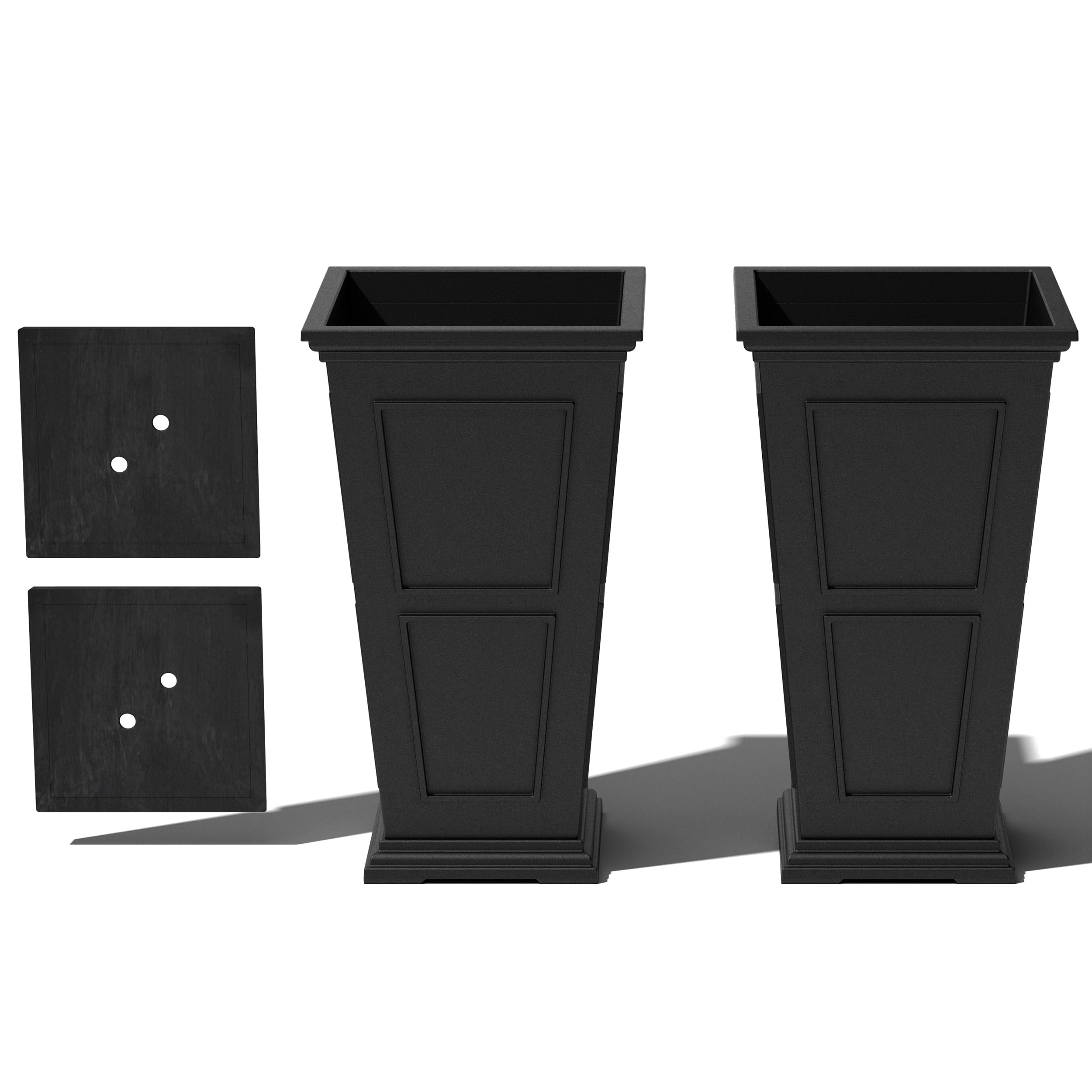
Veradek’s Brixton planter earns the top spot for its smart combination of thermal mass design and soil economy. The double-wall construction creates an insulating air gap that moderates root temperature through Canadian winters and summer heat waves. At 26 inches tall with a 14.75-inch footprint, it provides enough depth for deep-rooted perennials without wasting soil — the removable insert shelf cuts fill volume by roughly 40% while keeping the plant crown at the correct height. The shelf also simplifies seasonal swaps: lift out the inner bucket and replace the entire plant arrangement without disturbing the main pot.
The recycled polypropylene body includes UV inhibitors rated for -20°F to 120°F, and owner reports confirm zero cracking or fading after two full seasons in direct southern exposure. The classic estate-inspired ribbed profile looks substantially heavier than its 10-pound empty weight suggests — a psychological advantage that belies its manageable carry weight. Owners consistently note that these planters “look expensive” and resist the chalky surface degradation common to lower-grade resin after 12 months of sun exposure.
Made in Canada with a focus on dimensional precision, the Brixton’s wall thickness is consistent around all four corners, meaning the removable insert slides smoothly without binding. The pre-drilled drainage holes at the base are positioned to prevent standing water even when the planter sits on an uneven patio stone. For anyone investing in tall statement planters that need to perform across four seasons, this is the most engineering-conscious option in this price tier.
What works
- Removable insert shelf saves soil and enables quick plant swaps
- Double-wall insulation buffers root temperature swings effectively
- UV-stabilized resin shows no cracking or fading in long-term owner reports
What doesn’t
- Interior width (13 inches) limits root spread for very large shrubs
- Empty weight is light — must add bricks or gravel for wind stability
2. Mayne Fairfield 20-Inch Square Planter – Self-Watering

The Mayne Fairfield eliminates the most common outdoor planter failure — inconsistent watering. Its integrated reservoir holds roughly 3 gallons of water below a perforated platform, allowing roots to wick moisture upward on demand while the soil above stays aerated. In practice, this means petunias and pansies survive three-day trips without irrigation, and the overflow drainage port prevents the reservoir from becoming a mosquito breeding zone during rainy weeks. The 20-inch cube form holds 8.75 gallons of soil, enough for medium shrubs or a dense annual display.
Double-wall construction provides the same thermal buffering as the Veradek, but the Mayne adds a 13-pound empty weight — significantly heavier than any other planter at this size. When the reservoir is full and the pot is planted, total mass exceeds 50 pounds, giving it exceptional wind resistance on exposed porches. The UV-fade-resistant polyethylene maintains its matte espresso or white finish through full-sun conditions; owners in Florida and Texas report no color shift after 18+ months.
Made in the USA with a 15-year residential warranty, the Fairfield is the only planter here that backs its durability claim with a specific timeframe. The self-watering system requires initial setup — filling the reservoir through the side port and ensuring the wicking platform is properly seated — but after that, maintenance drops to refilling the reservoir every 5–7 days depending on heat and plant size. The included fill port plug seals cleanly and has not been reported to leak. For gardeners who travel during summer or simply want to reduce their watering frequency by half, this is the most functional design in the lineup.
What works
- Self-watering reservoir reduces irrigation frequency significantly
- Heavy base with full reservoir provides excellent wind stability
- 15-year residential warranty exceeds any other option here
What doesn’t
- Reservoir adds weight that makes relocation difficult after filling
- Self-watering mechanism requires learning curve for optimal wicking
3. Sunnydaze 24-Inch Large Double-Walled Polyresin Planter

When you need to overwinter a shrub in a container or protect roots from reflected patio heat, the Sunnydaze Anjelica is the most thermally sophisticated option here. The double-wall design creates a sealed air gap that slows heat transfer — owners report soil temperatures staying 10–12°F cooler on 95°F days compared to single-wall resin pots. An optional bottom plug opens the outer chamber so you can fill it with sand or gravel, adding 15–20 pounds of thermal mass that further buffers temperature swings and anchors the planter against wind. The 19-gallon capacity accommodates dwarf fruit trees, large ornamental grasses, or multiple layers of annuals.
The hand-painted sable finish with weathered texture mimics aged ceramic convincingly, but the real advantage is material science: linear low-density polyethylene resists UV embrittlement far longer than standard polypropylene. Owner reports consistently cite zero cracking after three to four seasons in full sun, whereas cheaper resin planters typically show stress fractures by year two. The 6.4-pound empty weight is remarkably light for a 24-inch pot — you need to fill the inner chamber with soil and the outer chamber with sand to achieve stable mass, but the design rewards that effort with exceptional longevity.
The most notable compromise: drainage is not pre-drilled. Six indented spots on the bottom indicate drill points, but drilling through both walls requires a 1/4-inch bit and careful depth control to avoid compromising the insulation layer. Some owners use rubber tubing to seal the drainage path through the inner wall only, maintaining the air gap while allowing water to escape. This extra step makes the Sunnydaze less beginner-friendly, but for experienced gardeners who prioritize root zone stability over plug-and-play convenience, the thermal performance is unmatched at this price point.
What works
- Double-wall air gap plus sand-fill option provides best-in-class root insulation
- LLDPE material resists UV cracking longer than standard polypropylene
- Hand-painted finish looks convincingly like aged ceramic or stone
What doesn’t
- No pre-drilled drainage — drilling required and technique matters
- Empty weight is very light; must fill outer chamber for stability
4. Keter Stone Tapered Planter Set of 2 (26.4-Inch)
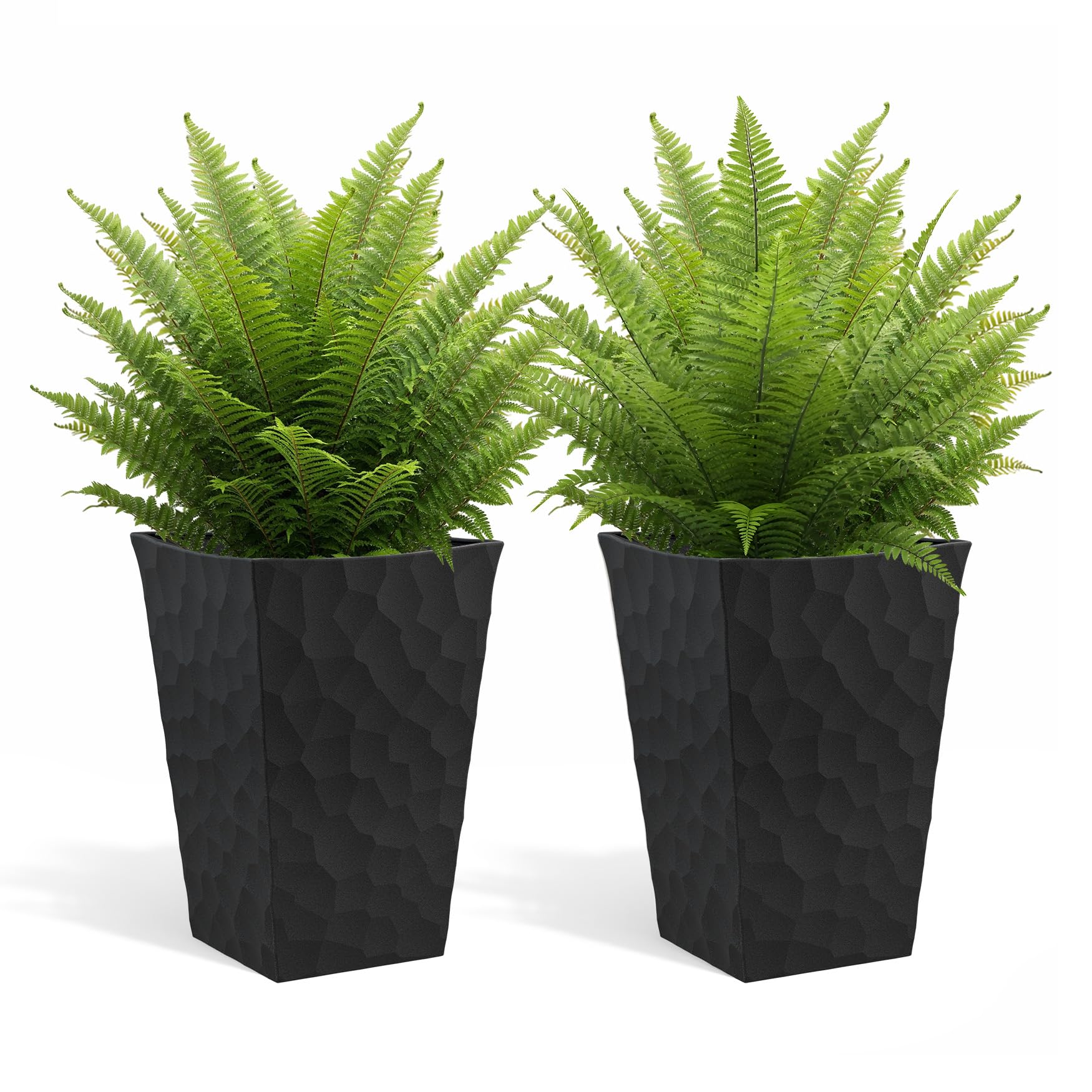
The Keter Stone Tapered planter delivers the most convincing faux-stone texture in this comparison. The sculpted resin finish has actual grain variation — running your hand across the surface reveals subtle ridges and pitting that fool the eye at porch distance. At 26.4 inches tall with a 12.2-gallon soil capacity, it’s tall enough for dwarf citrus trees, topiary standards, or upright evergreens without overwhelming a standard-sized entryway. The flippable design offers two display profiles — tapered wide at top or tapered narrow at top — giving stylistic flexibility that few planters in this class provide.
All-weather resin construction resists fading, cracking, and peeling according to owner reports across varied climates. The graphite color maintains its depth through full-sun exposure, though the stone texture does collect dust and pollen more visibly than smooth finishes — a quick hose rinse restores the look. The 9.88-pound empty weight means you need substantial soil volume to anchor it; owners recommend filling the bottom 6 inches with pea gravel or crushed stone to lower the center of gravity and prevent tipping in high wind.
Drainage is listed as “optional drillable,” and the base has a marked drilling zone rather than pre-formed holes. The resin is thick enough that a standard drill and 1/2-inch bit work cleanly, but drilling multiple holes is necessary for adequate drainage in rainy climates — one hole alone may not keep 12 gallons of saturated soil aerated during a wet spring. The lack of a pre-drilled option is a minor inconvenience but does not detract from the overall value: two large, beautifully textured tall planters at this price point represent strong dollar-to-aesthetic return for front-entrance landscaping.
What works
- Flippable design offers two distinct tapered profiles for styling flexibility
- Stone-look texture is the most realistic among resin options tested
- Generous 12.2-gallon capacity fits small trees and tall shrubs
What doesn’t
- No pre-drilled drainage — owners must drill holes themselves
- Light empty weight requires gravel ballast for wind-prone locations
5. Worth Garden 2-Pack 21″ Tall White Planters
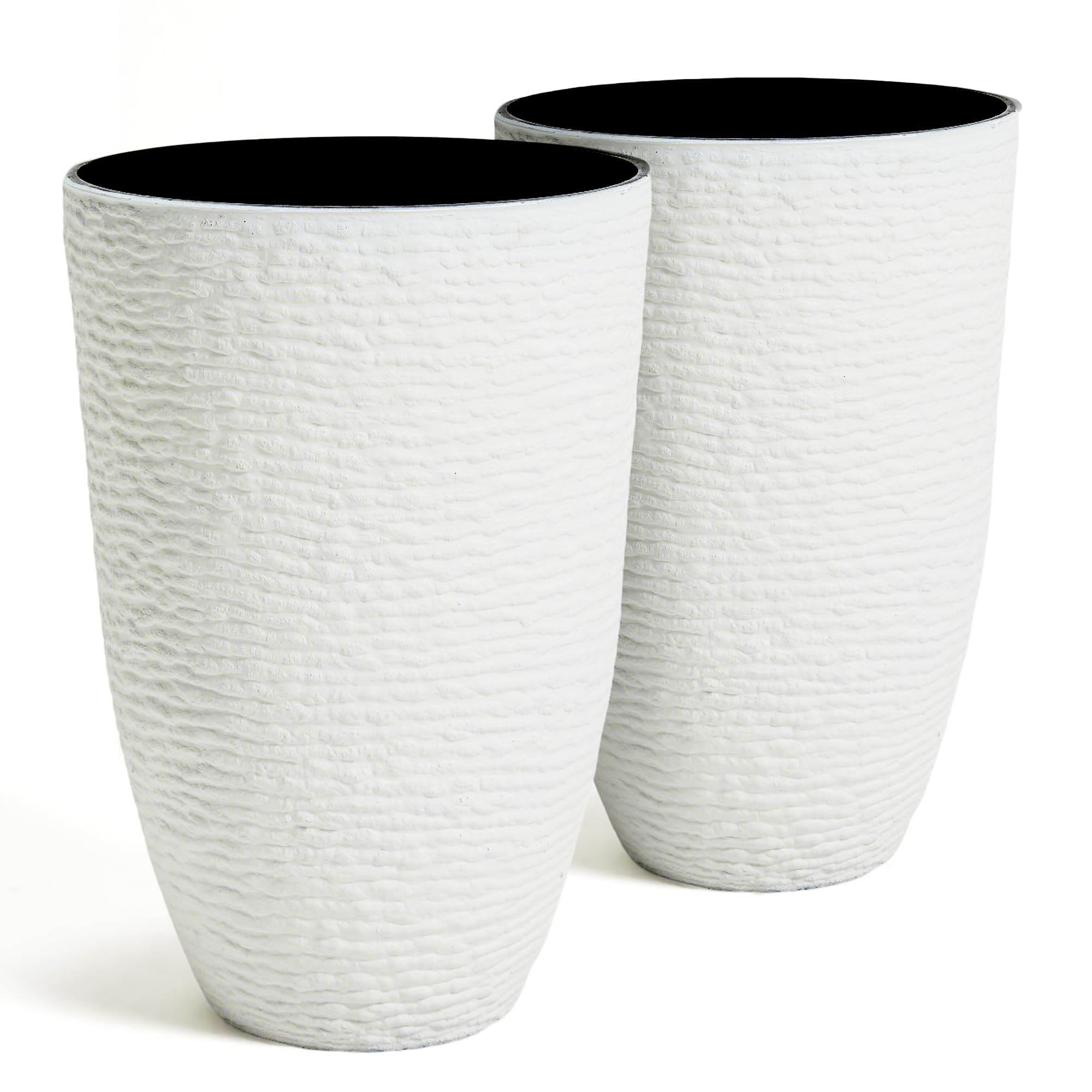
The Worth Garden planter uses a material hybrid — 85% recycled polypropylene blended with 15% stone powder — that hits a sweet spot between ceramic weight and plastic lightness. At 6.8 pounds for a 20.5-inch-tall pot, it’s 30% heavier than pure plastic of the same volume but far lighter than a comparable ceramic planter that would weigh 25+ pounds. This density gives it enough mass to resist moderate wind when planted, while remaining manageable to reposition. The matte white finish with grain texture reads as concrete from a few feet away, and owners consistently report that guests assume these are real stone.
The pre-drilled single drainage hole at the bottom works adequately for most scenarios, but the 9-gallon capacity means water can pool in the lower soil layer during heavy rain — adding a 1-inch gravel drainage layer at the bottom is recommended for exposed patios. The weather-resistant composite resists UV yellowing and impact cracking; owner reports note that the white color holds well after two seasons in direct sun, with only minor dirt accumulation in the grain texture that washes off easily. The curved silhouette with raised vertical details adds architectural interest that complements both modern and traditional homes.
One design limitation: the planter has no internal shelf or false bottom, so tall plants require significant soil fill to reach the correct elevation — owners wishing for a mid-height platform must add their own filler. The 20.5-inch height is ideal for flanking an entrance door where you want the planter to stand at waist level, and the 14-inch diameter accommodates standard nursery pots up to 5 gallons without looking cramped. For budget-conscious shoppers who want two large planters with a premium material feel, this set delivers better density and UV resistance than similarly priced pure-resin alternatives.
What works
- Stone-powder composite provides ceramic-like density without the weight
- Matte white finish mimics concrete convincingly at normal viewing distances
- Weather-resistant material resists UV yellowing better than standard plastic
What doesn’t
- Single drainage hole may be insufficient for heavy rain without a gravel layer
- No internal shelf or false bottom — must add filler for proper plant elevation
6. Classic Home and Garden Outdoor Whiskey Resin Barrel Planter (2-Pack)
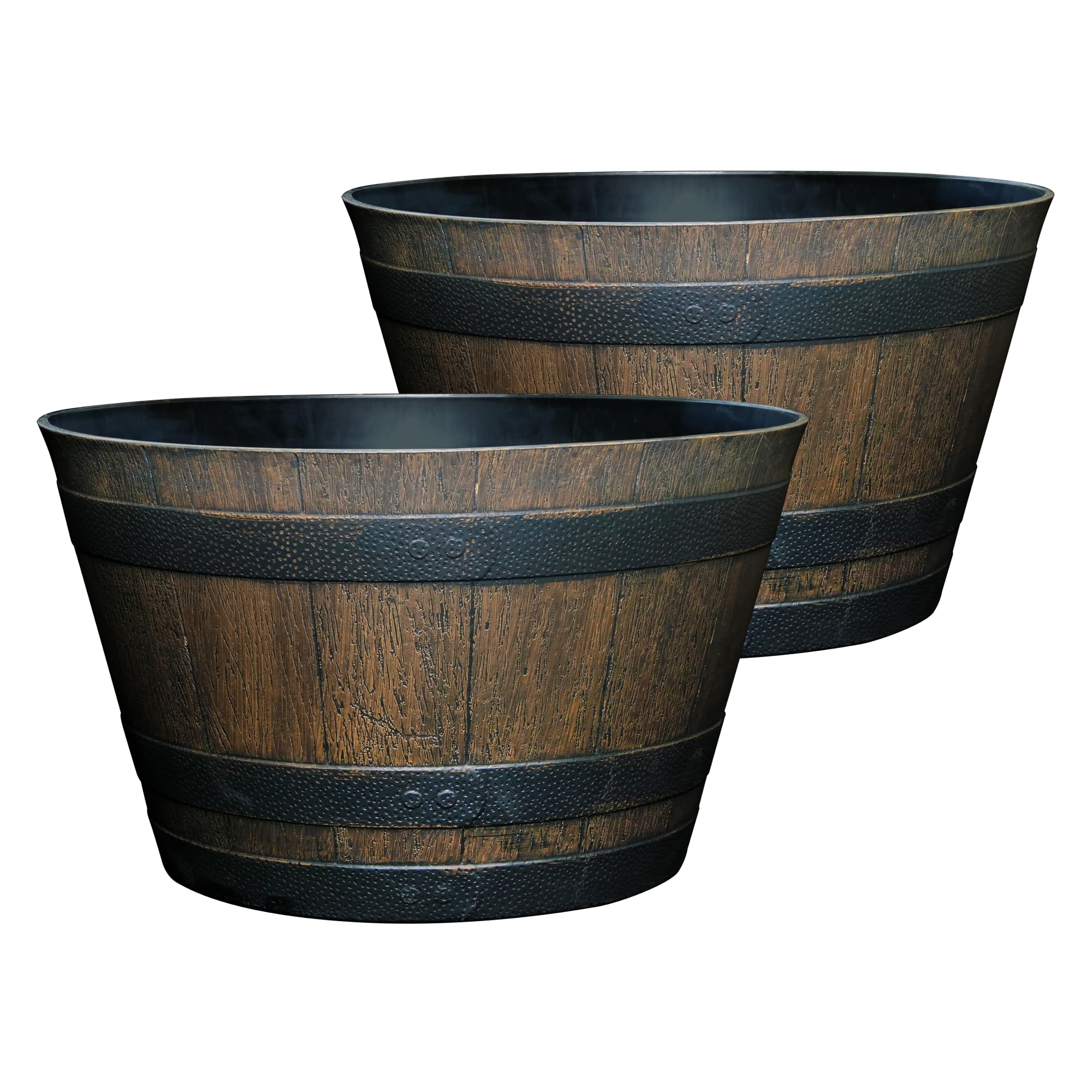
The Classic Home & Garden whiskey barrel planter solves a common aesthetic problem: how to get the authentic wooden barrel look without the 40-pound weight, rot risk, and metal band rust of real oak. The high-density resin construction replicates the stave lines and band details accurately, and the Kentucky Walnut finish with dark black bands creates a convincing distressed-wood appearance. At 20.5 inches in diameter and 12.5 inches deep, each planter holds enough soil for medium shrubs, large annual displays, or a compact ornamental tree. The set of two is priced competitively for the decorative impact per unit.
The UV-coated finish specifically targets color fade — the walnut brown stays rich through full-sun exposure, and owner reports across multiple seasons confirm no gray-out or chalkiness on the surface. However, the resin itself is standard-density polyethylene, not a UV-stabilized polymer blend, so the coating is the primary defense. Scratches or abrasions that penetrate the coating could expose base material to faster UV degradation. The lightweight construction (0.69 kg per planter) is notable — these are extremely easy to move when empty, but they require substantial soil or a base layer of rocks to prevent wind tipping on open patios. Owners filling them with artificial shrubs often use the hollow space below the shrub as a rock ballast cavity.
Pre-drilled drainage holes are included for outdoor use, though some owners note that the holes sit flush against the ground surface — placing the planters on pot feet or small risers improves airflow under the base and prevents the drain holes from clogging with patio debris. The interior volume is consistent with a true half-barrel shape, meaning the soil capacity is concentrated in the lower 8 inches while the upper taper reduces the top planting width. For real plants with spreading root systems, this shape works best for plants that are deeper-rooted rather than wide-spreading, like upright rosemary, dwarf boxwood, or standard lavender.
What works
- Authentic barrel aesthetic without wood rot or heavy weight
- UV-coated finish resists color fade through multiple seasons
- Pre-drilled drainage holes ready for immediate outdoor use
What doesn’t
- Standard polyethylene lacks advanced UV stabilization in the base resin
- Very lightweight empty — must add ballast for wind-prone locations
7. Myfeegoin 14-Inch 4-Pack Plastic Flower Pots with Saucers
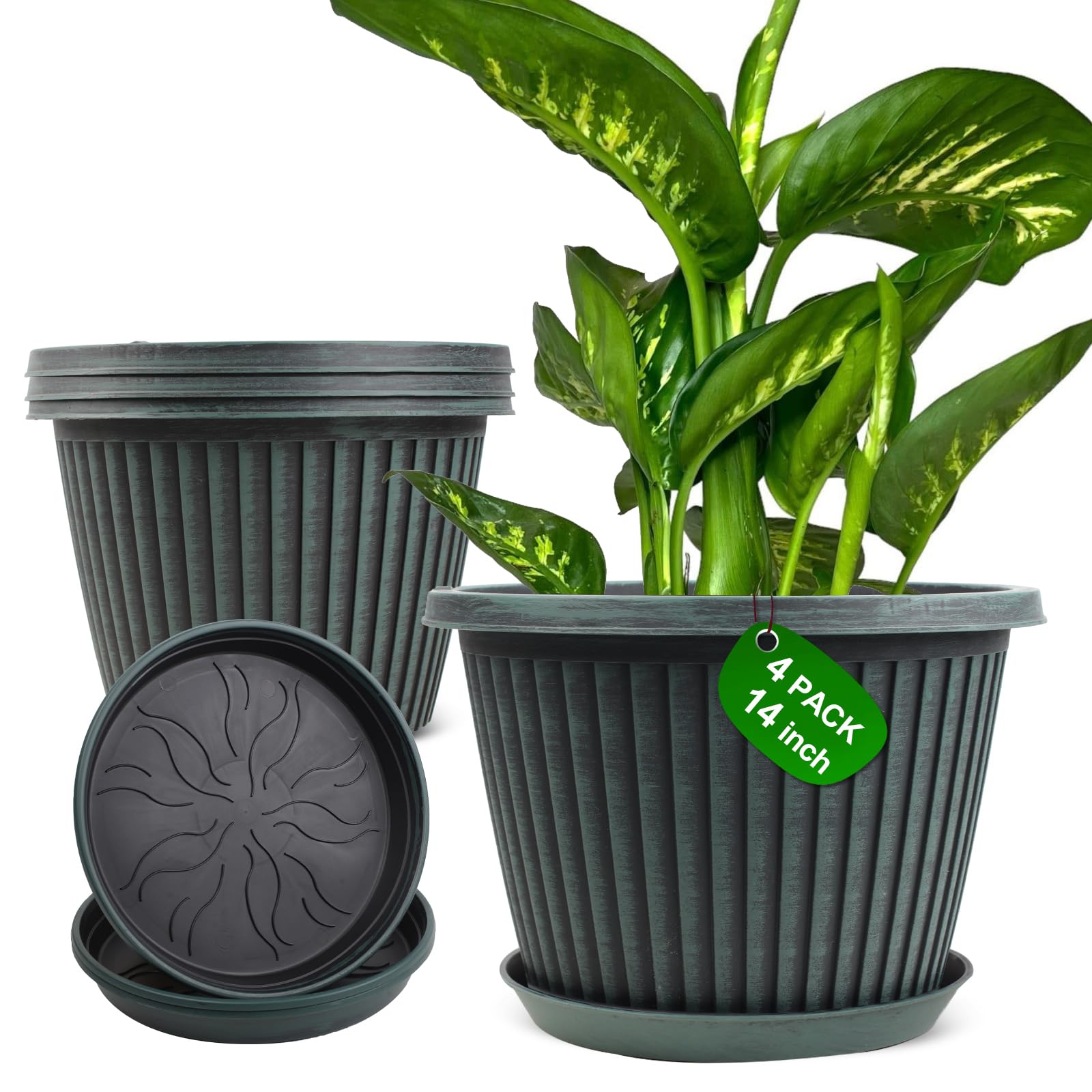
The Myfeegoin 4-pack is the budget-minded entry point for gardeners who need multiple pots to create a cohesive container garden without breaking the budget. Each pot measures 14 inches in top diameter with a 5-gallon capacity — large enough for a mature tomato, a bushy basil plant, or a mix of trailing and upright annuals. The ribbed resin body in blue-green mimics a painted ceramic glaze from a distance, and the rolled rim provides a comfortable grip for moving filled pots. The set includes matching saucers, which many comparably priced sets omit.
The polypropylene resin is recyclable and moderately UV-resistant, but this is not a heavy-duty outdoor material. Owner reports confirm the pots look “nicer than the price suggests” when freshly planted, but the material lacks the UV stabilization found in premium options. The four drainage holes per pot with matching saucers handle regular watering well, and the saucers’ raised edges catch overflow without spilling onto deck boards — a practical advantage for apartment balconies or covered patios where water runoff is a concern. The 5-gallon capacity is adequate for medium plants but too small for shrubs or trees that need deeper root channels.
Two key limitations deserve attention for outdoor use. First, the 14-inch top diameter with a 9.6-inch bottom diameter creates a steep taper that reduces actual soil volume in the lower third — deep-rooted plants may become rootbound faster than the 5-gallon rating suggests. Second, the material thickness is adequate but not robust — repeated freeze-thaw cycles in cold climates could induce stress cracks by the second or third winter. For seasonal annual displays on a covered porch away from direct winter weather, these are an excellent value. For permanent outdoor installations that must survive snow and ice, a thicker-walled planter from the mid-range or premium tier is a better long-term investment.
What works
- Includes four saucers that catch overflow without deck staining
- Ribbed design looks more expensive than the price point suggests
- Lightweight and easy to rearrange when filled with potting soil
What doesn’t
- Steep taper reduces usable soil volume in the lower section
- Standard polypropylene may crack after repeated freeze-thaw cycles
Hardware & Specs Guide
Drainage Hole Configuration
The number, diameter, and placement of drainage holes determine how quickly excess water exits the root zone. The Myfeegoin uses four evenly spaced holes per pot — adequate for covered patios but marginal for exposed gardens during rainy weeks. The Veradek and Mayne both use perimeter drainage channels that wick water from multiple collection points rather than relying on a single bottom hole. The Sunnydaze requires drilling six indentations, and improper drilling can compromise the double-wall insulation. For outdoor planters that sit on porous surfaces like gravel or soil, opt for designs with at least four holes or integrated drainage channels; for sealed patios, saucers with raised edges (like the Myfeegoin’s) prevent staining but must be emptied regularly to avoid root submergence.
Thermal Insulation Rating
Single-wall resin planters (Myfeegoin, Classic Home & Garden) offer minimal thermal protection — soil temperature closely tracks ambient air temperature, which can stress roots during heat waves or hard freezes. Double-wall designs (Veradek, Mayne, Sunnydaze) create a dead-air gap that reduces heat transfer by 40–60%, keeping root zone temperatures more stable. The Sunnydaze’s sand-fillable outer chamber adds thermal mass that further dampens temperature swings — owners in Zone 5 climates report successful overwintering of perennials that would not survive in single-wall pots. For year-round outdoor planting where the pot cannot be moved indoors during winter, prioritize double-wall or insulated construction regardless of material type.
FAQ
Should I choose self-watering planters for outdoor use in rainy climates?
How do I prevent my tall plastic planters from blowing over in the wind?
Can I leave resin planters outside during freezing winter temperatures?
Final Thoughts: The Verdict
For most gardeners, the containers for outdoor plants winner is the Veradek Brixton 26-inch because it combines double-wall insulation, a removable shelf for soil economy, and UV-stabilized material rated for extreme climates — all in a classic design that looks premium without exceeding mid-range pricing. If you want self-watering convenience that cuts watering frequency by half, grab the Mayne Fairfield 20-inch Square. And for maximum root insulation when overwintering shrubs in containers, nothing beats the Sunnydaze 24-inch Double-Walled Planter with its sand-fillable thermal mass chamber.