
Fresh herbs turn a simple meal into something special, but keeping basil, mint, and rosemary alive indoors often feels like a losing battle. The wrong container—whether it traps too much moisture, dries out too fast, or lacks proper drainage—can kill a plant before you get a second harvest. Choosing a planter with the right balance of water management, material breathability, and root room makes the difference between a thriving kitchen garden and a pile of yellowing stems.
I’m Rikta — the co-founder and writer behind Lawn Gear Lab. I’ve spent hundreds of hours analyzing container specs, studying how different materials and drainage systems affect herb root health, and cross-referencing owner feedback to find which planters actually deliver consistent results for common culinary herbs.
This guide compares seven top-rated designs, from self-watering window boxes to ceramic statement pots, to help you find the best containers for growing herbs that match your space, skill level, and plant selection.
How To Choose The Best Containers For Growing Herbs
Herb containers are deceptively simple. A pot is not just a pot—it’s the entire root environment. Unlike flowers or ornamentals, most culinary herbs (basil, oregano, thyme, cilantro) hate soggy roots and respond dramatically to container material. The wrong choice leads to root rot, stunted growth, or plants that bolt too quickly. Focus on these three factors.
Drainage and water management
Herbs need consistent moisture at the root zone, but they cannot tolerate standing water. Look for containers with at least one drainage hole (preferably several) or a self-watering system with a wicking mechanism that pulls water upward rather than soaking the root ball. Self-watering designs work well for moisture-loving basil but can drown rosemary and thyme if the reservoir stays full. A removable tray or saucer gives you control. If you travel often, a self-watering planter with a wick and a viewing window for water level is a practical upgrade over a basic pot with a saucer.
Material breathability and weight
Ceramic and glazed clay pots look elegant, retain moisture longer, and provide thermal mass that buffers soil temperature swings. They are heavier—which helps stability outdoors—but they cost more and can crack in freezing weather. Plastic containers are lightweight, cheaper, and weather-resistant but heat up faster in direct sun and do not breathe, meaning you must avoid overwatering. For indoor herb gardens on a windowsill, ceramic or glazed options with drainage are ideal. For outdoor balcony setups, thick-walled plastic or powder-coated metal frames (like vertical planters) offer durability without the weight.
Size, depth, and root space
Most herbs need 6 to 8 inches of soil depth for healthy root development. Basil and cilantro benefit from deeper containers (8 to 10 inches), while mint, chives, and thyme thrive in shallower (4 to 6 inch) pots. Compact window boxes (10 to 12 inches long) are perfect for small kitchen windowsills but can crowd multiple herbs if spaced too tightly. Larger rectangular planters (16 to 17 inches) give you room for a mixed herb garden. Vertical tiered planters maximize vertical space on a patio or balcony but typically have shallow bins—best for low-growing herbs like oregano and thyme rather than tall basil.
Quick Comparison
On smaller screens, swipe sideways to see the full table.
| Model | Category | Best For | Key Spec | Amazon |
|---|---|---|---|---|
| VIVOSUN 4-Pack Self-Watering | Self-Watering Box | Compact kitchen windowsills | 10.5 inch length, 2-layer wick system | Amazon |
| Oliz 8-Pack Window Box | Self-Watering Box | Large mixed herb gardens | 17 inch length, 1L reservoir per pot | Amazon |
| Meowell 12 inch Self-Watering | Self-Watering Pot | Deep-root herbs (basil, cilantro) | 12 x 12 x 10 inch, cotton rope wick | Amazon |
| SOUJOY Set of 3 Ceramic | Ceramic Pot Set | Indoor tabletop herb decor | 7/5/4 inch diameter, attached saucer | Amazon |
| OYEAL 4-Tier Vertical Planter | Vertical Tiered | Small patio / balcony herb garden | 16.8 x 7 x 5.5 inch bins per tier | Amazon |
| E-liu Set of 2 Ceramic | Large Ceramic Pot | Statement herb pots for kitchens | 11 & 14 inch, 3 drainage holes, mesh pads | Amazon |
| MyGift Rectangle Succulent Planter | Glazed Ceramic | Small windowsill with succulents | 12.9 x 3.7 x 4.1 inch, bamboo tray | Amazon |
In‑Depth Reviews
1. VIVOSUN Self-Watering Planters (4-Pack)

The VIVOSUN 4-pack hits the sweet spot for indoor herb growers who need reliable self-watering without excess complexity. Each 10.5-inch rectangular box uses a two-layer system: an inner container holds the soil and sits above a bottom reservoir, with absorbent strips wicking moisture upward. This design prevents the waterlogged roots that kill rosemary and thyme while keeping basil consistently hydrated. Owners report that the clear side window makes water level checks easy, and the included plant labels help track multiple herb varieties on a single windowsill.
The lightweight plastic construction is corrosion-resistant and easy to move, yet sturdy enough to hold up to regular watering without warping. The compact size fits narrow kitchen windowsills, and the top-opening pour spout allows refills without disturbing the plant. A clear water level window on the side (though noted by some owners to face the wrong direction on a ledge) removes guesswork. Assembly is straightforward—snap the inner tray into place, fill the reservoir, and the wick does the rest. The set also works as a hydroponic starter once roots mature.
For anyone juggling a busy schedule, the VIVOSUN maintains soil moisture for about 1.5 to 2 weeks between refills. Basil and mint thrive in this environment, and the self-regulating wick reduces the risk of both overwatering and underwatering. The only real compromise is the plastic aesthetic—it looks utilitarian rather than decorative—but the functional payoff is hard to beat at this price point.
What works
- Consistent wicking keeps basil and mint evenly moist without root rot
- Clear water level window eliminates guesswork
- Lightweight and compact for narrow windowsills
What doesn’t
- Plastic material feels less premium than ceramic
- Pour spout and water window face opposite sides, awkward on a ledge
2. Oliz Window Box Planter (8-Pack)
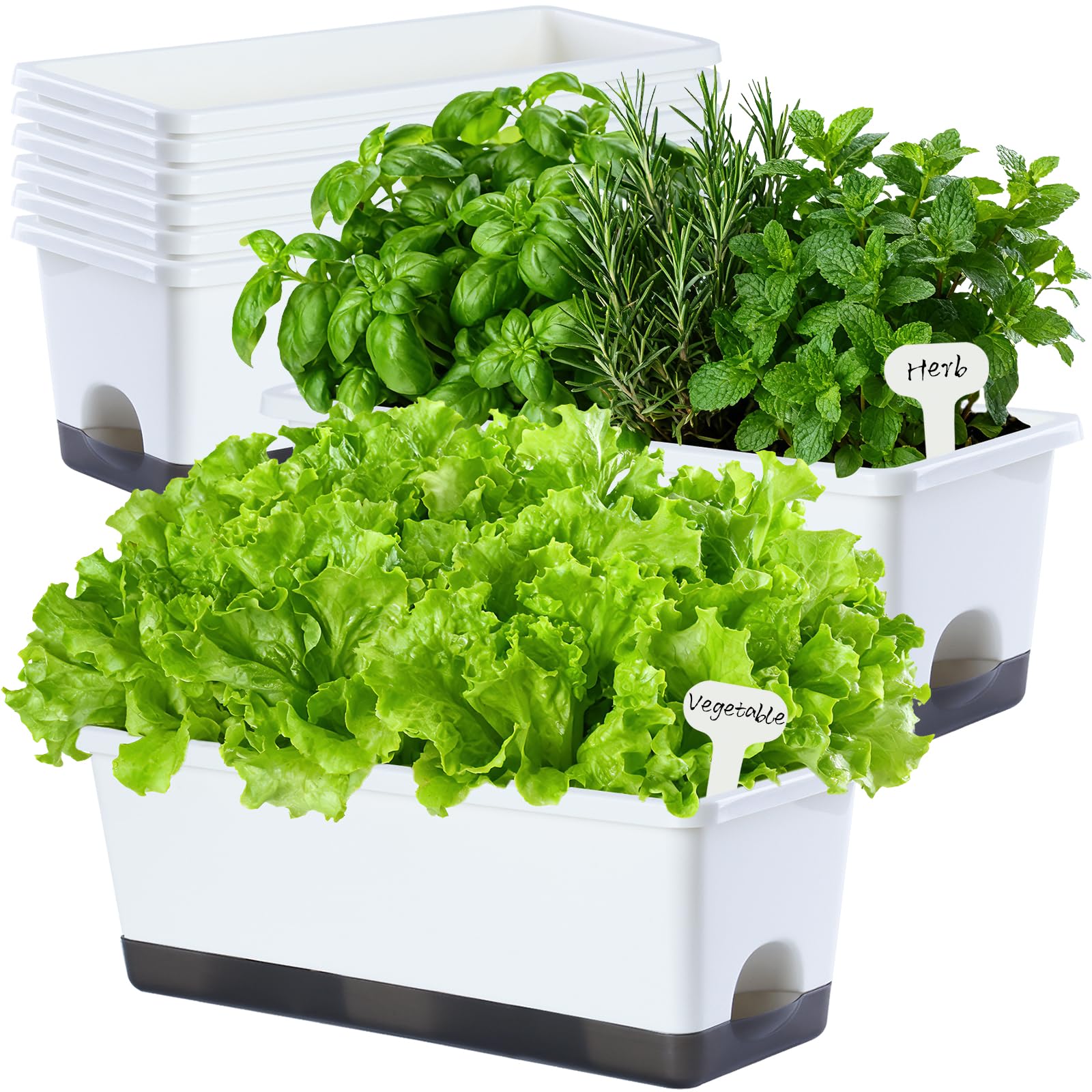
The Oliz 8-pack is the volume solution for anyone who wants to grow a full herb garden on a balcony or patio without buying individual pots. Each 17-by-7-inch planter holds a 1-liter water reservoir and uses absorbent cotton ropes to wick moisture from the bottom up. That capacity translates to roughly 10 days of autonomous watering—more than enough for a weekend trip. The PP plastic is thickened enough to bear considerable weight (rated for up to 330 pounds) without cracking, and owners confirm the white color holds up to direct sun without fading or warping.
Assembly is snap-together simple: insert the cotton rope into the inner tray, add soil and herbs, then fill the reservoir through the pour slot. The rectangular shape maximizes horizontal space, making it ideal for planting rows of basil, chives, cilantro, and lettuce side by side. Multiple drainage holes in the bottom of the inner pot improve air circulation and prevent the standing water that triggers root rot. Owners growing salad greens and bunching onions report vigorous root development and easy maintenance—just top off the reservoir once a week.
The biggest advantage here is the sheer scale: eight large planters for a price that undercuts most single ceramic pots. The self-watering mechanism works reliably, and the thick walls resist temperature swings better than thin plastic alternatives. The trade-off is the purely functional look—these are white, plastic, and utilitarian. But for practical herb production on a deck or in a greenhouse, the Oliz set is tough to beat.
What works
- Generous 1-liter reservoir keeps herbs watered for 10 days
- Thickened PP plastic withstands sun and heavy loads
- Eight-piece set offers massive herb garden capacity
What doesn’t
- Appearance is purely utilitarian—not decorative
- Cotton wicks may need occasional replacement
3. Meowell 12 inch Large Self-Watering Pot
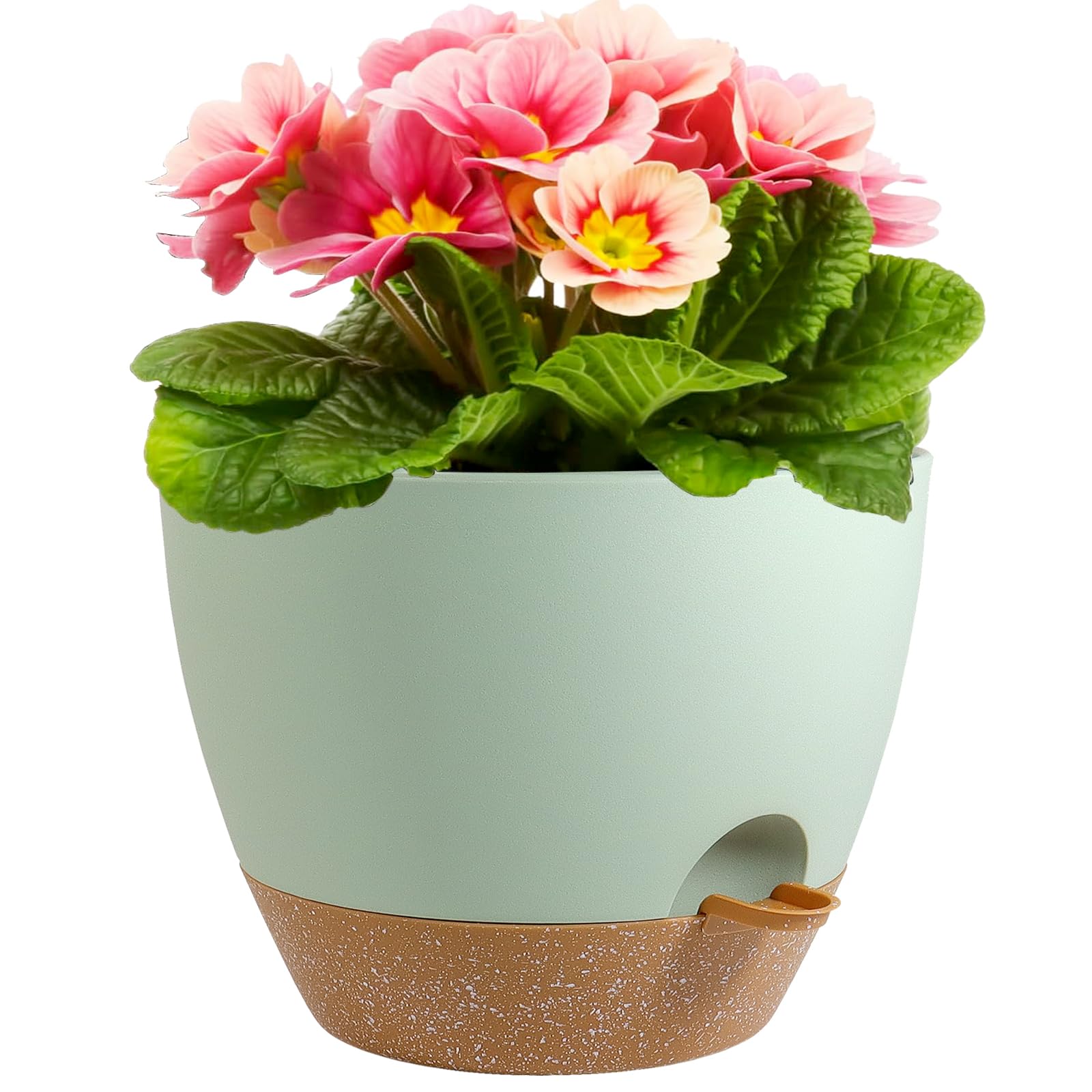
The Meowell 12-inch pot is built for herbs that demand deeper soil, like basil, cilantro, and dill. At 10 inches tall with a comparable diameter, this pot provides roughly twice the root volume of a standard window box. The self-watering mechanism uses a cotton rope running from the bottom reservoir into the soil, drawing water upward as needed. The reservoir includes a watering lip for easy refills, and the matte finish plastic (about 6mm thick) gives a weightier feel than typical budget planters without being difficult to move.
The green-with-brown speckled color blends well with natural decor, and several owners comment that it looks more expensive than it is. The deep reservoir keeps moisture available for 1 to 2 weeks, which is especially valuable for basil—a herb that wilts dramatically if the soil dries out for even a day. The drainage holes at the base (under the inner pot) ensure that excess water doesn’t pool in the soil compartment, a common failure point in cheaper self-watering designs.
The trade-off is that not all herbs appreciate bottom-wicking. Owners note that plants like money trees and some succulents dislike constant root moisture, so this pot works best with thirsty culinary herbs. The plastic construction also lacks the breathability of terracotta, so using a well-aerated potting mix matters. For a dedicated basil or cilantro container that reduces watering frequency to once or twice a week, the Meowell is a smart mid-range pick.
What works
- Deep 10-inch soil cavity supports tall root systems
- Thick matte plastic feels sturdy and looks upscale
- Cotton wick reservoir lasts up to 2 weeks between refills
What doesn’t
- Bottom wicking may not suit drought-tolerant herbs like rosemary
- Plastic still lacks the evaporation control of ceramic
4. E-liu Ceramic Plant Pots (Set of 2)

The E-liu set brings genuine ceramic quality to an herb container that doubles as kitchen decor. The two pots—11 inches and 14 inches long—feature a sleek, polished white finish with smooth rounded lines that fit countertops, windowsills, and kitchen islands. Unlike many ceramic pots that skimp on drainage, the E-liu includes three separate drainage holes at the base and a matching ceramic saucer. A mesh pad covers the holes to keep potting mix inside while letting water flow out freely, a detail that prevents soil loss during watering.
Fortified clay construction gives these pots a satisfying heft—they feel solid and resist scratches and chips better than cheaper glazed ceramics. The inner finish is glossy and smooth, making repotting and cleaning straightforward. The 14-inch size held five African violets with room to spare, so a single large pot can accommodate a substantial herb collection (basil, mint, chives, and parsley together). The 11-inch pot works well for a medium basil plant or a grouping of smaller herbs like thyme and oregano. Packaging is notably protective, reducing the risk of shipping damage.
The main consideration is the lack of a self-watering reservoir. You will need to water more frequently, and the ceramic material retains moisture longer than terracotta but less than plastic. For growers who prefer to control watering manually and want a pot that looks like a permanent fixture rather than a utility bin, the E-liu set delivers premium materials at a mid-range price. The mesh pads are a thoughtful touch that most comparably priced ceramic pots omit.
What works
- Fortified ceramic with three drainage holes and mesh pads prevents soil loss
- Clean white finish fits modern kitchen and office decor
- Large capacity (10 gallons total) supports robust herb growth
What doesn’t
- No self-watering feature—requires manual watering schedule
- Heavier than plastic; less portable for outdoor rotation
5. SOUJOY Set of 3 Ceramic Flower Pots

The SOUJOY set is the most visually distinctive option in this lineup, with a light purple gradient finish and a frosted ceramic texture that catches light differently from every angle. The three sizes (7.1, 5.3, and 4.1 inches in diameter) offer flexibility: use the largest for a bushy basil plant, the medium for cilantro or mint, and the smallest for individual thyme or chive starts. Each pot has a pre-drilled drainage hole and an attached saucer that collects runoff, minimizing mess on kitchen counters and office desks.
The ceramic quality is solid for the price—owners report good glaze consistency and no chipping after months of regular use. The attached saucer is a double-edged design: it looks clean and integrated, but it can make measuring water drainage tricky since you cannot lift the pot off the saucer. For plants that dislike wet feet, you need to empty the saucer promptly after watering. The frost finish gives a subtle grip that makes handling easier than glossy ceramics, though the pots still feel substantial without being overly heavy.
The real appeal here is the aesthetic impact. The gradient purple adds a deliberate pop of color that works well in Feng Shui arrangements or modern boho decor. For growers who prioritize visual harmony over pure vegetable production, the SOUJOY set transforms herb containers into intentional design elements. The smaller sizes limit root depth—you will need to transplant herbs as they mature or stick to shallow-root varieties like chives, mint, and small-leaf basil cultivars.
What works
- Frosted gradient finish stands out as decorative tabletop pottery
- Three graduated sizes suit different herb types
- Attached saucer contains mess and fits tight spaces
What doesn’t
- Smaller pots restrict root depth for larger herbs
- Attached saucer cannot be removed, complicating drainage management
6. OYEAL Raised Garden Bed (4-Tier Vertical)

The OYEAL vertical planter solves a common problem for apartment dwellers: you want a substantial herb garden but only have a 2-by-3-foot patch of balcony or patio. This four-tier unit uses a triangular metal frame to stack four separate plastic planting bins (each 16.8 by 7 by 5.5 inches), giving you roughly four linear feet of growing space in a 16.8-by-18.3-inch footprint. The raised design means you water and harvest at chest height without bending, a real advantage for regular herb maintenance.
Each plastic bin has a built-in drainage hole and a removable bottom tray that catches excess water before it drips onto the floor below. The powder-coated metal frame feels stable when fully loaded, and owners report it holds up well in windy conditions (some tested through 40 mph gusts without tipping). Assembly is more involved than a single pot—the instructions can be confusing, and some owners note that the plastic bins feel thinner than they would like. Two bins arrived with broken button stands in one report, though the frame itself remained solid.
For growing herbs, the shallow bin depth (5.5 inches) is adequate for low-growing varieties like oregano, thyme, chives, and compact basil but not ideal for tall, deep-rooted basil or dill. The vertical layout also means upper bins shade lower bins slightly, so rotate plant positions based on sun needs. If you are limited on horizontal space and want a productive, space-efficient herb garden, the OYEAL delivers solid value—just budget extra assembly time and consider reinforcing the bins with lighter soil mixes.
What works
- Compact footprint (16 x 18 inches) suits balconies and patios
- Ergonomic waist-height access reduces bending
- Stable metal frame withstands moderate wind
What doesn’t
- Shallow bins limit root depth for tall herbs
- Thin plastic bins may crack after a full season in direct sun
7. MyGift 13 Inch Rectangular Succulent Planter
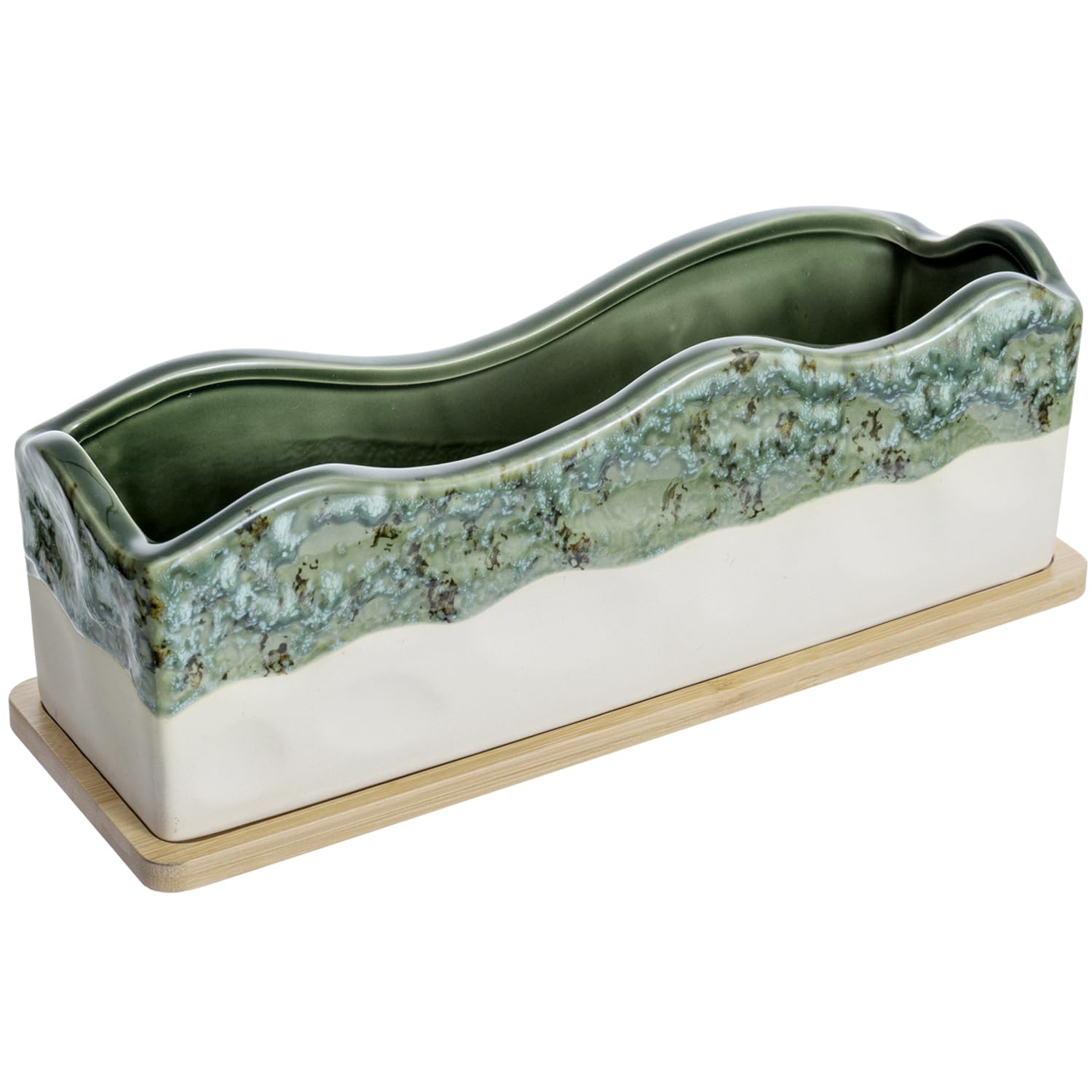
The MyGift rectangular planter prioritizes aesthetics above all else. Its seafoam green glaze over beige ceramic, combined with a removable bamboo tray, gives it a coastal, modern look that stands out on a kitchen counter or office desk. At 12.9 inches long but only 3.7 inches wide and 4.1 inches tall, this is a shallow, elongated dish designed for small-scale herb arrangements or succulents rather than deep-rooted vegetable production. A single functional drainage hole prevents waterlogging, and the bamboo tray catches runoff while adding a warm wood accent.
The ceramic body feels high-quality and well-constructed—owners consistently describe it as beautiful and functional. The glazed finish resists stains and wipes clean easily, which matters when you are pruning herbs or dealing with soil splatter. The bamboo tray includes bottom foot pads to elevate the pot slightly and protect surfaces from moisture. However, the shallow depth (4.1 inches) is the main constraint: only low-growing herbs like thyme, chives, mint, and small-leaf basil will thrive here. Taller basil, dill, or cilantro will quickly outgrow the container.
For anyone who wants a single elegant herb pot for a sunny windowsill and is content growing thyme and chives, the MyGift planter delivers top-shelf visual quality. The ceramic and bamboo combination feels more expensive than the asking price suggests. The trade-off is practical: limited root volume means you must stay on top of watering (no self-watering feature) and choose your herbs carefully. One owner noted quality control inconsistency between units, so inspect upon arrival.
What works
- Seafoam green glaze with bamboo tray is genuinely decorative
- Sturdy ceramic construction with smooth, stain-resistant finish
- Single drainage hole + bamboo tray handles runoff effectively
What doesn’t
- Shallow (4.1 inch) depth unsuitable for deep-root herbs
- No self-watering mechanism; small soil volume dries out fast
Hardware & Specs Guide
Self-Watering Reservoir vs. Drainage Hole
A self-watering reservoir uses a wick (cotton rope) or a bottom-perforated inner tray to pull water upward into the soil, keeping the root zone consistently moist without top-watering. This works well for basil, mint, and cilantro but can oversaturate drought-tolerant herbs like rosemary, sage, and thyme. Traditional drainage holes (single or multiple) let gravity remove excess water, requiring you to water more often but giving you complete control over soil moisture. The best containers for growing herbs in mixed plantings often combine both: a reservoir with an overflow drain so the soil never sits in standing water.
Ceramic vs. Plastic vs. Metal Frame
Ceramic (unglazed terracotta or glazed pottery) breathes slightly through its walls, aiding evaporation and preventing root rot. Glazed ceramic holds moisture longer than unglazed but costs more and can crack in freezing temps. Plastic is lightweight, UV-resistant (with thicker grades), and inexpensive, but it traps heat and moisture—require careful watering. Powder-coated metal frames (used in vertical and tiered planters) offer structural stability but the planting bins themselves are typically thin plastic; overall durability depends on the weakest component. For outdoor herb gardens, 6mm+ thick plastic or glazed ceramic is the safest bet against cracking and warping.
FAQ
What size container does basil need to grow well?
Are self-watering planters safe for all herbs?
Do I need to put rocks at the bottom of a herb pot?
Final Thoughts: The Verdict
For most gardeners, the containers for growing herbs winner is the VIVOSUN 4-Pack Self-Watering Planter because it delivers consistent moisture, a compact windowsill-friendly size, and a transparent water level indicator that removes all guesswork. If you want large-scale production on a budget, grab the Oliz 8-Pack Window Box. And for a premium decorative piece that anchors your kitchen herb display, nothing beats the E-liu Ceramic Set of 2.