
Specs are compiled from manufacturer listings and verified buyer reviews and can change over time — please confirm the key details on the product page before buying.
Pouring your own walkway sounds simple until you pull the concrete mold off and a turtle’s leg snaps or the flower petals chip off. The key to a finished stone you actually want to show off is not the concrete mix — it is the mold you pick. Some snap after a few pours, some flex enough to release the stone whole, and a few deliver the detail that turns a garden path into a garden accent.
I’m Rikta — the founder and writer behind Lawn Gear Lab. This guide is built by comparing the manufacturers’ published specifications and the patterns across verified customer reviews, so you get each pick’s real strengths and trade-offs instead of marketing spin.
The best concrete stepping stone molds release cleanly and hold their shape pour after pour.
Quick Picks
- AUTUMN Paw Print Stepping Stone Mold, Concrete Cement Mold for Non-Slip Garden Decor, 7 in — Best Value
- SvitMolds Mold DIY Turtle Shape Stepping Stone Mold Turtle Decorative Stepping Stone Mould Concrete Cement Mould DIY Personalized Manual Garden Lawn Pathmate Paving Pavement Paver (S02) — Best Design
- CJGQ Plus Size 19.6″x19.6″x1.7″ Walk Maker Reusable Concrete Pathmate Stone Mold Stepping Stone Paver Lawn Patio Yard Garden DIY Path Maker Paving Moulds (Irregular) — Best Coverage
- AUTUMN Sunflower Large Durable Stepping Stone Mold – Concrete Cement DIY Stones for Garden Walkway – Flower Statue Decor – Made in USA — Best Decorative
- Concrete Molds and Forms, 4 Pack Reusable Pathmate Stone Moldings DIY Paving Pavement Walk Maker Irregular Stepping Stone Paver Walkways Cement Molds for Patio, Lawn & Garden, 13.8×13.8×1.4 inch — Budget Champion
- Walk Path Maker, 2 Packs Plus Size: 18.9 x 18.9 x 1.8 inch Pathmate Stone Moldings Paving Pavement Concrete Molds and Foams Stepping Stone Paver Walk Way Cement Mold — Top Performer
- SvitMolds Concrete molds DIY Sold 6 pcs Plastic Moulds Flagstone Casting Concrete Paving Garden Paths Stone Patio Pavers for Garden Walkway #S34 — Best for Walkways
How To Choose The Best Concrete Stepping Stone Molds
Three factors separate a mold you use once from one you use for dozens of stones. Ignore these, and you waste concrete on a path that looks like a broken puzzle.
Plastic Type and Wall Thickness
The mold’s material decides how many pours it survives. In this guide, the SvitMolds turtle mold is listed at 0.078 inches thick (about 1.9 to 2 mm), and the SvitMolds 6-piece flagstone set is listed at 1.9 to 2 mm. That thickness handles heavy cement without cracking but stays flexible enough to bend for release, so turtle shells, sunflower petals, and paw pads stay defined pour after pour. Thinner polypropylene (PP) molds (a lighter, more flexible plastic) cost less, but reviewers report they tear at sharp corners after a few uses.
Release Agent Strategy
No mold pops concrete free by itself. Buyers consistently say that vegetable oil, cooking spray, or olive oil applied before each pour stops the concrete from bonding to the plastic. For example, one reviewer oiled the tips of a sunflower mold and avoided chips, while another skipped the spray and lost detail on the third pour. A good mold and a good release agent work together.
Stone Size and Project Scope
Match the mold size to your project. A 7-inch paw print uses a fraction of a bag of concrete for a few accent stones, while a 19.6-inch pathmaker needs roughly one 60-pound bag per stone and covers ground fast. For long paths, multiple molds matter — a six-piece flagstone set lets you pour several stones in one session, halving the cure-wait-cure cycle.
Quick Comparison
On smaller screens, swipe sideways to see the full table.
| Model | Best For | Material | Stone Size | Mold Thickness | Amazon |
|---|---|---|---|---|---|
| AUTUMN Paw Print | Accent paws & kid projects | Plastic | 7″ x 6.5″ x 1.75″ | 1.75″ | Amazon |
| SvitMolds Turtle | Decorative garden detail | ABS Plastic | 15.75″ x 13.39″ x 1.5″ | 0.078″ | Amazon |
| CJGQ Plus Size Pathmaker | Large path coverage | Polypropylene (PP) | 19.6″ x 19.6″ x 1.7″ | 1.7″ | Amazon |
| AUTUMN Sunflower | Large flower decor stones | Plastic | 15.75″ dia x 2″ | 2″ | Amazon |
| VanSmaGo 4-Pack Pathmaker | Budget multi-stone projects | ABS | 13″ x 13″ x 1.4″ | 1.4″ | Amazon |
| VanSmaGo 2-Pack Large Pathmaker | Large curves & big paths | Plastic | 18.9″ x 18.9″ x 1.8″ | 1.8″ | Amazon |
| SvitMolds 6-Piece Flagstone Set | Full walkway or patio pours | ABS Plastic | Various, 1.5″ thick | 1.9-2 mm | Amazon |
In-Depth Reviews
1. AUTUMN Paw Print Stepping Stone Mold, Concrete Cement Mold for Non-Slip Garden Decor, 7 in

You get a textured, non-slip finished stone that pops out cleanly pour after pour without chipping.
This mold makes a finished stone measuring 7 inches by 6.5 inches and 1.75 inches thick. The textured surface gives you slip resistance, so the stone stays grippy in wet weather on a garden path. The plastic is strong — one reviewer noted making six stones and the mold still looked new. You do not need experience; the instructions work for a weekend project with kids.
Unlike the CJGQ pathmaker that needs a full 60-pound bag per stone, buyers report that a single 60-pound bag of Quikcrete fills two 13-inch and two 16-inch stones with this mold. One buyer mentioned Pam cooking spray works great as a release agent (a substance you apply to the mold so the concrete does not stick), and another confirmed olive oil does the same. The textured surface helps foot traffic grip.
Made in the USA. Compared to the SvitMolds turtle mold at 15.75 inches by 13.39 inches, the paw print at 7 inches by 6.5 inches is compact, easy to store, and works well for small accent projects or gifts.
What Works
- Textured surface gives you non-slip finished stones so feet do not slide in rain
- One 60lb bag yields multiple stones, according to buyers
- Flexible plastic releases concrete easily with a little oil
What to Know
- Shallow 1.75″ depth may feel thin for heavy foot traffic areas
- Single mold means you pour one stone per cycle
Reach for this if: you want a simple, reliable mold for a few custom accent stones or a fun project with kids.
Look elsewhere if: you need to pave a full walkway and want larger stones that cover ground faster.
2. SvitMolds Mold DIY Turtle Shape Stepping Stone Mold Turtle Decorative Stepping Stone Mould Concrete Cement Mould DIY Personalized Manual Garden Lawn Pathmate Paving Pavement Paver (S02)

The deeply detailed turtle shell holds its shape through dozens of pours — the best decorative pick for a garden accent.
You get a finished turtle that measures 15.75 inches by 13.39 inches and is 1.5 inches thick. That is a substantial stone that stands out in a garden bed. The mold is made of ABS plastic (acrylonitrile butadiene styrene, a strong, impact-resistant plastic) about 0.078 inches thick (roughly 1.9 to 2 mm). The manufacturer says it can produce more than 50 turtles, and a buyer backed that up by reusing the mold 7 times without damage. Another reviewer used Quickcrete 4000 PSI (pounds per square inch, a measure of concrete strength) with shredded fiberglass and let the stone dry 18 hours indoors, then 12 more before demolding.
The fine turtle details stay sharp with repeated use. One tip from a buyer: use vegetable oil for easy release, and add chicken wire inside the concrete for strength if the stone will be walked on. Allow a full 48 hours drying in hot climates — a reviewer in Texas reported a turtle arm broke when demolding at 24 hours. A different buyer used a hammer drill (a power tool that hammers as it spins) to vibrate the mold and get air bubbles out.
Compared to the AUTUMN paw print mold at 7 inches by 6.5 inches, the turtle at 15.75 inches by 13.39 inches is a statement piece that takes more concrete and patience — the finished result looks handcrafted.
Strong Points
- Thick ABS plastic withstands repeated heavy pours
- Detailed texture comes through clearly in finished stones so the shell lines stay visible
- Owners mention reusing it 7+ times without wear
Watch Out For
- Shipping from Ukraine can take up to 26 days
- Air bubbles can settle in the concrete if you do not vibrate the mold
Pick this for: a decorative garden accent with real detail that lasts many pours.
Skip if: you need fast delivery — plan ahead for shipping time.
3. CJGQ Plus Size 19.6″x19.6″x1.7″ Walk Maker Reusable Concrete Pathmate Stone Mold Stepping Stone Paver Lawn Patio Yard Garden DIY Path Maker Paving Moulds (Irregular)

You save hours with each 19.6-inch pour — this is the fastest way to cover ground for a large path.
This pathmaker makes stones 19.6 inches by 19.6 inches and 1.7 inches thick. That plus size means each pour covers a lot of ground. The material is heavy-duty polypropylene (PP, a lightweight, flexible plastic). It is lighter and more flexible than ABS but still reusable if you clean it before concrete hardens. One owner reported each mold takes less than one 60-pound bag of concrete, and 6 bags filled 7 molds — handy math for project planning.
The irregular cobblestone shape gives the path a rustic, uneven look that mimics real stone. But that same irregular shape means the stones are not perfectly flat — that is the look, but note it if you want a smooth, uniform surface. A reviewer who bought a two-pack said the project saved thousands compared to a professional install.
Compared to the VanSmaGo 2-pack at 18.9 inches, the CJGQ is slightly bigger per stone, and the polypropylene makes it light at just 1 pound.
Why It Works
- Large 19.6″ size reduces the number of pours needed, so you finish faster
- Lighter polypropylene material is easy to handle
- Irregular cobblestone look mimics real natural stone
The Downsides
- Rustic finish is not perfectly flat or smooth
- Thinner polypropylene may wear faster than ABS over many pours
Ideal for: a large DIY path project where speed and coverage matter more than perfectly uniform stones.
Not for: someone who wants a polished, flat stepping stone with fine decorative detail.
4. AUTUMN Sunflower Large Durable Stepping Stone Mold – Concrete Cement DIY Stones for Garden Walkway – Flower Statue Decor – Made in USA

You get a 15.75-inch sunflower stone that stays intact — but only if you oil the petal tips before each pour.
This mold makes a finished sunflower stone 15.75 inches in diameter and 2 inches thick. That is a substantial decorative piece for a flowerbed or walkway. The plastic is thick and sturdy — buyers consistently say it is strong and well-made. One reviewer used the mold two times and it was holding up well.
The catch is in the petal tips. A reviewer noted tips chipped on the third flower, but shared the fix: spray olive oil into the tips before pouring, and tamp (tap down) the mold to remove air bubbles. Another buyer confirmed spray oil prevents chips and makes demolding easy. They also suggested drying the stone an extra 24 hours beyond the basic set time. Quick Crete concrete was recommended over Menards brand, which a reviewer said had too many pebbles that ruined the detail.
Compared to the CJGQ pathmaker, which is a functional shape for covering ground, the sunflower is all about decoration — you place it as an accent, not build a full path. Made in the USA by AUTUMN.
Things to Love
- Thick 2″ stone holds up to foot traffic in a garden
- Large sunflower design makes a bold decorative statement
- Sturdy plastic holds detail through multiple uses
Things to Consider
- Petal tips chip without thorough oiling before each pour
- Menards brand concrete has pebbles that ruin fine detail
Grab this for: a standout garden accent stone that looks impressive when finished correctly.
Skip if: you want a quick path — the sunflower needs careful oiling and extra drying time.
5. Concrete Molds and Forms, 4 Pack Reusable Pathmate Stone Moldings DIY Paving Pavement Walk Maker Irregular Stepping Stone Paver Walkways Cement Molds for Patio, Lawn & Garden, 13.8×13.8×1.4 inch

You get four ABS molds for the cost of one competitor’s single mold — a clear volume play for budget projects.
This VanSmaGo set gives you 4 molds, each making a stone about 13 inches by 13 inches and 1.4 inches thick. The material is ABS plastic (acrylonitrile butadiene styrene, a strong, impact-resistant plastic), the same type as the SvitMolds turtle mold, so it handles concrete without warping. Customers note the quality is very good. One noted a 60-pound bag of concrete fills all 4 molds — not just one — meaning you complete a full path section in one session.
The stones are smaller than the CJGQ pathmaker at 19.6 inches, but four molds let you create a continuous pattern without waiting for each stone to cure. One buyer used them to outline a gnome garden and said they look great. A minor con: a small piece broke off one mold when tapping, so handle corners carefully during demolding.
Compared to the AUTUMN sunflower, a single decorative mold, this 4-pack is the smarter choice for functional path stones at a lower per-mold cost.
What Makes It Smart
- 4 molds let you pour multiple stones at once, speeding up the project
- ABS plastic construction is durable for repeated use
- One 60lb bag fills all 4 molds, according to buyers
Where It Falls Short
- Smaller 13″ stones mean more pours for a full path
- One customer observed a small piece broke off when tapping
Best suited for: a budget-conscious project where having multiple molds saves time.
Not ideal if: you want large, statement-size stones that cover ground faster.
6. Walk Path Maker, 2 Packs Plus Size: 18.9 x 18.9 x 1.8 inch Pathmate Stone Moldings Paving Pavement Concrete Molds and Foams Stepping Stone Paver Walk Way Cement Mold
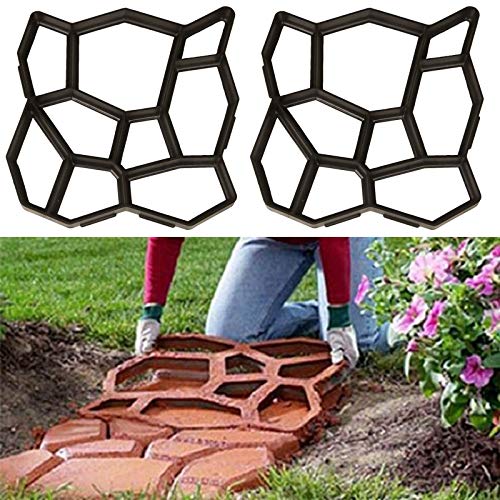
Two large irregular molds let you pour two stones per session — cutting project time nearly in half compared to a single mold.
This VanSmaGo set gives you two pathmaker molds, each producing stones 18.9 inches by 18.9 inches and 1.8 inches thick — nearly as large as the CJGQ pathmaker. The material is plastic, and buyers consistently report the molds are sturdy and reusable. One user highlighted they let you maneuver to any size and angle, handy when you want the path to curve around a garden bed.
The irregular shape gives the path a natural, block-of-stone look, but there is a trade-off. A buyer mentioned the finished path was too narrow for a garbage can to roll over. Another reviewer gave a detailed account: it takes about 4 hours per cycle (mix, pour, clean), and you should oil the mold and clean corners for easy release. Use a 40-pound sack of regular concrete (not fast-set) and wait about 2 hours before removing the mold.
Compared to the single CJGQ mold at 19.6 inches, the VanSmaGo 2-pack costs more but lets you pour two stones per session instead of one — cutting project time for a long walkway.
Strong Suits
- Two large molds speed up the pour cycle significantly
- Irregular shape gives a natural, rustic path look
- Sturdy plastic holds up to repeated use
Weaknesses
- Finished path may be too narrow for wheeled items like a garbage can
- Slow process — about 4 hours per pour cycle
Choose this for: a larger walkway where two molds per cycle move the project faster than a single mold.
Skip if: you need a mold that handles very wide paths or tight curves.
7. SvitMolds Concrete molds DIY Sold 6 pcs Plastic Moulds Flagstone Casting Concrete Paving Garden Paths Stone Patio Pavers for Garden Walkway #S34

Six textured flagstone molds — the heavy lifter for pouring a full walkway in a fraction of the usual time.
This SvitMolds set is the big one: 6 pieces covering a total area of 0.37 square meters (about 4 square feet), each 1.5 inches thick, with different textures that give each paver its own character. The molds are made of ABS plastic (acrylonitrile butadiene styrene, a strong, impact-resistant plastic) with a wall thickness of 1.9 to 2 mm. The set lets you pour multiple stones in one session, then cure and demold them together. One buyer made 350 pavers using fiber-reinforced high-strength concrete, using about 75-80% of an 80-pound bag per set of molds.
The real-world reviews are deep here. One buyer describes using old cooking oil as a mold release (a substance that prevents concrete from bonding to the plastic), a massager strapped to a trash bag as a makeshift shaker table to remove air bubbles, and polypropylene sheets under the pavers. They used 45 bags of 50-pound crack-resistant concrete, cured for 24 hours in the sun, and reported no weeds after 2 years. They also note the mold lips can crack over time but are fixable with duct tape. Another buyer used Quickrete 5000 High Early Strength concrete and a Harbor Freight cement mixer, getting fast shipping from Kiev despite the distance.
Compared to the VanSmaGo 2-pack pathmaker, this 6-piece set is the better choice for a serious walkway — you get more molds per purchase, and the varied textures create a more natural-looking path. Just note that the first pour is tough to release, and the molds are not numbered, so you must track the pattern yourself.
Why It Excels
- 6 molds allow high-volume pours for large walkways, so you finish faster
- Different textures create a natural, varied flagstone look
- ABS plastic withstands hundreds of pours with care
Limitations
- First pour is tough to release without good lubrication
- Mold lips can crack; fixable with duct tape
Ideal for: a serious DIY paver project where you need to pour many stones efficiently.
Not for: a beginner wanting one or two quick accent stones — this set is a time and concrete commitment.
Understanding the Specs
Mold Wall Thickness
The thickness of the plastic wall directly decides how many pours you get. ABS plastic (acrylonitrile butadiene styrene, a strong, impact-resistant plastic) in the 1.9 to 2 mm range (about 0.078 inches) is the balance. It is thick enough to hold fine detail for 50 or more stones, such as turtle shell lines staying sharp, but flexible enough to bend for clean release. Thinner polypropylene (PP) walls (a lighter, more flexible plastic) are cheaper but more likely to crack at corners after repeated use.
Stone Depth and Thickness
The finished stone’s thickness affects durability more than any other spec. A stone 1.4 inches thick, like the VanSmaGo 4-pack, works for light foot traffic in a garden but can crack under heavier weight. A 2-inch thick stone, like the AUTUMN sunflower, holds up to regular walking and even light wheelbarrow traffic. If your path sees daily use, aim for at least 1.75 inches — same as the AUTUMN paw print. Thicker stones also take longer to cure fully, so factor in drying time.
FAQ
How many stones can I get from one bag of concrete?
What is the best release agent to use for concrete molds?
How long should I let the concrete cure before removing the mold?
Are ABS plastic molds better than polypropylene?
Can I use stepping stone molds for a full walkway?
How do I prevent air bubbles in my concrete stepping stones?
Are these molds reusable?
Can I color my concrete stepping stones?
Do these molds work with materials other than concrete?
Final Thoughts: The Verdict
For most people, the best concrete stepping stone molds overall is the AUTUMN Paw Print. It is sturdy, made in the USA, gives you textured non-slip stones, and delivers multiple stones from a single bag of concrete. If you want a decorative garden accent with real detail, grab the SvitMolds Turtle. And for a full walkway project, the SvitMolds 6-Piece Flagstone Set is the choice for volume, texture variety, and pouring a whole path section at once.
How We Picked
We do not accept paid placement, and we did not hands-on test every unit. Instead, we match each pick to a real buyer and use-case by comparing the manufacturers’ published specifications against the patterns in verified customer reviews — so you get each pick’s real strengths and trade-offs instead of marketing copy.
Sources & Methodology
Specifications: manufacturer listings and product documentation. Review insights: verified customer reviews, as of July 2026. Pricing: not shown on this page (it changes often); check the current price via the retailer link.
As an Amazon Associate, Lawn Gear Lab earns from qualifying purchases. This does not affect which products we feature.