
You have mixed the concrete, poured it into the mold, and waited a day. The moment of truth: will the form hold its shape, or will you get a bulging, lopsided planter? A good concrete planter form is the difference between that moment of pride and a frustrating pile of rubble in your workshop. The single most important thing to know is that a sturdy outer shell (usually plastic or ABS, a tough plastic) supporting a smooth inner silicone liner is what gives you clean, repeatable results.
I’m Rikta — the co-founder and writer behind Lawn Gear Lab. This guide is built by comparing the manufacturers’ published specifications and the patterns across verified customer reviews, so you get each pick’s real strengths and trade-offs instead of marketing spin.
Whether you are pouring your first cement pot or your fiftieth, the right best concrete planter forms keep their shape, release your work cleanly, and survive reuse after reuse without cracking or warping.
How To Choose The Best Concrete Planter Forms
Concrete is heavy. When you pour wet cement into a form, the weight pushes outward on all sides. If the form’s outer shell is flimsy, you get bulging walls and a lopsided planter. If the inner silicone is too thin, it tears after a few uses. Here is what separates a form you will reach for again from one you will throw away after one pour.
Outer Shell Rigidity
The plastic or ABS frame is what takes the real weight of the concrete. A good shell stops the walls from bulging outwards, so every planter comes out with straight sides and clean geometry. Look for forms described as “double-layer” or “with plastic frame” — that means the silicone liner sits inside a hard exoskeleton.
Silicone Quality and Thickness
The inner mold is what touches your concrete. Thicker silicone, usually around 3mm to 5mm, releases the cured cement more easily and resists tearing over dozens of uses. Buyers report that thick, dense silicone in these molds “holds up very well” even after a dozen pours, while thin silicone can develop hairline fractures around the edges.
Number of Pieces and Shapes
Some forms come as a single round pot; others include three or more shapes — round, square, hexagonal, oval — plus matching coaster molds. If you want variety for selling at markets or making gift sets, a multi-piece set saves money versus buying each shape separately. For a single, large statement planter, one dedicated form is the better choice.
Finished Size vs. Mold Size
Mold dimensions are always bigger than the finished planter because the concrete forms walls. For a form measuring 7.3 inches across, the finished pot will be about 5.9 inches. Always check the listing for the finished product size, not just the outer mold size, so you end up with a pot that fits your plant.
Quick Comparison
On smaller screens, swipe sideways to see the full table.
| Model | Category | Best For | Key Spec | Amazon |
|---|---|---|---|---|
| Big Round Silicone Planter Mold | Single Mold | First-time concrete pours | Finished size 5.9 x 4.7 inches | Amazon |
| Large Round Silicone Planter Mold | Single Mold | Frequent reuse | 4.5-star rating over 211 reviews | Amazon |
| 3 Pack Concrete Molds | Multi-Shape Set | Round, square & oval variety | 3 molds with coasters included | Amazon |
| 3 Sets Large Silicone Plant Molds | Geometric Set | Three distinct geometric shapes | Cylinder, cube & hexagon + coasters | Amazon |
| SEWACC Planter Mold | Large Urn Mold | Big statement planters | Mold size 11.4 x 11.4 x 10.2 inches | Amazon |
| EAIVENY Planter Mold | Round Mold | Multi-use heavy daily pours | 9.84 x 9.84 x 9.84 inch mold | Amazon |
| Large Concrete Planter Mold | Large Round | Biggest finished pot size | 13.78 x 12.2 x 12 inch mold | Amazon |
In‑Depth Reviews
1. Big Round Silicone Planter Mold, 7 Inch

The 7.3 x 4.9 inch Osilifen Big Round mold is the top pick for first-time pourers who want a straight-sided, symmetric planter without guesswork; its rigid plastic outer shell prevents concrete weight from bulging the walls, delivering a finished pot measuring 5.9 x 4.7 inches.
The reinforcement frame screws together securely. One reviewer noted spraying the frame with cooking spray before the pour lets the outer shell “easily pop off.” Another used Cement All (a fast-set concrete mix) and said it allowed them to “de-mold in an hour,” which is unusually fast — most concrete needs 24–48 hours. The silicone inner mold pulls away cleanly and leaves a smooth surface that needs no sanding.
The honest catch: it is a single mold at 1 lb, so you get exactly one planter shape per pour. For most home DIY projects, one perfect round pot at a time is all you need, and this form delivers that reliably.
Why it’s great
- Rigid plastic frame prevents bulging — no lopsided pots
- Smooth silicone liner releases concrete and resin easily
- Includes a plastic rod to create a built-in drainage hole
Good to know
- Only one shape — you cannot switch between round and square
- Some users found the finished pot smaller than expected
2. Large Round Silicone Planter Mold, PSOIRGCNH

Compared to the Osilifen mold, the PSOIRGCNH Large Round form uses the same double-layer design (plastic shell + silicone liner) but leads on sheer user approval with a 4.5-star rating across 211 reviews — nearly five times as many customer opinions backing it. The finished pot size is identical at 5.9 x 4.7 inches, so the real difference is long-term trust.
Reviewers report using this mold “over a dozen times” and finding it “holds up very well,” which is the kind of durability you want if you are making planters for friends or small sales. The silicone is dense enough to release concrete and epoxy resin without sticking, and the plastic shell locks together securely enough to keep dyed concrete from bleeding into the white mold surface.
Choose this one over the Osilifen if you plan to cast more than five or six planters. The extra community validation of 200+ reviews means issues like warping or tearing after repeated use have already been ruled out by real buyers.
Where it shines
- Double-layer ABS shell and silicone liner hold shape under weight
- Over 200 reviews confirm it holds up through frequent reuse
- Smooth interior releases concrete, resin, and plaster with ease
Worth noting
- Single mold — no variety of shapes
- Some buyers wanted a slightly larger finished pot size
3. 3 Pack Concrete Molds, Square and Round

Imagine wanting three different planter shapes for a weekend craft session without buying three separate forms. The Cunhill 3 Pack gives you exactly that: one round mold, one square mold, and one oval mold, each with a plastic support frame that keeps the concrete from deforming the shape. The round and square molds measure roughly 7.5 x 3.5 x 2.8 inches, while the oval is smaller at 5.2 x 3.7 x 3 inches.
Buyers describe these as “easy little concrete pot molds” that make “very cute little pots with easy.” The included base coasters are a practical touch — you pour one coaster per shape, giving each planter a matching base. One buyer mentioned the square and oval molds are connected by a thin silicone web and must be carefully cut apart with a blade, so budget an extra few minutes for prep.
The standout detail: each of the three molds produces a smooth, slightly shiny finish right out of the form, saving you sanding time. That is rare in multi-mold sets at this level.
What stands out
- Three distinct shapes (round, square, oval) for project variety
- Plastic frames keep concrete walls from bulging
- Matching base coasters included for each shape
The trade-offs
- Square and oval sections are connected and need cutting apart
- Epoxy resin can flash-cure inside these molds if you work slowly
4. 3 Sets Large Silicone Plant Molds, Wehous

The single number that matters most in this category is three — the Wehous set delivers exactly three visually distinct planter shapes (cylinder, cube, and hexagon) plus 3 matching coaster molds, giving you a full set of forms along with coordinating drip trays. The cylinder, cube, and hexagon are modern and architectural, which is harder to find than round or square molds.
Owners mention the silicone is thick and durable, making demolding easy, and the set works well with both resin and concrete. The catch reported by several reviewers: the square mold’s side walls can bulge slightly under concrete weight because it lacks a rigid outer shell like the Osilifen or PSOIRGCNH molds. One owner reported they “had to make shift support for the sides” on the square form to keep the walls straight.
For the number of molds and coasters you get, the value per shape is strong — just know the cube will need extra bracing, and a simple cardboard or plywood wrap around the outside during curing fixes the bulging completely, making the price-to-value read solid if you are willing to add that step.
The upsides
- Three modern geometric shapes: cylinder, cube, hexagon
- Matching coaster molds included for each shape
- Thick flexible silicone releases concrete and resin cleanly
Keep in mind
- No outer support shell — square mold can bulge unless braced
- Resin demolding can be difficult compared to concrete
5. SEWACC Planter Mold, Large Urn Epoxy Mold
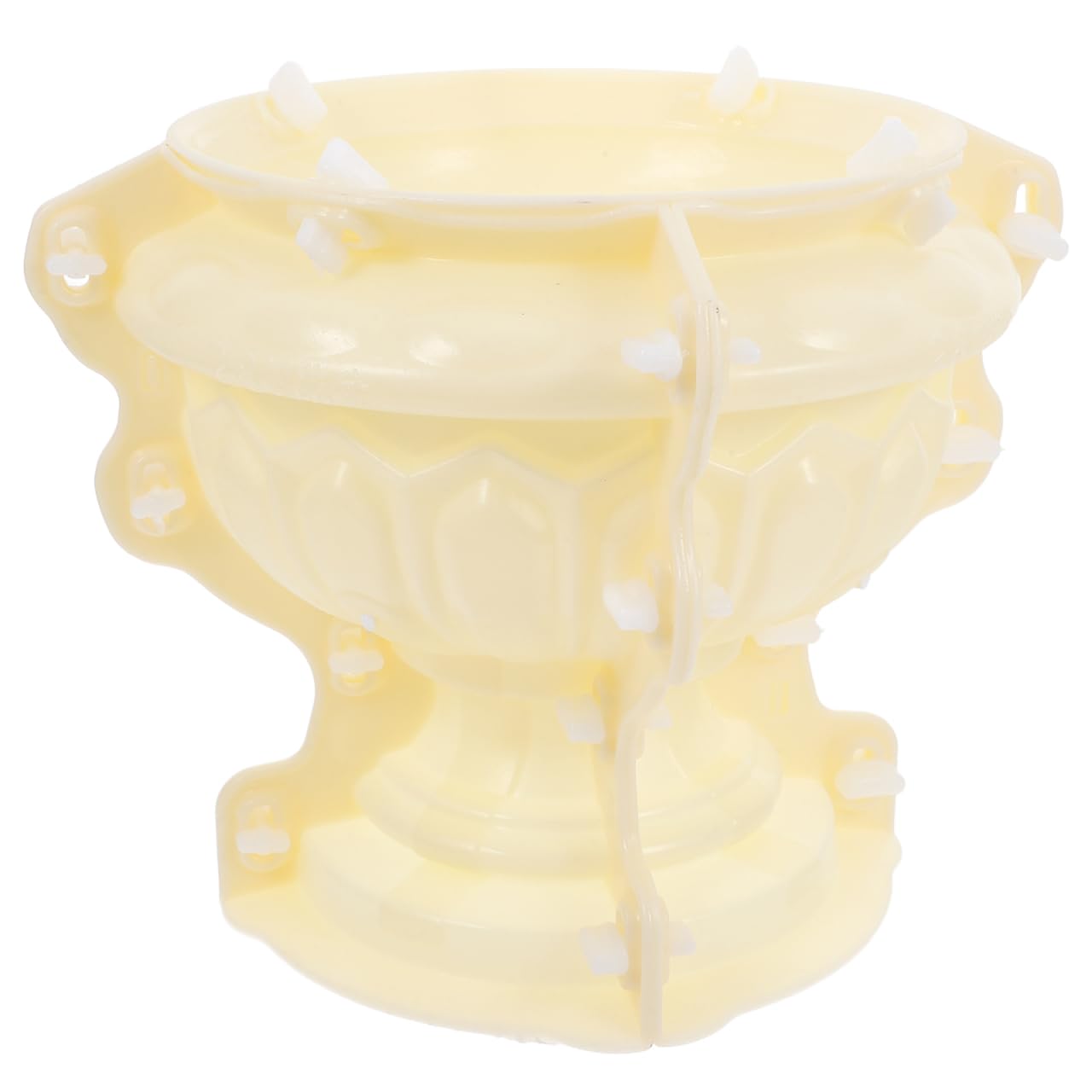
What you actually get at this lower price is a rigid plastic mold measuring 11.4 x 11.4 x 10.2 inches, designed for larger urn-style planters that hold nearly twice the volume of smaller round molds.
Customers note that using form release oil like WD-40 before pouring, vibrating the concrete to settle air pockets, and waiting about 24 hours before demolding produce “boutique-quality urns” with crisp details. An experienced concrete user advised cleaning the mold between casts by soaking it in vinegar if residue builds up. The plastic is sturdily made with secure clasps that keep the two halves together during the pour.
One thing you give up: because this is a rigid plastic form rather than a flexible silicone liner, the mold can leak at the seams on a second pour if the clasps wear down. Applying a light coating of petroleum jelly along the seam before each pour seals it effectively. This mold is perfect for the budget buyer who wants a showpiece urn for their entryway or patio and is willing to apply a little seam-sealing know-how to keep costs down.
Why we’d pick it
- Large 11.4-inch mold creates substantial urn-style planters
- Secure plastic clasps hold shape through dense concrete pours
- Crisp surface detailing with proper release agent and vibration
A few caveats
- Can leak at seams on repeat uses unless sealed
- Plastic-only mold lacks the easy-release of silicone liners
6. EAIVENY Planter Mold, Large Round Concrete Mold

This EAIVENY mold is perfect for the high-volume maker who pours concrete planters daily — some reviewers report using it “at least twice a day” — and needs a form built for fast, repetitive work. The 9.84 x 9.84 x 9.84 inch round mold is made from ABS plastic and features a built-in buckle system that replaces traditional screws, speeding up setup between pours.
Buyers praise the results: one customer observed “it came out beautiful” with a “great pattern.” The mold instructions recommend brushing engine oil inside before each pour, injecting cement, and demolding the inner form first after 7 hours, then the outer mold later. This staged demolding helps the walls hold their shape during the final cure.
The honest limit is that some users report thin plastic and a poor seal that can cause leaks, resulting in lopsided pots. One buyer called it “way too pricey for what it is.” If you pour infrequently, the cheaper single molds above will perform as well — this one is for someone who needs a durable production tool and is willing to seal the seams with tape or silicone for every pour.
Strong points
- ABS plastic frame withstands frequent daily pours
- Built-in buckle system for quick assembly between casts
- Creates smooth, patterned round planters at 9.84-inch size
Before you buy
- Some units have thin plastic and poor seals causing leaks
- Does not include a built-in drainage hole — you drill your own
7. Large Concrete Planter Mold, EAIVENY 13.78 Inch
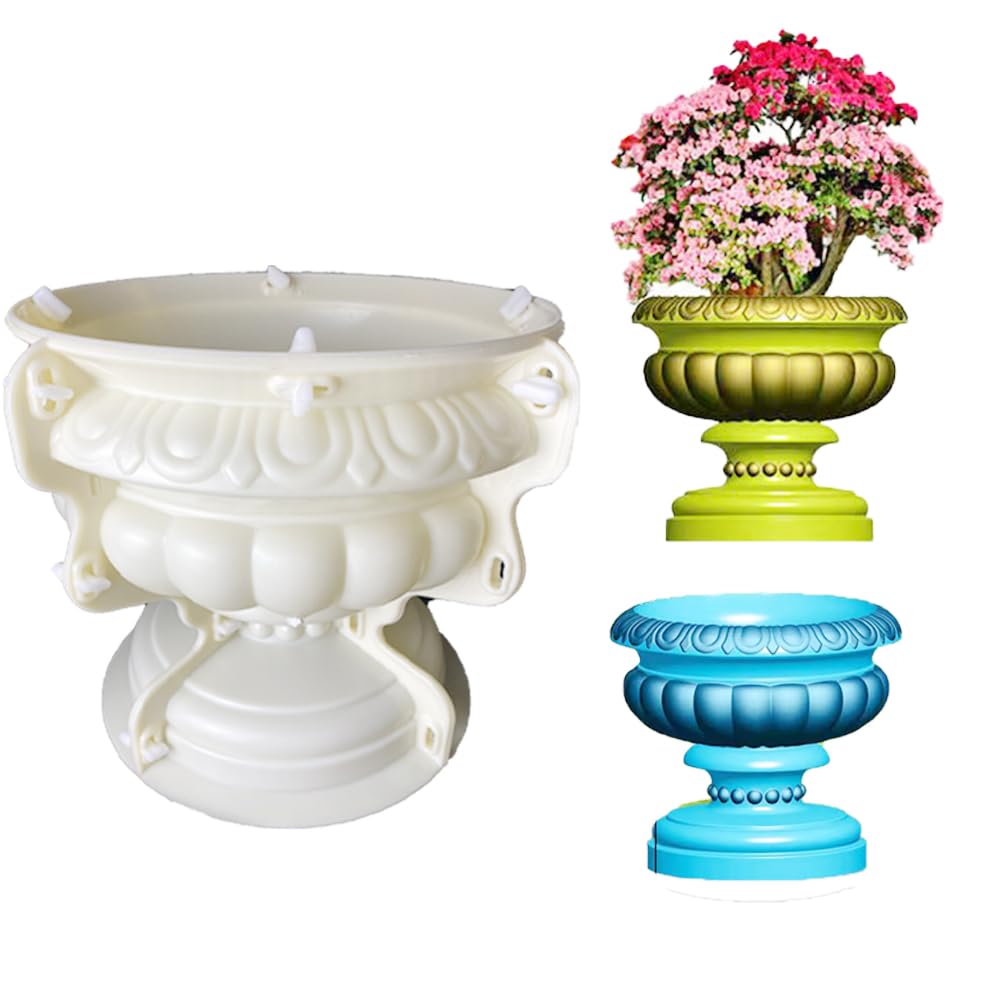
Compared to the rest of the field, the EAIVENY 13.78-inch mold costs the same as the brand’s 9.84-inch version but delivers roughly 40% more volume per finished planter, making it a strong value for the size. At 2 lbs, the ABS plastic mold is light for its scale, though some units leak at the seams and no drainage hole is built in, requiring a long masonry bit.
If you want the largest finished pot possible from a single form, this 13.78 x 12.2 x 12 inch mold creates a round planter big enough to hold a substantial shrub or small tree. Reviewers point out similar results: “it came out beautiful” with a great pattern, and the mold is fun and easy to use, though the same caveats about sealant tape and drilling apply.
The one clear reason to choose this over the 9.84-inch EAIVENY is purely size — if your project needs a planter that makes a visual statement or holds a large root ball, the extra 4 inches of diameter is worth the identical up-front cost.
What we like
- Largest mold in this guide at 13.78 inches for statement planters
- ABS plastic form is lightweight for its size at 2 lbs
- Built-in buckle system for tool-free assembly
The downsides
- Some molds leak at seams and need reinforcement
- No drainage hole included — you must drill your own
Understanding the Specs
Outer Shell Material
The hard outer frame is what carries the weight of wet concrete. Plastic and ABS (a tough, impact-resistant plastic) are the common materials. ABS is tougher and resists cracking under repeated use. A form with no outer shell (just silicone) will bulge under heavy concrete pours, so look for a “double-layer” or “with plastic frame” description to get straight walls every time.
Silicone Thickness and Flexibility
The inner liner needs to be thick enough to resist tearing when you flex it to release the cured concrete. Thinner silicone (around 2mm) works for resin but can tear after a few concrete pours. Molds with silicone between 3mm and 5mm last “over a dozen uses” without losing their shape, according to regular buyers.
Finished Size vs. Mold Size
A 7.3-inch mold typically produces a 5.9-inch finished pot because concrete forms walls that are 0.5 to 0.75 inches thick on each side. Always confirm the “finished product size” in the listing, not the outer mold dimensions, so you get the actual planter size you expect for your plant.
Drainage Hole Provision
Some molds include a removable plastic rod or insert that creates a drainage hole at the bottom of the pot as the concrete cures. Others leave a solid base, which means you need a masonry drill bit (typically 1/2 inch or larger) to add drainage after demolding. If you are making planters for succulents, drainage is essential — look for a mold that provides it.
FAQ
How long should I wait before demolding a concrete planter?
Why does my concrete planter stick to the silicone mold?
Can I use these molds with epoxy resin instead of concrete?
How many times can I reuse a concrete planter mold?
Final Thoughts: The Verdict
If you want one dependable pick, the best concrete planter forms winner is the Big Round Silicone Planter Mold because it combines a rigid plastic support frame with a smooth silicone liner at a price that makes the first pour feel risk-free. If you want a mold that hundreds of buyers have proven durable over a dozen uses, grab the Large Round Silicone Planter Mold from PSOIRGCNH. And for making three different shapes in one weekend without buying three separate forms, the 3 Pack Concrete Molds from Cunhill gives you round, square, and oval in one go.