
Specs are compiled from manufacturer listings and verified buyer reviews and can change over time — please confirm the key details on the product page before buying.
You want finished, ready-to-use organic matter straight to your garden bed without building a pile or waiting a year for rot. The catch is that not all bags are equal: some are pure worm castings (the waste of earthworms, packed with concentrated microbes), others are manure-based soil conditioners best for bulk amending, and a handful include seafood meals (lobster and crab meal) that feed fungi as well as roots. This guide breaks down seven real options by their actual contents, the weight you carry home, and what each one actually does once it hits the soil.
I’m Rikta — the founder and writer behind Lawn Gear Lab. This guide is built by comparing the manufacturers’ published specifications and the patterns across verified customer reviews, so you get each pick’s real strengths and trade-offs instead of marketing spin.
The right compost in a bag depends entirely on what you are planting and if you need a nutrient-packed concentrate or a large-volume bulk amendment to improve poor native soil.
Quick Picks
- Espoma Organic Land and Sea Gourmet Compost — Gourmet Pick
- Michigan Peat Baccto Wholly Cow Horticultural Compost — Bulk Builder
- Brut Cow Compost – Pure Composted Cow Manure — Pure Cow Power
- R&M Organics Premium Organic Compost — Plant Rescuer
- Uncle Jim’s Worm Farm Black Gold Worm Castings — Microbe Medicine
- Back to the Roots Organic Worm Castings — Mid-Range Castings
- Plantonix Worm Bliss Organic Worm Castings — Starter Castings
How To Choose The Best Compost In A Bag
Buying bagged compost is straightforward once you separate two basic categories: concentrated castings that act as incredible soil medicine, and bulk manure composts that improve large beds. The wrong pick means either running out halfway through a project or overpaying for volume you do not need.
Worm Castings vs. Manure Compost
Worm castings are the finished waste of earthworms. They are packed with beneficial microbes, gentle enough to use straight on seedlings, and usually sold in smaller bags (1 to 5 pounds). Manure-based compost, often composted cow manure, comes in larger volumes (10 quarts to 40 quarts) and serves as a general soil builder that improves texture and water retention across bigger areas.
Weight vs. Volume
A 10-pound bag of manure compost takes up less physical space than a 10-quart bag of peat-based mix because moisture and density differ. Check both the item weight and the liquid volume (quarts or cubic feet) to understand how much ground the bag actually covers. A 1-quart bag of castings is a potent concentrate; a 40-quart bag of manure compost is bulk work material.
Certificate and Additives
OMRI (Organic Materials Review Institute) listing means the product is approved for certified organic use—no synthetic chemicals. Some bags also include mycorrhizae (beneficial root fungi that help plants absorb water and nutrients) or seafood meals (lobster and crab meal add chitin, which the brand claims feeds natural soil fungi that protect roots). If you garden organically, look for the OMRI seal in the specs.
Quick Comparison
| Model | Best For | Item Weight | Unit Count | Type | Amazon |
|---|---|---|---|---|---|
| Espoma Organic Land and Sea | Gourmet Planting Mix | 24 lb | 1.0 Count | Lobster & Crab Meal Compost | Amazon |
| Michigan Peat Baccto Wholly Cow | Bulk Soil Amendment | 34 lb | 1.0 Count | Peat & Manure Blend | Amazon |
| Brut Cow Compost | Pure Cow Manure | 10 lb | 192.0 Ounce | Composted Cow Manure | Amazon |
| R&M Organics Premium Compost | Targeted Plant Revival | 10 lb | 160.0 Ounce | Manure Based Compost | Amazon |
| Uncle Jim’s Black Gold Worm Castings | Soil Amendment | 4 lb | — | Worm Castings | Amazon |
| Back to the Roots Worm Castings | Houseplant & Garden Boost | 5 lb | 80.0 Ounce | Worm Castings | Amazon |
| Plantonix Worm Bliss | Small Batch Potting | 1 lb | 37.23 Ounce | Worm Castings | Amazon |
In‑Depth Reviews
1. Espoma Organic Land and Sea Gourmet Compost

A seafood-enriched compost that feeds soil fungi as well as plant roots.
You get a 24-pound bag that includes lobster and crab meal — a source of chitin that the brand claims encourages natural soil fungi known to protect roots. Buyers report noticeably improved indoor plant health and larger fruit on tomatoes and zucchini after mixing this in. The granules contain a proprietary blend of endo and ecto mycorrhizae (root-friendly fungi that help plants absorb water and nutrients), so young transplants get a head start.
Unlike the manure-based R&M or Brut composts, the Espoma is a specialized planting mix meant to invigorate container soil or improve native soil at transplant time. One long-time user mentioned using it for three years straight with consistent results. It is not the cheapest option, but the dual benefit of compost nutrition plus mycorrhizae makes it a strong choice if you grow heavy-feeding vegetables or fussy perennials.
What stands out
- Contains lobster and crab meal for fungal support
- Includes mycorrhizae for root health
- Dry, lightweight texture spreads evenly
What to consider
- 24 lb bag is heavier than the 10 lb manure options if you carry far
- Not a bulk soil builder — better as an amendment or planting mix
Gourmet verdict: Reach for this if you grow vegetables in containers or want to boost soil biology around shrubs and flowers.
A caveat: For large raised beds, a bulk manure compost gives more coverage per dollar.
2. Michigan Peat Baccto Wholly Cow Horticultural Compost
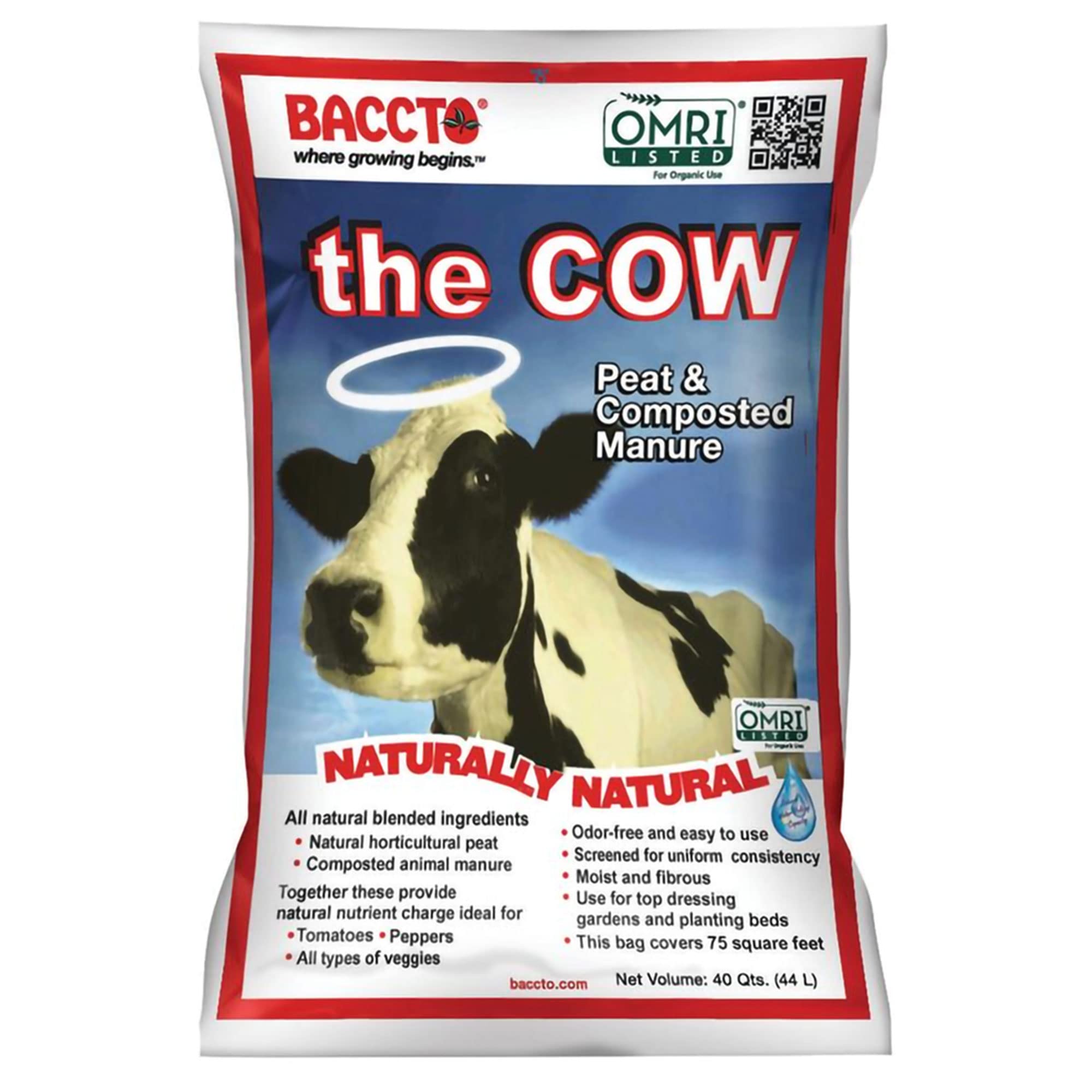
The biggest bag on the list at 40 quarts — real bulk for serious garden work.
You get 40 quarts of volume for filling raised beds or top-dressing lawns, which is more than any other bag here. At 34 pounds, it is the heaviest product, but that weight translates to a mix of natural peat and composted animal manure screened to a uniform texture for even distribution. Owners mention that it has little to no smell and works great for mixing into poor sandy soil — one 78-year-old gardener described using it with coir and perlite for raised beds with good results.
Unlike the concentrated worm castings from Worm Bliss or Back to the Roots, Wholly Cow is a bulk soil amendment: you use it by the shovel, not by the handful. Reviewers also note high manure concentration makes it excellent for mushroom cultivation when mixed 1:1 with coco coir and sterilized. The natural water-holding capacity reduces how often you need to water, which saves time during dry spells.
Why it works for big jobs
- 40 quarts — most volume per bag in the list
- Odor-free and screened for uniform texture
- Improves moisture retention in sandy or poor soils
Weight warning
- 34 lb bag is heavy — plan for a cart or helper
- Not a concentrated nutrient additive; it is a general soil builder
Best for large projects: If you need to fill several raised beds or amend a whole lawn section, this is your bag.
skip it if: You only need a small amount for a few houseplants — the 40-quart bag is overkill.
3. Brut Cow Compost – Pure Composted Cow Manure

Odor-free cow manure compost that is gentle on roots and certified organic.
Brut is straight composted cow manure with no additives — just thoroughly aerated manure that has been tested for safety and finely sifted. It carries the OMRI (Organic Materials Review Institute) listing, which matters if you keep a certified organic garden. One first-time grower reported planting tomato seeds on March 1st and seeing strong growth by late April using a 3:2 ratio of this compost to soil.
The 10-pound bag is lighter than the Wholly Cow but delivers 10 quarts of volume. Unlike the R&M Organics bag below, which also weighs 10 pounds, Brut’s unit count is 192.0 ounces versus R&M’s 160.0 ounces, giving you slightly more material per bag. Reviewers call it odor-free and say it works well for roses and vegetable plugs. The key trade-off versus worm castings like Uncle Jim’s or Back to the Roots is that manure compost is a broader soil conditioner rather than a microbe-dense concentrate.
Strong points
- OMRI listed — verified for organic gardening
- Odor-free and finely sifted for even mixing
- 192.0 oz gives good volume for the 10 lb weight
Trade-off
- Less microbial density than pure worm castings
- 10 lb bag only covers small to medium beds
For the organic gardener: Grab this if you want a clean, certified manure compost for vegetables and flowers without any risk of root burn.
Not ideal for: Pots smaller than 6 inches — you will get more use from a concentrated casting product there.
4. R&M Organics Premium Organic Compost
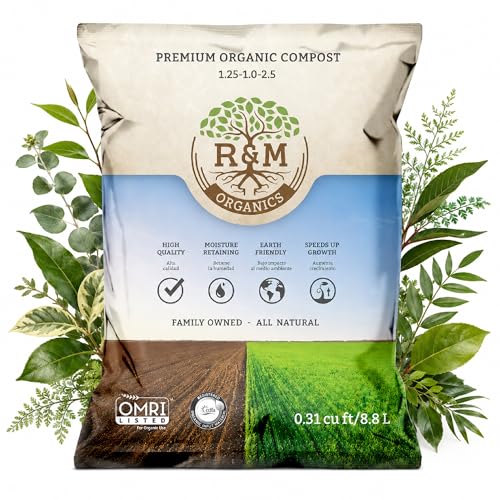
A dairy-cow manure compost that revived a dying tomato plant within a week.
This compost is made from dairy cow manure and processed through a complete composting method with continuous aeration (constant air flow) to cut odors. One buyer described how they mixed it into a 27-gallon planter and saw yellow leaves turn green, plus new growth and flower buds, all within a week. The bag weighs 10 pounds with a unit count of 160.0 ounces, and the recommended application is a thin quarter-inch layer around plants or mixed into soil.
Compared to Brut’s 192.0-ounce bag at the same weight, R&M has slightly less volume, but reviewers emphasize its fine topsoil texture with no manure smell or clumps. A Master Gardener even recommended it for rescuing azaleas after a roof-cleaning incident. Organic growers need to note its OMRI listing is not mentioned in the specs, unlike Brut. Use R&M for targeted plant revival and smaller container gardens where you want precise application.
Why it stands out
- Fine topsoil texture — no clumps or manure smell
- Quick visible results on stressed plants
- Low-odor formula works indoors
Heads up
- 160.0 oz is less than the Brut bag’s 192.0 oz at same weight
- More expensive per ounce than bulk options
Rescue pick: Reach for this when a specific plant is struggling and you need a gentle, fast-acting organic boost.
Better alternatives: For large-scale bed filling, the Wholly Cow 40-quart bag gives more value.
5. Uncle Jim’s Worm Farm Black Gold Worm Castings

Worm castings from a farm that has raised worms for over 50 years.
Uncle Jim’s is the largest worm farm in the US and uses worm beds that are decades old, working all layers of the compost rather than just the top few inches. The brand claims the castings are 7 times richer in phosphates, 5 times richer in nitrogen, and 11 times richer in potash than average lawn soil. A 4-pound bag is compact but concentrated — one reviewer noted that the soil was excellent for sunflowers with no leaf yellowing, while another appreciated that the seller replaced a package delivered to the wrong address quickly.
Compared to Back to the Roots’ 5-pound bag, Uncle Jim’s is 4 pounds with a smaller footprint, but both are concentrated worm castings meant to be used sparingly. One buyer did mention the bag has a natural odor (like worm dirt) and contains tiny white bugs that customers note are beneficial for controlling pests and balancing soil bacteria — so do not be alarmed if you see them. The long track record of the farm is a confidence point for gardeners who want a proven source.
What impresses
- Decades-old worm beds for deeper compost quality
- Very high nutrient concentration claims
- Strong customer service reputation
One thing to know
- Has a natural worm-dirt smell — normal but noticeable
- 4 lb bag is small; you will need multiple bags for large beds
For the purist: Ideal if you want worm castings from a farm that specializes in vermicompost (composting with worms) and has a decades-long reputation.
Pocket the size: The 4-pound bag is enough for several houseplants but runs out fast when amending garden beds.
6. Back to the Roots Organic Worm Castings

A 5-pound bag of pure USA vermicompost that blends into chunky soil mixes.
You get 5 pounds of worm castings that buyers describe as rich and clean — one buyer mentioned they blend easily into chunky soil mixes like coco chips, perlite, and charcoal without compacting the soil. The resealable bag is helpful if you use it over several sessions. At 80.0 ounces, it is roughly double the unit count of the Worm Bliss bag when comparing concentrated castings.
Unlike manure composts like Brut or R&M, these castings are meant as a soil enhancer rather than a bulk filler. Reviewers point out that the product holds a lot of moisture, so you need to be careful when using it as an amendment — it can make the soil stay wet longer. One owner reported their garden is thriving in the first year using it, and another specifically uses it for milkweed because it is safe for monarch butterflies. If you have a medium-sized container garden or a few raised beds, 5 pounds gives you room to experiment.
Highlights
- Resealable bag for repeated use
- Blends cleanly without compacting soil
- 80.0 oz — good value for mid-range casting volume
Watch out for
- Holds a lot of moisture — can keep soil wet if overused
- Not a bulk soil conditioner; best as a top dressing or mix-in
Solid all-rounder: Reach for this 5-pound bag when you want a reliable casting product that mixes easily into houseplant or garden soil without clumping.
Skip the bag if: You are covering more than 50 square feet of beds — a manure-based bulk compost will be more economical.
7. Plantonix Worm Bliss Organic Worm Castings

The smallest bag in the lineup — 1 pound of pure vegan-fed worm castings.
Worm Bliss is 100% organic worm castings from worms raised on a strictly vegan diet in a climate-controlled facility. The 1-pound bag is small — shoppers say it is about the size of a bag of potato chips and fits 10 to 12 plant repottings (4-inch and 6-inch pots and succulent bowls) with leftovers. That precise number from a verified buyer tells you exactly how far the 37.23 ounces go if you are working with small containers.
At 37.23 ounces, this bag has the smallest unit count on the list — 37.23 ounces versus the Back to the Roots 80.0-ounce bag and the R&M 160.0-ounce bag. However, the castings are rich in texture, and buyers report there is no smell and that the castings can be sprinkled on dirt or soaked in water for worm tea (a liquid plant feed). One buyer did warn that the packaging is very small and that people who do not know what 1 quart looks like might be disappointed. Use this if you have a few houseplants or want to test worm castings before buying a bigger bag.
Perfect for small spaces
- 1 lb bag is easy to store and carry
- No odor — works well indoors
- Can make worm tea by soaking in water
Size reality check
- 37.23 oz — smallest unit count in the list
- Will not cover garden beds; strictly for pots and small containers
Houseplant helper: Best if you have a dozen or fewer houseplants and want a gentle, odorless nutrient boost without committing to a large bag.
Not for big projects: If you are amending a vegetable garden, go straight to the 5-pound Back to the Roots or the 10-pound manure options instead.
Understanding the Specs
Item Weight vs. Unit Count
Item weight (pounds) tells you how heavy the bag is to carry, while unit count (ounces) tells you how much actual material is inside. A 10-pound bag of manure compost may have 160 ounces, while a 1-pound bag of worm castings has 37 ounces. Do not assume a heavier bag gives more material — check both numbers to compare value per bag.
OMRI Listing
OMRI (Organic Materials Review Institute) listing means the product meets the standards for certified organic production. If you are growing vegetables for a strict organic garden, look for the OMRI seal in the specs. Some products like Brut Cow Compost carry it, while others keep the same organic ingredients without formal certification.
Mycorrhizae
Mycorrhizae are beneficial fungi that attach to plant roots and help them absorb water and nutrients from the soil. Products like the Espoma Land and Sea include a proprietary blend of endo and ecto mycorrhizae. This is a bonus if you are transplanting or starting seeds, as the fungi give the young root system a head start.
Worm Castings vs. Manure Compost
Worm castings are the finished waste of red wiggler worms — concentrated with microbes, gentle on roots, and ideal for small doses. Manure compost, usually composted cow manure, is a bulk soil conditioner that improves texture, water retention, and general fertility across larger areas. Your choice depends on if you need precision (castings) or volume (manure).
FAQ
Can I use bagged compost straight from the bag without mixing?
How much compost in a bag do I need for a 4×8 raised bed?
Will bagged compost burn my plants like fresh manure does?
Worm castings vs. manure compost — which is better for vegetables?
Does compost in a bag expire or go bad?
Can I mix different compost bags together?
Is compost in a bag safe for indoor houseplants?
How often should I apply bagged compost during the growing season?
What is the difference between OMRI listed and organic label on the bag?
Final Thoughts: The Verdict
For the majority of shoppers, the compost in a bag winner is the Espoma Organic Land and Sea because its lobster and crab meal formula feeds both soil fungi and plant roots, making it the most versatile single bag for vegetables, flowers, and containers. If you want bulk volume to fill raised beds, grab the Michigan Peat Baccto Wholly Cow. And for concentrated microbial power in small pots, the Plantonix Worm Bliss delivers the smallest dose for houseplant lovers starting small.
How We Picked
We do not accept paid placement. Every pick is matched to a real buyer and a real use-case; we do not hands-on test units.
Sources & Methodology
Specifications: manufacturer listings and product documentation. Review insights: verified customer reviews, as of July 2026. Pricing: not shown on this page (it changes often); check the current price via the retailer link.
As an Amazon Associate, Lawn Gear Lab earns from qualifying purchases. This does not affect which products we feature.