
Specs are compiled from manufacturer listings and verified buyer reviews and can change over time — please confirm the key details on the product page before buying.
Your vegetable patch will either take off or stay stuck depending on the compost you pick. But the shelves are full of bags labeled “worm castings” (earthworm waste that feeds gently), “cow manure,” and “gourmet blends,” so it is easy to grab the wrong one and end up with a stinky mess or soil that does nothing for your plants. This guide cuts through the marketing to find the best compost garden soil for your specific setup, whether you are feeding tomatoes in a raised bed or reviving a sad houseplant.
I’m Rikta — the founder and writer behind Lawn Gear Lab. This guide is built by comparing the manufacturers’ published specifications and the patterns across verified customer reviews, so you get each pick’s real strengths and trade-offs instead of marketing spin.
Here is the breakdown of the best options for feeding your garden, balancing nutrient density, price tier, and scent, so you can pick the perfect compost garden soil amendment for your project.
Quick Picks
- Blue Ribbon Organics OMRI Certified Organic Compost — Premium Pick
- Espoma Organic Land and Sea Gourmet Compost — Best Overall
- Back to the Roots Organic Worm Castings — Best Value Castings
- Earth Worm Castings – Organic Red Worm Compost — Fungus Gnat Fighter
- Uncle Jim’s Worm Farm Black Gold Worm Castings — Nutrient Dense
- R&M Organics Premium Organic Compost — Low Odor Manure
- Black Kow Nitrogen Phosphate Composted Cow Manure — Budget Soil Builder
How To Choose The Best Compost Garden Soil
Compost garden soil is not a single thing. It ranges from pure worm castings, which act as a gentle, slow-release fertilizer, to fully composted manure that improves soil structure, and even blends fortified with shellfish meals for an extra mineral kick. Your choice depends entirely on what you are growing and where you are growing it.
Understand the Source: Worms vs. Manure
Worm castings (vermicompost) are the waste produced by earthworms. They are dense with beneficial microbes and are often used as a gentle soil amendment. They improve water retention and add nutrients without burning tender roots. Composted cow manure, like that from Black Kow, is excellent for conditioning heavy clay or sandy soils by adding organic matter. However, it can have a strong odor if not fully composted. For indoor use or delicate houseplants, worm castings are almost always the better choice.
Check for Certification and Odor
An OMRI (Organic Materials Review Institute) certification tells you the product is safe for organic gardening. For indoor use or when working in tight spaces, a low-odor or odorless product is a priority. Some worm castings products make “no burn” claims, while raw manure needs time to age to avoid burning plants.
Match the Bag Size to Your Project
Compost volumes vary wildly, from a 1-gallon bag for a few houseplants to 1-cubic-foot bags for raised beds. A 4-pound bag is sufficient to top-dress a small container garden, while a 32-pound bag is meant for mixing into a sizable vegetable patch. Check the item weight and volume — you want enough material to cover your planting area without running out mid-project.
Quick Comparison
| Model | Best For | Form | Weight | Source | Amazon |
|---|---|---|---|---|---|
| Ribbon Organics Compost | Premium all-purpose amendment | Solid compost | 32-35 lbs | Organic compost | Amazon |
| Espoma Land and Sea | Lobster & crab meal enriched | Granules | 24 lbs | Crab & lobster meal blend | Amazon |
| Back to the Roots Worm Castings | Gentle indoor feeding | Granules | 5 lbs | Worm castings | Amazon |
| Earth Worm Castings | Fungus gnat control | Organic compost | 6 lbs | Worm castings | Amazon |
| Uncle Jim’s Worm Castings | Nutrient-dense, multi-use | Castings | 4 lbs | Worm castings | Amazon |
| R&M Organics Compost | Low-odor manure for outdoor use | Solid | 10 lbs | Cow manure | Amazon |
| Black Kow Composted Manure | Budget soil builder for raised beds | Granules | 6 lbs | Composted cow manure | Amazon |
In‑Depth Reviews
1. Blue Ribbon Organics OMRI Certified Organic Compost

The bag weighs 32 to 35 pounds and carries the OMRI Certified organic label — that is your guarantee of no synthetic chemicals.
If you want a single, all-purpose backbone for your soil, this is it. At 32 to 35 pounds per bag, it is a serious volume of material that has a texture like dark, crumbly topsoil. It is OMRI (Organic Materials Review Institute) Certified for Organic Use, which means it passes the highest standard for natural gardening — no synthetic chemicals are involved. It is also described as safe to use at any concentration, so you will not burn your plants even if you mix a heavy layer into a container.
Buyers report that it is excellent as a container mix for fussy plants like Clivias, Orchids, and Epiphyllums. One experienced gardener noted they mixed it half-and-half with perlite (a lightweight volcanic mineral that improves drainage) and orchid bark to create the perfect balance of moisture retention and drainage. Another reviewer called it “black gold,” saying it has no sticks, plastic, or debris you sometimes find in cheaper brands. The smell is described as earthy, not offensive, so you can use it indoors without a problem.
The main catch is the premium price. For a quick top-dress of pots, a smaller bag might be a better fit for your budget. But if you are enriching a whole raised bed and want near-guaranteed quality, this is the bag to reach for.
Why It Stands Out
- OMRI Certified for organic gardening confidence
- Dark, rich, odorless texture with no sticks or debris
- Safe to use at any concentration without burning plants
One Trade-Off
- Higher cost per bag compared to standard retail composts
Reach for: Gardeners building high-quality soil for finicky plants like Clivias or starting a new raised bed who want the cleanest, richest compost available.
Look elsewhere: If you only need a small amendment for a couple of houseplants; a 1-gallon bag of worm castings is more practical.
2. Espoma Organic Land and Sea Gourmet Compost

The lobster and crab meal adds chitin (a natural pest-deterring compound), so your vegetables get an edge the Blue Ribbon Organics bag does not offer.
This is a unique product because it goes beyond standard compost by adding lobster and crab meal directly into the mix. That sea-based ingredient provides a kick of chitin, a natural compound that can help plants fend off certain soil-borne pests. It also includes Myco-Tone, a proprietary blend of endo and ecto mycorrhizae — beneficial fungi that form a partnership with plant roots to pull more water and nutrients from the soil.
Owners mention that this stuff works wonders on Hostas, with one reviewer noting their plants grew “extremely well” after using it. Another gardener who grows all their vegetables indoors in a basement setup raves that it adds nutrients and mycorrhizae that improve their containers. The bag is a full 1 cubic foot and weighs 24 pounds, providing plenty of material for a medium-sized vegetable patch or several large pots.
The main drawback is the price, which sits at a mid-to-premium level. It is not the cheapest compost per pound on the shelf. However, because it is enriched with the lobster meal and mycorrhizae, you often need less of it to get a great result compared to a basic manure. For gardeners who want to push their vegetable yield without adding synthetic fertilizers, this is a smart, single-bag solution.
what separates it
- Enriched with lobster and crab meal for added minerals
- Contains Myco-Tone mycorrhizae to improve root partnership
- Large 1 cubic foot bag at 24 lbs for serious projects
Worth Knowing
- Premium price point; expect to pay more per bag than standard manure
Best for: The vegetable and flower gardener who wants a single-bag, no-fuss way to significantly boost soil biology and nutrients.
Consider otherwise: If the scent of a seafood-based product is a concern — though it is fully composted and mostly smells earthy.
3. Back to the Roots Organic Worm Castings

This 5-pound bag is advertised as having no odor and no burn risk, making it a practical pick for delicate houseplants.
This 5-pound bag of pure USA vermicompost is the entry-level champion for houseplant lovers. Because it is worm castings — not raw manure — it has essentially no smell, which is a huge relief for indoor use. The product is advertised as having no burn risk, meaning you can safely mix a handful directly into the root zone of your most delicate ferns or orchids without worrying about leaf burn.
Customers note that these castings are “rich, clean organic” and blend easily into chunky soil mixes made from coco chips, perlite, and charcoal. That is a critical detail for aroid and orchid growers who use coarse, fast-draining mixes where standard dirt would just wash away. One gardener mentioned they use it for milkweed to support monarch butterflies, finding it to be a safe and effective fertilizer. The resealable bag also helps keep the product fresh if you do not use the whole thing at once.
Compared to the 4-pound bag from Uncle Jim’s, this is 5 pounds versus 4 pounds in a comparable price tier. It offers a great balance of quality and cost. The only note in reviews is that it holds a lot of moisture, so if you are using it as a heavy amendment for a succulent mix, be mindful of your watering schedule.
What Works Well
- No smell, making it ideal for indoor plant care
- Blends easily into chunky, non-soil mixes like coco chips
- Resealable bag keeps castings fresh over time
One Note
- Holds significant moisture; adjust watering for succulents or cacti
Grab this for: Houseplant enthusiasts who want a clean, low-odor, no-burn feeding solution they can mix right into a chunky potting blend.
Skip this if: You are building soil for a large outdoor vegetable patch and need bulk volume at a lower cost per pound.
4. Earth Worm Castings – Organic Red Worm Compost

The listing advertises a neutral pH of 7.0, and reviewers point out it helps with fungus gnat problems.
This product from Mountain Valley Seed Company is a 6-pound bag of OMRI Certified Organic worm castings, which separates it as a certified organic option. The listing says it has a neutral pH of 7.0. The brand also includes a recipe to turn it into “worm tea,” a liquid fertilizer you can use for gentle weekly feedings.
Shoppers say a very specific use-case: combatting fungus gnats. One reviewer noted they used it to fight a gnat infestation by mixing a new soil blend of coco peat, perlite, and moss. They found the castings acted as a mild fertilizer to help the plant restart after the trauma of repotting. This is a smart angle — while castings do not kill adult gnats, the beneficial microbes in them help crowd out the gnat larvae in the soil, while also feeding your plant.
At 6 pounds, it is 6 pounds versus the 4-pound bag from Uncle Jim’s Worm Farm, and it sits in a similar price bracket. However, some reviews note the price has increased as demand has grown, with one buyer calling it “overpriced” despite being a good product. If you are buying for a specific gnat problem or for small to medium indoor pots, it works great. For mixing into a huge garden bed, the price per pound may sting.
Why It Shines
- OMRI Certified for organic use with a neutral pH of 7.0
- Buyers report success helping to combat fungus gnats in soil
- Includes a recipe to make your own liquid worm tea
One Drawback
- Some buyers feel the price per pound is high compared to other castings
Reach for: Indoor gardeners dealing with a fungus gnat problem who want an organic, neutral-pH amendment that also feeds the plant.
Look elsewhere: If you need bulk castings for a large garden — the 5-pound Back to the Roots bag may offer better cost efficiency for large-scale use.
5. Uncle Jim’s Worm Farm Black Gold Worm Castings

The company claims these castings are richer in phosphates, nitrogen, and potash than average soil.
Uncle Jim’s Worm Farm is well-known in the vermicomposting world, and their Black Gold Worm Castings come from worm beds that are decades old. The company claims these castings are richer than average soil in phosphates, nitrogen, and potash. That points to a nutrient-dense amendment, which means a little bit goes a long way.
Owners mention that the soil works well, with one gardener noting their sunflowers started thriving with no leaf yellowing — a classic sign of nitrogen deficiency — after using this product. Another review mentions the castings contain tiny white bugs, which the buyer correctly identified as beneficial springtails that contribute to soil balance and pest control. This is a natural, healthy sign of a living soil product, not a defect. The bag itself is a compact 4 pounds, weighing in at 8 x 3 x 10 inches.
Compared to the Back to the Roots 5-pound bag, this one is a pound lighter but is widely recognized as being incredibly “hot” (nutrient-dense). You should use it more as a top-dress or a light amendment rather than the primary potting medium. The only real con is that the high nutrient density means you get less volume for your money, and the smell is described as a natural “worm dirt” odor that some might find strong.
Its Key Advantage
- Extremely nutrient-rich; marketed as richer than average soil in nitrogen
- From decades-old worm beds, indicating well-established biology
- Customers note sunflowers thrive with no leaf yellowing
Keep In Mind
- Strong natural “worm dirt” odor; may not suit all indoor uses
- Small 4-pound bag; you get less volume for the price
Best for: Gardeners who want the most potent, high-concentration worm castings to use sparingly as a powerful top-dress for flowering plants or vegetables.
Consider otherwise: If you need a larger volume of a milder compost for mixing into a soil base; this concentrated product is best used as a supplement.
6. R&M Organics Premium Organic Compost
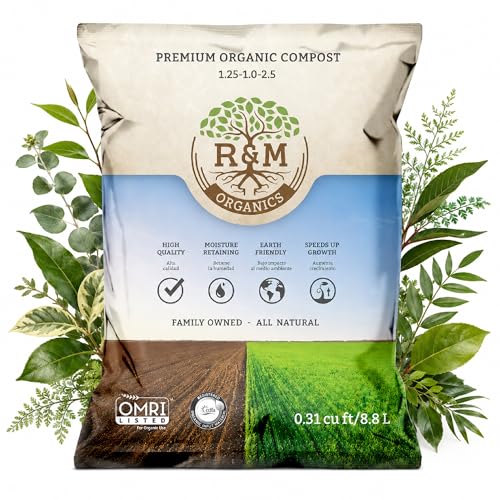
The company fully composts this dairy cow manure with continuous aeration, so you get a clean, earthy scent — not a barnyard stink.
If the smell of traditional manure has kept you away from using it in your garden, this is the solution. R&M Organics takes dairy cow manure and runs it through a complete composting method with continuous aeration. The result is a product that has a “clean, earthy soil-like scent,” which the company describes as low odor. This makes it far more practical for using around the house or in a garage than the Black Kow alternative.
Reviewers point out that the texture is excellent, with one reviewer describing it as like “fine topsoil” that is easy to spread and has no clumps. It revived a dying tomato plant, with yellow leaves turning green and new flower buds appearing within a week of mixing it into a 27-gallon planter. A Master Gardener even recommended it to someone whose azaleas were struggling after a roof cleaning, and the compost successfully rescued the plants. The bag is a convenient 10 pounds, larger than the 6-pound Black Kow but smaller than the 24-pound Espoma bag.
The biggest trade-off is the price. Even though it is a mid-range product, the 10-pound bag does not cover as big an area as the other bulk options. You are paying for the convenience of a low-odor, fully-composted, ready-to-use product. If you are a serious vegetable gardener who needs to top-dress a 50-foot row, you will need multiple bags, and the cost adds up.
What We Like
- Low odor despite being manure-based — great for sensitive noses
- Fine, clump-free texture that spreads easily like topsoil
- Shoppers say rapid results, reviving dying tomato and azalea plants
The Limitation
- Relatively small 10 lb bag compared to bulk soil amendments
Grab this for: Gardeners who want the conditioning benefits of cow manure but cannot stand the typical barnyard smell, especially suitable for use near patios or doorways.
skip it if: You are prepping a large vegetable patch on a budget; a bigger, cheaper bag of raw compost might be more cost-effective.
7. Black Kow Nitrogen Phosphate Composted Cow Manure

The bag recommends a simple 1:1 mixing ratio with your existing soil to fix clay or sandy ground on a budget.
This is the most basic and farm-proven option on the list. Black Kow is composted cow manure, and its primary job is not to be a high-NPK (Nitrogen, Phosphorus, Potassium) booster like worm castings, but to condition the physical structure of your soil. It helps provide aeration to hard, clay-type soils and adds moisture-holding capacity to sandy soils. The bag recommends a 1:1 mixing ratio with your existing soil, which is a simple rule to follow.
Buyers are honest about the scent. One reviewer for the family said, “It smell terrible but for the value she can get over the smell.” That is the trade-off — the smell is strong because it is minimally processed in a way that preserves the organic matter and beneficial bacteria. Those bacteria convert nitrogen and other nutrients into forms roots can actually use. Another review noted it is the “best product for gardens in my state,” even if they found it “expensive,” though here it is positioned as the budget-friendly option due to its lower price per pound.
Unlike the R&M Organics compost, this has a much stronger, more pungent odor, so it is strictly an outdoor product. It is best used for mixing into the bottom of a raised bed or a new in-ground flower border where you can let it blend in and off-gas before you plant. It is a value pick for the sheer amount of organic material you get for your money relative to the premium worm castings.
The Upside
- Excellent for conditioning clay and sandy soils by improving aeration
- Contains beneficial bacteria for nutrient conversion
- Simple 1:1 mixing ratio with native soil
The Caution
- Strong, unpleasant barnyard smell; strictly for outdoor use
- Not as nutrient-dense per pound as worm castings
Reach for this: The budget-conscious gardener building up new flower beds or vegetable patches who needs a lot of organic matter to improve soil structure without worrying about a temporary strong smell.
Look elsewhere: If you are growing in containers on a patio or indoors, or if the smell will be an issue for neighbors or family.
Understanding the Specs
NPK and Nutrient Density
The NPK ratio (Nitrogen, Phosphorus, Potassium) tells you the primary nutrient content. Worm castings typically have a balanced, low NPK that releases slowly without burning plants. Black cow manure is richer in organic matter but lower in these specific numbers. The Espoma Land and Sea compost gets an unusual mineral boost from crustacean shells. For general plant health, an NPK of around 1-0-0 for worm castings is a gentle baseline, while manure improves the soil’s biology more than its number on a bag.
Bag Volume vs. Weight
Compost is often sold by weight (pounds) but the true value is the volume (cubic feet or gallons). A 24-pound bag of Espoma is a full 1 cubic foot, while a 5-pound bag of castings is much denser but has less total volume. For filling a raised bed, look for “cubic feet.” For top-dressing houseplants, weight matters less; you just need enough to cover the surface. Always check the liquid volume or unit count to compare apples to apples.
FAQ
Can I use worm castings on all my houseplants?
How often should I apply compost garden soil?
What is the difference between compost and fertilizer?
Will compost garden soil attract bugs or pests?
Is cow manure or worm castings better for vegetables?
What does OMRI Certified mean for compost?
Can I make my own liquid compost tea at home?
Why does my compost bag smell so bad?
How much compost garden soil do I need for a raised bed?
Can I mix different composts together?
Final Thoughts: The Verdict
For most buyers, the compost garden soil winner is the Espoma Organic Land and Sea Gourmet Compost because it combines a large 1-cubic-foot volume with unique nutrient boosters (lobster/crab meal and mycorrhizae) that give vegetables and flowers a real edge. If you want a gentle, no-smell option for indoor houseplants, grab the Back to the Roots Organic Worm Castings. And for the budget-conscious outdoor gardener building new beds, the Black Kow Composted Cow Manure provides excellent structure and value.
How We Picked
We do not accept paid placement. Every pick is matched to a real buyer and a real use-case; we do not hands-on test units.
Sources & Methodology
Specifications: manufacturer listings and product documentation. Review insights: verified customer reviews, as of July 2026. Pricing: not shown on this page (it changes often); check the current price via the retailer link.
As an Amazon Associate, Lawn Gear Lab earns from qualifying purchases. This does not affect which products we feature.