
The single most common mistake succulent owners make is using standard potting compost, which holds moisture like a sponge and rots drought-adapted roots within weeks. Succulents need a gritty, fast-draining mix that mimics the arid, rocky soils they evolved in, where water passes through quickly and roots get plenty of air. The difference between a thriving collection and a graveyard of mushy leaves is literally what you put in the pot.
I’m Rikta — the co-founder and writer behind Lawn Gear Lab. For this guide, I spent hours comparing the chemical composition, particle sizes, drainage rates, and pH balances of seven popular mixes, cross-referencing them against real owner feedback to find the best compost for succulent plants.
Whether you are repotting a top-heavy aloe or starting a tray of lithops from seed, the right soil mix determines whether those roots will establish or rot. After extensive analysis, I lined up the top contenders to help you find the best compost for succulent plants that matches your specific growing style and collection size.
How To Choose The Best Compost For Succulent Plants
Selecting the right mix is about understanding the specific needs of your plants. Not all succulent soils are created equal, and the wrong choice can lead to poor growth or plant loss. Focus on these three critical factors when making your decision.
Drainage and Aeration: The Non-Negotiables
Succulent roots are designed to dry out between waterings. A mix must drain rapidly and remain porous. Look for ingredients like perlite, pumice, coarse sand, calcined clay, or lava rock. Dense materials like fine peat or uncomposted bark create anaerobic pockets that suffocate roots and invite fungal diseases. The best mixes have a gritty texture you can feel even when dry.
Organic Matter vs. Inorganic Grit
Too much organic matter holds water too long; too little can starve a plant of nutrients. A balanced succulent compost uses a moderate amount of coir, worm castings, or peat for moisture and nutrition, balanced with an equal or greater volume of inorganic grit for drainage. Pure inorganic mixes like Bonsai Jack’s Gritty Mix require more frequent feeding, while organic blends like Rosy Soil pre-load microbes for a self-sustaining root zone.
pH and Plant-Specific Needs
Most succulents prefer a slightly acidic to neutral pH between 5.5 and 7.0. Certain genera, like lithops and cacti, are sensitive to pH swings. Some premium mixes are explicitly pH-optimized. If your tap water is already alkaline, avoid mixes with added limestone. A pH that is too high can lock out micronutrients, leading to pale, weak growth.
Quick Comparison
On smaller screens, swipe sideways to see the full table.
| Model | Category | Best For | Key Spec | Amazon |
|---|---|---|---|---|
| Bonsai Jack Gritty Mix | Gritty | Ultimate drainage for rot-prone plants | pH 5.5 optimized | Amazon |
| Rosy Soil Cactus Mix | Organic | Microbe-rich, peat-free formula | 4 qt resealable bag | Amazon |
| Soil Sunrise Potting Mix | Blended | Large collections, no amendments needed | 8 qt volume | Amazon |
| Miracle-Gro Succulent Mix | Peat-based | Budget-friendly for beginners | Contains plant food | Amazon |
| Hoffman Organic Mix | Organic | Low dead organic matter for gnat control | 4 quart volume | Amazon |
| Midwest Hearth Mix | Blended | pH-controlled for desert plants | Peat, perlite, vermiculite | Amazon |
| Avalution Lava Rock | Amendment | Top dressing or custom mixing | 2.4 lb lava pebbles | Amazon |
In‑Depth Reviews
1. Bonsai Jack Gritty Mix

Bonsai Jack’s Gritty Mix is the gold standard for growers who refuse to compromise on root health. This trademarked blend of Bonsai Block, Monto Clay, and Pine Coir is engineered with uniform particle sizes that prevent compaction, a leading cause of root rot. The optimized pH of 5.5 is ideal for acid-loving succulents like lithops, haworthia, and echeveria, promoting nutrient uptake and vibrant coloration.
Because this mix drains extremely fast, you will need to water more frequently than with peat-based blends — owners report weekly deep soaks are essential. The gritty texture means you can water without fear, but the small bag size means you might need multiple units for a large collection. It is clean, well-draining, and completely free of fungus gnats, which are often attracted to damp organics.
While the price is premium, the peace of mind it provides is unmatched. Many users describe it as essential for high-value or rot-prone plants. If you have ever lost a succulent to overwatering despite letting the soil dry, this mix is the solution. It is ready to use straight from the bag, and it works equally well as a top dressing for aesthetic appeal.
What works
- Exceptional drainage prevents rot and gnats
- Uniform particle size eliminates soil compaction
- Optimized pH 5.5 for healthy root development
What doesn’t
- High cost per quart relative to standard mixes
- Requires more frequent watering due to fast drainage
2. Rosy Soil Cactus Mix
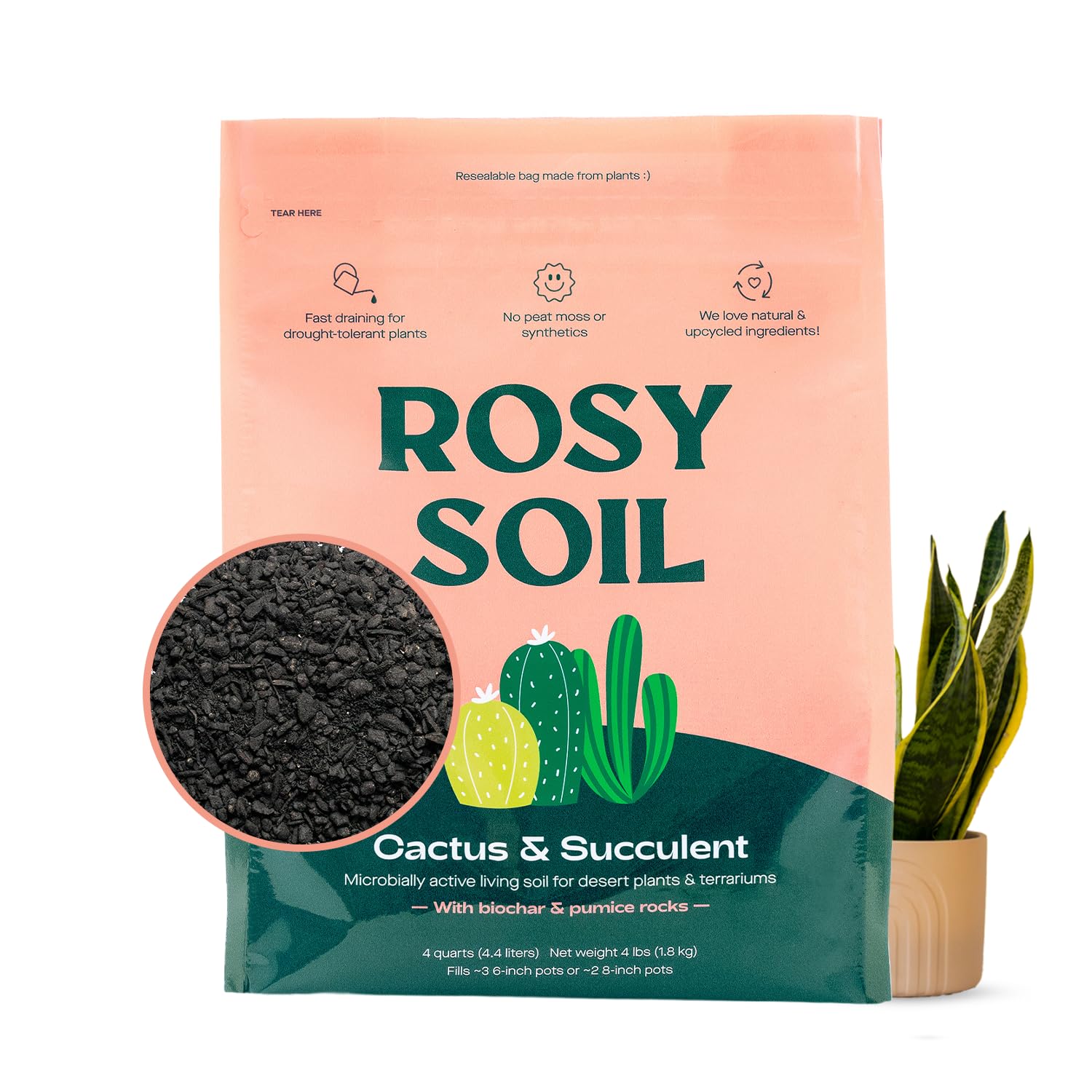
Rosy Soil rethinks succulent compost by eliminating peat moss entirely, a bold move that translates into superior drainage and environmental sustainability. The chunky texture stays loose and airy, preventing the soggy compaction that plagues traditional mixes. What really sets it apart is the pre-loaded living component: beneficial fungi, microorganisms, and organic worm castings create a thriving underground ecosystem that feeds roots without synthetic fertilizers.
Users consistently note the mix arrives clean, with a dark, even texture and no sign of bugs or mold even after multiple bags. It is versatile enough for aloe vera, jade, snake plants, and even bonsai, and the 4-quart resealable bag includes clear planting instructions for beginners. The only catch is that some growers still add perlite or bonsai soil for very sensitive species, and the resealable closure can fail on the first use.
For growers who want a single-bag solution that is both sustainable and performance-tuned, Rosy Soil is a compelling mid-range option. Its biological activity means it supports root recovery from damage or transplant shock, making it a favorite for propagating pups and cuttings. The peat-free formula also helps prevent overwatering by draining more freely than standard organic mixes.
What works
- Peat-free design provides excellent drainage naturally
- Pre-loaded microbes and worm castings reduce fertilizer needs
- Clean texture with no reported pest issues
What doesn’t
- May need amendments like perlite for the most sensitive species
- Resealable bag zipper often breaks on first use
3. Soil Sunrise Potting Mix
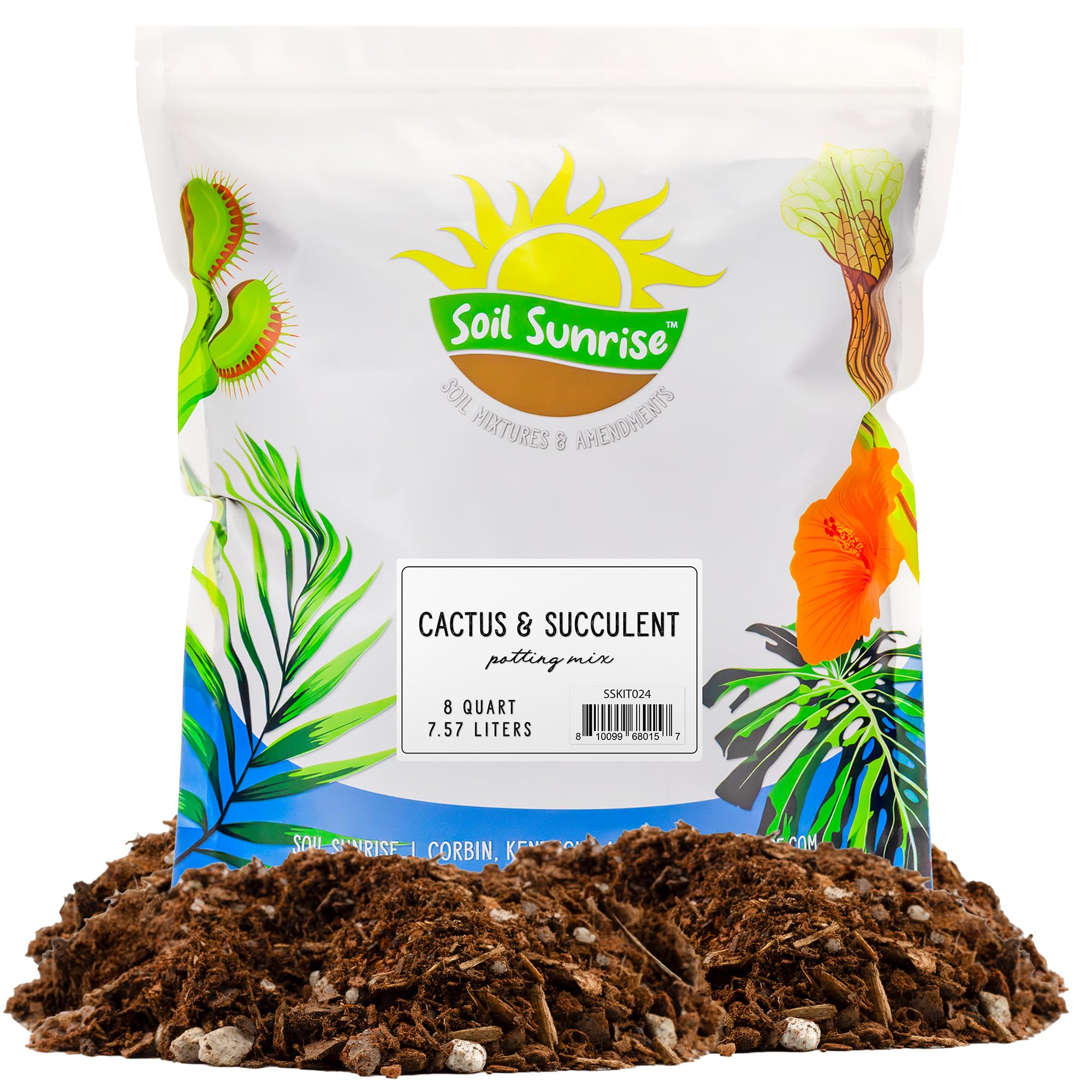
Soil Sunrise delivers a hand-blended gritty mix that gives premium brands a run for their money at a significantly lower cost per quart. The 8-quart bag is large enough to repot an entire windowsill collection, and it contains a custom blend of pine bark, silica sand, calcined clay, and pumice. This combination mimics the rocky, fast-draining soil conditions of the American Southwest without any hidden soil filler.
Owners consistently praise the texture, noting it is visibly and texturally different from mass-market products — it feels more like coarse gravel and sand than potting soil. The mix is fresh, smells clean, and has no reported incidents of bugs or fungus gnats. Users often use it as a base, adding pumice or worm castings for specific plants like ponytail palms, but many find it works perfectly straight from the bag.
The primary consideration is its weight; this is a heavy, sand-heavy mix that can be messy to handle if spilled. It also drains very quickly, so houseplant owners accustomed to standard soil will need to adjust their watering schedule. For the volume and quality, however, it is arguably the best value for growers with larger collections or those who want to mix their own custom blends on a budget.
What works
- Excellent value with 8 quarts of premium gritty mix
- Hand-blended with real pine bark, sand, clay, and pumice
- No soil filler, bugs, or gnats reported by users
What doesn’t
- Heavy, sand-heavy texture can be messy to handle
- Very fast drainage requires watering schedule adjustment
4. Miracle-Gro Succulent Mix

Miracle-Gro’s Succulent Potting Mix is the most widely available option and a solid choice for beginners who need a low-fuss solution. It contains a blend of sphagnum peat moss, processed forest products, and a pre-added plant food formula that supports initial growth. The 4-quart bag fills one 8-inch container, and the soil works for a wide range of indoor succulents, from aloe vera to echeveria.
However, this mix is primarily peat moss, which means it can stay damp for extended periods — multiple reviewers note it is still wet four days after watering. This characteristic makes it forgiving for forgetful waterers, but dangerous for those who tend to overwater. Many experienced growers add perlite or pumice to improve drainage, and some report the texture is too fine for rot-prone species.
On the positive side, it has no strong odor and is easy to work with. It also contains a small amount of fertilizer, so new plants get a nutritional boost during establishment. For veteran succulent keepers, this is a base that needs amendments; for a first-time buyer, it works if used conservatively. It is a budget-friendly entry point but not a high-performance mix.
What works
- Widely available and easy for beginners to use
- Contains pre-mixed plant food for initial growth
- No strong odor and manageable texture
What doesn’t
- Heavy peat base retains water too long for most succulents
- Requires perlite or pumice amendments for best results
5. Hoffman Organic Cactus Mix

Hoffman’s Organic Cactus and Succulent Soil Mix has a reputation for being the go-to solution when fungus gnats or root rot have taken hold. The key is its low dead organic matter content — it contains very little wood chips or pulp, which are common attractors for gnats and moisture-retention problems. This mix is primarily peat moss and compost, pH-balanced to support bloom and root development for both desert and jungle cacti.
Users who switched to Hoffman after battling gnats in other mixes report immediate improvement, with the gnat population disappearing and new growth appearing within weeks. The texture is light and fluffy, draining well while still providing enough structure for root anchorage. Many growers use it as a base, adding perlite or orchid bark to create custom blends for specific species like snake plants or ivy.
One notable downside is packaging inconsistency — some bags have arrived with leaks or broken seals. The soil itself is high quality, but the bag design could be improved. It also benefits from added perlite for growers who want maximum aeration. Overall, this is a reliable mid-range option, especially for those struggling with soil-borne pests or moisture issues.
What works
- Low dead organic matter eliminates fungus gnat habitat
- Light, fluffy texture drains well and prevents compaction
- pH-balanced to encourage bloom and root development
What doesn’t
- Some bags arrive with leaking or broken seals
- Still benefits from added perlite for maximum aeration
6. Midwest Hearth Cactus Mix
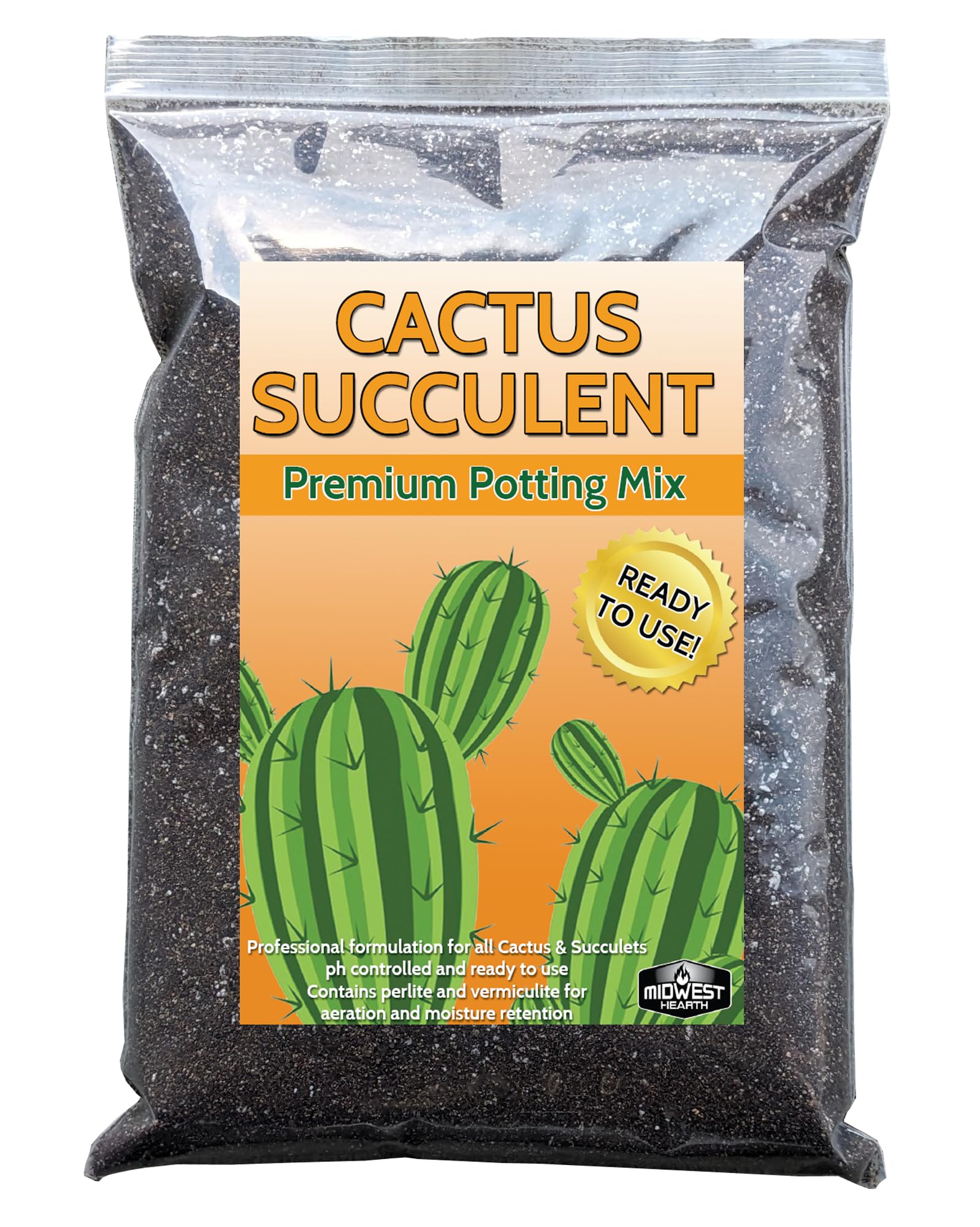
Midwest Hearth offers a professionally formulated mix that balances peat moss, perlite, and vermiculite specifically for drought-tolerant plants. The blend is pH-controlled to match the needs of cacti and succulents, promoting strong root development and steady growth. It is ready to use straight from the bag and works for a wide range of plants, including aloe vera, jade, Christmas cactus, and desert rose.
Users appreciate the mix’s fast-draining formula, which prevents soggy soil and root rot when used appropriately. The 4-quart resealable bag is convenient for small collections, and a larger 8-quart size is available for more extensive setups. The mix is made in the USA and is suitable for both indoor windowsills and outdoor patio containers, as well as terrariums.
An unusual complaint from some owners is that the dry top particles can blow away if near an open window, requiring daily cleanup. The mix is also light enough that under-watering it can cause it to shrink away from the pot walls. For growers who want a reliable, no-amendment-needed mix with a controlled pH, this is a solid choice, but it needs careful watering to avoid the top layer turning into a dust hazard.
What works
- pH-controlled formula supports strong root development
- Fast-draining blend of peat, perlite, and vermiculite
- Made in the USA with a convenient resealable bag
What doesn’t
- Dry top particles can blow away near open windows
- Light mix can shrink away from pot walls when under-watered
7. Avalution Lava Rock Pebbles

Avalution’s Horticultural Lava Rock Pebbles are not a standalone potting mix, but a professional-grade amendment and top dressing that gives growers precise control over their soil structure. These small, porous lava pebbles provide superior drainage and aeration when mixed into any succulent soil. Their porous nature also helps neutralize soil pH, making the root environment more stable over time.
Users use these pebbles to create custom cactus and succulent mixtures, as a decorative top dressing, or as a component in semi-hydro setups for plants like hoyas and rhipsalis. The rocks are clean and release minimal dust compared to some competitors, though a thorough rinse is recommended before use. Once cleaned, they reveal subtle, earthy colors that complement terrariums and fairy gardens.
This is a specialty product, not a complete solution. It is best for growers who already have a base soil and want to increase grit without buying an entirely new bag of expensive pre-mixed soil. The 2.4-pound bag is compact but stretches far when mixed at a 1:1 ratio with a potting medium. It is a practical, cost-effective tool for the hands-on gardener who likes to fine-tune their soil.
What works
- Porous lava rock improves drainage and aeration in any mix
- Versatile as top dressing, amendment, or in semi-hydro setups
- Neutralizes soil pH and is less dusty than alternatives
What doesn’t
- Not a standalone soil; requires a base potting mix
- Needs thorough rinsing before use to remove dust
Hardware & Specs Guide
Drainage Ingredients
The fastest-draining mixes use inorganic grit like pumice, perlite, calcined clay, lava rock, or coarse sand. These materials create large pore spaces that let water flow through quickly, preventing the anaerobic conditions that lead to root rot. Avoid mixes primarily composed of fine peat or uncomposted bark, which retain too much moisture for true desert plants.
pH and Nutrient Profile
Succulents thrive in a pH range of 5.5 to 7.0. Mixes optimized for pH typically avoid added limestone and may use pine bark or coir as a base. Pre-loaded worm castings or mycorrhizae provide a slow-release nutrient source without the salt buildup of synthetic fertilizers. Brands like Bonsai Jack and Rosy Soil prioritize pH tuning for healthy root development.
FAQ
Can I use regular potting soil for succulents?
What is the best way to improve drainage in a succulent mix?
Should I use fertilizer with my succulent compost?
Final Thoughts: The Verdict
For most gardeners, the compost for succulent plants winner is the Bonsai Jack Gritty Mix because it provides the ultimate drainage and pH optimization for rot-prone species. If you want a sustainable, peat-free option with living soil biology, grab the Rosy Soil Cactus Mix. And for the best value covering a large collection, nothing beats the Soil Sunrise Potting Mix.