
Unlock bigger, sweeter harvests from your strawberry patch with the best soil amendments, liquid feeds, and organic composts formulated to support acidic-soil fruiting plants. Strawberries demand well-draining, nutrient-rich ground that stays consistently moist without waterlogging — a balance that generic garden composts rarely deliver.
I’m Rikta — the co-founder and writer behind Lawn Gear Lab. I’ve spent countless hours analyzing soil NPK ratios, organic matter content, and mycorrhizal inoculation data alongside thousands of verified owner reports to separate the truly effective strawberry feeds from the overhyped filler.
This guide breaks down the top performers across organic compost, liquid berry fertilizers, and premium soil blends so you can confidently choose the best compost for strawberries that matches your planting style and budget.
How To Choose The Best Compost For Strawberries
Strawberries are heavy feeders that thrive in slightly acidic soil with a pH between 5.5 and 6.5. The compost you choose must deliver balanced nutrients without overwhelming the delicate root system. Here are the three most important factors to evaluate before buying.
Organic Certification & Ingredient Sourcing
Strawberries are among the most pesticide-sensitive fruits grown at home. Look for OMRI-listed or certified organic composts that rely on natural ingredients like worm castings, lobster meal, or composted manure. Synthetic additives can disrupt soil microbiology and lead to bitter-tasting fruit.
Nutrient Profile & Slow-Release Capacity
A well-balanced strawberry compost should provide a moderate nitrogen level (to fuel leafy growth without sacrificing fruit), higher phosphorus for strong root development and flowering, and potassium for berry size and sweetness. Slow-release granular amendments like worm castings feed gradually, while liquid options deliver an immediate boost during fruiting stages.
Drainage & Aeration
Strawberry roots rot quickly in compacted, waterlogged soil. Premium composts include perlite, coco coir, or bark fines to maintain an open structure that drains excess moisture while retaining enough water to sustain fruit development. Avoid heavy clay-based mixes that hold too much moisture.
Quick Comparison
On smaller screens, swipe sideways to see the full table.
| Model | Category | Best For | Key Spec | Amazon |
|---|---|---|---|---|
| Blue Ribbon Organics Organic Compost | Premium Compost | Best Overall Quality | 7.9 gallons, 32–35 lb bag | Amazon |
| Espoma Land and Sea Gourmet Compost | Organic Compost | Soil Amendment & Microbiome | Lobster & crab meal + mycorrhizae | Amazon |
| Bloom City Organic Berry Fertilizer | Liquid Feed | Fruiting Boost in Containers | 32 oz liquid, organic | Amazon |
| Growth Technology GT Fruit Focus | Liquid Feed | Hydroponics & Precision Feeding | 250 mL, 12 essential minerals | Amazon |
| Coast of Maine Organic Tomato & Veggie Soil | Planting Mix | In-Ground Beds & Raised Rows | 20 qt, composted manure + peat | Amazon |
| TPS Nutrients Strawberry Fertilizer | Liquid Feed | Targeted Strawberry Nutrition | 32 oz, 1:128 mixing ratio | Amazon |
| Back to the Roots Worm Castings | Granular Amendment | Budget-Friendly Soil Booster | 5 lb bag, 80 oz | Amazon |
In‑Depth Reviews
1. Blue Ribbon Organics OMRI Certified Organic Compost

This is the gold standard for gardeners who want a pure, contaminant-free compost base they can trust for edibles. The dark, rich texture rehydrates easily and smells pleasantly earthy — zero ammonia or chemical trace. Users report it blends perfectly with perlite and orchid bark for container strawberry beds, providing the drainage strawberries need while holding enough moisture through fruiting cycles.
The OMRI certification means every pound meets strict organic standards, so you can top-dress runners or mix it into new raised beds without worrying about synthetic residues. The 32-35 pound bag covers roughly 7.9 gallons, offering deep coverage for several large containers or a moderate in-ground patch. This is the go-to pick for growers who prioritize clean, high-grade organic matter over lower-cost alternatives.
Some gardeners note the price is steeper than bulk bin composts, but the consistency — no sticks, no plastic, no water-repellent sections — justifies the premium. Use it as a 1:4 amendment ratio with existing topsoil to maximize your strawberry yield without overspending.
What works
- Premium quality with consistent dark, crumbly texture
- OMRI certified — safe for organic strawberry production
- Retains moisture without becoming waterlogged
What doesn’t
- Higher price point per pound compared to bulk options
- Bag size is moderate; larger plantings require multiple bags
2. Espoma Organic Land and Sea Gourmet Compost

Espoma’s Land and Sea blend leverages lobster and crab meal — two marine-derived ingredients packed with chitin and calcium that naturally boost soil biology and deter soil-borne pests. The inclusion of both endo and ecto mycorrhizae gives strawberry roots a symbiotic advantage, enhancing nutrient uptake in suboptimal soil. Users consistently report bigger tomatoes and more productive zucchini alongside noticeably larger strawberry fruits.
This 1-cubic-foot bag is lightweight and dry, making it easy to mix into existing beds or containers. It works well as a top dressing or a 50/50 blend with peat moss for acidic-loving plants. The organic certification and lack of synthetic chemicals make it a solid choice for organic berry patches where you want a slow-release fertilizer built directly into the soil matrix.
The primary drawback is the dry texture — it requires thorough watering after application to activate the microbial colonies. However, once moistened, the compost holds its structure without compacting, which is ideal for strawberries that hate soggy feet. For the price, this is one of the most biologically diverse bagged composts on the market.
What works
- Unique lobster and crab meal enriches soil with calcium
- Endo/ecto mycorrhizae improve root health
- Lightweight and easy to mix into raised beds
What doesn’t
- Dry consistency needs thorough watering to activate
- Bag size is modest for large-scale plantings
3. Bloom City Organic Berry Fertilizer

Bloom City formulated this liquid feed specifically for blueberries and strawberries, giving it a targeted nutrient profile that supports flowering, fruit set, and root runner development. Users see noticeable results within two weeks — more berries per cluster and richer color in the fruit. The 32-ounce bottle mixes easily with water, making it a practical choice for container gardeners who want a quick boost during the fruiting phase.
The organic formulation avoids synthetic salts that can burn delicate strawberry roots. It’s especially effective for potted strawberries where soil nutrients deplete faster than in-ground beds. Many customers apply it every two weeks through the growing season and report consistent yields without the leaf burn associated with high-nitrogen general-purpose fertilizers.
One caveat is the odor — it has a strong, earthy marine smell that some users find unpleasant. The smell dissipates quickly after application, but it’s worth noting if you’re sensitive to strong organic fertilizer scents. Overall, this is a top-tier liquid option for strawberry growers seeking a convenient, effective organic feed.
What works
- Formulated specifically for strawberries and blueberries
- Easy liquid application with noticeable results in 2 weeks
- Organic — won’t burn roots or leaves
What doesn’t
- Strong earthy odor during mixing and application
- May require additional calcium supplementation for heavy fruiting
4. Growth Technology GT Fruit Focus
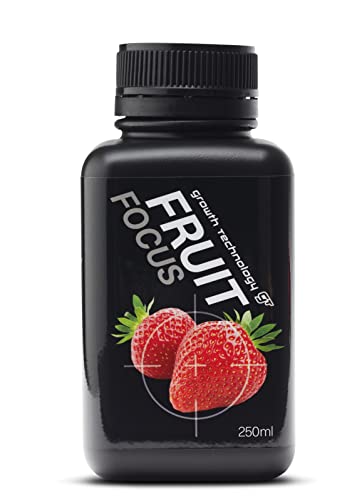
Growth Technology’s GT Fruit Focus delivers a complete mineral profile — including calcium — in a concentrated liquid that feeds strawberries, citrus, and berries with precision. The 1:128 mixing ratio means a single 250 mL bottle goes a long way; users report it lasting multiple seasons for small to medium patches. It is formulated for both soil and hydroponic systems, making it a versatile tool for experimental growers.
Customers switching from general-purpose fertilizers see larger leaf size and more consistent fruit production. The calcium content helps prevent blossom end rot in strawberries and supports cell wall integrity, resulting in firmer berries that store longer. It’s especially popular among indoor strawberry growers using grow lights and semi-hydro setups.
The main trade-off is the upfront cost — the bottle is small relative to budget brands. But the concentrated formula and measurable results make the cost-per-feed competitive. If you want a laboratory-grade nutrient solution for your strawberry plants without synthetic growth promoters, this is the choice.
What works
- Complete mineral nutrition including calcium
- High concentration — small bottle lasts a long time
- Works for soil, hydroponics, and semi-hydro setups
What doesn’t
- Small bottle size may seem expensive per ounce
- Requires precise mixing ratio for best results
5. Coast of Maine Organic Tomato & Vegetable Planting Soil

Coast of Maine’s tomato and vegetable planting soil is a rich, lightweight blend of composted manure and sphagnum peat moss that provides excellent moisture retention and drainage — two requirements strawberries demand. The 20-quart bag offers generous volume for filling raised beds or topping off multiple containers. Users consistently report rapid visible growth in strawberries and other fruiting plants after transplanting into this mix.
The composted manure base adds organic matter that slowly releases nutrients, reducing the need for frequent liquid feeding. Many customers mix it 50/50 with native soil for in-ground beds and see improved yields in their first season. The presence of aromatic wood helps deter some insects naturally, though it’s not a substitute for pest management.
Some batches have been reported to contain fungus gnats — a common issue with bagged compost that contains uncomposted organic material. Letting the bag sit in direct sunlight for 48 hours or treating with neem oil before use solves the problem. Given the price-to-volume ratio, this is one of the most cost-effective mid-range options for large strawberry patches.
What works
- Excellent moisture retention with good drainage
- Large 20-quart bag covers big bed areas
- Lightweight and easy to work with
What doesn’t
- Some batches contain fungus gnats — pre-treat to prevent infestation
- Slightly higher cost per quart than generic potting mixes
6. TPS Nutrients Strawberry Fertilizer
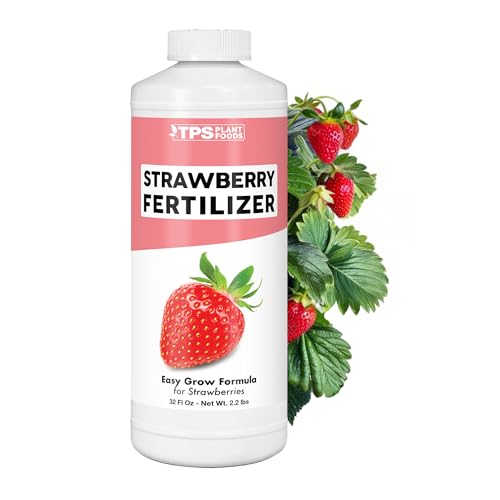
TPS Nutrients designed this liquid feed exclusively for strawberry plants, which means every macro and micronutrient ratio is tailored to support flower development, berry sizing, and root runner production — not general fruiting or leafy growth. The 1:128 mixing ratio stretches the 32-ounce bottle across numerous applications: a 4×20-foot raised bed user reported the bottle lasting one full feeding, making it suitable for moderate-sized patches.
Gardeners see immediate results, with verified reviews noting three times more berries compared to the previous season after switching from generic plant food. The formula promotes lush foliage without forcing excessive vegetative growth, keeping the plant’s energy directed toward fruit. It is also safe for container strawberries, making it a versatile choice for balcony growers.
One limitation is the bottle size for large plantings — a single bottle may not cover multiple feedings for a big patch. You’ll want to stock up if you have more than 80 square feet of strawberries. Aside from that, this is the most targeted strawberry-specific liquid feed in this roundup, ideal for growers who want a dedicated, no-guesswork solution.
What works
- Formulated specifically for strawberries — not a generic mix
- Visible increase in berry count and size
- Easy 1:128 mixing ratio for precise feeding
What doesn’t
- Bottle size is modest for large raised beds or multiple rows
- Higher cost per application than all-purpose feeds
7. Back to the Roots Organic Worm Castings

Worm castings are one of the most reliable, burn-free soil amendments you can add to a strawberry patch. Back to the Roots packages pure US vermicompost in a 5-pound resealable bag that easily mixes into potting soil or top-dresses around established plants. The granules release nutrients slowly, feeding strawberries for weeks without the risk of over-fertilizing. Users report healthier leaves, stronger growth, and no offensive odor.
The castings contain beneficial microbes that protect seedling roots from soil-borne pathogens — a critical advantage when starting new strawberry runners. The 5-pound bag covers a surprising amount of soil area when used as a 1:4 amendment ratio. Many customers use it as the base component for custom strawberry potting mixes alongside perlite and coco coir.
This is a pure, single-ingredient product, so it lacks the added calcium, mycorrhizae, or balanced NPK that some premium mixes include. It works best as a foundational soil builder rather than a standalone fertilizer. If you want an inexpensive, natural way to improve soil texture and microbial life for your strawberries, this is the entry point.
What works
- Pure vermicompost with beneficial microbes
- No burn — safe for direct root contact at any stage
- Resealable bag for convenient storage
What doesn’t
- Single-ingredient — lacks calcium and mycorrhizae
- Slow release may not satisfy heavy feeders during peak fruiting
Hardware & Specs Guide
NPK Ratio & Organic Content
Strawberries need compost with a balanced NPK profile — slightly higher phosphorus for root and flower development, moderate nitrogen for leaf growth, and enough potassium for fruit sweetness. Organic composts like worm castings typically have a low, slow-release NPK around 1-0-0, while formulated liquid feeds range from 2-4-4 to 3-5-4. Always check the label: synthetic fertilizers with high nitrogen (10-10-10) can produce excessive foliage at the expense of berries.
Bag Volume vs. Coverage Area
Bag sizes vary from 5-pound granular packs (covering roughly 10 square feet as a 2-inch top dressing) to 1-cubic-foot bags that fill a 4×4-foot raised bed. Liquid concentrates like the 32-ounce bottles treat up to 300 square feet per bottle depending on dilution. For container strawberries, a 20-quart bag of planting mix fills approximately three 12-inch pots. Match the volume to your planting area to avoid under- or over-purchasing.
FAQ
Is it better to use liquid or granular compost for strawberries?
Can I use regular vegetable compost for my strawberry patch?
How often should I apply compost to my strawberry plants?
Final Thoughts: The Verdict
For most gardeners, the compost for strawberries winner is the Blue Ribbon Organics Organic Compost because it delivers the highest quality, contaminant-free organic matter that improves soil structure and feeds strawberries naturally all season. If you want a biologically active soil amendment with marine-based calcium, grab the Espoma Land and Sea Gourmet Compost. And for the most budget-friendly soil booster that improves texture without burning roots, nothing beats the Back to the Roots Organic Worm Castings.