
Mint is famously aggressive, but even this vigorous herb stalls out if the soil lacks the right organic backbone. A light, nutrient-dense compost that holds moisture without becoming waterlogged is the difference between lush, aromatic leaves and a spindly, yellowed disappointment.
I’m Rikta — the co-founder and writer behind Lawn Gear Lab. My research for this guide involved comparing over a dozen compost formulations, analyzing NPK profiles, moisture retention rates, and microbial content, and cross-referencing hundreds of verified owner experiences to find the blends that actually deliver for mint growers.
Whether you’re planting in a raised bed, a container on the patio, or expanding a patch in the ground, choosing the right compost for mint means prioritizing drainage, balanced nutrition, and an additive-free organic base that won’t stunt growth or introduce weed seeds.
How To Choose The Best Compost For Mint
Mint plants are not heavy feeders like tomatoes or peppers. They thrive in soil that is consistently moist but never soggy, with a neutral pH and a steady supply of organic matter. Selecting a compost that meets these specific requirements prevents common issues like root rot, rust disease, and bitter-tasting leaves.
Texture and Drainage
Mint roots spread horizontally near the surface and need a loose, crumbly medium. A compost that is too dense or clay-like will trap water and suffocate roots. Look for products described as granular, finely sifted, or containing perlite or coco coir to ensure good aeration and drainage.
Nutrient Balance (NPK and pH)
An overly rich compost with high nitrogen can produce soft, lush growth that attracts pests and has a weaker essential oil concentration. Aim for a balanced or slightly lean organic compost with a pH between 6.0 and 7.0. Materials like worm castings or well-aged manure provide slow-release nutrition without shocking the plant.
Organic Certification and Additives
Mint leaves are frequently used fresh in teas and cooking, so a product free from synthetic chemicals, sewage sludge, and unlabeled fillers is essential. OMRI-listed or similar organic certifications give you confidence the compost is safe for edibles. Avoid blends with synthetic fertilizers or moisture-control crystals that can disrupt the natural microbial balance.
Quick Comparison
On smaller screens, swipe sideways to see the full table.
| Model | Category | Best For | Key Spec | Amazon |
|---|---|---|---|---|
| Back to the Roots Organic Worm Castings | Worm Castings | Gentle top dressing & container mint | 5 lb resealable bag | Amazon |
| Espoma Organic Land and Sea | Lobster & Crab Meal | Boosting mint in flower beds | 1 cu ft, 24 lb bag | Amazon |
| Back to the Roots 25.7qt Organic Compost | Peat-Free Mix | Raised bed mint patches | 1 cu ft, peat-free | Amazon |
| R&M Organics Premium Organic Compost | Manure-Based | Recharging tired garden soil | 10 lb, moisture retention | Amazon |
| Brut Cow Compost | Cow Manure | Large vegetable & herb plots | 1 cu ft, OMRI listed | Amazon |
| Heirloom Roses Mint Compost | Specialty Mint Mix | Pest-repellant mint & rose beds | 7 qt box | Amazon |
| Blue Ribbon Organics OMRI Compost | Premium Organic | High-end container gardening | 7.9 gal, 32-35 lb bag | Amazon |
In‑Depth Reviews
1. Back to the Roots Organic Worm Castings

Pure worm castings provide the ideal gentle nutrient release for mint without the risk of nitrogen burn. This 5-pound bag from Back to the Roots delivers a fine, granular texture that integrates seamlessly into potting mixes or existing garden soil, promoting strong root spread and lush foliage. The inclusion of beneficial microbes helps protect mint seedlings from damping-off and other soil-borne pathogens.
Gardening enthusiasts praise its lack of odor and its ability to retain moisture without turning the medium into a compacted mess. Several reviews note that when used as a top dressing, it keeps mint leaves vibrant and aromatic for weeks without additional feeding. The resealable bag adds convenience for ongoing container maintenance.
The only trade-off is the relatively small volume for the price compared to bulk manure blends, making it better suited for containers and small patches than sprawling in-ground beds. For most mint growers, however, the purity and performance justify the investment.
What works
- No-burn formula safe for delicate mint roots
- Resealable bag keeps castings fresh for multiple uses
- Rich in beneficial microbes for soil health
What doesn’t
- Smaller bag size limits coverage for large patches
- Higher per-pound cost than manure-based composts
2. Espoma Organic Land and Sea Gourmet Compost

Espoma blends lobster and crab meal into this compost to create a unique source of chitin and trace minerals that mint can use to build stronger cell walls. The 1-cubic-foot bag covers approximately 6 square feet at a 2-inch depth, making it a viable option for both raised beds and ornamental herb borders. Mycotone mycorrhizae further enhance root-to-soil connection for more efficient water uptake.
Long-time users report that mint grown with this amendment shows deeper green coloration and a noticeable increase in essential oil production. The granular form does not mat down, allowing mint’s shallow root system to expand freely. The formula is completely organic, which is a must for any edible herb garden.
The main drawback is that the seafood-derived ingredients give off a mild marine scent during application that some find off-putting, though it fades quickly. The price sits on the higher end, but for those seeking a truly premium organic booster, this is a strong contender.
What works
- Chitin from crustacean meal supports natural pest resistance
- Mycorrhizae improve root health and moisture access
- Covers a decent area for its volume class
What doesn’t
- Temporary seafood smell during handling
- Premium pricing raises the cost per square foot
3. Back to the Roots 25.7qt Organic Premium Compost
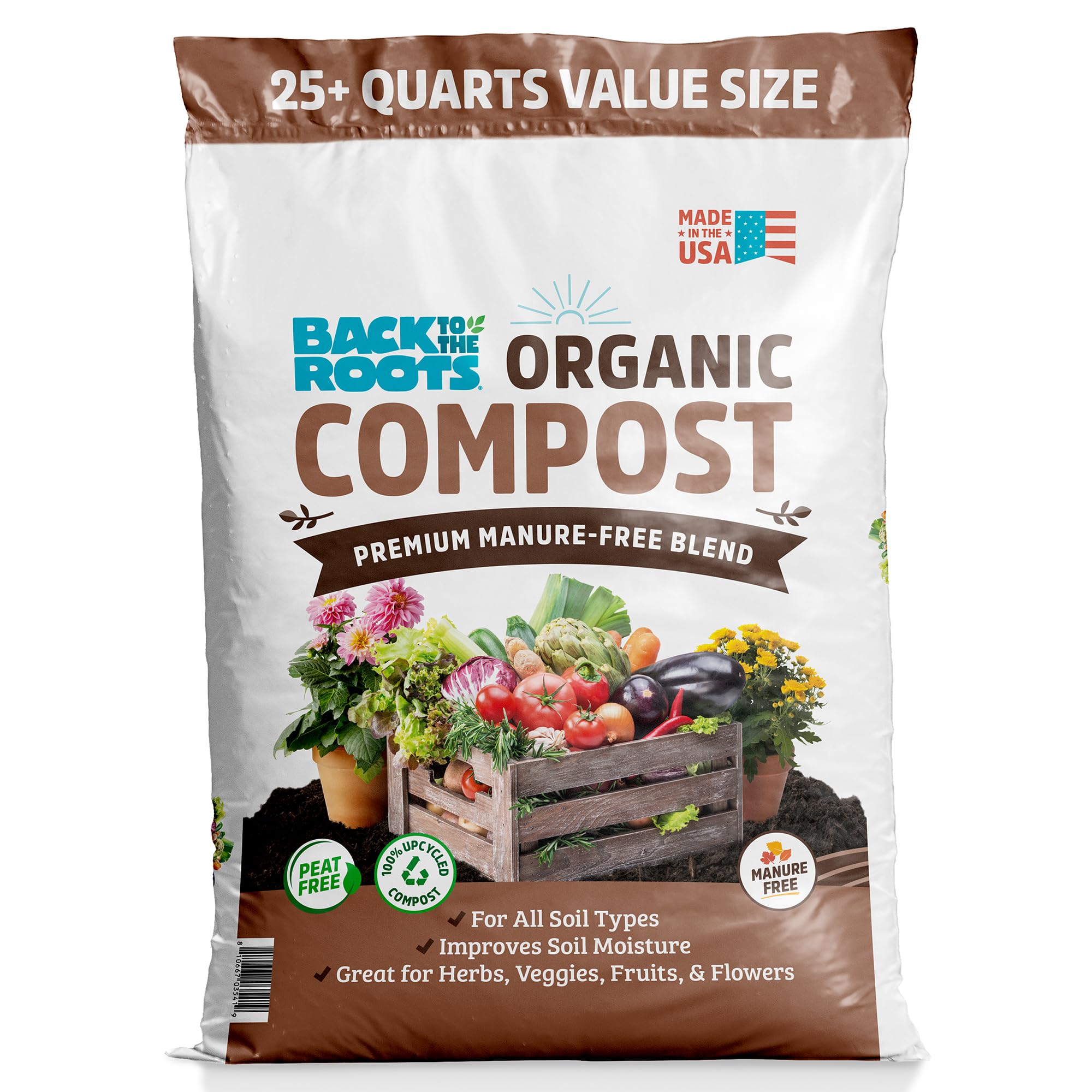
This peat-free compost from Back to the Roots uses upcycled wood fines and plant matter instead of harvested peat, making it an environmentally conscious choice for mint growers. The yucca extract improves water penetration so moisture reaches the root zone evenly without pooling on the surface. Dolomitic limestone keeps the pH in the 6.0–7.0 sweet spot that mint prefers.
Verified buyers highlight the rock-free, dark texture that blends easily with native soil. Gardeners using it in raised beds report that mint establishes quickly and spreads more vigorously compared to standard bagged topsoil. The compost also holds structure well under consistent watering, resisting compaction over several months.
The main limitation is that it is designed as a general-purpose soil blend rather than a concentrated amendment, so you may need to supplement with a light fertilizer if growing mint in poor native soil. For a straightforward, peat-free base that works out of the bag, this is a reliable mid-range option.
What works
- Peat-free formulation reduces environmental footprint
- Yucca and gypsum improve water absorption
- pH-balanced specifically for raised bed herbs
What doesn’t
- Not a concentrated amendment—needs larger volumes
- May require supplemental feeding in very poor soils
4. R&M Organics Premium Organic Compost
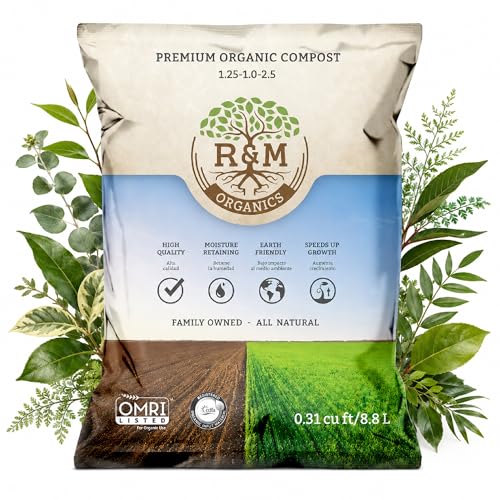
R&M Organics offers a fully composted dairy cow manure product that provides a balanced nutrient profile without the ammonia smell typical of fresh manure. The fine, soil-like texture makes it easy to mix into container soil or spread as a top dressing around mint plants. It holds moisture significantly better than plain garden soil, which helps mint survive hot afternoons without wilting.
Several customer accounts describe how this compost revived struggling herbs and flowers within a week of application, turning yellow leaves back to deep green. The absence of clumps and large debris makes it practical for precise applications in small raised beds and patio pots. The 10-pound bag is easy to handle for focused use.
The biggest issue is that cow manure compost is slightly richer than what mint strictly needs, so mixing it at a 1:3 ratio with regular soil or sand is advisable to prevent overly lush growth. For gardeners on a budget who need a fast-acting organic boost, this is a solid entry-level choice.
What works
- Low odor fully composted for indoor and outdoor use
- Improves moisture retention in sandy soils
- Budget-friendly cost per pound
What doesn’t
- Rich enough to potentially over-feed mint if used undiluted
- Bag design can tear if not handled carefully
5. Brut Cow Compost
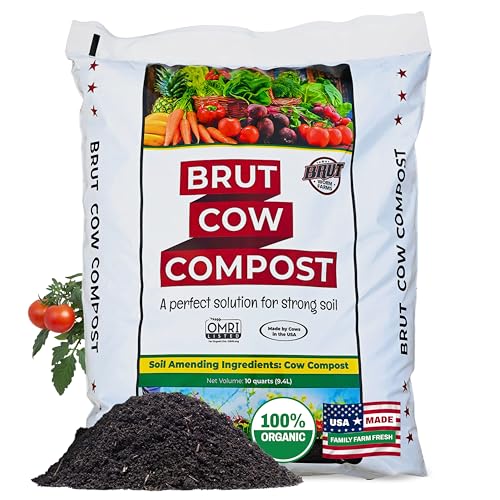
Brut’s cow manure compost is OMRI-listed and additive-free, providing a straight organic option for larger mint patches. The composting process is aerated and monitored to eliminate pathogens while preserving nitrogen, calcium, and iron. The finely sifted texture ensures even distribution whether you are amending a vegetable plot or starting new mint transplants.
Reviewers consistently note that plants grown with Brut compost exhibit faster initial growth and more robust foliage compared to generic bagged manure. The lack of artificial additives means there is no risk of chemical buildup in the soil over repeated applications. Several first-time growers found the 1-cubic-foot bag sufficient to refresh a 4×4-foot garden bed.
Because this is a straight manure product, it is more nutrient-dense than a blended compost, so mint growers should monitor for excessive leaf growth that may reduce oil concentration. When used in moderation, however, it provides long-lasting soil enrichment at a reasonable per-cubic-foot cost.
What works
- OMRI certification guarantees organic purity
- Fine sifted texture integrates without clumping
- Provides sustained nutrient release over many weeks
What doesn’t
- Higher nutrient density requires careful dilution for mint
- Bag can be heavy for those with mobility concerns
6. Heirloom Roses Mint Compost
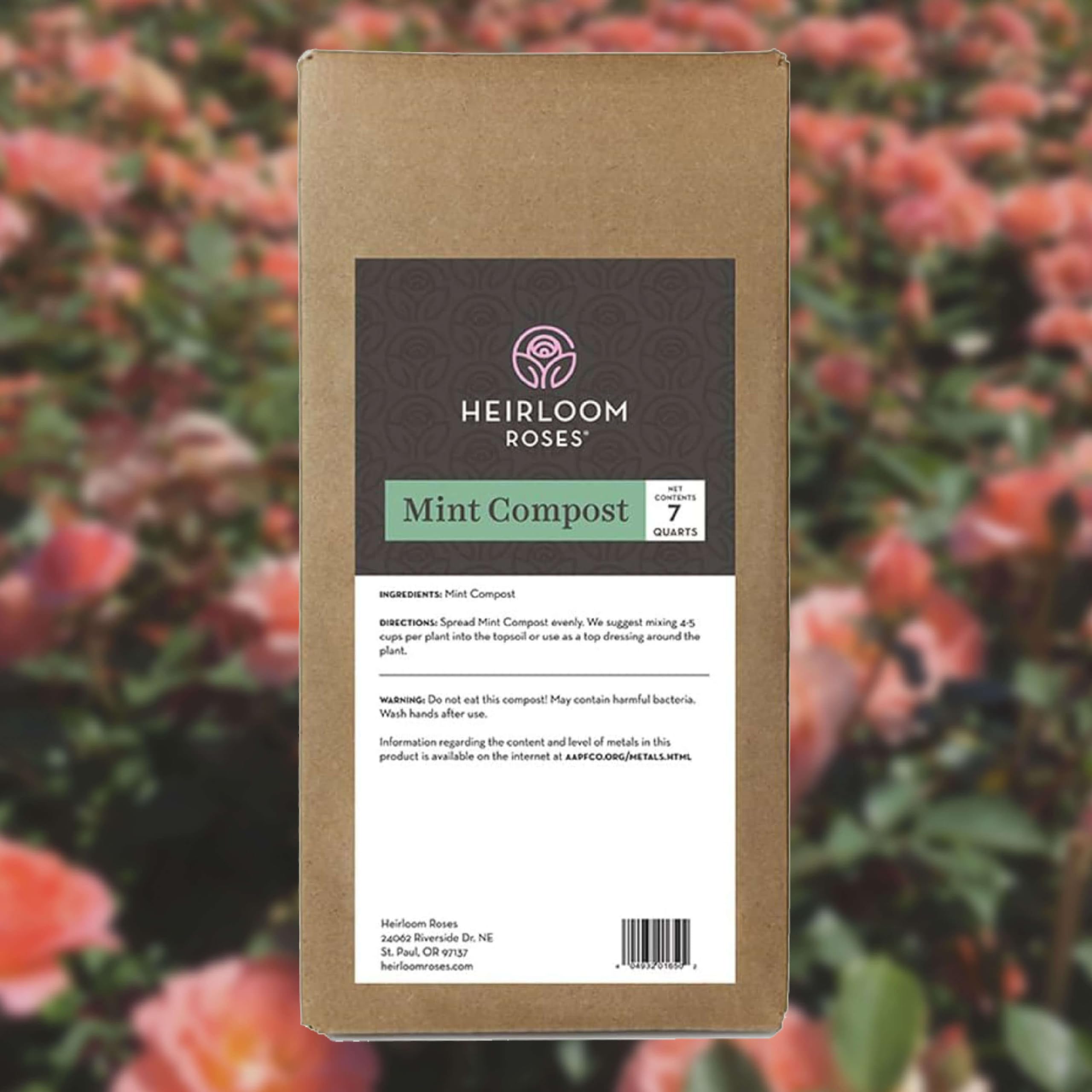
Uniquely formulated with mint plant matter, this Heirloom Roses compost is designed to release a subtle mint aroma that helps repel aphids, spider mites, and other common pests. The 7-quart box treats up to five roses, but the same principle applies to mint beds — the scent confuses pests looking for a meal. The natural humus content also breaks up clay soils while adding moisture retention for sandy conditions.
Buyers who used this product on their mint and herb gardens reported fewer insect problems without resorting to chemical sprays. The compost has a dark, rich appearance and a strong minty smell that some find pleasant and others find overpowering. It works both as a soil amendment at planting time and as a top dressing throughout the growing season.
The major drawback is the cost — this is a specialty product with a much higher price per quart than standard composts. Additionally, the intense mint scent may linger on hands after application. For the specific goal of natural pest management in an organic herb garden, it fulfills a niche function well.
What works
- Mint scent aids in natural pest deterrence
- Improves both clay and sandy soil structures
- Effective as a top dressing for established plants
What doesn’t
- Very high cost compared to general-purpose composts
- Strong fragrance not to everyone’s preference
7. Blue Ribbon Organics OMRI Certified Organic Compost

Blue Ribbon Organics produces what many customers describe as “black gold” — an exceptionally dark, earthy, contaminant-free compost that is OMRI certified for organic use. At a substantial 32–35 pounds per bag, it offers generous volume for serious gardeners. The humus-rich composition improves soil aeration while promoting water retention, a combination mint roots love.
Experienced growers report finding live worms in the bag, which is a reliable indicator of biological activity and soil vitality. The compost rehydrates easily and blends smoothly with perlite or bark for container mixes. Users transitioning mint from pots to raised beds noted that the plants took off noticeably faster when started with this amendment.
The cost is the most significant barrier. It is the highest-priced option per unit volume on this list, and the shipping weight adds to the overall expense. For containers and small, high-value herb gardens where every cubic inch of soil counts, it is a premium performer. For covering large areas, the cost quickly becomes prohibitive.
What works
- Exceptionally clean, dark, biologically active compost
- OMRI certified for unrestricted organic use
- Excellent structure for container and raised bed mixing
What doesn’t
- Premium price makes it impractical for large areas
- Heavy bag can be awkward to carry and pour
Hardware & Specs Guide
Compacted vs. Sifted Compost
Mint roots require loose, aerated soil to spread laterally. Composts that are finely sifted (like the Brut Cow Compost and Back to the Roots Worm Castings) integrate without forming clumps, reducing the risk of water pooling and root rot. Dense, compacted composts should be broken up or mixed with perlite before adding to a mint patch.
OMRI Listing and Your Edible Herbs
The Organic Materials Review Institute (OMRI) listing ensures a compost contains no synthetic fertilizers, sewage sludge, or prohibited additives. For mint grown for culinary use, an OMRI-listed product like the Blue Ribbon Organics or Brut Cow Compost provides peace of mind that your leaves remain safe to eat fresh or steep in tea.
FAQ
Can I use mushroom compost for mint?
Should I mix compost with sand for mint in containers?
Final Thoughts: The Verdict
For most gardeners, the compost for mint winner is the Back to the Roots Organic Worm Castings because it provides gentle, consistent nutrition without any risk of burning delicate roots and works perfectly as a top dressing or soil amendment. If you want a peat-free option that improves water absorption in raised beds, grab the Back to the Roots 25.7qt Organic Premium Compost. And for those aiming to naturally deter pests while feeding the soil, nothing beats the Heirloom Roses Mint Compost.