
Specs are compiled from manufacturer listings and verified buyer reviews and can change over time — please confirm the key details on the product page before buying.
The fastest way to turn sad houseplants into thriving ones often starts from the ground up. The wrong mix traps water, suffocates roots, and invites gnats — the right one delivers air, drainage, and steady nutrients so your Monstera, pothos, or fiddle leaf leaf actually grows instead of just surviving.
I’m Rikta — the founder and writer behind Lawn Gear Lab. This guide is built by comparing the manufacturers’ published specifications and the patterns across verified customer reviews, so you get each pick’s real strengths and trade-offs instead of marketing spin.
Whether you have a fussy alocasia that needs extra air around its roots or a collection of low-maintenance snake plants, the right compost for house plants makes watering simpler and growth noticeably faster.
Our Picks at a Glance
How To Choose The Best Compost For House Plants
The first thing to know is that “compost” for house plants is really a premium potting mix — it needs to drain fast, hold just enough moisture, and stay airy so roots get oxygen. Bagged garden soil or outdoor compost will compact in a pot and drown your indoor plants.
Drainage and Aeration
Look for ingredients like pumice, lava rock, perlite, and chunky bark fines. These create air pockets (pores) so water flows through quickly instead of pooling around the roots. A mix that feels “chunky” in the bag is exactly what aroid plants like Monstera and philodendron need.
Peat-Free and Perlite-Free vs. Traditional
Peat moss holds water and releases carbon when harvested. Perlite is the white spec you see in standard potting soil — it works but floats to the top over time. Newer blends use coco coir, tree fern fiber, or pumice instead, giving you the same drainage without the environmental downsides or dust.
Pre-Moistened vs. Dry
Some premium mixes arrive already damp so you can pot immediately — great for reducing transplant shock, but you need to be sure the moisture level is right for your plant species. Dry mixes let you control the water from the start.
Quick Comparison
| Model | Best For | Volume | Key Ingredient | Peat-Free | Amazon |
|---|---|---|---|---|---|
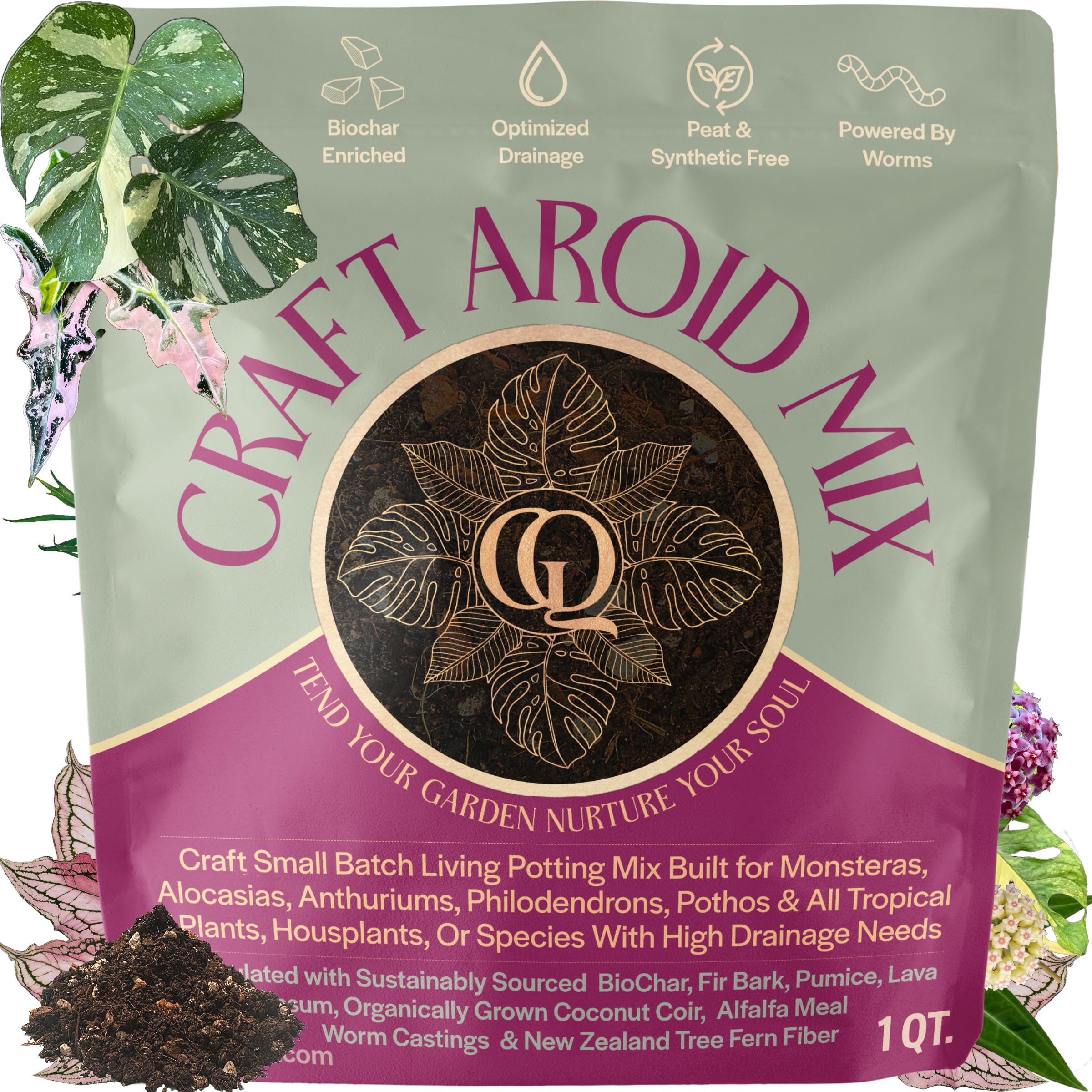
| Craft Aroid Mix (Grow Queen)★ Best Overall | Small aroid pots (6-inch or under) | 1 Quart | Douglas fir bark, pumice, lava rock | Yes | Amazon |
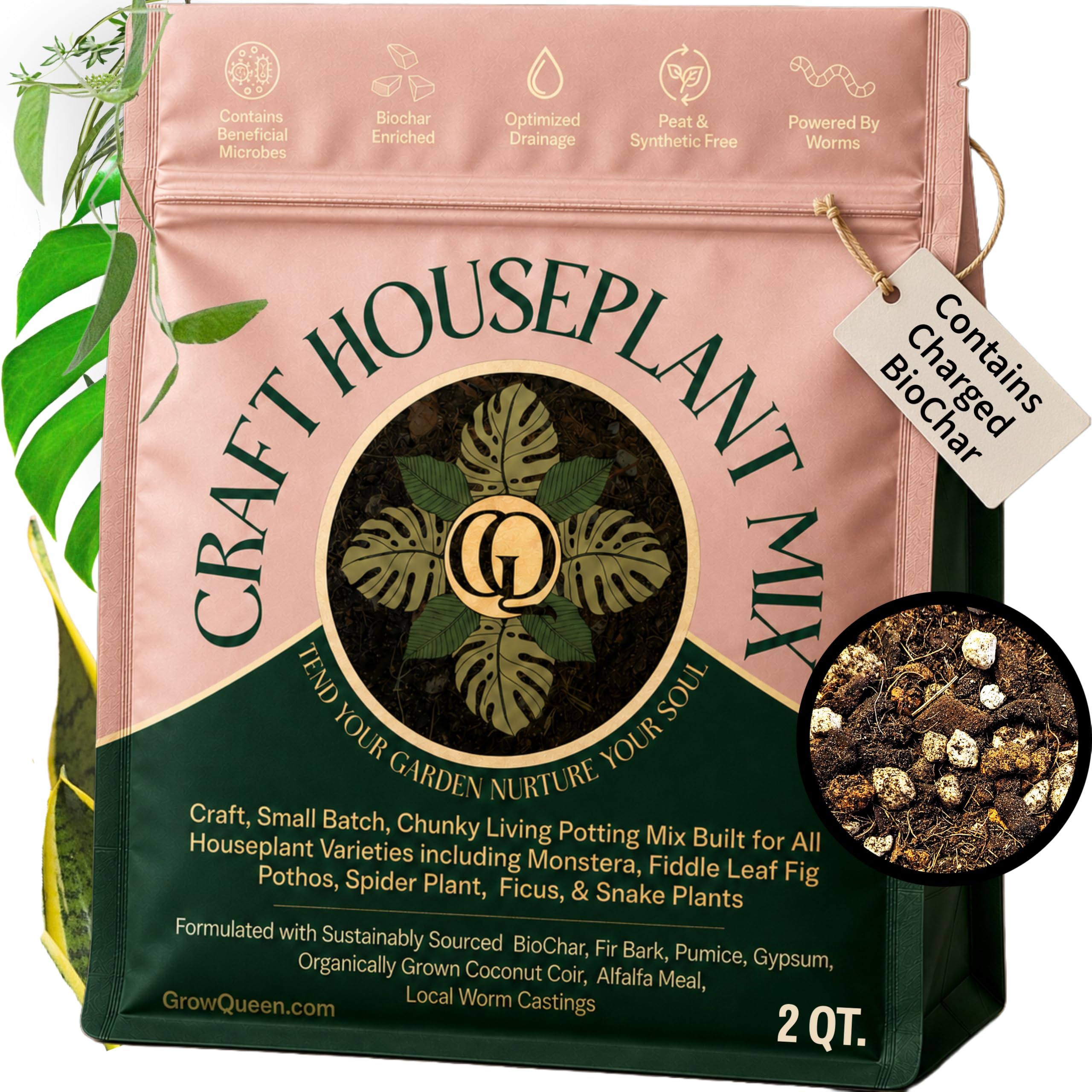
| Craft Houseplant Mix (Grow Queen)Also Great | All-around indoor use | 2 Quarts | Organic worm castings | Yes | Amazon |
| Sol Soils Chunky Mix | Tropical aroids | 1 Gallon | Coco coir, pumice, LECA | Yes | Amazon |
| Noot Potting Mix | Rapid root growth | 1 Gallon | Coconut chips, bio-organic food | Yes | Amazon |
| Perfect Plants Indoor Soil | Budget-friendly all-purpose | 4 Quarts | Pine bark, coco coir, sand | No | Amazon |
| Espoma African Violet Mix | Flowering indoor plants | 4 Quarts | Sphagnum peat moss, perlite | No | Amazon |
In‑Depth Reviews
1. Craft Aroid Potting Mix (Grow Queen)
Our pick — 4.6★ from 998 verified ratings; the strongest balance of quality and price.
The smallest bag here, but the most specialized texture for small aroid pots.
At just 1 quart, this bag is tiny — but it packs a serious texture punch for aroid lovers. It blends large Douglas fir bark fines, lava rock, pumice, and New Zealand Tree Fern Fiber, which acts as a soil conditioner and neutralizes pH down to 6.0 (mimicking the natural acidic conditions tropical plants evolved in). The mix is peat-free, perlite-free, and uses eco-friendly pumice and lava rock that require zero energy-intensive processing.
This is the bag for small pots (6 inches or smaller) where you need extreme drainage. The chunky texture makes it “almost impossible to overwater,” as the listing says. However, one buyer specifically noted a limitation: “I repotted a large alocasia and philodendron and it never dried out fully after the first watering” — for pots over 6 inches, this mix held too much moisture and caused root rot. So stick with it for your small Monsteras, pothos cuttings, and Hoyas in nursery pots under 6 inches.
Compared to the Craft Houseplant Mix above (which uses worm castings and is more universal), this is the true aroid specialist. The 1-quart vs 2-quart volume difference is just part of the story — the tree fern fiber gives it a unique pH-balancing benefit that the houseplant mix lacks.
What Makes It Unique
- New Zealand Tree Fern Fiber neutralizes pH to 6.0 — ideal for tropicals
- Pumice and lava rock means zero perlite dust or waste
- Coco coir is certified organic, washed more times than competitors
- Pet-friendly and safe around homes with animals
The Size Limit
- Only 1 quart — the smallest bag on this list
- One buyer found it held too much moisture for plants in pots larger than 6 inches
Best for: small aroid pots (6-inch or smaller) where you want the best pH-adjusted, fast-draining mix available.
Skip if: you are repotting a large Monstera, big philodendron, or any pot over 6 inches — the moisture retention becomes a risk.
2. Craft Organic Houseplant Potting Mix (Grow Queen)
The one bag that handles Monsteras, pothos, and even herbs without needing a custom mix.
This 2-quart blend lands right in the balance of “just chunky enough.” It packs Douglas fir bark fines, lava rock, and pumice together so water drains instantly — buyers report that the moisture balance lets roots drink without ever sitting in mud. The mix arrives pre-moistened, meaning you can pot a sensitive calathea or a fresh cutting without dry, hydrophobic soil repelling water.
Where this pull ahead of the Craft Aroid Mix (the 1-quart sibling) is volume: at 64.0 Ounces versus 32.0 Ounces for the aroid bag, you get a larger volume for about the same per-ounce cost. It also adds premium organic worm castings for steady nutrition, which the smaller aroid bag does not emphasize. Owners mention their Monstera Thai Constellation “unfolded a leaf” and showed “new growth” within a month.
The key difference from the Sol Soils mix below is texture — this one is chunkier, which means it drains even faster, but it also holds a bit more moisture thanks to the worm castings. If you have a mix of aroids, ficus, and tropicals, this is the single bag that covers them all.
What Gets Stronger Growth
- Pre-moistened so you never rassle with dry dirt
- Charged biochar (activated charcoal-like material) keeps nutrients around longer
- Peat-free and perlite-free — no floating white specks or collapsed structure
- Less prone to fungus gnats compared to compost-heavy mixes
The Real Trade-Off
- 2-quart bag goes fast if you repot multiple large plants
- Premium price compared to standard store-brand potting soil
Reach for this if: you want one mix that works for Monsteras, pothos, peace lilies, and indoor herbs without amending anything yourself.
Look elsewhere if: you need to repot a big potted tree or multiple 10-gallon containers — you will run through bags quickly.
3. Sol Soils Houseplant Chunky Mix
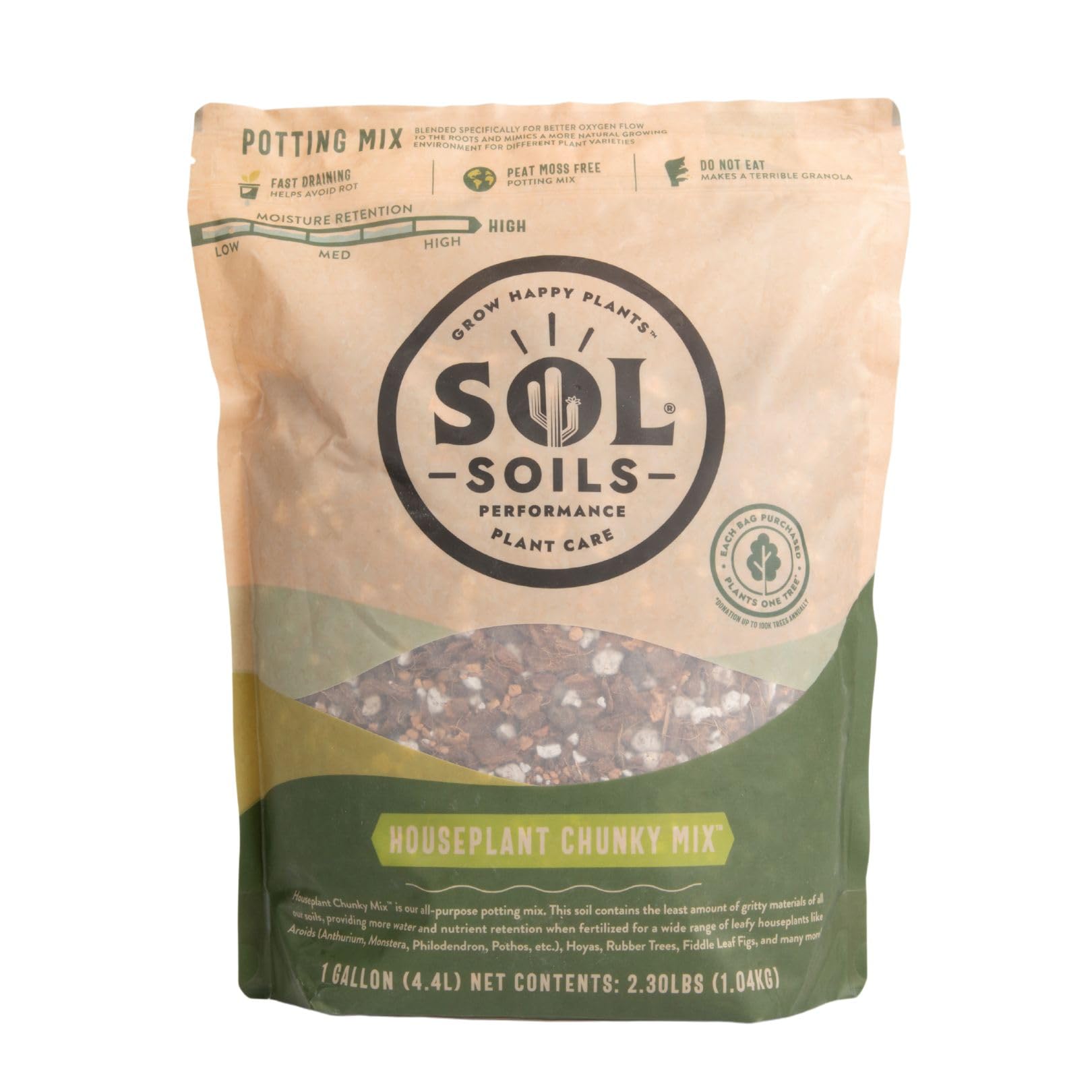
The chunkiest bag on this list — built for tropical roots that need maximum airflow.
Sol Soils goes all-in on aeration. This 1-gallon mix combines coconut coir, husk chips, perlite, pumice, pine bark, and LECA (lightweight expanded clay aggregate, those small round clay pebbles). The result is a soil that drains so fast that buyers call it “dry” out of the bag — which is actually ideal for plants recovering from root rot or species like Hoya that hate wet feet.
At a 4.7 rating from 252 reviews, it is the highest-scoring mix here. Reviewers mention “no gnats or mold” and praise the fact that you can use it straight from the bag “without baking, adding peroxide, etc.” Unlike the Noot mix below, which arrives pre-soaked with nutrients, this one is dry and peat-free, giving you full control over watering from day one. A fraction of each purchase goes to global reforestation, which adds a feel-good angle.
The catch is the price — this is the most expensive per-gallon option. But if you have a Thai Constellation, philodendron, or anthurium that needs truly fast drainage, the texture here beats every other bag on texture alone.
Why Roots Love It
- Five different drainage components (pumice, perlite, LECA, bark, coco chips)
- Peat-free and fully sustainable formula
- No bugs, mold, or fungus gnats reported by buyers
- Supports reforestation projects
The Hard Part
- Most expensive bag on this list per volume
- No larger bag sizes — you have to buy multiple 1-gallon bags for big jobs
Best for: collectors with high-value tropical plants (Monstera Thai Constellation, Hoya, anthurium) who want the safest drainage they can buy.
Skip if: your houseplant collection is mostly snake plants, ZZ plants, or low-light species that prefer standard potting soil — this drains too fast for them.
4. Noot Potting Soil Mix for Indoor & House Plants
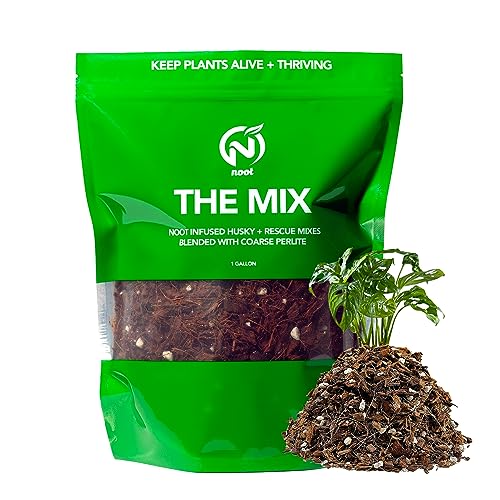
A pre-fed, microbe-packed mix that jump-starts roots faster than standard soil.
Noot takes a different approach: the bag is pre-soaked with its own Bio-Organic Plant Food (NPK.10/.15/.12 — the three numbers on fertilizer labels: Nitrogen, Phosphorus, Potassium) and fortified with 16 strains of beneficial bacteria and friendly fungi. That means you can repot and, according to reviewers, “notice new growth” within weeks without adding any fertilizer. One reviewer noted a Monstera “produced four large healthy leaves with strong roots” after moving into this mix.
The texture leans on larger coconut chips and coarse perlite rather than bark fines — so it is chunky but lighter than the Sol Soils or Craft mixes. It is also designed to be fast-draining to prevent root rot, which makes it a solid pick for beginners who tend to over-water. One reviewer successfully transitioned a dragon tree, snake plants, pothos, anthurium, African violet, and syngonium from old soil to Noot mix while eliminating a fungus gnat problem.
The downside is the same one every buyer notes: the 1-gallon resealable bag is small for the price. Use it as a “specialist mix” for your most expensive plants rather than for every repot.
What Makes It Different
- Pre-loaded with organic nutrients and living microbes — no extra feeding needed for weeks
- 16 strains of beneficial bacteria and fungi work at the root level
- Fast-draining formula helps fight root rot for over-waterers
- Resealable bag stores fresh for later use
The Honest Catch
- Expensive per-gallon — one buyer called it “very pricey for size bag”
- Pre-soaked moisture level might not suit every plant species right out of the bag
Reach for this if: you want the fastest possible root growth from a bag and are willing to pay more for the microbes and pre-feeding.
Look elsewhere if: you need to repot an entire collection — the cost per plant adds up fast.
5. Perfect Plants Indoor Plant Soil

The biggest bag for the money — and it actually stays bug-free and drains well.
Perfect Plants gives you 4 quarts of organic materials (pine bark, coco coir, perlite, sand, and garden lime) in a heavy-duty resealable bag. At this volume, it beats the 1-quart and 2-quart premium bags on value. Reviewers repeatedly mention that it is “completely bug-free, unlike Miracle Grow,” which is the single biggest reason experienced indoor gardeners switch.
The texture is light, fluffy, and drains well — one buyer mentioned their aglaonema (Chinese evergreen) puts out “frequent new leaves” after repotting. It works for Monstera, aloe, spider plants, and African violets, making it a genuine all-purpose option. Unlike the Espoma mix below, which is tuned specifically for African violets, this one is designed for “all varieties of live houseplants” without modification.
The trade-off is that it is not as chunky as the Sol Soils or Craft mixes. The pine bark and coco coir give decent air pockets, but if you have a Monstera that needs extreme drainage, you will want to add extra perlite or pumice. For most common houseplants (pothos, snake plants, peace lilies), this is the most practical value choice.
What Makes It Worth Buying
- 4-quart bag — the largest volume in this list for the mid-range price tier
- Organic ingredients with no synthetic chemicals
- Buyers confirm zero gnats or pests
- Resealable bag stores fresh for months
The Limitation
- Not as chunky as premium aroid mixes — may need amending for plants that need extreme drainage
- Heavier texture than the coco-coir-heavy blends
Best for: beginners or large collections where volume and value matter more than boutique texture.
Skip if: you are potting a Thai Constellation Monstera or fussy calathea that demands maximum aeration out of the bag.
6. Espoma Organic African Violet Potting Mix

The classic formula that brought a neglected 20+ year old African violet back to constant blooms.
Espoma has been mixing organic soil since 1929, and this 4-quart bag is a proven formula for African violets and indoor flowering houseplants. It blends sphagnum peat moss, humus, perlite, and yucca extract (a natural wetting agent that helps water absorb evenly instead of beading up). One buyer reports that this “African Violet potting mix revived a neglected 20+ year old plant” that now “thrives with near-constant blooms” after repotting.
Compared to the Perfect Plants mix, this one is lighter and more tailored for flowering plants. The peat moss holds moisture better than coco coir, which African violets appreciate — they like consistent dampness without being waterlogged. The yucca extract is a nice touch that you do not see in most general-purpose mixes. Buyers consistently give it 5 stars, saying their violets “perked up so much” and “bloom right up with flowers.”
The catch is that this is a specialist mix. It contains peat (not peat-free), and it is not ideal for aroids like Monstera or philodendron that need chunkier, faster-draining soil. Use it for your flowering indoor plants only.
Why Flowering Plants Love It
- Yucca extract helps water penetrate evenly — no dry pockets in the pot
- Sphagnum peat moss holds moisture for consistent soil dampness
- Rich in humus and organic matter for steady nutrition
- Made in the USA by a 90+ year old company
Keep In Mind
- Not peat-free — peat harvesting has environmental impact
- Too moisture-retentive for aroids, succulents, or cacti
Reach for this if: you have African violets, peace lilies, or other flowering houseplants that like steady moisture.
Look elsewhere if: your collection is mostly aroids, succulents, or snake plants — this holds too much water for them.
Understanding the Specs
Chunky vs. Fine Texture
“Chunky” means the mix contains visible pieces of bark, pumice, or lava rock that create air channels — like the gaps between gravel. Water flows through quickly, and roots get constant oxygen. Fine soil (like standard potting mix) packs tighter, holds more water, and can suffocate aroid roots. If your plant’s tag says “well-draining soil,” you want chunky.
Peat-Free and Why It Matters
Peat moss is harvested from bogs that take thousands of years to form and release stored carbon when dug up. Peat-free mixes use sustainable alternatives like coco coir (ground coconut husk), tree fern fiber, or pine bark. They drain just as well, but the texture holds up longer in pots — peat eventually breaks down into mud, while coco coir stays airy.
FAQ
Can I use outdoor garden compost for my house plants?
How often should I repot my house plants into fresh soil?
What does “fast-draining” actually mean for house plant soil?
Is peat-free soil better than peat-based soil?
Will a chunky mix work for low-light plants like snake plants or ZZ plants?
How do I know if my house plant soil has fungus gnats?
What is the difference between potting mix and potting soil?
Can I mix two different brands of house plant soil together?
Final Thoughts: The Verdict
For most people, the compost for house plants winner is the Craft Organic Houseplant Potting Mix because its pre-moistened, chunky texture works for Monsteras, pothos, and tropicals without needing amendments. If you want the fastest root growth and do not mind a smaller bag, grab the Noot Potting Mix. And for the most extreme drainage for prized aroids, the standout is the Sol Soils Chunky Mix.
How We Picked
We do not accept paid placement. Every pick is matched to a real buyer and a real use-case; we do not hands-on test units.
Sources & Methodology
Specifications: manufacturer listings and product documentation. Review insights: verified customer reviews, as of July 2026. Pricing: not shown on this page (it changes often); check the current price via the retailer link.
As an Amazon Associate, Lawn Gear Lab earns from qualifying purchases. This does not affect which products we feature.