
Specs are compiled from manufacturer listings and verified buyer reviews and can change over time — please confirm the key details on the product page before buying.
Getting fat, sweet peppers from your garden really depends on what happens below the soil. The right compost feeds the plant steadily, keeps moisture even, and prevents the blossom-end rot that ruins all your work just before harvest. This guide cuts through the bag labels to show you which compost blends actually deliver the nutrients and soil structure peppers crave, from delicate worm castings for seedlings to rich lobster-meal blends for heavy feeders.
I’m Rikta — the founder and writer behind Lawn Gear Lab. This guide is built by comparing the manufacturers’ published specifications and the patterns across verified customer reviews, so you get each pick’s real strengths and trade-offs instead of marketing spin.
Whether you are starting seeds indoors or building a raised bed for a full season of jalapeños and bell peppers, this breakdown of the best compost for growing peppers covers seven distinct options matched to different garden needs and budgets.
Quick Picks
- Wiggle Worm 100% Pure Worm Castings Plus Worm — Best Overall
- Espoma Organic Land and Sea Gourmet Compost — Premium Pick
- Uncle Jim’s Worm Farm Black Gold Worm Castings — Top Performer
- Earth Science Earthworm Castings — Best for Seedlings
- Worm Bliss (1 Gallon) – Organic Worm Castings — Best Value
- Back to the Roots Organic Worm Castings — Versatile Pick
- Worm Castings Organic Fertilizer 1.1LB by Doter — Budget Champion
How To Choose The Best Compost For Growing Peppers
Pepper plants are heavy feeders that need a steady supply of nutrients, especially calcium and phosphorus, to set fruit and avoid blossom-end rot. The compost you choose directly affects drainage, microbial life, and how often you need to water, so matching the right type to your growing method matters.
Worm Castings vs. Blended Compost
Pure worm castings are gentle enough to use directly on seedlings without burning roots, making them ideal for starting pepper seeds indoors. Blended composts that include lobster meal, crab meal, or mycorrhizae provide a broader nutrient profile for established plants in the garden but may need to be mixed into the soil rather than used as a standalone potting medium.
Particle Size and Texture
Pepper roots need air as much as they need water. A fine, sifted compost (like most worm castings) mixes evenly into potting soil without creating clumps or blocking drainage. Coarser compost with visible chunks works better as a top dressing or a soil amendment for garden beds, where it improves aeration over time.
Nutrient Content and pH
Peppers prefer slightly acidic soil, around 6.0 to 6.8 pH. Compost naturally buffers pH toward neutral, but some blends (especially those with lobster or crab meal) can lean alkaline, so test your soil if you add them heavily. Look for compost that lists a balanced N-P-K ratio without synthetic additives.
Quick Comparison
| Model | Best For | Weight | Unit Count | Form | Amazon |
|---|---|---|---|---|---|
| Wiggle Worm 40lb | Large gardens & living soil | 40 Pounds | 640.0 Ounce | Granules | Amazon |
| Espoma Land & Sea | Transplants & heavy feeders | 24 Pounds | 1.0 Count | Granules | Amazon |
| Uncle Jim’s Worm Farm 4lb | Balanced all-purpose feeding | 4 Pounds | — | Granules | Amazon |
| Earth Science 3lb | Indoor pots & seed starting | 3 Pounds | 48.0 Ounce | Granules | Amazon |
| Worm Bliss 1 Gallon | Delicate roots & container soil | 1 Gallon | 80.0 Ounce | Granules | Amazon |
| Back to the Roots 5lb | Versatile garden & houseplants | 5 Pounds | 80.0 Ounce | Granules | Amazon |
| Doter Worm Castings 1.1lb | Small-space & trial use | 1.1 Pounds | 17.6 Ounce | Granules | Amazon |
In‑Depth Reviews
1. Wiggle Worm 100% Pure Worm Castings Plus Worm Egg Material, 40lbs
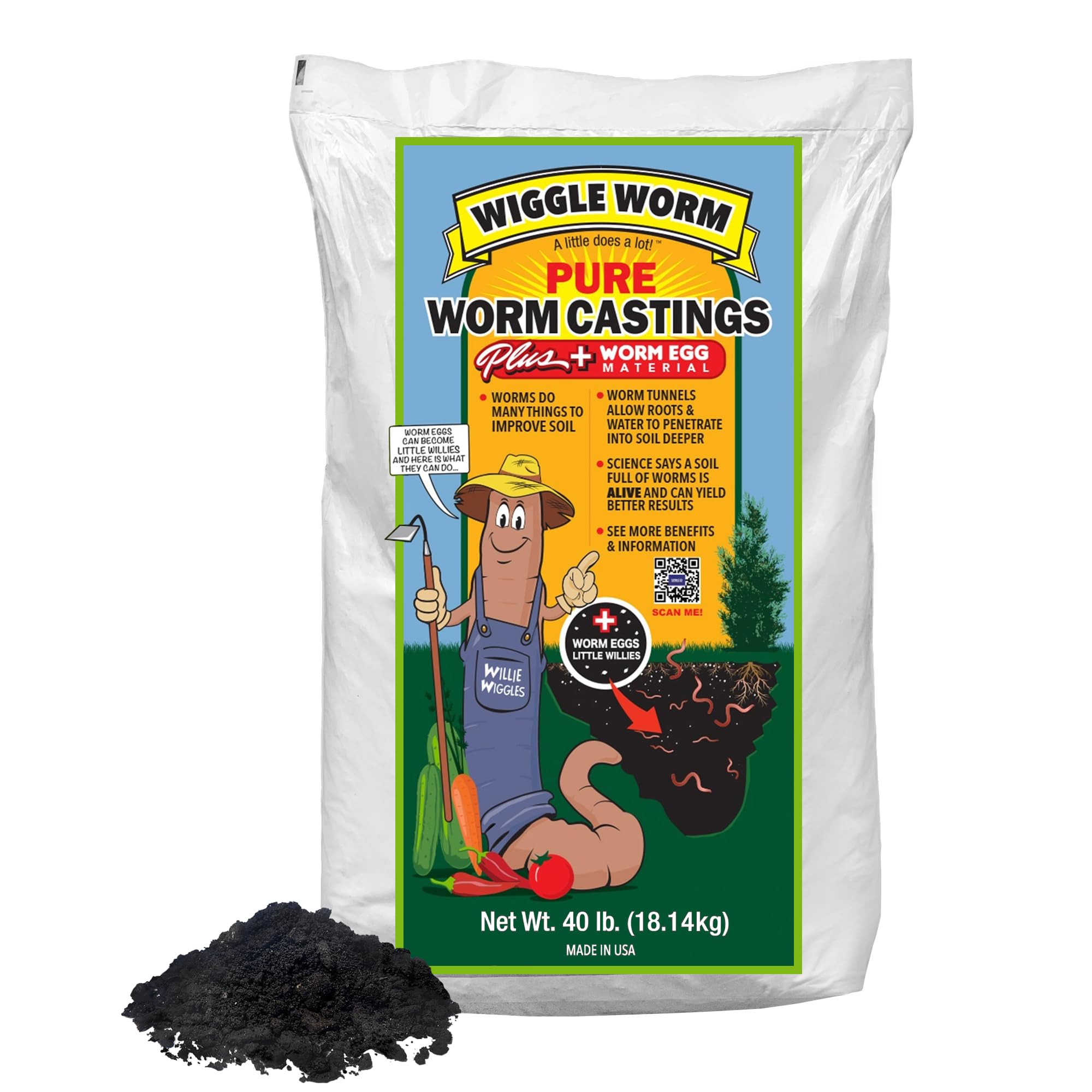
The bulk bag that builds a living soil all season long for pepper patches.
At a full 40 pounds, this is the bag you reach for when you have a serious garden bed to fill and you want a compost that does more than just fertilize. The Wiggle Worm formula mixes pure worm castings with worm egg material (the cocoons worms lay, plus tiny soil balls and bedding bits) to boost microbial activity right in the ground. That means your pepper plants get better aeration and drainage while the microorganisms work to open up nutrients in the soil around the roots.
Buyers report that the castings have a soft, velvety feel, no foul odor, and no clumps of undecomposed material — they mix easily into container soil and garden beds alike. One gardener noted that the worm eggs can hatch in the soil, producing live worms that tunnel, bring in oxygen, and create space for plant roots, which is exactly the kind of deep soil health peppers need to push out heavy yields. This is a massive 640.0-ounce bag, so you are not paying for water weight.
Garden-scale powerhouse: If you want a single bag that feeds your pepper plants, improves drainage, and kick-starts a self-sustaining soil ecosystem, this is the one. The 40-pound weight makes it less practical for a few small pots on the windowsill.
Reach for this if: you have a large raised bed or multiple containers and want a compost that keeps working beneath the surface all year.
Look elsewhere if: you only need a small bag for indoor pepper seedlings — the 40-pound size is overkill for that.
2. Espoma Organic Land and Sea Gourmet Compost with Lobster & Crab Meal, 1 Cubic Foot Bag

A seafood-enriched compost that feeds pepper plants from transplant to harvest.
This is not a typical worm casting. Espoma blends natural and organic ingredients with lobster meal and crab meal to create a rich compost that delivers a broad spectrum of nutrients, including the calcium that helps prevent blossom-end rot on peppers. It also contains Myco-Tone, a proprietary blend of endo and ecto mycorrhizae (beneficial fungi that attach to roots and help them absorb more water and nutrients), making this a strong choice when you are planting or transplanting peppers into the garden.
At 24 pounds and formulated for vegetables, flowers, trees, and shrubs, this bag goes a long way. Owners mention that this compost improves soil quickly and that plants grow extremely well after just one season of use. One reviewer noted using it for three years straight and being consistently happy with the results. Unlike pure worm castings, this blend is designed to be mixed into the native soil rather than used as a standalone potting medium, so it works best when you are amending a garden bed or a large container.
Nutrient-dense transplant boost: The lobster and crab meal gives pepper transplants a strong start, especially if your native soil is tired. skip it if you prefer a finer-textured compost for indoor seed starting.
Best for: gardeners planting peppers into raised beds or ground soil who want an organic, all-in-one mix that conditions and feeds at the same time.
Not ideal for: indoor pots where a lighter, dust-free worm casting is easier to handle.
3. Uncle Jim’s Worm Farm Black Gold Worm Castings Compost Fertilizer, 4 lbs

Worm castings from decades-old beds that are richer in nutrients than average soil.
Uncle Jim’s Worm Farm has been in business for over 50 years, using over 40 acres of land, and they raise their worms in beds that have been operating for decades. The claim is that these worms work all layers of the compost (not just the top few inches), which creates a more thoroughly processed casting. The resulting worm castings are advertised as 7 times richer in phosphates, 5 times richer in nitrogen, and 11 times richer in potash than average lawn soil — exactly the kind of nutrient density that supports pepper flowering and fruit set.
Customers note purchasing this product twice and plan to buy again, noting that it has a natural worm-dirt odor and sometimes contains tiny white bugs that are actually beneficial for soil balance. One gardener mentioned that the seller’s customer service was excellent when a delivery error occurred, sending a replacement free of charge. The 4-pound bag is a manageable size for container peppers or a small raised bed, though it is significantly smaller than the Wiggle Worm or Espoma bags.
Concentrated and consistent: The decades-old worm beds produce a nutrient-packed casting that peppers respond to quickly. Just be aware that the bag size means you will need to reorder more often for a large garden.
Who it suits: gardeners who want a proven brand with a strong track record and a bag size that is easy to store.
Trade-off: the 4-pound bag goes fast if you are amending multiple containers or a large bed.
4. Earth Science Earthworm Castings – 3 lb — Premium Plant Fertilizer
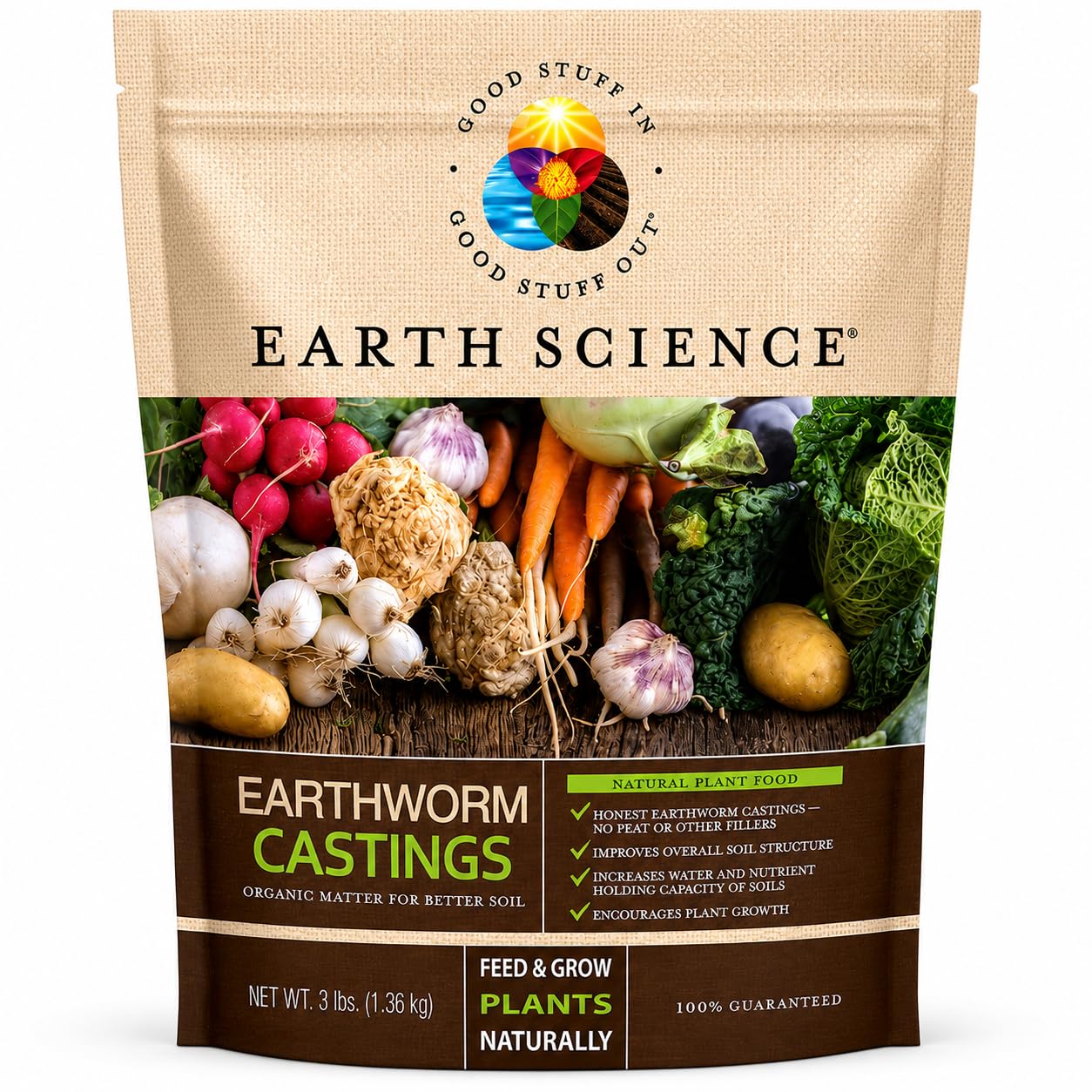
A fine-textured worm casting sized perfectly for a season of indoor pepper starts.
The 3-pound bag from Earth Science is made with a 1:4 mixing ratio in mind, meaning you can blend one part of these castings with four parts of potting mix for a gentle, nutrient-rich starting medium. This is especially helpful for pepper seeds, which need consistent moisture and a steady supply of nutrients without the risk of chemical burn. The castings are 100% vermicompost with no fillers, and they help reduce soil compaction by forming soil aggregates (clumps of soil particles that create air pockets).
One buyer mentioned mixing these earthworm castings into coco coir at about 20-25% castings to create a seed-starting mix, and the results were fantastic — seedlings were stronger, sprouted faster, and showed less transplant shock. The 48.0-ounce bag is compact enough to store on a shelf alongside your seed trays, making it an easy grab-and-go option for starting peppers indoors before the last frost. It is a manageable size for indoor pots, as another reviewer noted.
Seed-starting specialist: The bag size and fine texture make this a natural fit for mixing small batches of potting soil for pepper seedlings. For a large vegetable garden, you will need to buy multiple bags to cover the same area as a single 5-pound or 40-pound bag.
Best for: seed starting and small container pepper plants where you want precise control over the mix.
pass on it if: you need to amend a large raised bed — the 3-pound bag is too small for that.
5. Worm Bliss (1 Gallon) – Organic Worm Castings for Plants – OMRI-Listed
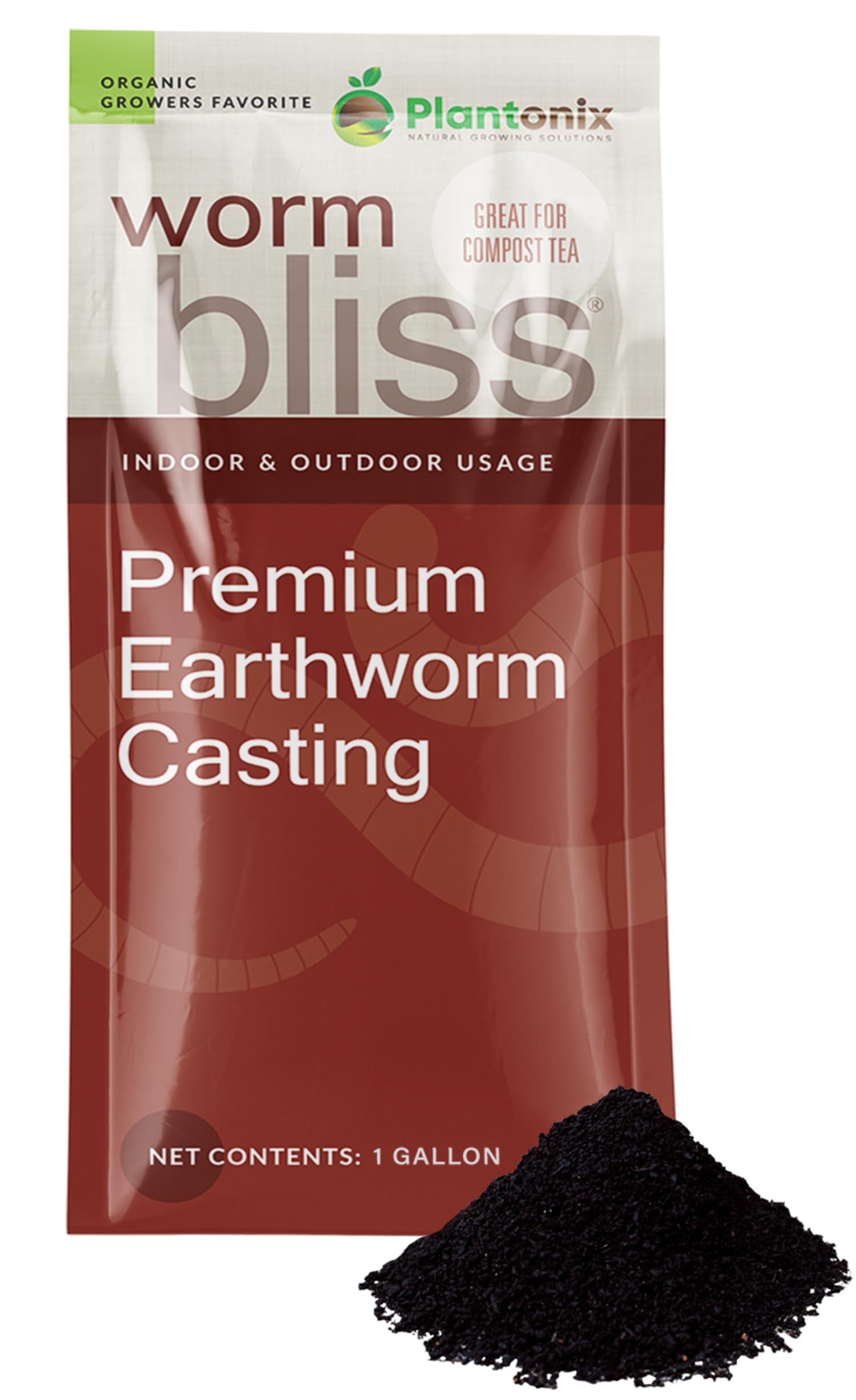
An OMRI-listed casting that is especially gentle on delicate pepper roots.
Plantonix raises their worms in a climate-controlled facility and feeds them a strictly vegan diet (no manure), then screens the castings to remove dirt, sand, and rocks. The result is a pure, fine-textured worm casting that is OMRI-listed (certified for organic use). This matters for pepper plants because their root systems can be sensitive to chemical fertilizers and rough textures. The humus in these castings improves water retention, so your pepper containers stay hydrated longer between waterings.
Reviewers point out that Worm Bliss works fine as organic fertilizer for tropical plants like Marantas with delicate roots that dislike chemical fertilizers, and one reviewer specifically mentioned using it when planting very large containers of vegetables including peppers. The 1-gallon bag is comparable in size to the Back to the Roots 5lb bag, but at a price point that lands closer to the budget end, making it a solid value for gardeners who want organic certification without paying a premium. The granules are not too small to interfere with fine roots, and the castings have an earthy smell rather than a strong odor.
Gentle and organic: The vegan diet and fine sifting give this a clean texture that pepper seedlings and transplants tolerate well. The 1-gallon bag is not the largest option, but it costs less than many mid-size alternatives.
Reach for this if: organic certification matters to you and you want a casting that won’t overwhelm young pepper plants.
Look elsewhere if: you need a larger volume for a big garden bed — the 1-gallon size is best for containers and small beds.
6. Back to the Roots Organic Worm Castings for Plants, Natural Fertilizer and Soil Enhancer, Made in the USA, 5lb

A well-balanced bag of pure USA vermicompost for peppers and everything else you grow.
This 5-pound bag from Back to the Roots is pure USA vermicompost with beneficial microbes that enhance soil and protect seedlings from harmful pathogens. The resealable bag is a practical touch — you can open it, scoop out what you need for your pepper pots, and seal it back up without worrying about moisture or pests. It is formulated to reduce the need for additional fertilizers, which makes it a simple one-and-done amendment for your pepper soil mix.
One owner reported using a ton of this for their garden and finding it safe for milkweed and monarchs, which speaks to how gentle it is. Another reviewer mentioned that it blends easily into chunky soil mixes (coco chips, perlite, charcoal) without compacting the soil, and they observed healthier leaves and stronger growth as a result. The 80.0-ounce unit count matches the Worm Bliss bag, but this one comes from a brand with a popular #GrowOneGiveOne program that donates gardening kits to classrooms. It is a versatile, no-nonsense option for pepper containers, raised beds, and in-ground gardens alike.
Reliable all-rounder: The 5-pound bag hits a balance for most home gardens — big enough to amend several containers but not so heavy that it is hard to store. The resealable bag keeps it fresh between uses.
Who it suits: gardeners who want a straightforward, made-in-the-USA worm casting that works for peppers, houseplants, and the whole garden.
Trade-off: if you have a very large pepper patch, you will need to buy multiple bags or step up to the 40-pound option.
7. Worm Castings Organic Fertilizer 1.1LB by Doter, All Nature Fertilizer

An entry-level bag of worm castings that is odor-free and safe for a small pepper pot.
If you are growing a single pepper plant on an apartment balcony or just want to test how your soil responds to worm castings before buying a larger bag, the 1.1-pound Doter bag is the lowest-commitment option. It is nontoxic and odor-free, which buyers confirm, and it comes in granular form that is already broken down into nutrients plants can digest without pre-mixing or measuring. The maker claims it helps reduce carbon, prevent extreme pH levels, and increase nitrogen levels, though at this small size you are mostly getting a trial run.
One buyer summed it up by saying, “They grew my plants in no time!” and noted there was no odor at all. Another reviewer mentioned that it is made in China, but their plants did not seem to care. The 17.6-ounce unit count is significantly smaller than every other product on this list — at 17.6 ounces versus 80.0 ounces for the larger bags, and 1.1 pounds versus 5 pounds for the Back to the Roots bag. For a single pepper plant in a 5-gallon pot, one bag will get you through the first few weeks, but you will need to reorder or supplement with another nutrient source for a full season.
No-risk starter bag: Low cost, no odor, and safe for pets and children make this a low-stakes way to try worm castings for the first time. Just plan to buy more if your pepper plants take off.
Best for: first-time users who want to see how their pepper plants respond to worm castings without buying a large bag.
it’s not for you if: you have more than a couple of containers or you want a single bag that lasts the whole growing season.
Understanding the Specs
Unit Count and Weight
Compost bags are sold by weight (pounds) or volume (gallons), but the actual nutrient density varies by brand. A 1.1-pound bag of worm castings is significantly smaller than a 5-pound bag — at 1.1 pounds versus 5 pounds, which matters if you are amending multiple containers. Heavier bags like the 40-pound option give you enough volume to mix into a full raised bed, while smaller bags around 3 to 5 pounds are easier to store and better for indoor pots. Always check the unit count in ounces to compare apples to apples across different brands.
Worm Castings vs. Blended Compost
Pure worm castings are gentle on roots, odor-free, and ready to use straight from the bag without composting further. They are ideal for mixing into potting soil for pepper seedlings and container plants. Blended composts that include lobster meal, crab meal, or mycorrhizae provide a wider range of nutrients but may have a stronger smell and a coarser texture. Blends are better suited for garden beds where you can mix them into the native soil before transplanting peppers.
OMRI Listing and Organic Certification
OMRI (Organic Materials Review Institute) listing means the product has been reviewed and approved for use in certified organic production. If you are growing peppers for a strict organic garden, look for the OMRI seal on the bag. Products without the seal may still be 100% organic, but the OMRI listing provides third-party verification that no synthetic additives or prohibited substances are present.
Texture and Sifting
Fine, sifted worm castings mix evenly into potting soil without creating clumps or blocking drainage. Coarser compost with visible chunks works better as a top dressing around established pepper plants or as a soil amendment for garden beds. Some brands mention that they screen their castings to remove rocks, sand, or undecomposed material, which gives you a more consistent product that is easier to work with in containers.
FAQ
Can I use pure worm castings as potting soil for pepper seedlings?
How often should I add compost to pepper plants during the growing season?
Will worm castings burn my pepper plants like chemical fertilizer does?
What is the difference between worm castings and regular compost?
Can I mix lobster and crab meal compost into container soil for peppers?
How do I store an open bag of worm castings?
Do worm castings have an expiration date?
Is a 1.1-pound bag of worm castings enough for a single pepper plant?
What is the difference between OMRI-listed and organic worm castings?
Can worm castings help prevent blossom-end rot on peppers?
Final Thoughts: The Verdict
For most buyers, the best compost for growing peppers winner is the Wiggle Worm 40-pound bag because it delivers a massive volume of pure worm castings with worm egg material that builds a self-sustaining, living soil — exactly what heavy-feeding pepper plants need all season long. If you want a nutrient-dense boost for transplants, grab the Espoma Land and Sea compost with lobster and crab meal. And for starting pepper seeds indoors or a few containers on a balcony, the Earth Science 3-pound bag offers the right texture and size at a budget-friendly tier.
How We Picked
We do not accept paid placement. Every pick is matched to a real buyer and a real use-case; we do not hands-on test units.
Sources & Methodology
Specifications: manufacturer listings and product documentation. Review insights: verified customer reviews, as of July 2026. Pricing: not shown on this page (it changes often); check the current price via the retailer link.
As an Amazon Associate, Lawn Gear Lab earns from qualifying purchases. This does not affect which products we feature.