
Dumping a bag of compost into your garden bed without a strategy is a gamble—some blends pack enough nutrients to fuel explosive flowering, while others are barely more than damp filler. The difference between a mediocre harvest and a show-stopping garden often comes down to whether your compost delivers the right microbial life, organic matter, and mineral content for your specific soil type. This guide focuses on the handful of blends that consistently produce measurable results, saving you the trial and error of guessing which bag actually works.
I’m Rikta — the co-founder and writer behind Lawn Gear Lab. My process involves cross-referencing hundreds of verified owner reports against lab-backed NPK ratios, microbial activity claims, and the real-world particle size that determines how well a compost integrates with native soil.
My goal is to cut through the marketing fog and point you toward a product that will actually improve your soil structure, feed your plants, and justify its price tag. This is the definitive breakdown of the best compost for garden use cases ranging from heavy clay transformation to container growing to liquid feeding for finicky roses.
How To Choose The Best Compost For Garden Beds
Selecting the right compost means matching the product’s nutrient profile, texture, and microbial activity to your specific garden medium — heavy clay requires a different approach than sandy loam or container mix. Focus on these four criteria, and you’ll eliminate 90% of the weak options from your shortlist.
Understanding NPK and the Input Source
A compost bag that lists only “organic matter” with no NPK ratio is a red flag. You need to know the nitrogen (N), phosphorus (P), and potassium (K) percentages to understand how aggressively it feeds. Manure-based composts (cow, chicken) provide a balanced, gentle feed suitable for general vegetables. Worm castings offer a neutral pH (around 7.0) and a slow-release microbial boost that won’t burn young roots. Marine-based blends (lobster, crab, fish meal) target phosphorus for root development and bloom production. Biochar improves soil structure over multiple seasons but must be “charged” with nutrients first or it can stunt early growth.
Particle Size and Soil Texture Integration
If your garden has heavy clay soil, you need a compost with coarse, fibrous particles that physically pry apart the clay platelets to improve drainage and aeration. Fine, dust-like composts (< 1mm particles) are better for sandy soils where water retention is the priority. For containers and raised beds, a medium-textured compost that holds moisture without becoming waterlogged is ideal. The bag should specify whether the product is sifted — un-sifted composts often contain large sticks and uncomposted material that can tie up nitrogen as it breaks down.
Live Microbial Content vs. Sterilized Fillers
Compost that claims to improve “soil health” without containing living beneficial bacteria and mycorrhizal fungi is usually just expensive dirt. Look for brands that explicitly mention the presence of endo- and ectomycorrhizae (these form symbiotic partnerships with plant roots) or worm egg material (which indicates a truly living product). Be wary of composts that have been heat-sterilized to kill weed seeds — they also kill the microbial life that makes compost valuable as a soil amendment rather than just a fertilizer.
Application Rate and Bag Sizing
Calculate how much area you need to cover before choosing a bag size. A standard 1 cubic foot bag (about 24 lbs) will cover roughly 12 square feet at a 1-inch depth. For a 4×8 raised bed, you need three or four bags for a full top-dress. Buying a 40lb bag of worm castings may seem expensive upfront, but if you have a large vegetable garden, the cost per square foot is lower than buying multiple smaller bags of premium marine compost. For container gardeners, liquid concentrates that dilute into multiple gallons offer a more economical path.
Quick Comparison
On smaller screens, swipe sideways to see the full table.
| Model | Category | Best For | Key Spec | Amazon |
|---|---|---|---|---|
| Wiggle Worm 40lb Castings | Worm Castings | Living soil and large gardens | 40 lbs, 7.0 pH, worm egg material | Amazon |
| Espoma Land and Sea | Marine Compost | Blooming flowers and vegetables | 24 lbs, lobster & crab meal, mycorrhizae | Amazon |
| Great Big Roses Liquid Booster | Liquid Extract | Rose bushes and flowering shrubs | 32 oz, 70 chelated trace minerals | Amazon |
| Down To Earth All Purpose Mix | Granular Fertilizer | Tomatoes, peppers, and raised beds | 5 lbs, 4-6-2 NPK, OMRI listed | Amazon |
| Mountain Valley Worm Castings | Worm Castings | Indoor plants and small gardens | 6 lbs, 1 gallon, odorless, fine texture | Amazon |
| R&M Organics Compost | Manure Compost | Fruit trees, lawns, and flowers | 10 lbs, dairy cow manure, low odor | Amazon |
| The Andersons BioChar DG | Biochar Amendment | Clay soil transformation over multiple seasons | 10 lbs, covers 5,000 sq ft, charged biochar | Amazon |
In‑Depth Reviews
1. Wiggle Worm 100% Pure Worm Castings 40lb
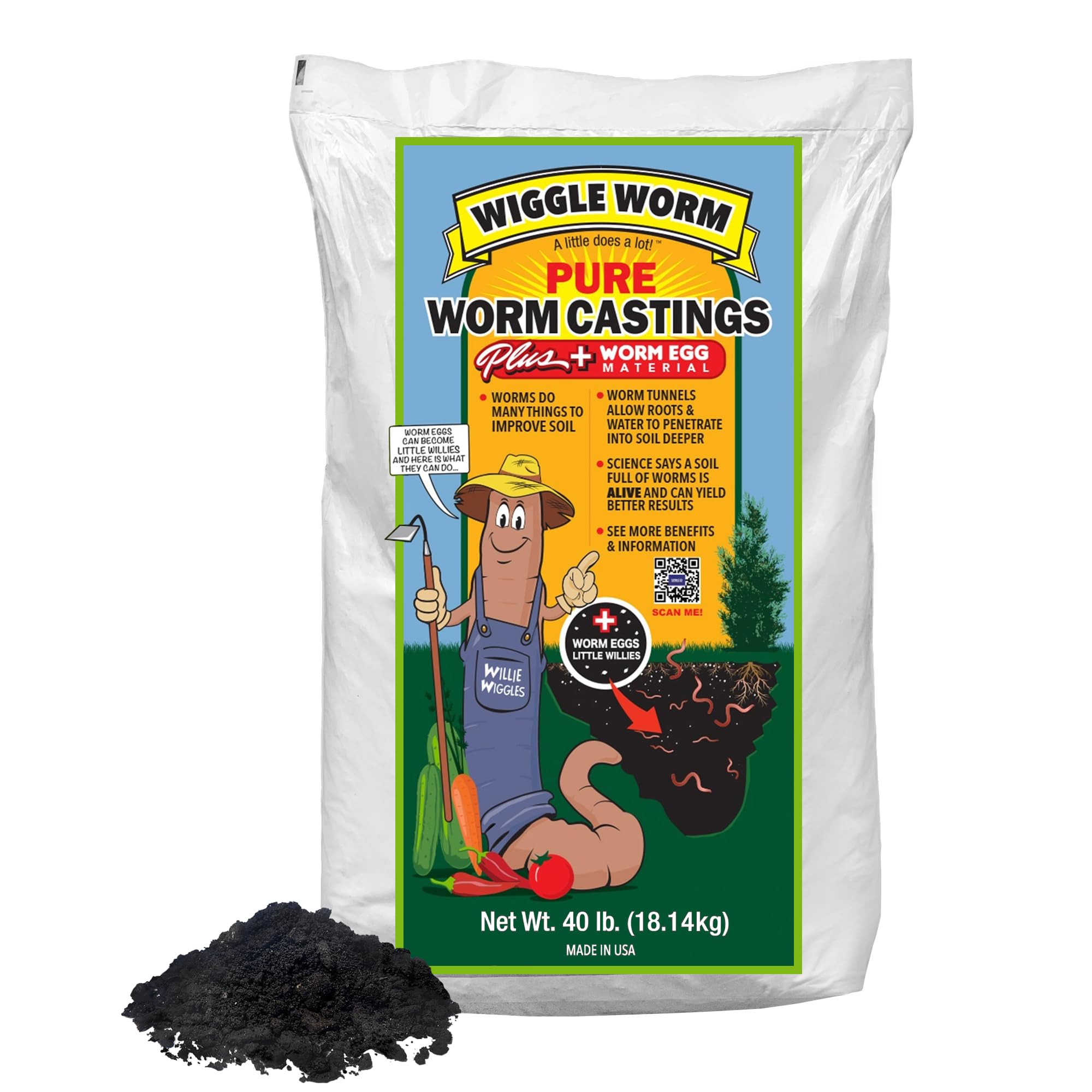
This 40-pound bag of pure worm castings with added worm egg material represents a genuine commitment to creating living soil rather than just feeding plants a chemical meal. The texture is finely sifted, free of trash or clumps, and mixes effortlessly into both containers and garden beds. Unlike many worm castings that are little more than expensive compost filler, the Wiggle Worm product consistently tests at a neutral 7.0 pH and delivers the microbial diversity that drives nutrient cycling in the root zone.
Owner reports from harsh climates — including triple-digit Mojave Desert summers and freezing winters — describe gardenias, hibiscus, and strawberries that bloom and fruit prolifically after incorporation, with plants surviving conditions that normally kill them. The presence of worm egg material means that some of the cocoons may hatch in your soil, establishing a self-sustaining worm population that continues to produce castings and aerate the earth.
The biggest downside is that 40 pounds is heavy, and the bag is a simple black-and-white printed poly sack that can tear if handled roughly during shipping. For small-space gardeners, the 6-pound option from Mountain Valley Seed Company is a more manageable alternative, but the value-per-pound on this bulk bag is unmatched for serious vegetable gardeners.
What works
- True worm castings with egg material, not filler compost
- Neutral pH and fine texture integrate quickly into any soil type
- Proven to help plants survive extreme temperature swings
What doesn’t
- Bag lacks handles and can tear during transit
- Very heavy for small gardeners or tight storage spaces
2. Espoma Organic Land and Sea Gourmet Compost

Espoma’s Land and Sea blend is a marine-based compost that uses both lobster and crab meal as its primary nitrogen and chitin sources, making it distinct from the standard manure or plant-based competitors. The inclusion of Espoma’s proprietary Myco-Tone blend of endo and ectomycorrhizae gives this compost an edge for root development — those fungi attach to root systems and dramatically expand the soil volume the plant can mine for water and minerals. The granular texture is dry and lightweight for a 24-pound bag, which makes it easier to handle than wet, heavy manure composts.
Long-term users report three years of consistent results using this as a soil amendment for indoor vegetable starts, hostas, and fruiting crops. The lobster and crab meal provides a steady supply of calcium and phosphorus, which directly supports fruit set in tomatoes and peppers. Several owners note that plants grown in reused potting soil amended with this compost produced larger fruits and healthier foliage than plants grown in fresh bagged soil without amendments.
The dry texture can be dusty when poured, so mixing with slightly moist soil or applying on a calm day is wise. The 1-cubic-foot bag covers roughly 12 square feet at a 1-inch depth, so larger gardens will need multiple bags. It is also pricier per pound than manure-based composts, which reflects the specialized marine ingredient sourcing.
What works
- Lobster and crab meal supply calcium and phosphorus for fruit development
- Contains endo and ectomycorrhizae for enhanced root partnerships
- Lightweight, dry granules are easy to handle and store
What doesn’t
- Dry texture can create dust clouds during application
- Higher cost per square foot than manure-based blends
3. Great Big Roses Liquid Fertilizer Booster
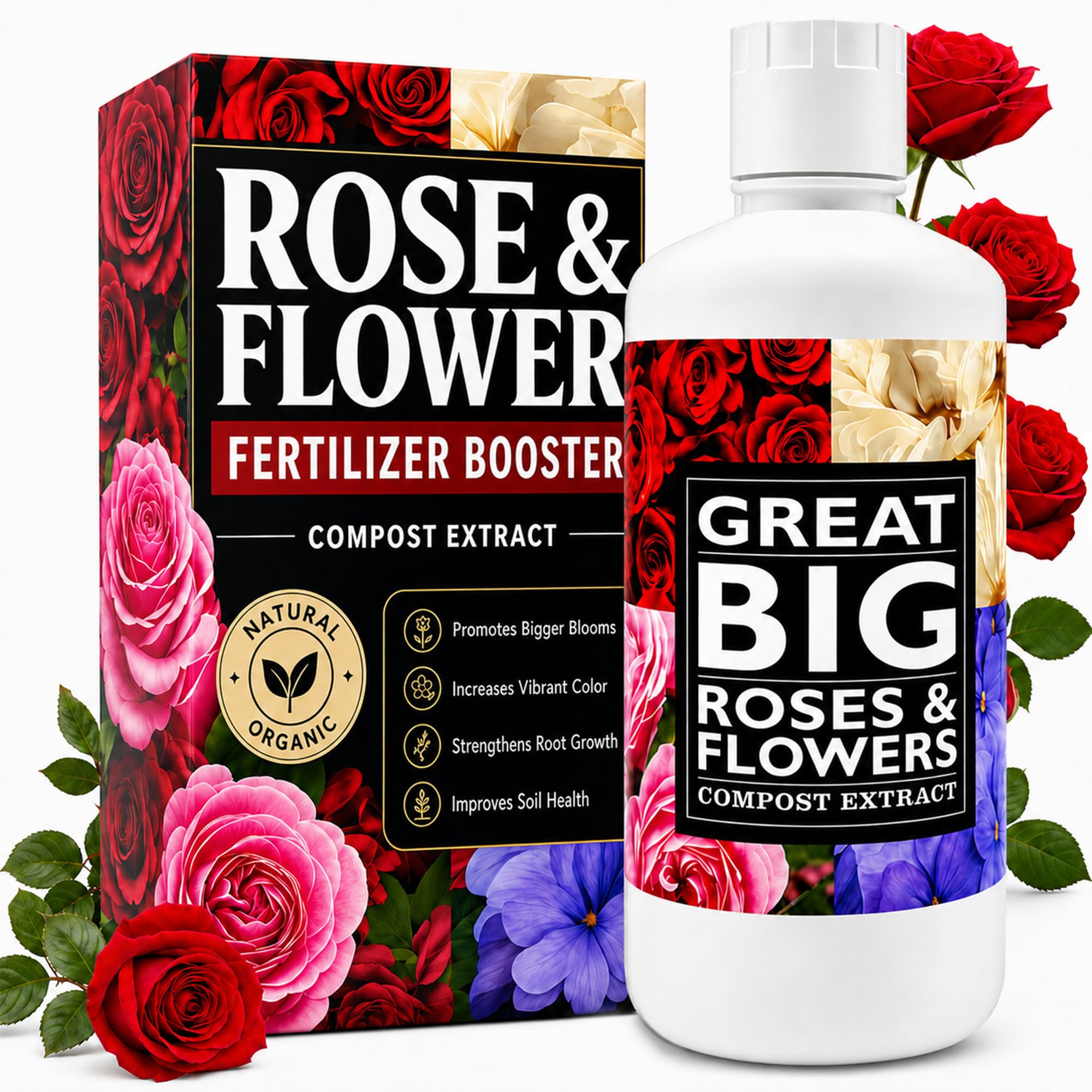
Liquid compost extracts fill a specific niche — they deliver soluble nutrients and humic acids directly to the root zone without requiring soil incorporation. The Great Big Roses booster is a 32-ounce concentrate that mixes at 4 ounces per gallon of water, yielding 8 gallons of liquid feed. The formula packs humic acids, seaweed, chelated iron, and over 70 trace minerals, which effectively act as a compost tea concentrate for gardeners who don’t want to brew their own. Multiple owner photos show rose bushes that hadn’t bloomed in years producing massive flowers within weeks of the first application.
This product amplifies existing soil fertility rather than replacing it, making it best used in conjunction with a solid compost or fertilizer program. Roses and hydrangeas respond particularly well, with users reporting “crazy” flower production on hydrangeas and continuous reblooming on roses even through summer heat. The liquid format means you can precisely target individual plants, applying exactly 1 gallon of diluted solution per bush per application.
The jug design is the most common complaint — the wide mouth makes it easy to spill expensive concentrate when measuring into a watering can. The price is also high for 8 total gallons of finished feed, so gardeners with large rose gardens (more than 8 bushes) will need multiple bottles per season.
What works
- Proven to induce blooms on roses that have been barren for years
- 70 chelated trace minerals unlock nutrients in poor soil
- Liquid format allows targeted application per plant
What doesn’t
- Jug design makes measuring messy — easy to spill concentrate
- High cost per finished gallon for large gardens
4. Down To Earth All Natural All Purpose Mix 4-6-2

Down To Earth’s all-purpose mix is a 4-6-2 granular organic fertilizer that functions more as a nutrient-rich planting mix than a traditional compost, making it a versatile option for gardeners who want NPK transparency. The ingredient panel — fish bone meal, blood meal, feather meal, rock phosphate, langbeinite, greensand, humates, and kelp meal — provides both fast-release nitrogen (from blood meal) and slower-release phosphorus and potassium from mineral sources. This is an OMRI-listed product, meaning it meets organic production standards for serious growers who need certification compliance.
The gentle, non-burning formula makes it safe for transplants and seedlings, and the 4-6-2 ratio skews toward phosphorus and potassium, which supports flowering and fruiting in tomatoes, peppers, and vegetables. Several owners report dramatic turnarounds: one user described tomato plants that were “pale and flimsy” transforming into vigorous specimens within two weeks of application. The 5-pound bag is compact but stretches a long way — 15 pounds lasts nearly a year for the average home vegetable gardener.
It has a strong smell when first applied, which is typical for blood-meal-based fertilizers and can attract animals if not worked into the soil. The smell does dissipate within a few days, and working the granules into the top inch of soil minimizes the issue. It is not a true compost in the sense of building soil structure, but as a nutrient-boosting planting mix it outperforms most generic composts for fruit production.
What works
- Transparent 4-6-2 NPK ratio with full organic ingredient list
- Safe for seedlings and transplants — won’t burn young roots
- OMRI listed for certified organic production
What doesn’t
- Strong blood-meal odor that can attract animals if not mixed in
- Does not improve soil structure like a bulk compost would
5. Mountain Valley Seed Company Earth Worm Castings

This 6-pound bag of worm castings from Mountain Valley Seed Company offers a nearly odorless, fine-textured vermicompost that is ideal for indoor plant re-potting and small container gardens. The castings are derived from certified organic cow manure that has been processed by red earthworms, resulting in a neutral 7.0 pH product that won’t burn sensitive houseplant roots. One owner used this to re-pot houseplants infested with fungus gnats and found that the castings helped restore plant health while improving the overall potting medium.
The texture is clean and consistent, with no visible debris or clumps, making it easy to mix into potting soil at a ratio of about 10-20% by volume. Many owners use it simply as a top-dress for indoor potted plants, applying a quarter-inch layer on the soil surface and watering it in. The product ships in a resealable bag, which is a nice touch for indoor gardeners who only use a portion at a time.
Several owners note that the cost per pound is high compared to bulk worm castings. The 6-pound bag covers only about 1-2 cubic feet of soil mix, so gardeners with multiple large raised beds will find it uneconomical compared to the 40-pound Wiggle Worm option. It is also possible to feel slight grit from small worm-egg particles, though this is a sign of quality rather than a defect.
What works
- Odorless and clean texture — perfect for indoor use and houseplants
- Neutral 7.0 pH ensures safe application to any plant
- Resealable bag is convenient for portioned use
What doesn’t
- High cost per pound for what you get
- Bag size is too small for large vegetable gardens
6. R&M Organics Premium Organic Compost
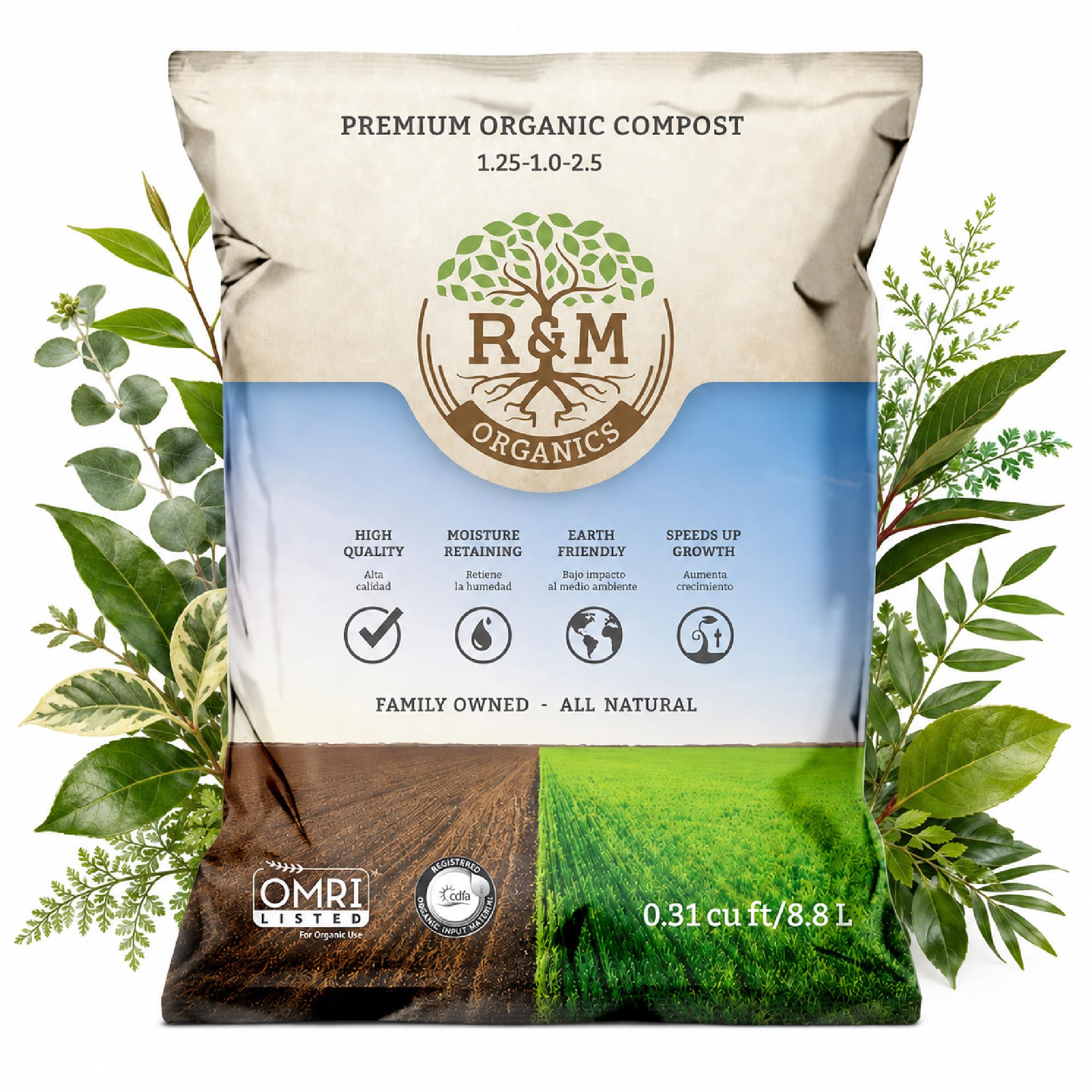
R&M Organics delivers a fully composted dairy cow manure product that strikes a solid mid-range balance — it’s nutrient-rich enough to revive struggling plants but processed through a continuous aeration method that minimizes the pungent odor typical of raw manure. The texture is fine, similar to topsoil, and spreads easily without clumps. This compost excels as a rescue amendment: one owner used it to save azaleas damaged by an enzymatic roof cleaner, and another revived a dying tomato plant whose yellow leaves turned green within a week after mixing it into the pot.
The moisture retention properties are a genuine standout — the organic matter structure holds water longer than mineral soils, reducing watering frequency in raised beds and containers. The 10-pound bag is manageable for small-to-medium garden beds, and the low-odor profile makes it suitable for urban gardens where neighbors might object to manure smells. The product works for fruit trees, roses, orchids, lawns, and general landscaping.
Some owners consider the price high for a 10-pound bag of cow manure compost, especially compared to bulk truckload options from local garden centers. The bag is also somewhat small — 0.31 cubic feet — so covering a large garden area requires multiple bags. For a quick fix for a handful of ailing plants, the price is justifiable; for wholesale bed preparation, buying it by the cubic yard locally makes more sense.
What works
- Low-odor composting process suitable for urban or indoor use
- Fine, clump-free texture blends easily into native soil
- Proven effective as a rescue treatment for stressed plants
What doesn’t
- Small bag size means high cost per square foot for large beds
- Price per pound feels steep for a cow manure product
7. The Andersons BioChar DG Organic Soil Amendment
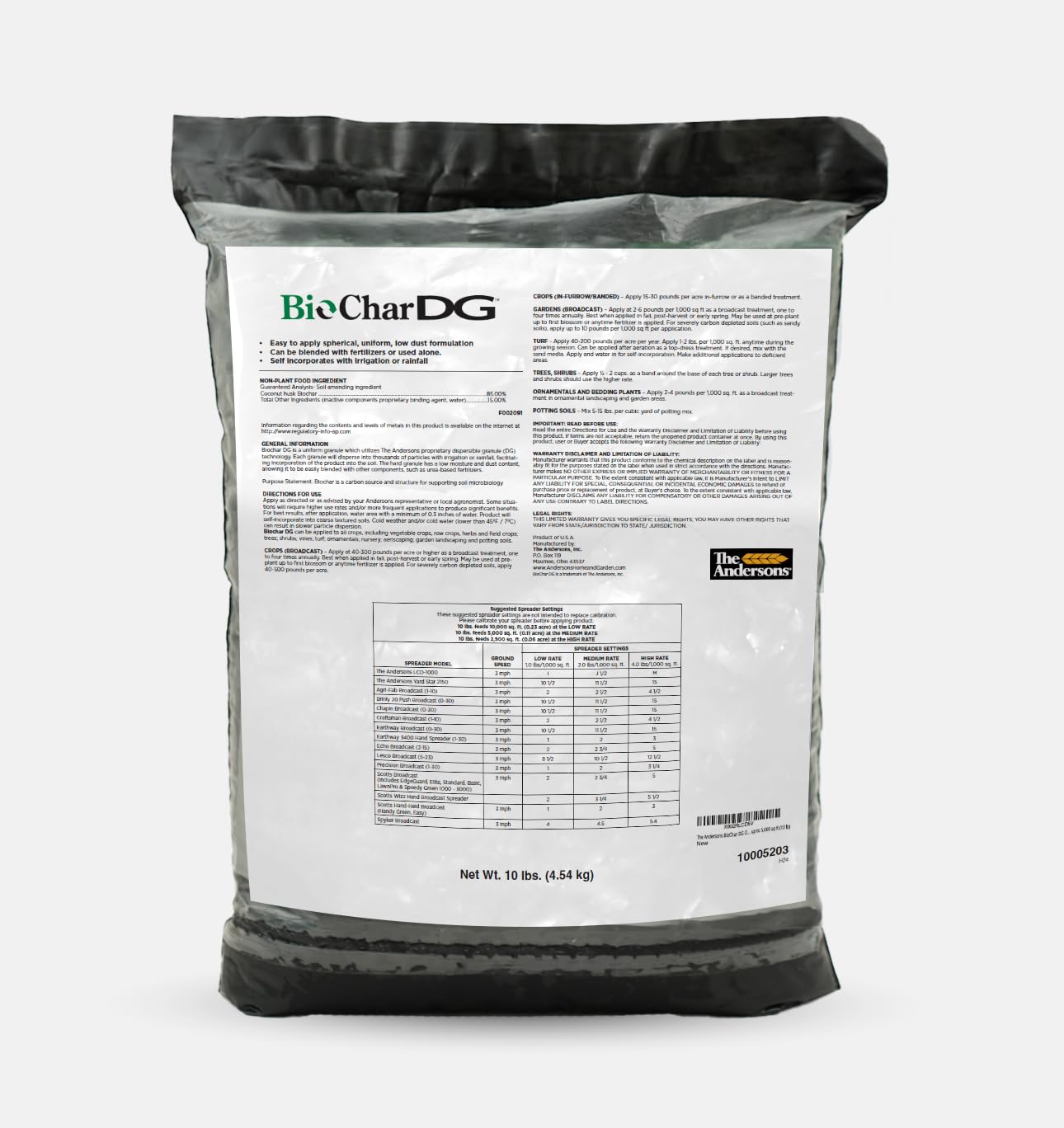
The Andersons BioChar DG is not a typical compost — it is a carbon-rich soil amendment designed for long-term structural improvement in heavy clay and sandy soils. The patented DG (dispersible granule) technology means each pellet breaks apart with water, allowing the biochar to integrate into the soil rapidly without the dust cloud that plagues many biochar products. This 10-pound bag covers up to 5,000 square feet when used as a lawn top-dress, making it exceptionally efficient per square foot compared to bagged composts. The biochar itself acts like a permanent sponge, attracting and holding nutrients, water, and beneficial bacteria in the root zone for years after a single application.
Owner feedback from clay-heavy regions in North Texas is striking: after three years of regular applications, gardeners report that their heavy clay soil transformed into a workable, water-permeable medium that supports deep green Bermuda lawns while neighboring properties remain yellow and stressed. The product works alongside any fertilizer program — it does not replace monthly feeding but makes every fertilizer application more effective by preventing nutrient leaching. Several users noted that their lawns developed a deeper green color after the second season, once the biochar had been “charged” by natural soil processes.
A critical caveat is that biochar must be charged with nutrients before application. While Andersons claims their DG product is pre-charged, some owners reported initial yellowing of grass after the first application, which resolved after adding a nitrogen-rich fertilizer. This suggests that very poor soil may need an extra boost alongside the biochar. The product is also not available in California or Oregon due to regulatory restrictions.
What works
- DG Technology eliminates dust and ensures even, fast soil integration
- Stays active in soil for multiple seasons, improving structure year over year
- Unmatched coverage for lawns — 10 lbs covers up to 5,000 sq ft
What doesn’t
- Biochar may need extra nitrogen “charging” to prevent initial yellowing
- Not available for purchase in California or Oregon
Hardware & Specs Guide
NPK Ratio Explained for Garden Compost
The NPK ratio is the percentage of nitrogen (N), phosphorus (P), and potassium (K) by weight. For general vegetable gardens, a balanced ratio like 4-6-2 favors flowering and fruiting without forcing excessive leaf growth. Worm castings typically test around 1-1-1, making them a gentle soil improver rather than a high-analysis fertilizer. Marine-based composts (lobster/crab meal) provide trace calcium and chitin, which can suppress soil-dwelling pests.
Particle Size and Sifting Grade
Composted products with particle sizes under ¼ inch integrate faster and create more uniform soil texture, while coarser blends with visible organic fibers improve aeration in clay soil. Sifted composts cost more but reduce the risk of nitrogen drawdown from uncomposted wood chips. Biochar pellets typically measure 1-2 mm and are designed to disperse into microscopic porous particles upon hydration.
Microbial Additives: Mycorrhizae vs. Worm Eggs
Endomycorrhizae penetrate root cells and are beneficial for vegetables and flowers, while ectomycorrhizae wrap around roots and are more relevant for trees and shrubs. Worm egg material introduces live worm populations that tunnel and aerate soil naturally. A compost that lists both “mycorrhizae” and “worm castings” on its label is typically more biologically active than one that is only pasteurized manure.
Moisture Retention vs. Drainage Enhancement
Manure-based composts (cow, chicken) boost water retention by holding 3-5 times their weight in moisture, which benefits sandy soils. Biochar provides the opposite effect — its porous structure improves drainage in clay while still holding nutrients in a reservoir. Worm castings occupy the middle ground, improving both aeration and moisture holding equally.
FAQ
Can I mix compost directly into the soil or should I use it only as a top-dress?
How often should I apply compost to my vegetable garden?
What is the difference between compost and fertilizer?
Final Thoughts: The Verdict
For most gardeners, the compost for garden winner is the Wiggle Worm 40lb Worm Castings because it delivers living microbial life, neutral pH, and enough volume for serious soil transformation at a fair per-pound cost. If you want targeted bloom-boosting power for roses and hydrangeas, grab the Great Big Roses Liquid Booster. And for breaking up heavy clay soil over multiple seasons, nothing beats the The Andersons BioChar DG for its long-term structural improvement and coverage efficiency.