
Specs are compiled from manufacturer listings and verified buyer reviews and can change over time — please confirm the key details on the product page before buying.
Getting daffodils to come back bigger and brighter each spring depends on one thing: what you feed them when they go in the ground. The wrong mix can leave you with weak stems, fewer blooms, or bulbs that rot before they even wake up. You need a compost that delivers the right nutrients without burning delicate roots or leaving your soil out of balance.
I’m Rikta — the founder and writer behind Lawn Gear Lab. This guide is built by comparing the manufacturers’ published specifications and the patterns across verified customer reviews, so you get each pick’s real strengths and trade-offs instead of marketing spin.
Whether you are planting fall bulbs for the first time or refreshing a mature bed, the best compost for daffodils has the nutrient profile, texture, and organic safety that bulbs actually respond to.
Quick Picks
- Espoma Organic Bulb-Tone 3-5-3 — Best Overall
- Black Kow Composted Cow Manure 35 lb Bag — Soil Builder
- Brut Cow Compost 1 Cubic Foot — Pure & Simple
- Espoma Organic Mushroom Compost 0.75 cu ft — Multi-Purpose
- Malibu Compost Bu’s Blend Biodynamic Compost 12 Quart — Living Compost
How To Choose The Best Compost For Daffodils
Daffodil bulbs store their own energy, but they rely on the surrounding soil for the phosphorus and potassium they need to set strong buds and deep roots. Pick a compost that feeds without overwhelming — bulbs are sensitive to high nitrogen, which pushes leafy growth at the expense of flowers.
Nutrient Ratio: Look for Phosphorus, Not Just Nitrogen
Bulbs need phosphorus (the middle number in an N-P-K ratio — N stands for nitrogen, P for phosphorus, K for potassium) for root and bloom development. A balanced ratio like the Espoma Bulb-Tone 3-5-3 gives you that extra phosphorus kick specifically for flowering. General composts like cow manure have a lower, more neutral profile — useful for soil structure but less targeted for bloom production.
Texture and Drainage: Avoid Waterlogged Roots
Daffodils rot in heavy, wet soil. A compost that improves aeration — like Black Kow’s composted cow manure, which buyers report mixing 1/3 with vermiculite and coco coir — helps sandy soils hold moisture and clay soils drain. Mushroom compost and biodynamic blends also offer a light, crumbly texture that prevents bulbs from sitting in water.
Organic Certification and Additives
If you garden organically, look for products approved for organic production. The Espoma Bulb-Tone carries that certification. On the other hand, be aware of hidden additives — one Malibu Compost reviewer noted it contains langbeinite (a potassium-rich mineral), which can be toxic if your soil already has enough potassium. Always check ingredients before applying.
Quick Comparison
| Model | Best For | N-P-K Ratio | Weight | Volume | Amazon |
|---|---|---|---|---|---|
| Espoma Organic Bulb-Tone | Targeted bulb feeding | 3-5-3 | 4 lb | — | Amazon |
| Black Kow Composted Cow Manure | Soil conditioning for heavy feeders | 0.5-0.5-0.5 | 35 lb | — | Amazon |
| Espoma Organic Mushroom Compost | General soil improvement | — | 25 lb | 0.75 cu ft | Amazon |
| Brut Cow Compost | Pure additive-free compost | — | — | 1 cu ft | Amazon |
| Malibu Compost Bu’s Blend | Biodynamic growing | — | — | 12 qt | Amazon |
In‑Depth Reviews
1. Espoma Organic Bulb-Tone 3-5-3

A targeted 3-5-3 formula that gives daffodils the phosphorus they need for blooms.
Whether you use it in the planting hole for new bulbs or sprinkle it on the soil surface for established daffodils after they finish blooming, this granular fertilizer feeds without burning. The 3-5-3 analysis delivers 6% calcium alongside a higher phosphorus middle number, which is exactly what bulb roots draw on for strong flower development. One reviewer noted, “This has absolutely made my tulips and daffodils thrive!”
Unlike a general compost like the 35 lb Black Kow bag, weighing 35 lb compared to 4 lb and carrying a mild 0.5-0.5-0.5 ratio, Bulb-Tone packs a concentrated nutrient punch in a 4-pound bag that is ready to use straight from the package — no mixing required. It is also approved for organic production and has been made by Espoma since 1929. The catch is that if you are looking to improve heavy clay or sandy soil texture rather than feed bulbs, you may still want a bulkier soil conditioner on the side.
Why it works for daffodils
- 3-5-3 N-P-K ratio is formulated for bulb flowering
- Contains 6% calcium to support cell wall strength
- Organic Input Material certified for organic gardening
- No mixing needed — place directly in the planting hole
One limitation
- Does not bulk up or aerate soil like a larger-volume compost would
- 4 lb bag covers fewer bulbs than a bulk compost bag
Reach for this if: you want a proven, targeted bulb food that daffodil growers trust — one reviewer has been an Espoma customer for 46 years.
Look elsewhere if: your main goal is to rebuild poor soil structure, not just feed existing bulbs.
2. Black Kow Composted Cow Manure 35 lb Bag

A heavy 35-pound bag of composted manure that enriches soil without burning roots.
Black Kow weighs 35 pounds and uses a mild 0.5-0.5-0.5 analysis, so it releases nutrients slowly — you are not shocking freshly planted daffodil bulbs with a sudden spike. The organic matter works by helping sandy soils hold moisture and clay soils drain better, which directly fights bulb rot. One buyer described mixing it “1/3 equal parts with vermiculite and coco coir” for a light, high-performing blend for flowers and vegetables.
The difference between this and the 4-pound Espoma Bulb-Tone is stark: Black Kow weighs 35 lb vs 4 lb, giving you a bulk soil amendment rather than a concentrated bulb food. If your daffodil bed has tired, compacted earth, this bag improves the physical structure. But as a reviewer noted, “it’s ridiculously overpriced” on Amazon compared to local home centers — worth checking your local prices before ordering online.
What it does for your bed
- Improves aeration in clay and water retention in sandy soil
- Slow-release 0.5-0.5-0.5 nutrients won’t burn tender bulbs
- Organic composition, no synthetic additives
Watch for
- Not a bloom-focused formula — low phosphorus compared to bulb-specific feeds
- Shipping cost balloons the delivered price
Best for: fixing poor soil structure in a large garden bed before planting bulbs.
skip it if: you only need a quick nutrient boost for a few dozen bulbs and do not want to haul 35 pounds.
3. Brut Cow Compost 1 Cubic Foot
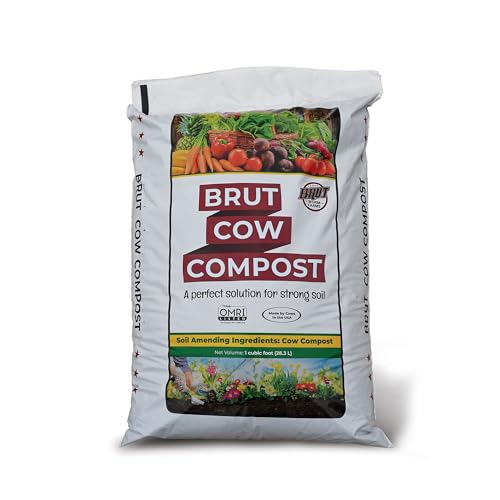
A cubic foot of pure, aerated compost with no fillers or synthetic additives.
Brut Cow Compost is marketed as 100% pure compost — no fillers, no additives, just composted cow manure. Owners mention using it in a 3:2 ratio with soil for strong seedling growth; one first-time grower planted tomato seeds on March 1st and saw excellent growth by April 22nd using that same mix. The absence of added fertilizers means you have complete control over the nutrient profile around your daffodil bulbs.
Compared to the 35-pound Black Kow bag, this 1-cubic-foot option is lighter in physical weight but similar in concept: it improves texture and drainage without a high nutrient spike. The catch is the price tag — it costs noticeably more than many bulk options. You pay for the purity guarantee and the convenience of bagged compost that does not require screening.
What you get
- 100% pure compost — no synthetic extras or fillers
- Aerated and tested to avoid burning plant roots
- Versatile 3:2 ratio with soil works well for bulbs
Think twice about
- No targeted N-P-K for bulb bloom support
- Premium price for the volume delivered
Choose this if: you want a clean slate — a natural compost with no extras, so you control exactly what goes into your daffodil bed.
Pass if: you are on a tighter budget or want a bigger bag for a large planting area.
4. Espoma Organic Mushroom Compost 0.75 cu ft
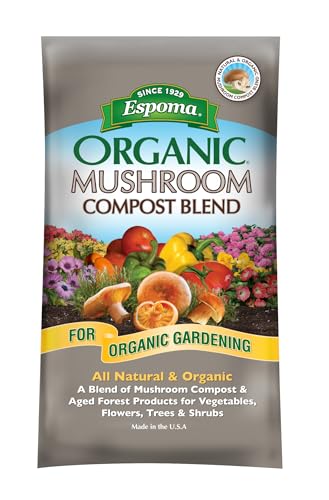
A 25-pound blend of mushroom compost and aged forest products for broad soil conditioning.
This bag mixes rich mushroom compost with aged forest products at a 60:40 ratio, intended for planting vegetables, flowers, trees, and shrubs — including daffodils. The manufacturer recommends mixing or rototilling it into existing soil to a depth of 4-6 inches, which gives bulbs a loose, nutrient-rich zone to root into. One buyer who put it around their peonies reported “they have done terrific” with the extra nutrient boost.
Where this differs from the Bulb-Tone above is flexibility: mushroom compost feeds the whole soil ecosystem rather than targeting bulbs specifically. It weighs 25 pounds and covers 0.75 cubic feet, making it a middle ground between a heavy 35-pound bulk bag and a lightweight 4-pound concentrate. The trade-off is that it lacks a precise N-P-K label, so if you need exact phosphorus numbers for bloom support, you might want to top-dress with a bulb-specific fertilizer.
Advantages
- Improves soil texture and adds organic matter broadly
- Works for bulbs, vegetables, trees, and shrubs in one bag
- Aged forest products help prevent compaction
Consider
- No published N-P-K ratio, so bloom-specific feeding is a guess
- Not labeled for organic gardening the way Bulb-Tone is
Good for: gardeners who want one bag to improve the whole bed — bulbs, flowers, and veggies all benefit.
Not ideal if: you are strictly focused on maximizing daffodil bloom count and want a guaranteed phosphorus source.
5. Malibu Compost Bu’s Blend Biodynamic Compost 12 Quart

A 12-quart biodynamic compost aimed at repairing the soil ecosystem and saving water.
Malibu Compost Bu’s Blend is positioned as a living compost that repairs your soil’s ecosystem and serves as a humus source for planting. Biodynamic farming principles drive the blend, which some reviewers praise as “the best, cleanest, richest compost” for container gardens. Several buyers use it to brew compost tea, noting it “really does work” for plant vitality.
The honest catch is significant and comes straight from a verified buyer: “This product contains langbeinite which can be toxic to plants if your soil already has enough potassium.” That means before you use this around daffodil bulbs, you really should check your soil potassium level. Unlike the Black Kow or Brut Cow options, this is not plain compost — it has a mineral additive that can backfire if your soil is already rich. At 12 quarts, it is also the smallest volume here relative to its price point, so it is better suited for a container of bulbs or a small raised bed than a full border.
Standout features
- Packed with beneficial microbes and humus for long-term soil health
- Excellent for brewing compost tea, per multiple reviewers
- Does not smell — manure is fully composted
Heads-up
- Contains langbeinite (potassium source) that can harm plants if soil K is already adequate
- Small 12-quart size and high per-unit cost
Spring for this if: you are into biodynamic methods and want a microbe-rich compost for a small planting or compost tea.
Pass on it if: you want a simple, risk-free compost for a large daffodil bed and do not want to test your soil first.
Understanding the Specs
N-P-K Ratio
Every bag of compost or fertilizer will show three numbers separated by hyphens — these represent the percentage of nitrogen (N), phosphorus (P), and potassium (K) by weight. For daffodils, the middle number (phosphorus) is the most important because it drives root development and flower bud formation. A ratio like 3-5-3 gives your bulbs a targeted phosphorus boost. General composts like cow manure often show 0.5-0.5-0.5, which is more about soil structure than bloom power.
Volume vs Weight
Compost is sold by weight (pounds) or by volume (cubic feet or quarts). A heavy bag, like a 35-pound Black Kow bag, is not necessarily more concentrated — it may simply contain more moisture or denser material. Volume gives a better measure of how much space the compost will fill in your bed. A 12-quart bag equals about 0.4 cubic feet, while a 1-cubic-foot bag is roughly 2.5 times larger. Match the volume to the size of your daffodil planting area.
FAQ
Can I use regular compost from my backyard bin for daffodils?
Is cow manure compost safe for daffodil bulbs?
What happens if I use a high-nitrogen compost on daffodils?
How much compost do I need per daffodil bulb?
Should I mix compost with my existing soil or use it on its own?
Can I use mushroom compost for daffodils?
What does “biodynamic” compost mean for my daffodils?
Will compost attract pests or rodents to my daffodil bed?
Should I fertilize daffodils after they bloom?
Is it possible to over-compost daffodils?
Final Thoughts: The Verdict
Across the board, the best compost for daffodils winner is the Espoma Organic Bulb-Tone because it delivers a targeted 3-5-3 N-P-K ratio, organic certification, and decades of grower trust in a convenient, no-mix bag. If you want to rebuild poor soil texture across a large bed, grab the Black Kow Composted Cow Manure. And for a pure, additive-free compost that lets you control every variable in a container or small raised bed, the standout is the Brut Cow Compost.
How We Picked
We do not accept paid placement. Every pick is matched to a real buyer and a real use-case; we do not hands-on test units.
Sources & Methodology
Specifications: manufacturer listings and product documentation. Review insights: verified customer reviews, as of July 2026. Pricing: not shown on this page (it changes often); check the current price via the retailer link.
As an Amazon Associate, Lawn Gear Lab earns from qualifying purchases. This does not affect which products we feature.