
Specs are compiled from manufacturer listings and verified buyer reviews and can change over time — please confirm the key details on the product page before buying.
If your citrus tree’s leaves are turning yellow or dropping fruit despite regular watering, the problem is almost certainly in the soil. Citrus needs a specific acidic environment that standard garden dirt cannot provide. The right mix handles drainage, pH, and slow-release feeding so you don’t have to guess and correct later.
I’m Rikta — the founder and writer behind Lawn Gear Lab. This guide is built by comparing the manufacturers’ published specifications and the patterns across verified customer reviews, so you get each pick’s real strengths and trade-offs instead of marketing spin.
Whether you are potting a Meyer lemon on the patio or an indoor orange tree by the window, the compost for citrus trees you choose must balance acidity between 5.5 and 6.5 while draining fast enough to keep roots from sitting wet.
Quick Picks
- Soil Sunrise Citrus Tree Potting Soil Mix — Best Overall
- GARDENWISE Premium Organic Citrus Potting Soil — pH Stable
- GARDENWISE Organic Lemon Tree Soil (3 Quarts) — Budget Champion
How To Choose The Best Compost For Citrus Trees
Citrus trees are heavy feeders that hate wet feet. The wrong mix — one that is too dense or too alkaline — leads to yellow leaves (chlorosis), blossom drop, and sour fruit. You need to look for three non-negotiable characteristics before buying.
Acid pH Between 5.5 and 6.5
Citrus roots absorb iron, magnesium, and manganese only in slightly acidic soil. If the pH (a measure of acidity) creeps above 7.0, the tree starves even if those nutrients are present. Every bag you consider should state its pH range, and 5.5 to 6.5 is the verified balance for lemons, limes, oranges, and grapefruit.
Sharp Drainage + Aeration
Citrus roots rot quickly in compact, waterlogged soil. Look for a mix that includes perlite (white volcanic glass beads) and coarse sand. These create air pockets and let excess water run out the bottom of the pot. A bag without these ingredients is essentially heavy garden soil that will drown your tree.
Built-In, Slow-Release Nutrition
Citrus needs steady feeding through the growing season. Some mixes include a pre-blended organic fertilizer that releases nutrients gradually, removing the need to remember to add liquid feed every other week. A mix that supports growth for a set period, like 6 months, saves you time and reduces the risk of over-fertilizing.
Quick Comparison
| Model | Best For | Volume | pH Range | Fertilizer Included | Amazon |
|---|---|---|---|---|---|
| Soil Sunrise Citrus Tree Potting Soil Mix | Potting multiple trees at once | 12 Quarts | Balanced (stated) | Yes | Amazon |
| GARDENWISE Premium Organic Citrus Potting Soil | Best all-around pH-stable mix | 3 Quarts | 5.5 – 6.5 | Yes | Amazon |
| GARDENWISE Organic Lemon Tree Soil | Single potted lemon tree | 3 Quarts | 5.5 – 6.5 | Yes | Amazon |
In‑Depth Reviews
1. Soil Sunrise Citrus Tree Potting Soil Mix (12 Quarts)

The 12-Quart bag lets you repot multiple trees without buying a second batch.
If you have more than one citrus tree — or a single large pot that swallows soil — this is the practical winner. It comes in 12 Quarts, while the GARDENWISE bags are 3 Quarts. That amount is enough to fill a 14-inch or 16-inch pot entirely, or handle two medium pots in one go.
The mix includes peat moss (organic matter that holds moisture and lowers pH) and a pre-blended fertilizer, so you do not have to mix anything separately. Buyers report the texture is light and fluffy straight out of the bag, making repotting quick and less messy than wetter, denser soils.
The catch is that the fertilizer is already blended in, so if you prefer to control every nutrient yourself, you lose that flexibility. But for most owners, ready-to-use feeding beats the hassle of extra bottles.
Real customer note: Several owners mention the big bag handles a full 16-inch container with no leftover soil.
Trade-off: You cannot easily separate the fertilizer from the mix for custom feeding schedules.
Reach for this when: You want the biggest volume at once for multiple pots or a single large container, with everything already balanced.
Look elsewhere if: You need a small bag for a single 6-inch pot and want to avoid storing leftover soil.
2. GARDENWISE Premium Organic Citrus Potting Soil (3 Quarts)
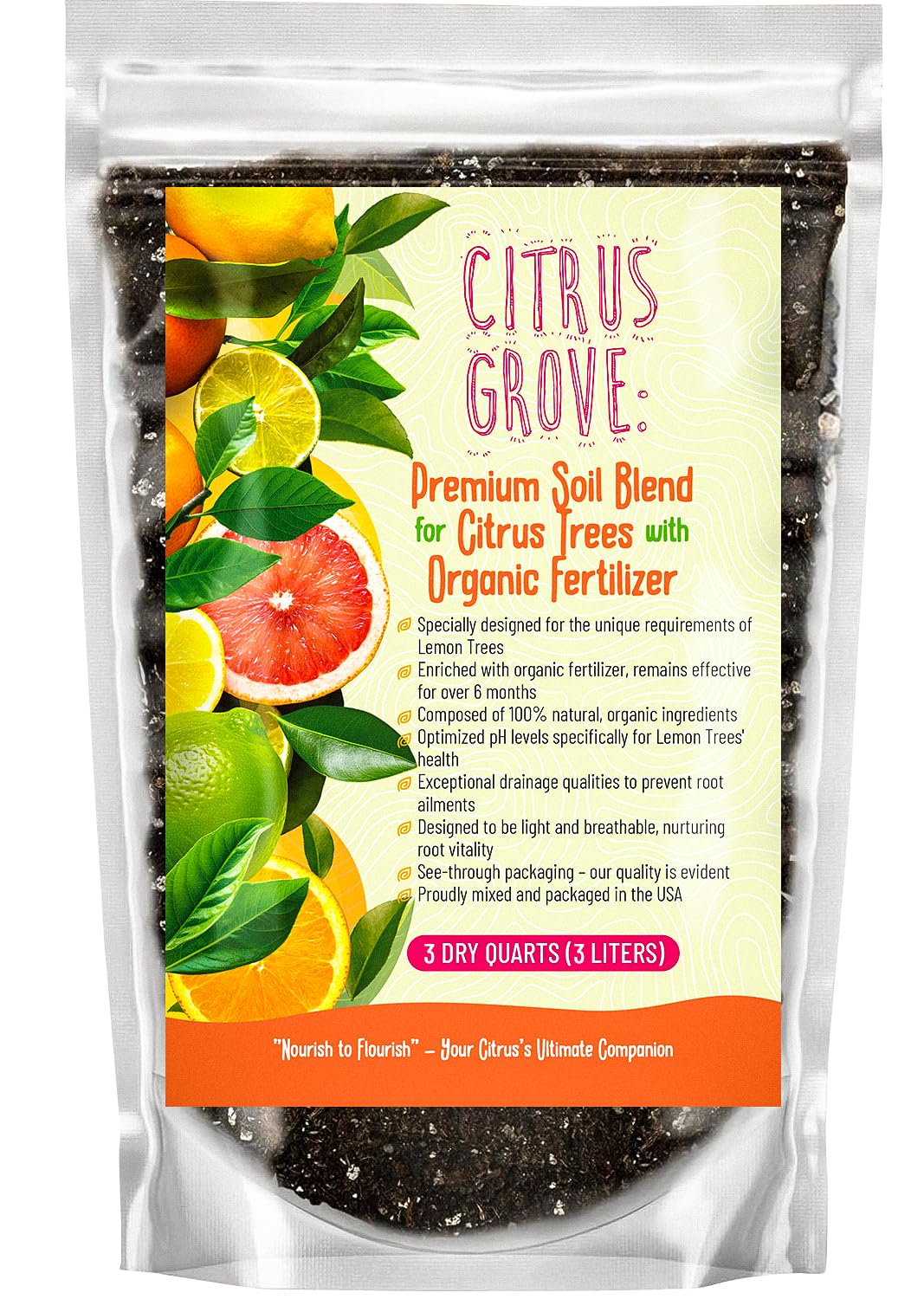
Tuned to hold its 5.5-to-6.5 pH stable, so you do not chase acidity every month.
This one stands out for its dual-acidity approach. The mix uses both organic acidic compost and peat moss to hit the 5.5 to 6.5 range, and it adds dolomite lime (a natural pH buffer) to keep that range from drifting. That means less guesswork for you if you have hard tap water, which can push soil alkaline over time.
It includes extra perlite and coarse sand for drainage, plus coconut coir and vermiculite (mineral flakes that retain moisture) to hold enough water so roots stay hydrated without getting waterlogged. The mix is also packed with iron, magnesium, and manganese — key micronutrients that prevent yellow leaves (chlorosis) and support fruit production. Customers note the texture is loose and drains fast, with no standing water after a thorough soak. At 3 Quarts, it fits a single 8-to-10-inch pot perfectly.
The trade-off compared to the 12-Quart Soil Sunrise bag is volume — if you have multiple trees, you will need more than one bag. But the added pH stability with dolomite lime makes it a smarter choice for anyone who waters with municipal supply.
What stands out
- Dolomite lime stabilizes pH against alkaline tap water
- Four different aeration components: perlite (volcanic glass beads), sand, coir (coconut husk fiber), vermiculite (mineral flakes)
- Micronutrients (iron, magnesium, manganese) blended in
The one limit
- 3-Quart size means buying multiple bags for larger or multiple trees
Best for pH-sensitive setups: If you have hard water or want to set-and-forget the acidity for months, the dolomite buffer makes this the more forgiving pick.
Skip it for large pots: You will need two or three bags for a single 14-inch container, making the Soil Sunrise bag more economical for that job.
3. GARDENWISE Organic Lemon Tree Soil (3 Quarts)
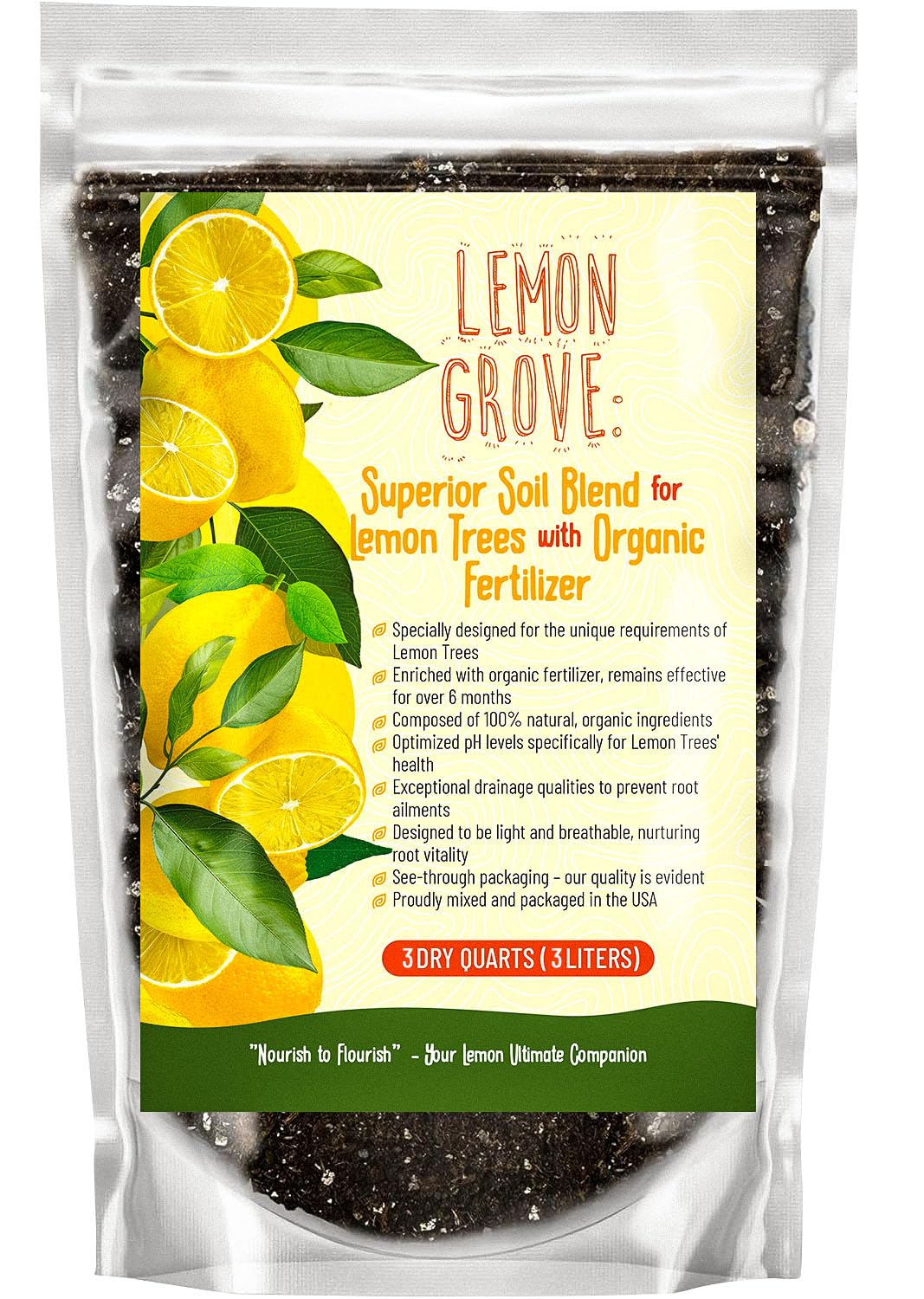
Gives your lemon tree a 6-month supply of nutrients so you can water and walk away.
This is the focused version of the same GARDENWISE formula, branded specifically for lemon trees but perfectly suited to any citrus. Its defining advantage is the added organic fertilizer that provides nutrients for up to 6 months — meaning one spring repot covers you through the whole growing season without a single dose of liquid feed.
It maintains the same critical pH range of 5.5 to 6.5 and includes perlite and coarse sand for superior drainage. The ingredient list covers perlite, coarse sand, coconut coir, vermiculite, garden compost, organic acidic compost, peat moss, dolomite lime, and organic fertilizer. Reviewers point out the bag size (3 Quarts) is just right for replacing the soil in a standard 8-inch nursery pot.
The main difference from the Premium version above is that this one leads with the fertilizer duration as the headline feature (6 months), while the Premium version adds dolomite lime for pH stability as its differentiator. In practice, both are similar — choose the Lemon Tree Soil if you prioritize the longest no-think feeding window.
Hands-off feeding: With a 6-month fertilizer supply blended in, you can repot in spring and not touch fertilizer again until fall.
One caveat: At 3 Quarts, if your lemon tree is in a larger pot (12 inches or bigger), you will need two bags to fill it properly.
Ideal for one-tree households: Perfect for a single potted lemon on the patio where you want to simplify your watering and feeding routine.
Not for heavy feeders in poor light: If your tree is indoors with low sun, the 6-month fertilizer may be more than it needs — monitor for leaf burn and adjust.
Understanding the Specs
pH Range (5.5 — 6.5)
This is not a nice-to-know number; it is the single measurement that determines whether your citrus tree can absorb nutrients at all. In soil that is too alkaline (above 7.0), iron and manganese become chemically locked. The tree starves even if those elements are present in the mix. A pH between 5.5 and 6.5 keeps those minerals soluble so roots can take them up. Every quality citrus compost states this range explicitly.
Perlite + Coarse Sand
Perlite is a lightweight volcanic glass that looks like tiny white pebbles. It creates air pockets in the soil, letting oxygen reach the roots and allowing excess water to drain out quickly. Coarse sand adds weight and drainage at the bottom of the pot. If a bag lacks both, it is too dense for citrus and will lead to root rot over time.
FAQ
Can I use regular potting soil for a citrus tree?
How often should I repot a citrus tree with fresh compost?
Is 3 quarts of compost enough for a standard potted lemon tree?
Does pre-mixed fertilizer in the compost last the full 6 months?
What does dolomite lime do in citrus compost?
Can I use citrus compost for other acid-loving plants?
Should I add extra perlite to the bag?
Is the GARDENWISE Lemon Tree Soil safe for indoor citrus trees?
What do buyers most often complain about with these composts?
Can I mix citrus compost with my garden soil for in-ground trees?
Final Thoughts: The Verdict
For the majority of shoppers, the compost for citrus trees winner is the Soil Sunrise Citrus Tree Potting Soil Mix because its 12-Quart size covers multiple pots or a large single container without running out mid-project. If you want pH stability against hard tap water, grab the GARDENWISE Premium Organic Citrus Potting Soil. And for a single lemon tree with 6 months of built-in feeding, the GARDENWISE Organic Lemon Tree Soil is the pick.
How We Picked
We do not accept paid placement. Every pick is matched to a real buyer and a real use-case; we do not hands-on test units.
Sources & Methodology
Specifications: manufacturer listings and product documentation. Review insights: verified customer reviews, as of July 2026. Pricing: not shown on this page (it changes often); check the current price via the retailer link.
As an Amazon Associate, Lawn Gear Lab earns from qualifying purchases. This does not affect which products we feature.