
Specs are compiled from manufacturer listings and verified buyer reviews and can change over time — please confirm the key details on the product page before buying.
Coco coir pellets replace messy potting soil with a clean, predictable medium that hydrates in seconds. The key is finding a pack that expands consistently, has a balanced pH, and holds its structure through the season. This guide focuses on diameter, count, and netting so you can match a pellet to your specific seeds and setup.
I’m Rikta — the founder and writer behind Lawn Gear Lab. This guide is built by comparing the manufacturers’ published specifications and the patterns across verified customer reviews, so you get each pick’s real strengths and trade-offs instead of marketing spin.
Whether you are starting vegetables, rooting cuttings, or setting up a hydroponic tower, the right coco coir pellets save you from collapsed soil and inconsistent germination while giving your seedlings the airy, moisture-steady foundation they need.
Our Picks at a Glance

How To Choose The Best Coco Coir Pellets
To pick the right coco pellet, start with your seed size, how many plants you want, and if you need a ready-to-use pot or loose soil you can mix. The two key numbers on the label are diameter and count.
Pellet diameter vs expanded volume
A 30mm pellet (roughly 1.2 inches across) works well for most herbs, flowers, and small vegetable seeds like lettuce or peppers. A 42mm pellet (about 1.75 inches) gives you more room for larger seeds like squash, tomatoes, or cucumbers and holds moisture longer between waterings. Bigger pellets also mean fewer transplants — the seedling can stay in the same pellet longer before you move it to a pot or garden bed.
Netted vs loose coir
Some pellets come wrapped in a fine biodegradable netting that holds the coir together after expansion. The netting lets you transplant the entire pellet without disturbing the roots. The trade-off is that some netting breaks down slowly; you may need to snip it off before planting. Loose pellets without netting are simpler to break apart but require a seedling tray or small pot to hold their shape.
EC, pH, and organic certification
Low EC (electrical conductivity) means the coir has been washed to remove excess salts that can burn tender roots. Balanced pH (typically 5.5–6.5) creates a friendly environment for most seedlings. If you see “low EC and balanced pH” on the package, that is the main quality indicator — it tells you the coir was processed properly rather than just packed raw.
Quick Comparison
| Model | Best For | Diameter | Count | Netting | Amazon |
|---|---|---|---|---|---|
| ZeeDix 100 Pack 30mm★ Best Overall | Versatile budget volumes | 30mm | 100 | No | Amazon |
| Mountain Valley Seed Co 42mm 50 PackAlso Great | Larger seedlings & hydroponics | 42mm | 50 | Biodegradable | Amazon |
| Mountain Valley Seed Co 42mm 100 Pack | Volume sowing of big seeds | 42mm | 100 | Biodegradable | Amazon |
| Legigo 100 Pcs 30mm | Quick rehydration & fine soil | 30mm | 100 | No | Amazon |
| Burpee 32 Count Coir XL 35mm | Premium beginner kit refills | 35mm | 32 | No | Amazon |
| Halatool 100 Pcs 30mm | Cat grass & small herb starts | 30mm | 100 | No | Amazon |
| Mountain Valley Seed Co 30mm 100 Pack | DIY hydroponic net pots | 30mm | 100 | Biodegradable | Amazon |
In‑Depth Reviews
1. ZeeDix 100 Pack 30mm Organic Coco Coir Pellets
Our pick — over 4★ from 750+ verified ratings; the strongest balance of quality and price.
A huge 100-pellet box that earns its keep with reliable expansion.
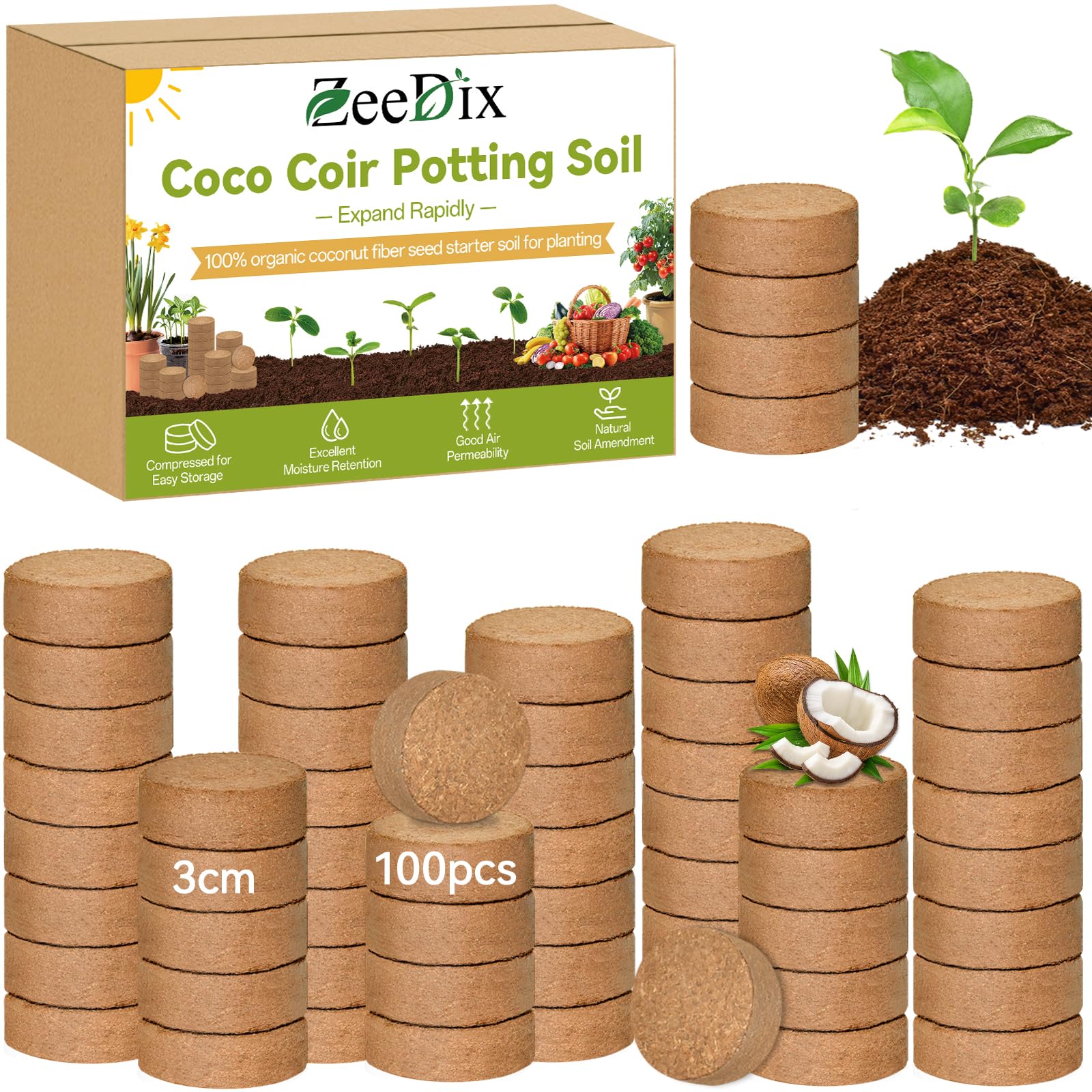
ZeeDix gives you 100 compressed 30mm pellets made from 100% organic coconut fiber with a low EC and balanced pH. Reviewers point out that they expand significantly — one owner reported a single box produced “ample starting mix” with leftovers that dried and stored well. The lightweight, airy texture is great for starting peppers, herbs, and microgreens, and several customers noted they used them specifically for cat grass with good results.
The ZeeDix pack holds a 3.1x count advantage over the Burpee 32-count, giving you roughly triple the number of starts for about the same price. The trade-off is that ZeeDix pellets are 30mm, while Burpee’s are 35mm — you get more total pellets but each one is slightly smaller. If you start a lot of small-seeded crops, the extra quantity is the better value. If you need extra room for large seeds, the Burpee or Mountain Valley pellets serve better.
What you get
- 100 pellets at a very low per-unit cost — excellent for volume sowing
- Made of 100% organic coconut fiber with low EC and balanced pH
- Shoppers say they expand significantly and store well after drying leftovers
What to consider
- 30mm diameter is smaller than Burpee’s 35mm or Mountain Valley’s 42mm
- No netting limits transplant convenience for direct-to-garden planting
Grab these if: You go through a lot of starts each season and want the lowest cost per pellet without sacrificing organic material and proper pH processing.
Pass if: You need the larger pellet size for big seeds or the netting for easy transplanting.
2. Mountain Valley Seed Co 42mm — Pack of 50
The jumbo pellet that gives your tomatoes and squash room to stretch before transplanting.
At 42mm diameter (about 1.75 inches), this pack gives you the biggest single-pellet volume among mid-count options without committing to a full 100-pack. Each dry pellet sits about a third of an inch tall and expands to roughly 2 inches tall in seconds — fast enough that you can prep a whole tray in the time it takes to boil water. The netting is biodegradable, so you can plant the entire pellet directly without disturbing the root ball.
Buyers report the high water-holding capacity (claimed 9x its weight) and low-salt processing, making it suitable for hydroponics. One reviewer noted using these in a freshwater fish tank with plant cuttings — the coir did not foul the water the way peat does. The catch is the count: at 50 units, you get fewer pellets than the budget 100-packs, so if you are starting large flats of greens, the 100-count version of the same 42mm pellet is a better fit.
Why you will like it
- 42mm diameter leaves more room for root development than standard 30mm
- Biodegradable netting eliminates transplant shock — plant pot and all
- Neutral pH and washed for low salt content, safe for sensitive seedlings
What to weigh
- 50 pellets go fast if you are starting more than two trays
- Netting can be tough to tear and may need scissors for some transplanting styles
The loudest vote: This is the pick if you want a roomy, netted pellet that works for large seeds, hydroponic towers, and direct-to-garden transplanting without extra steps.
Look elsewhere if: You need a higher pellet count for the same money — the 100-pack of the same 42mm is the smarter buy for volume sowers.
3. Mountain Valley Seed Co 42mm — Pack of 100
Double the count, same oversized 42mm format for serious spring sowing.
This is the 50-pack above scaled to 100 pellets, giving you the same 42mm diameter, the same biodegradable netting, and the same 9x water-holding claim. The bigger capacity makes more sense for gardeners who fill multiple 72-cell trays or run a community seed-starting operation. The dry pellets measure 1.75 inches across and expand to about 2 inches tall — consistently larger than the 30mm pellets found in the budget picks.
Owners mention high germination rates and easy transplanting through the netting. One long-time user said they have used these pellets for several years and prefer them over peat because the coir retains water longer and the larger size is easier to handle. The same reviewer noted that the netting does not fully break down in every soil condition and suggested snipping it off with scissors before up-potting — a small extra step for the convenience of no-root-disturbance transplanting.
What stands out
- 100 pellets at 42mm each — triple the count of the 50-pack for only a bit more
- Expands fast in seconds; one buyer called it “BY FAR the best” they have purchased
- Washed for low salt content and neutral pH, suitable for hydroponic systems
What to know
- Some netting stays tough and may need cutting away before transplanting
- Higher upfront cost than loose 100-packs of 30mm pellets
Who should reach for this: If you sow multiple trays of large-seeded crops (tomatoes, squash, cucumbers) and want one pack to last the whole season, this 100-count gives you room to work.
The honest trade-off: You pay more per pellet than the looser budget packs, but the 42mm diameter and netted casing justify it for gardeners who prioritize transplant ease.
4. Legigo 100 Pcs 30mm Coco Coir Pellets
The 30mm puck that turns into fluffy, fine-textured soil in under a minute.
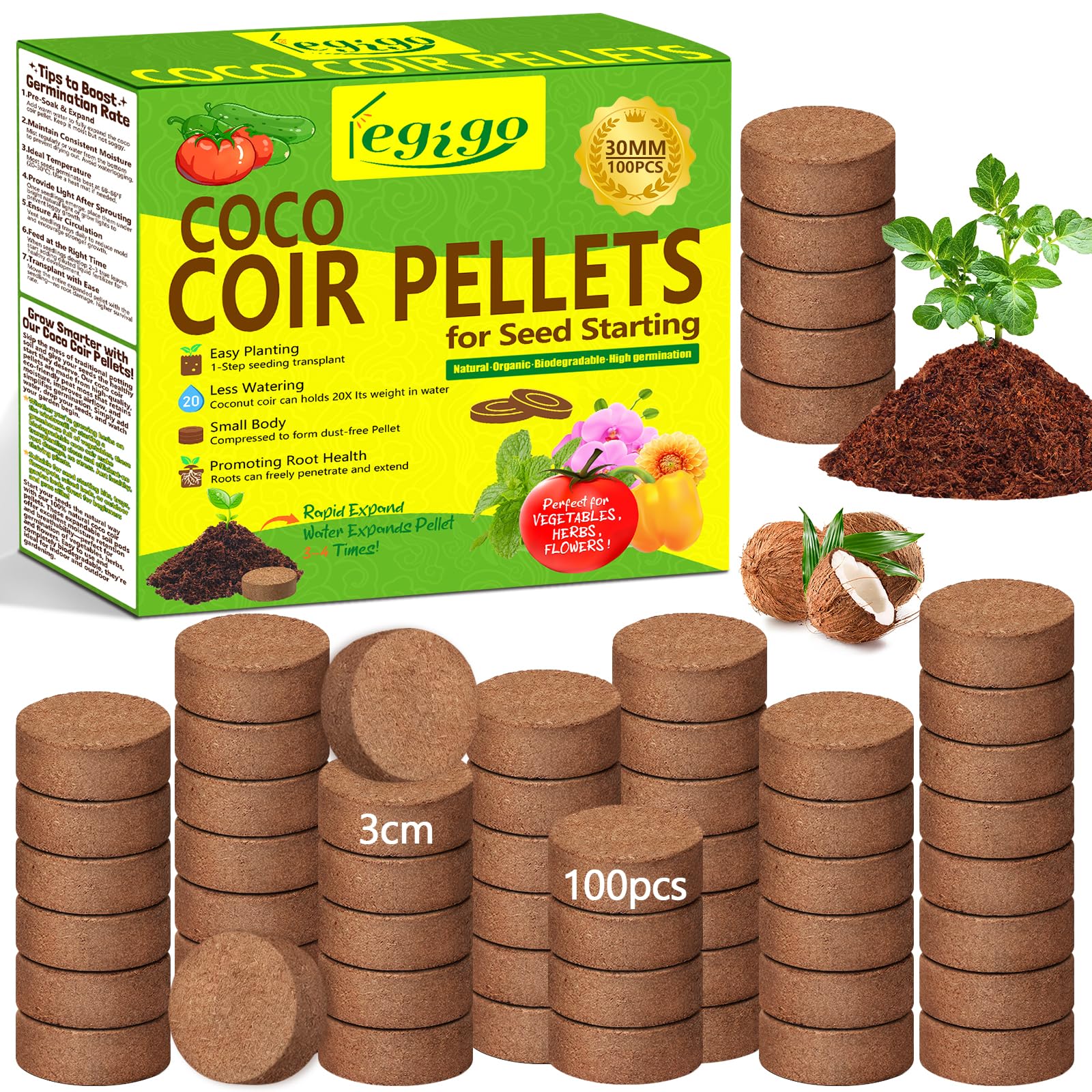
Legigo’s pellets measure 1.22 inches in diameter — slightly larger than the 1.18-inch diameter of the Halatool pellets — and expand into a very fine, airy medium that buyers love for starting tiny seeds like herbs, lettuce, and flowers. One buyer mentioned that rehydration happens in less than 60 seconds, producing perfectly moist planting soil with no dry clumps. The 100-count pack gives you a lot of starts for the money, and the compact dry form stores easily in a drawer or bin.
The main difference from the netted Mountain Valley pellets is that Legigo uses loose coir discs without netting. You need a tray or small pot to hold the expanded soil, and transplanting means moving the entire clump of coir rather than lifting a netted pod. The trade-off is flexibility — you can break the expanded coir apart and mix it with perlite or compost more easily than a pre-netted pellet. Customers note good moisture retention and no dust, though you will need to add nutrients since the coir itself is unamended.
Why it works
- Rehydrates in under 60 seconds — one of the fastest expansions in this list
- Fine, fluffy texture ideal for small seeds and delicate roots
- 100 pellets give you bulk volume at a competitive per-pellet cost
What to know
- No netting means you need a seed tray or pot to hold the shape
- Contains no added nutrients; you must feed seedlings after the first week or two
If you want fast prep: Legigo is the best choice when you need a quick, fine-growing medium for small seeds and plan to transplant into pots rather than directly into the garden.
skip it if: You prefer the convenience of netted, plantable pods — the Mountain Valley pellets are a better fit for direct-to-soil transplanting.
5. Burpee 32 Count Coir XL Super Growing Pellet 35mm
Burpee’s branded pellet that fits perfectly into their self-watering 32-cell kits.
At 35mm in diameter, these Burpee pellets are slightly larger than the standard 30mm but smaller than the 42mm Mountain Valley options. They expand to roughly 2.25 inches by 2.25 inches and about 2 inches tall when hydrated — a generous size for starting a wide range of seeds. The blend holds more water than standard peat pellets while maintaining better airflow to help prevent damping-off disease.
Buyers consistently report that seeds germinate quickly in these pellets, with one reviewer noting “high germination rate” and another calling them “wonderful and easy to use.” The main limitation is the count: 32 pellets is a small batch compared to the 100-packs in the same price range. If you are only starting a few trays of tomatoes or peppers, that’s plenty. If you fill large propagation flats every spring, you will run out fast. The pellets also work as refills for Burpee’s own 32-cell XL self-watering seed starting kit.
What makes it worth a look
- Expands to a tall 2.25″ x 2.25″ x 2″ — more vertical room than many 30mm pellets
- Branded coir blend designed for high moisture retention plus good airflow
- Compatible with Burpee’s XL self-watering tray system
Where it comes up short
- Only 32 pellets — one of the lowest counts in the lineup
- Higher per-pellet cost compared to generic 100-packs
The best scenario for these: If you already own a Burpee seed-starting kit or want a well-known brand with consistent expansion, these 35mm pellets are a reliable, no-guesswork choice.
Who should pass: Anyone starting large seedling batches — the 100-count packs from ZeeDix or Legigo give you three times the volume for similar money.
6. Halatool 100 Pcs 30mm Coco Coir Pellets
A budget 100-pack with mixed reviews on expansion consistency.
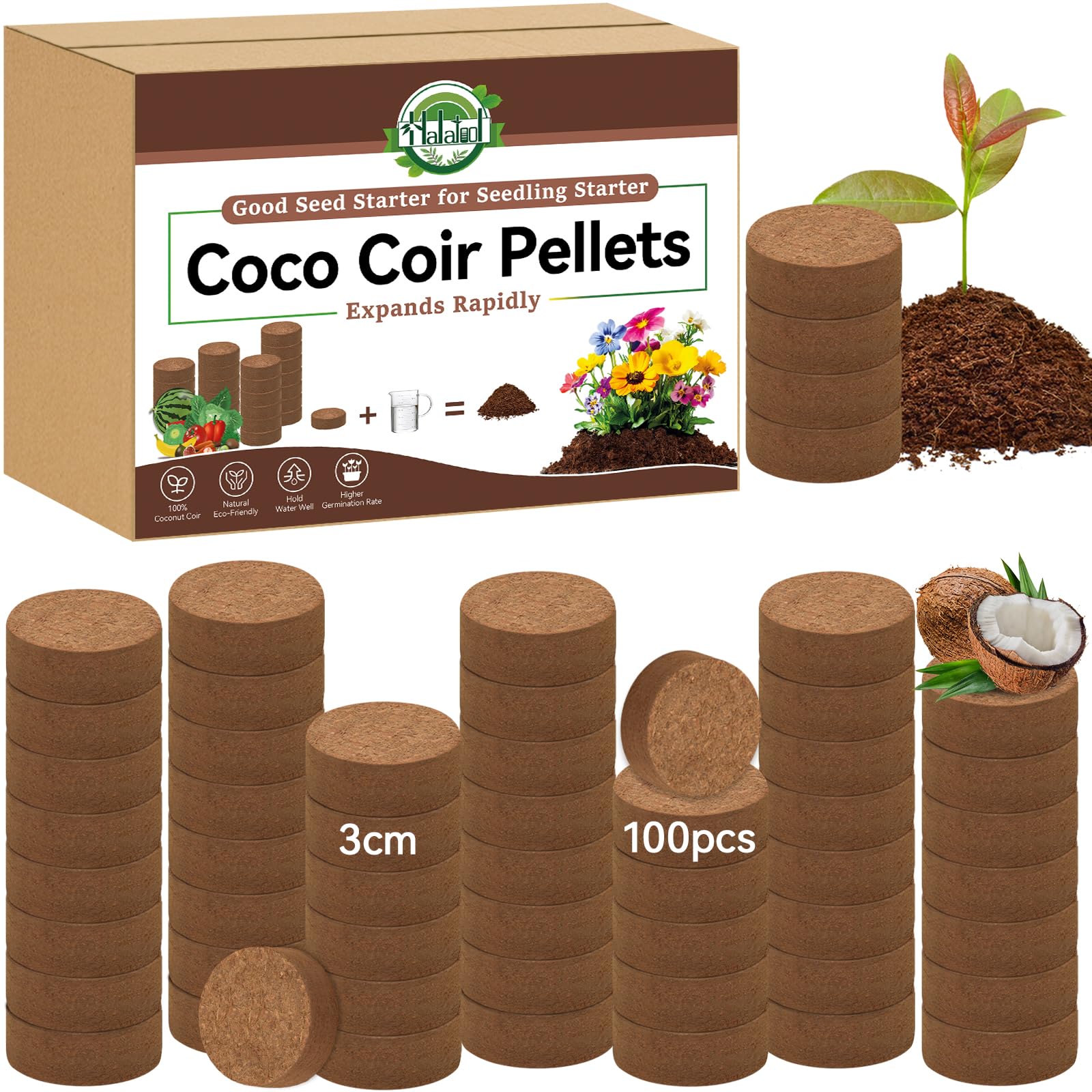
Halatool’s pellets measure 1.18 inches in diameter and expand into about 0.079 quarts of coco soil each when you add roughly 0.04 quarts of water. The material is 100% natural organic coco coir with low EC and balanced pH, so the base quality is fine for starting herbs, flowers, and houseplants. Several positive reviews mention it works great for cat grass — retaining moisture well with no mold smell and good growth rate.
The catch is that not every buyer had a good experience. One customer observed that the pellets collapsed after soaking instead of expanding properly, leaving piles of loose coir that were hard to work with. That kind of inconsistency is uncommon among top-tier brands but appears in Halatool’s feedback. The pellets are 30mm, matching the ZeeDix and Legigo size, but the expansion failure rate makes them a riskier choice if you need every single pellet to perform reliably for a large tray.
The positive side
- 100-count pack with organic material and low EC processing
- Buyers like it for cat grass, noting good moisture retention and no mold smell
- Expanded soil works well in self-watering starter cups
A real concern
- Some pellets collapse instead of expanding — a reported failure mode in reviews
- 1.18-inch diameter is the smallest in the 30mm category here
Who might still buy: If you only need pellets for a few trays of cat grass or small herbs and want the cheapest 100-count option, Halatool can work, but check the batch before committing to a big start.
Better alternatives: ZeeDix or Legigo offer the same count range with far fewer collapse reports for roughly the same price.
7. Mountain Valley Seed Co 30mm — Pack of 100
The same trusted Mountain Valley netting in a standard 30mm size for 2-inch net pots.
This is the smaller sibling of the 42mm Mountain Valley pellets — 30mm diameter (about 1 inch) instead of 42mm, but still wrapped in the same biodegradable netting and washed for low salt content. The dry pellet expands to about 1.5 inches tall in seconds, making it a natural fit for 2-inch hydroponic net pots. The netting holds everything together so you can drop the expanded pellet directly into the pot without loose coir spilling out.
Reviews are mixed on consistency. Some buyers got a great batch — uniform size, good expansion, fast germination. Others received pellets that varied wildly in height (one user highlighted the shortest at under 2 inches and the tallest over 3 inches after soaking), causing uneven seedling heights under grow lights. The inconsistency is a known risk, though the company refunded one dissatisfied customer. For hydroponic growers who need precise fit in the same size net pot, this variability is frustrating. The 42mm version of the same brand has fewer complaints about size variation.
Where it shines
- Biodegradable netting holds the coir together for clean hydroponic setup
- 30mm diameter is a standard fit for 2-inch net pots in hydro systems
- Washed, low-salt coir with neutral pH — good for sensitive seedlings
Where it wobbles
- Batch inconsistency: some buyers got a mix of short and tall pellets
- Netting does not always break down fast enough and may need snipping
Best use case: If you already use Mountain Valley’s 42mm pellets and want the same netted format in a smaller diameter for standard seed trays or 2-inch net pots, this 100-pack gives you bulk at a lower per-pellet cost.
The honest warning: Check your batch when it arrives — if the pellets look uneven in size, you may want to exchange rather than risk inconsistent germination heights.
Understanding the Specs
Pellet diameter and expanded height
The diameter of a dry pellet (30mm, 35mm, or 42mm) tells you how big the expanded medium will be. A 30mm pellet expands to roughly an inch or so of soil — enough for small seeds. A 42mm pellet gives you about 2 inches of soil height, which supports larger root systems for longer before you need to transplant. The bigger the diameter, the more water the pellet holds and the longer you can wait between waterings.
Low EC and balanced pH
“Low EC” means the coir has been washed to remove natural salts; high salt levels can burn tender roots and stunt germination. “Balanced pH” (usually 5.5–6.5) means the coir is already in the balance for most vegetables and flowers. If the package does not mention these two things, the coir may have inconsistent quality that hurts germination rates, especially for fussy seeds like peppers or tomatoes.
FAQ
How much water do I add to a 30mm coco pellet?
Can I use coco coir pellets for hydroponics?
Do coco coir pellets contain plant nutrients?
Can I transplant the whole pellet or do I remove the netting?
Why do some coco pellets collapse instead of expanding?
How should I store unused coco coir pellets?
What is the difference between coco coir and peat moss?
How many seeds should I put in one coco pellet?
Can I reuse coco coir pellets after one growing season?
What does “low EC” mean for my seedlings?
Final Thoughts: The Verdict
Across the board, the coco coir pellets winner is the Mountain Valley Seed Co 42mm 50 Pack because the oversized 42mm diameter and biodegradable netting give you a self-contained growing pod that works for everything from tomatoes to hydroponic towers without root disturbance. If you want the most volume for your money in a fast-expanding, fine-textured medium, grab the Legigo 100 Pcs 30mm. And for budget-conscious sowing of smaller seeds across multiple trays, the ZeeDix 100 Pack 30mm offers reliable organic material at the lowest per-pellet cost.
How We Picked
We do not accept paid placement. Every pick is matched to a real buyer and a real use-case; we do not hands-on test units.
Sources & Methodology
Specifications: manufacturer listings and product documentation. Review insights: verified customer reviews, as of July 2026. Pricing: not shown on this page (it changes often); check the current price via the retailer link.
As an Amazon Associate, Lawn Gear Lab earns from qualifying purchases. This does not affect which products we feature.