
Specs are compiled from manufacturer listings and verified buyer reviews and can change over time — please confirm the key details on the product page before buying.
That patchy clover in your lawn spoils the green carpet look you want. The fix is a selective herbicide that kills the clover but leaves your grass alone. The hard part is picking the right one from dozens of similar bottles. This guide breaks down six products using their published specs and real buyer experiences, so you know which spray or granule fits your lawn size and your mixing preference.
I’m Rikta — the founder and writer behind Lawn Gear Lab. This guide is built by comparing the manufacturers’ published specifications and the patterns across verified customer reviews, so you get each pick’s real strengths and trade-offs instead of marketing spin.
After digging through the data on active ingredients, coverage areas, and hundreds of real buyer reviews, these are the six products that make up our best clover killer for lawns guide, ranked by where each one fits your specific lawn and budget.
Quick Picks
- BioAdvanced Weed Killer for Lawns, Concentrate, 32oz — Best Overall
- PBI/GORDON Trimec Lawn Weed Killer, one gallon — Massive Coverage
- Bonide Chickweed, Clover & Oxalis Killer, 128 oz Ready-to-Use Spray — Best Value Ready-to-Use
- Scotts Turf Builder Weed and Feed5, 33.95 lb. — Granular Dual-Action
- Primesource Quinclorac 1.5L Select Liquid Crabgrass Killer (64 ounces) — Crabgrass Specialist
- Agrisel 3 Way Max Weed Killer, 128 Ounces — Low-Odor Concentrate
How To Choose The Best Clover Killer For Lawns
Picking the wrong clover killer usually means wasted time, brown patches where your grass got hurt, or a second trip to the store. Here are the three factors that separate a smart buy from a regret before you even open the bottle.
Active Ingredients — The Only Thing That Matters
Clover is a broadleaf weed (a weed with wide, flat leaves, unlike grass blades), so you need a broadleaf-selective herbicide that kills those plants but leaves grass alone. The three common active ingredients that actually work on clover are Dicamba, Triclopyr, and Quinclorac. Products that combine two or three of these, often with 2,4-D or MCPP (a chemical cousin of Dicamba), tend to kill clover faster and prevent regrowth. Always check the active ingredients list on the label — if you see only 2,4-D alone, it may brown the clover but not kill the root system for good.
Coverage Area — How Much Lawn Do You Have?
A product’s coverage spec tells you how many square feet one bottle or bag treats at the recommended mix rate. A small 32-ounce concentrate might cover 16,000 square feet, while a ready-to-use gallon spray covers only 1,000 square feet because it’s already diluted. If you have a large lawn, buying a concentrate that covers 32,000 to 64,000 square feet saves you multiple trips to refill the sprayer. If your lawn is small patches, a ready-to-use trigger spray gives you zero mixing hassle.
Granules vs. Liquids — Which Application Method Fits You?
Granular weed-and-feed products, like the Scotts Turf Builder Weed and Feed5, are the easiest to apply — you walk with a spreader in one pass. The trade-off is you need wet grass for the granules to stick, and the fertilizer in the mix might not be timed for your grass type’s growing season. Liquid concentrates give you more control: you mix only what you need and spot-treat clover patches without fertilizing the whole lawn. Ready-to-use spray bottles are the simplest for small yards but get expensive fast on larger areas.
Quick Comparison
On smaller screens, swipe sideways to see the full table.
| Model | Best For | Coverage | Active Ingredients | Form | Amazon |
|---|---|---|---|---|---|
| Bonide Chickweed, Clover & Oxalis Killer | Ready-to-use convenience | 10,000 sq ft | Dicamba, Triclopyr | Ready-to-Use Spray | Amazon |
| BioAdvanced Weed Killer for Lawns Concentrate | Best overall value concentrate | 16,000 sq ft | Dicamba, Mecoprop-P | Concentrate | Amazon |
| PBI/GORDON Trimec Lawn Weed Killer | Largest coverage per bottle | 32,000-64,000 sq ft | Trimec (2,4-D, MCPP, Dicamba) | Liquid Concentrate | Amazon |
| Scotts Turf Builder Weed and Feed5 | Dual-action weed & feed granular | 12,000 sq ft | 2,4-D, Dicamba | Granule | Amazon |
| Primesource Quinclorac 1.5L Liquid | Stubborn crabgrass & clover | 500 sq ft | Quinclorac 18.92% | Liquid Concentrate | Amazon |
| Agrisel 3 Way Max Weed Killer | Low-odor, safe-on-grass spray | 1,000 sq ft | Dicamba, Mecoprop-P | Liquid Concentrate | Amazon |
In‑Depth Reviews
1. BioAdvanced Weed Killer for Lawns, Concentrate, 32oz

The concentrate that treats a whole property from a single bottle.
One 32-ounce bottle of BioAdvanced covers 16,000 square feet, versus the Primesource Quinclorac at 500 square feet. So a typical suburban front and back lawn gets done in one purchase. Buyers report that “one container did the whole front and back garden.”
The active ingredients are Dicamba and Mecoprop-P (a selective broadleaf killer that targets clover, dandelion, and dollar weed without harming your grass). It works on both southern and northern lawns, so you don’t have to worry about your grass type, whether you have Bermuda or Fescue. The concentrate mixes with water in a standard sprayer, giving you control over how strong the solution is. But the included spray bottle has a stiff “press the tab” mechanism that some buyers found tricky on the first try.
It falls behind the PBI/GORDON Trimec on total coverage per dollar if your lawn is extra large. Some reviewers noted it turned their Bermuda grass brown temporarily. For a balanced mix of coverage, clover-killing power, and ease of use on a standard-sized lawn, this is the pick that requires no compromises.
Where It Excels
- 16,000 sq ft coverage from a single 32oz bottle.
- Labeled for both southern and northern grass types.
- Kills over 200 broadleaf weed types including clover and dollar weed.
One Real Trade-off
- The spray bottle’s tab can be stiff to engage on first use.
- Some buyers saw temporary brown patches on Bermuda grass.
Perfect for: anyone with a standard suburban lawn who wants one-and-done treatment that covers front and back, without researching your specific grass type.
Pass if: your yard is over 15,000 sq ft where the Trimec gallon offers more for your money, or you have a sensitive hybrid Bermuda.
2. PBI/GORDON Trimec Lawn Weed Killer, one gallon

The gallon jug built for big lawns with stubborn broadleaf weeds.
At 128 fluid ounces, this is the same volume as the Bonide ready-to-use spray, but because Trimec is a concentrate you dilute yourself, it stretches to 32,000 to 64,000 square feet. That is 32,000 to 64,000 square feet versus the BioAdvanced 32-ounce bottle at 16,000 square feet.
The active ingredient is Trimec, a three-way blend of 2,4-D, MCPP, and Dicamba that’s specifically formulated for cool-season grasses like Fescue, Bluegrass, and Ryegrass. Owners mention impressive speed: one verified review noted it “killed Creeping Charlie in 2-3 days, Virginia Buttonweed in 2 weeks.” The trade-off is that for thick, stubborn weeds you need to double or triple the Trimec portion compared to the label rate, and multiple applications are common for heavy infestations. Some buyers received “Weed-Out by ferti-lome” instead of the advertised PBI/GORDON brand, though the active ingredients are functionally the same.
Choose this over the BioAdvanced if you have a large cool-season lawn with a mix of clover, Creeping Charlie, and buttonweed — it gives you the most coverage for your money. For warm-season lawns or very small yards, the BioAdvanced concentrate or a ready-to-use spray is a better fit.
Why It Wins for Big Lawns
- 32,000 to 64,000 sq ft coverage from one gallon.
- Kills tough weeds like Creeping Charlie in 2-3 days.
- Three-way active ingredient blend (2,4-D, MCPP, Dicamba).
A Detail to Watch
- You may need to double the Trimec portion for very strong weeds.
- Intended for cool-season grasses; not ideal for St. Augustine or Bahia.
The right pick for: homeowners with over 20,000 sq ft of cool-season grass who want the lowest cost per spray and can handle mixing their own concentrate.
Skip it when: your lawn is under 10,000 sq ft, or you prefer grab-and-go ready-to-use spray without mixing.
3. Bonide Chickweed, Clover & Oxalis Killer, 128 oz Ready-to-Use Spray

128 fluid ounces, no mixing required, clover brown in three days.
This is the only ready-to-use spray on the list. At 128 fluid ounces it has a larger liquid volume than the BioAdvanced 32-ounce concentrate: 128 fluid ounces versus 32 fluid ounces. The difference is this bottle is already diluted — you spray directly from it, no mixing, no measuring. The 8-pound item weight is the heaviest on the list, so you’ll feel the bulk as you carry it around the yard.
The active ingredients are Dicamba and Triclopyr, a combination that specifically targets clover, chickweed, and oxalis (wood sorrel). One verified review called it out directly: “kills dandelions in one spray; clovers brown in 3 days.” The coverage of 10,000 square feet is solid for a ready-to-use product, though the attached hand sprayer gets poor marks from buyers for large lawns. Multiple reviewers recommend transferring the liquid to a pump sprayer for better coverage, especially on heavy infestations that need 4 to 5 gallons for a full yard.
But not every buyer got clover-killing results: one review notes that heavy clover patches only turned slightly brown at the top leaves and didn’t wither. That inconsistency suggests Triclopyr works best on young, actively growing clover, not on established patches with deep taproots.
What Makes It Easy
- 128 oz ready-to-use; no mixing or measuring needed.
- Dicamba + Triclopyr combo is effective on clover, chickweed, and oxalis.
- Covers 10,000 sq ft from the bottle.
The Catch
- At 8 lbs, the bottle gets heavy to carry around the yard.
- The hand sprayer is not ideal for large lawns; a pump sprayer works better.
Best suited for: small to medium lawns where you want to grab a bottle and spray without learning how to mix concentrates or calibrate a sprayer.
Walk past it if: you have over 10,000 sq ft of lawn or a heavy clover infestation that needs multiple gallons of spray — you’ll save money with a concentrate.
4. Scotts Turf Builder Weed and Feed5, 33.95 lb.

One spreader pass that kills weeds and feeds the grass at the same time.
At 543.2 ounces (nearly 34 pounds), this is the heaviest product on the list, compared to the 32-ounce BioAdvanced. You’re not just buying weed killer — you’re buying a combination herbicide and lawn fertilizer in granule form. The active ingredients are 2,4-D (1.220%) and Dicamba (0.081%), mixed with slow-release nitrogen that feeds the lawn as it grows.
The coverage of 12,000 square feet for one 33.95 lb bag means you cover a typical suburban lot in one trip around the yard with a broadcast spreader. The label specifies it works on Bahiagrass, Bermudagrass, Bluegrass, Centipedegrass, Fescue, Ryegrass, and Zoysiagrass — but warns explicitly against using it on St. Augustinegrass, Dichondra, or Bentgrass. Users note that for best results you wet the lawn first, apply the granules, then avoid watering for 2 to 3 days.
The honest review here: one verified buyer says it “didn’t kill my crab grass or clover but no dandelions and really great fertilizer.” If your primary target is clover, the liquid concentrates above are more reliable. The Weed and Feed5 works best as a broad season-long maintenance product that keeps dandelions in check while greening the lawn, rather than a targeted clover eradication tool.
What You Get
- Weed killer and lawn fertilizer in one granule bag.
- Compatible with most common grass types except St. Augustine and Bentgrass.
- Easy application with a spreader; covers 12,000 sq ft.
The Limitation
- One reviewer found it ineffective on clover and crabgrass.
- Cannot be reapplied more than 2 times per year.
Your move if: you want weed control bundled with regular feeding and you care more about a green lawn than about wiping out every single clover patch.
Not for you if: clover is the only weed you want to target, or you need a fast-acting liquid that kills visible weeds within days.
5. Primesource Quinclorac 1.5L Select Liquid Crabgrass Killer (64 ounces)
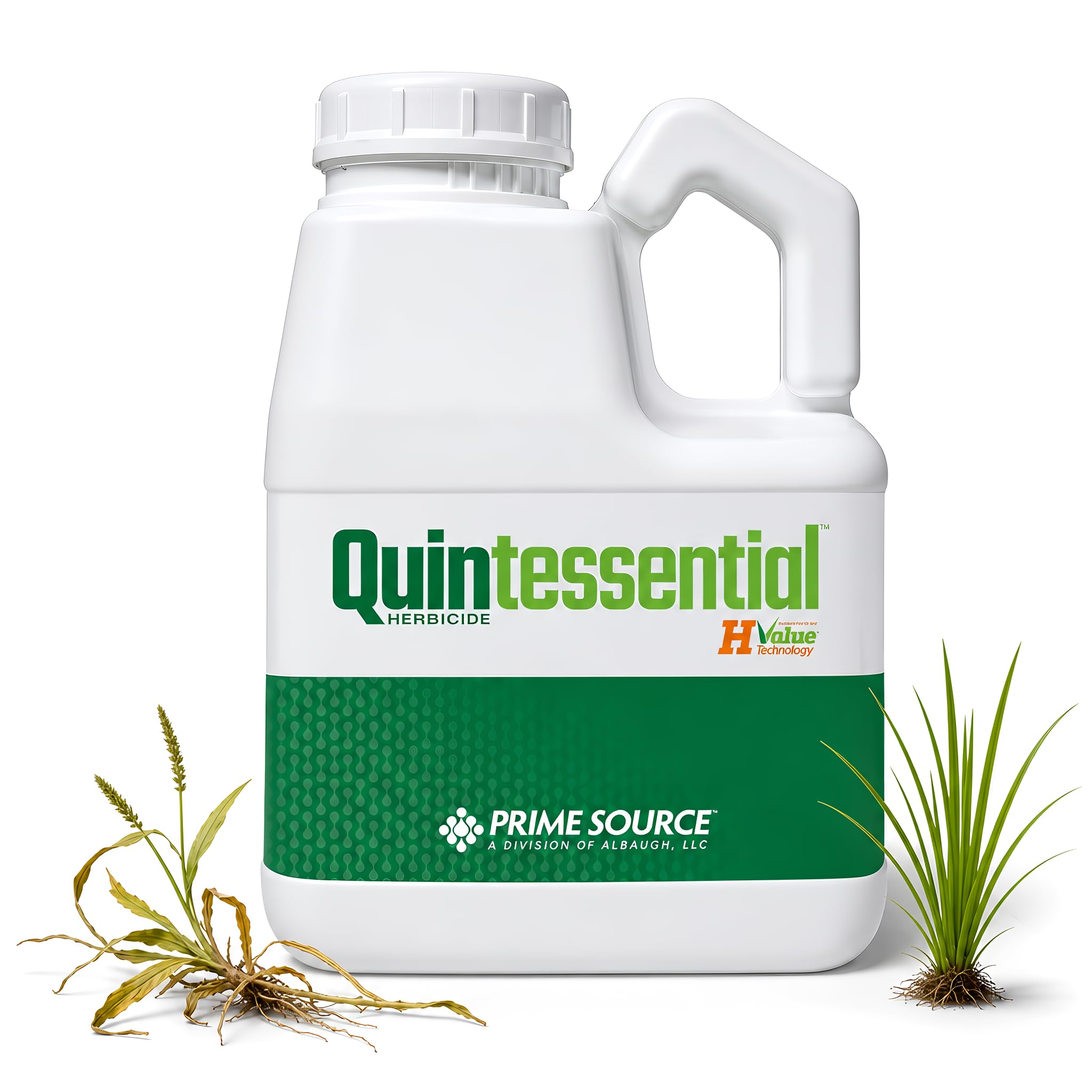
The post-emergent that kills crabgrass and clover while sparing your fescue.
This is the only product on the list with Quinclorac as its sole active ingredient at 18.92%. Quinclorac is a selective herbicide that targets crabgrass (large and smooth varieties), foxtail, and a wide range of broadleaf weeds including clover (hop, red, and white varieties), dandelion, and dollarweed. Its coverage of 500 square feet is the smallest on this list — a huge contrast to the 16,000 square feet of the BioAdvanced — because this is a concentrated formula meant for spot treatment, not broadcast spraying.
Verified reviewers report serious speed: “crabgrass dying by day 4, lawn grass fine.” Users almost universally recommend mixing it with a non-ionic surfactant (a wetting agent that helps the spray stick to leaves) or even dish soap to help the spray adhere to the waxy leaves of crabgrass and clover. Without surfactant, the liquid beads up and runs off, wasting the product. The downside is that at 500 square feet per mix, you need to mix multiple batches for even a modest lawn. Some reviewers found it killed about 70% of their crabgrass after a full application plus spot treatment.
This is not your all-purpose clover spray. It is your targeted weapon for lawns where crabgrass is the primary problem and clover is the secondary guest. For pure clover eradication at scale, the PBI/GORDON Trimec or the BioAdvanced are more efficient.
Strengths
- Selective: kills crabgrass and clover without harming established turfgrass.
- Fast visible results — crabgrass dying by day 4 per buyer reports.
- Quinclorac 18.92% is a specialized active ingredient for difficult grassy weeds.
Weaknesses
- Only 500 sq ft coverage per bottle; must re-mix for larger areas.
- Requires a surfactant for the spray to stick to leaves.
- One reviewer noted only ~70% kill on crabgrass after full application.
Perfect when: crabgrass is your main enemy and clover is secondary, or you have a small lawn and want the most specialized active ingredient for both.
Look elsewhere if: clover is the dominant weed and your lawn is over 1,000 sq ft — you’ll burn through this bottle fast and pay more per square foot.
6. Agrisel 3 Way Max Weed Killer, 128 Ounces
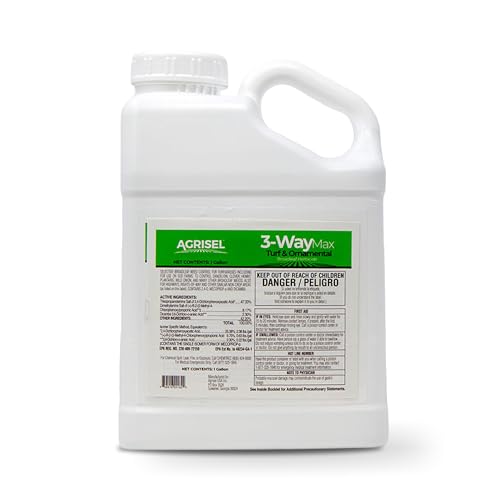
The low-odor concentrate that says it’s safe for grass and pets.
Agrisel 3 Way Max uses the same active ingredient combo as the BioAdvanced — Dicamba and Mecoprop-P — but in a 128-ounce bottle that covers only 1,000 square feet. That is a huge coverage difference compared to the BioAdvanced covering 16,000 square feet from 32 ounces. The label suggests 1.5 to 3.0 ounces per gallon of water, and many buyers found the mixing instructions unclear.
The product claims to be “pet safe” and have a “barely-there scent,” which is a meaningful difference from some herbicides that have a strong chemical smell for days after application. Reviewers confirm it kills dandelions and clover within a week and keeps the grass healthy. One review noted it “did not work well to kill dandelions or broadleaf” at various mix strengths, so results can be inconsistent if you don’t hit the right ratio for your weed type.
For a lawn under 1,000 sq ft, this might work if you value low odor and pet safety claims. But at this price point, the BioAdvanced covers 16,000 square feet, while this Agrisel listing shows 1,000 square feet. You are paying a premium for a small yard convenience product.
What Stands Out
- Low odor formula that customers note barely smells during application.
- Labeled as safe for all labeled grass types when used correctly.
- Easy to mix; 1.5-3.0 oz per gallon of water.
The Trade-off
- Covers only 1,000 sq ft, which is restrictive for a large lawn.
- Some reviewers reported it did not kill clover or dandelions effectively.
- Mixing instructions were considered unclear by several buyers.
Works for: someone with a very small lawn (under 1,000 sq ft) who values low odor and pet safety claims and doesn’t mind paying a premium per square foot of coverage.
Skip it when: you have any lawn over 1,500 sq ft, or you want the proven efficiency of the BioAdvanced or Trimec for the same active ingredients at a fraction of the cost.
Understanding the Specs
Dicamba and Mecoprop-P (MCPP)
These are the two most common active ingredients in selective broadleaf herbicides for lawns. Dicamba works by mimicking natural plant hormones, causing uncontrolled growth that kills the weed over a few days. MCPP (Mecoprop-P) is a slightly different chemical that targets the same hormone pathways but is especially effective on clover and chickweed. When you see both on a label, it is a stronger and faster combination than either alone. Neither kills grass because grass has a different biological response to these hormone mimics.
Triclopyr vs. Quinclorac
Triclopyr is another selective herbicide that targets woody and broadleaf plants, including clover, chickweed, and oxalis (wood sorrel). It is often found in products that claim “clover and oxalis killer.” Quinclorac is a different chemical family used primarily for crabgrass control, but it also kills certain clover species (white, red, and hop clover). If clover is your only problem, Triclopyr is more targeted; if you also have crabgrass and foxtail, Quinclorac is a better two-for-one choice.
FAQ
Will clover killer harm my grass?
How long does it take for clover killer to work?
Can I apply clover killer before mowing?
Is liquid or granular clover killer more effective?
How do I know if my grass type is safe for the product?
Will clover killer stop new clover from growing?
Can I use clover killer on a newly seeded lawn?
Do these products work on wild violet or creeping Charlie?
Why do some products say “ready-to-use” and others say “concentrate”?
Is it safe to apply clover killer if I have pets?
Final Thoughts: The Verdict
Across the board, the best clover killer for lawns winner is the BioAdvanced Weed Killer for Lawns Concentrate because it balances a powerful Dicamba/Mecoprop-P active ingredient mix with 16,000 square feet of coverage from a single 32-ounce bottle, all at a mid-range price that beats ready-to-use sprays on cost per treatment. If you have a bigger lawn and want the lowest cost per square foot, grab the PBI/GORDON Trimec Lawn Weed Killer gallon for its 32,000-64,000 square foot coverage. And for the easiest grab-and-go application with no mixing, the Bonide Chickweed, Clover & Oxalis Killer turns clover brown in three days with its 128-ounce ready-to-use bottle.
How We Picked
We do not accept paid placement, and we did not hands-on test every unit. Instead, we match each pick to a real buyer and use-case by comparing the manufacturers’ published specifications against the patterns in verified customer reviews — so you get each pick’s real strengths and trade-offs instead of marketing copy.
Sources & Methodology
Specifications: manufacturer listings and product documentation. Review insights: verified customer reviews, as of July 2026. Pricing: not shown on this page (it changes often); check the current price via the retailer link.
As an Amazon Associate, Lawn Gear Lab earns from qualifying purchases. This does not affect which products we feature.