
Specs are compiled from manufacturer listings and verified buyer reviews and can change over time — please confirm the key details on the product page before buying.
When your clematis stays green but never flowers, the usual culprit is a nutrient imbalance. Feeding it the right mix at the right time—like the picks below—can trigger the blooms you are waiting for.
I’m Rikta — the founder and writer behind Lawn Gear Lab. This guide is built by comparing the manufacturers’ published specifications and the patterns across verified customer reviews, so you get each pick’s real strengths and trade-offs instead of marketing spin.
You will learn which form of feed suits your routine and which nutrients drive those signature blooms, all while finding the clematis plant food that matches how you garden.
Our Picks at a Glance

How To Choose The Best Clematis Plant Food
Clematis is a hungry climber that rewards consistent feeding with waves of color. The choice between a liquid and a granular feed changes how often you need to work, so think about your schedule before you buy anything.
Match the Form to Your Routine
Liquid feeds are mixed with water and applied immediately, making them great for quick results and for vines growing in pots. Granular formulas are sprinkled on the soil and break down slowly, so you can feed monthly and let the rain do the heavy lifting.
Read the N-P-K Numbers
The three numbers on the bag tell you the balance of nitrogen, phosphorus, and potassium. Clematis responds best to a feed where the middle number, the phosphorus, is strong enough to push flower production rather than just leafy growth.
Quick Comparison
| Model | Best For | Form | Weight | Coverage | Amazon |
|---|---|---|---|---|---|
| Espoma Rose-Tone 4 lb★ Best Overall | Monthly organic feeding | Granules | 8 pounds | Medium | Amazon |
| Clematis Liquid Feed 32 oz | Quick results in pots | Liquid | 2.2 pounds | Full | Amazon |
| Potash Fertilizer 32 oz | Boosting flower color | Liquid | 32 fluid ounces | Garden & houseplants | Amazon |
| Espoma Rose-Tone 18 lb | Large established gardens | Granules | 18.1 pounds | Medium | Amazon |
In‑Depth Reviews
1. Espoma Organic Rose-Tone 4-3-2 (4 lb. Bag – Pack of 2)
Our pick — over 4.5★ from 700+ verified ratings; the strongest balance of quality and price.
The organic granule that feeds monthly and lets the soil do the work
The biggest win here is the schedule. You sprinkle these granules around the drip line of the plant once a month from May through September, water it in, and you are done — there is no mixing jugs or measuring liquids. Clematis is listed right on the label alongside roses, viburnum, and bougainvillea, so you know the 4-3-2 mix was designed with flowering climbers in mind.
It carries 5% calcium, which supports strong cell walls in the vine, and the brand has been making natural organics since 1929. The 4-pound bags arrive as a pack of two, giving you 128 ounces of feed to spread around the garden.
The thing everyone raves about is the effectiveness — with roughly 60 owners singling out how well it works. Buyers report that a first-season application left 30 rose bushes looking “stellar,” and that the slow-release nature means you do not have to worry about overdoing it.
What wins people over
- Monthly feeding schedule is genuinely low-maintenance
- Certified ready for organic gardening, no mixing required
- 5% calcium supports healthy vine structure
The trade-offs
- The organic odor splits opinions — some find it pleasant, others call it vile
- Weekly feeding fans may prefer a faster liquid option
Reach for this if: you want a set-and-forget organic routine that only asks for attention once a month.
Look elsewhere if: you need instant results for a struggling vine — granules take time to break down.
2. Clematis Fertilizer – Liquid Plant Food for More Blooms (32 oz)
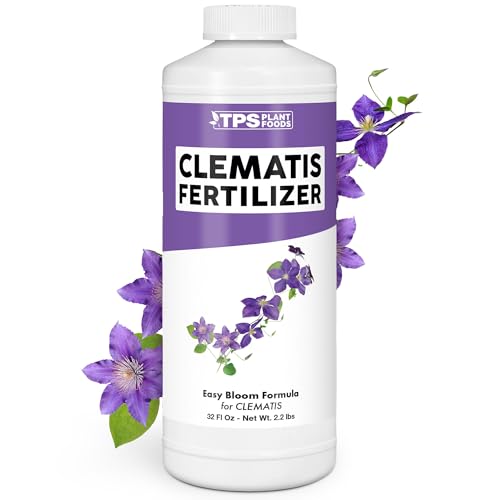
The liquid pick that revives a struggling vine within days, not weeks
This is the one to grab when your clematis looks stuck. The 32-fluid-ounce liquid bottle is designed for easy dilution, so you mix it into your watering can and give a gentle weekly feed that reaches both the roots and the climbing vines. At 2.2 pounds, the bottle is light enough to keep right next to your watering supplies.
Owners mention a small clematis that “wasn’t doing much” started growing really well after just the first dose. Another owner with two clematis in pots on a deck saw them look fantastic, and a third describes the feed as reviving struggling new plants and triggering fresh leaves after a spring application.
The honest catch is the bottle size. One owner went through the entire bottle in just 2-3 feedings and wished the container was bigger — so if you have a large trellis full of vines, plan to reorder.
Quick turnaround: This is the fastest route to visible growth for a vine in distress, ideal for potted clematis on a deck or patio.
Watch the volume: The 32 oz bottle disappears fast with weekly feeding across several plants.
3. Potash Fertilizer – Liquid Potassium Supplement (32 oz)
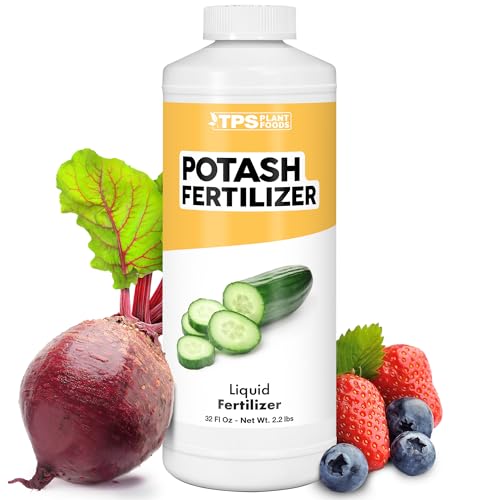
A pure potassium shot that pushes bud development when phosphorus is already covered
This one plays a supporting role in your clematis feeding plan. It is a concentrated liquid potash, a 0-0-10 mix that delivers a strong dose of potassium with no nitrogen and no phosphorus. Potassium is what drives bloom quality and overall plant resilience, making this a targeted supplement for the flowering stage rather than an all-in-one feed.
The label says no mixing is required, so you pour a small amount into your watering can and apply. Customers note their plants seem to be thriving with buds already appearing, and one notes it is “very easy to add to my plant water” and will likely last a while. It works well on vegetables, fruiting plants, turf, and ornamentals, not just climbers.
The recurring gripe is the lid, which one owner found breaks easily — so handle the cap with care. The bottle also went through a review noting an 8 oz version exists, which tells you this concentrated feed goes a long way.
Targeted strength: Ideal as a mid-season booster when your clematis has lush foliage but the flower buds are lagging.
Handle with care: The cap is the weak point; treat it gently to avoid a mess.
4. Espoma Organic Rose-Tone 4-3-2 (18 lb. Bag)

The 18.1-pound bulk bag for gardeners with a whole fence line of climbers to feed
For a long trellis, a pergola, or several established clematis vines, this 18.1-pound bag of Rose-Tone makes sense. It uses the same 4-3-2 organic granular formula (4 parts nitrogen, 3 parts phosphorus, 2 parts potassium) as the smaller pack, but gives you 288 ounces—compared to the 32-fluid-ounce liquid feed—to cover your whole garden.
Buyers call it “a lot of product for the price,” and one gardener alternates it with other feeds for roses that end up “fat and sassy.” Because it is slow-release, you are less likely to over-feed, but still follow the directions exactly. The formula includes 5% calcium and carries the same organic registration as the smaller pack.
The one honest note is the odor. The strong smell is the most-discussed downside, with an owner advising storing the bag in an airtight container so the scent does not drift through the garage or shed.
Built for volume: This is the economical pick for a large garden with roses, hydrangeas, and clematis all needing monthly feeding.
Plan the storage: The smell is strong, so an airtight bucket is a smart companion purchase.
Understanding the Specs
The N-P-K Ratio
The three numbers on any fertilizer label stand for nitrogen, phosphorus, and potassium. For clematis, you want a formula where the middle number is strong enough to drive flowering — like the 4-3-2 in the Espoma feeds — rather than a nitrogen-heavy mix that only grows leaves.
Liquid vs Granular Form
Liquid feeds give you fast results but require weekly attention, while granular formulas break down slowly and only need a monthly application. Your choice should match how much time you want to spend in the garden and whether your clematis is in a pot or in the ground.
FAQ
What is the best N-P-K ratio for clematis?
Should I use liquid or granular fertilizer for clematis?
Will Rose-Tone work on my clematis even though it says roses?
How often should I feed my clematis?
What does a high-potash fertilizer do for clematis?
How much Rose-Tone do I need for a large garden?
Is the Espoma fertilizer safe for organic gardening?
Does clematis fertilizer have a strong smell?
Final Thoughts: The Verdict
For most buyers, the clematis plant food winner is the Espoma Rose-Tone 4 lb pack because it pairs a genuinely easy monthly routine with organic credentials and 5% calcium for stronger vines. If you want fast results for a potted clematis that is struggling, grab the liquid Clematis Fertilizer. And for a whole fence line of established climbers, the 18.1-pound Espoma bag is the one to reach for — just plan airtight storage for the smell.
How We Picked
We do not accept paid placement. Every pick is matched to a real buyer and a real use-case; we do not hands-on test units.
Sources & Methodology
Specifications: manufacturer listings and product documentation. Review insights: verified customer reviews, as of August 2026. Pricing: not shown on this page (it changes often); check the current price via the retailer link.
As an Amazon Associate, Lawn Gear Lab earns from qualifying purchases. This does not affect which products we feature.