
Specs are compiled from manufacturer listings and verified buyer reviews and can change over time — please confirm the key details on the product page before buying.
Choosing the right clay pellets for your hydroponic setup is about more than grabbing the cheapest bag. You need good aeration for your roots, proper water drainage, and minimal dust to rinse off before you start. Pick the wrong media and it can hold too much water or break down into useless grit.
This guide is based on comparing manufacturer specs and patterns across verified customer reviews, so you get each pick’s real strengths and trade-offs.
For most home and hobby growers, the top clay pellets for hydroponics is the ZeeDix 5LBS because it balances low dust, a pH-neutral structure, and a mid-range volume that works for both small and medium systems.
Our Picks at a Glance
How To Choose The Best Clay Pellets For Hydroponics
Expanded clay pellets (also called LECA — lightweight expanded clay aggregate) give your roots both air and moisture. The pores in each pellet hold water, while the gaps between pellets let oxygen flow freely. Your choice depends on three things: pellet size, how much you need to rinse before use, and whether the media is a permanent part of your system or something you swap out.
Pellet Size and Uniformity
LECA balls typically range from 4 mm (about the width of a pencil lead) to 20 mm (about the size of a marble) in diameter. Smaller pebbles (4-8 mm) pack tighter together, which is better for seed starting or small net pots. Larger pebbles (10-16 mm or 8-20 mm) create bigger air gaps, but they can leave too much open space for tiny roots to grip. Look for a product that states the actual diameter range on the bag so you match it to your plant’s root system.
Dust Content and Prep Work
Almost all clay pebbles arrive with a fine clay dust coating them from tumbling in the bag during shipping. You will need to rinse and soak them until the water runs clear. Buyers consistently report that some brands are dustier than others. Check reviews for the phrase “minimal dust” if you want to speed up your setup time.
Volume vs. Weight
Because LECA (lightweight expanded clay aggregate) is a lightweight, porous material, a 10-pound bag might fill a much larger container than you expect. One reviewer noted that a small 2.5-pound bag was enough for a 2-inch layer in a 5-gallon tank and a 6-inch planter. Always check the volume in liters (or cubic centimeters) to know how many net pots or how deep a drainage layer you can fill.
Quick Comparison
| Model | Best For | Size Range | Weight | pH Neutral | Amazon |
|---|---|---|---|---|---|
| Josh’s Frogs (4 Quarts)★ Best Overall | Bioactive terrariums | — | 0.15 Pounds | Yes | Amazon |
| ZeeDix 5LBSBest Value | Soilless hydroponic systems | — | 80.0 Ounce | Yes | Amazon |
| Harris 2.5lb | Drainage layer in pots | — | 2.5 Pounds | Yes | Amazon |
| Pulovin 10 lbs | High-volume hydroponic grows | 4-16mm | 10 lbs | Yes | Amazon |
| Voulosimi 18LB | Deep water culture (DWC) | 0.3-0.5 in | 17.56 Pounds | Yes | Amazon |
| PowerGrow Systems 10 lbs | General hydroponic growing | — | 10 lbs | Yes | Amazon |
| GMGC45L | Large-scale systems | 8–20mm | 45 Liters | Yes | Amazon |
In‑Depth Reviews
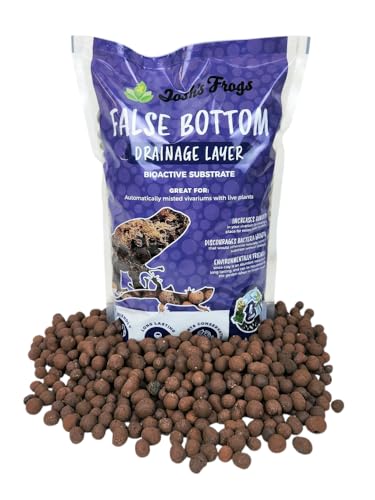
1. Josh’s Frogs False Bottom – LECA Expanded Clay Pebbles (4 Quarts)
Our pick — over 4.5★ from 900+ verified ratings; the strongest balance of quality and price.
The Josh’s Frogs bag is designed for bioactive terrariums, not for filling a DWC bucket—one buyer used a single bag for two crested gecko enclosures.
At just 0.15 pounds for the whole bag, this is not the pick for filling a deep-water culture (DWC) bucket. This amount is made for a false bottom in a bioactive vivarium where you need a thin drainage layer under the soil. One buyer used a single 5-quart bag in each of two 18x18x24 enclosures for crested geckos and said it was the “perfect amount.”
Because it is lighter than lava rock, you can stack it without crushing lower layers. Buyers also note “minimal dust after rinsing,” so the prep time stays short. At 0.15 pounds compared to the ZeeDix 80.0 Ounce, you are getting less material—this is a targeted design for a specific use case.
What it does well
- Lighter than lava rock, so it won’t compact lower layers
- Secure packaging with minimal dust
- Designed to create a water reservoir under soil to boost humidity
The catch
- Very low volume—not practical for hydroponic media beds or large net pots
Get this for: Bioactive terrariums, vivarium false bottoms, or anyone needing a thin drainage layer under substrate.
Do not get this for: Filling a hydroponic grow system—you would need many bags, which is not cost-effective.
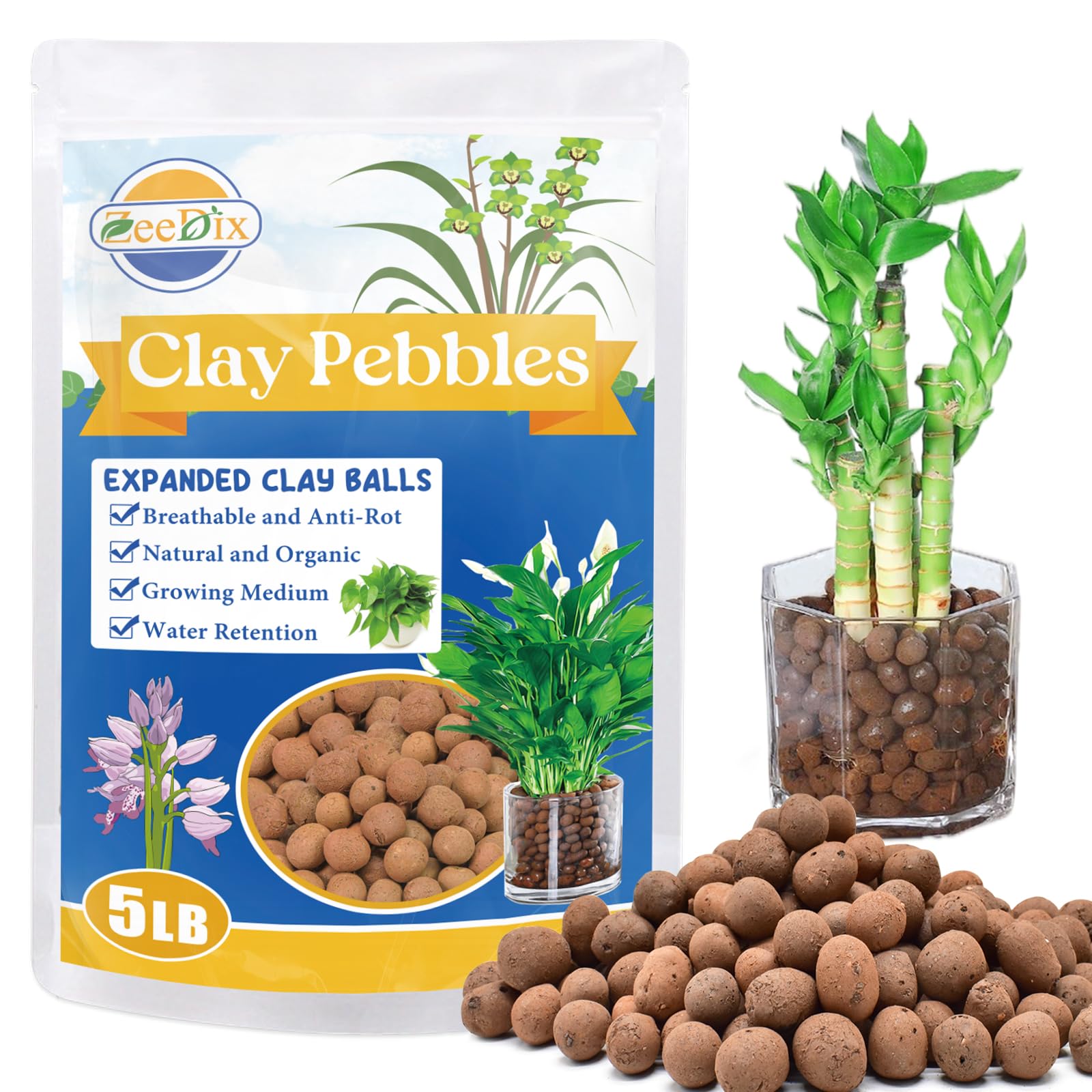
2. ZeeDix 5LBS Leca Clay Pebbles for Plants
The ZeeDix 5LBS earns its spot because buyers report the least dust of any bag here—so you spend minutes rinsing, not hours.
If you run a soilless hydroponic system, you want media that doesn’t arrive coated in a cloud of dust. Owners mention that these ZeeDix pebbles come “consistent size/shape, clean (no dust),” which saves you a long soak-and-rinse session. The 5-pound bag (80.0 Ounce unit count) is a mid-range volume that fits nicely into several net pots or a single deeper grow bed.
The micro-pores in each ball are made to absorb and gradually release nutrients from your hydroponic solution. This gives your roots a steady supply rather than a sudden flush after feeding. Compared to the Josh’s Frogs bag (which weighs only 0.15 pounds and is designed for thin drainage layers), this gives you enough material to actually fill a grow container for a full system.
Why it stands out
- Minimal dust reported by multiple buyers
- pH-neutral and chemically inert after kiln firing
- Washable and reusable across growing seasons
One limit
- Pebbles lean toward the larger side, which may leave gaps for very fine roots
Best for: Hydroponic growers who want a clean bag of LECA (lightweight expanded clay aggregate) that is ready for duty after a quick rinse—not a full-day prep.
Watch out: If you need very small pebbles for seed starting, the larger diameter might not give tiny roots enough contact surface.
3. Harris LECA Expanded Clay Pebbles for Plants, 2.5lb

The Harris 2.5lb bag surprises buyers because one 2.5-pound (2.5 Liters) package covered a 2-inch drainage layer in a 5-gallon tank plus a 6-inch planter.
Buyers consistently remark that the bag is “larger than expected.” One person reported it was enough for a 2-inch drainage layer in a 5-gallon tank plus a 6-inch planter, all from a single 2.5-pound (2.5 Liters) package. That makes this a solid pick if you only need to add a bottom layer to a few pots or a small aquarium setup.
The Harris pebbles are oblong rather than perfectly round, which actually stops them from rolling across the floor as you work. Because they are pH-neutral and odorless, they won’t alter your nutrient solution. Compared to the ZeeDix 5LBS bag (80.0 Ounce), this Harris bag has 40.0 Ounce versus 80.0 Ounce, so factor that in if you plan to fill a large grow bed.
What buyers like
- Oblong shape stays in place and doesn’t roll
- Excellent drainage—absorbed 1.5 inches of water in 2 days with no mold
- Versatile for orchids, snake plants, and hydroponic growing
The limit
- Not enough volume to act as sole substrate for a medium-to-large hydro system
Reach for this if: You need a bag-for-drainage-layer duties in pots or tanks, not a full grow-media fill.
Choose something bigger if: You are setting up a multi-bucket DWC (deep water culture) system or filling deep net pots.
4. Pulovin 10 lbs LECA Clay Pebbles for Plants
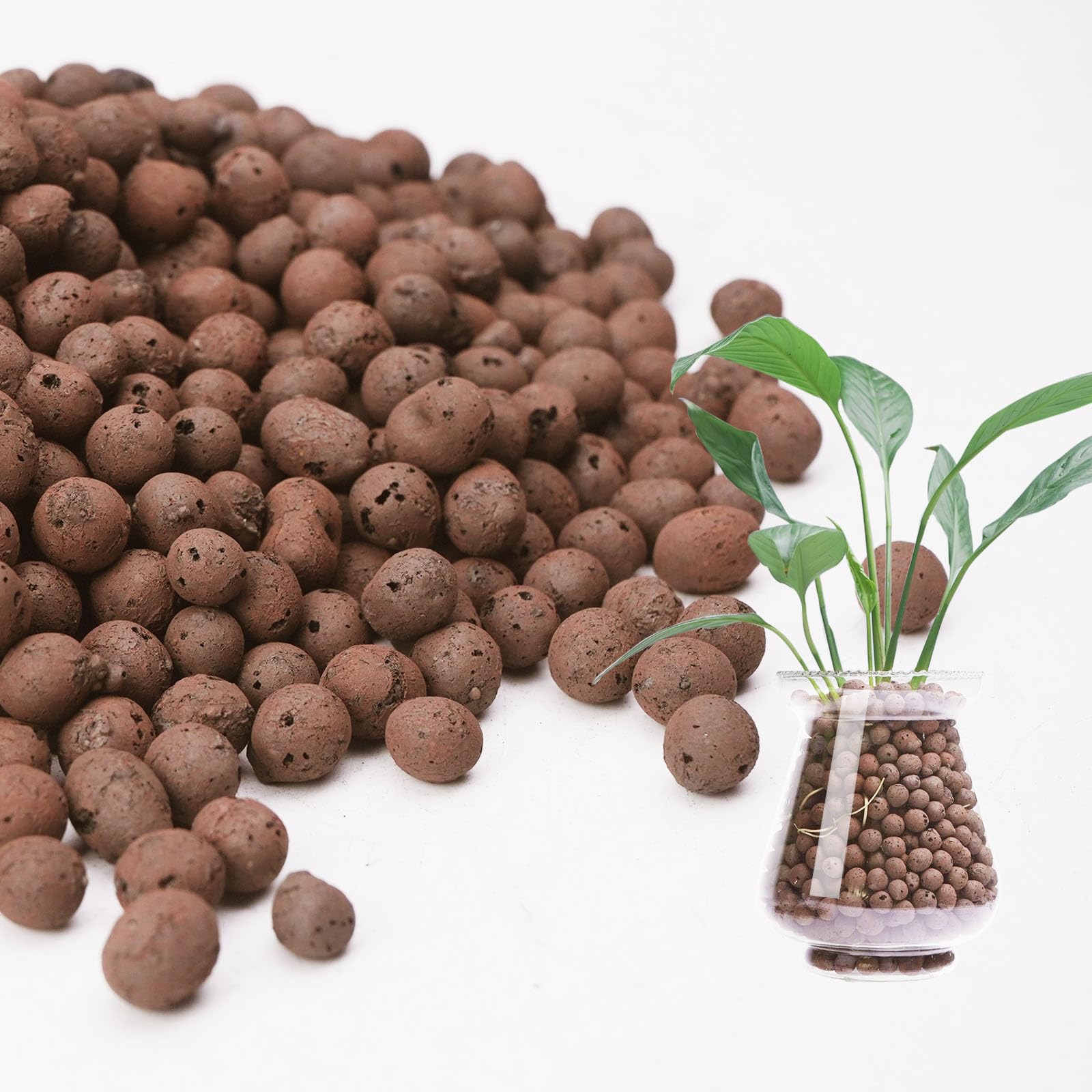
The Pulovin 10 lbs bag delivers 16,000 Cubic Centimeters of media with a 4-16mm size range—16,000 Cubic Centimeters versus the Harris 2.5lb bag’s 2.5 Liters for about the same price tier.
One buyer was surprised the box “was full to the brim” and another said the bag was “larger than expected” and used it for three hanging baskets, a 5-gallon bucket, and several pots—with half left over. For a 10-pound bag with a stated volume of 16000 Cubic Centimeters, that covers a lot of net pots or a single deep container.
The 4-16mm diameter range is a balance. You get some smaller pebbles for fine root contact and larger balls for air gaps. Unlike the Harris bag (which is just 2.5 pounds for 2.5 Liters), this Pulovin bag gives you 16,000 CC versus 2.5 Liters for roughly the same tier of investment—making it the highest-volume-per-dollar pick in the mid-range tier.
Why it works
- Wide size range (4-16mm) works for small and medium pots
- Clean, uniform, lightweight balls with good moisture retention
- Higher volume than most bags in its price tier
A note
- Bag is not resealable—you’ll need a container for storage
Best for: Growers who want a mid-price bag with enough volume to actually fill a system—not just top it off.
skip it if: You prefer a resealable bag or need the absolute smallest pebbles for fine-root propagation.
5. Voulosimi Clay Pebbles Hydroponic Rocks (18LB)

The Voulosimi 18LB bag weighs 17.56 pounds with uniform 0.3-0.5 inch pebbles—a buyer verified getting 36lbs as two bags and said it blocked light well in a DWC setup.
At 17.56 pounds (with the listed size range of 0.3 to 0.5 inches, or roughly 8-12mm), this is a heavy bag of uniform LECA (lightweight expanded clay aggregate). One buyer verified they got “36lbs received as ordered” (two bags) and said it worked great in their DWC (deep water culture) setup, blocking light well and leaving no grime after a full week. Another reviewer noted the pebbles are “all about the same size and very little dust” compared to previous orders.
pH neutral and non-toxic, these pebbles work in any hydroponic application. Compared to the Josh’s Frogs bag (0.15 pounds), this is 17.56 pounds versus the Josh’s Frogs 0.15 pounds—a clear signal of how much more material you get for a full grow bed. The trade-off is prep: one buyer mentioned it “requires heavy rinsing to remove dust” and recommended a 24-hour soak until the water clears.
What you get
- Uniform size (0.3-0.5 in) for consistent water flow and aeration
- Heavy enough to block light well in deep water culture
- Sturdy and reusable across multiple grows
Prep needed
- Requires heavy rinsing and a 24-hour soak to remove dust
Buy this for: DWC (deep water culture) or flood-and-drain systems where you need a deep fill of uniform pebbles that block light from the reservoir.
Consider a cleaner bag if: You hate spending the time to rinse and soak media before planting.
6. PowerGrow Systems Hydro Clay Pebbles (10 lbs)
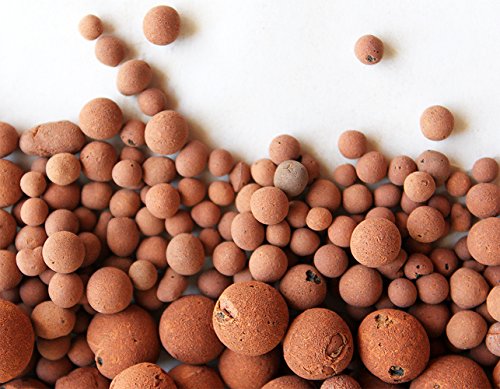
The PowerGrow 10-liter bag has been a hydroponics staple for years—one buyer used a single bag to create a 1.5-inch drainage layer across an 18×36 inch floor.
With a liquid volume of 10 Liters (about 160 Ounce unit count), this bag is a middle-ground option between the light 2.5-pound bags and the heavy 18-pound options. One buyer used a single bag to create a 1.5-inch drainage layer across an 18×36 inch floor for a bio enclosure—showing how far 10 liters can stretch when used as a thin layer.
The pebbles are pH neutral and certified for agricultural use. Customers note they are dustier than some competitors and recommend rinsing before use, but one repeat buyer says “much less dust than others” and appreciates the natural, imperfect look of the pebbles. The bag itself comes in a thin plastic bag inside a cardboard box—one buyer warned they had to buy a separate container for storage.
What works
- Good volume (10 Liters) for covering a decent grow bed or drainage layer
- pH neutral with no chemical additives
- Repeat reviewers point out consistent quality over time
The hassle
- Dusty—plan on a thorough rinse before use
- Packaging is flimsy; storing leftover media is messy
Best for: Growers who want a tried-and-tested bag at a fair price and don’t mind a rinsing step.
Pass on this if: You want a clean, dust-free experience right out of the bag, or need a resealable package.
7. GMGC45L Clay Pebble Grow Media (1.5 Cu. Ft.)

The GMGC45L delivers 45 Liters (about 1.5 cubic feet) of 8–20mm pebbles—45 Liters versus the PowerGrow 10 Liters for the best bulk value here.
At 45 Liters (which is roughly 1.5 cubic feet), this is the largest bag in the roundup by volume. The 8–20mm size range is on the larger end—ideal for deep water culture (DWC), flood-and-drain tables, and wicking beds where you want big air gaps. One buyer calls it “the most economic clay pebbles here” and uses it both for hydro and as potted-plant bottom cover.
The pebbles are made in Italy from all-natural clay and kiln-fired to stay stable and pH neutral with low EC (electrical conductivity — a measure of dissolved salts in water) levels. Compared to the 10-liter PowerGrow bag, this offers 45 Liters versus the PowerGrow 10 Liters, which matters when you are filling a large grow table. Buyers warn they are dusty and will float—so not suitable for pond use—but for large hydroponic setups, the value is tough to top.
Why it wins at scale
- Highest volume-per-dollar in the list (45 Liters)
- Consistent 8–20mm pebbles with low EC levels
- Reusable—just rinse and start the next grow
Trade-offs
- Dusty—needs a serious wash before use
- Pebbles will float, so not suitable for ponds or aquariums
Go big with this if: You are filling a large hydro system, multiple flood tables, or want to stock up for several grows at once.
pass on it if: You only need a small batch for a few pots—you’ll waste media and bag space.
Understanding the Specs
Size Range (mm / inches)
This tells you the diameter of the pebbles. Smaller pebbles (4-8 mm — about the width of a pencil lead to a piece of spaghetti) offer more surface contact for fine roots but less air gap. Larger pebbles (10-20 mm — about the size of a marble or grape) drain faster and allow more air flow, but very tiny roots might not have enough small spaces to grip. Match the range to your plant’s root structure and the size of your net pots.
Weight vs. Volume
LECA (lightweight expanded clay aggregate) is lightweight and porous, so the same bag weight can produce very different volumes depending on the pebble size and manufacturer. A 2.5-pound bag is about 2.5 Liters, while a 10-pound bag could be 10 Liters (or 16000 Cubic Centimeters). Always check the volume in liters (or CC) to know how deep you can fill your system—weight alone is misleading.
pH Neutral
Clay pebbles should be pH neutral (around 7.0) after kiln firing. If they are not, they can shift the pH of your nutrient solution over time, causing nutrient lockout for your plants. All the products here are pH neutral, meaning they will not alter your carefully balanced reservoir mix.
Dust Content
Clay dust is the fine powder that coats the pebbles after tumbling in shipping and handling. Some bags are dustier than others. Dust can cloud your nutrient solution or clog fine hydroponic equipment. A “minimal dust” product saves you the labor of multiple rinses and 24-hour soaks. Reading recent reviews for user reports on dust level is a solid move before buying.
FAQ
Do I need to rinse clay pebbles before using them in hydroponics?
Can I reuse clay pebbles after a grow cycle?
What size clay pebbles are best for deep water culture (DWC)?
Are clay pebbles the same as LECA?
How much LECA do I need for a 5-gallon bucket?
Will clay pebbles raise the pH of my water?
Can I use clay pebbles as a top dressing for potted plants?
Why do some bags say the pebbles are “oblong” instead of round?
Is there a difference between pebbles for hydroponics and pebbles for orchids?
How long do clay pebbles last in a hydroponic system?
Final Thoughts: The Verdict
For most home and hobby hydroponic growers, the clay pellets for hydroponics winner is the ZeeDix 5LBS because it balances low dust (shoppers say minimal rinsing needed), a pH-neutral structure (won’t shift your nutrient mix), and a mid-range volume (80.0 Ounce) that works for both small and medium systems. If you need to fill a large DWC (deep water culture) setup or several buckets on a budget, grab the GMGC45L (45 Liters) for the best bulk value. And for a targeted drainage layer in a terrarium or a few pots, the Harris 2.5lb bag is perfectly sized without leaving you with excess media to store.
How We Picked
We do not accept paid placement. Every pick is matched to a real buyer and a real use-case; we do not hands-on test units.
Sources & Methodology
Specifications: manufacturer listings and product documentation. Review insights: verified customer reviews, as of July 2026. Pricing: not shown on this page (it changes often); check the current price via the retailer link.
As an Amazon Associate, Lawn Gear Lab earns from qualifying purchases. This does not affect which products we feature.