
A chopping axe that bounces off a log instead of biting through it is not just frustrating—it’s dangerous. The thud of a mis-hit reverberates through your hands and arms, wasting energy and inviting injury. Choosing the right axe means looking beyond the length of the handle to the steel composition of the head, the HRC hardness rating, and the geometry of the blade edge. These engineering details separate a tool that delivers a satisfying, one-strike split from one that leaves you exhausted and your woodpile unchanged.
I’m Rikta — the co-founder and writer behind Lawn Gear Lab. Over many hours of market research, I have studied the metallurgy of forged steel heads, the shock-absorption properties of composite handles, and the ergonomic trade-offs between felling axes and splitting mauls to analyze which designs consistently earn their keep in the field.
Whether you are bucking firewood for the stove or clearing fallen timber after a storm, this guide focuses on the hardware details that matter for a best chopping axe.
How To Choose The Best Chopping Axe
An axe is a simple lever, but its performance depends on the precise interplay of head weight, blade profile, and handle material. Knowing which combination fits your wood type and swing style prevents wasted effort and unsafe rebounds.
Head Weight and Steel Hardness
A 4-pound head offers versatile control for both felling and splitting, while an 8-pound maul head delivers the sheer momentum needed to burst through knotted rounds. The steel’s Rockwell hardness (HRC) should fall between 50 and 55—softer edges dull quickly against seasoned oak, and harder edges can chip on a mis-hit into frozen wood. The best chopping axe heads are forged, not cast, because forging aligns the grain structure for greater impact toughness.
Handle Length and Material
Handles below 28 inches limit swing speed and reduce splitting force, making them best for limbing or camp tasks. A 36-inch handle maximizes rotational velocity for splitting large logs, but demands more clearance and stamina from the user. Composite handles with high fiberglass content resist moisture and shock better than straight wood handles, though premium hickory still offers natural vibration damping if kept dry and oiled.
Blade Geometry
A bevel-convex blade wedges the wood fibers apart and self-releases easily, which is ideal for splitting rounds. A straight chisel edge excels at clean cross-grain cuts for felling and trimming. A splitting axe wedge is thicker at the neck to prevent the head from jamming in the kerf, whereas a felling axe has a thinner profile for deeper penetration. Match the geometry to your primary task and you will avoid the wedging frustration of a stuck head.
Quick Comparison
On smaller screens, swipe sideways to see the full table.
| Model | Category | Best For | Key Spec | Amazon |
|---|---|---|---|---|
| Fiskars X27 Super Splitting Axe | Splitting Axe | One-strike splits on medium-large rounds | 36″, 4.3 lb head, bevel-convex blade | Amazon |
| Estwing 4 lb Axe (Hickory) | Felling Axe | Versatile chopping with traditional wood handle | 36″, 4 lb head, 50-55 HRC forged steel | Amazon |
| Husqvarna Wood Splitting Axe S2800 | Splitting Axe | Compact splitting for users under 6′ | 28″, 5 lb head, coated stainless blade | Amazon |
| Husqvarna 20″ Carpenter Axe | Carpenter Axe | Fine limbing and shaping tasks | 20″, 2 lb head, Swedish steel | Amazon |
| Fiskars 36″ Super Splitting Axe | Splitting Axe | Lightweight backpack-friendly splitter | 36″, 6 lb total, FiberComp handle | Amazon |
| Estwing 8 lb Splitting Maul | Splitting Maul | Busting gnarly knotted hardwood rounds | 36″, 8 lb head, 50-55 HRC forged head | Amazon |
| Truper Michigan Felling Axe | Felling Axe | Budget-friendly felling and splitting | 33″, 3.5 lb head, high-carbon steel | Amazon |
In‑Depth Reviews
1. Fiskars X27 Super Splitting Axe, 36″
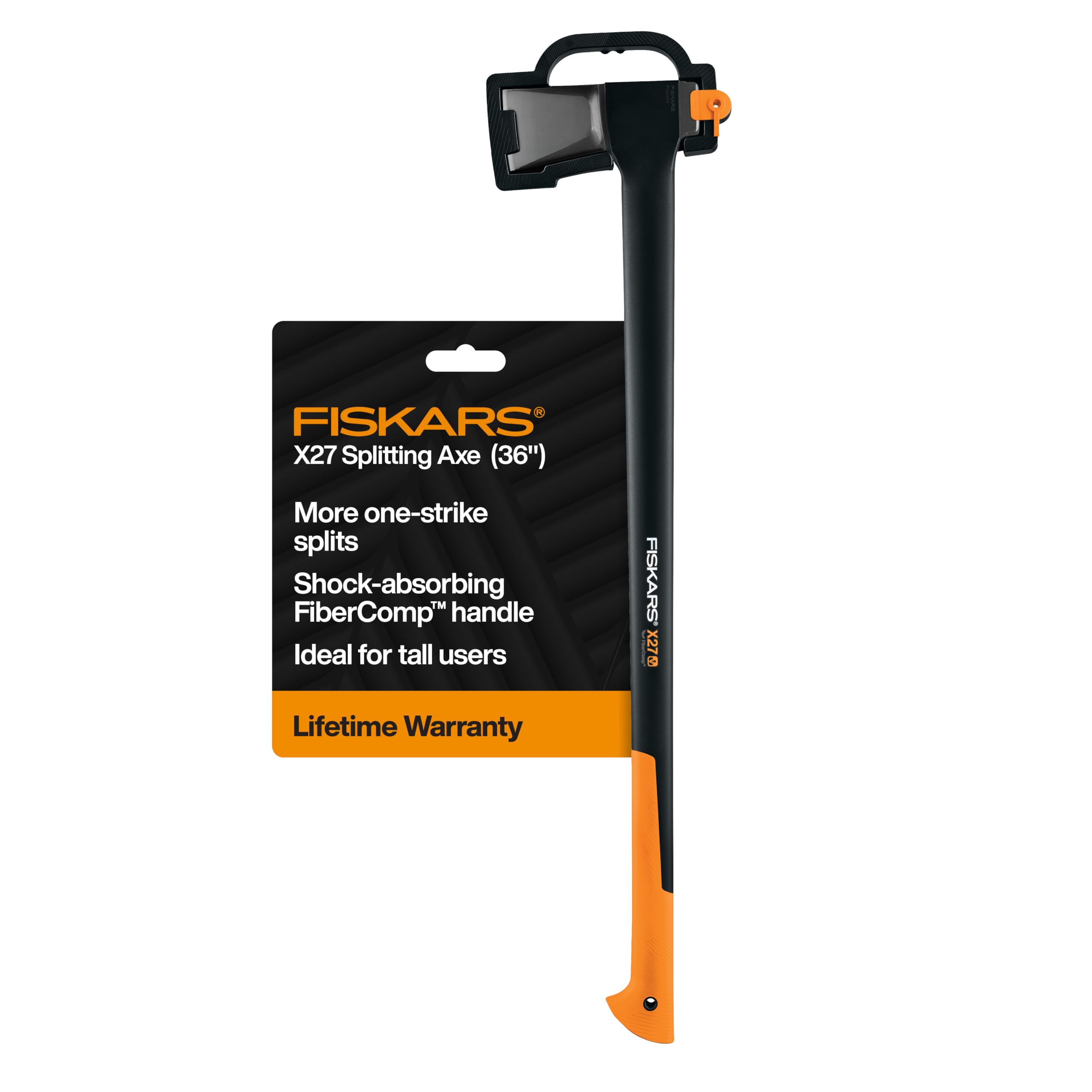
The Fiskars X27 uses a hardened forged steel head with a bevel-convex profile that wedges fibers apart efficiently and releases from the kerf without sticking. At 36 inches with a 4.3-pound head, it generates high tip speed from a relatively light package—owners report splitting 12-inch ponderosa rounds with only gravity-assisted swings. The FiberComp handle is infused with fiberglass to absorb shock and resist overstrike damage, a common failure point for wood handles.
Multiple reviews confirm that the X27 splits cleaner than traditional 8-pound mauls on most hardwoods—oak, maple, birch—while causing far less arm fatigue. The edge stays sharp through full seasons of use, and the composite construction eliminates the warping or loosening that affect hickory handles in wet climates. A few users note the plastic sheath feels less durable than leather, and professional loggers question long-term toughness under daily commercial abuse.
For the homeowner or weekend firewood producer, the X27 delivers the highest one-strike success rate in the mid-weight class. The balance between head weight and handle length makes it effective for users from 5’8″ to 6’2″, and the lifetime warranty backs the synthetic handle against breakage. It is the most recommended splitting axe in its category for a reason.
What works
- Bevel-convex blade self-releases from deep cuts
- Lightweight swing outperforms heavier mauls
- Composite handle eliminates warping and absorbs vibration
What doesn’t
- Sheath is plastic rather than leather
- Not ideal for daily professional use on large volumes
2. Estwing 4 lb Axe with 36″ Hickory Handle
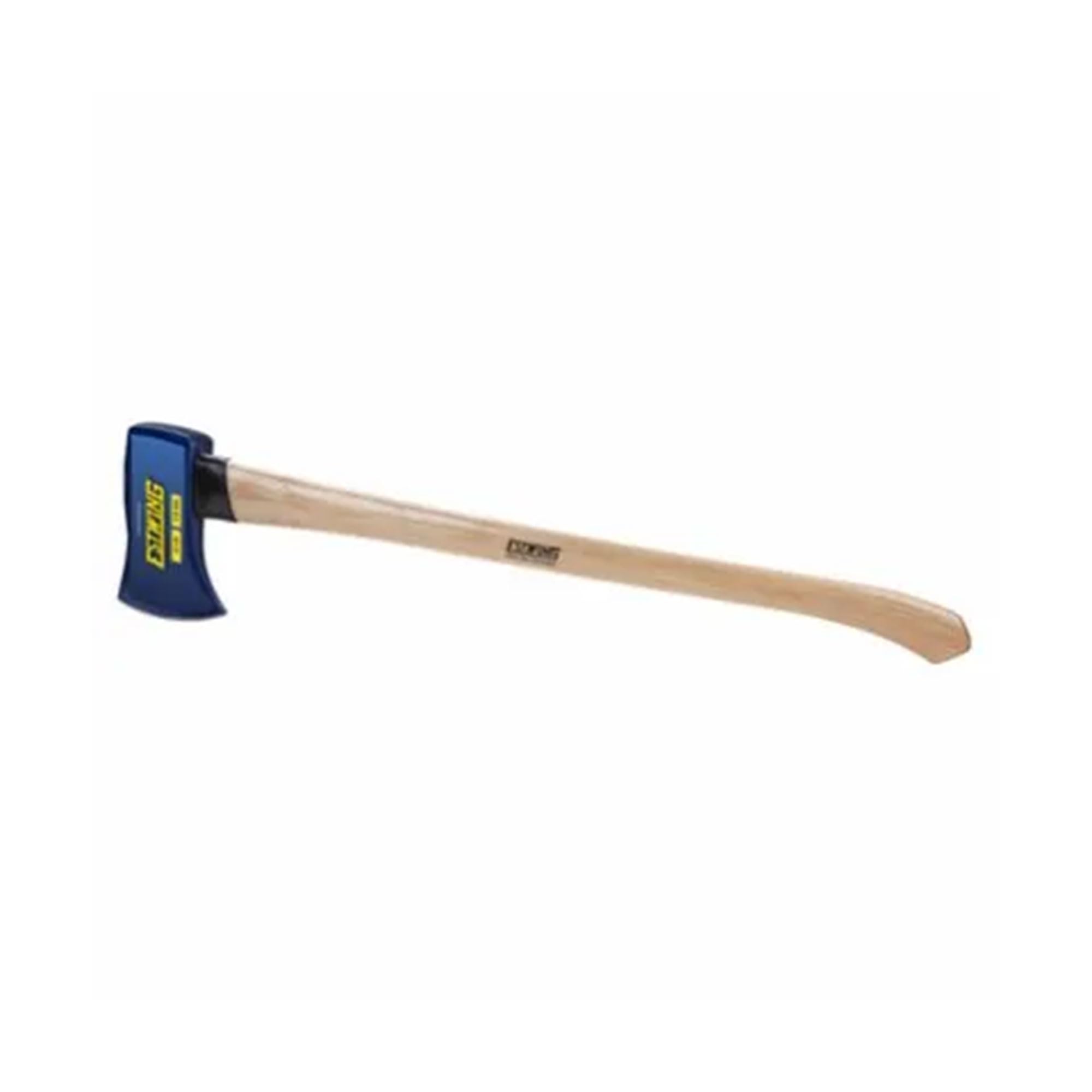
The Estwing 4-pound axe combines a fully forged alloy steel head hardened to 50-55 HRC with a select-grain American hickory handle. The straight chisel edge and felling-style head geometry make it suitable for both cross-grain cutting and moderate splitting. At 36 inches and 5.5 pounds total, it offers a balanced swing that users describe as precise and controllable.
Customers consistently praise the edge sharpness out of the box, noting that it reduces the number of swings needed per log compared to hardware-store axes. The contoured hickory handle provides natural vibration damping, though users with smaller hands find the grip profile too thick for comfort. Several reviews mention the bright yellow and blue head finish makes the axe easy to spot in brush or snow.
This is a traditionalist’s tool that rewards proper technique. It handles well for average-height users around 5’6″ and performs dependably on seasoned hardwoods. The wooden handle requires occasional oiling and care to prevent drying, but offers a classic feel that composite handles cannot replicate. It is a strong choice for those who want a quality heirloom-style felling axe.
What works
- Forged head holds a sharp edge through heavy use
- Hickory handle provides natural shock absorption
- Well-balanced for precise felling cuts
What doesn’t
- Handle is thick and may be uncomfortable for small hands
- Wood handle needs maintenance to prevent drying
3. Husqvarna Wood Splitting Axe S2800

The Husqvarna S2800 features a 5-pound coated stainless steel head mounted on a 28-inch fiberglass-composite handle, making it a compact but heavy-headed splitting tool. The non-stick coating on the blade reduces friction so the head slides through green or resinous wood without binding. The shorter handle limits swing radius but increases control for users splitting in tight spaces or who prefer a more vertical swing motion.
Owners report excellent splitting performance on seasoned softwood and moderate hardwood, with the head weight doing most of the work. The composite handle is weatherproof and will not warp, swell, or splinter—a clear advantage in damp firewood sheds. However, the blade arrives with limited sharpness from the factory, and several 6-foot-tall reviewers note the 28-inch handle feels too short for generating full splitting force from a standing swing.
This axe suits the shorter user or anyone who splits close to the ground on a chopping block. The warranty and Husqvarna brand reliability are strong selling points, but the S2800 is not the best match for tall users splitting large-diameter rounds. It fills a specific niche as a tough, compact splitter with a corrosion-resistant blade.
What works
- Non-stick coating prevents jamming in resinous wood
- Weatherproof composite handle will not warp
- 5-pound head delivers good splitting momentum
What doesn’t
- 28-inch handle is too short for taller users
- Factory edge is not very sharp
4. Husqvarna 20″ Wooden Curved Carpenter Axe
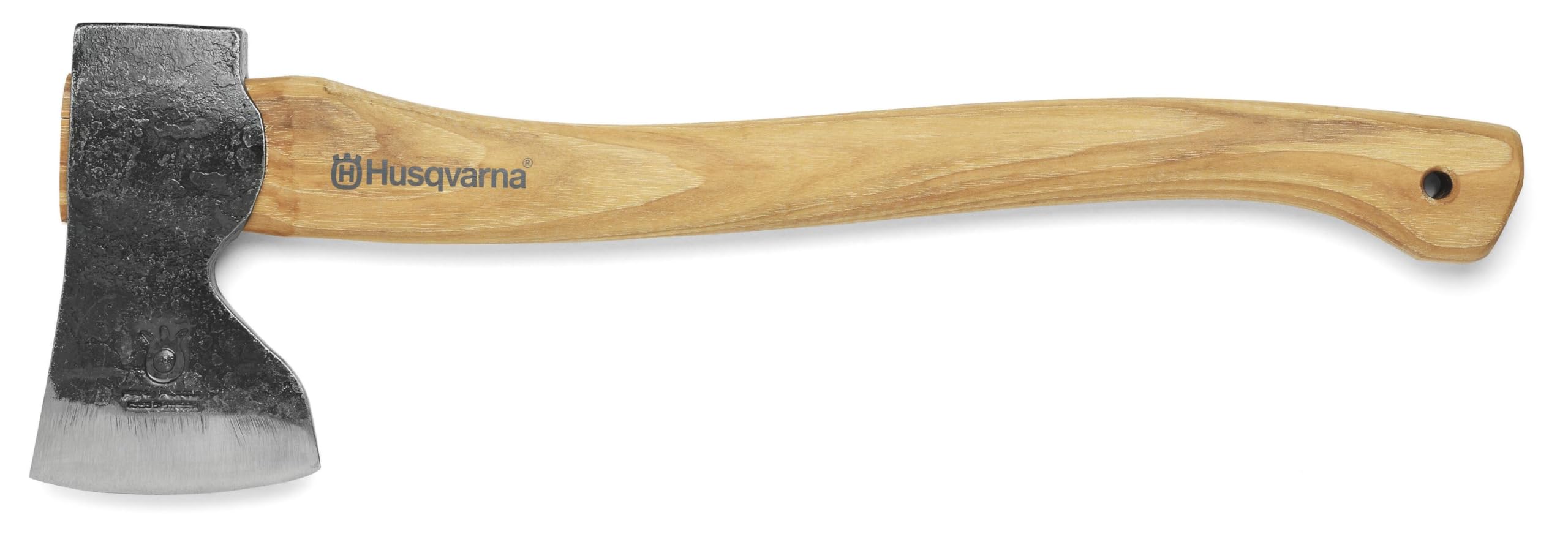
The Husqvarna Carpenter Axe is a hand-forged tool with a 2-pound head made from Swedish alloy steel, fitted to a 20-inch American hickory handle. This is not a heavy splitting tool—it is designed for fine carpentry work, limbing, and shaping wood with precise control. The straight carpenter’s edge allows for accurate cuts, and the leather edge cover protects the blade during transport.
Long-term users report excellent edge retention after six years of daily use on a tree farm, using the axe for wedging, carving, and splitting kindling. The thin head profile holds a sharp edge well, though it is not intended for splitting large rounds or felling substantial trees. Some buyers note the fit and finish require tuning—the head may not be perfectly seated on the shoulder, and the handle benefits from sanding and oiling out of the box.
This axe appeals to the bushcraft enthusiast or woodworker who values a traditional forged tool with a specific purpose. It is not a one-size-fits-all splitter, but for detail-oriented cutting tasks, the Swedish steel and hickory combination makes it a refined, durable choice that improves with user maintenance.
What works
- Swedish alloy steel holds a fine edge well
- Lightweight and maneuverable for detail work
- Leather mask protects blade during storage
What doesn’t
- Not designed for heavy splitting or large rounds
- May need handle sanding and head reseating
5. Fiskars 36″ Super Splitting Axe (Standard)
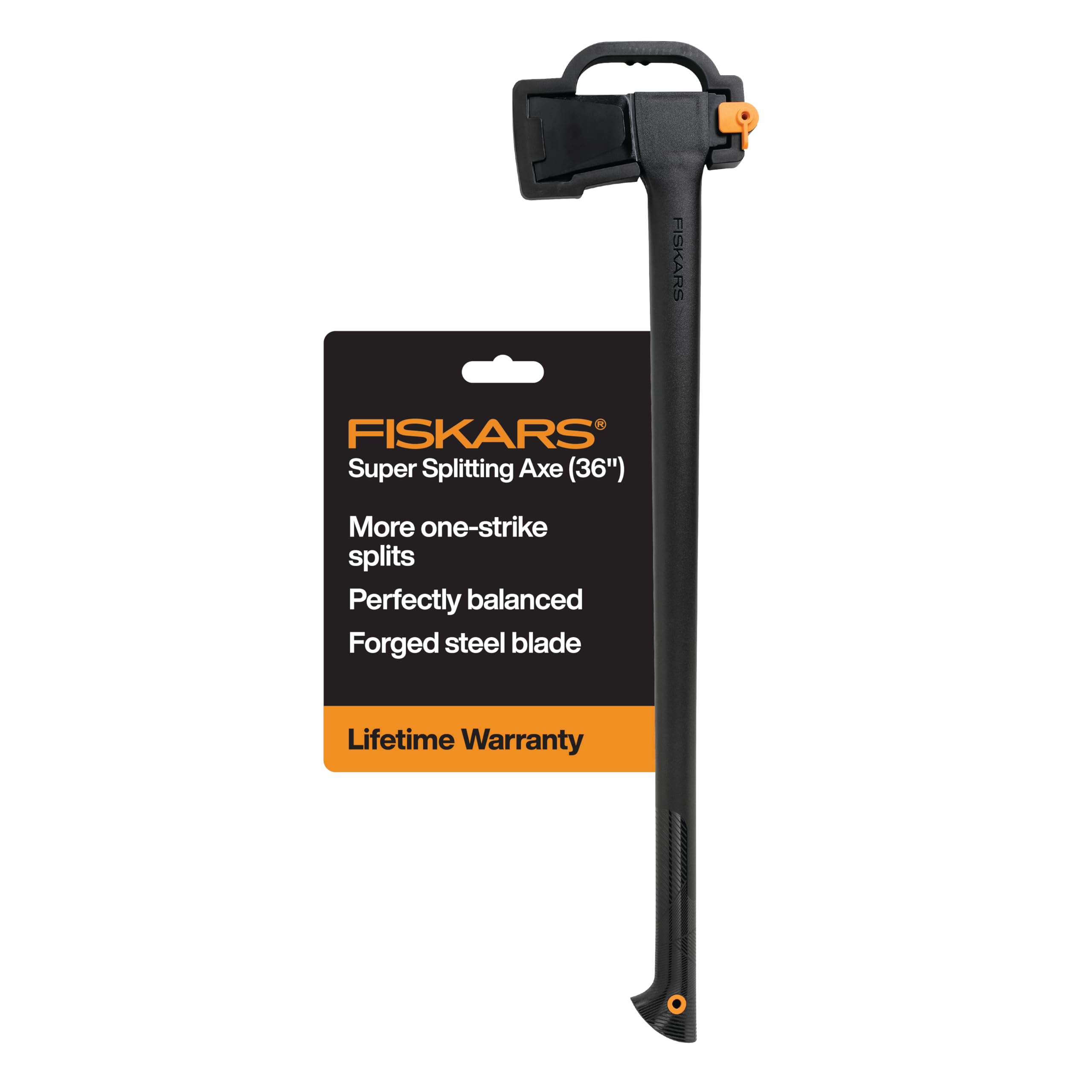
The standard Fiskars Super Splitting Axe shares the same 36-inch FiberComp handle and bevel-convex blade geometry as the X27 but with a lighter overall build (approximately 6 pounds total). It is designed for medium to large logs but favors portability over raw momentum, making it an excellent choice for backpacking, camping, or users who need a capable axe that does not max out their carry capacity.
Customer feedback emphasizes the razor-sharp edge out of the box and the lightweight feel that reduces fatigue over extended sessions. The axe splits ash and maple noticeably better than traditional steel-handled mauls of comparable weight. The virtually unbreakable handle includes a lifetime warranty, and the head is forged from hardened steel that resists dulling. A few users note the head weight might feel insufficient for very large or knotty hardwood rounds.
This is the entry point into the Fiskars splitting system for those on a budget or prioritizing pack weight. It performs admirably on medium firewood and will not break the bank, though those splitting oak or elm daily may want to step up to the heavier X27 model.
What works
- Lightweight and well-balanced for extended use
- Extremely sharp out of the box
- Lifetime warranty on the FiberComp handle
What doesn’t
- Less splitting momentum on large, knotty rounds
- Not ideal for very tall users needing extra reach
6. Estwing 8 lb Wood Splitting Maul, 36″ Fiberglass Handle

The Estwing 8-pound maul is built for brute force applications where a standard splitting axe bounces off the wood. Its forged alloy steel head is hardened to 50-55 HRC and paired with a dual-injection fiberglass handle infused with over 70% fiberglass for maximum strength. The high-force head design uses a wedge geometry that generates greater splitting force per swing than a conventional axe profile.
Users tackling fibrous species like elm, ironwood, or wet oak consistently report that this maul splits stumps that defeated lighter tools. The 36-inch handle provides ample swing arc, and the broad rubber grip improves handling control even with heavy gloves. However, the 8-pound head is fatiguing—multiple reviewers warn that it is punishing for users who do not have the strength to swing it all day, and it is not recommended for smaller frames or occasional use.
This maul is a specialist tool for the dedicated firewood producer dealing with stubborn rounds. It is less versatile than a general-purpose axe but excels at the single task of bursting apart tough, knotty wood. If your primary challenge is splitting impossible-looking logs, the Estwing 8-pound maul will outperform almost any lighter alternative.
What works
- Head weight and wedge design split very tough wood
- Fiberglass handle with rubber grip reduces vibration
- Forged steel head hardened to 50-55 HRC
What doesn’t
- Very heavy—fatiguing for smaller users
- Limited usefulness for felling or limbing tasks
7. Truper 3.5 lb Michigan Felling Axe, 33″ Fiberglass Handle

The Truper Michigan Felling Axe offers a 3.5-pound high-carbon steel head on a 33-inch fiberglass handle, making it an entry-level choice for general chopping and splitting. The Michigan-style head has a curved profile suited for felling and limbing, and the fiberglass handle resists moisture and impact better than budget wood handles at the same price point. A protective sheath is included.
Buyers in Latin American markets consistently rate this axe highly for basic functionality and value, noting that the edge arrives sharp enough for immediate use. The lighter head weight (3.5 lb) makes it manageable for beginners or users who do not need heavy splitting power. Experienced users note the steel quality, while adequate, does not match the edge retention of premium forged options, and some prefer a wood handle on a felling axe for better vibration absorption.
This axe serves the occasional user or someone building a first tool kit on a tight budget. It is not a professional-grade tool, but it cuts reliably and the fiberglass handle eliminates the splitting risk of low-quality wood handles. If your workload is light and your budget is fixed, the Truper is a functional, safe choice.
What works
- Affordable entry with a durable fiberglass handle
- Comes with a protective sheath
- Light enough for beginners to learn proper swing technique
What doesn’t
- Steel does not hold an edge as long as premium options
- Fiberglass handle transmits more vibration than wood
Hardware & Specs Guide
Rockwell Hardness (HRC)
The HRC scale measures a steel head’s resistance to indentation. Axes with an HRC rating between 50 and 55 strike the optimal balance: they are hard enough to hold a sharp edge through a full cord of wood but tough enough to survive glancing blows into frozen logs or rocky ground. Heads below 48 HRC dull quickly; heads above 58 HRC become brittle and risk chipping on overstrike.
Bevel-Convex vs Straight Edge
A bevel-convex blade has a curved grind that starts thick at the neck and tapers to a sharp edge. This geometry wedges wood fibers apart efficiently—ideal for splitting. A straight, chisel-type edge cuts a cleaner line through the grain, making it better for felling, limbing, and carpentry. Using the wrong edge profile for the task leads to either stuck heads or poor cutting performance.
FAQ
How do I match handle length to my height for an axe?
Is a heavier axe head always better for splitting wood?
Final Thoughts: The Verdict
For most gardeners, the best chopping axe winner is the Fiskars X27 Super Splitting Axe because its bevel-convex blade and FiberComp handle deliver the highest one-strike efficiency with minimal user fatigue. If you want a traditional forged feel with premium hickory, grab the Estwing 4 lb Axe. And for busting through the toughest knotty hardwood rounds, nothing beats the Estwing 8 lb Splitting Maul.