
A child’s potting bench isn’t a scaled-down toy — it’s a miniature workspace where genuine skills take root. The right model transforms muddy afternoons into lessons in patience, biology, and responsibility. But the wrong one splinters, tips over, or sits untouched after a single use, teaching nothing but disappointment.
I’m Rikta — the co-founder and writer behind Lawn Gear Lab. I’ve spent hundreds of hours analyzing kids’ gardening sets, comparing wood thickness, metal gauge, shelf height, and inclusive accessories to separate the benches built for serious play from the ones destined for the recycle bin.
After reviewing seven distinct options, I’ve narrowed the field to the safest, sturdiest, and most engaging models available today. This guide breaks down exactly what makes a great children’s potting bench and which one deserves a spot in your backyard.
How To Choose The Best Children’s Potting Bench
Not every gardening playset is built for actual potting. The best benches balance child-safe construction with features that let kids dig, water, and plant without constant adult intervention. Focus on these four areas when shopping.
Material and Weather Resistance
Solid wood (cedar or fir) holds up best against rain and sun exposure. Cheap particleboard swells and flakes within a season. A painted or treated finish adds protection — look for ASTM or CPSIA safety certifications to confirm no harmful chemicals were used.
Bench Height and Tool Sizing
A potting bench that forces a child to stand on tiptoes or hunch over will be abandoned quickly. Measure your child’s waist height and look for a bench that lands 2–4 inches below it. The same logic applies to the tools — handles should fit a closed fist without dragging.
Functional Features That Encourage Real Play
A working faucet, a removable sink basin, or a draining platform turns pretend play into real gardening. Benches with a cold frame or starter pot slots let kids see seeds germinate — a satisfaction no plastic toy flower can replicate.
Stability and Storage
Wobbly legs and narrow bases cause tip-overs when a child leans sideways to reach a pot. Prioritize benches with a wide footprint, locking casters, or a low center of gravity. Enough shelf space to store tools out of the rain also extends the bench’s life.
Quick Comparison
On smaller screens, swipe sideways to see the full table.
| Model | Category | Best For | Key Spec | Amazon |
|---|---|---|---|---|
| TP Toys Potting Bench | Premium Wood | Full-featured outdoor play | 35.6 x 14.2 x 34.8 inches | Amazon |
| Topeakmart Potting Bench | Adult-Size | Adult-child shared gardening | 154 lb tabletop capacity | Amazon |
| Gizoon Outdoor Potting Bench | Metal Top | Mess-free clean up | 37.4 x 18.5 inch work area | Amazon |
| Mederra Mud Kitchen | Cedar Water Play | Mud and water sensory play | 100% cedar construction | Amazon |
| ROBUD Wooden Workbench | Tool Bench | Tool-based imaginative play | 27.6 x 11.6 x 40.6 inches | Amazon |
| ROBOTIME Gardening Set | Portable Kit | Portable on-the-go play | 17-piece set in tool bag | Amazon |
| CUTE STONE Garden Set | Plastic Wheelbarrow | Sandbox and indoor play | 71-piece role-play kit | Amazon |
In‑Depth Reviews
1. TP Toys Kids Potting Bench
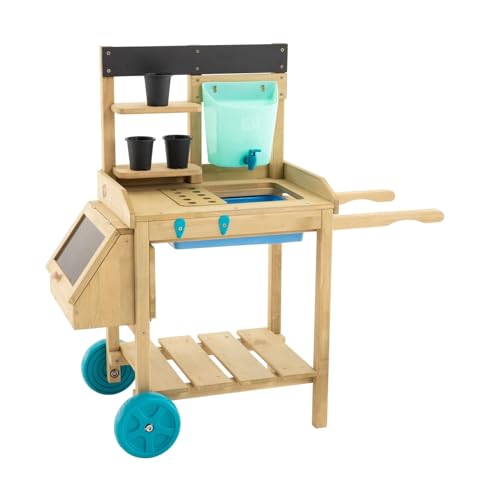
This wooden potting bench is the only option here designed specifically as a child’s potting station — not a repurposed adult cart or a generic tool bench. The FSC-certified European wood construction measures 35.6 x 14.2 x 34.8 inches, placing the work surface at a comfortable height for ages 3 and up. A working faucet and sink basin allow real water play, while the wooden draining platform and cold frame slot let kids start seedlings and watch them sprout.
The included starter pots and spacious pot holders keep the workspace organized, and the wheels and handles make it easy to roll into the sunniest corner of the yard. Multiple children can play side by side without crowding, which is rare for a bench in this size range. Assembly instructions use metric measurements, so expect a 2- to 3-hour build with a power drill and a second pair of hands.
Some owners report that the wood feels thinner than expected and recommend avoiding power tools during assembly to prevent splitting. Once built, the bench holds up well on a covered porch or in a sheltered backyard spot, but prolonged exposure to heavy rain may require an extra coat of sealant to protect the FSC wood over multiple seasons.
What works
- Working faucet and sink are huge hits with toddlers and preschoolers
- Wheels make repositioning effortless for sun-chasing gardeners
- Starter pots and cold frame slot support real seed germination
What doesn’t
- Assembly requires a power drill and takes most builders 2-3 hours
- Wood can split if over-torqued with power tools
2. Gizoon Outdoor Potting Bench with Metal Tabletop

This bench bridges the gap between an adult potting station and a child-friendly workspace. The metal tabletop — 37.4 inches long and 18.5 inches wide — is easy to wipe down after muddy potting sessions, and it stands 37 inches high, which suits taller kids aged 6 and up better than toddlers. The fir wood frame is sturdy enough to handle 100 pounds of soil bags and pots, and the painted finish adds a layer of weather protection.
Storage is a standout feature: double doors with magnetic closures keep tools out of sight, while removable shelves let you reconfigure the interior for tall watering cans or short pots. The ergonomic metal handle is sized for adult hands, but children can still open the doors independently. Assembly is straightforward with numbered parts and a clear manual, though the wood is on the softer side and can chip if overtightened.
The 1-star reviews highlight a warped door on some units and weak magnets that fail to keep doors closed in windy conditions. If you plan to keep this bench outdoors full-time, applying an extra varnish coat before assembly will mitigate the soft-wood issue. Despite these quirks, the metal worktop alone makes it a uniquely low-maintenance option for parents who want real potting capability without the constant cleanup.
What works
- Metal tabletop handles water and dirt without staining or warping
- Double-door cabinet keeps garden supplies hidden and organized
- Removable shelf adapts to oversized pots and long-handled tools
What doesn’t
- Standing height is too tall for most children under 5
- Magnetic door closures aren’t strong enough for windy areas
3. Topeakmart Potting Bench Table
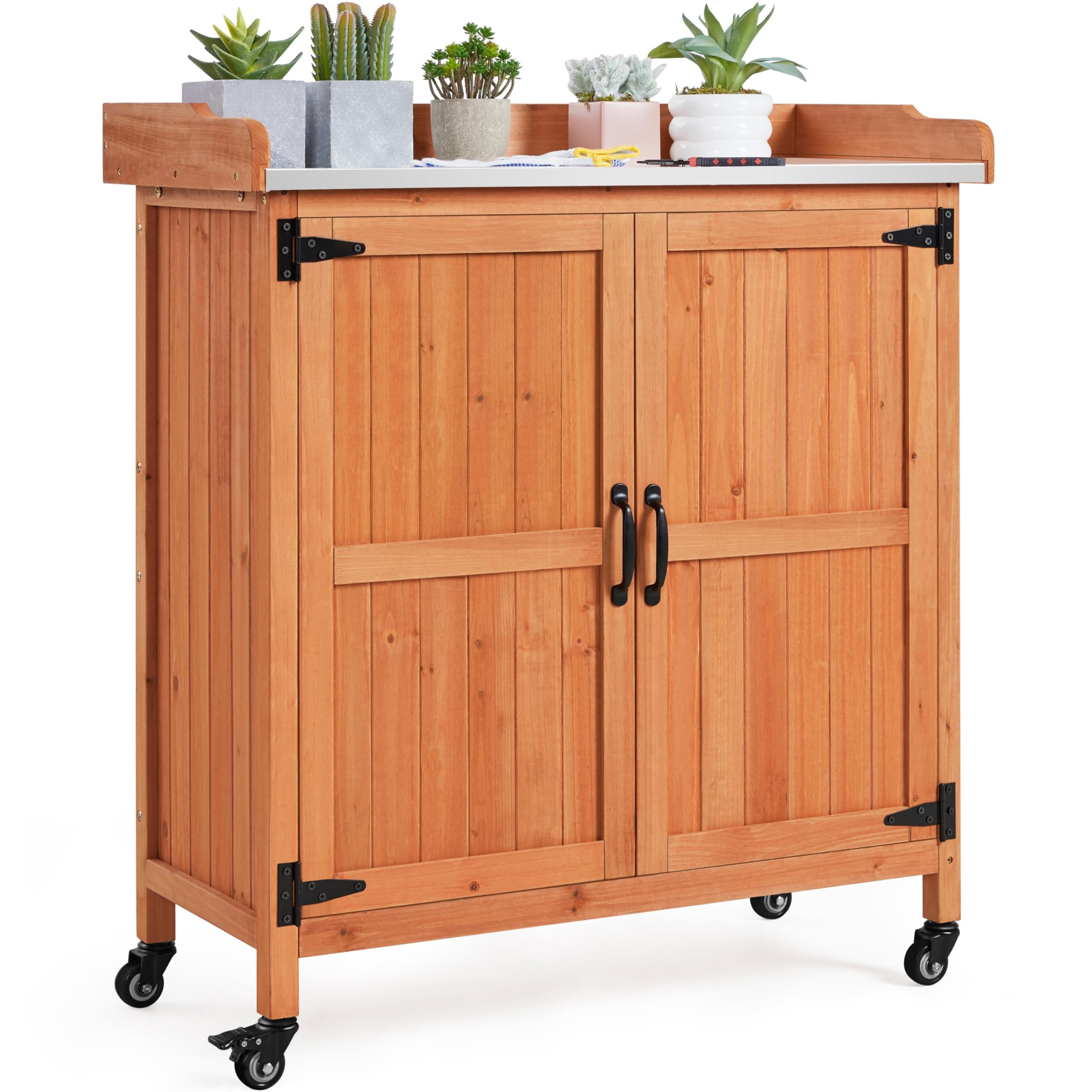
At 36 inches wide and 37 inches tall, this fir-wood bench fits a household where both adults and children garden together. The tabletop can hold 154 pounds, so a bag of soil and a stack of 4-inch pots won’t overwhelm it. Four removable castors — two lockable — let you roll the bench between the garage and the garden, then lock it in place for stable potting.
The elevated design reduces back strain for adults, while the two closed-tier shelves store long-handled tools and watering cans out of a toddler’s immediate reach. A removable middle shelf creates flexible vertical space for taller items like spray bottles or a child’s watering can. Assembly is rated as moderate, but the painted finish arrives smooth and splinter-free straight from the box.
The wood is soft — several builders found that screws strip easily if hand-tightened too firmly. The bench is also heavy at nearly 34 pounds, so moving it up stairs is a two-person job. For families who want a bench that serves both parent and child, this is the most practical middle ground, but it lacks the kid-specific features — faucets, cold frames, or tool loops — that a standalone children’s bench offers.
What works
- High weight capacity supports heavy soil bags and large pots
- Lockable castors provide mobility plus stability
- Elevated design is comfortable for adults with back or knee pain
What doesn’t
- Soft fir wood strips screws if over-torqued
- No child-specific features like faucets or tool loops
4. Mederra Wooden Mud Kitchen Playset
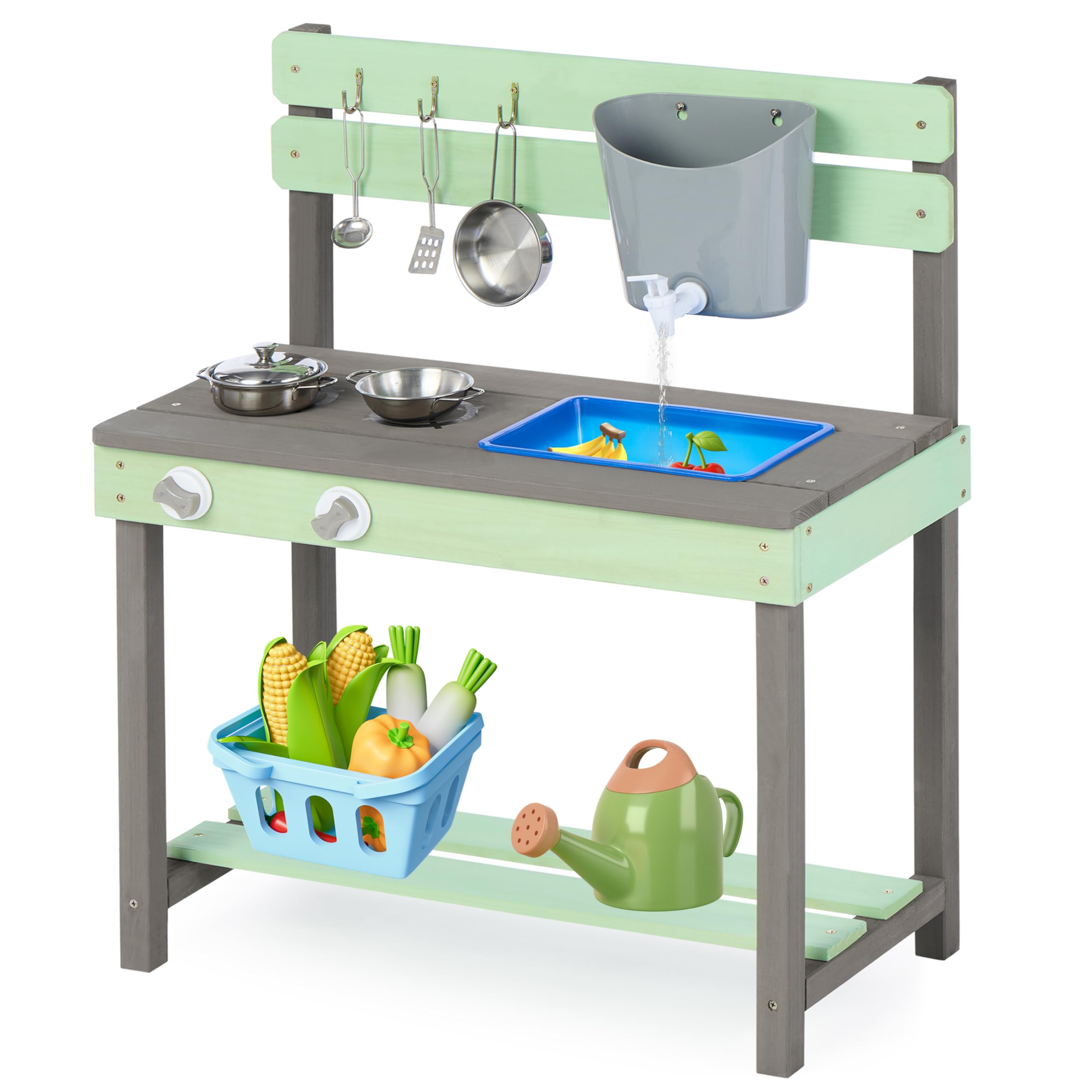
While technically a mud kitchen, this 100% cedar playset (31.5 x 25.5 x 11 inches) functions as an excellent potting bench alternative for toddlers aged 3 and up. The interactive water sink basin lets kids splash and “wash” their vegetables or pots, while the included pots, pans, and play food fuel imaginative role-play that naturally incorporates mud, leaves, and flower petals.
Cedar is naturally rot-resistant, so this unit can stay outdoors year-round without swelling or cracking — a major advantage over painted particleboard. ASTM, F963, and CPSIA certifications confirm the paint and finish are free of harmful chemicals. Pre-cut and pre-drilled wooden parts make assembly quick, and the green modern style blends neatly into most backyard setups.
The maximum manufacturer age recommendation caps at 10 months of play potential, which seems short for a well-built cedar unit. A few builders noted that some screw holes aren’t pre-drilled and require careful piloting to avoid splitting the cedar. For families focused on messy, sensory outdoor play — mixing dirt, water, and pretend cooking — this is the most durable and safest choice available.
What works
- Cedar construction resists rot and weather without extra treatment
- Interactive water sink is endlessly engaging for toddlers
- Full safety certifications for peace of mind
What doesn’t
- Short height suits toddlers but not older children
- Some holes require drilling despite claiming pre-drilled assembly
5. ROBUD Large Wooden Play Tool Workbench

This is a play workbench, not a potting bench, but it earns a spot here because its 27.6-inch width and 40.6-inch height, combined with solid engineered-wood construction, provide a durable surface for potting activities. The rounded corner design and smooth finish eliminate splinter risks, and the included wooden wrench, saw, hammer, and screwdriver encourage tool-handling skills that translate directly to real gardening tasks.
The bottom shelf stores pots and soil bags, while the pegboard back — with magnetic tool holders — keeps tools visible and accessible. Assembly takes about 30 minutes, and the workbench weighs 12.1 pounds, making it light enough to move between indoors and a covered porch. The bright multicolor design attracts toddlers aged 3 to 8, and the vice (which tightens counter-clockwise) is the only unintuitive quirk.
The bench can tip forward if a child pulls on the top edge, so it should be placed against a wall or anchored for safety. The magnets holding the tools on the pegboard are weak — tools slide off with a light bump. As a primary potting station, it lacks a sink or water feature, but as a tool-centric introduction to tinkering and planting, it pairs nicely with a separate watering can.
What works
- Rounded corners and smooth finish are safe for young toddlers
- Wooden tools develop real hand-eye coordination and motor skills
- Lightweight design is easy to relocate between rooms
What doesn’t
- Can tip forward if not wall-anchored or stabilized
- Magnetic tool holders lack holding strength
6. ROBOTIME Kids Gardening Set, 17PCS
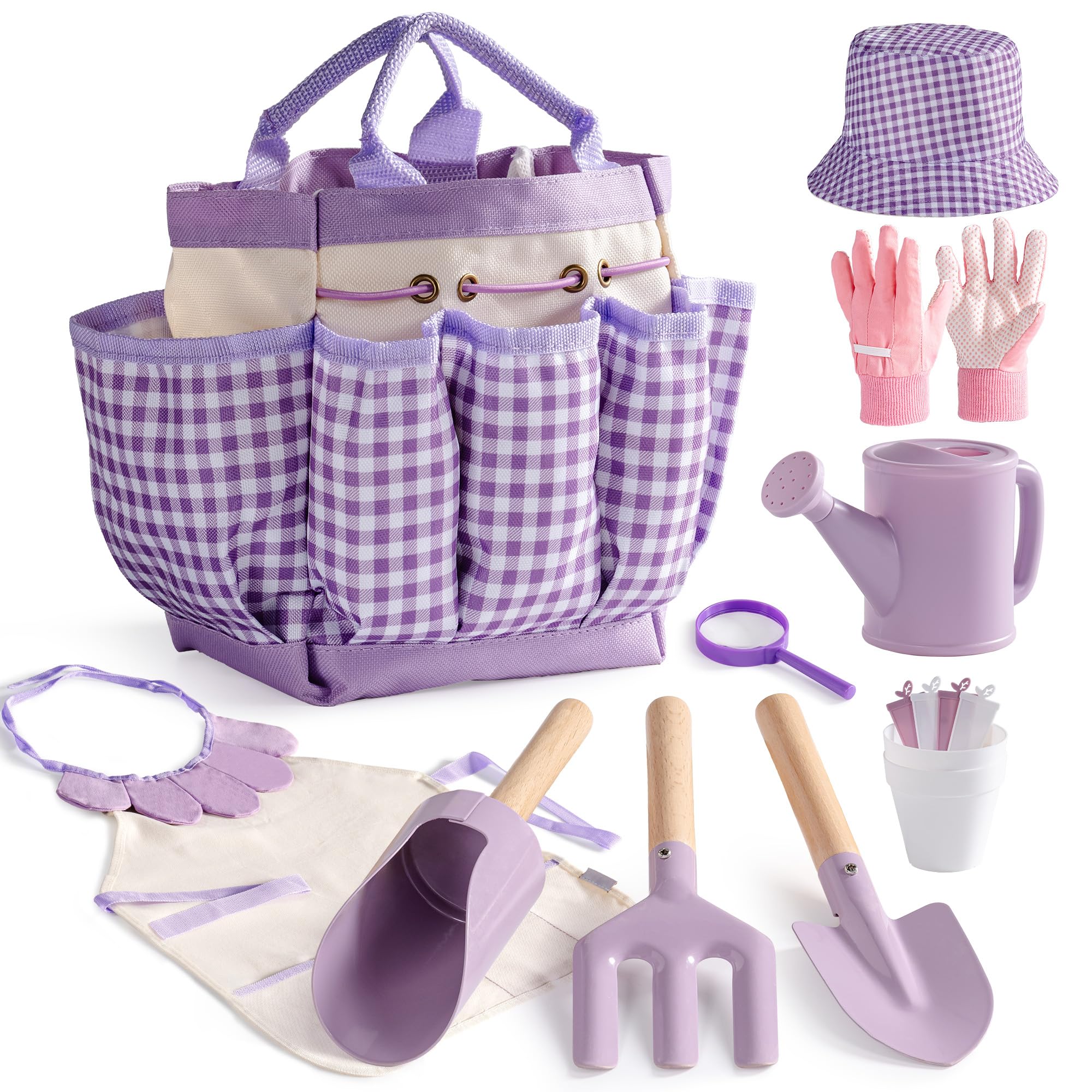
This 17-piece kit is a portable gardening set rather than a stationary bench, which makes it a versatile starting point for families who lack outdoor space for a large wooden structure. The set includes a soft apron, sun hat, gloves, watering can, tool bag, and metal tools with smooth wooden handles. The metal trowel and rake are genuinely functional for digging in loose soil, while rounded edges keep them safe for children aged 3 and up.
The magnifying glass and diary cards add an educational layer — kids can draw what they plant and observe insects up close. The tool bag keeps everything organized for trips to a community garden or a grandparent’s backyard. At 1.5 pounds, the entire kit is light enough for a preschooler to carry independently. The metal tools require adult supervision, but they hold up far better than the plastic alternatives found in cheaper sets.
The tools are sized for ages 3 to 6 — taller children will find the handles too short for comfortable digging. Some parents reported that the purple color scheme feels gender-specific, which may not suit every child. For a budget-friendly entry into real gardening that doesn’t require a permanent structure, this kit delivers solid quality and genuine functionality.
What works
- Metal tools with wooden handles are durable enough for real digging
- Carry bag makes the set portable for park or grandparent visits
- Magnifying glass and diary cards add an educational observation layer
What doesn’t
- Tool handles are too short for children over 6
- Purple color scheme may not appeal to all kids
7. CUTE STONE Kids Gardening Tool Set

This 71-piece plastic set is built for imaginative role-play rather than real potting. The functional wheelbarrow (26.5 x 9.8 x 13.8 inches) is easy for little hands to push around the yard, and the watering can and shovel are sized for ages 3 and up. The 54-piece DIY flower building set lets children snap together stems, leaves, and petals to create custom blooms — a no-mess alternative to real planting that still teaches flower anatomy.
All pieces are made from odor-free, durable plastic with smooth edges, making this a safe choice for sandbox and indoor use. The 12 insect figures add a bug-hunting element that extends play beyond gardening. Assembly is limited to the wheelbarrow handles, and the whole set weighs light enough for a preschooler to carry. Bright, multi-colored pieces keep attention spans engaged for up to an hour of independent play.
The plastic tools won’t hold up to actual digging in hard or clay soil — they are best suited for sand, loose potting mix, or indoor pretend play. Some buyers found the flower pieces too small for children under 3 and recommended removing them from the set. As a pure playset focusing on role-play, it’s excellent; as a functional gardening tool, it falls short of the metal-tool sets.
What works
- Functional wheelbarrow encourages active outdoor movement and chore play
- DIY flower parts teach plant anatomy without mess or dirt
- Safe plastic construction with smooth edges for indoor use
What doesn’t
- Plastic tools aren’t durable enough for real gardening in soil
- Small flower pieces can be a choking hazard for toddlers under 3
Hardware & Specs Guide
Material Types and Their Trade-Offs
FSC-certified European wood (found on the TP Toys bench) balances sustainability with stiffness, but it needs an extra sealant coat for wet climates. Cedar (Mederra mud kitchen) is naturally rot-resistant and ideal for full-exposure outdoor use. Fir (Topeakmart and Gizoon) is cost-effective but soft — screws strip easily and the wood dents under heavy loads. Plastic (CUTE STONE) is maintenance-free, but it won’t survive a season of real digging. For a bench that lives outside, cedar or painted fir is the minimum; for a covered porch, FSC wood with a sealant coat is sufficient.
Work Surface Height and Child Ergonomics
A potting bench that forces your child to reach up or stoop down will be ignored. Measure from the floor to your child’s waist while they stand flat-footed. The ideal bench work surface lands 2–4 inches below that waist measurement. For a 3-year-old, that’s roughly 18–20 inches. The TP Toys bench at 34.8 inches total height places the work surface near 22 inches — appropriate for ages 3 to 6. Adult-height benches like the Gizoon (37 inches) only suit children 7 and up. If you plan to use the bench for multiple ages, look for an adjustable shelf or a removable platform that raises the child to the right height.
Functional Features That Matter
A working faucet and sink (TP Toys) or a removable water basin (Mederra) transforms passive pretend play into active cause-and-effect learning — kids pour, splash, and clean up. Cold frames or starter pot slots let children observe germination from seed to sprout, reinforcing the biology lesson. Tool storage shelves should be at least 12 inches deep to accommodate standard kid-sized watering cans and trowels without items falling off. Magnetic closures on cabinet doors (Gizoon) are convenient but need a strike-plate reinforcement when used outdoors.
Safety Certifications and Stability
ASTM F963 and CPSIA compliance confirm that paints and finishes are free from lead and phthalates — look for these on any colored wooden bench. Weight capacity matters less for child safety than tip resistance: benches with a wide stance (over 14 inches front-to-back) and a low center of gravity are less likely to tip when a child leans sideways. Locking castors (Topeakmart) let you immobilize the bench during use. Rounded corners (ROBUD) and edges with a grit rating under 200 prevent splinters. Never place a lightweight bench on unlevel ground without anchoring it.
FAQ
At what age can a child start using a potting bench?
Should I choose a wooden bench or a plastic garden set for outdoor use?
How do I weatherproof a wooden children’s potting bench?
Final Thoughts: The Verdict
For most families, the children’s potting bench winner is the TP Toys Potting Bench because it combines a working faucet, storage shelves, a cold frame slot, and FSC-certified wood in a size that fits toddlers through early elementary kids. If you want a durable, weather-resistant station for shared adult-child use, grab the Gizoon Outdoor Potting Bench with its easy-clean metal top. And for the budget-conscious family that wants real metal tools in a portable kit, nothing beats the ROBOTIME 17-Piece Set.