
Cherry trees demand a specific soil environment to set fruit and resist disease; the wrong compost can lock out nutrients or invite root rot. A well-chosen compost blend must balance slightly acidic pH, moderate nitrogen, and a structure that drains freely while holding enough moisture through the ripening period.
I’m Rikta — the co-founder and writer behind Lawn Gear Lab. After analyzing dozens of organic amendments, checking NPK ratios, reading hundreds of verified owner reports, and cross-referencing OMRI certifications against real-world results, I built this guide around the six formulations that actually perform for stone fruit growers.
If you want a fast, reliable shortcut to richer soil, sweeter cherries, and stronger trees, scroll down to find the best cherry tree compost that fits your planting style and budget.
How To Choose The Best Cherry Tree Compost
Cherry trees are sensitive to pH extremes and heavy clay soils that hold water into the fruit set stage. The right compost addresses both the chemical and physical environment of the root zone. Here are the three factors that separate an effective amendment from one that does little more than add bulk.
NPK Ratio and Nitrogen Balance
Cherry trees need a moderate nitrogen supply — too much pushes vegetative growth at the expense of flower buds and fruit firmness. Look for a compost with an N-P-K ratio that sits around 4-6-4 or 6-2-4. A high first number (nitrogen) in a hot manure compost can burn feeder roots, while a low middle number (phosphorus) will reduce blossom set. Slow-release organic sources like feather meal or fish bone meal are ideal.
pH Range and Acidifying Ingredients
Cherry trees thrive in slightly acidic soil, ideally between pH 6.0 and 6.8. A compost that includes sphagnum peat moss, composted pine bark, or elemental sulfur helps nudge the pH downward in alkaline soils. If your native soil is already acidic, avoid composts that contain lime or high-ash wood byproducts that raise pH. Some blends are specifically formulated for acid-loving plants and are a safer pick for cherry trees grown in neutral or alkaline ground.
Texture and Drainage Profile
Cherry roots are shallow and wide-spreading, and they will rot in compacted, waterlogged amendments. A good compost should feel crumbly, not sticky or dense. Look for screened material without large sticks or clods; the particle size should range from fine dust to about half an inch. Blends that contain perlite, aged bark, or coir improve aeration in heavy soils. If the compost forms a hard cake when squeezed, it is too dense for cherry trees.
Quick Comparison
On smaller screens, swipe sideways to see the full table.
| Model | Category | Best For | Key Spec | Amazon |
|---|---|---|---|---|
| Blue Ribbon Organics Compost | Premium / OMRI | Best Overall Cherry Compost | 7.9 Gal / 32-35 lb, OMRI Certified | Amazon |
| Michigan Peat Baccto Wholly Cow | Premium / Peat-Mix | Top-Dressing & Raised Beds | 40 Qt, Odor-Free, Peat + Manure | Amazon |
| Down To Earth Fruit Tree Fertilizer | Powder / OMRI | Balanced Feeding (6-2-4) | 5 lb, 6-2-4 NPK, Feather Meal | Amazon |
| FoxFarm Happy Frog Fruit & Flower | Granular / OMRI | Monthly Top-Dress | 4 lb, 4-9-3 NPK, Mycorrhizae | Amazon |
| Coast of Maine Acid-Loving Soil | Potting Mix / Organic | Low pH Needs & Berries | 20 Qt, Peat + Compost, Low pH | Amazon |
| Brut Worm Farms Cow Compost | Amend / Budget | Budget-Rich Soil Builder | 10 Qt, OMRI, Pure Cow Manure | Amazon |
In‑Depth Reviews
1. Blue Ribbon Organics OMRI Certified Compost

This is the benchmark for cherry growers willing to invest in a premium medium. The compost is uniformly dark, crumbly, and free of any woody debris or plastic fragments — the kind of consistency that makes soil incorporation effortless. OMRI certification guarantees no synthetic additives, and the high organic-matter content improves water retention in sandy soils while fluffing up clay.
Owner reports consistently mention the compost’s earthy, pleasant smell and the total absence of fungus gnats, a common problem with cheaper bagged soils. For cherry trees planted in containers or raised beds, mixing this compost at a 1:2 ratio with perlite and orchid bark creates an ideal aerated root zone that drains fast enough to prevent crown rot during wet springs.
The volume (7.9 gallons / roughly 32 pounds) is smaller than bulk options, but the concentrated quality means a single bag goes further than twice the volume of low-grade material. Cherry trees respond with darker foliage and noticeably larger fruit set in the first season of top-dressing with this compost.
What works
- Dark, screened texture with no sticks or debris
- OMRI certified for organic production
- Odorless and free of fungus gnats
- Pair with castings for a potent soil booster
What doesn’t
- Premium cost per cubic foot compared to bulk blends
- Small bag size may require multiple purchases for large orchards
2. Michigan Peat Baccto Wholly Cow Horticultural Compost
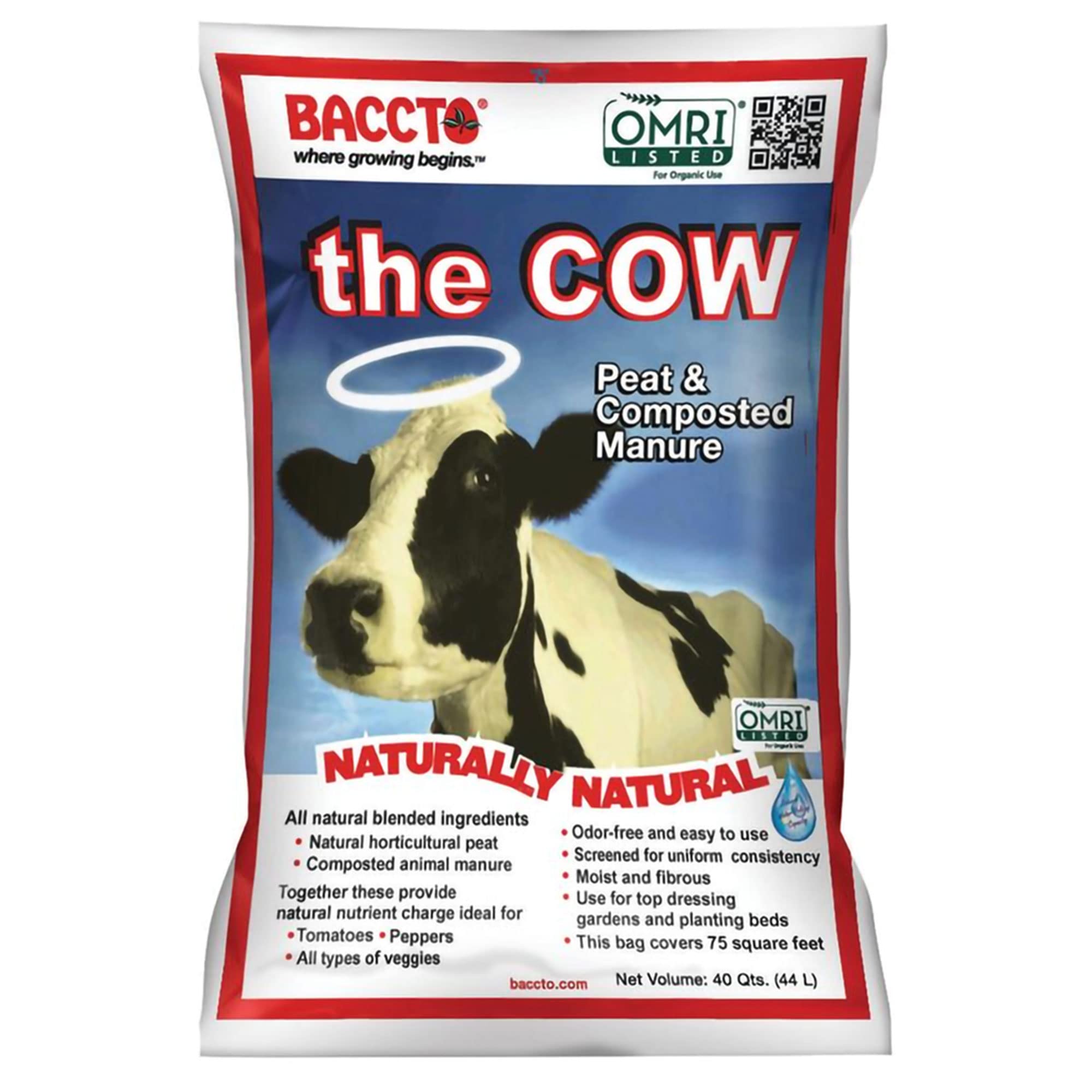
This 40-quart bag delivers the best volume-to-quality ratio for cherry tree owners with multiple trees or large raised beds. The blend combines composted animal manure with natural peat, producing a lightweight, odor-free medium that darkens existing soil without the smell associated with raw manure products. The texture is uniformly screened so you do not end up picking out large sticks before spreading.
Cherry growers using this compost as a top-dressing report that the moisture-retention properties of the peat reduce watering frequency during dry spells, while the manure component supplies a steady trickle of nitrogen and micronutrients. For a single mature cherry tree, a 2-inch layer over the root zone in early spring provides enough nutrient density to carry through fruit development without burning feeder roots.
Multiple verified owners noted that the compost served well as a substrate for mushroom cultivation — which is a strong indicator of high organic matter and low contamination. Cherry trees in sandy or river-bottom soils benefit especially from the water-holding capacity that this blend introduces into the root zone.
What works
- Generous 40-quart bag at a reasonable per-pound cost
- Odorless and pleasant to work with
- Improves moisture retention in sandy soils
- No large woody debris or mold
What doesn’t
- Not OMRI certified if that is a requirement for your garden
- Peat content may raise pH slightly; test soil before heavy use on alkaline ground
3. Down To Earth Organic Fruit Tree Fertilizer 6-2-4

This is a concentrated powdered fertilizer, not a bulk compost, but it is the ideal complement to a low-nutrient compost base for cherry trees. The 6-2-4 NPK ratio is precisely calibrated for stone fruit — moderate nitrogen to support leaf canopy without triggering excessive vegetative growth, plus added calcium carbonate to improve fruit firmness and storage life.
Owners have used this product to revive cold-damaged crabapple and cherry trees over two growing seasons, reporting a return of healthy leaves and abundant fruit set. The ingredients list is clean: feather meal, fish bone meal, langbeinite, potassium sulfate, alfalfa meal, and kelp meal. No synthetic salts mean no risk of fertilizer burn when applied at the recommended rate around the drip line.
For best results, mix this powder into your existing compost or soil during spring growth and again after the fruit set. It does not expire if stored in a cool, dry place, making it a convenient supplement to keep on hand for mid-season deficiencies.
What works
- Specialized 6-2-4 ratio tailored for fruit trees
- Added calcium for better fruit development
- OMRI listed and all natural ingredients
- Does not expire when stored properly
What doesn’t
- Powder form requires mixing; not a ready-to-use soil amendment
- 5 lb box is a supplement, not a standalone soil rebuild
4. FoxFarm Happy Frog Fruit & Flower Fertilizer 4-9-3

FoxFarm’s granular fertilizer flips the typical NPK ratio, prioritizing phosphorus (9) over nitrogen (4) to support flower and fruit development. For cherry trees that are already growing in reasonably fertile soil but need a boost in bloom density and fruit set, this is an excellent targeted supplement. The inclusion of mycorrhizal fungi helps the root system access nutrients and water more efficiently.
Users report that a simple monthly sprinkle under the mulch line, followed by watering, keeps cherry trees producing healthy blossoms without the need for complex mixing. The granules break down gradually, releasing nutrients over several weeks, which fits well with the cherry tree’s fruiting cycle. The 4-pound bag is light enough to handle easily and will cover several mature trees over a season.
FoxFarm has been producing greenhouse-tested formulas since 1984, and the batch consistency shows in the results. Cherry trees treated with this fertilizer show stronger bloom color and firmer fruit. It is also OMRI listed, so it fits into organic management programs without concern.
What works
- High phosphorus ratio for blooming and fruit set
- Mycorrhizal fungi boost root efficiency
- Simple monthly sprinkle application
- OMRI listed and greenhouse tested
What doesn’t
- 4-pound bag is small; heavy feeders may need multiple bags
- Not a complete soil amendment — works best as a supplement
5. Coast of Maine Organic Planting Soil for Acid Loving Plants

Cherry trees grown in neutral or alkaline soil often suffer from iron chlorosis — yellowing leaves with green veins — because the roots cannot absorb micronutrients at a high pH. This blend from Coast of Maine is formulated to lower soil pH, making it an effective solution for correcting that imbalance. The ingredients include composted manure, sphagnum peat moss, and aged bark, all of which work together to acidify the root zone gradually.
The 20-quart bag is a practical size for refreshing the top few inches around a single mature cherry tree or mixing into the planting hole for a new tree. Verified owners of blueberry and strawberry beds report that the low pH formulation produces vigorous growth and abundant fruit, and the same response can be expected for sweet cherry varieties that prefer a pH around 6.0 to 6.5.
Coast of Maine has been producing regionally sourced organic products since 1996, and this planting soil reflects their commitment to sustainable inputs. The texture is light and fluffy, with good drainage characteristics that prevent water pooling around the crown of the tree — a critical factor for cherry tree longevity.
What works
- Low pH blend ideal for chlorosis correction
- Fluffy texture with excellent drainage
- OMRI listed and sustainably sourced
- No strong odor; pleasant to work with
What doesn’t
- Bag is heavy for its volume due to moisture content
- Not intended as a standalone fertilizer — use with a feeding program
6. Brut Worm Farms Cow Compost – 10 Quart

If you need a pure, organic manure compost on a tight budget, this 10-quart bag from Brut Worm Farms delivers value without cutting corners on certification. The compost is made from thoroughly aerated cow manure, finely sifted to remove large clods, and OMRI listed for organic production. The nitrogen, calcium, and iron content enriches tired soil and stimulates microbial activity around the cherry tree root zone.
The formula is odor-free, which is a major advantage for urban gardeners who cannot tolerate the smell of uncomposted manure. It is also gentle on roots — no risk of burning even when used as a top-dressing for young cherry trees. For a first-time cherry grower, mixing this compost into the native soil at a 3:2 ratio (soil to compost) creates a fertile planting bed without the need for synthetic inputs.
Owners of raised vegetable beds and rose gardens have reported fast growth after incorporating this compost. While the volume is modest, the concentration of nutrients means a little goes a long way. Cherry trees in containers or small backyard plots will see visible improvement in leaf color and shoot vigor within a month of application.
What works
- Pure cow manure compost with OMRI certification
- Odor-free and safe for young roots
- Adds nitrogen, calcium, and iron to depleted soil
- Fine texture works well in containers and raised beds
What doesn’t
- 10-quart bag is small; a large orchard will need multiple bags
- Not a complete fertilizer — lacks the balanced NPK of blended products
Hardware & Specs Guide
NPK Ratio Decoded
The three numbers on a fertilizer bag — nitrogen, phosphorus, potassium — tell you how the compost will influence cherry tree growth. High nitrogen (the first number) pushes leaf and shoot development, but too much delays fruiting and softens fruit. A ratio with a higher middle number (phosphorus) supports flower bud formation and fruit set. For cherry trees, a ratio near 4-6-4 or 6-2-4 provides the right balance: enough nitrogen for canopy health without sacrificing fruit quality. Excess potassium (the third number) is rarely an issue, but a mid-range value between 3 and 6 works well for most stone fruits.
pH and Organic Matter Content
Cherry trees prefer a soil pH between 6.0 and 6.8. If your compost contains high levels of sphagnum peat moss or composted pine bark, it will help lower pH in alkaline soils. Look for sulfur or elemental sulfur listed on the ingredient panel if you need a stronger acidifying effect. Organic matter content should be above 60% for a true compost; lighter blends with large amounts of perlite or coir may improve drainage but contribute less long-term fertility. Test your soil’s pH before applying any acidifying product — adding sulfur to already acidic soil can damage roots.
FAQ
Can I use general-purpose garden compost for a cherry tree?
How often should I apply compost to a mature cherry tree?
Final Thoughts: The Verdict
For most gardeners, the best cherry tree compost winner is the Blue Ribbon Organics OMRI Certified Compost because it provides the richest organic matter with zero contaminants and a texture that improves drainage and moisture retention simultaneously. If you want a high-volume, cost-effective option for raised beds or multiple trees, grab the Michigan Peat Baccto Wholly Cow Compost. And for a targeted pH correction in alkaline soils combined with an acid-loving plant blend, nothing beats the Coast of Maine Acid-Loving Planting Soil.