
Specs are compiled from manufacturer listings and verified buyer reviews and can change over time — please confirm the key details on the product page before buying.
Your cherry blossom tree turning yellow instead of bursting pink is almost always a soil pH problem, not a lack of effort. These trees are acid-loving feeders, which means a standard all-purpose fertilizer can actually starve them by locking up nutrients in the soil. The right cherry blossom tree fertilizer lowers soil pH and supplies nitrogen in a form roots absorb immediately, producing greener leaves and more flower buds.
I’m Rikta — the founder and writer behind Lawn Gear Lab. This guide is built by comparing the manufacturers’ published specifications and the patterns across verified customer reviews, so you get each pick’s real strengths and trade-offs instead of marketing spin.
Choose a feed that matches your tree’s nutrient uptake, your preferred application frequency, and your organic or synthetic preference. That’s what this breakdown of the cherry blossom tree fertilizer landscape delivers, pick by pick.
Our Picks at a Glance

How To Choose The Best Fertilizer For Cherry Blossom Trees
Cherry blossom trees (ornamental varieties) and cherry fruit trees have slightly different needs, but both demand acidic soil to thrive. If your tree is planted near a concrete foundation or in alkaline soil, the roots can’t access iron and other micronutrients no matter how much you feed it. That’s why the best products for this job are labeled for acid-loving plants, not just any tree food.
Match the NPK ratio to your goal
The three numbers on the bag (like 4-3-4 or 6-2-4) stand for nitrogen, phosphorus, and potassium. Nitrogen drives leafy growth and overall green vigor, phosphorus supports root and bloom development, and potassium builds overall tree health. For cherry trees, look for a formula where nitrogen is the first and highest number, since that pushes the lush canopy and flower bud formation you want from a blossom tree.
Decide between water-soluble and slow-release
Water-soluble powders give you fast results because the roots can take up the nutrients immediately after you water them in, but they require reapplication every couple of weeks. Granular and spike formulas release nutrients slowly over months, so you apply them once in spring and once in fall. If you travel or forget to water regularly, a slow-release option is far more forgiving.
Check for organic vs. synthetic sources
Organic fertilizers like feather meal and fish bone meal feed the soil’s microbial life, which in turn makes nutrients available to the roots over a longer period. Synthetic salts give a rapid green-up but can burn roots if over-applied. For a newly planted cherry tree, a gentler organic or a balanced slow-release feed reduces the risk of fertilizer burn while the root system establishes.
Quick Comparison
| Model | Best For | Form | NPK Ratio | Weight | Amazon |
|---|---|---|---|---|---|
| Miracle-Gro Water Soluble Azalea Food★ Best Overall | Fast green-up & blooms | Powder | Acid-loving formula | 5 lb | Amazon |
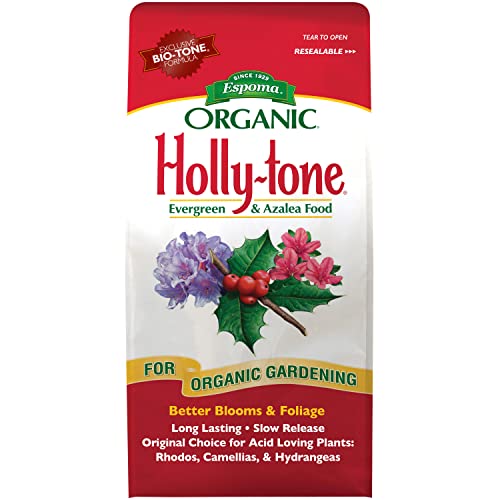
| Espoma Organic Holly-ToneOrganic Choice | Organic slow-release feeding | Granules | 4-3-4 | 4.1 lb | Amazon |
| Premium Fertilizer for Cherry | Targeted cherry tree health | Granules | Slow-release N | 3.3 lb | Amazon |
| FoxFarm Happy Frog Japanese Maple | Low pH feeders & root health | Powder | 4-3-4 | 4 lb | Amazon |
| Down To Earth Organic Fruit Tree | Edible cherry crops | Powder | 6-2-4 | 5 lb | Amazon |
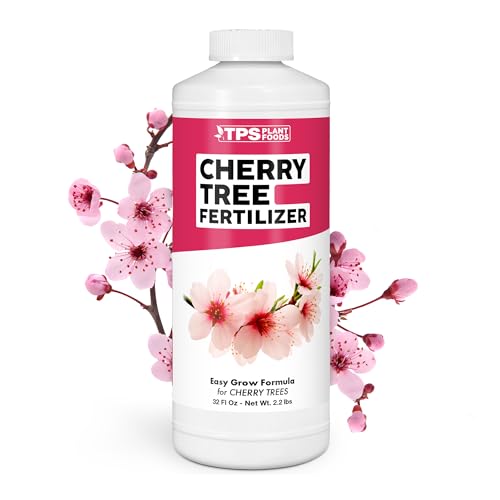
| TPS Nutrients Cherry Tree Fertilizer | Easy liquid feeding | Liquid | — | 32 oz | Amazon |
| Jobe’s Tree Fertilizer Spikes | Set-and-forget feeding | Spikes | 16-4-4 | 8.5 lb | Amazon |
In-Depth Reviews
1. Miracle-Gro Water Soluble Azalea, Camellia, Rhododendron Plant Food
Our pick — over 4.5★ from 650+ verified ratings; the strongest balance of quality and price.
The fast-acting powder that turns a struggling cherry blossom into a bloom machine within days.
You get fast results with a water-soluble feed, and this one works best for acid-loving plants like cherry blossoms. It earns 4.8 stars across 600+ owners, and buyers report it dissolves completely and easily, so no gritty residue clogs your watering can. Mix it at a 1:18 ratio for outdoor trees and feed every 7-14 days—a schedule that suits attentive gardeners.
The 5-pound bag is a 52% larger weight than the 3.3-pound Premium Fertilizer for Cherry, giving you noticeably more feedings for your money. What wins people over is effectiveness — it’s the most-praised trait by far, with owners reporting deeper green leaves and more abundant blooms on their azaleas, rhododendrons, and blueberries. It’s also safe on indoor plants, so the same mix can feed a bookshelf orchid and a backyard cherry tree.
The one honest trade-off is the packaging: the resealable Velcro bag is a mixed blessing, and a few owners note that fertilizer dust on the Velcro makes the seal useless. Keep a scoop or a spoon in the bag and wipe the closure clean, and it’s a non-issue. For a cherry blossom owner who wants visible results this season, this is the pick.
Why owners stick with it
- Dissolves fully with zero residue for easy watering-can application
- Feed every 7-14 days for rapid green-up and bloom push
- Works on indoor and outdoor acid lovers alike
- 5 lb bag outlasts most competitors by weight
The packaging catch
- Velcro reseal fails if powder coats the closure
- Requires a regular bi-weekly schedule, not set-and-forget
Reach for this if: you want fast, visible results and don’t mind a bi-weekly watering routine.
Think twice if: you travel often and need a feed that works for months without reapplying.
2. Espoma Organic Holly-Tone 4-3-4 Natural & Organic Plant Food
The organic granule that feeds your tree for a full season with a single spring application.
If you want to feed the soil, not just the leaves, this is the original acid-loving plant food and it’s approved for organic gardening. The 4-3-4 analysis includes 5% sulfur, which helps lower soil pH over time — exactly what a cherry blossom tree needs to open up iron and other micronutrients. Owners mention it keeps hydrangeas healthy and vibrant in a variety of colors, and one buyer notes their azaleas are still blooming while the neighbors’ have already faded.
It’s a slow-release granule, so you apply it around the drip line in spring and fall and let the natural organics break down gradually. That’s a lighter workload than the bi-weekly schedule of the Miracle-Gro above, making it a strong choice for gardeners who want to feed twice a year and be done. Plant benefits are the most-praised aspect here — owners consistently see healthier evergreens and more vigorous blooming across multiple seasons.
The trade-off is value: while many consider it worth the cost, some owners find it a bit pricey for a 4.1-pound bag that covers less ground than bulkier feeds. For a single ornamental cherry tree, though, one bag treats a full season with room to spare. It’s the gentlest way to correct alkaline soil without risking root burn.
The organic payoff
- Slow-release organics feed all season from one application
- 5% sulfur helps acidify alkaline soil naturally
- Approved for organic gardening and registered as Organic Input Material
- No mixing, measuring, or watering-in required
Budget check
- Some owners find it pricey for the bag size
- Slower visible results than water-soluble feeds
Best for: organic gardeners who prefer two applications a year over a strict schedule.
Not ideal if: you need a quick fix for a tree that’s already yellowing fast.
3. Premium Fertilizer for Cherry Trees by TreeHelp

The only true cherry-specific feed here, built around root development and slow-release nitrogen.
If you want a fertilizer made only for cherry trees, this 3.3-pound bag is your match. It promotes long-term vitality through sturdy root development, and the slow-release nitrogen feeds your tree all season. One spring application covers your tree from bud break to leaf drop, so you skip the mid-summer top-up.
Customers note dramatic growth: “We spread this in the spring and our cherry shrubs at least tripled in size over the growing season!” A Lapin cherry owner found it easy to apply with clear instructions, and another buyer saw a bumper crop the spring after one winter application. One bag treats one large tree or 2-3 smaller or newly planted trees, so it fits a home orchard well.
Downsides are minimal but real. It’s not the cheapest fertilizer per pound — one owner noted it’s “not cheap but it works,” and with fewer reviews behind it than the big-box brands, there’s less long-term feedback data. But for a dedicated cherry tree, this targeted formula removes all guesswork about whether you’re feeding the right species.
Why cherry owners choose it
- Formulated specifically for cherry trees, not just acid lovers
- Slow-release nitrogen feeds all season from one application
- One bag handles a large tree or 2-3 young ones
- Complete instructions make first-time use easy
Cost reality
- Pricier per pound than general acid-loving feeds
- Smaller review base means less long-term data
Grab it if: you want a species-specific feed and a once-a-season routine.
Look elsewhere if: you’re feeding several different tree types and want one all-purpose acid formula.
4. FoxFarm Happy Frog Japanese Maple Fertilizer

The microbe-enriched powder that supercharges root efficiency for low pH feeders.
This one stands apart because it contains beneficial microorganisms and mycorrhizal fungi — living allies that help the roots take up more nutrients and water from every feeding. For a cherry blossom tree stressed by poor soil, that root efficiency translates to denser foliage and stronger branch development. The 4-3-4 blend with phosphorus and potassium is formulated specifically for low pH feeders like Japanese maples, hydrangeas, and junipers, which puts it squarely in the cherry blossom family.
Reviewers point out impressive growth: one gardener’s 1-foot Japanese maple grew past 7 feet tall and 5 feet round in two years of feeding. Reviewers praise its effectiveness, especially for reviving a poorly maintained bush. Mix 2 tablespoons per 1 gallon of water, and feed monthly through the growing season—a middle ground between the bi-weekly Miracle-Gro and the twice-yearly granules.
Be aware the powder is fine and can drift in the wind, so apply it close to the soil rather than broadcasting it high. It’s also labeled for Japanese maples specifically, so if you want a cherry-targeted formula, the TreeHelp above is more on-the-nose. But for root health and long-term soil building, the microbial boost here is a genuine advantage.
The living soil advantage
- Mycorrhizal fungi boost nutrient and water uptake
- Monthly feeding schedule is easy to maintain
- Formulated for low pH feeders like cherry trees
- Shoppers say dramatic growth and color improvement
Handling notes
- Fine powder can drift in wind if applied carelessly
- Labeled for Japanese maples, not cherry trees specifically
Choose this if: you want to build long-term soil health alongside feeding your tree.
skip it if: you prefer a product with “cherry” in the name and no ambiguity.
5. Down To Earth All Natural Organic Fruit Tree Fertilizer 6-2-4

The organic 6-2-4 that feeds the fruit itself, with added calcium for proper development.
If your cherry tree is a fruiting variety — not just an ornamental — this is the organic feed that prioritizes crop quality. The 6-2-4 formula is higher in nitrogen than the 4-3-4 blends, driving vigorous leafy growth, and it adds calcium for proper fruit development. It’s listed by the Organic Materials Review Institute (OMRI) for use in organic production, making it a clean choice for gardeners who eat what they grow.
The feather meal, fish bone meal, and kelp meal blend spreads easily and blends into soil quickly, with no harsh synthetic smell. Buyers report trees tripling in size and mango trees producing more fruit than ever. One buyer’s fig and pomegranate trees responded well, and even a frost-damaged crabapple tree came back to life after feeding. The 5-pound box covers a full backyard orchard, and it doesn’t expire if stored cool and dry.
The nutrient profile skews toward growth and fruit set rather than bloom volume, so if your top priority is a spectacular pink canopy rather than a heavy cherry harvest, the Miracle-Gro or Holly-Tone are more flower-focused. This is the one to reach for when you want edible payoff and clean organic inputs.
Built for the harvest
- 6-2-4 formula with added calcium for fruit development
- OMRI listed for certified organic production
- All-natural ingredients with no synthetic smell
- 5 lb box covers a full backyard orchard
Bloom trade-off
- Nitrogen-heavy ratio prioritizes growth over flower volume
- Powder form needs careful spreading to avoid drift
Best for: gardeners growing edible cherries who want organic, fruit-boosting nutrition.
Not for: purely ornamental blossom trees where maximum flower count is the only goal.
6. TPS Nutrients Cherry Tree Fertilizer Liquid Plant Food
The pour-and-go liquid for cherry owners who want zero measuring and zero mixing.
Liquid feeds are the easiest way to get nutrients into a young cherry tree without disturbing the soil, and this 32-ounce bottle is made in the USA specifically for cherry trees. It’s designed to promote vigorous growth, healthy foliage, and improved cherry production while being gentle enough not to overfertilize or stress the roots. For a small tree or a container-grown cherry blossom, this is the most beginner-friendly option on this list.
Owners mention small cherry trees “really took off growing with big leaves” after about a month of use, and another first-time feeder noted their three cherry trees responded well to a hose attachment application. The balanced nutrition makes it suitable for backyard cherry trees, young trees, and established orchard plantings alike. One 32-ounce bottle is a low coverage option, so it suits a single tree or a small collection rather than a whole orchard.
The recurring practical gripe is the lid: a bit of liquid can leak in transit if the cap isn’t fully tightened, so check the seal on arrival. With fewer reviews behind it, it’s also less battle-tested than the granule giants. But for the sheer ease of a ready-to-use liquid that targets cherry trees, it’s a convenient alternative to mixing powders.
The easy-feeding edge
- Ready-to-use liquid requires no mixing or measuring
- Gentle formula that won’t stress young roots
- Made in USA and specifically for cherry trees
- Works with hose attachments for fast coverage
Practical limits
- 32 oz bottle covers less ground than 5 lb bags
- Lid can leak if not tightened fully on arrival
Grab it if: you have one or two young cherry trees and want the simplest possible feeding routine.
Look elsewhere if: you need to feed multiple mature trees and want the best cost per feeding.
7. Jobe’s Tree Fertilizer Spikes 16-4-4 Time Release

The hammer-in spikes that feed your cherry tree for a full season with zero mixing.
For the gardener who wants to feed once and forget it for months, these 16-4-4 time-release spikes are the most hands-off option here. You simply hammer them into the soil around the drip line, where they deliver a continuous supply of nutrients directly to the active roots below the surface. There’s no runoff, no mess, no smell, and no measuring jug to clean up afterward.
The 16-4-4 ratio is heavily weighted to nitrogen, which pushes strong leafy growth — ideal for young cherry trees that need to establish a canopy fast. Customers note young trees thriving with quick growth after using these spikes once a year, and the formula is designed so it won’t burn trees even if you’re generous. There are 30 spikes in this package, which covers multiple trees or a couple of seasons on one specimen.
Pre-drilling the soil with a rod helps if your ground is rocky, and the spikes work best in damp soil. The main caveat is value: some long-time users feel the price creeps up every year, and one owner is considering switching to broadcast fertilizer to save money. But if convenience trumps cost and you want a feed that works all season, these spikes are the simplest system on the market.
The set-and-forget appeal
- Hammer in once, feeds for a full season
- No mixing, measuring, runoff, or smell
- 16-4-4 nitrogen formula drives fast leafy growth
- Designed not to burn trees even with generous use
Cost consideration
- Price climbs year over year, per long-time users
- Best results in damp soil; rocks can complicate installation
Best for: busy owners who want one application per season and zero daily maintenance.
Think twice if: you’re on a tight budget or prefer granular feeds that spread wider for less money.
Understanding the Specs
NPK Ratio
Those three numbers tell you the percentage of nitrogen, phosphorus, and potassium in the mix. Nitrogen drives leafy growth and bloom formation, which is why cherry blossom feeds lead with nitrogen. Phosphorus supports root and flower development, while potassium builds overall tree health and disease resistance. For a blossom-focused cherry, look for a higher first number; for fruit quality, prioritize calcium additions.
Acid-Loving Formula
Cherry trees prefer slightly acidic soil, typically below neutral pH. Fertilizers labeled for acid-loving plants contain ingredients like sulfur that help lower the soil pH over time, open up iron and other micronutrients the roots can’t otherwise access. This is why a general all-purpose fertilizer can actually starve a cherry tree even when you feed it regularly.
Slow-Release vs. Water-Soluble
Slow-release granules and spikes break down gradually over months, feeding the tree in small doses from one application. Water-soluble powders feed immediately but wash through the soil quickly, so they require reapplication every 7-14 days. Your schedule and your tolerance for regular yard work should drive this choice more than anything else.
Application Method
Granules are spread on the soil surface and watered in; spikes are hammered into the ground; liquids are mixed and poured or sprayed. Spikes are the easiest but concentrate nutrients in fewer spots. Granules spread wide for better root coverage. Liquids give the fastest absorption but the shortest feeding window between applications.
FAQ
How often should I fertilize my cherry blossom tree?
Can I use a regular all-purpose fertilizer on my cherry tree?
What NPK ratio is best for cherry blossoms?
How long does a bag of fertilizer last?
Is organic or synthetic fertilizer better for cherry trees?
When is the best time of year to fertilize?
Will fertilizer burn my cherry tree roots?
Can I use the same fertilizer on my other plants?
How do I apply granular fertilizer to a cherry tree?
Why is my cherry tree turning yellow despite fertilizing?
Final Thoughts: The Verdict
Across the board, the cherry blossom tree fertilizer winner is the Miracle-Gro Water Soluble Azalea Food because it combines the fastest visible results with the strongest owner satisfaction and the largest bag weight. If you want an organic, low-maintenance routine, grab the Espoma Holly-Tone for its twice-a-year feeding schedule. And for edible cherry crops, the Down To Earth Fruit Tree Fertilizer is the one to reach for with its calcium-boosted 6-2-4 formula. All three are backed by thousands of owners reporting healthier trees and more abundant blooms, so you can choose confidently based on your schedule and goals.
How We Picked
We do not accept paid placement. Every pick is matched to a real buyer and a real use-case; we do not hands-on test units.
Sources & Methodology
Specifications: manufacturer listings and product documentation. Review insights: verified customer reviews, as of August 2026. Pricing: not shown on this page (it changes often); check the current price via the retailer link.
As an Amazon Associate, Lawn Gear Lab earns from qualifying purchases. This does not affect which products we feature.