
Specs are compiled from manufacturer listings and verified buyer reviews and can change over time — please confirm the key details on the product page before buying.
Filling raised beds with decent soil without blowing your budget feels like a losing math problem — skimp and your vegetables stall out, splurge and you are out of cash before you buy seeds. The trick is knowing which budget-friendly mixes actually deliver the drainage, nutrients, and root room your plants need, and which ones are just bags of wood chips dressed up as soil.
I’m Rikta — the founder and writer behind Lawn Gear Lab. This guide is built by comparing the manufacturers’ published specifications and the patterns across verified customer reviews, so you get each pick’s real strengths and trade-offs instead of marketing spin.
Whether you are topping off an existing bed or starting from scratch, finding the right cheap soil for raised beds means knowing which ingredients matter most — and which bags are worth the trip to the garden center.
Our Picks at a Glance

How To Choose The Best Cheap Soil For Raised Beds
Cheap soil often comes with hidden costs — poor drainage, low nutrients, or bags full of coarse wood that rob your plants of nitrogen. Here are the three things to check before you buy.
Check the ingredient list for structure, not just fluff
A good raised bed mix needs three things: something light that holds air (perlite or vermiculite), something that holds moisture (peat moss or coconut coir), and something that feeds the plants (compost, worm castings, or manure). If the first ingredient is bark or wood mulch, that mix is likely to stunt your vegetables as it breaks down.
Volume vs weight — what you are actually paying for
A 50-pound bag sounds like a deal until you realize it packs mostly sand and heavy fill, while a lighter 20-quart bag of quality compost covers more bed space. Compare the cubic footage or quart volume between products, not the weight, to judge real value. For example, 2 cubic feet of premium mix often holds more usable soil than a heavier bag of cheap filler.
Look for living additives on a budget
Even affordable mixes can include mycorrhizae (a type of beneficial fungus that helps roots take up water and nutrients) or biochar (a charcoal-like material that holds nutrients in the soil for months). These small additions make a big difference for plant health without driving up the price.
Quick Comparison
| Model | Best For | Volume | Weight | Key Additives | Amazon |
|---|---|---|---|---|---|
| Coast of Maine Tomato & Veggie★ Best Overall | Best for Containers & Small Beds | 20 Quarts | — | Composted Manure, Peat Moss | Amazon |
| Coast of Maine Castine BlendTop Performer | Best Overall Performance | 2 cu ft | 40.3 lbs | Mycorrhizae, Biochar, Worm Castings | Amazon |
| Espoma Organic Raised Bed Mix | Best for Existing Beds | 1.5 cu ft | — | Myco-Tone, Earthworm Castings | Amazon |
| Midwest Hearth Premium Mix | Best Seed Starting Mix | 8 Quarts | 1.25 kg | Peat Moss, Vermiculite, Perlite | Amazon |
| Michigan Peat All Purpose | Budget Heavy-Duty Option | — | 50 lbs | Sedge Peat, Perlite, Slow-Release Fertilizer | Amazon |
In‑Depth Reviews
1. Coast of Maine Organic & Natural Planting Soil for Vegetables & Tomatoes (20 Qt)
A lightweight vegetable blend that punches above its price tag.
If you fill small raised beds or a cluster of large containers, this 20-quart bag from Coast of Maine is a strong mid-range contender. The formula uses composted manure and sphagnum peat moss, so your tomatoes and peppers get a steady nutrient release without you having to mix in extra fertilizer.
A buyer who tested it noted the soil is “lightweight, high-quality foil; one bag per 5-gallon pot,” and another reviewer said their wife called it “the best soil she’s tried thus far.” The mix is OMRI listed (certified for organic use), which matters if you are growing vegetables and want to avoid synthetic chemicals. One practical drawback: a few reviewers found undecomposed twigs in the bag that needed picking out for a finer texture, though plants still thrived.
Why it works
- Lightweight blend — easy to carry and pour
- Balanced moisture and drainage for veggies
- OMRI certified organic
Watch for
- Occasional twigs in the mix
- Better for containers than large beds without mixing
Best for small-scale growers: This is your pick if you manage a few raised beds or patio containers and want an organic mix you can trust.
skip it if: You need to fill a massive bed cheaply — you will go through too many bags.
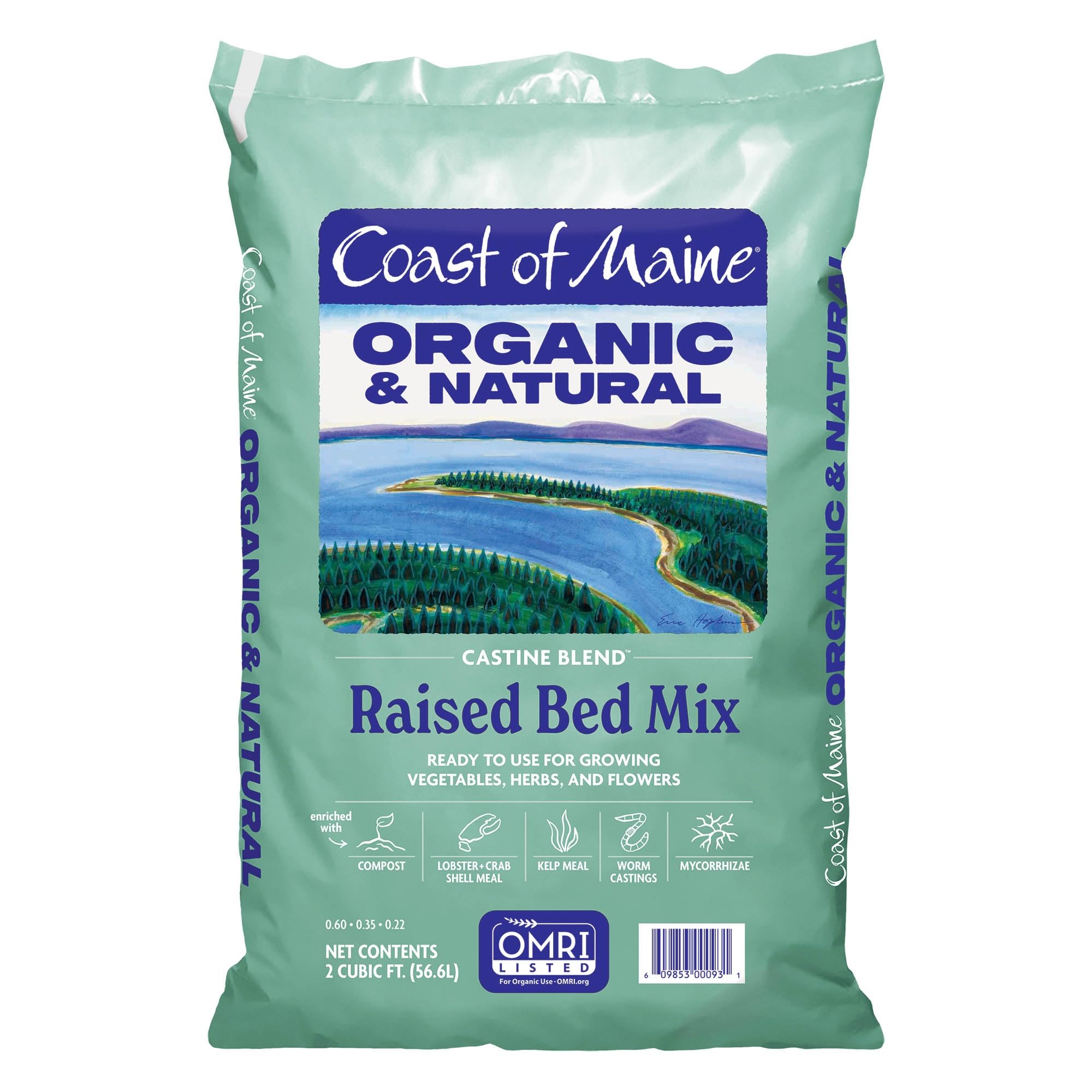
2. Coast of Maine Organic & Natural Castine Blend Soil (2 cu ft)
The premium-feeling mix that feeds beds without feeding your wallet.
This Coast of Maine Castine Blend is the pick that keeps delivering season after season. At 2 cubic feet compared to the Espoma mix’s 1.5 cubic feet, one bag covers more ground in your raised bed. Despite the bigger size, it weighs 40.3 pounds — noticeably lighter than the 50-pound Michigan Peat bag, which tells you this blend uses quality lightweight ingredients instead of heavy sand filler.
The real draw here is the ingredient lineup: worm castings, mycorrhizae (beneficial fungi that help roots absorb water), biochar (a charcoal-like material that holds nutrients in the soil), green sand, and lobster and crab shell meal. One buyer who has used this product for three years calls it the “best soil to add to improve garden beds,” noting it loosens existing soil in the beds. Another reviewer described opening the bag to find “soft rich, dark, organic dirt” with no twigs or bugs — a stark contrast to the wood-heavy complaints about the Espoma mix below.
Reviewers report it works well for raised beds, potted plants, and amending hard clay. The only honest gripe is that the bags could be larger — but at this price point, 2 cubic feet is already generous compared to the competition.
What earns its spot
- 2 cu ft bag — biggest volume in this lineup
- Loaded with mycorrhizae, biochar, worm castings
- Light, fluffy texture with no debris
The honest downsides
- Premium price per bag vs basic potting soils
- Not ideal for tiny containers — better suited for beds
The smart money pick: Reach for this if you want a single-bag solution that feeds your raised bed for a full season without needing extra amendments.
Look elsewhere if: You need the absolute cheapest per-pound option and don’t mind amending with fertilizer yourself.
3. Espoma Organic Raised Bed Mix (1.5 cu ft)

A purpose-built raised bed mix with a potent fungal boost.
Espoma designed this mix specifically for raised garden beds, and the ingredient list shows it: earthworm castings, alfalfa meal, kelp meal, feather meal, plus a proprietary blend of endo and ecto mycorrhizae called Myco-Tone. At 1.5 cubic feet compared to the Coast of Maine Castine Blend’s 2 cubic feet, so you get less volume per bag for the same price range — something to factor when filling a big bed.
On the plus side, reviewers love how well it retains moisture without turning soggy, and one buyer who tested it through a wet California February said the 1.5 cu ft bag arrived “perfectly sealed, no mold or dry spots.” That same reviewer is growing 9 vegetables and 12 flowering plants in it with good results. However, a critical one-star review warned that the mix seemed “mostly wood, looks like mulch,” and that seedlings stalled and turned yellow three weeks in. That split suggests this mix works beautifully as an amendment or top layer but may lack enough true compost to support heavy-feeding vegetables on its own in a brand-new bed.
What stands out
- Myco-Tone mycorrhizae blend for root health
- Great moisture retention without sogginess
- Clean, odor-free bag
The catch
- Some bags are wood-heavy and lack nutrients
- Smaller volume than similarly priced competitors
The top-off choice: Grab this if you are refreshing an existing raised bed and want a mix that holds moisture and adds mycorrhizae.
Think twice if: You are filling a brand-new deep bed from scratch — you may need to supplement with compost or fertilizer.
4. Premium Potting Soil Mix with Peat Moss, Vermiculite, Perlite (8 Dry Quarts) by Midwest Hearth

A fluffy, fine-textured mix engineered for delicate root starters.
This Midwest Hearth mix focuses on the classic peat-perlite-vermiculite trio — the gold standard for seed starting and container growing. The peat moss holds moisture, the perlite (tiny white volcanic glass beads) keeps air flowing through the soil, and the vermiculite (a sponge-like mineral) helps the mix hold onto water and nutrients. It arrives pH-balanced so you do not have to guess about acidity levels, and it is ready straight from the bag.
At 8 quarts, this is by far the smallest bag in this lineup; the Coast of Maine Tomato & Veggie offers 20 quarts. Buyers report that it is “light, fluffy texture” with “phenomenal drainage” and “no weeds or bugs.” One reviewer germinated petunias in it with great success, and another said their plumerias are thriving. The trade-off is clear: you get a premium fine mix that is perfect for starting seeds or potting up a few plants, but you will need multiple bags to fill even a small raised bed.
Why it is worth it
- Excellent drainage and moisture balance
- Light, fluffy texture — no compaction around roots
- No weeds, bugs, or debris reported
The limitation
- 8-quart bag is small for raised beds
- Price per quart is higher than bulk options
Start here: Perfect if you are germinating seeds or potting a few herbs on a budget — the texture gives delicate roots an easy start.
Not for big beds: Skip this if you are filling a large raised bed; you will need too many bags to make it cost-effective.
5. Michigan Peat General All Purpose Premium Potting Soil with Perlite (50 Pounds)

The budget-heavy bag that brings raw dirt for hard labor.
When you just need bulk soil to fill a large bed and plan to handle the nutrition yourself, this 50-pound bag from Michigan Peat is the no-frills workhorse. At 50 pounds versus the Coast of Maine Castine Blend’s 40.3 pounds, it packs more physical material per bag, which can cover a bigger area if your goal is top-filling or mixing into native soil. The formula combines dark reed sedge peat, perlite, sand, and slow-release fertilizers — so there is some feeding built in, but it is not the nutrient-dense living soil that higher-end mixes provide.
The catch? Several reviewers warn about fungus gnats hatching from the soil — a known risk with peat-based mixes stored in damp conditions. One buyer bluntly noted “lots of gnats come out of it,” while another described it simply as “dirty dirt” that arrived moist. On the positive side, buyers confirm it has “perfect consistency for potting” and works fine for container gardens. Treat this as a base soil that you will want to amend with compost, worm castings, or a balanced fertilizer for vegetables.
Bulk advantage
- 50 pounds — the heaviest bag for the price
- Ready to use, no mixing required
- Slow-release fertilizer already included
Real frustrations
- Fungus gnat risk reported by multiple buyers
- Dense and heavy — harder to carry and work with
Good for bulk filler: Reach for this if you need cheap volume to mix with better soil or compost, and you do not mind doing a little DIY amending.
Skip if: You want a premium living soil straight from the bag, or if gnat infestations in indoor setups are a dealbreaker.
Understanding the Specs
Volume vs Weight — The Real Measure of Value
Soil bags list volume (quarts or cubic feet) and weight (pounds), and they are not the same thing. A 50-pound bag can contain mostly sand and heavy filler, giving you less actual growing space than a 20-quart bag of lightweight compost. Compare cubic feet or quarts between products to judge how much bed they fill. One cubic foot equals roughly 7.5 gallons of growing space — so a 2-cubic-foot bag fills about 15 gallons of bed area.
Mycorrhizae and Biochar — Living Soil Boosters
Mycorrhizae are a type of beneficial fungus that forms a partnership with plant roots, helping them absorb more water and nutrients from the soil. Biochar is a charcoal-like substance that acts like a tiny sponge in the soil, holding onto nutrients and releasing them slowly to plant roots over weeks. Both are common in mid-range and premium mixes and give your plants a measurable head start without you having to buy separate additives.
FAQ
Can I use cheap potting soil straight from the bag in a raised bed?
How much soil do I need to fill a 4×8 raised bed?
Why does my cheap soil have fungus gnats?
Is it cheaper to make my own raised bed soil mix?
What does OMRI listed mean for raised bed soil?
Will cheap soil with wood chips hurt my vegetables?
How long does a bag of raised bed soil last before it goes bad?
Can I reuse soil from a raised bed the next season?
What is the difference between potting soil and raised bed mix?
Final Thoughts: The Verdict
Across the board, the cheap soil for raised beds winner is the Coast of Maine Castine Blend because at 2 cubic feet with mycorrhizae, biochar, and worm castings, it delivers premium performance without crossing into premium pricing. If you are topping off a small raised bed or working in containers, the Coast of Maine Tomato & Veggie mix gives you that same brand quality in a lighter, more portable 20-quart bag. And for budget-minded gardeners who want bulk filler to mix with their own compost, the Michigan Peat 50-pound bag is the most soil-per-dollar option — just be ready for a heavy bag and the potential for gnats.
How We Picked
We do not accept paid placement. Every pick is matched to a real buyer and a real use-case; we do not hands-on test units.
Sources & Methodology
Specifications: manufacturer listings and product documentation. Review insights: verified customer reviews, as of July 2026. Pricing: not shown on this page (it changes often); check the current price via the retailer link.
As an Amazon Associate, Lawn Gear Lab earns from qualifying purchases. This does not affect which products we feature.