
That water ring staining your cedar deck or the slimy rot forming under your terracotta pot isn’t just an eyesore — it’s a slow death sentence for your flooring and the roots of your container plants. A tiny air gap is the only barrier between healthy drainage and trapped moisture that causes mold, mildew, and wood decay. The right ceramic pot feet or their rugged rubber and plastic cousins provide that critical lift, and choosing the wrong ones means either watching expensive pots skid off their supports or, worse, discovering surface damage months too late.
I’m Rikta — the co-founder and writer behind Lawn Gear Lab. I’ve spent weeks analyzing load capacities, rubber compression data, ceramic firing quality, and hundreds of owner reports to separate the risers that genuinely protect your investment from the ones that crack, slide, or compress under weight.
Whether you’re outfitting a row of heavy concrete urns on a south-facing patio or elevating a single succulent on a hardwood shelf, this guide to the best ceramic pot feet will help you pick the right height, material, and strength for your specific setup.
How To Choose The Best Ceramic Pot Feet
Container planters trap moisture at the base, and without a gap for airflow, that moisture seeps into your deck boards, patio pavers, or indoor flooring. Pot feet — whether they are built into a ceramic pot or purchased as separate risers — create that essential air gap. The challenge is matching the right type, material, and weight rating to your specific pot size and surface.
Load Capacity and Pot Weight
A single 14-inch terracotta pot filled with damp potting soil can weigh over 50 pounds. Add a large shrub or small tree, and that number climbs toward 80 pounds or more. Most rubber and plastic risers advertise a weight limit per set — typically four feet — but you must cross-reference that rating against the total weight of your pot and soil combined. The AlpineReach hexagons claim 6,000 pounds across the pack, which is overkill for a single pot but reassuring for heavy concrete urns. For smaller ceramic pots under 20 pounds, standard rubber feet like the Bosmere Pot Toes handle the load without issue.
Material: Rubber vs. Plastic vs. Ceramic
Separate pot risers made from recycled rubber (like Potrisers) are nearly indestructible, non-slip, and won’t crack under UV exposure. Plastic risers (like the LFUTARI elevator) are lighter and cheaper but can bow under weight or become brittle after a few seasons in direct sun. True ceramic pot feet are not sold as add-ons — they are built into the base of pots like the LA JOLIE MUSE or LE TAUCI designs. If you are buying freestanding risers rather than a footed pot, choose rubber for outdoor heavy loads and plastic for lightweight indoor pots on shelves.
Height and Airflow Requirements
A 1/2-inch lift (the standard height of Potrisers) is sufficient for drainage on hard, flat surfaces like concrete or tile. For wooden decks, a taller gap — 3/4-inch to 1 inch — is safer because wood absorbs moisture and requires more airflow to dry between waterings. Bosmere Pot Toes offer stacking grooves that let you double up the height on uneven surfaces, which is useful for sloped patios where water pools. The LFUTARI elevator sits roughly 1 inch high, making it a good choice for deck environments where you want a visible separation between pot and wood.
Quick Comparison
On smaller screens, swipe sideways to see the full table.
| Model | Category | Best For | Key Spec | Amazon |
|---|---|---|---|---|
| AlpineReach Hexagons 12-Pack | Rubber Riser | Heavy outdoor planters on pavers | 6,000 lb capacity per pack | Amazon |
| LE TAUCI Ceramic Pot Set | Footed Planter | Indoor decorative display | 6.4″ & 5.1″ diameters | Amazon |
| Bosmere Pot Toes 12-Pack | Plastic Riser | Leveling pots on uneven surfaces | 500 lb per set, stackable | Amazon |
| POTRISERS Standard 16-Pack | Rubber Riser | Invisible lift for medium pots | 1,600 lb per set, USA-made | Amazon |
| LA JOLIE MUSE Footed Pots | Ceramic Planter | Boho indoor succulent display | 6.7″ & 5.1″ diameters, matte | Amazon |
| MyGift Rectangular Planter | Ceramic Planter | Windowsill succulent arrangements | 10″ long, bamboo tray | Amazon |
| LFUTARI Pot Elevator 4-Pack | Plastic Disc | Budget deck protection | 11.8″ diameter, 1″ height | Amazon |
In‑Depth Reviews
1. AlpineReach Extra Heavy Duty Pot Feet Risers 12 Pack

The AlpineReach hexagons are the only risers in this lineup that can legitimately support massive concrete planters without compression over time. The rubber compound is thick enough that it doesn’t squish under several hundred pounds, and the hexagon shape provides a wide, stable base that prevents the foot from tipping. Each riser measures 0.75 inches tall, which gives enough clearance for water to drain freely and air to circulate beneath oversized pots on pavers or concrete slabs. The textured finish grips both the pot bottom and the ground surface, reducing the risk of the planter sliding during wind or accidental bumps.
Owner reports confirm that these feet handle the weight of large concrete urns measuring 20 inches or more in diameter without any visible deformation. Several users repurposed them to elevate reptile tanks and terrariums, which speaks to the structural integrity of the rubber. The 12-pack provides ample coverage for multiple pots or extra stability for a single very heavy planter (three or four feet per pot is standard). The only practical drawback is that the aggressive grip makes it difficult to rotate a fully loaded pot once it’s seated — you have to lift the pot straight up to reposition it.
For anyone dealing with heavy composite, stone, or concrete planters on a patio, these risers are the most reliable solution available. The price per pack is higher than standard plastic feet, but considering the 6,000-pound total capacity and the weatherproof rubber formulation, they represent a one-time purchase for serious container gardeners. If your pot weighs less than 30 pounds, you can save money with lighter options, but for the heavy-duty role, this is the set to beat.
What works
- Handles concrete planters without compressing over time
- Weather-resistant rubber stays flexible in freezing temperatures
- Hexagon shape prevents sliding on smooth pavers
What doesn’t
- Strong grip makes it hard to rotate a heavy pot once seated
- More expensive than plastic alternatives for lighter pots
2. LE TAUCI Ceramic Plant Pots, 5.1 + 6.4 Inch

The LE TAUCI footed planters solve two problems at once: they provide a decorative ceramic container with built-in elevation, and they eliminate the need for separate pot feet. The reactive glaze finish in blue produces a unique marbled pattern on each pot, so no two units look identical. The feet are molded directly into the ceramic base, raising the pot about 3/4 of an inch off the surface — sufficient airflow for hardwood floors, desks, and windowsills. The set includes both a 6.4-inch and a 5.1-inch pot, making it versatile for pairing a larger foliage plant with a compact succulent.
Every pot ships with silicone plugs, drainage hole meshes, and foam base pads. The drainage hole measures roughly 3/4 inch, which is generous enough to prevent waterlogging but still small enough that soil won’t escape when the mesh pad is installed. Clear nursery pots fit snugly inside for those who prefer to bottom-water or inspect root health regularly. The ceramic feels dense and substantial compared to mass-produced fiber-stone alternatives, and the glazed surface wipes clean with a damp cloth without absorbing stains or mineral deposits.
The reactive glaze color is vivid but may vary between batches — this is inherent to the process and not a defect. One minor complaint from owners is that the included silicone plugs can be slightly too large for the drainage hole on certain units, requiring a trim to fit. For indoor use where aesthetics matter as much as function, this set delivers a premium look that justifies the price. If you need to match an existing color scheme, request photos of the actual batch before ordering.
What works
- Unique reactive glaze pattern on each pot
- Built-in ceramic feet provide stable elevation
- Includes drainage plugs, mesh pads, and foam protectors
What doesn’t
- Glaze color varies between production batches
- Silicone plug may need trimming to fit the drainage hole
3. Bosmere Pot Toes Plant Pot Risers 12-Pack

Bosmere Pot Toes are the most versatile plastic risers in this roundup because of their interlocking grooves — you can stack two or more on top of each other to create a custom height for leveling pots on sloped surfaces. Each toe measures 3 inches long by 2.5 inches wide, providing a broad footprint that distributes pressure evenly and prevents the pot from tipping. The dark gray color blends into shadows under planters, making them nearly invisible from a standing height. With a combined capacity of 500 pounds per pack of 12, they handle everything from standard nursery pots to heavy glazed ceramic containers.
Multiple owners report using them to correct uneven patios and sunken concrete slabs, stacking two toes under one side of a large pot to bring it level. The plastic material is rigid enough to avoid compression under most medium-sized planters, though it is not as indestructible as rubber. They also clean easily with a spray hose and remain non-slip on tile and concrete surfaces. The British design heritage shows in the attention to detail — the grooves align precisely, and the plastic doesn’t develop sharp burrs after cutting with a utility knife.
The trade-off is that the 1/2-inch height per toe is relatively short; even stacked, each pair provides only about 1 inch of lift. For pot owners who need a full 1.5 or 2-inch gap for maximum deck ventilation, these may require three or four stacked units, which can become unstable on very large pots. They also cost more per unit than simple rubber squares, though the stackability adds functionality that rubber blocks cannot match. For anyone with uneven flooring, these are the most practical solution.
What works
- Stackable grooves allow custom height adjustments
- Broad base prevents tipping on medium pots
- Dark gray color blends under most planters
What doesn’t
- Each toe only 1/2 inch tall — stacking reduces stability
- Plastic not as durable as recycled rubber under UV
4. POTRISERS Standard 1″ Wide x 1/2″ Tall 16-Pack
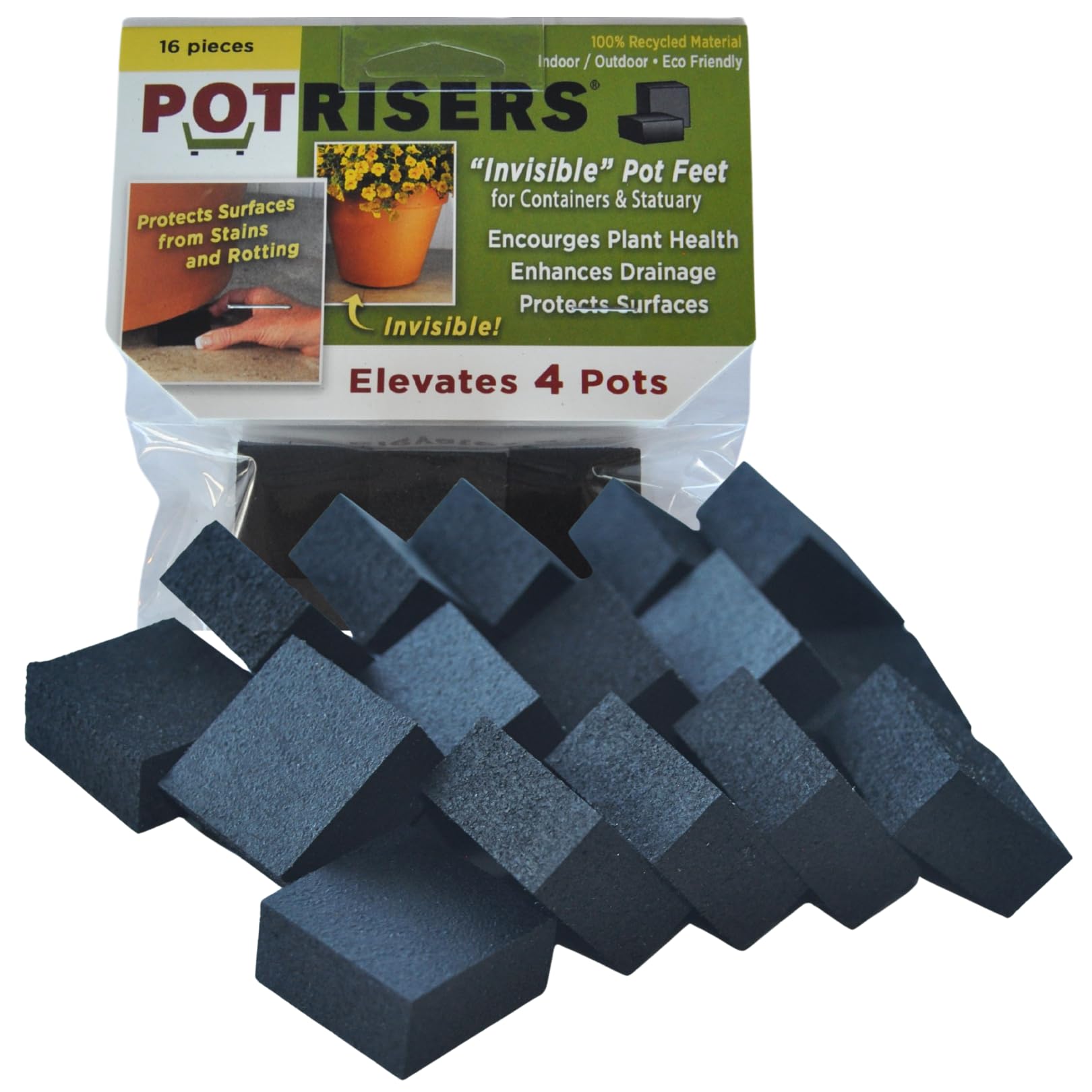
Potrisers have been the quiet standard in the pot foot category since 2008, and the formula remains unchanged because it works. Each rubber block measures 1 inch wide and just 1/2 inch tall — intentionally low to keep the pot close to the ground while still providing an air gap. The 100% recycled rubber formulation doesn’t compress or crumble over time, even when exposed to freeze-thaw cycles. A set of four feet supports up to 1,600 pounds, which covers the vast majority of residential planters, including heavy concrete options.
The low profile is the defining feature here. Owners who want invisible support without raising the visual height of their potted arrangement consistently choose these over taller alternatives. The rubber has enough friction to prevent the pot from sliding on smooth tile or sealed wood, though it may leave a slight mark on vinyl composite decking if left undisturbed for months. Because they are so small, you can easily fit three or four under a pot without the feet extending beyond the rim. The 16-count pack gives you enough for four medium pots or three large pots with a spare set.
The only real limitation is height — at 1/2 inch, the gap is adequate for concrete and tile but borderline for wooden decks where deeper airflow is recommended. Some owners also note that very lightweight plastic pots may shift on the rubber if bumped, though the friction improves significantly once the pot is filled with soil. For a discreet, low-maintenance solution that prioritizes surface protection over elevation, these are the safest bet.
What works
- Nearly invisible under most pots at 1/2 inch tall
- Recycled rubber doesn’t compress, crack, or rot
- Enough for four medium pots per pack
What doesn’t
- 1/2-inch height may be too short for wood decks
- Light pots may slide slightly before filling
5. LA JOLIE MUSE Ceramic Footed Flower Plant Pots Set

The LA JOLIE MUSE footed planters blend Scandinavian boho design with practical ceramic construction. The exterior features grooved patterns that mimic leaf veins, and the matte finish has a sandy, gritty texture that hides water spots and dust better than high-gloss surfaces. Four short feet are extruded directly from the ceramic base, lifting the pot about 3/8 inch off the tabletop — enough for airflow under the pot but not as tall as separate rubber risers. Each set includes a 6.7-inch and a 5.1-inch pot, both with drainage holes for healthy root growth.
The ceramic is fired at high temperature, giving it a denser, more durable feel than cheaper earthenware pots. Owners consistently praise the aesthetic — the neutral beige color complements any decor style and allows the plant’s foliage to be the focal point. The drainage holes are functional and sized appropriately for the pot dimensions, and the feet provide enough clearance to prevent water from wicking onto surfaces beneath the pot. For small houseplants like succulents, ferns, and cacti, the size proportions are ideal.
The main functional limitation is that the feet are short, so the gap is not sufficient for surfaces that experience heavy rainfall or splashing. These are best suited for indoor tabletops or covered patios. Additionally, because the pot bottom has a slight curve between the feet, it cannot serve as a cachepot for standard nursery pots — the plastic pot would rock unstably. If you want a decorative planter where you pot directly into the ceramic, these work beautifully; if you need to slide a nursery pot in and out, look for a pot with a flat interior base.
What works
- Unique textured matte finish resists water spots
- Ceramic feels dense and well-fired
- Built-in feet sufficient for indoor tabletop use
What doesn’t
- Feet too short for wet outdoor deck environments
- Curved interior base unsuitable as cachepot
6. MyGift Rectangular Succulent Planter with Bamboo Tray
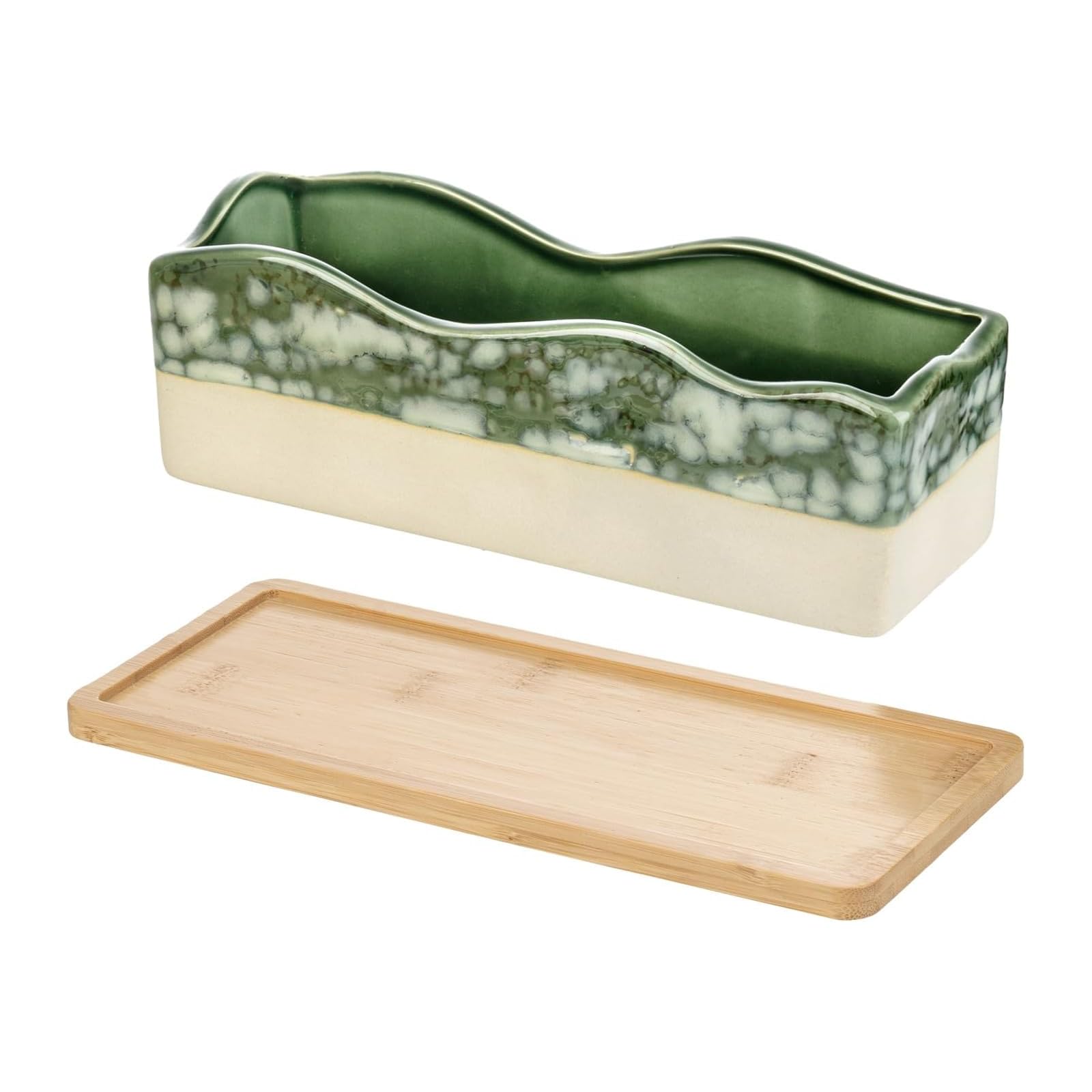
The MyGift rectangular planter is built for tight spaces: window ledges, narrow shelves, and desk corners where a round pot won’t fit. The glazed ceramic body features a beige and green color scheme that leans neutral enough to work with most interior palettes. Four small rubber foot pads are attached to the bottom of the planter to prevent the ceramic from scratching the surface, though these are more like bumper pads than true elevation feet — they lift the pot only a few millimeters. The real drainage solution here is the removable bamboo tray that catches runoff water below the single drainage hole.
The rectangular footprint measures 10 inches wide by 3.5 inches deep, which is ideal for succulents, herbs, or small foliage arrangements that prefer a shallow root run. The bamboo tray slides out easily for emptying, preventing water from pooling on the shelf. The glazed ceramic surface is smooth and easy to clean, and the drainage hole is positioned centrally to allow even water flow through the soil. Owners consistently describe the design as attractive and functional for small arrangements.
Quality control has been a recurring concern — some units arrive with a visible dip or squish in the center of the ceramic body, which appears to be a pre-firing mold defect rather than shipping damage. Replacement units have occasionally displayed the same flaw. The foot pads are thin and offer barely enough clearance for airflow, so this planter relies heavily on the bamboo tray for moisture management. For a windowsill succulent display where the tray is emptied promptly after watering, it works fine; for a high-humidity environment, the minimal gap could lead to moisture trapped under the pot.
What works
- Narrow footprint fits tight windowsill spaces
- Bamboo tray catches runoff and slides out easily
- Glazed ceramic finish looks clean and modern
What doesn’t
- Inconsistent quality — some units have center defects
- Foot pads offer minimal elevation for airflow
7. LFUTARI Plant Level Pot Elevator 4-Pack, 12 Inch

The LFUTARI elevator disc is a budget-tier solution that covers a lot of ground — literally. At 11.8 inches in diameter, each disc provides a wide platform that supports the full base of the pot, unlike individual feet that leave the center unsupported. The plastic construction keeps the cost low, and the 1-inch height offers decent clearance for airflow and drainage on wood decks or concrete. The design is essentially a low-profile saucer with a raised rim and legs, functioning as both a drip tray and a pot elevator in one piece.
The primary advantage is surface protection: the disc catches any water that drains from the pot and prevents it from reaching the deck or patio. For owners who water overhead and watch water stream out of drainage holes, this eliminates the need for a separate saucer. The plastic is lightweight and easy to clean, and the black color doesn’t show dirt quickly. Some owners report that the disc works well under heavy pots, with the plastic holding up without cracking under the weight of standard nursery containers filled with soil.
The biggest reliability concern is that the discs can arrive slightly bowed — the plastic may warp during manufacturing or shipping, causing the disc to rock on flat surfaces. A lightweight pot placed on a bowed disc may not sit securely, and the gap between the disc and the ground can be uneven. The plastic also feels less durable than rubber or thick ceramic; prolonged UV exposure could make it brittle over several seasons. For the price, it’s a practical stopgap for deck protection, but not a long-term investment for permanent planters.
What works
- Wide 11.8-inch base catches all runoff water
- 1-inch height provides useful airflow gap
- Very affordable for covering multiple pots
What doesn’t
- Units may arrive bowed, causing rocking
- Plastic can become brittle under extended UV exposure
Hardware & Specs Guide
Load Rating vs. Real Weight
Manufacturers often quote a combined load capacity for the entire pack of risers, but this assumes even weight distribution across all feet. A 1,600-pound rating on a 16-pack means each foot theoretically holds 100 pounds, but a heavy ceramic pot resting on just three or four feet concentrates that weight. Always divide the total rating by the number of feet you plan to use, then compare that to the pot’s wet soil weight plus the plant itself. A 14-inch pot with wet soil weighs about 50-60 pounds, so three feet rated at 100 pounds each gives a comfortable 300-pound safety margin.
Height Gap by Surface Type
Concrete and stone tiles need at least 1/4 inch of clearance for water to evaporate, but 1/2 inch is better. Wood decks require a minimum of 1/2 inch and ideally 3/4 inch, because wood absorbs moisture and takes longer to dry between waterings. Indoor hardwood floors can tolerate a 1/4-inch gap if the pot is on a saucer, but footed pots with ceramic legs (like the LE TAUCI or LA JOLIE MUSE) provide roughly 3/8 to 3/4 inch, which is sufficient for normal indoor humidity levels. Measure your specific surface conditions before choosing a height.
FAQ
Can I use ceramic pot feet on a wooden deck without causing damage?
How many pot feet do I need for a single large planter?
Will separate rubber pot feet stain my concrete patio over time?
Final Thoughts: The Verdict
For most gardeners, the ceramic pot feet winner is the AlpineReach Heavy Duty 12-Pack because it combines an extreme 6,000-pound load rating with weatherproof rubber that won’t degrade after seasons of sun and rain. If you want an integrated ceramic look with built-in elevation that doesn’t require separate risers, grab the LE TAUCI Reactive Glaze Set. And for leveling pots on uneven surfaces where stacking height matters, nothing beats the Bosmere Pot Toes 12-Pack.