
Specs are compiled from manufacturer listings and verified buyer reviews and can change over time — please confirm the key details on the product page before buying.
Your clematis and roses need a strong support that won’t sag or rot after one season. But finding a structure that stays solid in the ground, handles rain and snow, and fits the exact space in your yard is tougher than it looks.
I’m Rikta — the founder and writer behind Lawn Gear Lab. This guide is built by comparing the manufacturers’ published specifications and the patterns across verified customer reviews, so you get each pick’s real strengths and trade-offs instead of marketing spin.
Below are five real cedar wood trellises, from expandable lattice panels to a full pagoda arch. Use this to match the right structure to your climbing plants and garden layout. This is the cedar wood trellis guide that cuts through the noise and tells you which one fits your specific project.
Quick Picks
- 2Pcs Expandable Garden Trellis, 38″ x 89″ Large Wooden Lattice — Best Value
- Westwood 47″W x 86″H Cedar Arbor — Best Overall
- Rosewood 47″W x 89″H Cedar Arbor — Quickest Setup
- 4Pcs Expandable Garden Trellis, 13″ x 68″ Thickened Wooden Lattice — Compact 4-Pack
- All Things Cedar 6-Foot Pagoda Arbor Garden Arch Trellis — Premium Build
How To Choose The Best Cedar Wood Trellis
Picking a cedar trellis is not just about looks — the wrong size or style can leave you with a flimsy support that tips over when your morning glories get heavy. Here are the three things to check before you buy.
Height and Span for Your Plant Type
Heavy climbers like grapes and large roses need a tall, sturdy structure — think 86 inches or more — so the mature vine has room to spread without buckling the frame. Smaller plants like clematis or ivy can thrive on shorter panels, around 36 to 48 inches, which let you tuck a support into narrow beds or against a fence.
Material and Finish
Genuine cedar resists rot and insects naturally, but not all “cedar” trellises are the same. Carbonized pine (heat-treated to look like cedar) is often labeled “cedar wood” for its color and water resistance — it works for light duty but may fade if not painted. Premium Western Red Cedar offers better natural durability and a longer lifespan without added treatment.
Assembly and Anchoring
Some trellises arrive fully assembled and simply expand into place, making them ideal for renters or quick seasonal setups. Others require you to screw boards together and set posts into concrete. If you are installing over pavers or a wooden deck, look for a model that includes ground stakes or is light enough to work with rebar
Quick Comparison
| Model | Best For | Material | Dimensions (W x H) | Weight | Amazon |
|---|---|---|---|---|---|
| 4Pcs Expandable Garden Trellis | Renter-friendly wall coverage | Carbonized Cedar Wood | 13″ x 68″ (each) | 2.83 kg (4-pack) | Amazon |
| 2Pcs Expandable Garden Trellis | Large vertical fence coverage | Carbonized Cedar Wood | 38″ x 89″ (each) | — | Amazon |
| Rosewood 47″W x 89″H Cedar Arbor | Quick assembly garden entryway | Cedar | 47″ x 88.7″ | 45 lbs | Amazon |
| Westwood 47″W x 86″H Cedar Arbor | Solo assembly on pavers | Cedar | 17.5″ x 85.5″ | 24.95 kg | Amazon |
| All Things Cedar 6-Foot Pagoda Arbor | Heavy-duty garden arch | Western Red Cedar | 36″ x 87″ | 63 lbs | Amazon |
In‑Depth Reviews
1. 2Pcs Expandable Garden Trellis, 38″ x 89″ Large Wooden Lattice
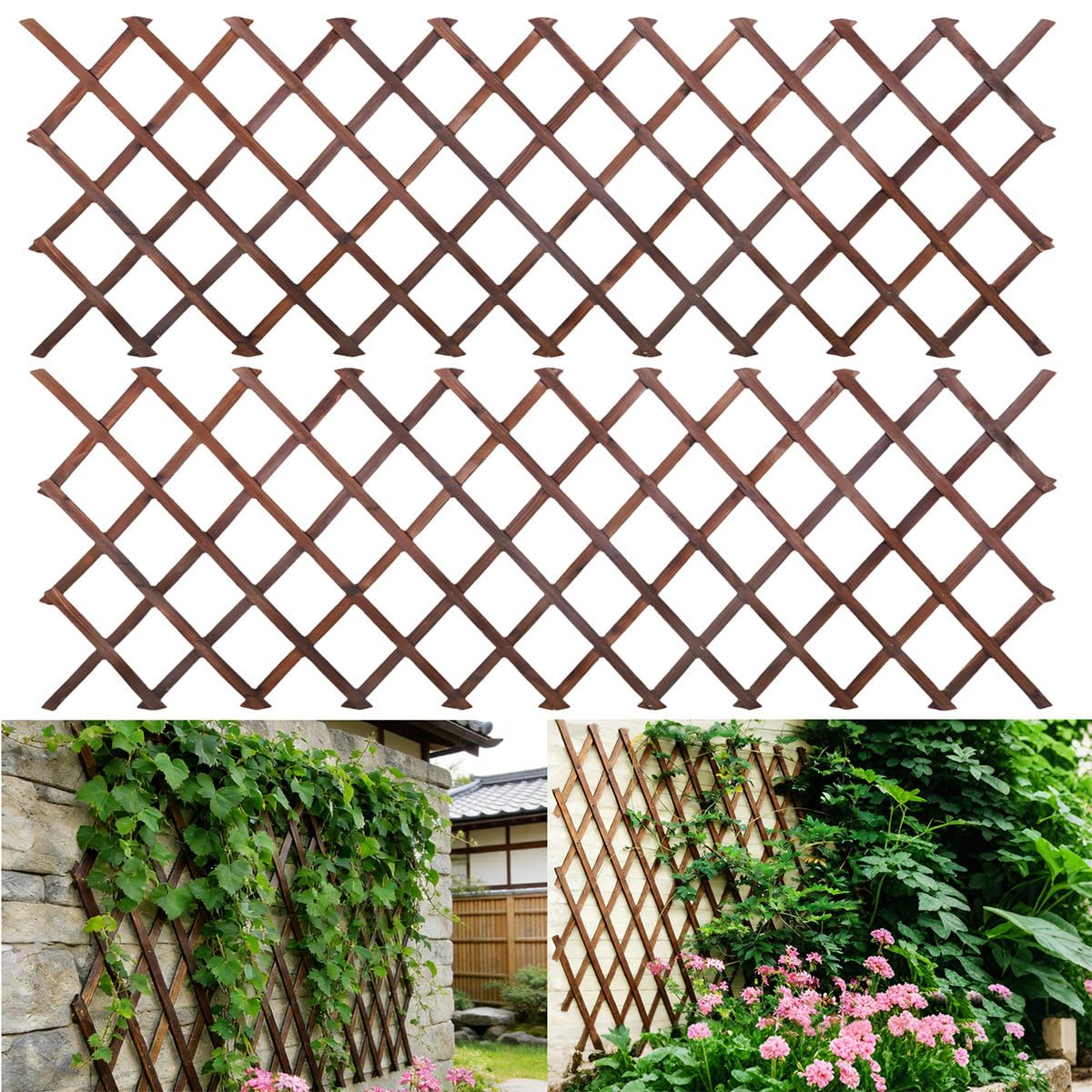
The big-panel expandable that gives you 89 inches of run against a long wall or fence.
This is the set for covering serious ground. Each panel measures 38 inches tall by 89 inches wide when fully extended, making it the widest expandable lattice here — that is about five times the width of the 4Pcs expandable panels. The slats are 0.35 inches thick, a 30% increase over standard lattice, so the wood resists warping and cracking through a full season of rain and sun.
Buyers report using these panels fastened at a 45-degree angle to a fence to hold clematis, calling it “beautiful, solid, and very efficient.” No assembly is required — you simply expand the lattice to your desired width and secure it in place, which makes it a fast option if you rent or like to rearrange your garden layout each year. The carbonized cedar finish looks rich brown right from the start.
One thing to watch: like all expandable trellises, the ends can leave a few loose slats that need a staple or nail to feel completely secure.
The Big Coverage Advantage
- Massive 89-inch extended width per panel — covers a long fence run with one piece
- 0.35-inch thick slats handle heavier vines than cheap lattice
- No tools or assembly needed; expands and sets up in minutes
The End-Gap Catch
- Outer ends can be unstable with loose slats that need extra fastening
- Listed material is carbonized pine (labeled “cedar wood”), not natural Western Red Cedar
- Best for wall or fence mounting — not free-standing
Reach for these if: you need to cover a wide fence or wall in minutes with an expandable panel that is thicker than typical lattice.
Look elsewhere if: you want a free-standing arbor or prefer unfinished solid cedar that you can paint yourself.
2. Westwood 47″W x 86″H Cedar Arbor
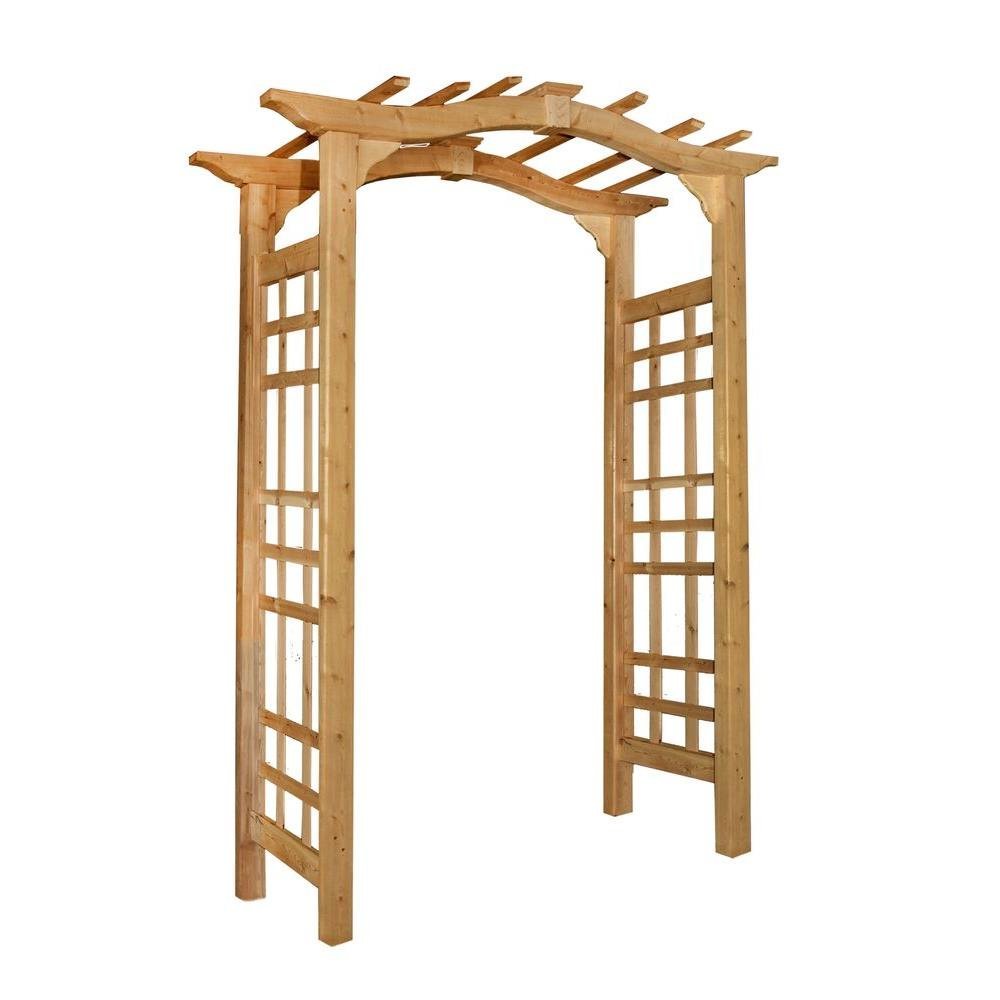
The free-standing arch that one person can assemble on pavers without needing help.
This arbor is the balance for the gardener who wants a statement piece without a complicated build. It stands 86 inches tall and 47 inches wide, with a lattice top that gives climbing roses and honeysuckle a natural spread. The cedar is pre-stained a golden brown and is backed by a 1-year warranty against material defects — and the maker says it will not need painting or regular maintenance.
The big story here is installation. One reviewer noted “easy solo assembly, sturdy free-standing on pavers with rebar,” and another noted they set it up solo in under an hour. The included ground stakes let you anchor it into soil or use rebar through the stakes if you are placing it on pavers. The arbor weighs about 24.95 kilograms, which is noticeably heavier than expandable lattice panels — that translates to stability once it is in the ground.
One buyer mentioned that the box arrived with a broken slat, but the company replaced the entire side panel quickly. The anchoring system is simple, but if you have very loose or sandy soil, you might want to use quick-set concrete for extra security.
The arbor is narrower than the Rosewood at 17.5 inches wide on the posts versus 47 inches — something to check if you plan to walk through it regularly.
Solo-builder’s choice: This arbor earns its “Best Overall” spot because it combines real cedar, easy one-person assembly, ground stakes, and a size that fits most garden paths without overwhelming a small yard.
Real trade-off: The post width is only 17.5 inches — fine for an arch but tighter than the Rosewood if you want a spacious walk-through entry.
Go with this if: you want a free-standing cedar arch you can install by yourself on pavers or lawn with minimal fuss.
skip it if: you need a wide passageway (look at the Rosewood at 47 inches) or if you prefer a fully pre-assembled panel.
3. Rosewood 47″W x 89″H Cedar Arbor

The arbor that assembles in under 15 minutes and gives you a wide 47-inch walk-through.
If you want a wide entryway that a wheelbarrow can roll through, this is it. The Rosewood arbor measures 47 inches wide by 88.7 inches tall, giving you a much roomier opening than the Westwood. Owners mention “extremely easy assembly under 15 minutes; instructions perfect, parts aligned” — that is about four times faster than what owners of the All Things Cedar pagoda report for their build.
The cedar is stained with a water-based finish that keeps the natural wood grain visible, and the lattice detail at the top gives roses and honeysuckle a structured place to weave through. It includes hidden screw-in ground anchors, so you do not need to mix concrete unless your soil is especially loose.
A few owners mentioned that the cuts could be more precise — having sandpaper on hand helps if you want a perfect fit. The natural wood grain varies from piece to piece, so your arbor may look slightly different from the photo, which is expected with real cedar.
Speed king: At under 15 minutes of assembly with no power tools needed, this is the fastest way to get a full garden arch standing in your yard.
Choose this if: a wide, quick-to-build garden entry is your priority and you like the look of water-based stain over raw wood.
pass on it if: you plan to assemble it entirely solo — a second person speeds up the alignment of the top arch.
4. 4Pcs Expandable Garden Trellis, 13″ x 68″ Thickened Wooden Lattice
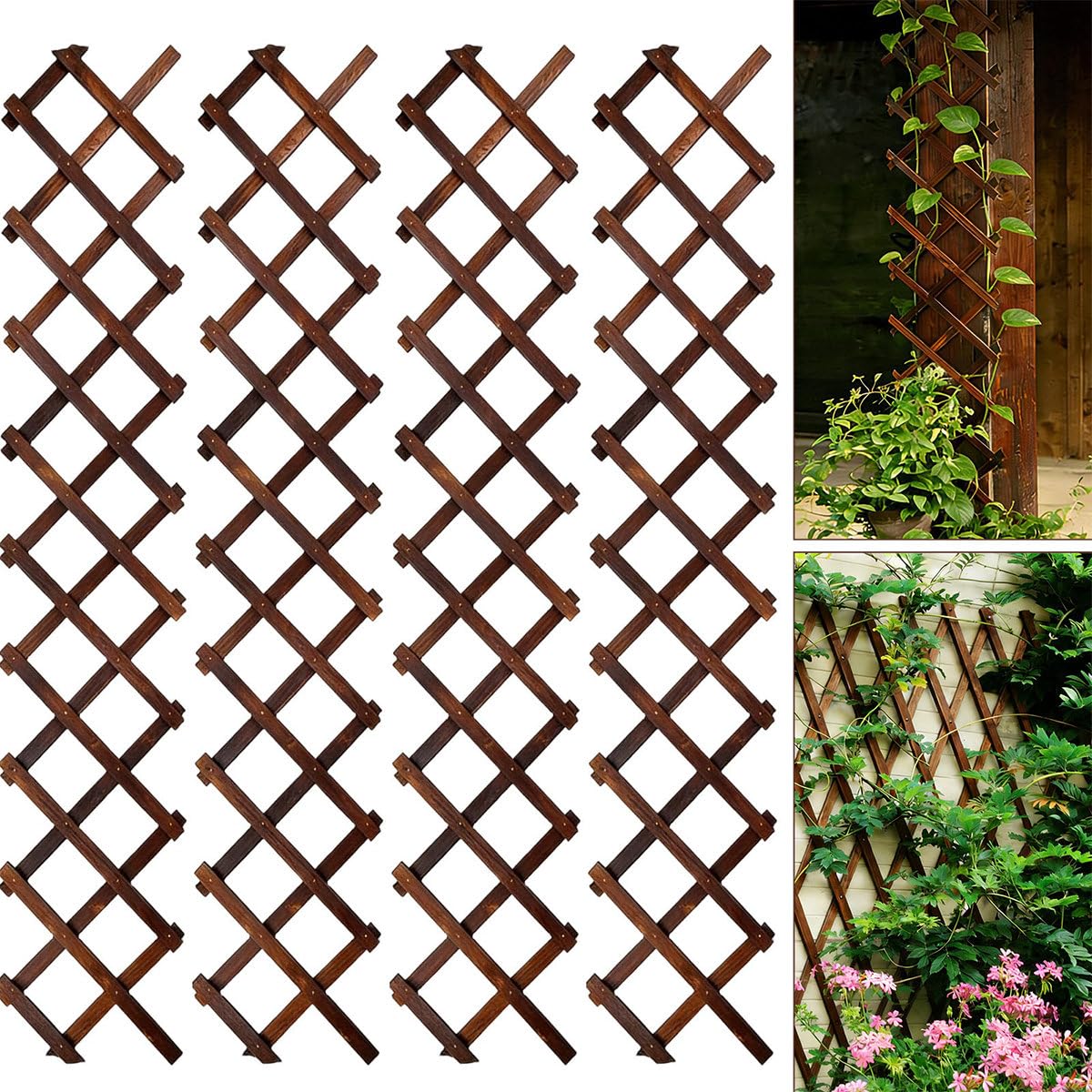
Four narrow panels for the gardener who wants to dot trellises along a fence or wall.
This is the budget-friendly entry point for light climbing plants. You get four expandable panels, each measuring 13 inches wide by 68 inches tall, so you can space them along a railing or mount them individually on a wall. The slats are 0.35 inches thick — the same thickness as the larger 2-Pack version — so you are not losing durability by going smaller. At just 2.83 kilograms for the whole set, these are the lightest picks here, making them easy to hang on a wooden fence or inside a patio room.
Customers note using these panels fastened to a fence at a 45-degree angle to hold clematis, calling them “beautiful, solid, and very efficient.” The carbonized finish is a rich brown that blends into most garden settings. No assembly is required — you just pull the lattice open to your desired width and secure it.
Like the larger expandable set, the ends can leave a few slats feeling loose. One owner reported that “the ends are unstable, with an occasional dangling piece which is a challenge to secure somewhere.” A staple gun or a small nail can solve that, but it is worth knowing before you mount them.
The Multi-Spot Advantage
- Four narrow panels let you spread support across multiple planting spots
- Thicker 0.35-inch slats resist warping better than standard lattice
- Ultra-light at 2.83 kg total — easy to mount on fences or walls
The End-Stability Issue
- Unstable outer ends with occasional dangling pieces that need extra fastening
- Carbonized pine, not natural Western Red Cedar
- Each panel is only 13 inches wide — too narrow for a heavy vine like a large rose
Best for: renters or decorators who want multiple lightweight trellis spots along a fence or wall without a permanent installation.
Not for: anyone hoping to support a heavy, woody vine like a mature wisteria — the thin profile is better for lighter plants.
5. All Things Cedar 6-Foot Pagoda Arbor Garden Arch Trellis

The heavy-duty pagoda built from real Western Red Cedar that stands up to wet winters.
This is the premium option for a reason — it is made from Western Red Cedar, not carbonized pine, which naturally resists rot and insects without chemical treatment. The pagoda style stands 87 inches tall, 36 inches wide, and 71 inches long, creating a tunnel-like arch that works beautifully as a wedding arch or a walkway into a vegetable garden. It weighs 63 pounds, making it more than double the weight of the Westwood arbor and the heaviest pick here — that weight translates into serious stability once anchored, especially with concrete footers.
The trade-off is assembly time. One customer observed the build took two hours solo and noted that half the holes were not pre-drilled — you will need a drill and a second person for a few steps. Another owner said the instructions are sparse and some pre-drilled holes were misaligned by about one-quarter inch. The brand does include a 30-day warranty, and buyers confirmed that missing screws were sent promptly, but plan for a weekend project, not a 15-minute setup.
Reviewers who got it assembled describe it as “very solid” and expect decades of use. The wood is unfinished, so if you want to paint or stain it to match your house, you have the freedom to do that — just do it before assembly to get all the edges.
The real-deal arch: Western Red Cedar and a 63-pound build mean this arbor outlasts lighter trellises, but be ready to break out the power drill and set concrete footers.
Buy this if: you want a genuine cedar structure that will last for years and you do not mind spending a weekend assembling it with a drill.
Pass on it if: you need a simple, quick-to-assemble trellis — the Westwood or Rosewood arbors are faster and easier.
Understanding the Specs
Carbonized Cedar vs. Western Red Cedar
Carbonized cedar is heat-treated pine that takes on a dark, cedar-like color and gains some moisture resistance. It is a budget-friendly choice that works well for light decorative use and wall-mounted trellises. Western Red Cedar is a naturally rot-resistant softwood that can last for years outdoors without any chemical treatment — it costs more but gives you a longer lifespan if the trellis sits directly in soil.
Expandable Lattice
An expandable trellis uses a scissor-fold diamond pattern so you can pull it wider or narrower to fit your space. This is convenient for renters or seasonal setups because it requires no assembly and can be stored flat in the off-season. The catch is that the ends can leave one or two slats feeling loose — you may need a staple or nail to lock them in place.
Slat Thickness
The slat thickness (often measured in inches or millimeters) determines how much weight the trellis can bear without warping. A standard lattice might use slats around 0.2 to 0.25 inches. The trellises in this guide use 0.35-inch slats, about 30% thicker, which means they resist cracking when a mature vine pulls on them and hold up better in windy spots.
Ground Anchoring
Free-standing arbors need to be anchored so they do not tip over in wind or under the weight of a fully leafed vine. Some include ground stakes that you hammer into the soil, others have tabs for rebar if you are placing the arbor on pavers. For very loose or sandy ground, quick-set concrete around the posts gives the most secure hold.
FAQ
Can I leave a cedar trellis outside in winter?
How long does a cedar wood trellis last outdoors?
Will the lattice support heavy grapes or wisteria?
Can I mount an expandable trellis on a brick wall?
Is the Rosewood arbor easy to assemble alone?
How deep should I set the posts for a free-standing arbor?
Can I paint or stain an unfinished cedar trellis?
What is the difference between the Westwood and Rosewood arbors?
Do I need a drill to assemble the All Things Cedar pagoda?
Final Thoughts: The Verdict
If you want one dependable pick, the cedar wood trellis winner is the Westwood Cedar Arbor because it gives you a genuine cedar arch with easy solo assembly, ground stakes for quick installation, and a size that fits almost any garden path without overwhelming the space. If you want a wide walk-through entry that assembles in under 15 minutes, grab the Rosewood Arbor. And for a long fence or wall, the 2Pcs Expandable Lattice panels offer the most coverage for your money.
How We Picked
We do not accept paid placement. Every pick is matched to a real buyer and a real use-case; we do not hands-on test units.
Sources & Methodology
Specifications: manufacturer listings and product documentation. Review insights: verified customer reviews, as of July 2026. Pricing: not shown on this page (it changes often); check the current price via the retailer link.
As an Amazon Associate, Lawn Gear Lab earns from qualifying purchases. This does not affect which products we feature.