
Aloe vera plants are famously resilient, but their single biggest killer is a potting mix that holds too much moisture. The difference between a thriving, plump-leaved aloe and a yellow, mushy one almost always comes down to the drainage quality of its soil. A dense, moisture-retentive all-purpose mix is a recipe for root rot in these succulents.
I’m Rikta — the co-founder and writer behind Lawn Gear Lab. For this guide, I analyzed the ingredient profiles, pH ranges, and drainage compositions of the most popular commercial mixes, cross-referencing hundreds of verified owner reports to find what actually keeps aloe roots healthy and dry.
Aloe vera needs a sandy, porous, sharply draining substrate that mimics its native arid habitat. After extensive research, this guide breaks down the top contenders to find the best cactus soil for aloe vera plants on the market today.
How To Choose The Best Cactus Soil For Aloe Vera Plants
Not all cactus mixes are created equal. Some still retain too much moisture, while others are so gritty they lack any nutritional holding capacity. Knowing which ingredients matter for aloe vera is the first step to making an informed choice.
Ingredient Profile: The Grit Factor
Aloe roots need to breathe. Look for a mix that prominently features inorganic drainage agents like perlite, pumice, coarse sand, or lava rock. These create air pockets that prevent water from pooling around the root ball. A mix that is heavy on dense materials like undecomposed bark or fine peat moss without aeration components will likely stay too wet.
pH Balance and Nutrient Content
Aloe vera thrives in a slightly acidic to neutral pH range, ideally between 6.0 and 7.0. Many quality cactus soils are specifically pH-balanced for succulents. While aloe is not a heavy feeder, a small amount of organic matter like worm castings or compost provides steady, mild nutrition without the burn risk of synthetic slow-release fertilizers.
Drainage Speed and Container Match
The best metric for a good aloe soil is how quickly water evacuates the pot. A proper mix should feel wet for only 24-48 hours after watering. If you intend to use a glazed ceramic or non-porous pot, you must compensate with an even grittier mix. For terracotta pots, a standard balanced cactus blend often works perfectly.
Quick Comparison
On smaller screens, swipe sideways to see the full table.
| Model | Category | Best For | Key Spec | Amazon |
|---|---|---|---|---|
| Rosy Soil Cactus Soil | Peat-Free Premium | Organic growing & microbe health | Chunky, peat-free, living microbes | Amazon |
| Tinyroots Succulent Soil | Fine Grain Premium | Small succulents & overwatering prevention | 2.25 qt fine grain, excellent drainage | Amazon |
| Hoffman Organic Cactus Mix | Proven Classic | Reliable all-around use | 4 qt, organic, pH balanced | Amazon |
| DUSPRO 7-in-1 Mix | Multi-Ingredient | Nutrient-rich, varied texture | 1 qt, 7 ingredients including lava rock | Amazon |
| Midwest Hearth Cactus Mix | USA-Made Balanced | Ready-to-use, no mixing needed | 4 qt, peat, perlite, vermiculite blend | Amazon |
| Miracle-Gro Succulent Mix | Budget-Friendly | General succulent care | 4 qt, sphagnum peat & forest products | Amazon |
| Perfect Plants Snake Plant Soil | Coco Coir Base | Snake plants & moisture protection | 4 qt, coco coir, bark, sand blend | Amazon |
In‑Depth Reviews
1. Rosy Soil Cactus Soil
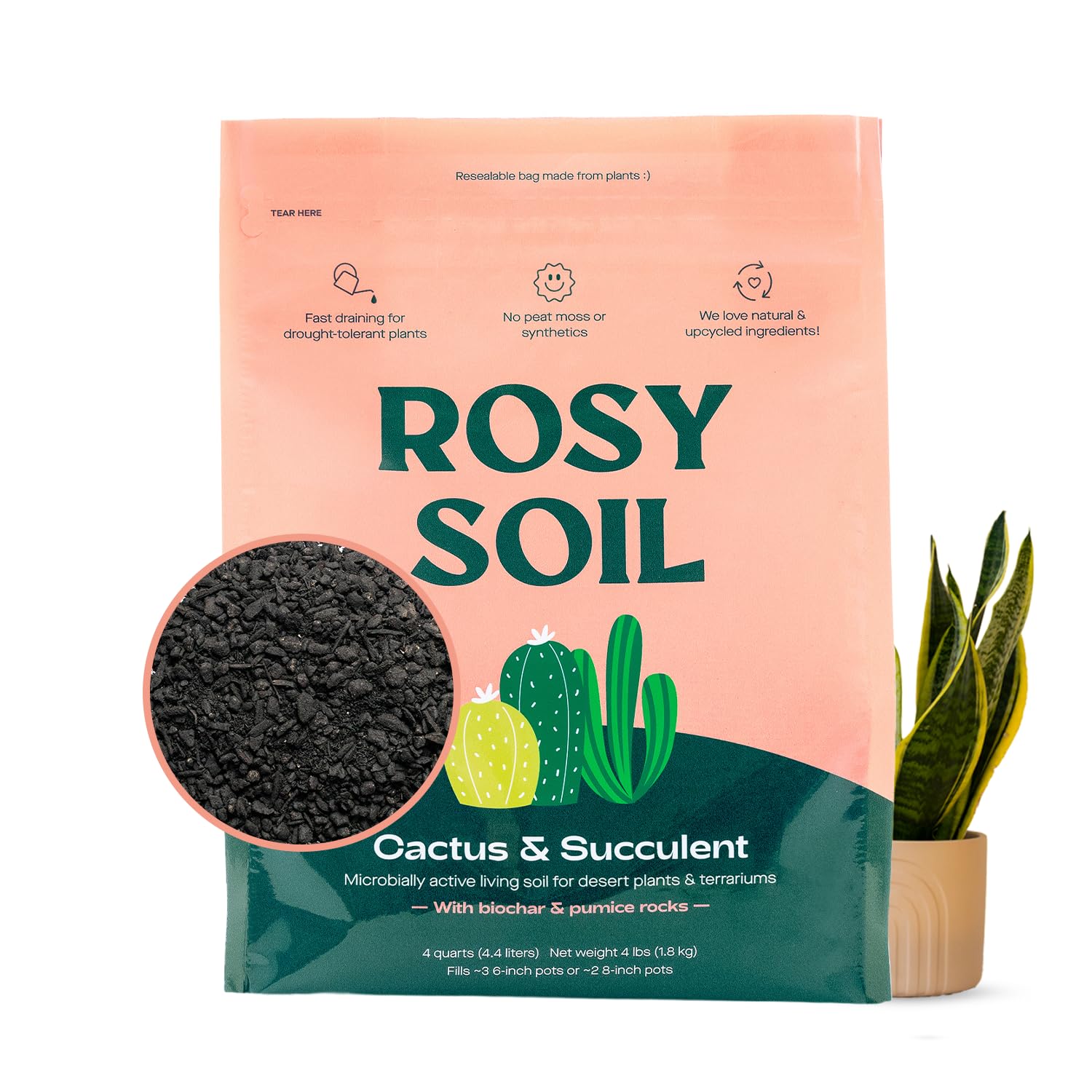
Rosy Soil stands out with its chunky, peat-free formula that remains loose and airy long after the first watering. By substituting peat moss with a mix of coir, bark, and grit, this blend achieves a drainage speed that standard cactus mixes struggle to match. The inclusion of beneficial fungi and microorganisms creates a living soil ecosystem that feeds roots naturally without synthetic fertilizers, making it a top-tier choice for aloe owners who want proactive root health.
The 4-quart resealable bag uses plastic-neutral packaging and is made domestically, appealing to sustainability-minded gardeners. The texture is noticeably chunky, which prevents compaction—a common issue with finer mixes over time. Owners consistently report that their aloe and other succulents show improved vigor and color within weeks of repotting.
While the bag’s resealable closure is weak and may require an external clip, the soil itself is of exceptional quality. Some users add extra perlite or bonsai gravel for very dense pots, but for most aloe vera plants in terracotta containers, this mix works perfectly straight out of the bag.
What works
- Peat-free formula drains faster and stays airy longer than peat-based mixes
- Pre-loaded beneficial microbes promote a thriving root ecosystem without synthetic additives
What doesn’t
- Bag resealable closure is poorly designed and tends to fail
- Some users find it needs additional grit for very moisture-sensitive plants
2. Tinyroots Succulent Soil

Tinyroots delivers a finer-grained formula designed specifically to prevent overwatering. The substrate has a more uniform texture than chunky mixes, which makes it ideal for small succulents like lithops and delicate aloe pups. Its drainage capacity is exceptional—water flows through the pot rapidly, leaving behind only minimal moisture. This is a premium solution for owners who have historically struggled with soggy soil.
The mix contains no large pieces of bark or perlite that can float to the surface, giving it a clean, professional appearance in any pot. The smaller particle size also allows for better root contact, which can be beneficial for newly propagated aloe cuttings trying to establish a foothold. Many reviewers reported seeing blooms on their succulents for the first time after switching to this blend.
The primary drawback is the bag size. At 2.25 quarts, it offers less volume than standard 4-quart options at a higher price point, making it less economical for repotting multiple mature plants. It is best used for small-scale repotting or for mixing into other soils to boost drainage.
What works
- Fine, uniform grain provides excellent drainage and is nearly impossible to overwater
- Ideal for small succulents and shallow root systems
What doesn’t
- Small 2.25-quart bag offers low volume relative to its price
- May require mixing for very large or deep pots that need more structure
3. Hoffman Organic Cactus and Succulent Soil Mix

Hoffman’s organic mix has been a staple for succulent growers for years, and its reputation is well-earned. The blend is lightweight and fast-draining, composed primarily of peat moss and composted materials with perlite and sand for aeration. It arrives ready to use straight from the bag. The pH balance is dialed in for desert and jungle cacti, which perfectly overlaps with the needs of aloe vera.
Users consistently highlight its ability to eliminate fungus gnats and prevent root rot, even in plants that previously struggled in other mixes. The low amount of undecomposed organic matter means it doesn’t break down into sludge over time. It works exceptionally well in breathable pots like terracotta, where it can cycle between wet and dry quickly.
On the downside, a handful of bags have arrived with defective seals, leading to spillage during shipping. While the soil itself performs admirably, some users find it beneficial to add extra perlite for very water-sensitive aloes. For the price and volume, it remains one of the most reliable options for general succulent care.
What works
- Fast-draining, lightweight consistency that effectively prevents root rot
- Low dead organic matter content resists breaking down into compacted sludge
What doesn’t
- Occasional packaging defects result in bag leaks during transit
- Some aloe owners prefer to add more perlite for extra drainage
4. DUSPRO Succulents Soil Potting Mix
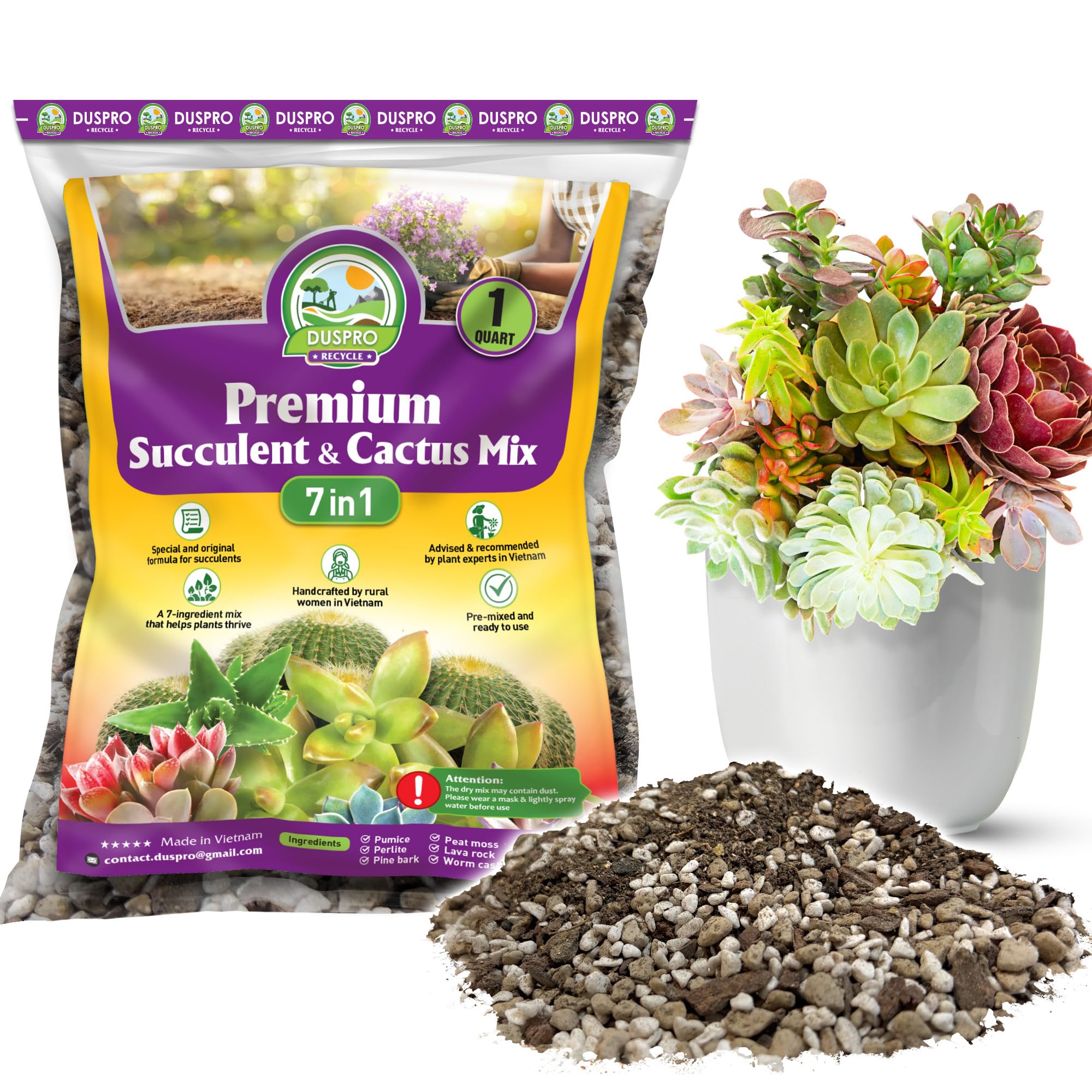
DUSPRO’s 7-in-1 formula is an ingredient-heavy blend that includes perlite, pumice, lava rock, peat moss, pine bark, worm castings, and vermiculite. This combination aims to provide both rapid drainage and sustained nutrition, making it a comprehensive solution for aloe vera and other succulents. The inclusion of worm castings offers a gentle organic fertilizer boost that supports steady growth without chemical burn.
The texture is varied, with visible pieces of pumice and lava rock that create substantial air pockets. Owners note that the mix arrives slightly dusty and may require a quick hand-mixing in the bag to evenly distribute the components. For the volume (1 quart), it fits a single medium pot well, but serious collectors will want the larger 4-quart or 8-quart sizes.
While the ingredient list is impressive, some users feel the product is priced on the higher side for what is still a relatively small volume. The dusty initial state is a minor inconvenience, but after a thorough mix, the soil performs well, keeping succulents healthy and thriving without retaining excess moisture.
What works
- Diverse 7-ingredient blend provides excellent drainage and natural nutrient support
- Includes worm castings for gentle, slow-release organic feeding
What doesn’t
- Components may settle during shipping, requiring a thorough mix before use
- Higher per-quart cost compared to some simpler blends
5. Midwest Hearth Cactus & Succulent Potting Soil Mix
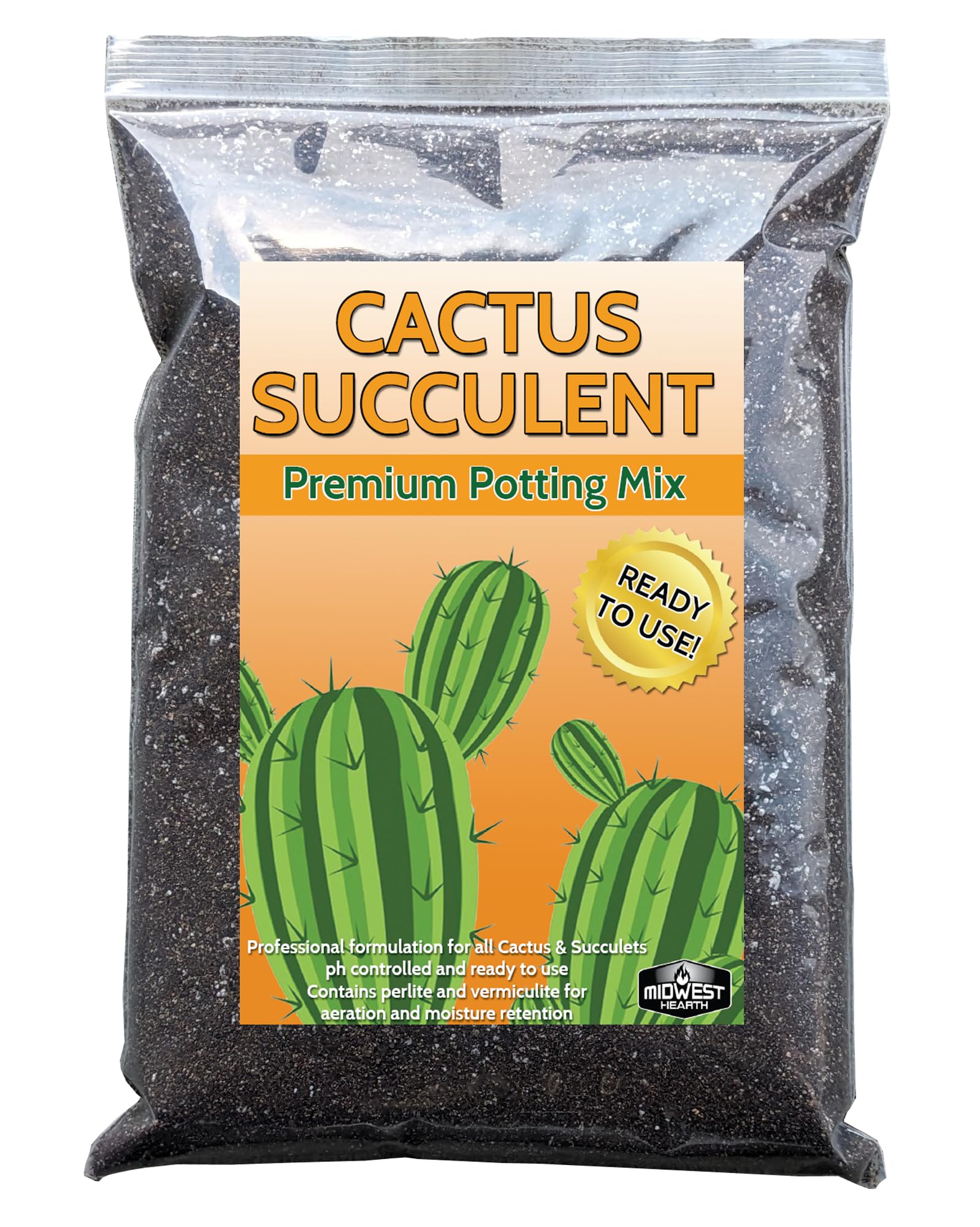
Midwest Hearth offers a straightforward, professionally mixed blend of peat moss, perlite, and vermiculite that is ready to use without any amendments. The formula is pH-balanced specifically for drought-tolerant plants, ensuring aloe roots get the slightly acidic environment they prefer. This mix is designed to hit the sweet spot between drainage and moisture retention, preventing roots from sitting in water while still holding enough moisture between waterings.
The 4-quart resealable bag is practical for filling 2-3 standard pots, and the brand offers an 8-quart size for larger collections. Homeowners appreciate the consistency of the mix, noting that their succulents and cacti show visible improvement after repotting. The texture is noticeably lighter than generic potting soils, which makes lifting and moving pots easier.
The main complaint is that the very dry, fine top layer of the soil can blow away if placed near an open window or in a drafty area. This is a minor annoyance rather than a performance issue, but it is worth noting for indoor gardeners who keep their aloe on windowsills.
What works
- Well-balanced formula provides fast drainage without drying out too quickly
- Ready to use straight from the bag with no mixing or amendments required
What doesn’t
- Dry top particles can blow away easily in drafty locations
- Some users prefer a chunkier texture with more visible aeration material
6. Miracle-Gro Succulent Potting Mix

Miracle-Gro’s entry into the succulent soil category is a widely available, budget-conscious option that uses sphagnum peat moss and processed forest products as its base. It is designed to work for indoor succulents including aloe vera, echeveria, and burro’s tail. The inclusion of Miracle-Gro’s proprietary plant food provides a quick nutrient boost for plants repotted into fresh soil.
This mix is considerably denser and more moisture-retentive than premium options. It works well for aloe vera only if the watering schedule is carefully managed and the pot has excellent drainage. Many experienced succulent owners note that the formula is essentially peat moss with perlite, and they recommend mixing in additional coarse sand or pumice to improve drainage performance for aloe.
On the positive side, it is one of the most affordable and accessible options on the market. For a beginner who is just starting out and has a terracotta pot, this mix can keep an aloe alive and growing. It is best viewed as a functional base that benefits from custom amendments rather than a perfect standalone solution.
What works
- Affordable and widely available, making it easy to purchase locally or online
- Contains starter plant food for immediate nutrient availability
What doesn’t
- High peat content retains more moisture than ideal for aloe vera without amendments
- Not suitable as a standalone mix for aloe; requires added perlite or sand for proper drainage
7. Perfect Plants Organic Snake Plant Soil

Perfect Plants has formulated this mix specifically for snake plants, but its ingredient profile of coconut coir, pine bark chips, perlite, and sand makes it a solid candidate for aloe vera as well. The coco coir base provides excellent water management—it wets easily but drains rapidly, preventing the soggy conditions that lead to root rot. The absence of slow-release fertilizer is a deliberate choice, allowing the gardener to control the feeding schedule.
The texture is well-aerated with visible bark chips and perlite, creating a porous structure that roots can navigate easily. Owners of snake plants and aloe vera alike report that this mix revives struggling plants and promotes new growth. The heavy-duty resealable bag is a nice touch for long-term storage, and it is packaged with care on a family farm in the USA.
The primary drawback is cost. For volume, this mix is expensive compared to standard cactus soils. It is best suited for small to medium repotting projects or for propagating plant pups. For large aloe vera plants requiring significant soil volume, the price per quart may be prohibitive for some gardeners.
What works
- Coco coir base provides superior water management and rapid drainage
- All-natural ingredients with no slow-release fertilizer for complete control over feeding
What doesn’t
- High cost per quart makes it less economical for large repotting projects
- Primarily marketed for snake plants, so aloe growers may need to verify texture preferences
Hardware & Specs Guide
Drainage Agents: Perlite, Pumice & Sand
The most critical component in any cactus soil for aloe vera is the presence of inorganic drainage agents. Perlite is expanded volcanic glass that creates air pockets and improves aeration. Pumice is heavier and holds its structure longer without breaking down. Coarse horticultural sand adds weight and sharpness that prevents compaction. A mix that lists these as primary ingredients will protect aloe roots from rot.
Organic Matter and Nutrient Sources
While aloe is a light feeder, some organic matter is beneficial for root anchorage and moisture buffering. Peat moss, coconut coir, and composted forest products are common but vary widely in their water-holding capacity. Worm castings provide low-risk organic nitrogen and trace minerals without the volatility of chemical fertilizers. Avoid mixes with heavy clay or undecomposed wood chips that can harbor pathogens.
FAQ
Can I use regular potting soil for my aloe vera plant?
What should I do if my cactus soil still seems too wet for aloe?
Final Thoughts: The Verdict
For most gardeners, the cactus soil for aloe vera plants winner is the Rosy Soil Cactus Soil because its peat-free, chunky texture and living microbe content create the ideal root environment with minimal effort. If you want fine-grained precision and overwatering protection for small pots, grab the Tinyroots Succulent Soil. And for a proven, budget-friendly classic that works with a simple amendment, nothing beats the Hoffman Organic Cactus Mix.