
Plumeria roots suffocate in standard garden soil. A cactus mix designed for rapid drainage prevents the root rot that kills more plumeria plants than any other mistake. The right blend mimics the gritty, fast-shedding conditions of a tropical dry season, allowing your plumeria to push out blooms rather than struggle against soggy compaction.
I’m Rikta — the co-founder and writer behind Lawn Gear Lab. I spend my time comparing potting soil formulas, studying horticultural drainage data, and analyzing aggregated owner feedback to find which cactus mixes actually protect subtropical plants like plumeria from moisture stress.
This guide breaks down the fast-draining ingredients, pH range, and texture that make a soil suitable for plumeria roots, and reviews the top bagged options available. Choosing the right cactus mix for plumeria means the difference between a season of fragrant flowers and a pot of rotting stumps.
How To Choose The Best Cactus Mix For Plumeria
Plumeria are heavy feeders with thick, fleshy roots that demand oxygen. A cactus mix that works for a jade plant may hold too much moisture for plumeria. Focus on these four factors to avoid the most common potting failures.
Drainage Speed and Texture
The mix must drain within seconds, not minutes. Look for chunky, gritty components like pumice, calcined clay, or coarse sand. If the bag feels light and fluffy, it likely contains too much peat or coir and will stay wet too long for plumeria. A proper plumeria mix should feel sharp and loose in your hand, not soft and spongy.
Organic Content Without Compaction
Plumeria need organic matter, but fine peat moss compacts into a dense mat over time. Bark fines and worm castings provide nutrients while maintaining pore space. Avoid mixes with “forest humus” or overly screened compost that breaks down into mud. The organic fraction should be coarse, visible, and fibrous.
pH Range Between 6.0 and 6.8
Plumeria prefer a slightly acidic to neutral root zone. Cactus mixes are often pH-adjusted out of the bag. If you’re mixing your own, test the final blend. Acidic peat-heavy soils can drift below 5.5, locking out calcium and magnesium — two nutrients plumeria crave for flower production.
Bag Size and Value Per Quart
Plumeria grow quickly and need repotting every 12-18 months. A 4-quart bag covers one or two small repots. For a collection of multiple plumeria, consider larger bags or multi-packs to get a consistent blend across all containers. Smaller single-use bags are fine for testing a brand before committing to a bulk purchase.
Quick Comparison
On smaller screens, swipe sideways to see the full table.
| Model | Category | Best For | Key Spec | Amazon |
|---|---|---|---|---|
| Soil Sunrise Cactus & Succulent | Premium Gritty Mix | Chunky, no-amendment needed plumeria soil | Pine bark, silica sand, calcined clay, pumice | Amazon |
| Rosy Soil Cactus & Succulent | Organic Peat-Free | Microbe-rich, sustainably formulated mix | 4 Quart resealable bag, made in USA | Amazon |
| Miracle-Gro Cactus, Palm & Citrus | Trusted Brand 3-Pack | Large collections and multi-pot repotting | 8 Quart bags, 3-Pack, enriched with plant food | Amazon |
| Hoffman Organic Cactus & Succulent | Value 2-Pack | Budget-friendly bulk for multiple planters | 10 Quarts total, ready to use | Amazon |
| Tinyroots Succulent Soil | Fine Grain Specialist | Small pots and young plumeria cuttings | 2.25 Quarts, prevents over-watering | Amazon |
| Midwest Hearth Cactus & Succulent | Fast Draining Classic | Ready-to-use single pot repotting | 4 Dry Quarts, pH balanced | Amazon |
| DUSPRO Succulents Soil 7-in-1 | Multi-Ingredient Blend | Nutrient-rich base that needs light mixing | Perlite, pumice, lava rock, worm castings | Amazon |
In‑Depth Reviews
1. Soil Sunrise Cactus and Succulent Potting Mix (8 Quarts)
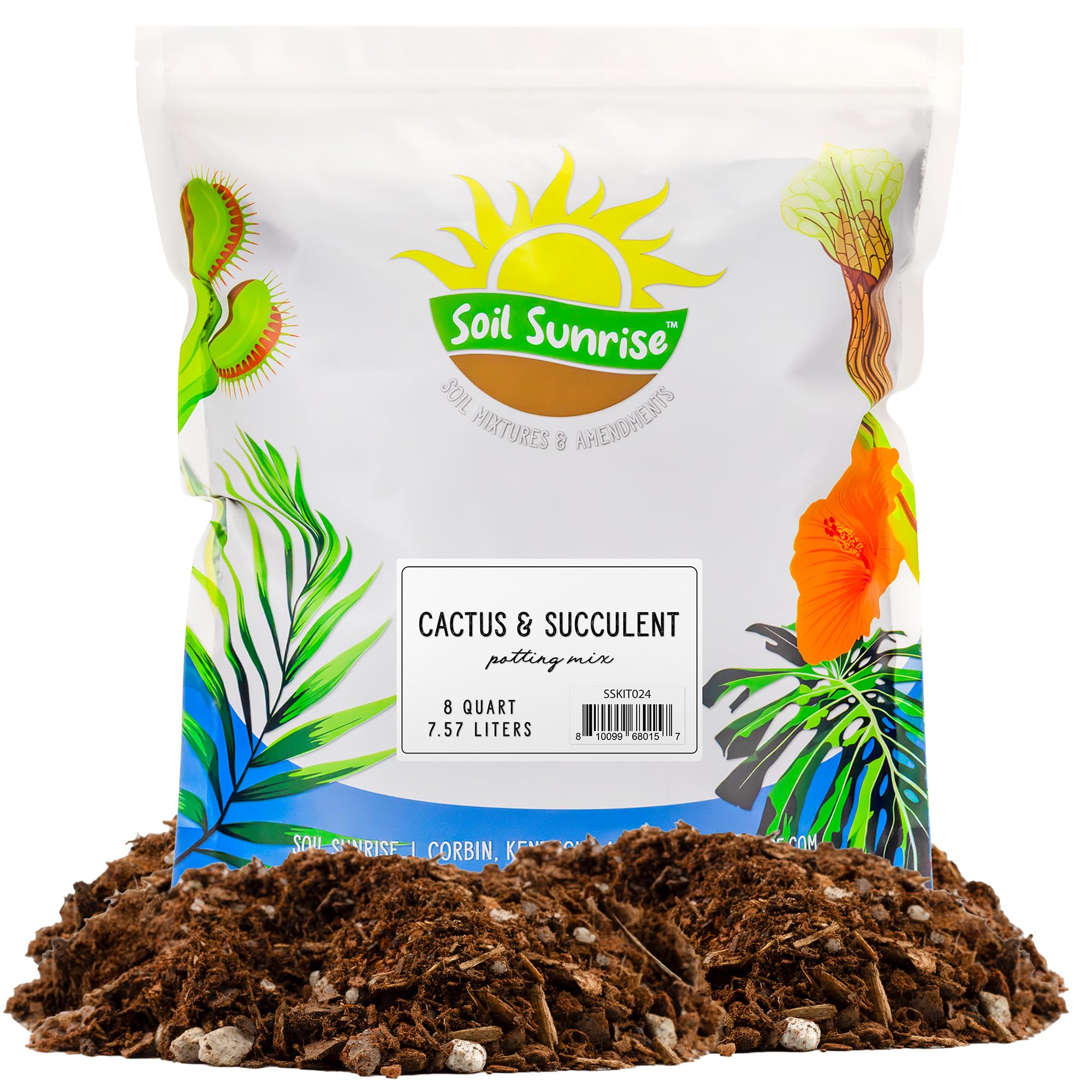
This is the gritty, desert-style mix that plumeria roots respond to immediately. The hand-blended formula combines pine bark, silica sand, calcined clay, and pumice — every ingredient contributes to aeration rather than water retention. Owners report that the soil dries out in about 8 days in standard indoor conditions, which is the right moisture cycle for actively growing plumeria.
The texture is noticeably coarser than mass-market cactus soils. You can see individual grains of sand and chunks of clay throughout the bag, which means water channels through rather than pooling. Users consistently call it a “true cactus soil” that needs no amendments for most drought-tolerant plants, including plumeria.
The 8-quart size is substantial enough to handle a 12-inch pot, making this a practical single-bag solution for one large plumeria or several smaller starts. The mix arrives fresh and has no detectable smell or pest contamination, a common concern with bagged soils stored in warehouses.
What works
- Gritty, chunky texture provides instant drainage
- No added fertilizer means you control the feeding schedule
- Large 8-quart volume covers deep plumeria pots
What doesn’t
- Premium price per quart compared to standard blends
- May need additional worm castings for heavy feeders
2. Rosy Soil Cactus Soil – Organic Succulent Potting Mix (4qt)
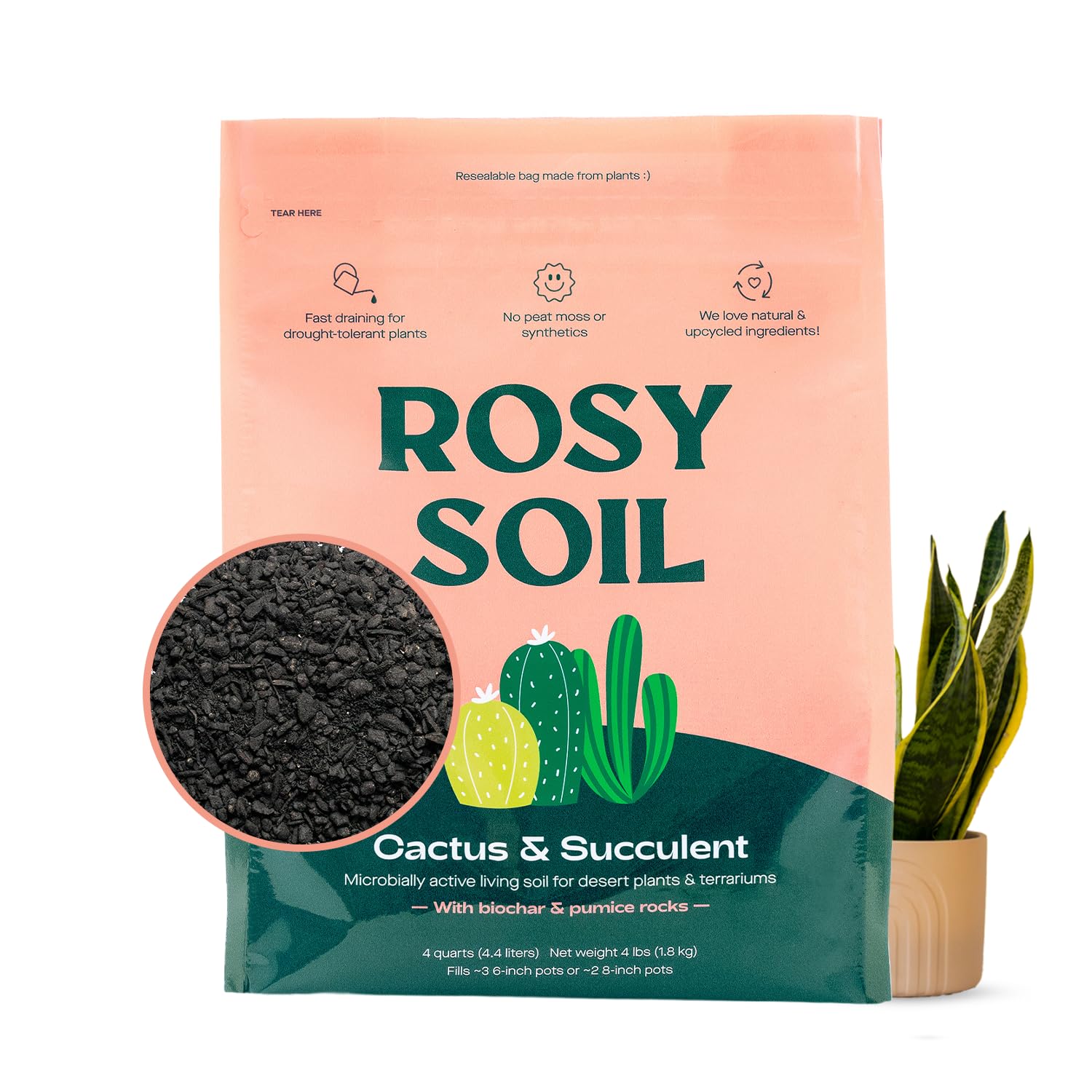
Rosy Soil skips peat moss entirely, which solves two plumeria problems at once: peat compacts over time and holds moisture longer than plumeria roots like. This chunky, living soil comes pre-loaded with beneficial fungi, microorganisms, and worm castings that feed roots without synthetic fertilizers, making it a strong choice for organic growers.
Multiple users note the soil stays loose and airy after months of watering, a direct result of the peat-free, bark-and-pumice structure. The bag is resealable and printed with step-by-step planting instructions, which is helpful if you are new to potting plumeria. At 4 quarts, it fills 2-3 standard pots, though some users mix in extra perlite or bonsai gravel for older plumeria with thick root masses.
Customers who repotted a ZZ plant or aloe into Rosy Soil report thriving growth within weeks. The mix has a dark, clean appearance with no visible pests across multiple bag reports. The only minor friction is that the resealable closure requires care to close fully.
What works
- Peat-free formula prevents compaction and over-retention
- Live microbes and worm castings support root health naturally
- Chunky texture drains fast and stays airy
What doesn’t
- Bag is smaller than the price suggests
- Some users add grit for mature plumeria
3. Miracle-Gro Cactus, Palm and Citrus Potting Mix (8 qt., 3-Pack)

Miracle-Gro’s cactus formula is the most widely available option and works reliably for plumeria when used as directed. The fast-draining formula is enriched with plant food, giving plumeria a nutrient boost right out of the bag. Each 8-quart bag fills two 8-inch containers, and the 3-pack provides enough soil to repot an entire small collection in one session.
Long-time users consistently pair this mix with extra perlite or pumice to fine-tune drainage for heavier feeders like plumeria. The base texture is lighter and fluffier than a gritty desert mix, so while it drains well for standard cacti, plumeria owners often cut it 50/50 with a chunky additive to prevent moisture lingering around the thick roots.
Customer reviews highlight successful blooming on Thanksgiving and Christmas cacti, and one reviewer reported excellent results using a half-cactus, half-potting-soil recipe with added fertilizer. The main trade-off is cost — for the total volume, the per-quart price is higher than some specialist blends.
What works
- Trusted brand with consistent quality across batches
- Pre-fertilized for immediate planting convenience
- 3-pack provides ample volume for large repotting jobs
What doesn’t
- Per-quart cost is high for a mainstream blend
- Most plumeria growers add grit to improve drainage
4. Hoffman 10410 Organic Cactus and Succulent Soil Mix (10 Quarts, 2 Pack)

Hoffman delivers 10 quarts of organic cactus soil across two bags at a price that makes it the most economical option for plumeria owners potting multiple plants. The mix is designed to provide proper drainage and encourage bloom and root development, and it arrives ready to use with no mixing required. The bags are easy to pour and store.
The texture is finer and lighter than the gritty premium blends. Customer feedback indicates the soil retains moisture longer than some plumeria owners prefer, with one reviewer noting it felt “dense like regular potting soil.” Most successful users cut the Hoffman mix with perlite or pumice at roughly a 3:1 ratio to achieve the fast-drying environment plumeria need.
For budget-conscious growers who already have a bag of perlite on hand, this is a practical base that stretches far. The 10-quart total volume handles multiple medium pots, and the organic certification is a plus for those avoiding synthetic inputs.
What works
- Excellent price per quart for organic cactus soil
- Two bags make large repotting projects manageable
- Works well as a base when amended with drainage grit
What doesn’t
- Holds too much moisture for plumeria without amendment
- Texture is denser than chunky desert-specific blends
5. Tinyroots Succulent Soil – Cactus Soil Potting Mix (2.25 Quarts)

Tinyroots uses a finer grain structure than most cactus mixes, which makes it especially useful for tiny pots and young plumeria cuttings that need a snug, stable root environment without large air pockets. The mix drains well enough that customers report it’s “almost impossible to over-water” — a major safety net for growers who tend to be heavy-handed with the watering can.
The smaller particle size means water moves through consistently without channeling, and the absence of large perlite chunks gives the soil a uniform appearance that some find more aesthetically pleasing in small desktop pots. One reviewer specifically called it ideal for lithops, which share the same sensitivity to moisture as plumeria cuttings.
At 2.25 quarts, this bag is best suited for a single small repot or for use as a top-dressing layer. The price per quart sits in the mid-range, but the targeted fine texture makes it a specialist tool rather than a bulk solution for a plumeria collection.
What works
- Fines are ideal for small pots and rooting cuttings
- Almost impossible to over-water in this mix
- Uniform grain prevents water channeling
What doesn’t
- Small bag volume limits use to one or two pots
- Not chunky enough for large, mature plumeria roots
6. Midwest Hearth Cactus & Succulent Potting Soil Mix (4 Dry Quarts)
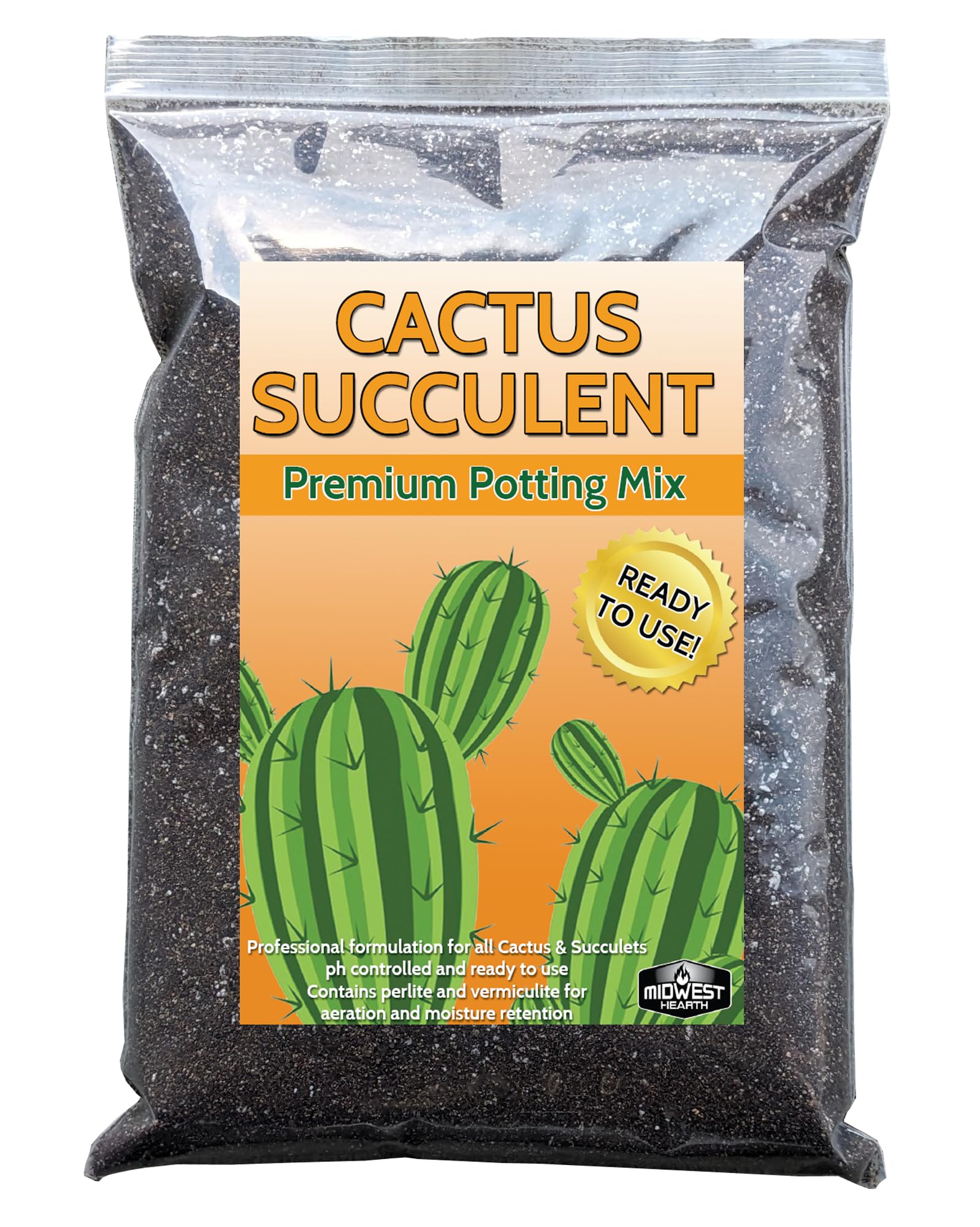
Midwest Hearth offers a straightforward, made-in-USA cactus mix that is pH balanced and ready to use straight from the bag. The blend of peat moss, perlite, and vermiculite delivers the quick drainage desert plants need, and the 4-quart resealable bag is convenient for single-pot repotting. Reviewers consistently call it “good dirt” that makes their succulents happy.
The presence of vermiculite is worth noting — vermiculite holds moisture, which is fine for many cacti but can be problematic for plumeria in humid environments or low-light conditions. Plumeria growers in dry climates may find this mix works well as-is, while those in coastal or rainy areas should consider cutting it with additional perlite to offset the vermiculite’s water retention.
A few users noted that the dry top layer blows around when near a window, so this is best used in a pot with a wide drainage saucer or in a terrarium setting. The low price makes it an affordable starting point for testing whether a cactus mix suits your specific plumeria.
What works
- Affordable entry point for testing cactus soil
- pH balanced specifically for drought-tolerant plants
- Made in the USA with consistent quality
What doesn’t
- Vermiculite content may retain too much moisture for some plumeria
- Dry particles can blow out of open pots near a window
7. DUSPRO Succulents Soil Potting Mix – 7 in 1 (1 Quart)
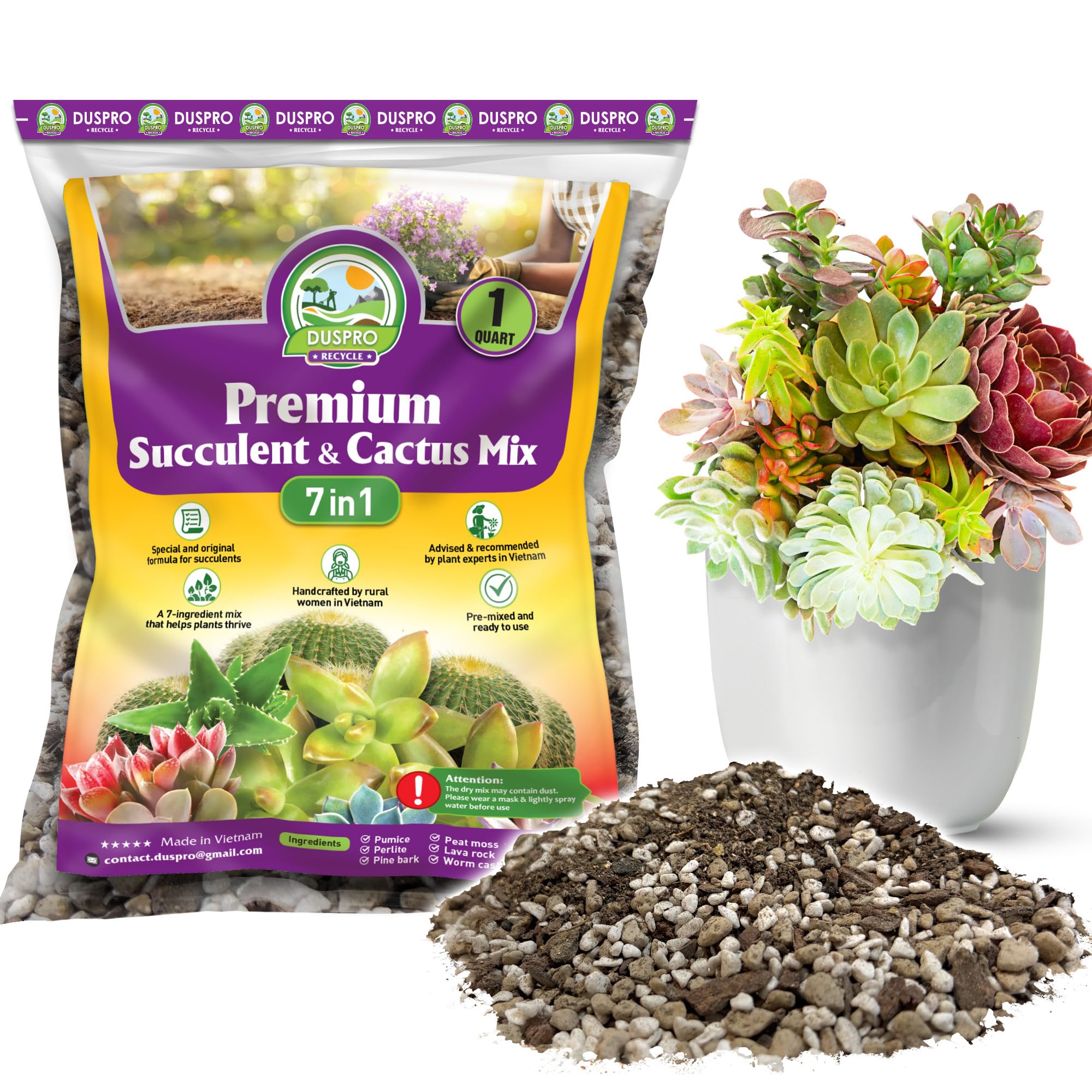
DUSPRO’s 7-in-1 blend brings together perlite, pumice, lava rock, peat moss, pine bark, worm castings, and vermiculite in a nutrient-dense package. The worm castings provide a natural fertility boost that plumeria appreciate during active growth, and the lava rock and pumice create sharp drainage channels that prevent soggy root zones.
The mix arrives not fully homogenized, so you need to dump it out and stir it before potting — a small chore that ensures even distribution of the heavier mineral components. Several users praised the richness of the soil and noted their succulents look healthy and thriving after transplanting. The 1-quart size fills a 6-inch pot, so this is best for small single-plumeria repots.
Some reviewers felt the price was high for the bag volume, but the ingredient diversity is genuinely wider than most budget blends. For a single plumeria cutting or a small plant that needs fresh soil immediately, this offers a complete nutritional package without mixing multiple amendments.
What works
- Seven ingredients provide broad drainage and nutrient support
- Worm castings feed plumeria naturally without chemical fertilizer
- Lava rock and pumice create durable pore space
What doesn’t
- Small 1-quart volume is expensive per quart
- Needs manual mixing before use for even distribution
Hardware & Specs Guide
Drainage Speed
The best cactus mix for plumeria should drain completely within 10-15 seconds after watering. To test, wet a handful of soil and squeeze — it should crumble and release water, not hold a muddy shape. Gritty mixes with visible pumice or calcined clay provide the fastest drainage. Softer mixes with peat or vermiculite will need amendment for plumeria.
Particle Size Distribution
Plumeria roots need both fine particles for root contact and coarse particles for air channels. A mix with particles ranging from 1/16 inch to 1/4 inch is ideal. Uniformly fine soil (all small particles) compacts and suffocates roots. Uniformly coarse soil (all large chunks) leaves roots exposed to dry air pockets. A range of sizes gives the best balance.
Organic Matter Ratio
Between 20% and 40% organic content by volume works for plumeria, with the remainder being mineral grit (pumice, perlite, sand, calcined clay). Too little organic matter and the mix dries out so fast that roots cannot absorb nutrients. Too much organic matter and the mix turns into a moisture sponge that rots roots. Bark fines and worm castings are better than peat moss for long-term structure.
pH Testing Method
Use a calibrated soil pH probe or a liquid test kit. Mix 1 part soil with 2 parts distilled water, stir, wait 30 minutes, then test the slurry. Target a reading between 6.0 and 6.8. If the mix is below 5.5, add a small amount of garden lime. If above 7.5, mix in peat moss or sulfur. Most commercial cactus mixes arrive near 6.5, but it is worth verifying for plumeria.
FAQ
Can I use regular cactus soil for plumeria or do I need a special mix?
How often should I repot plumeria into fresh cactus mix?
Should I add fertilizer to cactus mix for plumeria?
Why does my cactus mix stay wet for a week after watering my plumeria?
Final Thoughts: The Verdict
For most gardeners, the cactus mix for plumeria winner is the Soil Sunrise Cactus and Succulent Potting Mix because its gritty, hand-blended texture drains fast enough for plumeria without needing amendments. If you want a peat-free, microbe-rich organic base, grab the Rosy Soil Cactus and Succulent Mix. And for value-conscious growers repotting multiple plants, the Hoffman Organic Cactus and Succulent 2-Pack stretches your dollar while providing a solid foundation for your own custom blend.