
A bypass pruner that crushes a rose cane rather than slicing it cleanly is the fastest way to invite disease into your prized bushes. The difference between a ragged tear and a smooth, scissor-like cut determines how quickly that wound heals and whether your plant thrives or struggles through the season. That is why choosing the right pair for this specific task matters more than most gardeners realize.
I’m Rikta — the co-founder and writer behind Lawn Gear Lab. I spent dozens of hours studying blade geometry, handle ergonomics, cutting capacities, and corrosion resistance data across the top contenders, then cross-referenced hundreds of verified owner reports to find which models actually deliver on their promises for rose care.
Whether you are deadheading spent blooms or shaping woody canes, you need a tool that fits your hand and leaves a clean wound every time. This guide breaks down the top bypass pruners for roses to help you find the one that matches your hand size, grip strength, and pruning frequency.
How To Choose The Best Bypass Pruners For Roses
Selecting a pruner for roses is not about raw power; it is about precision, cleanliness, and long-term comfort. Rose canes vary in thickness from soft green growth to hardened woody stems, and your tool must handle both without crushing the cambium layer. Focus on these four factors before making your decision.
Blade Type and Cutting Capacity
Only bypass-style blades should be on your short list. Anvil pruners cut by crushing stems against a flat base, which damages the vascular tissue roses rely on to heal. A true bypass design uses two curved blades that slide past each other for a scissor-clean cut. Look for a cutting capacity of at least 20 millimeters, as most mature rose canes fall between 12 and 20 millimeters in diameter. Models claiming a 1-inch capacity give you extra headroom for thicker woody regrowth.
Blade Material and Coating
High-carbon steel is the standard for edge retention, but it requires maintenance to prevent rust. A fluorine or non-stick coating significantly reduces sap adhesion, which is critical when you are cutting through dozens of green stems in a single session. Coated blades also wipe clean more easily and resist corrosion in humid garden environments. Without coating, you must oil the blade after every use to keep it functional.
Handle Ergonomics and Grip
Rose pruning often involves repetitive cuts in tight spaces, and an uncomfortable handle will turn a pleasant task into a painful chore. Aluminum handles keep weight down for extended use, while rubberized or soft PVC grips provide slip resistance and shock absorption. Hand size matters — smaller hands need narrower grips and shorter overall length, while larger hands benefit from wider, contoured handles. Some premium models offer adjustable grip widths to accommodate different hand sizes.
Locking Mechanism and Maintenance
A reliable safety lock prevents accidental blade exposure when reaching into a tool bag or carrying pruners between bushes. Look for a single-thumb latch that engages securely but does not require two hands to release. Replaceable blades and pivot bolts extend the life of your pruner significantly, especially if you prune frequently or cut through dirty canes that accelerate dulling.
Quick Comparison
On smaller screens, swipe sideways to see the full table.
| Model | Category | Best For | Key Spec | Amazon |
|---|---|---|---|---|
| Original LÖWE 9.104 | Premium | Large hands, right-handed precision | 22 mm cutting cap, adjustable grip | Amazon |
| Felco F5 | Premium | All-steel durability, replaceable parts | 1-inch cut, 8.9 in length | Amazon |
| Original LÖWE 14.104 | Mid-Range | Medium-large hands, precise cuts | 22 mm cut, sliding lacquer coating | Amazon |
| Corona BP 6250 | Mid-Range | Heavy pruning, replaceable blade | 1-inch cut, forged aluminum handle | Amazon |
| TONMA JP | Mid-Range | One-inch heavy cuts, wood grain grip | SK5 steel, 25 mm cut capacity | Amazon |
| Saboten 7.9 in | Entry-Level | Small hands, detailed rose work | 20 mm cut, fluorine coated steel | Amazon |
| ARS HP-130DX | Budget | Small hands, floral snips | 2-inch blade, 7-inch overall length | Amazon |
In‑Depth Reviews
1. Original LÖWE 9 Bypass Pruning Shears 9.104

The Original LÖWE 9.104 is the gold standard for rose pruning when your hand size leans toward medium or large. Its outward-curved soft plastic grips follow the natural resting position of your palm, which reduces strain during long sessions of deadheading and shaping. The carbon steel blades feature a non-stick coating that resists sap adhesion, and the main cutting blade can be replaced with a single nut — no need to disassemble the entire tool for a refresh.
With a cutting capacity of 22 millimeters, this pruner handles the thickest woody rose canes without hesitation. The secondary blade works in tandem to ensure the bypass action stays tight and accurate, leaving a wound that heals rapidly. At 8.27 inches long and 8.64 ounces, the 9.104 feels substantial without being cumbersome, and the safety latch operates with one hand for quick transitions between cuts.
German engineering is evident in the sliding lacquer corrosion protection and the precision-ground edge that holds its sharpness through hundreds of cuts. Right-handed users will appreciate the natural bias in the grip contour, though ambidextrous users should test the fit before committing. Florists and serious rosarians consistently report years of trouble-free use, making this a purchase you will not revisit annually.
What works
- Adjustable grip width accommodates different hand sizes perfectly
- Non-stick coated blades resist sap buildup and clean easily
- Replaceable blade system extends tool life without full replacement
What doesn’t
- Right-hand bias may not suit left-handed users
- Premium price point exceeds what casual gardeners want to spend
2. Felco F5 Pruning Shears
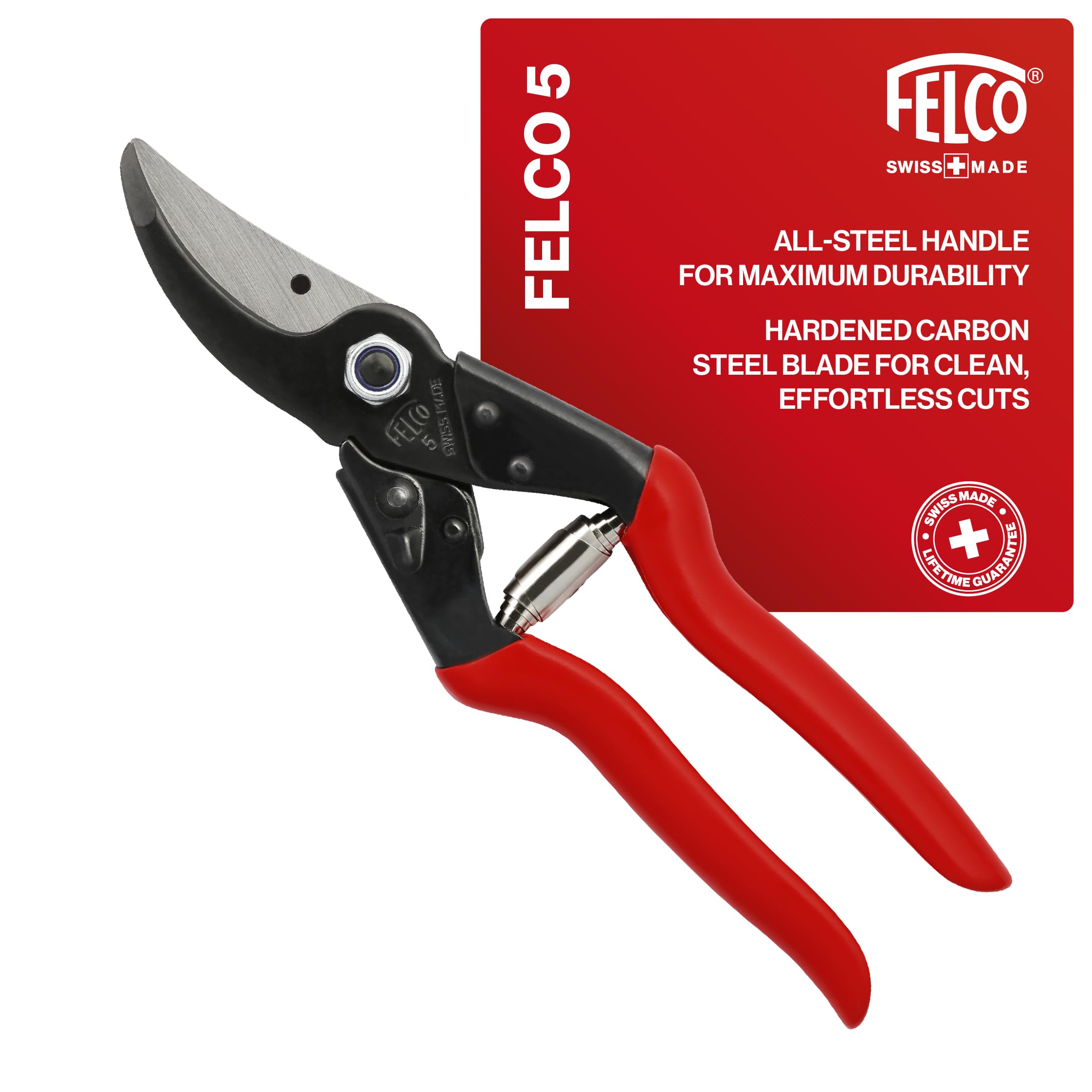
Felco has built a reputation on Swiss precision, and the F5 model justifies that reputation with an all-steel handle construction that feels indestructible. Unlike aluminum-handled competitors, the F5 uses heavy-duty steel throughout, which adds weight but delivers unmatched leverage when cutting through dense, woody rose canes up to 1 inch thick. The rubberized phalate grips provide a secure hold even when your hands are sweaty or gloved.
Every component of the Felco F5 is replaceable — blade, spring, bolt, and handles — so you can maintain this pruner for decades rather than replacing it every few seasons. The carbon steel blade arrives razor-sharp out of the box and maintains that edge through repeated use, though regular oiling is necessary to prevent rust on the uncoated metal. At 8.9 inches long, it offers a comfortable reach for both close-up deadheading and deeper cuts into the bush.
One-handed operation is smooth thanks to the well-calibrated spring action and the thumb-operated safety lock. Owners consistently rate the F5 as the best pruner they have ever owned, with many reporting that it outperforms big-box store alternatives after a single season. The trade-off is heft — users with smaller hands or arthritis may find the steel handles fatiguing during extended sessions compared to aluminum models.
What works
- Fully replaceable parts make this a tool you can keep for a lifetime
- Steel handles deliver exceptional leverage for thick woody canes
- Smooth spring action allows effortless one-handed operation
What doesn’t
- Heavier than aluminum-handled alternatives for extended sessions
- Blade requires frequent oiling to resist rust in humid conditions
3. Original LÖWE Bypass Pruner 14.104

The LÖWE 14.104 delivers German precision in a package that weighs just 6.35 ounces, making it one of the lightest bypass pruners capable of cutting rose canes up to 22 millimeters in diameter. The sliding lacquer coating on the carbon steel blades reduces friction during the cut and provides corrosion protection that holds up well in damp garden conditions. This coating also helps sap slide off the blade surface, so you spend less time wiping and more time pruning.
At 7.48 inches long, the 14.104 is compact enough to maneuver into tight spaces between rose canes and dense shrubbery. The standard handle is designed for medium to large hands, and the bright orange plastic grips make the tool easy to spot if you set it down among foliage. The one-hand safety lock engages positively and does not require pinching to release, which is helpful when you are holding a cut cane with the other hand.
Owners consistently praise the clean, non-crushing cuts this pruner delivers on both green growth and hardened wood. Florists and retired professionals note that the lightweight design reduces hand strain during all-day trimming sessions. The sliding lacquer will wear over heavy use, but the underlying steel remains sharp through many seasons before requiring a touch-up.
What works
- Extremely lightweight design minimizes hand fatigue during long sessions
- Sliding lacquer coating reduces friction and provides rust resistance
- Compact length fits into tight spots within rose bushes
What doesn’t
- Coating can wear off on heavily used blades over multiple seasons
- Grip size may feel narrow for users with very large hands
4. Corona Tools BP 6250 MAXFORGED Aluminum Bypass Pruner
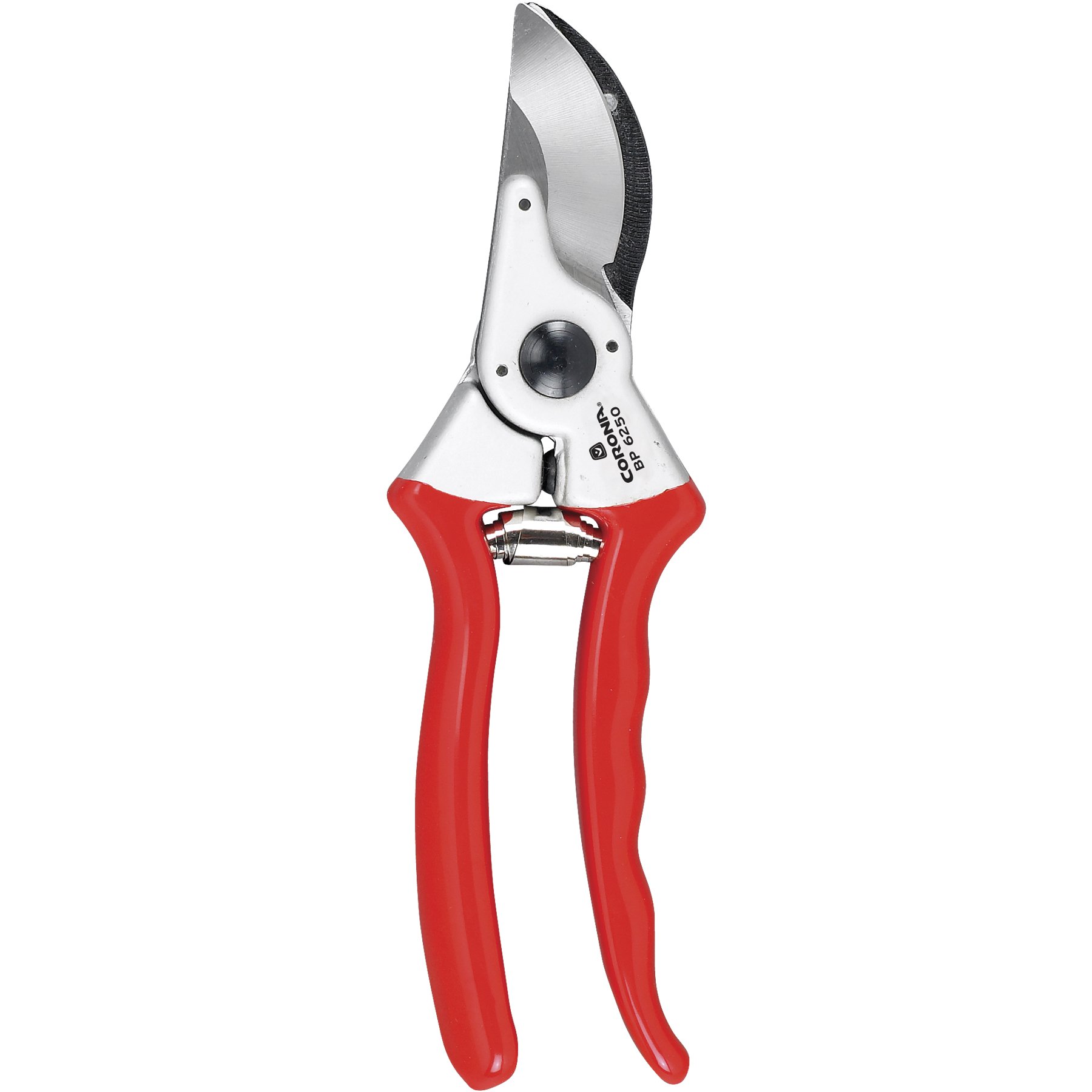
The Corona BP 6250 punches well above its price tier by combining a 1-inch cutting capacity with lightweight forged aluminum handles that reduce fatigue during heavy pruning. The precision-honed steel blade delivers scissor-clean cuts on live branches and woody stems, and the replaceable blade design means you can restore peak performance without buying a whole new tool. The self-cleaning sap groove channels sticky residue away from the pivot point, keeping the action smooth.
Ergonomic non-slip red grips provide a secure hold even in wet conditions, and the bright color makes the pruner easy to spot among mulch and grass. The built-in thumb lock engages simply and keeps the blades closed during transport or storage. At 10.8 inches long and 9.6 ounces, the BP 6250 offers good reach for deeper cuts while remaining light enough for detailed rose work.
Customer feedback consistently compares the BP 6250 favorably against premium brands like Felco, noting comparable performance at a lower price point. The carbon steel blade holds its edge well but requires thorough cleaning and oiling after each use to prevent rust — a standard requirement for uncoated high-carbon steel. The wire cutting notch adds utility for general garden maintenance beyond rose pruning.
What works
- 1-inch cutting capacity handles the thickest rose canes with ease
- Replaceable blade and sap groove extend the tool’s usable life
- Lightweight aluminum handles reduce arm fatigue during extended use
What doesn’t
- Blade needs oiling after every session to avoid rust formation
- No non-stick coating means sap buildup requires regular wiping
5. TONMA Bypass Pruning Shears
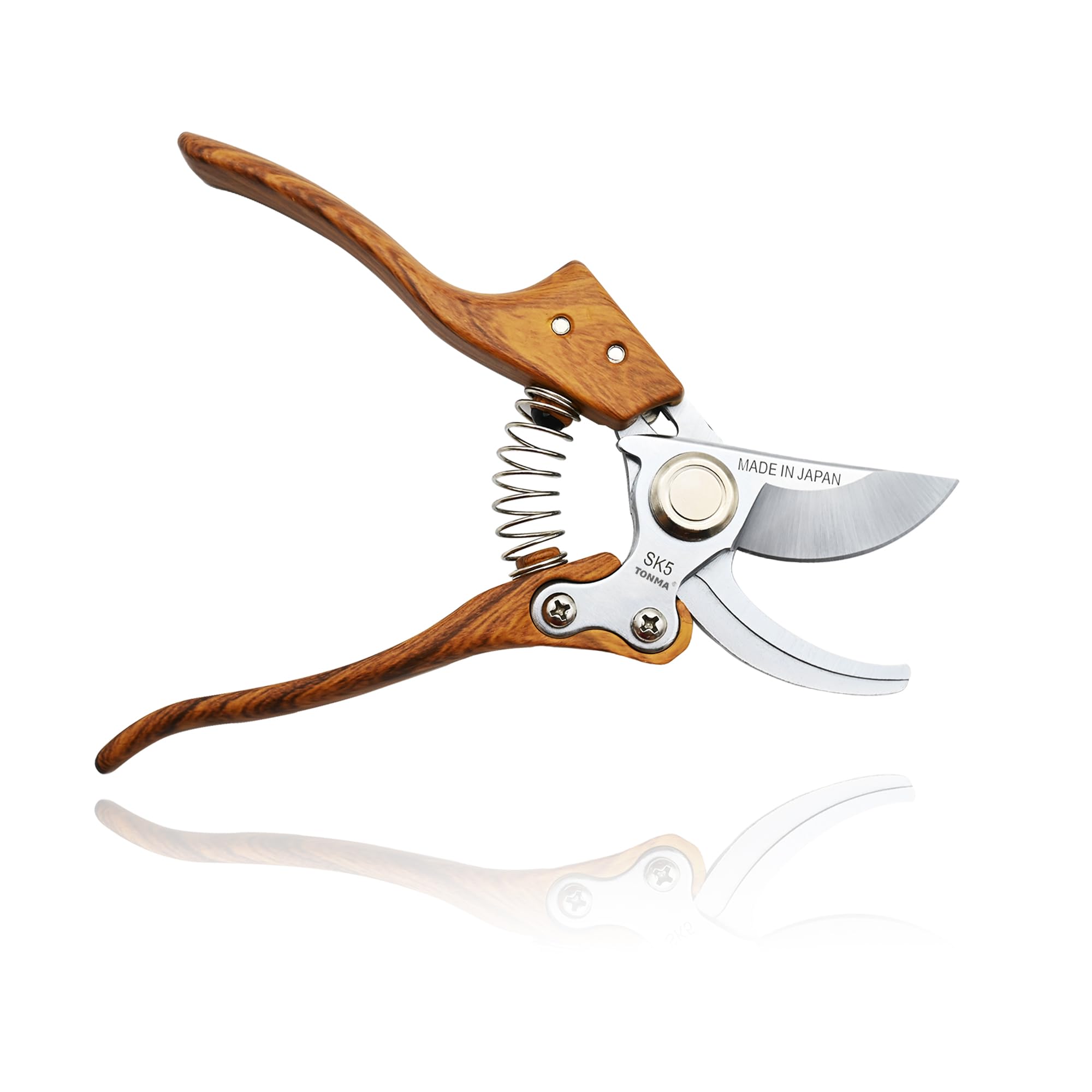
The TONMA JP shears bring Japanese SK5 steel quality to a price that undercuts most premium competitors. SK5 is a high-carbon steel known for excellent edge retention and toughness, allowing this pruner to cut branches up to 1 inch in diameter without excessive force. The imitation wood grain aluminum alloy handles look distinctive and provide a comfortable, non-slip grip that reduces hand pain during prolonged trimming sessions.
One standout feature is the improved safety lock design with a tight clip that stays engaged during use or storage. The lock does not slide accidentally, which is a common frustration with cheaper pruners. At 8 inches overall, the TONMA is well-balanced and feels nimble enough for detailed rose work while still delivering the leverage needed for thicker canes. The round-point blade style works well for reaching into dense growth without snagging on adjacent stems.
Some owners report that the pivot action feels tight out of the box and requires a small adjustment with silicone lubricant to open fully. The jaws also open slightly less than some competing models, which can limit your cut angle on very wide canes. The included lifetime service policy provides peace of mind, though you will likely only need it if the pivot requires recalibration over time.
What works
- Japanese SK5 steel delivers exceptional edge retention and sharpness
- Aluminum alloy handles are lightweight yet strong for heavy cuts
- Safety lock stays secure and does not disengage accidentally
What doesn’t
- Pivot may arrive too tight and require adjustment out of the box
- Jaw opening is narrower than some competing models
6. Saboten Japanese Bypass Pruning Shears 7.9 in

The Saboten 7.9-inch pruner is purpose-built for gardeners with smaller hands who need precise control around delicate rose bushes. Its fluorine-coated blade is the defining feature — the coating resists sap and rust, so cuts stay smooth and cleanup takes seconds with just a wipe. The 20-millimeter cutting capacity is sufficient for the vast majority of rose canes, and the heat-treated carbon steel holds a sharp edge through many sessions.
At just 0.24 kilograms, the Saboten is exceptionally light and maneuverable, making it ideal for detailed work like deadheading spent blooms or shaping bonsai roses. The rubber grip provides secure purchase even when your hands are damp, and the Duracon safety lock keeps the blade closed for safe storage in an apron or tool bag. The strong riveted joint ensures the blades meet cleanly for reliable cuts every time.
Florists and home gardeners alike report that these shears transform trimming from a chore into an enjoyable task. The smaller size does limit leverage on very thick woody canes — anything approaching 20 millimeters will require more hand force than a longer-handled model. Owners note that the fluorine coating significantly reduces the sticky residue problem that plagues uncoated pruners.
What works
- Fluorine coating minimizes sap buildup and simplifies wiping clean
- Compact size and light weight suit small hands and detailed work
- Rust-resistant coating reduces maintenance in humid environments
What doesn’t
- Small size limits leverage on thick woody canes near capacity
- Not ideal for users with large hands who prefer a longer handle
7. ARS HP-130DX 7-Inch Light Pruner

The ARS HP-130DX is a compact, no-fuss pruner that excels at cutting flowers, green growth, and thin rose canes. Its hard chrome-plated high-carbon steel blade arrives extremely sharp and maintains that edge through frequent use, though the small 2-inch blade limits its capacity to branches under 0.5 inches thick. The soft PVC handles are designed to fit small hands comfortably, and the 7-inch overall length makes it easy to carry in a pocket or floral apron.
This pruner is a favorite among florists who need a lightweight tool for processing cut flowers all day. The single-bevel edge produces clean cuts on soft stems, and the simple lock mechanism engages easily without interfering with the cutting rhythm. At this entry-level price point, the ARS offers a path into quality Japanese steel without the investment of larger pruners.
The main limitation is the cutting capacity — thicker rose canes will require multiple attempts or cause the blades to bind. This model is best used for deadheading, light shaping, and cutting blooms for arrangements rather than heavy structural pruning. Some owners treat the HP-130DX as a consumable item, replacing it every 5-6 months because the small blade is difficult to sharpen effectively at home.
What works
- Extremely sharp out of the box for precise floral and green growth cuts
- Lightweight and compact enough for pocket or apron carry
- Comfortable grip designed specifically for smaller hands
What doesn’t
- Cutting capacity limited to thin stems under 0.5 inches
- Small blade is difficult to resharpen; often treated as disposable
Hardware & Specs Guide
Cutting Capacity in Millimeters
This is the single most important spec for rose pruners. Most rose canes are between 12 mm and 20 mm in diameter, so a pruner with a 20 mm capacity handles routine deadheading and shaping. If you prune older, woody growth or species with thick canes, step up to a model with 22 mm to 25 mm capacity. Exceeding the rated capacity can bend the blade or cause the bypass action to split, leaving a ragged cut that invites disease.
Blade Coatings and Corrosion Resistance
Uncoated high-carbon steel delivers the sharpest edge but requires diligent maintenance. Fluorine and non-stick coatings serve two purposes: they reduce sap adhesion so cuts remain clean, and they provide a barrier against rust in humid environments. Sliding lacquer coatings also reduce friction during the cut, requiring less hand force. If you prune daily or live in a humid climate, a coated blade will save considerable cleanup time and extend the effective life of the tool between sharpenings.
FAQ
Why should I choose bypass pruners over anvil pruners for roses?
What cutting capacity do I need for typical rose canes?
How do I maintain the blade to prevent rust on uncoated steel?
Final Thoughts: The Verdict
For most gardeners, the bypass pruners for roses winner is the Original LÖWE 9.104 because its adjustable grip width, non-stick coated carbon steel blades, and 22 mm cutting capacity deliver both precision and comfort for medium to large hands. If you want a lighter, more compact tool for detailed deadheading and smaller hands, grab the Saboten 7.9 in. And for heavy pruning of thick woody canes where leverage matters most, nothing beats the Felco F5 with its all-steel construction and fully replaceable parts.