
Specs are compiled from manufacturer listings and verified buyer reviews and can change over time — please confirm the key details on the product page before buying.
Planting bulbs is supposed to be about future flowers, not a sore back and muddy knees. The right tool changes that: you stand upright, step on a pedal, twist, and a perfect hole appears. The hard part is picking which planter actually cuts through tough soil without bending or jamming.
I’m Rikta — the founder and writer behind Lawn Gear Lab. This guide is built by comparing the manufacturers’ published specifications and the patterns across verified customer reviews, so you get each pick’s real strengths and trade-offs instead of marketing spin.
Whether you are planting a single row of tulips or turning a whole flower bed, the right bulb planter saves your back, your knees, and your patience — and this guide matches the tool to the job.
Quick Picks
- Dolibest Bulb Planter Tool w/Soft Grip — Best Overall
- Altdorff Bulb Planter Tool, Sod Plugger with Long Handle Serrated Base — 5-in-1 Back Saver
- Colwelt Bulb Planter Tool Long Handle, Serrated Base Gardening Bulb Transplanter — Standing Comfort
- Fiskars Bulb Planter, Spring-Loaded Handle for Easy Bulb Planting — Handy Classic
- Eadwiella Bulb Planter Tool with 6 Inch Depth Measurement — Heirloom Quality
- Berry&Bird 12″ Garden Bulb Transplanter Tool — Light & Traditional
- Berry&Bird Garden Bulb Planter with 4 Inches Depth Mark — Depth-Marked Hand Tool
How To Choose The Best Bulb Planter
Not all bulb planters work the same way. Some are designed for quick, kneeling work in soft flower beds, while others are built to punch through hard, packed soil from a standing position. The first decision is how much ground you are covering and what your soil feels like.
Handle Length: Standing vs. Kneeling
A long handle (around 37 to 39 inches) lets you work entirely upright — you step on a pedal, the tool sinks in, and you never bend. That saves your back on large planting jobs. Short handles (around 11 to 12 inches) are lighter and more portable, but they force you to kneel or crouch. For a big bed of daffodils, the standing style pays off fast.
Serrated Base and Steel Core
The cutting edge is what meets the ground. A deeply serrated or notched edge bites into compacted soil, roots, and light stones much better than a smooth rim. Stainless steel or powder-coated steel gives you rust resistance and longevity. A steel core cutter with a narrow leading edge helps the soil plug fall out cleanly instead of sticking inside the cylinder.
Auto-Dump and Ejection
Nothing slows you down like a jammed soil plug. Some planters have a spring-loaded handle that releases the contents. Others use a raised pedal that pushes the soil core out automatically. The best designs eject the plug without you having to tap, shake, or dig it out by hand, keeping the rhythm of digging fast and smooth.
Depth Marks and Adjustability
Bulbs need to sit at a specific depth — too shallow and they freeze, too deep and they struggle to sprout. Look for gradation marks etched into the side of the cylinder or an adjustable depth spacer. A tool that lets you set the depth between 3 and 6 inches gives you flexibility across different bulb types without guessing.
Quick Comparison
| Model | Best For | Handle Type | Cutting Diameter | Weight | Amazon |
|---|---|---|---|---|---|
| Dolibest Bulb Planter | Heavy-Duty, Auto-Dump | Long (Rubber Grip) | 3″ | 3.02 kg | Amazon |
| Altdorff Bulb Planter | 5-in-1 Versatility | Long (T-Handle) | 3.5″ | 3 lbs | Amazon |
| Colwelt Bulb Planter | Standing Comfort | Long (Soft Grip) | 3.5″ | 2.99 lbs | Amazon |
| Fiskars Bulb Planter | Quick Hand Planting | Short (Spring-Loaded) | 2.25″ | — | Amazon |
| Eadwiella Bulb Planter | Lifetime Heirloom Tool | Short (Ash Handle) | — | 1.41 lbs | Amazon |
| Berry&Bird 12″ Planter | Lightweight Hand Digging | Short (Wooden Handle) | — | 6.3 oz | Amazon |
| Berry&Bird Short Handle | Depth-Marked Planting | Short (Wooden Handle) | — | 6.3 oz | Amazon |
In‑Depth Reviews
1. Dolibest Bulb Planter Tool w/Soft Grip
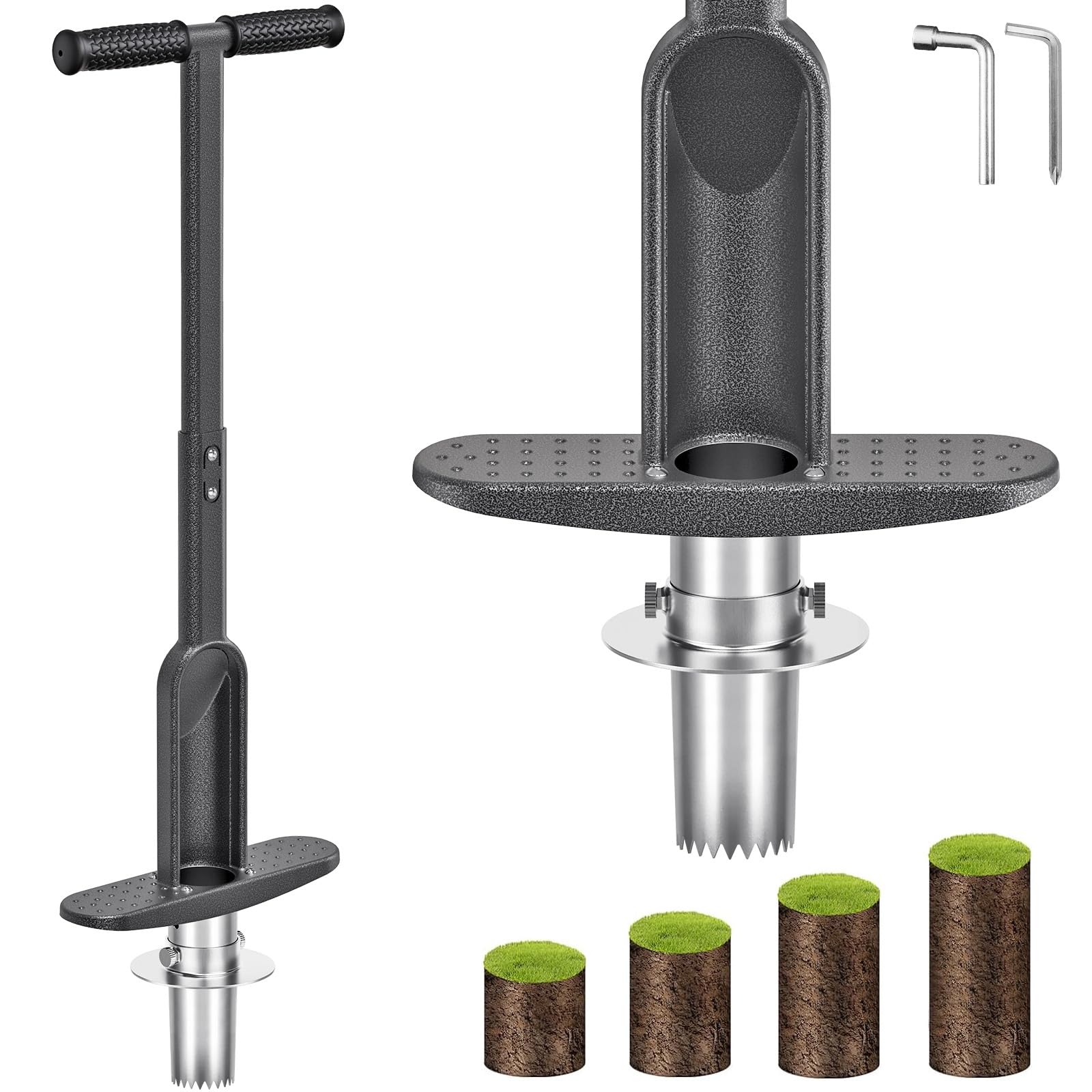
Auto-dumping soil keeps the rhythm fast without bending to clear a jam.
This is the tool that makes you wonder why you ever knelt in the dirt. The Dolibest Bulb Planter uses a center auto-dump design that pushes the soil plug out as you dig, so you can sink hole after hole without stopping to tap the cylinder. It cuts a 3-inch diameter hole, and the sharp stainless steel serrated bottom — made of 304 stainless steel — bites through dry soil easily. One reviewer noted planting 100 bulbs in one hour versus the usual four or five, saying the soil expelled cleanly from the cone.
You can set the digging depth anywhere from 3 to 6 inches using the central spacer mechanism — just loosen the ergonomic knob, slide the spacer, and tighten it. That means one tool handles shallow crocus bulbs and deeper tulip bulbs without guesswork. The long handle has a soft rubberized grip that reduces hand fatigue, and the whole thing is made of reinforced steel with a rust-resistant coating for year-round use in wet or snowy seasons. Unlike the lighter hand planters below, this one is built for heavy continuous use.
Designed for Speed
- Auto-dump center design keeps soil from jamming inside the cylinder
- Adjustable depth from 3 to 6 inches with a simple knob and spacer
- Stainless steel serrated bottom cuts through dry soil without effort
- Soft rubberized grip reduces hand fatigue on large jobs
One Limitation
- One buyer mentioned it works great but is really only good for 3-inch depth settings
- At 3.02 kg it is noticeably heavier than a short-handled planter
Reach for this if: you have a big planting project and want a standing tool that auto-ejects soil so you never break stride.
Look elsewhere if: you only plant a few bulbs in soft, loose soil — a lighter hand tool costs less and stores smaller.
2. Altdorff Bulb Planter Tool, Sod Plugger with Long Handle Serrated Base

A 5-in-1 design that also pulls sod plugs and takes soil samples standing up.
If you want one standing tool that does more than plant bulbs, the Altdorff Bulb Planter is built for versatility. It works as a bulb planter, sod plugger, grass plugger, transplanter, and hole digger — so you are not hauling multiple tools around the yard. It is 39 inches tall and 11 inches wide, with a long T-handle that keeps you upright. You step down the middle pedal to control the digging depth, then step on the right pedal to release the soil. It digs a 3.5-inch diameter hole, which is a good fit for most bulbs and small transplants.
The body is made of iron with a powder-coated surface that resists rust, and it weighs 3 pounds. Two rows of bolts add stability. Compared to the Dolibest above, the Altdorff has a wider hole (3.5 inches vs 3 inches) and the dual-pedal system gives you separate controls for digging and ejecting. Buyers report it makes quick work of both bulbs and grass plugs. The trade-off is it does not have an adjustable depth spacer, so you control depth by feel on the middle pedal.
Multi-Tool Advantage
- Five functions in one tool: bulb planter, sod plugger, grass plugger, transplanter, hole digger
- Two separate pedals — one to push in, one to eject the soil core
- 39-inch height and long T-handlet saves your back and knees entirely
- Iron construction with powder coating for rust resistance
Depth Setup
- No adjustable depth spacer — you control depth by how hard you step on the middle pedal
- At 3 pounds it is heavier than a short-handle model for quick carry
Best for: the gardener who also patches the lawn and wants one heavy-duty tool for both jobs.
skip it if: you only need a simple bulb planter and prefer adjustable depth settings.
3. Colwelt Bulb Planter Tool Long Handle, Serrated Base Gardening Bulb Transplanter

A serrated base and two-pedal system make standing work feel easy.
The Colwelt Bulb Planter focuses on making each step comfortable and efficient from a standing position. It has a serrated base that helps the cylinder penetrate stony soil, and the two-pedal design gives you a dedicated foot pedal for pushing down with your body weight and a raised pedal that pushes the soil core out automatically. The digging cylinder is 3.5 inches in diameter and can reach a maximum depth of about 4.7 inches — a good fit for most tulip, iris, and daffodil bulbs.
The handle is a soft T-style grip that adds comfort, and the whole tool is made of powder-coated steel for rust resistance. It weighs 2.99 pounds and measures 37 x 11 x 3.5 inches. While it does not have an adjustable depth spacer like the Dolibest, the two-pedal ejection system makes it faster than models where you have to tap the cylinder to release the soil. Owners mention it works best when the soil is not overly dry or soaked, so time your planting after a light rain.
Pedal Powered
- Two-pedal design: one for downward force and one for soil ejection
- Serrated base cuts through stony soil better than a smooth edge
- Soft T-style grip handle adds comfort during long sessions
- Powder-coated steel construction resists rust over seasons
Know Before Planting
- Max depth of about 4.7 inches is fine for bulbs but shallow for deep transplants
- Not ideal in dry or overly saturated soil, per the manufacturer
Pick this for: a comfortable standing planter with a soft grip and reliable ejection — great for medium-to-large bulb beds.
Choose something else if: you need adjustable depth control or plan to work in extreme soil conditions.
4. Fiskars Bulb Planter, Spring-Loaded Handle for Easy Bulb Planting

A spring-loaded handle that drops the soil plug without tapping or shaking.
The Fiskars Bulb Planter is a hand-held tool that punches above its size. It has a spring-loaded handle — you squeeze to close the jaws, push into the soil, then release to drop the plug. Gradation marks on the side let you measure depth for accurate planting, and the 2.25-inch diameter head is ideal for small to medium bulbs like tulips and daffodils. It is made of rust-resistant steel, and Fiskars backs it with a lifetime warranty.
Customers note it works well for a full afternoon of planting. One owner reported: “I used the item to plant about 40 bulbs in one afternoon.” They mentioned a small learning curve about when to squeeze and when to let go, but after a few bulbs it became easy. Another reviewer pointed out that it is really intended for well-prepared soil — hitting rocks or clay may stress the mechanism. It is the most portable option in this list, fitting easily into a tool bucket or apron pocket, unlike the 39-inch standing models above.
Fast for Small Jobs
- Spring-loaded handle releases the soil plug without bending
- Gradation marks on the side help you plant at the right depth every time
- Rust-resistant steel with a lifetime warranty from Fiskars
- Compact and portable — fits in a tool bucket or apron
Soil Limits
- Several reviewers warn it struggles in rocky or clay-heavy soil
- Some users feel the thin design may not hold up well in hard ground
- One reviewer planted 40 bulbs in an afternoon and noted it was fine for soft soil
Grab this for: quick, kneeling bulb planting in prepared garden beds where you want a spring-loaded release.
Pass on it if: your soil is full of rocks or heavy clay, or you only want a standing planter.
5. Eadwiella Bulb Planter Tool with 6 Inch Depth Measurement

A mid-length hand planter with a serrated core that slices through packed ground.
The Eadwiella Bulb Planter splits the difference between a miniature hand tool and a full standing model. It has a steel core cutter with a deeply serrated edge that helps it penetrate packed ground, and the leading edge is narrower in diameter than the rest of the cylinder — this design helps soil plugs fall out easily rather than jamming inside. The handle is made of ash hardwood, and the tool is covered by a limited lifetime warranty from Eadwiella.
It has 6-inch depth measurement marks so you can plant consistently without guessing. At 1.41 pounds, it is noticeably heavier than the 6.3-ounce Berry&Bird tools below, but that weight comes from the steel core. The manufacturer says it is great for larger bulbs like daffodils. The trade-off is you still work from a kneeling or crouching position — it does not have the long handle and foot pedal of the Colwelt or Altdorff above, so your back does more of the work on larger planting projects.
Built to Last
- Steel core cutter with a deeply serrated edge for penetrating packed ground
- Narrow leading edge allows soil plugs to fall out easily
- 6-inch depth measurement marks for consistent planting depth
- Ash hardwood handle with a limited lifetime warranty
Standing vs. Kneeling
- Mid-length handle still requires kneeling or bending — no standing option
- At 1.41 pounds it is heavier than lightweight hand planters, so fatigue builds faster on big jobs
Choose this if: you want a durable, serrated hand tool with depth marks that is built to last a lifetime.
Think twice if: you want to plant from a standing position — go with a long-handle model instead.
6. Berry&Bird 12″ Garden Bulb Transplanter Tool

A 12-inch stainless steel hand tool that weighs just 6.3 ounces and is built to last.
The Berry&Bird 12-inch Bulb Planter is the lightest tool in this lineup at 6.3 ounces, which makes it easy to carry around the garden all day without tiring your arm. It is made from stainless steel with an ash hardwood handle sourced from an FSC-certified government-controlled forest. The manufacturer says it is very suitable for digging solid soil and that the transplanted seedlings have a high survival rate. They also claim the tool can be used for more than 10 years, with the wood and steel getting smoother over time.
The 12-inch length puts it in the hand-tool category — you work kneeling or bending. It comes with a 10-year warranty and a 30-day free replacement guarantee from Berry&Bird, which the brand describes as a traditional gardening tool company. It is a straightforward, no-frills planter. If you compare it to the Fiskars above, this one lacks a spring-loaded release, so you will have to tap or push the soil out manually. But for the price and weight, it handles the basics well for small bulb beds.
Ultralight Basics
- Weighs only 6.3 ounces — the lightest pick in this list for easy portability
- Stainless steel with an FSC-certified ash wooden handle
- Comes with a 10-year warranty and 30-day free replacement
- Manufacturer says it improves with use as the wood and steel smooth out
No Mechanical Eject
- No spring-loaded handle or pedal — requires manual soil removal
- Kneeling posture required for every hole, which strains the back on big jobs
Best for: the budget-conscious gardener who wants a light, traditional hand tool for occasional planting in soft soil.
pass on it if: you plant in large quantities or need a standing option that ejects soil automatically.
7. Berry&Bird Garden Bulb Planter with 4 Inches Depth Mark

A compact planter with 4-inch depth marks for precise bulb placement every time.
This Berry&Bird model is essentially the short-handle companion to the 12-inch tool above. It has a 4-inch depth mark on the stainless steel cylinder so you can see exactly how deep you are digging — helpful for tulips, daffodils, and lilies that need consistent planting depth. The handle is ash wood from FSC-certified forests, and the tool weighs the same 6.3 ounces as its longer sibling. It comes with a 2-year warranty and a 30-day free replacement guarantee.
The manufacturer says it is ideal for spring, autumn, and year-round planting of bulbs like tulips, iris, gladiolus, and onions. The strong, sharp notch helps the tool penetrate the ground easily. Like the longer Berry&Bird, there is no spring or pedal mechanism, so you remove the soil manually. At 8.86 x 7.09 x 2.36 inches, it is compact enough to store in a garden shed drawer. If the Fiskars or Eadwiella above are sold out, this is a solid fallback for small, precision planting.
Compact & Precise
- 4-inch depth marks on the cylinder for accurate planting depth
- Lightweight at 6.3 ounces and compact for easy storage
- Sharp notch helps the tool penetrate the ground easily
- Ash handle from FSC-certified forests for eco-conscious buyers
Manual Only
- No spring-loaded handle or ejection mechanism — manual soil removal
- Short handle requires kneeling or bending for every hole
- 2-year warranty is shorter than the 10-year on Berry&Bird’s longer model
Reach for this if: you value a compact, lightweight tool with depth marks for planting small amounts of bulbs close to the ground.
Look elsewhere if: you plan to plant dozens of bulbs in one go or want a standing option that saves your knees.
Understanding the Specs
Cutting Diameter
This is the width of the hole the planter digs. A wider diameter (like 3.5 inches) gives you room for larger bulbs or sod plugs, while a narrower one (like 2.25 inches) is better for small bulbs and fine soil. The number matters because a hole that is too narrow can crush roots, and one that is too wide leaves an unnecessarily large divot in your flower bed.
Depth Marks and Adjustability
Most bulbs need to sit at a specific depth underground to grow properly. Gradation marks on the side of the cylinder let you see how deep you are going as you push in. Some premium tools have an adjustable spacer that lets you set a hard stop at a chosen depth (like 3 or 6 inches), so every hole is exactly the same without measuring.
Handle Length and Posture
Short handles (around 11 to 12 inches) require you to kneel or bend. Long handles (37 to 39 inches) let you stand upright, using your body weight to push the tool into the ground. If you are planting more than 30 bulbs or have back or knee issues, a long-handle model is a significant upgrade in comfort.
Soil Ejection Mechanism
After you pull a soil plug out of the ground, you need to get it out of the cylinder before the next hole. Some tools use a spring-loaded handle that opens the jaws. Others use a raised pedal that pushes the plug out from above. The fastest designs dump the soil automatically as you move to the next spot, so you never stop to clear the tube.
FAQ
Can I use a bulb planter in rocky or clay soil?
What is the difference between a bulb planter and a sod plugger?
How deep should I plant most bulbs?
Is a long-handle bulb planter worth the extra cost?
How do I prevent the soil plug from jamming inside the planter?
What does a spring-loaded handle do on a bulb planter?
Can I use a bulb planter for planting vegetables and seedlings?
How do I clean and store a bulb planter?
What size hole does a typical bulb planter make?
Are bulb planters with a wooden handle better than those with a rubber grip?
Final Thoughts: The Verdict
If you want one dependable pick, the bulb planter winner is the Dolibest because its auto-dump design and adjustable depth control let you dig dozens of perfect holes in a row without stopping. If you want a versatile 5-in-1 tool that also pulls sod plugs, grab the Altdorff. And for quick, kneeling work in prepared soil, the Fiskars with its spring-loaded handle is a reliable classic.
How We Picked
We do not accept paid placement. Every pick is matched to a real buyer and a real use-case; we do not hands-on test units.
Sources & Methodology
Specifications: manufacturer listings and product documentation. Review insights: verified customer reviews, as of July 2026. Pricing: not shown on this page (it changes often); check the current price via the retailer link.
As an Amazon Associate, Lawn Gear Lab earns from qualifying purchases. This does not affect which products we feature.