
Finding a spray that kills aphids, mites, and caterpillars without scorching your tomatoes or peppers is the defining challenge of vegetable gardening. Many products either burn tender leaves on contact or wash off in the next rain, leaving your crop vulnerable.
I’m Rikta — the co-founder and writer behind Lawn Gear Lab. I’ve spent dozens of hours analyzing active-ingredient profiles, reading through verified owner reports, and cross-referencing application methods so you can compare the real performance differences between contact killers, systemic deterrents, and multi-purpose concentrates.
After sorting through concentrated formulas, ready-to-spray bottles, and systemic options, I’ve built a clear guide to the bug repellent for vegetable plants that matches different garden sizes and pest pressures without forcing you to gamble on trial and error.
How To Choose The Best Bug Repellent For Vegetable Plants
Selecting the right repellent comes down to how your plants absorb the treatment and what stage of pest pressure you are facing. A contact spray kills on-site but degrades quickly, while a systemic option builds internal resistance over time.
Contact Killers vs. Systemic Deterrents
Contact killers like neem-oil or spinosad-based sprays coat the leaf surface and kill pests within minutes. They work fast but require thorough coverage of leaf undersides and reapplication after rain. Systemic formulas, such as those using rosemeric acid from rosemary, are absorbed into the plant’s vascular system. Pests ingest the active compound when they feed, causing them to stop eating or die. Systemics take one to two weeks to build up but provide longer-lasting protection without needing to hit every leaf.
Active Ingredient Matching
Check which pest is bothering your crop. Aphids and whiteflies respond well to neem oil and spinosad. Spider mites often require a dedicated miticide or a product that lists them specifically. Powdery mildew and other fungal issues need a fungicidal component — look for citric acid or sulfur-based actives. If you grow edibles, verify the label’s pre-harvest interval so you can spray safely right up to the day you pick.
Concentrate vs. Ready-to-Use
Ready-to-use bottles are convenient for spot treatments and small container gardens. Concentrates that make several gallons of spray are significantly more economical for raised beds and in-ground rows. A 32-ounce concentrate that yields 10 gallons can treat a full season of weekly applications, whereas a 24-ounce ready-to-use bottle may only cover two or three thorough sessions.
Quick Comparison
On smaller screens, swipe sideways to see the full table.
| Model | Category | Best For | Key Spec | Amazon |
|---|---|---|---|---|
| Sierra Natural Science SNS-209 | Systemic Concentrate | Long-term pest prevention | 16 oz concentrate; rosemeric acid systemic | Amazon |
| Dr. Earth 8004 | Ready-to-Spray | Quick knockdown on contact | 32 oz; kills on contact + residual | Amazon |
| Garden Safe Fungicide3 | 3-in-1 Neem Oil | Insect + fungal control | 1 gallon; neem oil extract | Amazon |
| BioAdvanced Tomato & Vegetable | Ready-to-Use Spray | Fast-acting spot treatment | 24 oz; harvest-day safe | Amazon |
| Natural Guard Spinosad Soap | Contact Spray | Stubborn beetles and caterpillars | 32 oz; spinosad + soap | Amazon |
| Earth’s Ally Disease Control | Fungicide Concentrate | Powdery mildew on edibles | 32 oz concentrate; citric acid | Amazon |
| Organic Insecticide & Fungicide Concentrate | Bio-Based Concentrate | All-in-one for whole garden | 16 oz concentrate; bio-based formula | Amazon |
In‑Depth Reviews
1. Sierra Natural Science SNS-209 Systemic Concentrate

The SNS-209 works differently than every other product on this list. Instead of coating leaves on the surface, it delivers rosemeric acid derived from rosemary into the plant’s vascular system. Pests like thrips, spider mites, and aphids stop feeding when they bite into treated tissue. This systemic approach means you don’t have to find every hidden colony — the plant fights from the inside out.
Users report noticeable results after about two weeks of consistent watering-in, with pest populations dropping sharply without any leaf burn or strong chemical odor. The concentrate mixes at a low dose per gallon, making a single pint bottle stretch across a full season of weekly maintenance for a medium vegetable garden.
Because it works as a deterrent rather than a fast contact killer, it pairs well with a contact spray for active outbreaks. The mild rosemary scent dissipates quickly indoors and out, and multiple owners confirm it remains safe around pets after the initial application.
What works
- Builds internal resistance that lasts for weeks
- No leaf burn or strong chemical odor
- Excellent for preventing spider mites and thrips
What doesn’t
- Takes 1–2 weeks to reach full effectiveness
- Does not kill on contact during active infestations
2. Dr. Earth 8004 Ready to Spray Yard and Garden Insect Killer

Dr. Earth’s 8004 combines pyrethrin-based contact action with an OMRI-listed organic formulation that is safe to use on vegetables up to the day of harvest. The ready-to-spray bottle connects directly to your garden hose, making it easy to cover large raised beds without mixing or measuring. Users consistently report rapid knockdown of aphids, mosquitoes, and beetles within minutes of application.
The formula is gentle enough for strawberries, lettuce, and tender herbs when applied early in the morning or late afternoon. Owners with pets and children appreciate the lack of harsh residual chemicals, and the sprayer delivers a consistent mist that reaches leaf undersides without excessive runoff.
Because it kills on contact without systemic protection, you need to reapply after heavy rain or every 7–10 days during peak pest season. The hose-end design also makes it easy to treat fruit trees and ornamentals beyond the vegetable patch.
What works
- Immediate contact kill on a wide range of pests
- Hose-end sprayer covers large areas fast
- Safe for edible crops up to harvest day
What doesn’t
- Requires frequent reapplication after rain
- Does not provide systemic protection between sprays
3. Garden Safe Fungicide3 with Neem Oil Extract
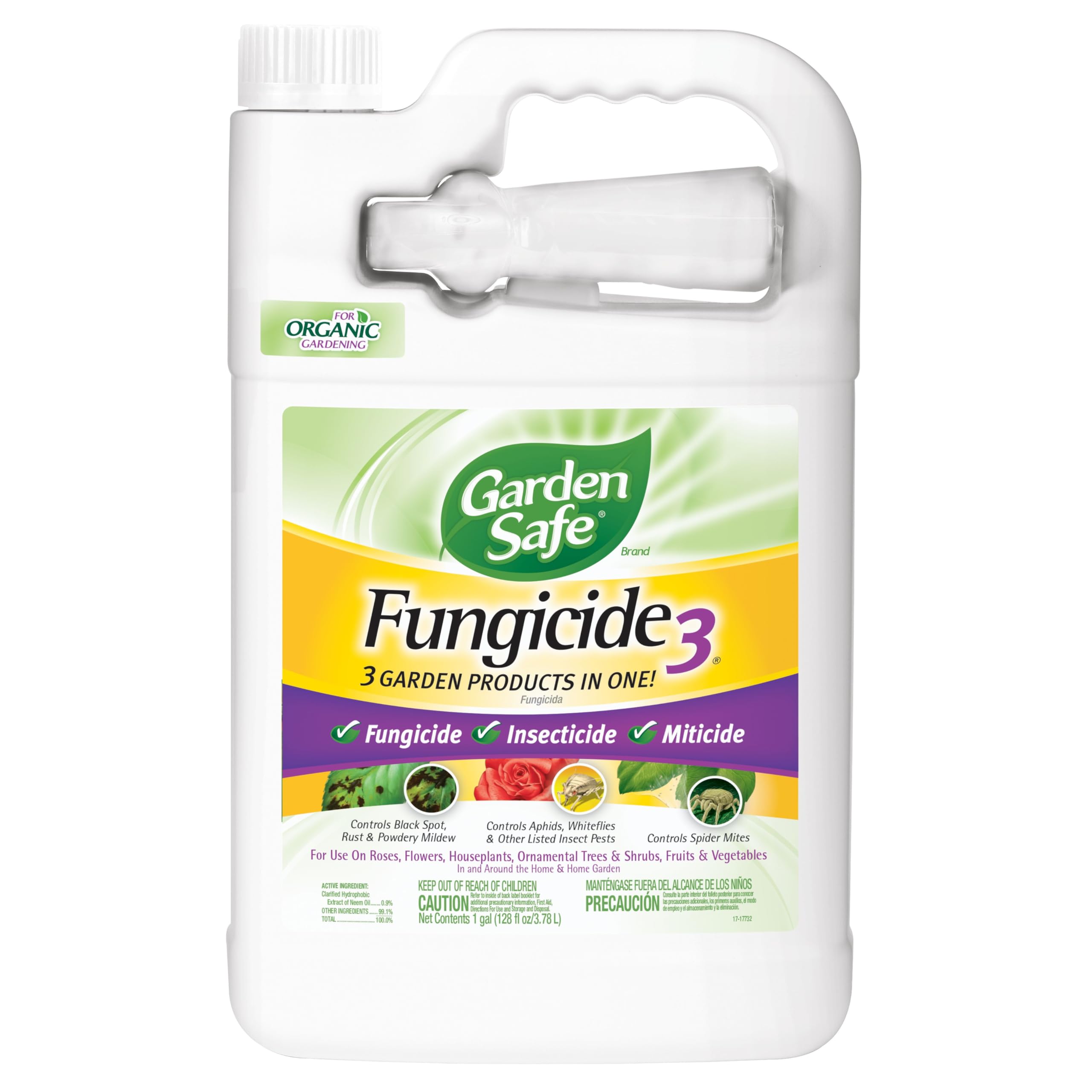
The Garden Safe Fungicide3 pulls triple duty as a fungicide, insecticide, and miticide in a single 1-gallon ready-to-use bottle. Its active ingredient is clarified hydrophobic neem oil extract, which smothers soft-bodied insects and fungal spores on contact. Users report excellent results against powdery mildew on tomatoes and blueberries, as well as aphids and whiteflies on roses and vegetables.
The full-gallon size is a strong value for gardeners with multiple beds, and the integrated sprayer makes spot treatment straightforward.
One consistent complaint involves the short sprayer wand, which limits reach to about 4 inches from the bottle. For large plants or dense foliage, transferring the liquid to a separate pump sprayer improves coverage and ergonomics.
What works
- Triple action against insects, mites, and fungus
- Large 1-gallon size for multiple applications
- Organic neem oil formula safe for edibles
What doesn’t
- Integrated sprayer wand is too short for tall plants
- Can burn leaves if applied in direct midday sun
4. BioAdvanced Tomato & Vegetable Pest Control

BioAdvanced’s 24-ounce ready-to-use formula is designed for fast knockdown of aphids, cutworms, and caterpillars specifically on tomatoes, peppers, carrots, and other listed vegetables. The key advantage here is the harvest-day safety window — you can spray in the morning and pick fruit the same afternoon without waiting through a pre-harvest interval.
Gardeners with multiple raised beds appreciate the ease of the trigger sprayer, which distributes a wide and consistent mist. Verified reports show effective control of spotted lanternflies on grapevines and general pest reduction across leafy greens and fruiting crops. The Bayer Advanced brand brings a long track record of reliable pest management to the table.
Some users note that results are better as a maintenance spray rather than a full eradication tool for heavy infestations. The 24-ounce bottle covers a modest garden area, so larger plots may need multiple units or a concentrate alternative for cost efficiency.
What works
- Safe to spray on tomatoes up to harvest day
- Fast-acting contact kill on common pests
- Easy trigger sprayer for quick spot treatment
What doesn’t
- Small bottle size for larger vegetable gardens
- Less effective for severe, established infestations
5. Natural Guard Spinosad Soap

Natural Guard combines spinosad, a naturally derived nerve toxin, with insecticidal soap for a powerful one-two punch against beetles, caterpillars, and spider mites. The 32-ounce ready-to-spray bottle works within minutes after contact, and owners report dramatic results — one user eliminated a cactus beetle infestation with a single treatment, with no return of pests days later.
The soap component helps the spinosad penetrate waxy leaf coatings and reach pests hiding in leaf axils. This spray is especially effective on cole crops (broccoli, kale), fruiting vegetables like tomatoes and peppers, and ornamentals affected by thrips or aphids. The formula also lists powdery mildew suppression when sprayed directly onto affected areas.
A few users mention the bottle can leak during shipping, so check the seal before first use. The 32-ounce size works well for small to medium gardens, but large-scale growers may want to stock multiple bottles or look for a concentrate version.
What works
- Exceptional knockdown of beetles and caterpillars
- Spinosad + soap penetrates tough leaf surfaces
- Fast results often visible within minutes
What doesn’t
- Bottle seal can leak during transit
- Not a systemic — requires thorough leaf coverage
6. Earth’s Ally Disease Control Concentrate
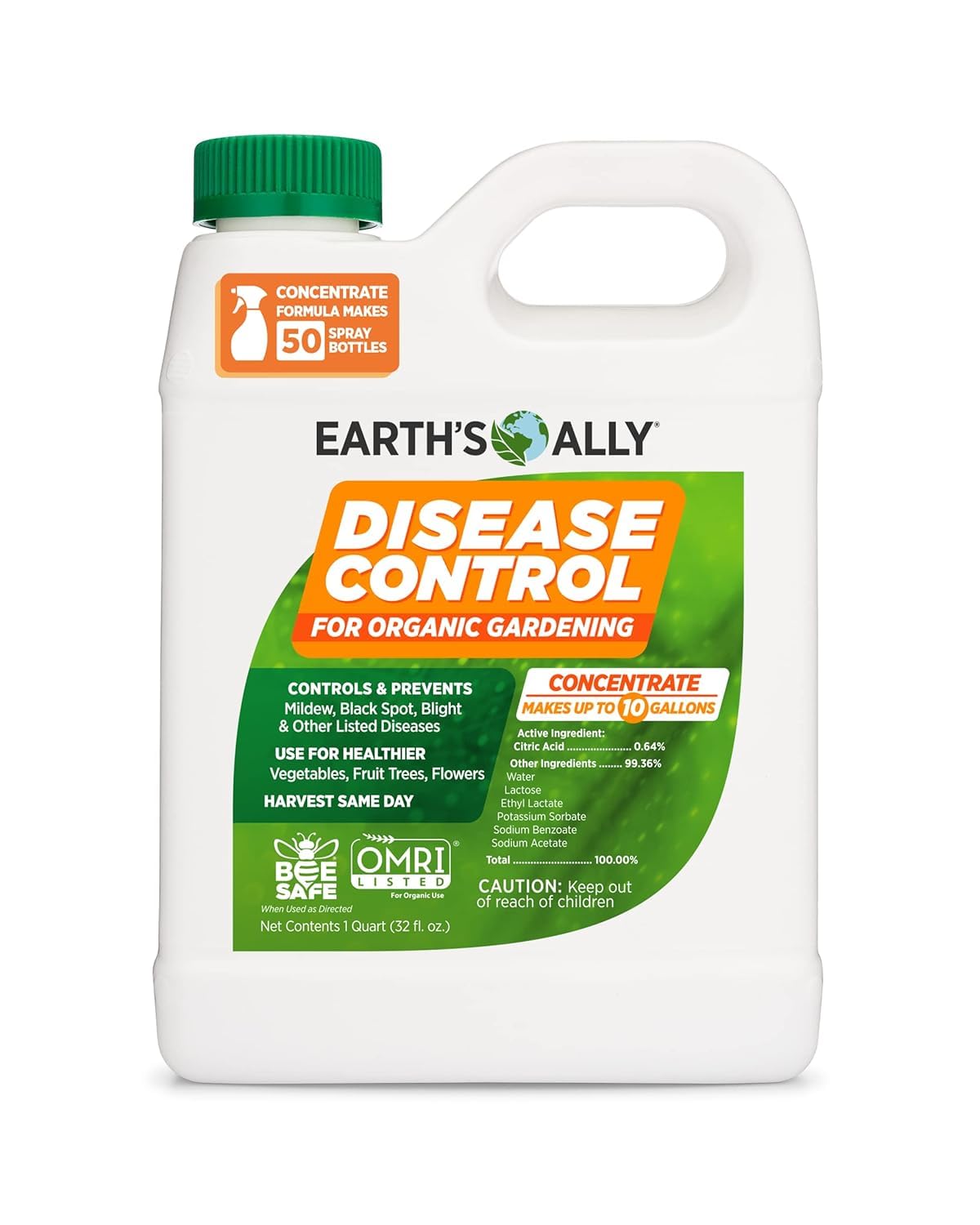
Earth’s Ally specializes in fungal disease management using citric acid as its active ingredient. This 32-ounce concentrate makes up to 10 gallons of ready-to-use spray, targeting powdery mildew, downy mildew, blight, black spot, and leaf spot. It is OMRI Listed for organic gardening and safe to use on vegetables and fruits up to the day of harvest.
Gardeners dealing with recurring mildew on roses, tomatoes, and citrus trees see noticeable improvement within a week of regular spraying. The citric acid formula is gentle enough to avoid leaf burn even on sensitive ornamentals, and it leaves no harmful residue that could affect pollinators once dry.
Because it is primarily a fungicide rather than an insecticide, it won’t control chewing pests like aphids or caterpillars. Pair it with a dedicated insect repellent for comprehensive garden protection. The concentrate dilution of 6 tablespoons per gallon is easy to mix and stretches far across multiple beds.
What works
- Excellent control of powdery and downy mildew
- Concentrate makes 10 gallons, great value
- OMRI Listed and safe up to harvest day
What doesn’t
- Does not kill insects — only fungal diseases
- Requires mixing and measuring before use
7. Organic Insecticide & Fungicide Concentrate

This bio-based concentrate from Evergreen Way Inc offers dual insecticide and fungicide action in a single 16-ounce bottle. A few drops diluted in water — users report 10 drops per 32 ounces — deliver rapid contact kill on aphids, whiteflies, thrips, and fungus gnats while simultaneously suppressing powdery mildew outbreaks. Multiple owners observed bug death within 5 to 10 seconds of direct spray contact.
The formula is designed for broad-spectrum use across vegetables, herbs, ornamentals, and lawns. Gardeners with mixed beds appreciate the low odor and the ability to treat both pest and disease issues in one pass. Many users report lush green growth after integrating the spray into a weekly maintenance routine, with no leaf burn or discoloration even on tender new shoots.
The concentrate format offers excellent cost-per-gallon economics, but the small 16-ounce bottle means you will want to track dilution ratios carefully to avoid running out mid-season. Some users find the instructions could be clearer about the exact mixing rate for different pest pressures.
What works
- Very fast contact kill on most common pests
- Low odor and no leaf burn when mixed correctly
- Effective against both insects and fungal issues
What doesn’t
- Dilution instructions could be more precise
- Small bottle size means frequent remixing
Hardware & Specs Guide
Contact Killers
Formulations that kill pests on direct contact rely on thorough leaf coverage. Spinosad and neem oil are the most common active ingredients. They degrade within hours to days under sunlight and rain, requiring reapplication every 5–10 days. These are ideal for active outbreaks where you need immediate results.
Systemic Deterrents
Products like SNS-209 use compounds absorbed by the plant into its vascular tissue. Pests ingest the active ingredient when feeding, causing them to stop eating or die over 1–3 days. The protection builds over 1–2 weeks and lasts through rain, making systemics better for long-term prevention.
Fungicide Integration
Some vegetable pests are actually fungal diseases rather than insects. Powdery mildew and blight require fungicidal actives like citric acid or neem oil. Products labeled as 3-in-1 fungicide/insecticide/miticide cover both camps but often require lower doses and careful timing to avoid leaf burn in full sun.
Concentrate vs. Ready-to-Use
Concentrate formulas let you mix custom volumes, which is more economical for large gardens making weekly applications. Ready-to-use bottles are compact and precise for spot treatments but cost more per ounce. A typical 32 oz concentrate yielding 10 gallons treats roughly 2,000 square feet per season.
FAQ
Can I use a systemic repellent on vegetables I eat every day?
How often should I reapply a contact spray during rainy weather?
Will these sprays harm bees and other pollinators?
Final Thoughts: The Verdict
For most gardeners, the bug repellent for vegetable plants winner is the Sierra Natural Science SNS-209 because its systemic rosemeric acid formula provides long-lasting internal protection without repeated spraying. If you want immediate contact knockdown, grab the Dr. Earth 8004. And for an economical dual insecticide-fungicide option that works in a single pass, nothing beats the Organic Insecticide & Fungicide Concentrate.