
Specs are compiled from manufacturer listings and verified buyer reviews and can change over time — please confirm the key details on the product page before buying.
Forgetting that bromeliads are not soil-dwelling plants is the fastest way to rot their roots. Unlike a tomato or a fern, a bromeliad clings to tree bark in the wild — its roots are built for air and quick drainage, not dense, water-holding dirt. The wrong potting mix traps moisture around the base, and within days the leaves go soft and brown at the center.
I’m Rikta — the founder and writer behind Lawn Gear Lab. This guide is built by comparing the manufacturers’ published specifications and the patterns across verified customer reviews, so you get each pick’s real strengths and trade-offs instead of marketing spin.
Below, you will find three mixes that actually let a bromeliad’s roots breathe, each chosen for a different bromeliad potting soil need — from budget-friendly quarts to premium blends that revive even the oldest houseplants.
Our Picks at a Glance
How To Choose The Best Bromeliad Potting Soil
Bromeliads are epiphytes — they absorb water and nutrients through their central cup, not their roots. The soil’s only job is to anchor the plant and let excess water drain away in seconds. Here is what to check before you buy.
Drainage and Aeration Are Everything
Look for a chunky, coarse blend with ingredients like pine bark, lava rock, calcined clay, or pumice. These create air pockets that let oxygen reach the root zone and stop water from pooling. A mix that feels dense or looks like fine garden dirt will suffocate the roots.
Bag Volume Matters More Than You Think
Bromeliad pots are usually shallow. A 2-quart bag can repot a few small plants, while a 4-quart bag handles three to four medium containers. Check the volume in quarts or ounces — a larger bag saves you from buying twice when you are repotting several plants at once.
Peat-Free and Climate-Friendliness
Some modern mixes skip peat entirely and use biochar, a carbon-negative ingredient that stores carbon in the soil for centuries. Peat-free blends also tend to be lighter and resist compaction longer, meaning you repot less often.
Quick Comparison
| Model | Best For | Volume | Key Ingredients | Unit Count | Amazon |
|---|---|---|---|---|---|
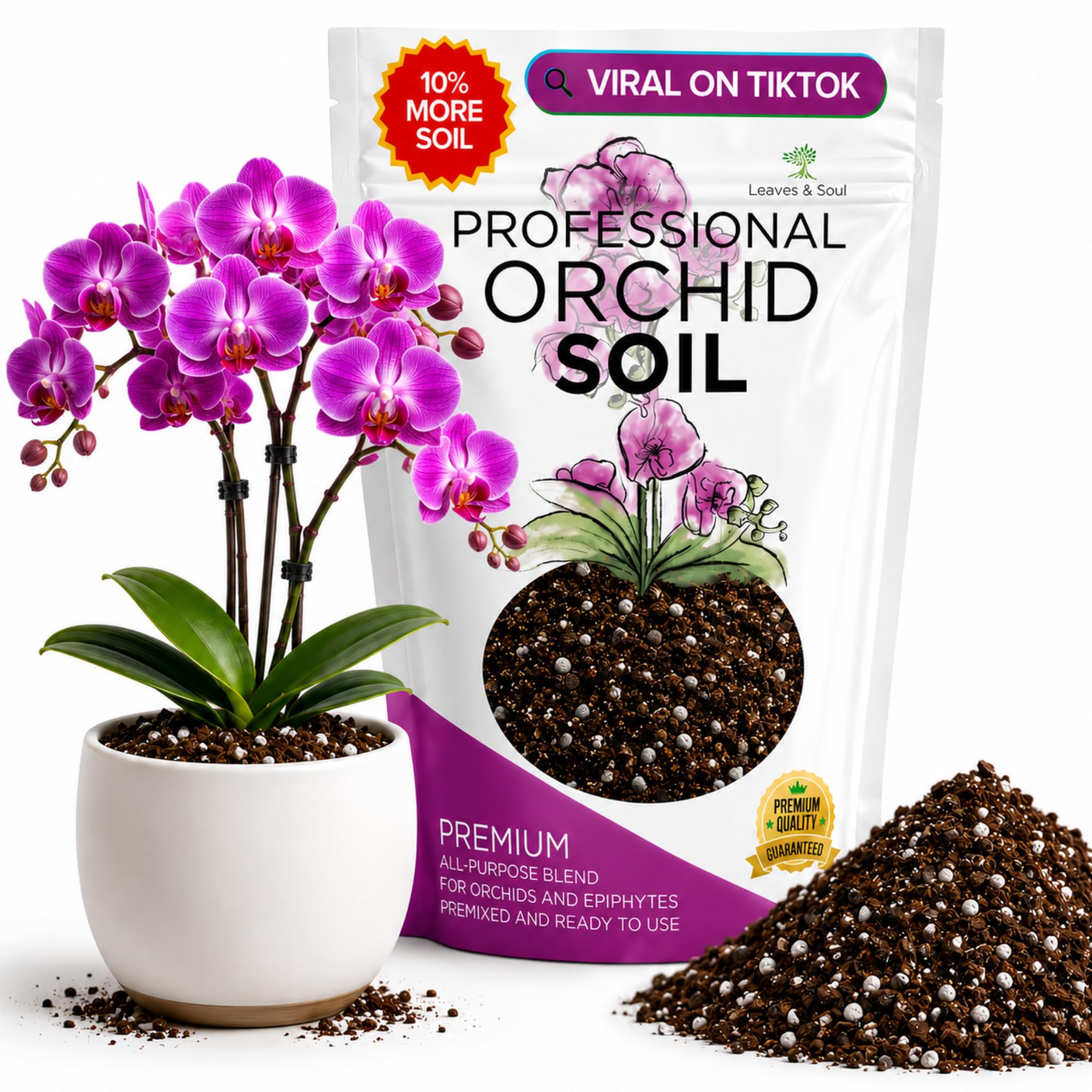
| Leaves and Soul Orchid Mix★ Best Overall | Mid-Range Champion | 2.2 Quarts | Lava Rock, Calcined Clay, Pinebark | 81.9 Ounce | Amazon |
| Rosy Soil Orchid Mix | Best Overall Value | 4 Quarts | Bark, Pumice, Biochar | 128.0 Ounce | Amazon |
| rePotme Bromeliad Mix | Premium Revival | 2 Quarts | Multi-Purpose Blend | — | Amazon |
In‑Depth Reviews
1. Leaves and Soul Professional Orchid Soil Mix
Our pick — 4.5★ from 6,000+ verified ratings; the strongest balance of quality and price.
A classic three-ingredient blend that drains fast and fits any budget.
If you want a solid, straightforward bromeliad mix without the extras, this 2.2-quart bag from Leaves and Soul delivers exactly what the roots need: fast drainage and air. The blend of red lava rock, calcined clay, and pinebark creates a coarse, airy structure that lets excess water drain quickly while holding just enough moisture. At 81.9 Ounce per bag — a strong mid-range value.
One reviewer noted repotting a bonsai after three years with great success, calling the texture equal parts and the amount perfect. Others use it for aloe plants and general indoor plant care, noting it works as advertised. The resealable packaging keeps the mix fresh for your next round of repotting, which is handy if you only need a few cups at a time.
While it does not have the biological boosters of the Rosy Soil mix, its simplicity is a strength — you know exactly what your plant is getting, and the ingredients are made in the USA. It falls a bit short on total volume compared to the 4-quart bag above, but it is a dependable choice for one or two bromeliads.
What works
- Fast-draining blend of lava rock, calcined clay, and pinebark prevents root rot
- 81.9 Ounce unit count offers good value for the bag size
- Made in the USA with a low-maintenance refund policy
What holds it back
- No mycorrhizae or biochar — straight mineral/bark blend with no microbial extras
- 2.2 quarts versus the Rosy Soil bag’s 4 quarts
A solid mid-range pick: Perfect for a single bromeliad or two small pots, especially if you want a simple, proven blend without biological additives.
skip it if: You need to repot multiple plants at once — the 2.2-quart bag runs out fast on larger jobs.
2. Rosy Soil Orchid Potting Mix, 4 Quarts
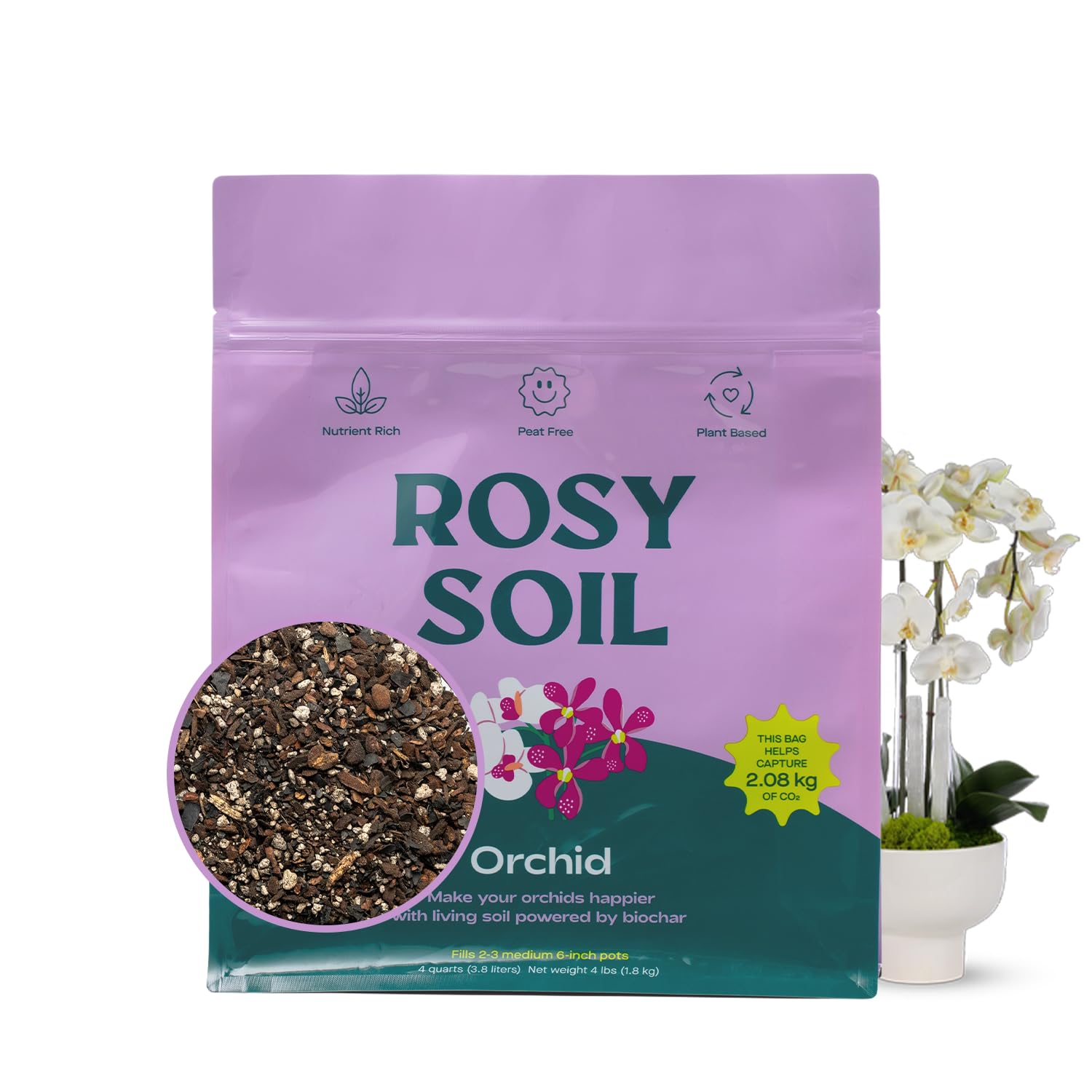
The largest bag with a biochar boost that mimics a bromeliad’s natural perch.
This is the mix you reach for when you want volume and a modern, living soil approach. At 4 quarts and 128.0 Ounce, versus the rePotme bag at 2 quarts — enough to fill two to three medium 6-inch pots with some to spare, as buyers report. The blend of orchid bark, pumice, and biochar creates the open, fast-draining structure that bromeliad roots need to breathe instead of sitting in soggy soil.
Unlike the bark-and-rock-only mixes, Rosy Soil is enriched with mycorrhizae and beneficial microbes — a living network that supports root development and nutrient uptake. One owner noted this mix gave them a “kiki” (a baby bromeliad offset) for the first time, and that their plants are growing and blooming better than they have in years. It is also peat-free and uses biochar, a carbon-negative ingredient that stores carbon in soil for centuries rather than releasing it.
The catch is the price — this is the premium-tier option. But given the 4-quart bag size, the per-pot cost is competitive, especially if you are repotting several plants at once or want a climate-positive product with no synthetic additives.
Why it wins: Combines the largest volume (4 quarts) with biochar and mycorrhizae that actively support root health — a step beyond simple bark mixes.
The honest trade-off: Higher upfront cost than smaller bags, though the per-pot value is strong if you have multiple bromeliads.
Best for: Anyone repotting several bromeliads at once who wants a peat-free, microbial-rich mix that mimics their natural habitat.
Reach for this if: You care about sustainability (biochar is carbon-negative) and want a bag that actually finishes the job without needing a second purchase.
3. rePotme Bromeliad and Jewel Classic Potting Soil Mix
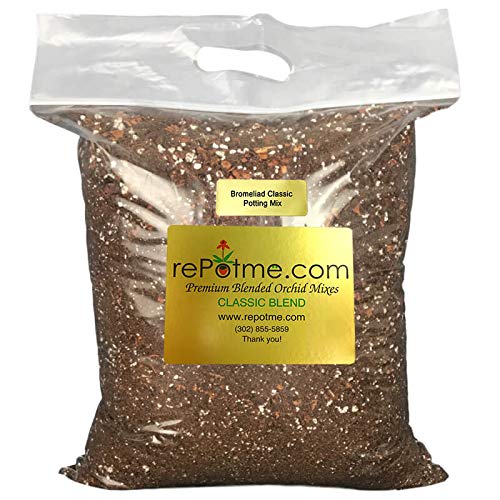
A small-batch mix that revived a 70-year-old Hoya within weeks.
This is the specialty blend that seasoned plant owners turn to when ordinary mixes fail. The rePotme Bromeliad and Jewel Classic Potting Soil Mix comes in a resealable 7 x 11.5 inch bag holding 2 quarts — noticeably smaller than the others, but owners mention it performs well beyond its size. Customers note the mix revived a 70-year-old Hoya, which bloomed on new and old spikes and grew three new vines within six weeks after repotting.
Unlike the other two picks that are marketed primarily for orchids with bromeliads as a secondary use, this mix is explicitly labeled for bromeliads and houseplants. It provides fantastic drainage while absorbing an ideal amount of water — exactly what bromeliad roots need. Another owner noted their orchid flowered within days of using the soil, and a third said their plants perked up noticeably after transplanting.
For a single bromeliad or a small collection, it is plenty. For multiple large pots, you will need more than one bag.
Why plant lovers pick it
- Explicitly designed for bromeliads and houseplants, not just orchids
- Reviewers point out dramatic recovery results — revived a 70-year-old Hoya with new vines in 6 weeks
- low-maintenance blend encourages healthy growth and fantastic drainage
The one catch
- Smaller bag (2 quarts) means you will need multiple bags for a larger collection
- Higher per-quart price than the Leaves and Soul mix
Best for revival projects: If you have a struggling bromeliad or a precious houseplant that needs a fresh start, this mix has the reputation to justify the premium per-quart cost.
Look elsewhere if: You are repotting several plants at once — the small bag runs out quickly on larger jobs, making the Rosy Soil bag a better volume-for-price choice.
Understanding the Specs
Drainage and Aeration
Bromeliad roots need a coarse, chunky mix with plenty of air pockets. Ingredients like pine bark, lava rock, calcined clay, and pumice create these gaps where oxygen can reach the roots. A mix that looks like fine garden dirt will trap water — within days the base of the plant can rot. The three picks above all feature open, fast-draining blends designed to prevent overwatering and root rot.
Bag Volume and Unit Count
You get more value from a bigger bag when repotting several bromeliads. A 2-quart bag handles one to two medium plants, while a 4-quart bag covers three to four pots. Check the unit count in ounces for a sense of how much material you are actually getting — the Rosy Soil bag, for example, holds 128.0 Ounce, versus the Leaves and Soul bag at 81.9 Ounce. Bigger bags save you from buying twice when repotting several plants.
FAQ
Can I use regular potting soil for bromeliads?
What is the difference between orchid mix and bromeliad mix?
How often should I repot a bromeliad?
How much soil does a bromeliad need?
What does biochar do in potting soil?
Can I use a mix with mycorrhizae for bromeliads?
Is peat-free soil better for bromeliads?
How can I tell if my bromeliad needs better drainage?
Final Thoughts: The Verdict
Across the board, the bromeliad potting soil winner is the Rosy Soil Orchid Potting Mix (4 Quarts) because it delivers the largest volume, a peat-free biochar blend, and mycorrhizae (beneficial fungi that help roots absorb water and nutrients) that actively support root health — all at a fair per-pot price. If you want a simple, budget-friendly, made-in-the-USA mix for one or two plants, grab the Leaves and Soul Professional Orchid Soil Mix. And for a premium revival blend with a proven track record of reviving old houseplants, the rePotme Bromeliad and Jewel Classic Potting Soil Mix is a strong choice.
How We Picked
We do not accept paid placement. Every pick is matched to a real buyer and a real use-case; we do not hands-on test units.
Sources & Methodology
Specifications: manufacturer listings and product documentation. Review insights: verified customer reviews, as of July 2026. Pricing: not shown on this page (it changes often); check the current price via the retailer link.
As an Amazon Associate, Lawn Gear Lab earns from qualifying purchases. This does not affect which products we feature.