
Overhead watering is the single fastest way to dampen off delicate seedlings, wash away uncovered seeds, and create a crust over your starting mix that blocks new growth. Switching to bottom watering trays forces the capillary action of your soil to pull moisture upward from below, encouraging deep root development and keeping the surface dry where airborne fungi settle. For any indoor seed-starting setup, the tray under the cells is just as critical as the cells themselves.
I’m Rikta — the co-founder and writer behind Lawn Gear Lab. Over the last several weeks, I’ve pored through hundreds of owner reports and spec sheets for seed-starting flats, ran comparisons on material thickness, dimensional compatibility, and long-term durability, and cross-referenced each option against real germination success rates to separate the trays that hold up season after season from those that warp after one watering.
Whether you are starting a dozen pepper cells or a full greenhouse flat of microgreens, choosing the right best bottom watering trays hinges on wall thickness, leak-free construction, and a reservoir design that supports consistent moisture wicking without pooling.
How To Choose The Best Bottom Watering Trays
The market is flooded with cheap seed flats that crack, warp under grow lights, or leak onto your counters. For effective bottom watering, you need a tray that acts as a reliable wicking reservoir. Here are the three specifications that separate a deep-root nursery flat from a disposable pan.
Material Thickness & Reinforced Design
Standard thin plastic trays flex and buckle the moment they are loaded with moistened potting mix and a 72-cell insert. Look for trays with a nominal thickness of at least 1.5 mm and ribbed or raised-line bottom structures. Extra-thick PS polypropylene resists heat from germination mats without softening and supports the weight of a full tray without sagging.
Dimensional Compatibility
The vast majority of cell inserts and nursery pots are built to the 1020 standard — roughly 10 inches by 20 inches at the base. If you buy off-size trays, your inserts will wobble, fail to wick evenly, or get stuck during nesting. Verify the internal bottom dimensions and rim taper so the tray accepts standard plug flats without gaps.
Reservoir Depth & Leak-Proof Walls
A true bottom watering tray must hold a standing reservoir of at least 1.5 to 2.5 inches so the capillary action can draw water into the root zone for hours. The tray walls must be continuous and free of cracks or thin seams. No-drainage-hole construction is non-negotiable — holes turn the system into a drip tray, not a wicking station.
Quick Comparison
On smaller screens, swipe sideways to see the full table.
| Model | Category | Best For | Key Spec | Amazon |
|---|---|---|---|---|
| RooTrimmer 10 Pack (TX550) | No Hole Tray | Heavy duty greenhouse use | 1.8 mm wall thickness / 2.52″ depth | Amazon |
| SOLIGT 10 Pack (B0CHB66WTT) | No Hole Tray | High-volume seed starting | 14″x11″ / 2.3″ deep heavy duty | Amazon |
| RooTrimmer 10 Pack (TD538) | No Hole Tray | Budget durable flats | 1.6″ depth / 1020 standard fit | Amazon |
| Garrdeen Plant Saucer Trays | Saucer Tray | Large pot overflow catch | 12″ dia / 1.26″ tall | Amazon |
| SOLIGT Self Watering Kit | Self Watering Kit | Guided bottom watering system | Capillary mat + transparent flood tray | Amazon |
| Guioiby Seed Starter Kit | All In One Kit | Complete indoor setup | 120 cells + 4 full spectrum grow lights | Amazon |
| Living Whole Foods Growing Trays | Drain Tray | Hydroponic microgreens | 20″x10″ / light weight / drain holes | Amazon |
In‑Depth Reviews
1. RooTrimmer 10 Pack 1020 Trays (TX550)

The RooTrimmer TX550 trays anchor this list for a reason: at 1.8 mm nominal wall thickness and a deep 2.52-inch reservoir, they represent the heaviest-duty 1020 flat available for bottom watering. The bottom features deeper concave-convex striping that both stiffens the base against bending under saturated soil and traps a consistent layer of water so cell inserts can wick evenly across the full footprint.
Owner reports consistently note that these trays do not flex when loaded with 15 full peat pots and water — a benchmark that thinner trays fail immediately. They are built from high-quality PS material that handles cold greenhouse temperatures and heat mat use without cracking. The no-hole design is leak-proof, and the standard 10×20 bottom footprint accepts most 72 and 128 cell inserts without shifting.
The only dimensional catch is that these trays do not nest perfectly with older 1020 flats from other brands, so if you already own a collection of standard trays, mixing them on a shelf may cause alignment issues when stacking. For a fresh start or a dedicated bottom-watering bank, they are the most durable investment in the category.
What works
- Extremely thick walls resist all bending under full soil and water load
- 2.52-inch depth holds a generous wicking reservoir
- Concave-convex bottom lines improve water distribution
What doesn’t
- Dimensions differ slightly from legacy 1020 trays, creating nesting incompatibility
- Higher price per tray compared to thinner alternatives
2. SOLIGT Extra Thick Heavy Duty 10 Pack
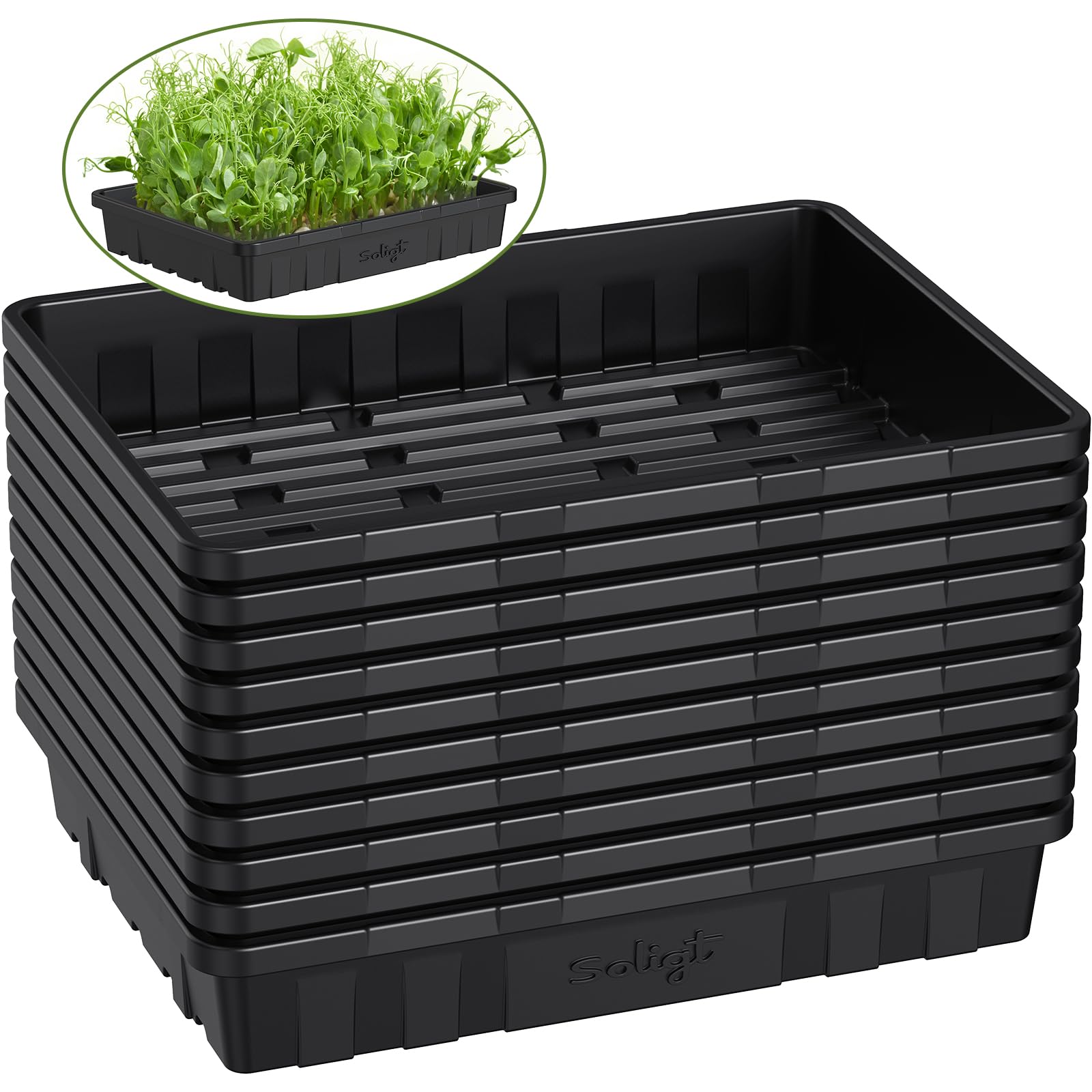
SOLIGT’s 10-pack no-hole trays are engineered with raised ridges on the base that create an air gap between the bottom of the tray and the surface, preventing condensation stains and promoting even water distribution underneath cell inserts. The 2.3-inch depth holds enough water for multiple days of capillary wicking, and the thick PS walls do not buckle when the tray is fully saturated.
Feedback from experienced seed starters highlights how these trays clean up season after season without developing stress cracks or becoming brittle. The 14×11 inch footprint is slightly smaller than a standard 1020 flat, which makes them a better fit for small shelving units but means standard 1020 cell inserts may overhang slightly. Owners recommend using these trays with the matching SOLIGT 72-cell inserts for a perfect seal.
The main drawback reported is the dimensional variance from traditional 10×20 nursery trays — if you need strict interchangeability with a large existing collection of 1020 equipment, the slight offset can cause storage frustration. As a standalone bottom-watering system for a home gardener, the thickness and leak-free design deliver years of reliable service.
What works
- Unusually thick plastic that does not crack under repeated use
- Raised bottom ridges improve air circulation and prevent waterlogging
- Compact size fits well on standard wire shelving
What doesn’t
- Non-standard dimensions do not nest with conventional 1020 trays
- Smaller footprint limits compatibility with some large plug flats
3. RooTrimmer 10 Pack 1020 Trays (TD538)

The TD538 trays sit in the sweet spot between economy flats and premium heavy-duty models. At 1.6 inches deep, the reservoir is sufficient for capillary watering sessions, though it requires more frequent refilling than the 2.5-inch deep TX550. The plastic is noticeably thicker than the store-brand trays that warp after one season — owners confirm these do not bend when lifted full of soil and a 72-cell insert.
These trays are designed to pair precisely with RooTrimmer’s own 72 and 128 cell inserts. The top rim measures 21 inches by 11 inches, and the bottom nests at 19.1 x 9 inches, creating a snug fit that prevents movement during transport. The BPA-free PS material holds up under LED grow lights and heat mats without off-gassing or discoloration.
Some users note that the 1.6-inch sidewall is slightly shallower than other 1020 flats on the market, which can be an issue if you need extra vertical clearance for tall humidity domes or if you rely on a deep water column for extended weekend watering. For the price per tray, the TD538 offers a balanced mix of durability and affordability that suits mid-scale home propagation.
What works
- Thicker than typical big-box store flats without the premium price
- Snug fit with standard 1020 cell inserts prevents wobble
- BPA-free material suitable for edible seedlings
What doesn’t
- Only 1.6 inches deep — reservoir needs more frequent topping off
- Does not stack well with taller sidewall trays for storage
4. Garrdeen 6 Pack 12-Inch Plant Saucer Trays
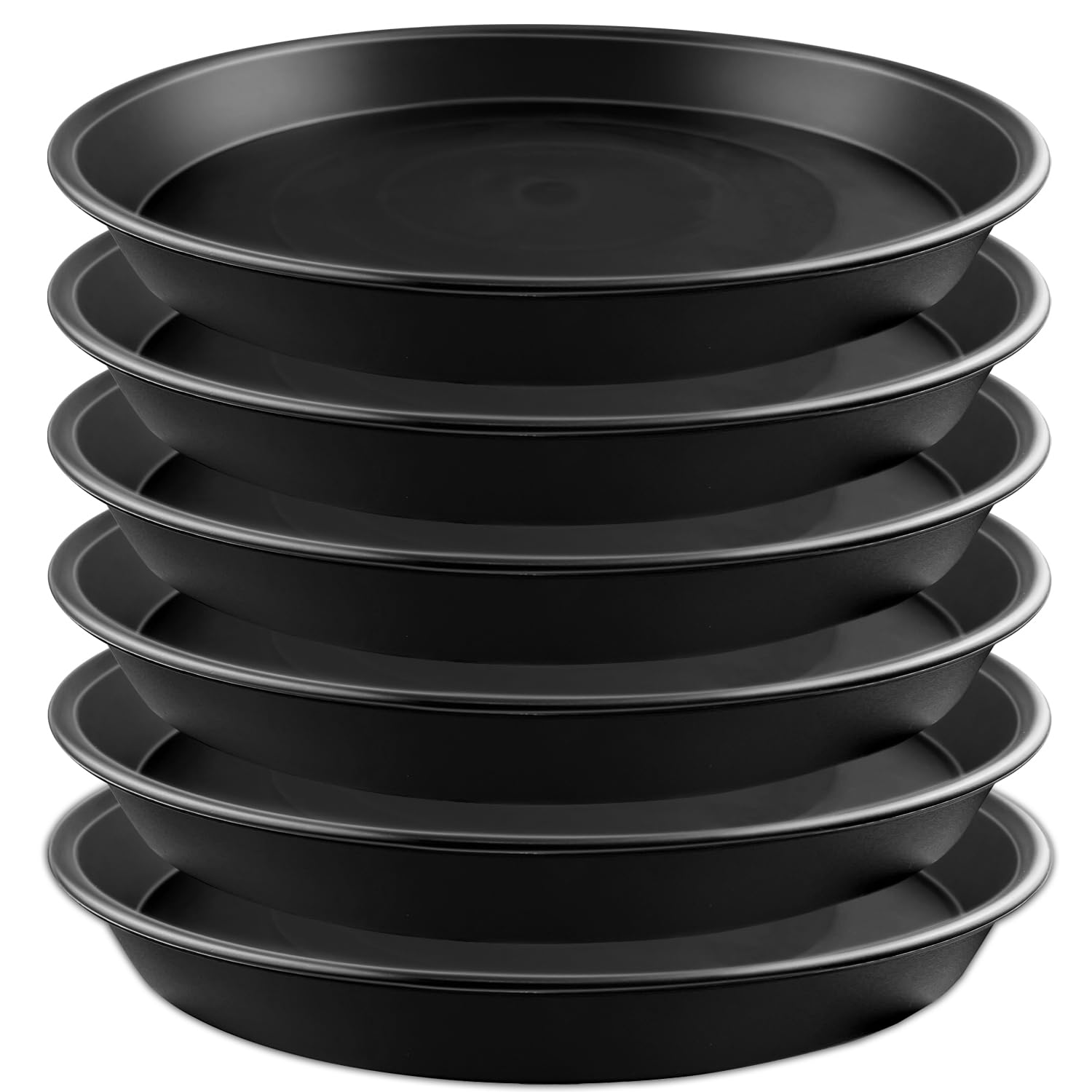
These Garrdeen saucers shift the bottom-watering concept from seed flats to individual pot overflow protection. Made from thick PP plastic measuring roughly 0.36 pounds per saucer, they are significantly beefier than the brittle black saucers commonly sold in garden centers. The 1.26-inch lip is steep enough to hold a meaningful reservoir beneath a 10- to 12-inch nursery pot, allowing capillary action to hydrate from below.
The reinforced base and continuous sidewalls prevent cracking when supporting heavy terracotta or glazed ceramic pots. Owners specifically mention that these saucers do not develop condensation pools on hardwood floors because of the slight base lift. The black color hides mineral stains and looks clean on patios or indoor plant stands.
These are not seed trays — they are strictly for use under individual pots. If you are looking for a standard 1020 flat for multiple cells, these round saucers will not stack or fit under a humidity dome. For a plant collector who wants to convert large container plants to bottom watering, the Garrdeen saucers deliver the necessary thickness and a generous water-catching lip.
What works
- Exceptionally thick plastic that does not flex under heavy clay pots
- 1.26-inch tall lip holds enough water for overnight bottom wicking
- Smooth finish that is easy to wipe clean between waterings
What doesn’t
- Round saucer format unsuitable for seed-starting cell trays
- Size fixed at 12 inches — not adaptable to smaller or larger pots
5. SOLIGT Self Watering Seed Starter Trays 3 Pack
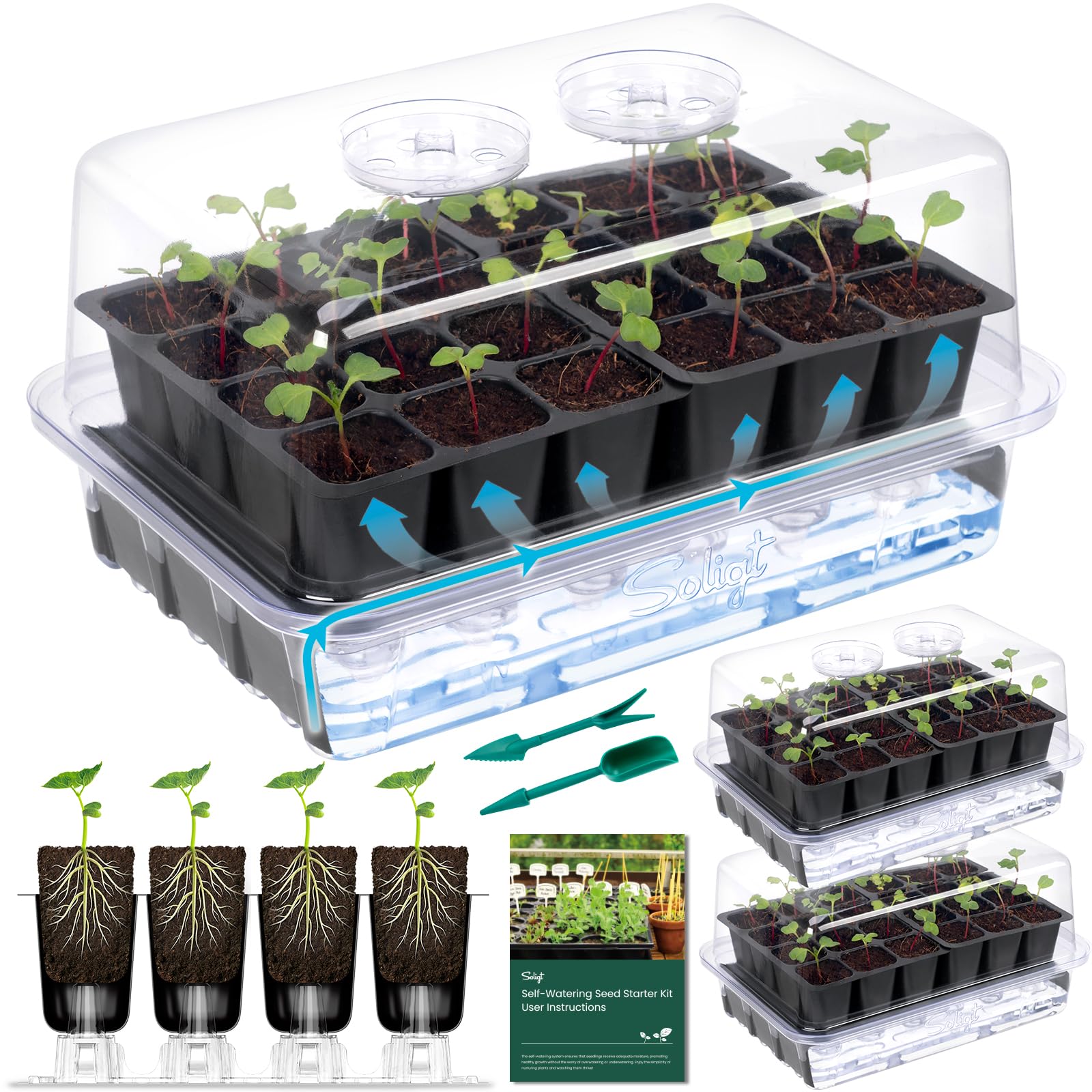
SOLIGT’s self-watering system uses a clear bottom tray, a capillary felt mat, and a support grid to deliver consistent moisture from below without guesswork. The transparent tray lets you monitor the water level at a glance — you simply fill the reservoir to the “S” in the SOLIGT logo and the mat wicks moisture into the 1.5-inch square cells. The system includes three packs, each with a humidity dome, adjustable vents, and 100 plant labels.
Germination reports are strong: multiple owners report 100 percent germination rates for tomatoes, basil, and peppers using this system with a heat mat. The dome vents make the transition from high-humidity to ambient air seamless. The support stands also double as soil block pushers for transplanting, which adds utility for the price.
A few users note that the capillary mat does not wick water to the very center of the tray unless it is perfectly aligned and in full contact with the reservoir at one edge. If the mat shifts during filling, some cells may dry out faster than others. For beginners, this system provides a clear visual guide to bottom watering; experienced growers may find the mat maintenance slightly fiddly.
What works
- Transparent reservoir shows water level without lifting the tray
- Capillary mat delivers consistent moisture when properly aligned
- Complete kit includes domes, labels, and support stands
What doesn’t
- Mat wicking can be uneven if the contact edge is not fully submerged
- Small cell size (1.5 inches) limits root space for fast-growing seedlings
6. Guioiby Seed Starter Tray 120 Cells with Grow Light
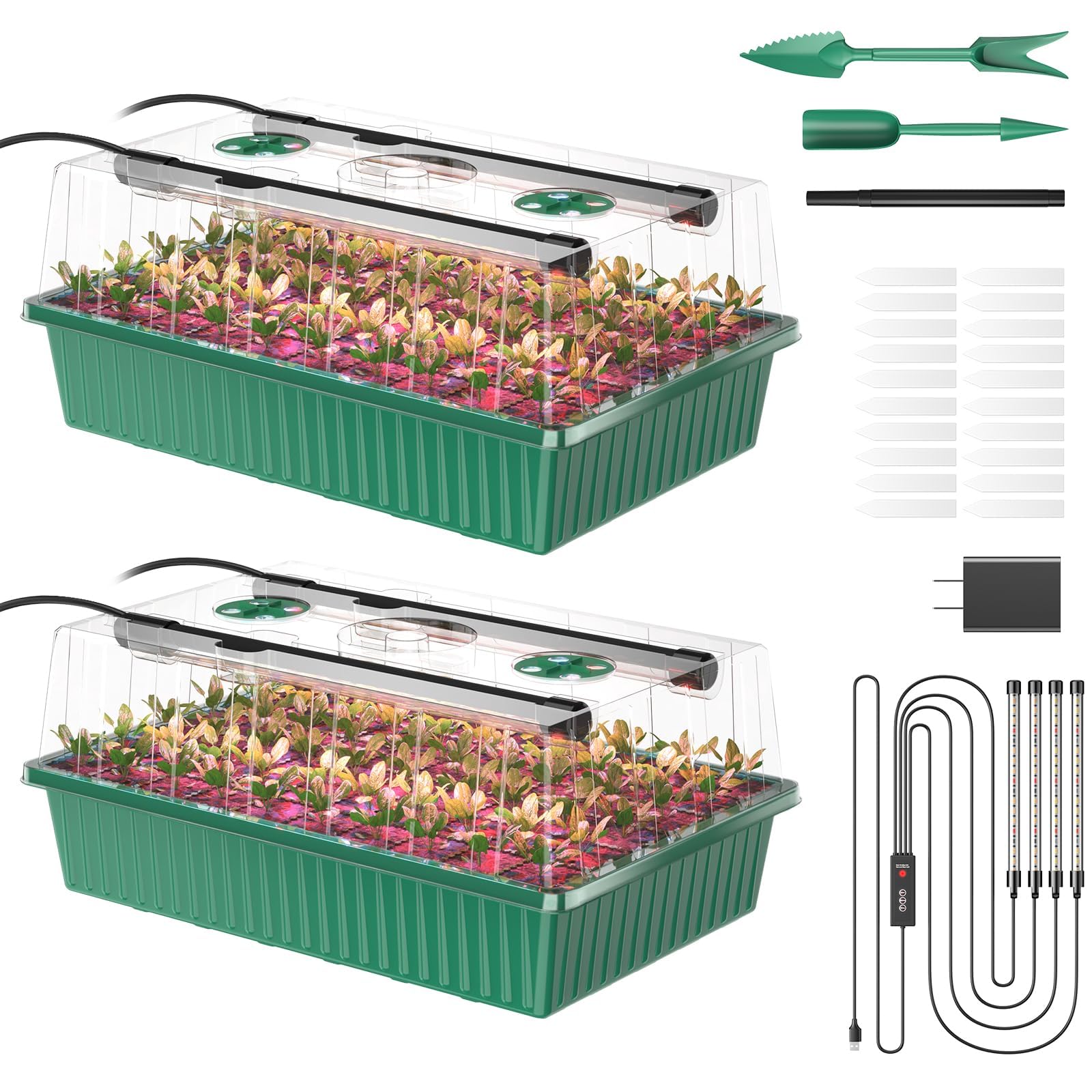
The Guioiby kit is a complete indoor propagation station that includes two 60-cell silicone trays, humidity domes, and four adjustable full-spectrum LED grow light bars with 5 brightness levels and 3 timer settings. The clear base trays work as a bottom-watering reservoir — you fill the bottom tray and the silicone cell bottoms allow capillary absorption without disturbing seeds. The silicone material is flexible enough to push seedlings out from below without root damage.
Each cell features a drainage hole design that prevents oversaturation while still enabling wicking from the base tray. The humidity domes have adjustable air vents, and the included smart control system manages the light cycles automatically. Owners praise the push-up silicone bottom for transplanting: removing a plug in one intact chunk without tearing roots is significantly easier than with rigid plastic cells.
The domes are notably taller than standard seed-starting flats, which some users find unnecessary for most seedlings and prefer a low-profile option. The assembly process for the light bars and aperture covers requires some force. For a grower who wants a fully contained system with controlled lighting and bottom watering in one package, this kit offers an integrated solution that reduces the number of separate components needed.
What works
- Silicone push-up cells allow transplant without root disturbance
- Integrated full-spectrum LEDs with auto-timer eliminate guesswork
- Bottom tray holds water for capillary wicking through drainage holes
What doesn’t
- Tall humidity domes are oversized for most seedling stages
- Aperture covers and light bars require significant assembly force
7. Living Whole Foods 10 Plant Growing Trays

These Living Whole Foods trays come in a 10-pack with a 20×10 inch bottom measurement that fits standard Sure to Grow hydroponic pads and microgreen mats. The plastic is slightly thicker than the ultra-cheap trays from discount retailers, but it remains flexible — fully loaded trays will twist if not carried with two hands. The built-in drain holes mean these are not designed for bottom watering as a reservoir; instead, they function as a carrier tray that must sit inside a second solid tray to hold water.
Owners using these for chicken fodder and microgreens report they work well when handled carefully and kept out of direct sunlight between uses. Trays left in the sun to dry warp permanently, as the thin wall structure cannot handle uneven thermal expansion. Used indoors and dried flat, they can last for several seasons before stress cracks appear at the corners.
At this price point, you get ten trays that serve as a functional base for hydroponic pads or as a shallow drip tray beneath plug flats. If your bottom-watering method involves a two-tray system where this sits on top of a solid flat, they work fine. As a standalone reservoir, the drain holes defeat the purpose. These are best suited for growers who already own solid trays and just need additional carriers for microgreens or fodder.
What works
- Ten trays for the price make bulk microgreen production economical
- Fits standard 20×10 inch hydroponic grow pads precisely
- Light enough to move multiple stacked trays in one trip
What doesn’t
- Drain holes prevent use as a stand-alone bottom watering reservoir
- Thin walls warp permanently if left in direct sunlight to dry
Hardware & Specs Guide
Wall Thickness & PS Material Grade
The reliable bottom watering trays on this list use PS (polystyrene) or PP (polypropylene) plastic in thicknesses ranging from roughly 1.2 mm to 1.8 mm. PS is stiffer and resists bending at higher temperatures, while PP offers more flexibility and crack resistance. Trays rated as “heavy duty” typically have reinforced rims and ribbed bottoms that prevent bowing when the flat is full of saturated soil. Avoid trays that feel like disposable takeout containers — they buckle under the weight of a wet 72-cell insert and spill water across your workspace.
Reservoir Depth & Capillary Performance
Depth determines how long the tray can supply water through capillary action before refilling. A 1.5-inch deep tray hydrates seedlings for roughly 12 to 18 hours under average indoor conditions. Trays at 2.5 inches or deeper can sustain moisture for two to three days, which is critical for weekend-growers or during hot germination phases. The best bottom watering trays use a smooth interior with raised linear ridges that lift the cell tray off the floor, allowing water to flow freely underneath rather than getting trapped in isolated pockets.
FAQ
Do I need trays with or without drainage holes for bottom watering?
How deep should the water reservoir be in a bottom watering tray?
Can I leave water sitting in the tray for several days?
Final Thoughts: The Verdict
For most gardeners, the best bottom watering trays winner is the RooTrimmer TX550 10-Pack because the 1.8 mm wall thickness and 2.52-inch reservoir provide the most durable and forgiving platform for consistent capillary watering across multiple seasons. If you need a complete guided system with a transparent reservoir and felt wicking mat, grab the SOLIGT Self Watering Kit. And for a budget-friendly flat that still outperforms flimsy store trays, the RooTrimmer TD538 offers the best value for mid-scale home propagation.