
A clean lawn border is the difference between a garden that looks deliberate and one that looks like it just grew there. The best border edging for landscaping stops grass from invading flower beds, keeps mulch in its place, and defines garden architecture with a crisp, finished edge. Whether you are fighting creeping Bermuda grass, trying to retain river rock, or simply want a visual line between turf and planting beds, the material and installation method you choose must match the specific job.
I’m Rikta — the co-founder and writer behind Lawn Gear Lab. I spend my time dissecting product specs, reading through hundreds of verified buyer reports, and comparing material science data so you get only the most relevant, durable, and practical options for your specific yard conditions.
After evaluating coiled HDPE boards, galvanized steel strips, faux stone panels, and no-dig recycled plastic walls on criteria like depth rating, stake density, weather resistance, and installation complexity, here is my breakdown of the top contenders for border edging for landscaping.
How To Choose The Best Border Edging For Landscaping
Choosing landscape edging comes down to three non-negotiable factors: the depth of the barrier underground, the material’s resistance to ground movement and weather, and the installation method your soil type and project size demand.
Depth Below Grade Determines Weed Control
Grass rhizomes and creeping roots typically travel 2 to 4 inches below the surface. A coiled board that sits 5 inches deep like the Master Mark Terrace Board stops most underground runners. If you need deeper protection against aggressive bamboo or established root systems, a 10-inch panel like the VEVOR HDPE coil provides the necessary root wall. For simple decorative separation where weeds are less aggressive, a 2-inch hammer-in strip or no-dig wall is sufficient.
Material Hardiness in Sun and Cold
HDPE (high-density polyethylene) resists UV fading, rot, and cracking even in freeze-thaw cycles, but it can warp if installed without letting it relax in the sun first. Galvanized steel with powder coating offers superior impact resistance and a permanent shape, but it can rust if the coating chips on rocky soil. Resin faux stone blocks like the Beuta system provide a stone aesthetic without the weight, though they perform best in straight runs and require careful planning for curves.
Stake Count and Stability
The biggest complaint across every coiled and strip edging category is insufficient stakes. A 60-foot roll that ships with 10 stakes will shift under heavy rain or foot traffic. Budget for additional stakes — one every 2 to 3 feet for straight runs and every foot on tight curves. The EasyFlex no-dig kit includes 64 spikes for 100 feet, which is the right density for most residential projects.
Quick Comparison
On smaller screens, swipe sideways to see the full table.
| Model | Category | Best For | Key Spec | Amazon |
|---|---|---|---|---|
| Master Mark Terrace Board | Coiled HDPE Board | General flower beds & straight paths | 5 in. tall, 40 ft. length | Amazon |
| Hugeleaf Landscape Edging | Plastic Strip | Low-profile mower-friendly borders | 2 in. tall, 60 ft. length | Amazon |
| Beuta Faux Stone Blocks | Resin Block System | Premium stone look in straight lines | 6.5 in. tall, 48 in. per section | Amazon |
| VEVOR HDPE Coiled Board | Deep HDPE Barrier | Deep root barriers & runoff control | 10 in. tall, 60 ft. length | Amazon |
| Worth Garden Galvanized Steel | Hammer-In Steel | Custom curves & permanent borders | 4.5 in. tall, 33 ft. total | Amazon |
| STIRLINGEAR Galvanized Steel | Hammer-In Steel | Mid-century clean lines & xeriscaping | 5 in. tall, 33 ft. total | Amazon |
| EasyFlex No-Dig Wall | No-Dig Recycled Plastic | Large projects without trenching | 2.5 in. tall, 100 ft. length | Amazon |
In‑Depth Reviews
1. Master Mark Terrace Board

The Master Mark Terrace Board delivers the best balance of depth, material quality, and price among coiled edging options. Its 5-inch height buries 1.5 inches below grade to block surface-level rhizomes while leaving 3.5 inches visible for a clean woodgrain border. Made from HDPE, it resists UV fading and freeze-thaw cracking, which is critical for year-round installations in temperate climates.
Installation requires digging a shallow trench, but the plastic becomes pliable after sitting in direct sunlight for a couple of hours, allowing it to form smooth curves around tree rings or planting beds. The included 10 stakes are insufficient for the full 40-foot run — most users add a second set of stakes every 2 to 3 feet to prevent waviness, especially in loose soil or after heavy rain.
Reviewers consistently note that the woodgrain texture looks much better than plain black plastic edging once installed, and the material holds up against string trimmers without chipping. The 40-foot coil is manageable for a medium-sized flower bed or a pair of smaller borders. If you need a reliable, widely available HDPE board with proven longevity, this is the benchmark.
What works
- Durable HDPE resists cracking and UV damage over multiple seasons
- Woodgrain surface blends naturally in garden beds
- Flexible enough for gentle curves after solar warming
- Made in USA with a long manufacturing history
What doesn’t
- Supplied stakes are too few for a stable 40-foot install
- May appear slightly wavy if not staked densely
- Requires trenching, which adds labor time
2. Hugeleaf Landscape Edging
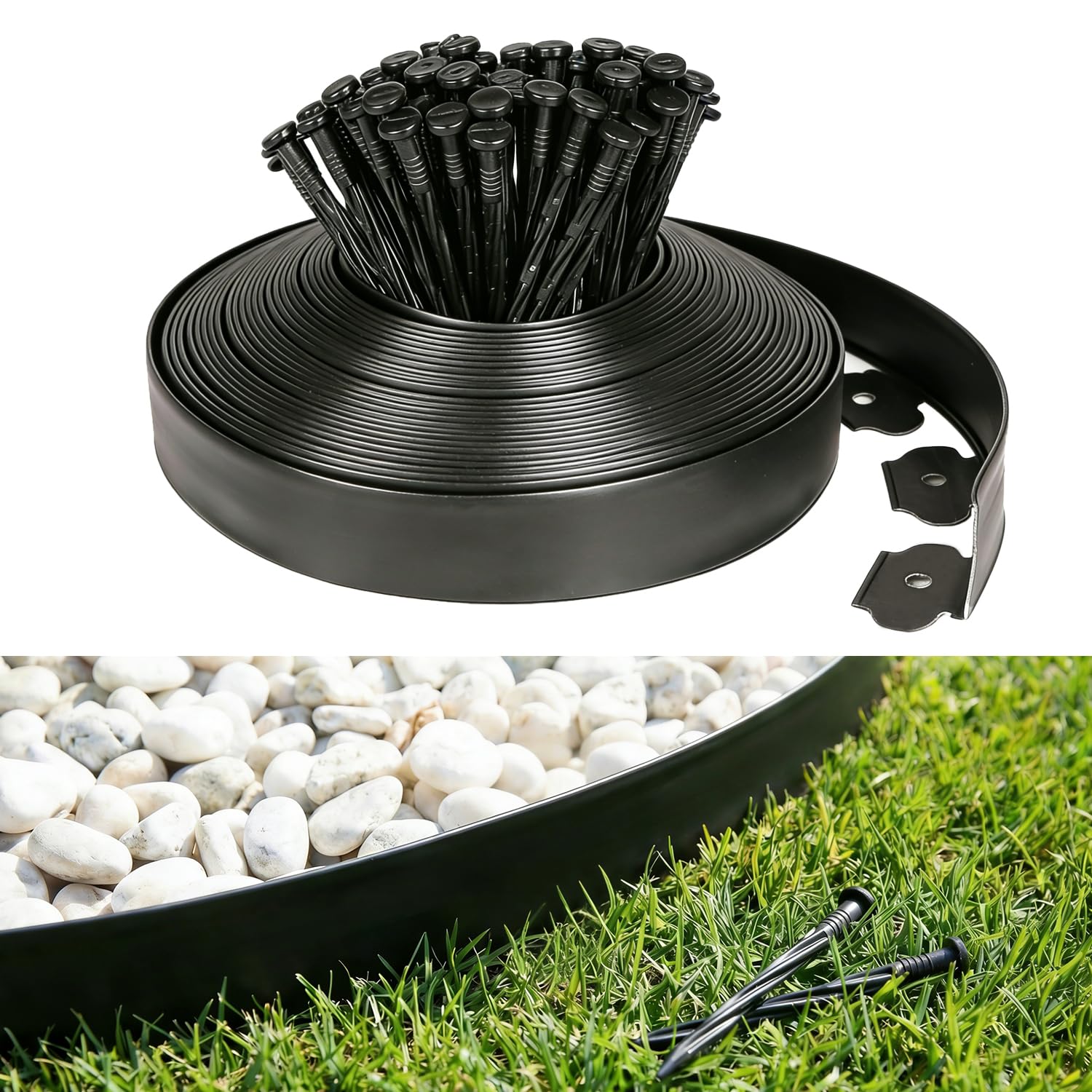
At 2 inches tall with 60 included stakes, the Hugeleaf kit is designed for low-profile separation between lawn and flower beds. The height is tall enough to stop a mower wheel from riding over the border but short enough that you can run a trimmer string above it without snagging. The plastic material cuts easily with scissors or pruners for custom lengths.
Installation uses a no-dig hammer-in method: lay the strip along the desired edge and pound the plastic stakes through the pre-formed holes. The stakes are plastic, so they work best in soft, loamy soil — hard clay or rocky ground will cause them to bend or snap. Several buyers recommend soaking the ground or waiting after rain to make stake insertion easier.
This edging works well for straight runs and broad curves, but it does not hold tight radius bends without creating waves in warmer weather. Owners suggest leaving the coil in the sun for several hours before installation to relax the plastic memory. For the price, you get enough material and stakes to complete a 60-foot project without supplementary purchases, which is rare in this category.
What works
- Generous 60-stake count covers density requirements out of the box
- Low profile allows mower deck to clear the edge easily
- Quick no-dig install saves significant labor
What doesn’t
- Plastic stakes break in hard or rocky soil
- Material can become wavy under extreme heat
- Too short to stop aggressive grass rhizomes
3. Beuta Faux Stone Blocks
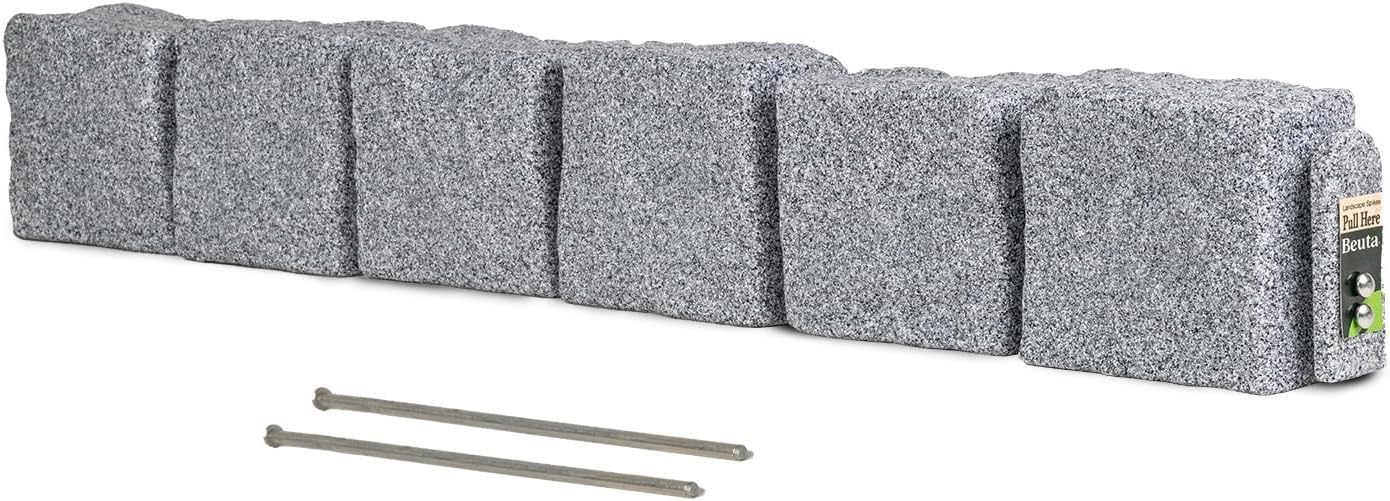
The Beuta system mimics realistic stacked stone blocks but weighs a fraction of natural stone, with each 48-inch section coming in at 10.7 pounds. The patent-pending connection system uses two spikes per section to lock the panels together, and the 6.5-inch height provides a substantial visual barrier that retains mulch and small river rock effectively.
Installation is straightforward for straight runs: hammer the spikes through the pre-formed holes into the ground. The panels include five block types — start, stop, turn left, turn right, and extender — but this system is designed for straight lines and 90-degree corners. Tight curves or sweeping arcs are difficult because of the rigid panel lengths. Owners have improvised 90-degree turns using drilled holes and cable ties, but the manufacturer’s intended layout is geometry-based.
Greystone color mimics a natural sandstone finish that blends with traditional landscaping. Some units have arrived with minor surface dents or cosmetic blemishes — these are hidden once the block is placed against the soil. The per-section cost is higher than coiled plastic equivalents, but the visual upgrade justifies the premium for front-yard borders where aesthetics matter most.
What works
- Realistic stone appearance elevates garden presentation
- Durable resin resists rust, rot, and UV damage
- Substantial 6.5-inch height contains mulch and rock
What doesn’t
- Designed primarily for straight lines — curved layouts require modifications
- Higher cost per linear foot than coiled alternatives
- Some units have cosmetic surface imperfections
4. VEVOR HDPE Coiled Board

The VEVOR coiled board stands out for its 10-inch depth — double the height of most standard landscape edging. At 0.1-inch thickness and 200 pounds of puncture resistance, it functions as a rigid barrier against deep-rooted weeds and stormwater runoff. This is the best option for properties with drainage issues where water flows under standard-height edging.
Installation requires digging a full trench — you cannot hammer this into place because of the thick HDPE. Owners use a hand saw or heavy shears to cut the roll to length. The material wants to spring back to its coiled shape, so burying at least 5 inches and backfilling tightly is necessary to hold it vertical. If more than 5 inches is left above ground, the panel may lean or lay over under lateral soil pressure.
Satisfied buyers mention using this edging to stop runoff from neighboring properties, block vegetation from growing under fences, and create defined borders around vegetable gardens where deeper root barriers matter. The 60-foot length covers large projects in a single coil. The main trade-off is installation difficulty — this is not a weekend-afternoon project for beginners.
What works
- Exceptional 10-inch depth stops runoff and deep roots
- Thick HDPE withstands riding mower deck contact
- Puncture-resistant material holds shape in heavy soil
What doesn’t
- Full trench installation required — labor-intensive
- Coil memory makes it difficult to straighten initially
- No stakes included; must source separately
5. Worth Garden Galvanized Steel

The Worth Garden steel edging uses 4.5-inch-tall strips with 2.5-inch spikes integrated into each panel, leaving 2 inches visible above ground for a clean, low-profile border. The galvanized steel core with a powder-coated black finish resists corrosion while retaining flexibility — each 40-inch strip bends to match custom curves without kinking.
Installation is a hammer-in process: position the strip along your desired line, then use a rubber mallet to drive the sharp saw-tooth spikes into the ground. No trenching is required. The 11 included 7-inch clips connect adjacent panels for rigidity, which is critical for long straight runs. Reviewers note that the steel cuts easily with a hacksaw for custom lengths, and the material can be pulled up and reshaped if you change your garden layout.
The powder coating can chip if hammered directly with a steel mallet, but a rubber mallet preserves the finish. Over time, exposed edges may develop a slight rust patina that many owners actually prefer for a rustic aesthetic. This kit covers 33 linear feet — enough for a medium-sized garden bed or a walkway border. It is a permanent solution that outperforms plastic in impact strength and shape retention.
What works
- Hammer-in installation with no trenching required
- Flexible steel forms smooth curves without kinking
- Connector clips create rigid joints between panels
What doesn’t
- Powder coating chips if struck with steel mallet
- Exposed cut edges may rust over time
- 2-inch above-ground height is minimal for deep mulch
6. STIRLINGEAR Galvanized Steel

The STIRLINGEAR edging mirrors the hammer-in steel category but stands 5 inches tall with 3 inches buried underground and 2 inches visible. The integrated spikes provide strong anchoring in firm soil, and the powder-coated black finish delivers a modern, minimalist border that works especially well with xeriscaping and mid-century garden designs.
Installation follows the same hammer-in method: use a rubber mallet along the measured line. The included 11 stakes provide decent coverage for the 33-foot kit, but owners recommend adding extras at every connection point for maximum stability in shifting soil. The steel bends to create gentle curves but holds its shape against mower contact and string trimmer hits.
Buyers frequently praise the clean transition between lawn and planting beds. The 2-inch above-ground height is sufficient for defining edges but cannot retain heavy gravel or thick mulch on slopes. Some customers note that the steel naturally develops a darker patina on exposed edges that complements the black powder coating. This is an excellent mid-range steel option for homeowners who want a crisp, durable border without the cost of masonry.
What works
- Clean powder-coated black finish suits modern landscapes
- 5-inch total height provides better underground anchor than 4.5-inch models
- Steel holds shape against mower and trimmer contact
What doesn’t
- Limited to 2-inch above-ground exposure
- Stake count feels light for a 33-foot run
- Not suitable as a deep root barrier
7. EasyFlex No-Dig Landscape Edging

The EasyFlex No-Dig system is the fastest large-scale edging solution available. The 100-foot coil of 2.5-inch-tall recycled plastic does not require trenching — you score the ground with a shovel or edger, lay the roll, and hammer the 64 included anchoring spikes through the pre-drilled holes. The woodgrain texture is purely decorative, but it blends well with natural landscapes.
The plastic is flexible enough for tight curves around tree rings while maintaining enough rigidity to form straight borders. Owners warn that the material can curl upward when exposed to direct summer heat — adding stakes at every pre-drilled hole rather than skipping every other hole prevents this lifting. The 2.5-inch height retains smaller mulch materials but will not hold river rock on sloped terrain.
This edging works best for owners who want a quick, weekend-completed project covering substantial front-yard borders or large vegetable gardens. EasyFlex customer service is responsive — missing or broken connectors have been replaced promptly. The recycled plastic composition is environmentally favorable, but the material will not match the life span of galvanized steel or thick HDPE in extreme climates.
What works
- Fast no-dig install saves significant labor time
- Comes with 64 stakes — adequate density for a stable install
- Flexible recycled plastic forms tight curves
What doesn’t
- Tendency to curl upward in direct sun without dense staking
- 2.5-inch height limits mulch retention on slopes
- Plastic is less impact-resistant than steel or thick HDPE
Hardware & Specs Guide
Height Above Grade vs. Weed Suppression
The visible portion of your border edging is primarily aesthetic, but it also determines how well the edge contains mulch and resists mower encroachment. A 2-inch above-ground profile allows mower decks to clear the edge but will not hold heavy river rock. Edging with 3.5 to 5 inches exposed retains bark nuggets and small gravel effectively. The Master Mark and VEVOR HDPE boards allow you to control the exposed height by adjusting trench depth.
Material Thickness and Longevity
HDPE edging between 0.08 and 0.1 inches thick resists cracking in freeze-thaw cycles for 10-plus years. Galvanized steel at 16 to 18 gauge is rigid and permanent but can develop surface rust where the coating is scratched. Resin blocks like Beuta avoid rust and rot entirely but can become brittle in sustained subzero temperatures. Recycled plastic no-dig edging is the least durable material, typically showing surface stress after three to five seasons in direct UV exposure.
FAQ
How deep should landscape edging be buried to stop grass roots?
Can steel landscape edging be used for curved flower beds?
How many stakes do I really need for a 60-foot coiled border?
Final Thoughts: The Verdict
For most gardeners, the border edging for landscaping winner is the Master Mark Terrace Board because it combines a functional 5-inch depth with durable HDPE material and a woodgrain finish at a fair cost. If you want a permanent, root-blocking barrier for drainage or invasive species, the VEVOR 10-inch HDPE coil is your heavy-duty pick. And for a fast, no-dig 100-foot project, the EasyFlex No-Dig Wall delivers speed and adequate stability for light-duty borders.