
Landscaping boots face a brutal daily cycle — saturated grass in the morning, loose gravel at noon, wet mud by the afternoon, and concrete or uneven turf all day long. The wrong outsole pattern or an unsealed upper leads to slips, cold feet, and early sole separation that eats into your profit margin in repairs and downtime.
I’m Rikta — the co-founder and writer behind Lawn Gear Lab. I’ve spent hundreds of hours cross-referencing ASTM safety ratings, waterproofing membranes, outsole rubber compounds, and owner-reported durability across dozens of work boot models to find the boots that actually hold up to commercial landscaping demands.
Whether you are hauling sod, running a zero-turn, or digging irrigation lines under gray skies, finding the right pair can slash fatigue and prevent foot injuries. This guide breaks down the specs that separate a six-month boot from a multi-year investment for the best boots for landscaping.
How To Choose The Best Boots For Landscaping
Landscaping boot selection is a trade-off between water resistance, underfoot grip, and the weight you carry on each leg for 10+ hours. A logger style with a deep heel works on slopes but can tear up turf; a wedge sole spreads weight evenly but clogs in deep mud. The three specs below define which boot fits your specific terrain mix.
Toe Protection and Safety Ratings
ASTM F2413-11 is the standard you want for impact and compression. A steel toe is the traditional choice for heavy lifting, but composite toes avoid conducting cold in winter and will not set off metal detectors at secured job sites. Metatarsal guards (like the wrap on the Muck Chore) protect the top of the foot from falling objects — a real risk when carrying stone edging or handling a chainsaw.
Waterproofing and Breathability
Rubber boots offer 100% waterproofness but zero breathability; neoprene and GORE-TEX lined leather boots strike a balance. Look for a two-layer system where an internal membrane blocks water while a moisture-wicking lining pulls sweat away from your skin. Storm Defender (Carhartt) and GORE-TEX (Danner, Georgia) are both proven, but breathability varies — GORE-TEX generally performs better in high-heat landscape work.
Outsole Traction and Construction Method
The best landscaping outsoles use a self-cleaning lug pattern — Duratread (Ariat) and Vibram (Danner and Georgia) shed mud rather than accumulating it. Wedge soles (Thorogood) are excellent on flat, firm surfaces but can be slippery on loose soil. Goodyear welt construction (Thorogood, Ariat, Georgia) allows the boot to be resoled, extending the usable life significantly beyond cement-construction boots.
Quick Comparison
On smaller screens, swipe sideways to see the full table.
| Model | Category | Best For | Key Spec | Amazon |
|---|---|---|---|---|
| MUCK Men’s Chore Met Guard | Rubber / Neoprene | Wet mud & debris protection | Metatarsal guard + steel toe | Amazon |
| CAT Men’s Invader Hi Steel Toe | Leather / Hiker | All-day standing on concrete | Steel toe + chunky EVA midsole | Amazon |
| Georgia Boot Low Heel Logger GORE-TEX | Leather Logger | Uneven terrain & slopes | Vibram outsole + 200g Thinsulate | Amazon |
| Twisted X All Around Bomber | Pull-On Leather | Barn & fence line work | Full-grain oiled leather | Amazon |
| Carhartt Ground Force Wellington | Pull-On Composite | Wet job sites & heavy wear | Storm Defender + composite toe | Amazon |
| Thorogood 1957 Series 8″ | Wedge Sole Leather | Flat, firm landscaping surfaces | MaxWear wedge outsole | Amazon |
| Ariat Men’s Workhog H2O | Leather / Pull-On | Flat feet & all-day comfort | Duratread outsole + composite toe | Amazon |
| Danner Vicious 4.5″ | Low-Top Leather | Hot weather & fast walking | Vibram outsole + GORE-TEX | Amazon |
| ARIA Workhog XT Venttek Bold H2O | Pull-On Ventilated | Hot, dry landscaping days | VentTEK mesh + composite toe | Amazon |
In‑Depth Reviews
1. MUCK Men’s Chore Met Guard Work Boots

The Muck Chore Met Guard boots use 5 mm neoprene for shock absorption and a flexible upper that conforms to the foot, while the external metatarsal guard turns rigid on impact — a rare combination of comfort and safety that is ideal for anyone carrying stone, pipe, or equipment on a landscape site. The steel toe and steel shank are paired with rubber overlays that wash clean easily after a day of wet work.
Owner reports confirm the boots are genuinely warm in winter, with a roomy toe box that does not dig into the steel toe cap. The rubber outsole provides excellent traction on snow and ice, and most users found the boots held up for around two years of regular heavy wear before the neoprene seams showed fatigue at the flex points.
The main compromise is flexibility when bending the toe — steel toe construction limits squatting motion — and some buyers experienced seam separation at the bending point after extended use. Nevertheless, for a wet-dominant landscaping environment where foot protection is non-negotiable, this boot is tough to beat.
What works
- True size fit with roomy toe box
- Excellent heat retention for cold sites
- Grips well on wet and icy surfaces
What doesn’t
- Seams can develop holes at flex points after heavy use
- One negative review noted quality not matching price premium
2. CAT Men’s Invader Hi Steel Toe

The CAT Invader Hi is a tough, chunky hiker-style steel-toe boot that brings modern styling to the job site without sacrificing protection. Its outsole provides strong grip on concrete and dusty surfaces, and multiple owner reports confirm the boots keep feet dry in rain and mud thanks to a waterproof layer in the build.
Users consistently report high comfort for long standing hours, though several note that adding an aftermarket insole improves the experience significantly due to minimal factory padding. The laces are a common weak point — they tend to break after a few months of daily use — but the rest of the boot holds up well, with one mechanic reporting a year of heavy wear with no structural issues.
For the landscaping worker who moves between hardscape and softscape and values a clean, professional appearance, the Invader Hi offers a strong balance between cost and durability. Just budget for replacement laces and a good insole.
What works
- Durable build with solid grip on concrete/dust
- Waterproof performance in rain and mud
- Comfortable after adding supportive insoles
What doesn’t
- Stock factory laces break quickly
- Lacks padding; inserts needed for all-day comfort
3. Georgia Boot Men’s Low Heel Logger GORE-TEX Waterproof Insulated
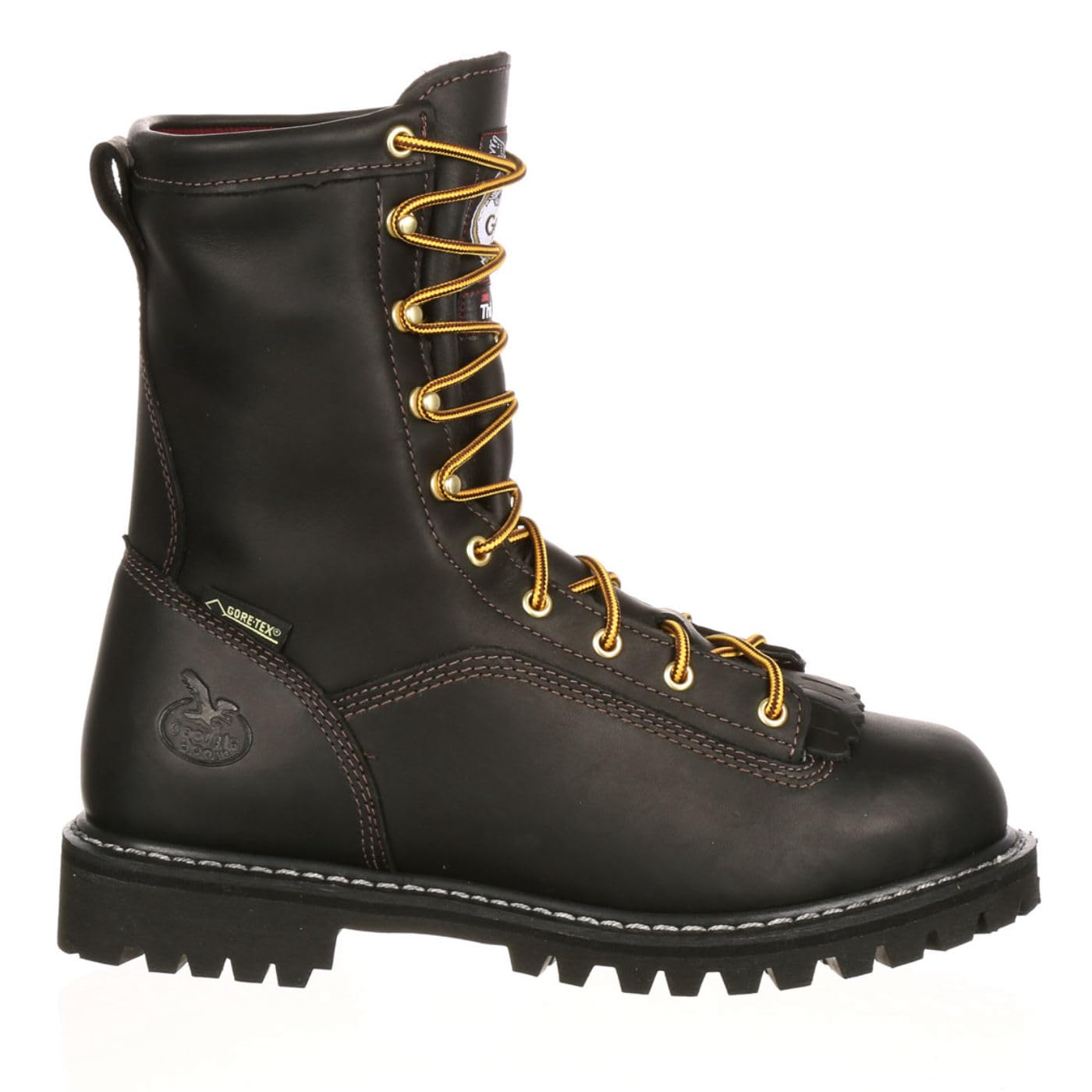
The Georgia Logger is a Goodyear welt construction boot with full-grain black leather, a Vibram lug outsole, and 200 grams of Thinsulate insulation. The combination of GORE-TEX waterproofing and a steel shank provides serious support for carrying heavy loads over uneven terrain, and the Vibram outsole resists abrasion, heat, chemicals, and oil.
Owners praise the excellent construction and craftsmanship, noting that the boots last for years with proper care. The break-in period runs about a week of daily wear, after which the leather forms to the foot. The brass eyelets and red stitching give it a classic, smart look that works for both job sites and casual wear. However, the boot runs heavy, and the Thinsulate makes feet uncomfortably warm in temperatures above 20°C.
Some users found the ankle stiffness required weeks to break in, and the leather is thinner than premium brands like Danner Rainforest. But for the price difference, the Georgia Logger offers exceptional value for landscape work on slopes, gravel, and muddy grades.
What works
- Excellent GORE-TEX waterproof performance
- Vibram outsole grips well on mud and rock
- Goodyear welt can be resoled
What doesn’t
- Heavy boot — noticeable fatigue on long days
- Too warm for summer-only landscaping
4. Twisted X Men’s 11in All Around Bomber Work Boot
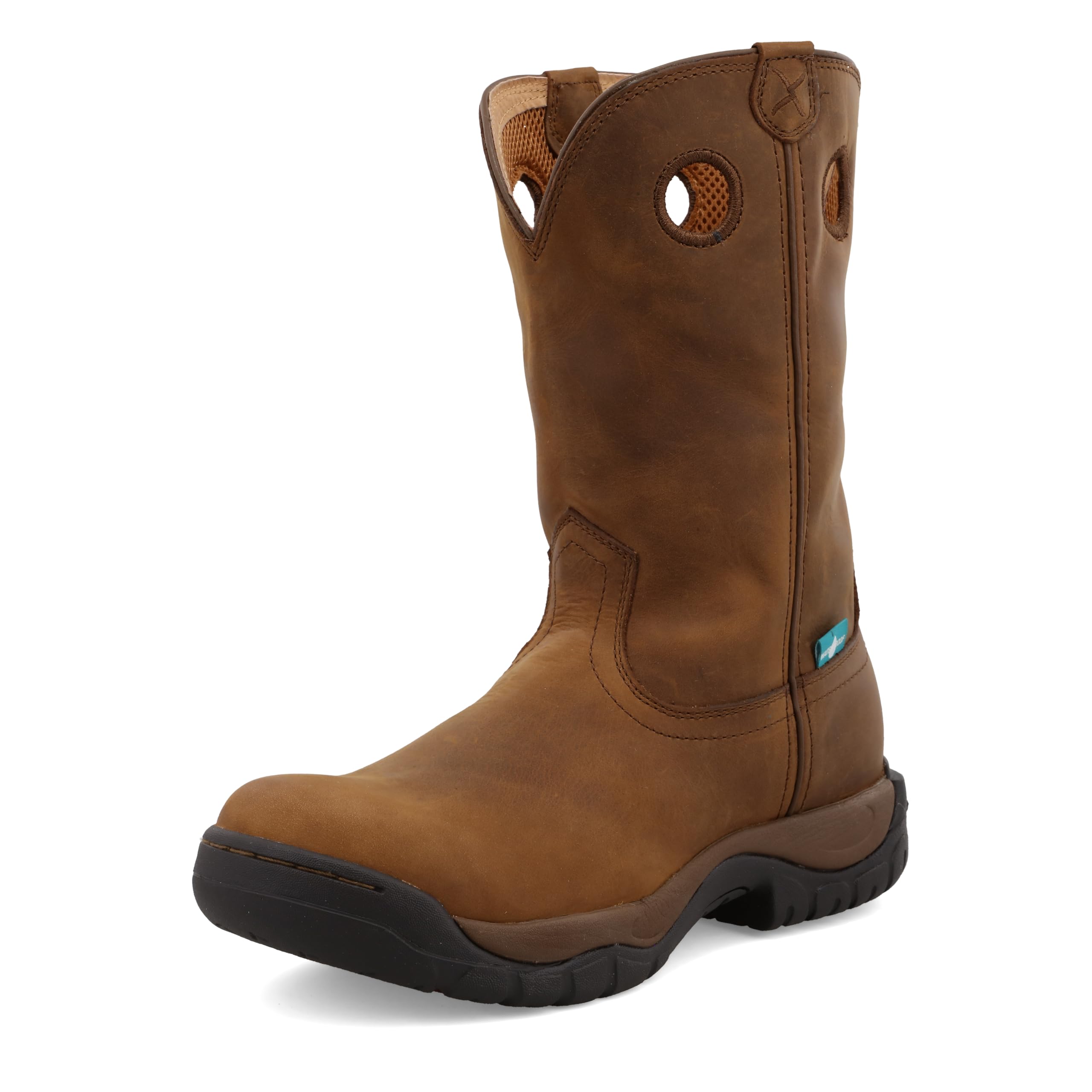
The Twisted X Bomber is a pull-on work boot handcrafted from full-grain oiled leather, designed originally for barn use but equally capable on a landscape site. The 11-inch shaft provides generous ankle coverage, and the wide K-toe design accommodates foot swelling during long days. Owners report the boot is comfortable right out of the box with minimal break-in required.
Multiple repeat buyers confirm this is a durable, cushioned boot that supports ankles, feet, and lower back — a common pain point for landscape workers. The water resistance holds up well in puddle-level wet conditions, though it is not fully submersible. The gray/brown color scheme avoids looking overly dirty after a day of work.
For workers with hammertoes or wide feet, reviews specifically call out the Bomber as the only boot style that works without pain. The pull-on design is convenient for quick changes between tasks, though the smooth leather upper offers less ankle protection than a lace-up logger.
What works
- Zero break-in — comfortable from first wear
- Excellent for wide feet and foot conditions
- Durable and good-looking workwear style
What doesn’t
- Limited ankle support compared to lace-up boots
- Not fully submersible in deep water
5. Carhartt Ground Force 10” Waterproof Wellington Boot

The Carhartt Ground Force Wellington uses oil-tanned leather and rugged fabric with Storm Defender waterproof technology that keeps water out while allowing moisture to escape through the FastDry lining. The 10-inch pull-on design is easy to slip into for quick job transitions. Owners consistently report these boots as durable enough for oilfield work and outlasting Red Wings over years of heavy use.
The composite toe meets ASTM safety standards and is rated for electrical hazard protection, a key advantage for anyone working near underground utilities. The EVA midsole and Ground Force rubber outsole provide shock absorption and flexible grip. Several hard-use customers noted the boots remain comfortable after 12-hour shifts without hot spots or blisters.
There is a known sizing quirk — one owner received the wrong size, so purchasing from a reputable seller with a consistent size chart is recommended. The pull-on design also requires significant effort to remove after a muddy day, and some users wished for a quick-release pull tab.
What works
- Storm Defender membrane is genuinely waterproof
- Composite toe keeps feet warm in cold soil
- Comfortable for 12+ hour shifts
What doesn’t
- Difficult to remove when caked in mud
- Inconsistent sizing reported by some buyers
6. Thorogood 1957 Series 8” Waterproof Work Boots

The Thorogood 1957 re-issue brings mid-century American work boot styling with a modern waterproof breathable membrane. The Goodyear Storm Welt construction means these boots can be resoled multiple times, giving them a lifecycle far beyond cement-construction alternatives. The MaxWear wedge outsole provides traction on mud and grass without digging up turf.
Owners rave about the comfort and fit, with the removable memory foam footbed molding to the foot after just a week of wear. The Briar Pitstop leather color earns consistent praise for its rich appearance. One user reported the boot kept feet warm in winter and cool in summer due to the breathable lining, an ideal trait for landscapes where temperature swings are common.
A few negative reviews point to Amazon-specific fulfillment issues — one pair arrived in a knockoff box with a defective left boot. That appears to be a seller issue rather than a Thorogood quality problem. The wedge sole also lacks deep tread, so it can be slippery on loose gravel compared to a lug sole.
What works
- Can be resoled via Goodyear welt construction
- Wedge sole provides stable footing on firm surfaces
- Breaks in quickly with memory foam insole
What doesn’t
- Wedge sole lacks deep tread for loose terrain
- Amazon fulfillment issues reported with packaging
7. Ariat Men’s Workhog 8 Inch H2O Composite Toe Boot
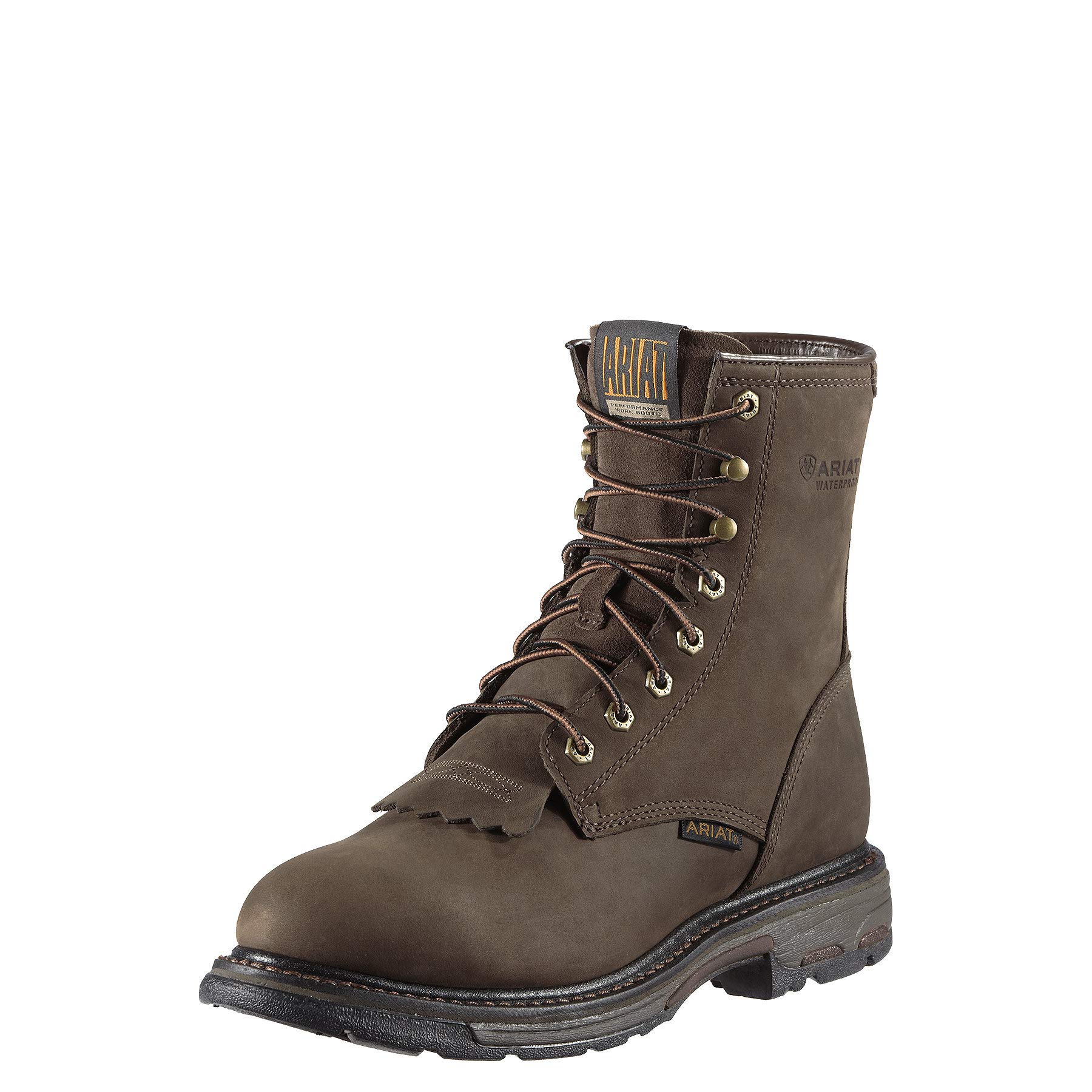
The Ariat Workhog H2O is a pull-on boot with a full-grain leather upper, Goodyear welt construction, and a Duratread outsole that is self-cleaning and non-tracking — meaning it sheds mud rather than carrying it into your truck or house. The composite toe meets ASTM F2413-05 for impact and compression and is EH rated for electrical hazards.
Owner feedback consistently highlights the excellent waterproofing and slip-resistant sole, with users reporting the boot keeps feet warm in sub-zero temperatures while the interior liner regulates temperature well for milder days. Multiple buyers with flat feet report this boot as their go-to for all-day standing comfort, and one husband-and-wife review noted the boot works for both after being broken in.
The main criticism is that the pull-on loops may not be as durable as the rest of the boot, and a few users found the tongue finicky. However, the overall durability and comfort make it a strong mid-premium choice for landscaping crews who need reliable protection at a fair price.
What works
- Self-cleaning Duratread outsole
- Excellent waterproofing and temperature regulation
- Comfortable for flat-footed workers
What doesn’t
- Pull-on loops could be more robust
- Tongue construction feels somewhat whimsical
8. Danner Vicious 4.5” Waterproof Work Boots
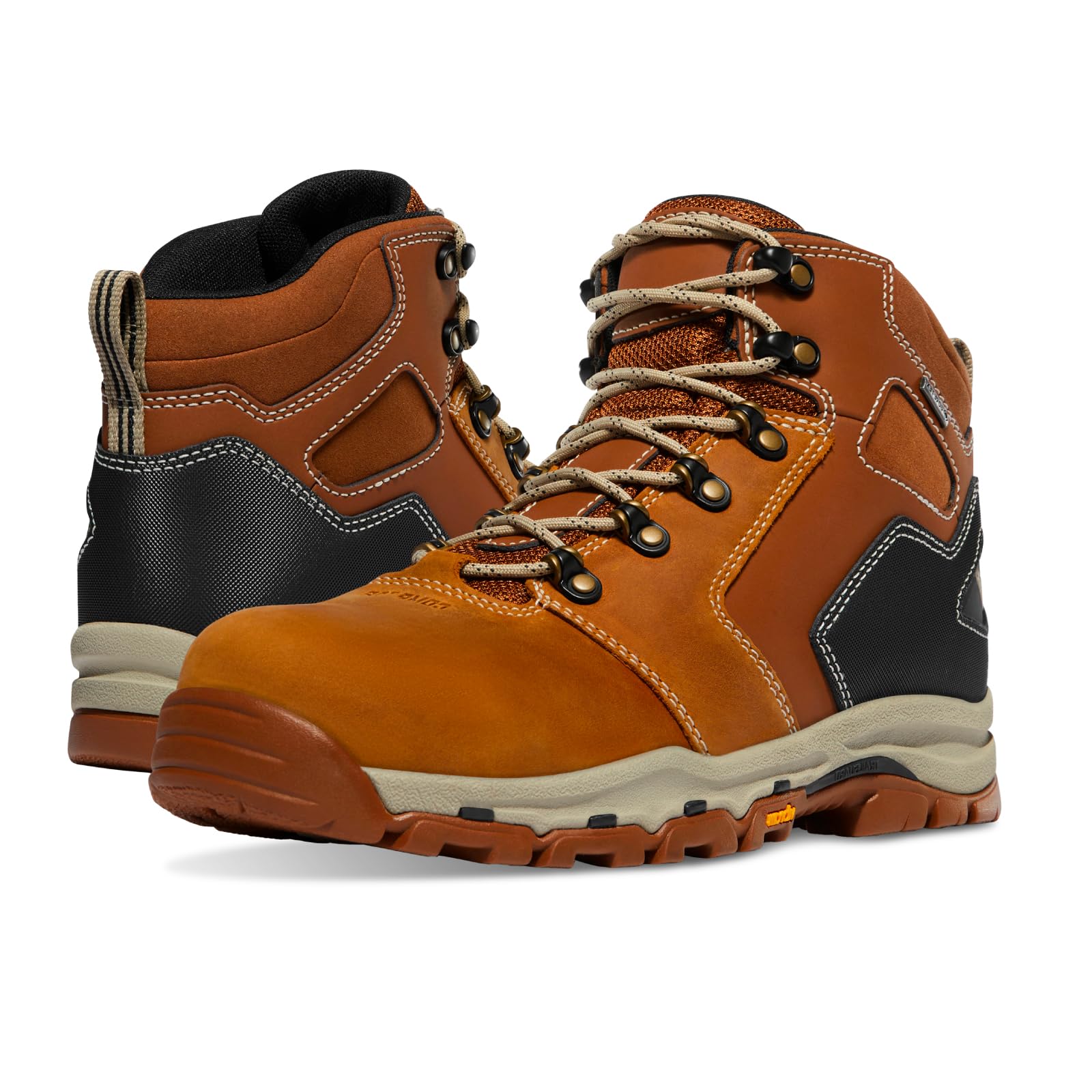
The Danner Vicious 4.5 boot uses a full-grain leather upper paired with a GORE-TEX liner for 100% waterproof, breathable protection. The Vibram Vicious outsole has a low-profile 90-degree heel that provides oil and slip resistance on hard surfaces, while the Danner Trailguard platform gives a roomy toe box with a snug heel fit — ideal for workers who walk fast over long distances.
User reports after 1.5 years of heavy use show the tread and waterproofing hold up well, with original laces and eyelets still intact. Workers in automotive shops and on construction sites report excellent foot support and low back pain relief. The speed lace system makes for quick, secure fastening even with work gloves on.
A small number of buyers experienced discomfort from what appeared to be a manufacturing defect — lumps in the sole or tongue that made the boot unwearable despite break-in attempts. The 4.5-inch height offers less ankle coverage than an 8-inch boot, so workers on steep slopes may prefer a taller model.
What works
- Exceptional GORE-TEX waterproofing
- Speed lace system is practical and secure
- Holds up well after 1.5 years of daily wear
What doesn’t
- Low shaft height limits ankle support
- Occasional manufacturing defects reported
9. ARIAT Workhog XT Venttek Bold H2O

The Ariat Workhog XT Venttek Bold H2O is the most ventilated boot in this list, featuring VentTEK mesh panels that actively push heat and moisture out while maintaining full waterproof protection. The composite toe is ASTM-certified for impact and compression without conducting cold, and the pull-on design makes it easy to slip on before heading out to the job site.
Owners confirm the boot is tough enough for construction, oilfield, and farming — environments that mirror the abuse of commercial landscaping. The reinforced toe area resists premature wear, and the boot remains foot-dry after months of exposure to mortar, snow, brick drops, and watery mud. Several users emphasize the ventilation is a game-changer for hot climates, keeping feet from sweating inside the boot.
The drawbacks are weight and cost — this is a heavy boot, and it sits at the premium end of the price spectrum. Some users mention the break-in period is more noticeable than expected for a pull-on boot. But for the worker who needs a ventilated, composite-toe boot for hot and humid days, this is a specialized solution that outperforms most competitors.
What works
- Effective VentTEK keeps feet dry and cool
- Composite toe is cold-resistant and durable
- Slip-on design is convenient for quick starts
What doesn’t
- Heavy boot — noticeable on long shifts
- Break-in is more noticeable than similar pull-ons
Hardware & Specs Guide
Waterproof Membrane Types
GORE-TEX (Danner, Georgia) uses an expanded PTFE film that blocks liquid water while allowing vapor to escape — the gold standard for breathable waterproofing. Storm Defender (Carhartt) uses a polyurethane-based membrane that is less breathable but equally waterproof. For all-day wet work, GORE-TEX is superior; for job sites where you are in and out of water, Storm Defender is sufficient and more affordable.
Construction Methods
Goodyear welt (Thorogood, Ariat, Georgia) stitches the upper to the outsole through a leather or rubber welt, allowing the boot to be resoled. Cement construction (Carhartt, CAT) bonds the outsole directly — lightweight and less expensive, but the boot is disposable when the tread wears out. For landscape work on hardscapes, the repairability of Goodyear welt offers a longer total lifespan.
Outsole Patterns
Wedge soles (Thorogood) spread weight evenly and do not mark turf — best for mowing crews and flat-site prep work. Lug soles (Georgia, Danner, Muck) with deep, self-cleaning treads are essential on slopes, loose gravel, and mud. Duratread (Ariat) is a proprietary rubber compound that resists oil, heat, and slipping while shedding mud automatically. For mixed terrain, a moderate lug pattern is the most versatile option.
Toe Protection Materials
Steel toes (Muck, CAT, Georgia) provide the highest impact protection but transfer cold in freezing weather. Composite toes (Carhartt, Ariat Workhog and Venttek) are non-metallic, lighter, and do not conduct heat or cold — a strong choice for winter landscape work near metal detectors. All listed boots meet ASTM F2413 safety standards, so both options provide legitimate protection for lifting and support.
FAQ
Are steel toe or composite toe boots better for landscaping?
What is the best outsole pattern for wet grass and mud?
How often should I replace landscaping work boots?
Final Thoughts: The Verdict
For most gardeners, the boots for landscaping winner is the MUCK Men’s Chore Met Guard Work Boots because it offers the rare combination of a metatarsal guard, steel toe, neoprene waterproofing, and warm thermal retention — all at a price that outperforms safety-toe boots costing twice as much. If you want a ventilated, composite-toe boot for hot climates, grab the ARIA Workhog XT Venttek Bold H2O. And for a lightweight, stylish hiker for hardscape work, nothing beats the CAT Men’s Invader Hi Steel Toe.