
Water your bonsai, and if the soil stays soggy for days or turns into hard, cracked clay, your tree is in trouble. The single most important thing you can do for a bonsai is give it soil that drains fast while holding just enough moisture between waterings. This guide breaks down five proven bonsai soil mixes, what each one is actually made of, and exactly which tree type or skill level each mix fits — so you stop guessing and start seeing real root health.
I’m Rikta — the co-founder and writer behind Lawn Gear Lab. This guide is built by comparing the manufacturers’ published specifications and the patterns across verified customer reviews, so you get each pick’s real strengths and trade-offs instead of marketing spin.
If you want a fast-draining, pre-mixed bag that works from day one without needing to blend your own ingredients, the best choice for most growers is a balanced mix of pumice, lava rock, calcined clay, and pine bark that keeps roots aerated and healthy.
How To Choose The Best Bonsai Soil
Bonsai soil is nothing like the potting mix you use for houseplants. The goal is not to hold water — it is to drain quickly, let air reach the roots, and still keep a tiny amount of moisture. If you use regular garden soil, your bonsai roots will suffocate and rot. Here is what to look for.
Ingredient Breakdown: What Is Actually in the Bag
The best mixes combine three key inorganic particles — pumice (light volcanic rock that holds air and some water), lava rock (heavier, sharp-edged rock that improves drainage), and calcined clay (baked clay granules that absorb moisture then release it slowly) — with a small amount of pine bark for organic matter. A mix that relies too heavily on bark or peat will stay wet too long.
Particle Size and Consistency
Bonsai roots need particles that are roughly 1/8 to 1/4 inch in size, with no dust or fine powder that can clog the gaps. A screened and pre-washed mix saves you the hassle of sifting at home. If you see a lot of fine dust in the bag, you will need to sift it out yourself.
Matching the Mix to Your Tree Type
Conifers like junipers and pines want a lean, extra-fast-draining mix with very little organic material — think pumice, lava, and slate. Tropical trees like ficus and jade can handle a bit more water retention, so a blend with calcined clay and a touch of pine bark works better. Beginners are often better off with a mix that includes some organic matter because it forgives inconsistent watering.
Quick Comparison
On smaller screens, swipe sideways to see the full table.
| Model | Category | Best For | Key Spec | Amazon |
|---|---|---|---|---|
| The Bonsai Supply 4qt | Premium | Experienced growers who want pure drainage | 128 fl oz (4 quarts) | Amazon |
| Tinyroots Conifer Blend | Premium | Conifer owners who need a large bag | 2.5 Gallons | Amazon |
| Harris Bonsai Soil | Mid-Range | Seedlings and all-purpose repotting | 2 Quarts | Amazon |
| Bonsai Jack #221 | Mid-Range | Versatile use and succulent compatibility | 74 fl oz (2 quarts) | Amazon |
| Gardenera Premium Mix | Value | Beginners trying their first repot | 1 Quart | Amazon |
In‑Depth Reviews
1. The Bonsai Supply Professional Bonsai Soil Mix

You get the biggest bag in this guide at 128 fluid ounces (4 quarts) — enough to repot multiple trees without buying a second bag. The mix drains very fast and prevents root rot because the particles leave visible air gaps in the pot. Buyers report that tree health improves noticeably after repotting. The catch is that this mix has almost no nutrients, so you must fertilize regularly. As one reviewer noted, “Beginners should add 10-30% organic material (chunky bark/compost) to retain moisture.” This is the soil to buy when you know exactly what you are doing and want pure performance for the money. skip it if you are a raw beginner who wants a forgiving mix straight from the bag — you will need to add organic matter or risk the soil drying out too fast.
Why it’s great
- Largest bag in the guide at 128 fl oz — repot multiple trees at once
- Flawless drainage that prevents root rot in nearly any species
- Pre-sifted and ready to use; no extra work needed
Good to know
- Lacks nutrients; you must fertilize every few weeks
- Not ideal for raw beginners without adding organic material
- Some users find it less cost-effective than mixing their own
2. Tinyroots Conifer Bonsai Soil Blend
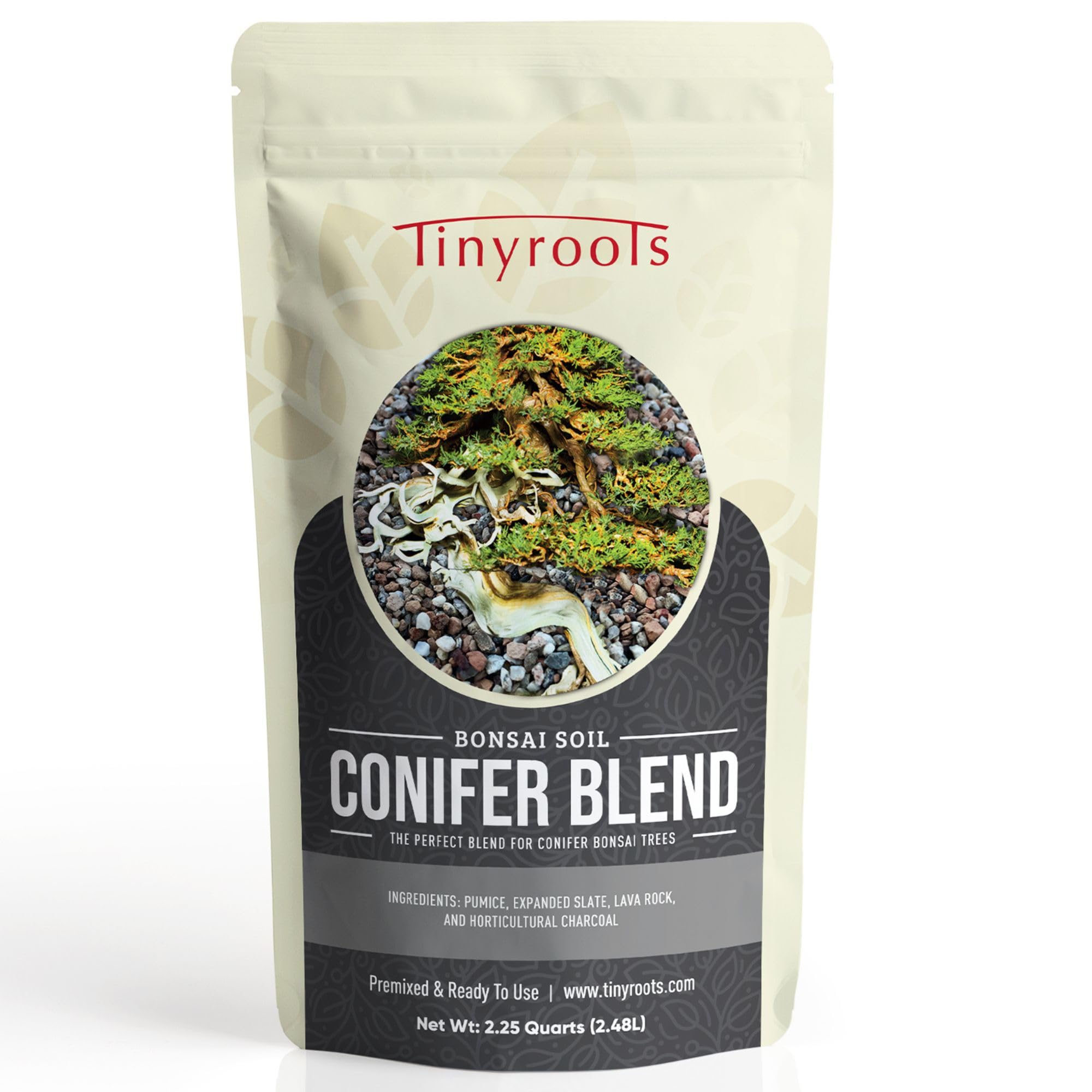
If you own conifers — junipers, Japanese black pines, white pines, cedars, or cypress — this 2.5-gallon blend is purpose-built for them and gives you more than 10 times the volume of the 2-quart Harris or Bonsai Jack mixes. At 2.5 gallons versus 2 quarts for most competitors, you get enough soil for a whole bench of trees, not just one pot. The blend combines pumice, expanded slate, lava rock, and horticultural charcoal, creating a mix that does not compact at all and drains immediately. Owners mention that “the soil stays loose” and promotes healthier color and stronger growth. For seedlings, reviewers suggest you mix it 50/50 with peat moss so it stays moist enough for young roots; for mature trees from rocky environments, an 80/20 or 90/10 ratio works better. The only real limit: this is formulated specifically for conifers and does not include the calcined clay that tropical trees prefer — so choose The Bonsai Supply instead if you grow ficus or jade.
Where it shines
- Massive 2.5-gallon bag at a competitive per-quart rate
- Consistent, clean particle size with no dust or compaction
- Already screened and ready to use with zero sifting needed
Worth noting
- Blended for conifers only; less suited to tropical species
- May need mixing with peat moss for seedlings
- Resealable bag is helpful but the volume can be heavy to pour
3. Harris Bonsai Soil, All Purpose Premium Blend

If you are starting bonsai from seed or repotting a single young tree, this 2-quart bag gives you a balanced all-purpose blend of forest humus, pumice, calcined clay, organic amendments, basalt rock dust, and lime — all at a price that undercuts premium bags while still delivering strong drainage. The lime keeps the pH steady (a measure of acidity-alkalinity) so roots absorb nutrients efficiently. The mix holds moisture well enough that in winter you only need to water once a week, but it still drains excess water quickly so the roots do not sit in a puddle. One buyer who sowed four bonsai seeds in December reported that “3 have sprouted” by early January after moving the seedlings into this soil. The bag is small — one bag is just enough for one tree — but the particle quality is consistent and there is very little dust. The standout feature here is the inclusion of both organic matter and lime, which makes this one of the most forgiving mixes for a beginner who is still learning to water correctly. Not for someone with a large collection of conifers that need pure, nutrient-free drainage.
What stands out
- Excellent germination results for seeds and cuttings
- Includes lime for automatic pH balancing
- Holds moisture well without becoming waterlogged
The trade-offs
- Small 2-quart bag suits only one or two trees
- Slower drainage than pure inorganic mixes
- Heavier than pumice-only blends due to forest humus content
4. Bonsai Jack Universal Organic Bonsai Soil Mix #221
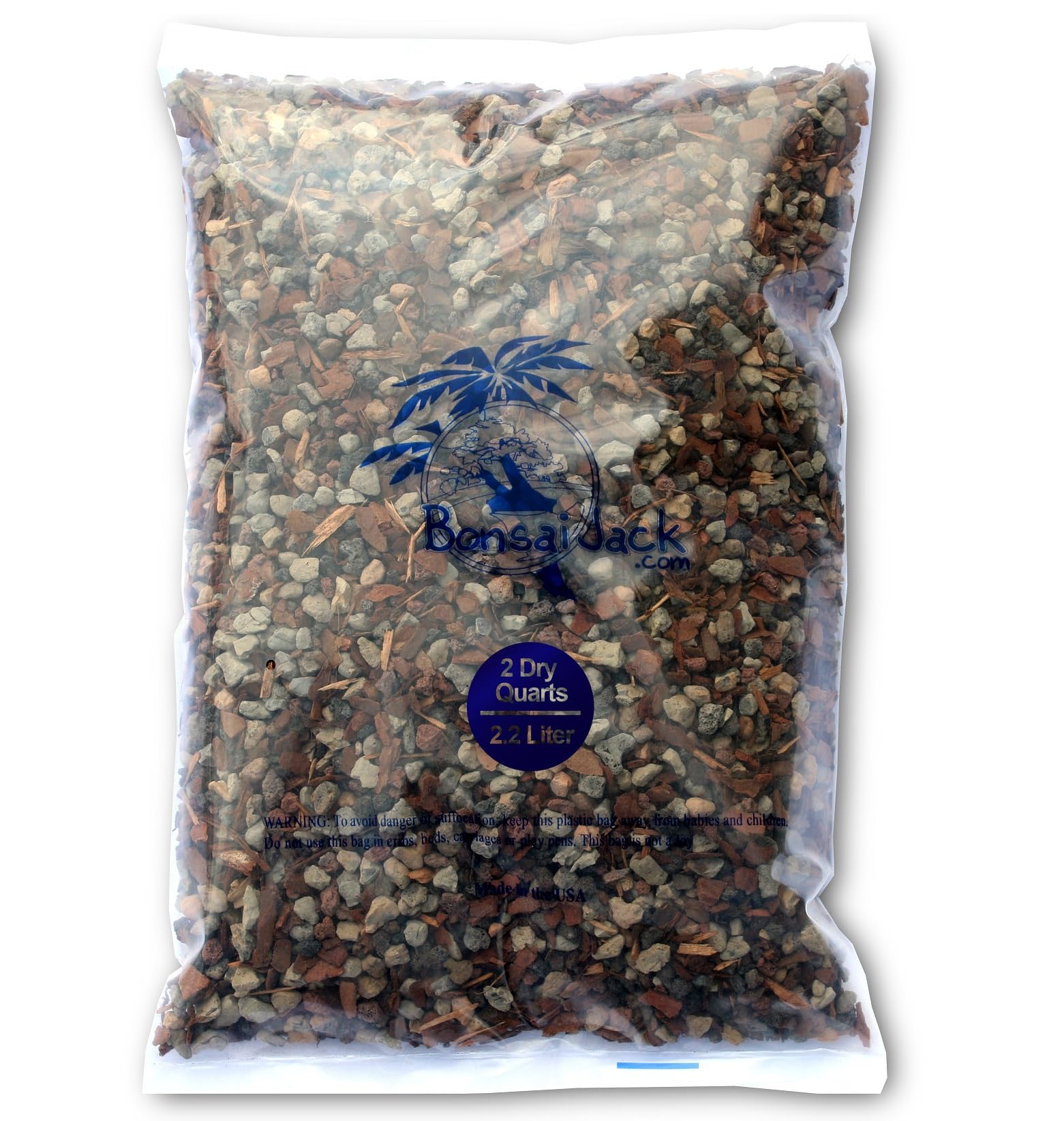
The spec that matters most here is particle consistency: Bonsai Jack #221 delivers it with an optimal pH of 6.4 and a screened, pre-washed mix that is ready to pour immediately. At 74 fluid ounces (2 quarts), it is significantly smaller than the 128-fluid-ounce Bonsai Supply bag, but its reputation as a professional supplier with over a hundred thousand bags sold makes it a trusted middle-ground choice. The downside you accept is that this mix holds very little moisture — only the pine bark and the absorptive rock trap any water at all. That makes it excellent for thick-leaved succulents and tropicals that hate wet feet, but one reviewer with three years of use noted it is “not suitable for mature trees in refinement” because root development is slower than with higher-quality akadama (a fired Japanese clay). Another buyer pointed out that it “holds water well for a healthy tree in full sun” and is cheaper than genuine akadama. For the price, you get a reliable, repeatable mix that works across bonsai, succulents, and cacti — a solid value for the grower who wants one bag that does several jobs. Not the right pick if you live in a dry climate and need a mix that holds moisture between longer watering gaps.
The upsides
- Screened and pre-washed; zero dust or fine particles
- Proven mix with over 100,000 bags sold and phone support
- Works well for bonsai, succulents, and cacti alike
Keep in mind
- Minimal moisture retention; not ideal for dry climates
- 2-quart bag is small for a multi-tree collection
- Mature-tree root development is weaker than with premium akadama
5. Gardenera Premium Bonsai Soil All Purpose Mix

At 1 quart, this is the smallest bag in the lineup, but it actually includes pumice, lava rock, calcined clay, and pine bark — the same four-ingredient formula that premium mixes use. It weighs just 2.1 pounds, so it is easy to handle and pour. What you give up is volume: one bag is barely enough for a single small bonsai, and several customers note the bag is “sufficient for only one plant” and could have used half more. The mix does not include instructions, which can be confusing for a beginner who expects actual soil, not a blend of rocks and bark. One reviewer who replanted a Juniper Dwarf said “all looks great” after two weeks, which is a strong sign for the mix’s basic drainage performance. This is a low-cost way to see what a real bonsai soil mix looks and feels like — ideal if you have never repotted a bonsai before and want a minimal upfront investment. But if you have more than one tree, buy the 4-quart Bonsai Supply bag instead and save money per quart.
Why we’d pick it
- Proper four-ingredient blend at a budget-friendly entry price
- Lightweight at 2.1 pounds for easy handling
- Backed by a money-back satisfaction guarantee
A few caveats
- Only 1 quart — barely enough for one small tree
- No instructions included; beginners may be confused by the lack of actual “soil”
- Requires more frequent watering than blends with higher organic content
Understanding the Specs
Drainage vs. Water Retention
Bonsai roots cannot survive in soggy, compacted soil. The ideal mix drains excess water within seconds while the particles themselves (especially calcined clay and pumice) absorb a tiny amount of moisture that roots can draw from between waterings. Mixes with more pine bark or forest humus hold more water, which can help beginners who water inconsistently, but they also increase the risk of root rot if you tend to overwater.
Particle Size and Sifting
Most quality bonsai soils use particles between 1/8 and 1/4 inch. Smaller particles (dust) fill the gaps between larger ones, blocking air flow and causing the mix to hold too much water. “Screened” and “pre-washed” on a bag means the manufacturer has already removed that dust for you. If a mix has a lot of dust in the bag, you can sift it through a 1/8-inch mesh hardware screen at home before using it.
FAQ
Can I use regular potting soil for my bonsai tree?
How much soil do I need for a single bonsai tree?
Should I add anything to my bonsai soil before using it?
What is the difference between akadama and a pumice-lava mix?
Can I reuse old bonsai soil?
Final Thoughts: The Verdict
Across the board, the bonsai soil winner is the The Bonsai Supply 4-Quart Professional Mix because it delivers the largest volume of pure drainage-focused particles at a price that makes sense for anyone with more than one tree. If you own conifers and need a massive bag for a bench of junipers or pines, grab the Tinyroots Conifer Blend. And for a beginner starting with seeds or a single young tree, the balanced, pH-stabilized blend of the Harris Bonsai Soil gives you the forgiveness you need while you learn your watering rhythm.