
Blue spruce trees are prized for their striking silvery-blue needles, but these conifers are notoriously pH-sensitive and prone to nutrient deficiencies that cause needle browning, stunted growth, and a dull, washed-out color. Choosing the right fertilizer means understanding the specific nitrogen-phosphorus-potassium ratios and sulfur content that these evergreens rely on to maintain their signature hue and structural vigor.
I’m Rikta — the co-founder and writer behind Lawn Gear Lab. I’ve spent hundreds of hours analyzing formulation data, studying pH response curves for acid-loving conifers, and cross-referencing verified buyer experiences to build a precise matchup between spruce tree needs and specific NPK profiles.
Whether you are dealing with a mature landscape specimen or a newly planted sapling, this guide breaks down the exact chemical and physical properties that matter most. This is your straightforward, data-driven resource for finding the best blue spruce fertilizer to restore needle color and root strength.
How To Choose The Best Blue Spruce Fertilizer
Blue spruce trees are shallow-rooted conifers that require acidic soil, ideally with a pH between 5.0 and 6.5. Selecting a fertilizer without considering acidification and micronutrient availability can lead to chlorosis, poor root development, and increased vulnerability to pests. Below are the critical factors to evaluate before buying.
Nitrogen, Phosphorus, and Potassium Ratios
Evergreens benefit from a balanced NPK ratio with slightly higher nitrogen to support rich green and blue needle color. Look for a first number (N) between 4 and 10 — too much nitrogen forces soft, succulent growth that attracts spider mites. A 4-3-4 or 10-8-6 formulation is a solid starting point, but the phosphorus and potassium numbers should be roughly equal to avoid root burn and to support seasonal hardiness.
Sulfur Content and pH Management
Blue spruce thrives when soil pH stays acidic. Elemental sulfur or sulfate in the fertilizer slowly lowers pH, preventing root lockout of micronutrients like iron and manganese. Products with at least 5% sulfur are ideal for established trees showing yellowing needles or reduced growth. Fast-acting sulfur granules can be used as a supplement if your soil test reveals alkaline conditions above 7.0.
Liquid vs. Granular Release Mechanism
Liquid fertilizers, like 32-ounce concentrates, provide an immediate nutrient boost and are best for mid-season correction of pale needles or weak growth. Granular slow-release formulas, particularly organic blends with Bio-tone or mycorrhizal fungi, feed the root system over several months and reduce the risk of chemical burn. For two-feed-per-year schedules (early spring and late fall), granular organics are the most forgiving option for inexperienced handlers.
Quick Comparison
On smaller screens, swipe sideways to see the full table.
| Model | Category | Best For | Key Spec | Amazon |
|---|---|---|---|---|
| Espoma Organic Evergreen-Tone | Granular Organic | Established yard trees & shrubs | 4-3-4 NPK, 5% Sulfur, 18 lb | Amazon |
| Espoma Organic Holly-Tone | Granular Organic | Large-scale acid-loving gardens | 4-3-4 NPK, 5% Sulfur, 36 lb | Amazon |
| FoxFarm Happy Frog Acid Loving | Granular Organic | Containers, blueberries & ornamentals | 4 lb bag, Mycorrhizal fungi | Amazon |
| Miracle-Gro Water Soluble Azalea/Camellia | Water-Soluble Powder | Quick color boost every 7-14 days | 5 lb, 1:18 outdoor mix ratio | Amazon |
| TPS Spruce Tree Fertilizer | Liquid Concentrate | Targeted summer feeding of blue spruce | 32 oz, 1 tsp/qt water | Amazon |
| TPS Evergreen Tree Fertilizer | Liquid Concentrate | Refreshing weak or declining evergreens | 32 oz, Made in USA | Amazon |
| Earth Science Fast Acting Sulfur | Granular Sulfur | Lowering soil pH proactively | 5 lb, Nutri-Bond Technology | Amazon |
In‑Depth Reviews
1. Espoma Organic Evergreen-Tone 4-3-4

Espoma’s Evergreen-Tone is a premium dry granular fertilizer formulated with a 4-3-4 NPK profile and 5% sulfur — exactly what blue spruce needs to maintain acidic soil conditions and prevent iron chlorosis. The 18-pound bag provides coverage for multiple large trees, and the Bio-tone formula adds beneficial microbes that improve root colonization and water uptake. Users consistently report visible greening within two weeks and sustained needle density through the growing season.
The organic composition, derived from natural ingredients without sludges or chemical additives, makes this a low-risk choice for both new plantings and established specimens. The granules are easy to broadcast around the drip line, and the slow-release mechanism means one application in early spring and another in late fall covers the entire year.
On the downside, the barnyard odor from the chicken manure content can be noticeable for a few days after application, and the 18-pound size may be overkill for someone with only a single small tree. Still, for long-term maintenance of blue spruce color and vigor, this is the most reliable granular option on the market.
What works
- Ideal 4-3-4 NPK with 5% sulfur for low pH support
- Slow-release organic feed lasts two full seasons per bag
- Bio-tone microbes strengthen root systems
What doesn’t
- Strong manure smell persists for days after spreading
- 18-lb bag is excessive for a single small spruce
2. Espoma Organic Holly-Tone 4-3-4

Holly-Tone is essentially the same 4-3-4 formulation as Evergreen-Tone but in a larger 36-pound bag designed for heavy-duty use across an entire acid-loving landscape. The 5% sulfur content helps offset alkaline soil and ensures that blue spruce roots can access iron and manganese for deep blue needle coloration. This product has a decades-long track record among arborists and is widely considered the gold standard for feeding hollies, magnolias, blueberry bushes, and evergreens simultaneously.
The granules are ready to use — no mixing required — and the slow-release organic matter feeds plants without burning even when applied generously. Verified reviews highlight that two applications per year (spring and fall) result in noticeably richer color and tighter branching by the second season. The large bag is economical for anyone managing multiple conifers, whole property lines, or mixed shrub beds.
The biggest drawback is physical size: at 36 pounds, the bag is heavy to carry and store, and the long shelf life can be wasted if you only own a couple of small trees. Additionally, the same barnyard odor from the organic matter is present, though it dissipates after watering.
What works
- Massive 36-lb bag gives best per-pound value for large properties
- Same proven 4-3-4 NPK plus sulfur as Evergreen-Tone
- Works on all acid-loving plants, not just conifers
What doesn’t
- Heavy bag is cumbersome to handle and store
- Unused granules may clump if stored in a damp garage
3. FoxFarm Happy Frog Acid Loving Fertilizer

FoxFarm’s Happy Frog Acid Loving Fertilizer stands out for its inclusion of mycorrhizal fungi and beneficial soil microbes, which create a symbiotic relationship with blue spruce roots to enhance nutrient absorption and drought tolerance. The 4-pound bag is compact but potent — a little goes a long way for container-grown trees or young saplings. The powder formulation is gentle enough to avoid root burn, making it ideal for beginners uncertain about application rates.
Verified users report dramatic results on gardenias, blueberries, and conifers alike, with one reviewer noting that their container spruce “greened up within two weeks” after the first feeding. The microbes are especially useful if your soil has been compacted or over-treated with synthetic chemicals, as they help rebuild the rhizosphere. The organic OMRI listing adds confidence for gardeners who avoid synthetic inputs.
The main limitation is the small bag size — 4 pounds covers only a few small trees or a single large one, so you will need multiple bags for a full landscape. Also, the slow release takes slightly longer to show visible results compared to liquid feeds, so immediate needle color correction may be better served by a different product.
What works
- Mycorrhizal fungi improve root access to water and nutrients
- Gentle organic formula suitable for young saplings
- OMRI listed for organic gardening programs
What doesn’t
- Small 4-lb bag requires frequent re-purchase for larger yards
- Slow release may not correct severe deficiencies quickly
4. Miracle-Gro Water Soluble Azalea/Camellia/Rhododendron Food

Miracle-Gro’s water-soluble formulation delivers nutrients instantly to the root zone, making it a go-to choice for reviving a blue spruce that looks pale or stressed mid-season. The acid-loving plant blend is mixed with water at a 1:18 ratio for outdoor use, and the 5-pound bag contains enough powder for dozens of applications. Users report seeing greener needles within a week of the first feeding — ideal for homeowners who want quick visual results.
The powder dissolves easily in a watering can or hose-end feeder, and the formula explicitly targets azaleas, rhododendrons, gardenias, and hydrangeas, but the acidity profile and micronutrient balance work equally well for blue spruce. The resealable bag helps keep unused powder dry between feedings, though several customers wish the closure had stronger adhesion.
The primary trade-off is frequency: you need to apply every 7 to 14 days during the growing season to maintain results, which is more labor-intensive than granular options. Additionally, the rapid-release chemistry can lead to needle burn if you over-concentrate the mix, so careful measurement is required.
What works
- Visible greening in 7 days for stressed spruce
- Easy to mix and apply with a watering can or hose feeder
- Large 5-lb bag covers many applications
What doesn’t
- Requires frequent re-application every 1-2 weeks
- Overdosing risks chemical burn on needles
5. TPS Spruce Tree Fertilizer
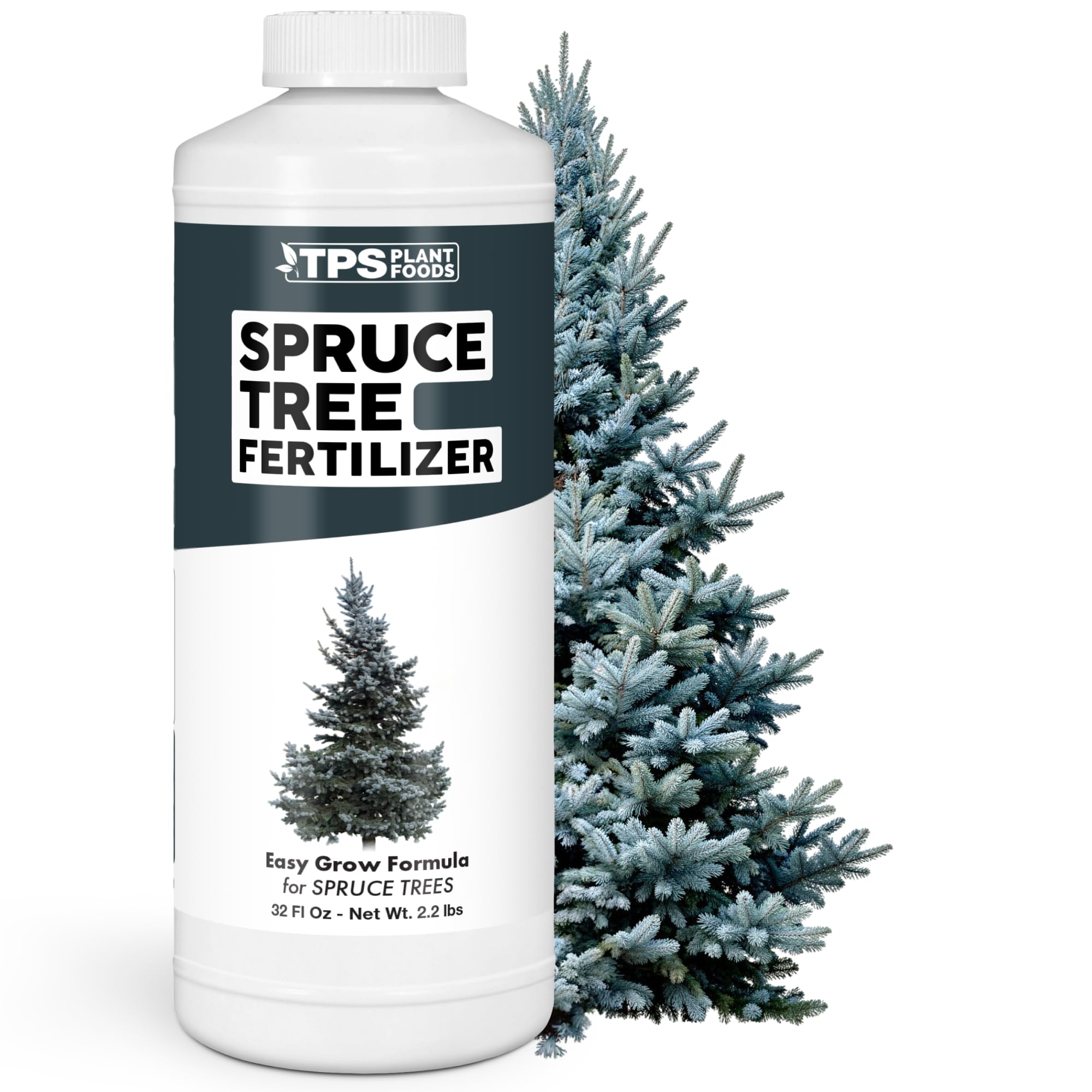
TPS Nutrients designed this liquid concentrate specifically for spruce trees, including blue spruce varieties, with a balanced micronutrient profile that supports needle density and deep blue coloration. The 32-ounce bottle mixes at 1 teaspoon per quart of water, providing a controlled feeding that reduces the chance of chemical burn compared to higher-concentration liquids. Verified reviews from blue spruce owners report that monthly applications lead to “filled out” branching and improved color over the course of a single season.
The formulation is gentle enough to use on both young transplants and mature trees, though one cautionary review noted potential drooping on a tree already under stress from other factors. The Made in USA manufacturing and clear dilution instructions make this a straightforward option for anyone looking for a species-specific feed rather than a general acid-loving mix.
The main issue is the small bottle volume — at 32 fluid ounces, a single bottle may only cover a handful of treatments for larger trees, so heavy users will need to buy multiple bottles per growing season. There is also less widespread long-term data available compared to established brands like Espoma or FoxFarm, which have decades of user feedback.
What works
- Formulated specifically for spruce tree physiology
- Low-concentration mix reduces burn risk
- Noticeable improvement in branching and color
What doesn’t
- Small bottle size, limited coverage per purchase
- Less long-term track record than Espoma or FoxFarm
6. TPS Evergreen Tree Fertilizer
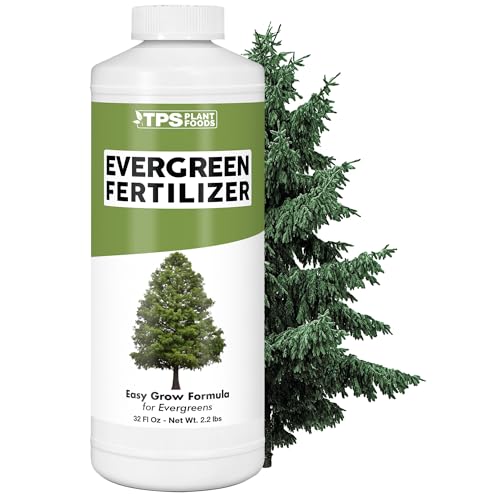
TPS’s Evergreen Tree Fertilizer is a liquid broad-spectrum feed for all conifers and evergreens, including blue spruce. The formula focuses on needle health and root strength, and several verified buyers specifically mention seeing their blue spruce “look refreshed and healthy” after use. The mixing ratio of 1 teaspoon per quart of water is easy to follow, and the liquid is quickly absorbed through foliar spray or soil drench.
The product works well as a mid-season correction for trees that missed a granular spring feeding or are showing early signs of chlorosis. However, owners of young or small blue spruce (under 3 feet tall) should exercise caution — at least one report describes chemical burn on a recently planted sapling when applied at the full recommended concentration. Halving the dose for juvenile trees is a wise precaution.
Because this is a general evergreen formula rather than a spruce-specific blend, it lacks the sulfur content and pH-modifying properties found in dedicated acid-loving fertilizers. Users with already alkaline soil may need to pair it with a sulfur supplement to solve needle yellowing caused by high pH, not just nutrient deficiency.
What works
- Quick liquid absorption for mid-season color recovery
- Easy 1 tsp/qt mixing ratio
- Positive results reported for blue spruce specifically
What doesn’t
- Risk of chemical burn on young trees at full dose
- No added sulfur to address soil pH issues
7. Earth Science Fast Acting Sulfur Granules

Earth Science Fast Acting Sulfur is not a complete fertilizer but a specialized soil amendment designed to lower pH quickly, making it an essential companion product for any blue spruce owner dealing with alkaline soil. The 5-pound bag contains elemental sulfur granules coated with patented Nutri-Bond Technology, which helps the sulfur stay in the root zone rather than washing away with rain. Many users report that their hydrangeas, azaleas, and blueberries respond within days, and the same benefits apply to blue spruce needle color and nutrient absorption.
If your blue spruce is showing yellowing needles despite regular feeding, the likely culprit is a soil pH above 7.0 locking out iron and manganese. Sprinkling these granules around the drip line once or twice a year, combined with an acid-loving fertilizer, restores the acidic environment the tree needs. The product is safe for people and pets immediately after application, and it can be used on lawns as well as ornamental beds.
The biggest caveat is that sulfur granules are not a standalone nutrient source — you must use them alongside a balanced NPK fertilizer for complete care. Also, despite the “fast acting” label, some users note that the pellets require multiple waterings to dissolve fully, so visible pH changes can take several weeks in dry conditions.
What works
- Effectively lowers soil pH for better micronutrient uptake
- Nutri-Bond Technology reduces product runoff
- Safe for pets and lawn use immediately after spreading
What doesn’t
- Not a complete fertilizer; requires NPK companion product
- Pellets dissolve slowly in dry conditions, delaying results
Hardware & Specs Guide
NPK Ratio Analysis
The nitrogen-phosphorus-potassium ratio determines whether your blue spruce gets enough nitrogen for needle color without excessive soft growth that attracts pests. A 4-3-4 ratio (used by Espoma) is ideal — moderate nitrogen, balanced phosphorus and potassium. Higher nitrogen formulations (like 10-8-6) can be used sparingly during active spring growth but should be avoided in late summer when trees need to harden off for winter.
Sulfur Content and pH Buffering
Elemental sulfur or sulfate content in the 5% range is the threshold for meaningful pH reduction in a single annual application. Blue spruce roots cannot absorb iron efficiently above pH 7.0, leading to interveinal chlorosis (yellowing between green veins). Products like Earth Science Fast Acting Sulfur and both Espoma formulas include sulfur as a primary ingredient, helping maintain the 5.0-6.5 range these conifers require.
Liquid vs. Granular Application
Liquid concentrates (32 oz bottles) deliver immediate results and are best for correcting acute deficiencies, but they require repeated applications. Granular organics (4-36 lb bags) release nutrients over 2-3 months per application and are less labor-intensive, but they take 1-2 weeks to show visible effects. For blue spruce, a hybrid approach works best — a granular organic feed in early spring and late fall, supplemented by a liquid dose mid-summer if needles look pale.
Mycorrhizal Fungi and Soil Biology
Some fertilizers, like FoxFarm Happy Frog, include mycorrhizal fungi that colonize spruce roots and increase the surface area for water and mineral absorption. This is especially beneficial if your soil is compacted, clay-heavy, or has been treated with synthetic herbicides in the past. The fungi do not replace the need for NPK, but they improve the efficiency of whatever nutrients are present.
FAQ
Can I use a general all-purpose fertilizer on my blue spruce?
How often should I fertilize blue spruce trees each year?
Why are my blue spruce needles turning yellow even after fertilizing?
Is it safe to fertilize a newly planted blue spruce sapling?
Final Thoughts: The Verdict
For most gardeners, the best blue spruce fertilizer winner is the Espoma Organic Evergreen-Tone because it provides the ideal 4-3-4 NPK ratio with 5% sulfur in a slow-release granular form that requires only two applications per year. If you want a large bag for many trees or mixed acid-loving shrubs, grab the Espoma Organic Holly-Tone 36-lb. And for a quick mid-season color boost to revive a pale blue spruce, nothing beats the TPS Spruce Tree Fertilizer liquid concentrate.