
Specs are compiled from manufacturer listings and verified buyer reviews and can change over time — please confirm the key details on the product page before buying.
Finding a blue and white cachepot that actually looks as good in your living room as it does in the product photos is the real challenge — thin glaze, crooked patterns, and pots that arrive chipped are frustratingly common. This guide hands you three proven picks that skip those headaches entirely, with all the key specs and buyer insights you need to decide in minutes.
I’m Rikta — the founder and writer behind Lawn Gear Lab. This guide is built by comparing the manufacturers’ published specifications and the patterns across verified customer reviews, so you get each pick’s real strengths and trade-offs instead of marketing spin.
A cachepot (a decorative container that holds a plain nursery pot inside) is all about how it fits your space and your style. If you are shopping for a blue and white cachepot, the three options here cover a fishbowl showpiece, a ready-to-display boxwood topiary, and a versatile oval planter — each with a very different feel and purpose.
Our Picks at a Glance

How To Choose The Best Blue And White Cachepot
A blue and white cachepot is first a decorative shell — its main job is to dress up a plain plastic nursery pot while protecting your surfaces from water spills. Since most cachepots lack a drainage hole, the material quality, weight, and interior dimensions matter much more than whether water can escape.
Material and Build Quality
High-temperature porcelain (like the Red Lantern fishbowl) is fired longer and harder than standard ceramic, which makes it denser, heavier, and more resistant to chips and crazing (fine cracks in the glaze). Standard glazed ceramic, seen in the Arborus planter, still offers a glossy, durable finish at a lower weight — it is a practical trade-off. A polished glaze is key for easy cleaning and for keeping that vivid blue pattern bright.
Size and Shape for Your Space
A tall fishbowl shape (12 inches tall, 9.25-inch opening) works best as an entryway or floor accent, while an oval planter (14 x 6 x 6 inches) suits long tabletops or mantels. Measure the spot first — the Galt International pot stands only 7.09 inches tall, making it a true tabletop piece. Also compare the opening diameter against your nursery pot’s top rim so the plastic pot does not show.
Pattern and Design Authenticity
Hand-painted patterns (found on the Arborus and Galt pieces) give each pot slight, unique brushstroke variations — that is a sign of quality, not a flaw. Ming dynasty style transfer-print, as with the Red Lantern fishbowl, reproduces the same pattern consistently across pieces. Both approaches are authentic to the chinoiserie tradition, but hand-painted adds more artistry and variation.
Quick Comparison
| Model | Best For | Weight | Dimensions | Material | Amazon |
|---|---|---|---|---|---|
| Red Lantern 12″ Fishbowl★ Best Overall | Statement floor or entryway piece | 4 Pounds | 9.25 x 9.25 x 12 inches | Porcelain | Amazon |
| Arborus Oval Planter | Tabletop orchid or floral centerpiece | 2 Pounds | 14 x 6 x 6 inches | Ceramic | Amazon |
| Galt International Boxwood Topiary | Low-maintenance ready-to-display greenery | 1.5 Pounds | 5.91 x 5.91 x 7.09 inches | Porcelain / Boxwood | Amazon |
In‑Depth Reviews
1. Red Lantern 12″ Ladies Blue & White Porcelain Fishbowl Cachepot
Our pick — over 4.5★ from 850+ verified ratings; the strongest balance of quality and price.
The heavyweight porcelain fishbowl that turns any plant into a floor statement.
This is the piece you position in an entryway, beside a fireplace, or anchoring a corner — its 12-inch height and 4-pound heft give it a grounded, substantial presence that lighter pots cannot match. The high-temperature fine Chinese porcelain carries a Ming dynasty style courtesan design, and the pattern is set under a glazed finish that resists fading. With a 9.25-inch opening and a 2.5-gallon capacity, it swallows a medium-sized nursery pot easily, and the tall fishbowl silhouette makes it a natural home for a palm tree or a dried branch arrangement.
The catch is the no-drainage bottom — standard for cachepots, but you must either keep the plant in a separate interior pot or add a layer of pebbles. Also, buyers report the stand is not included, so budget for a separate plant stand if you want it improve off the floor. Unlike the Arborus oval planter (2 pounds, 14 x 6 x 6 inches), this fishbowl, at 4 pounds, is heavier and more sculptural, so it dominates a room rather than blending into a tabletop vignette.
One buyer called it a “beautiful blue and white chinoiserie fish bowl — absolutely beautiful and excellent quality” and noted it worked perfectly as a base for a small Christmas tree. At 866 ratings with a 4.6 average, the consistency of praise around the glaze quality and pattern detail is strong.
Why It Shines
- Dense high-temperature porcelain at 4 pounds feels premium and durable
- Generous 2.5-gallon capacity fits large plants or a small tree
- Classic Ming dynasty style pattern is a genuine chinoiserie look
What To Weigh
- No drainage hole — use a separate nursery pot inside
- Stand is not included, so you need to source one separately
- At 12 inches tall it is a floor piece, not a tabletop accent
Reach for this if: you want a high-impact, heavy porcelain showpiece that makes entryways or fireplace hearths feel intentional — it is the most traditional chinoiserie look here.
Look elsewhere if: you need a short tabletop pot or something with an oval footprint for a narrow shelf.
2. Arborus Blue and White Ceramic Oval Cachepot
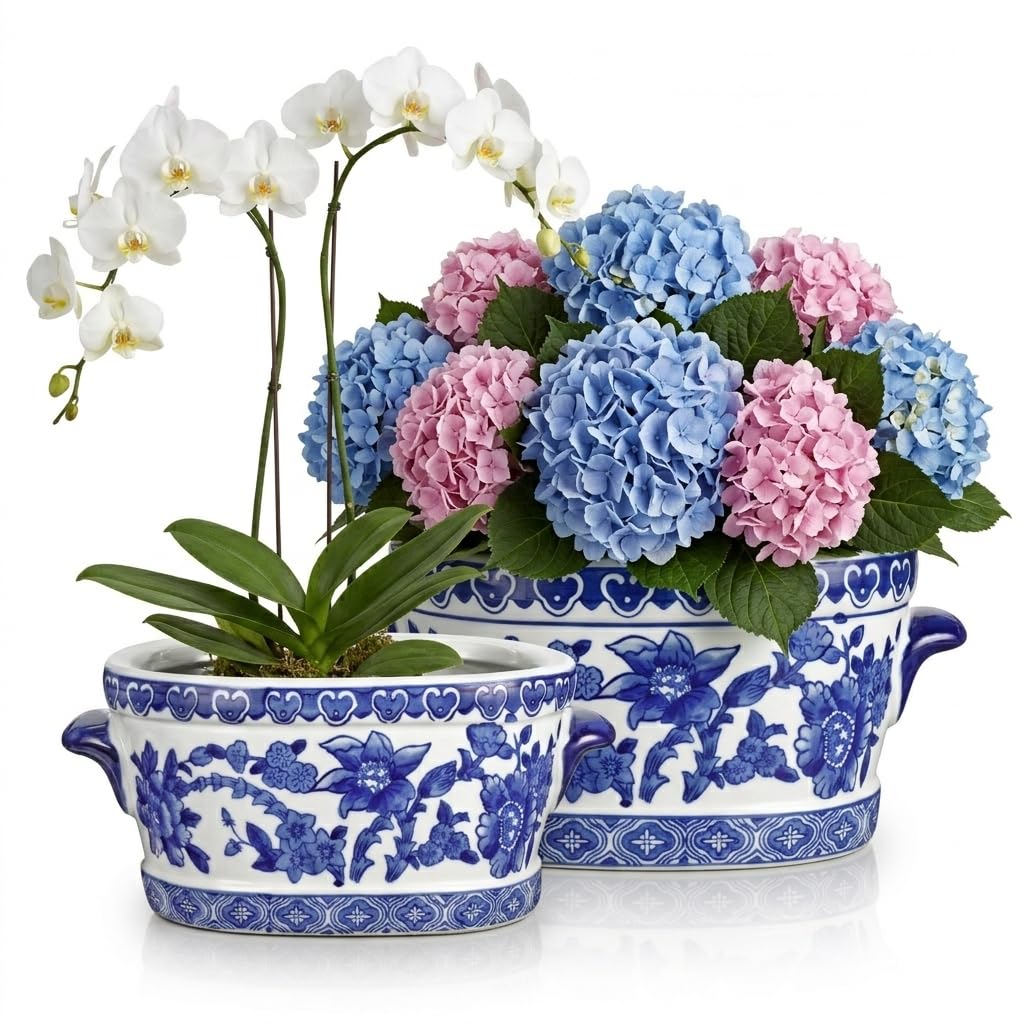
The polished oval that feels heavier than its 2 pounds and fits a long mantel perfectly.
This oval planter from Arborus takes a different shape from the round fishbowl above — at 14 x 6 x 6 inches, it is designed to run along a tabletop, mantel, or kitchen counter where a tall round pot would look crowded. The hand-painted blue floral pattern is inspired by classic Chinese porcelain, and buyers consistently mention that the blue is “vibrant” and the polished glaze gives it a look that “should be priced ten times more.” Despite being a 2-pound ceramic piece (versus the Red Lantern’s 4-pound porcelain), it still arrives with a satisfying weight and felt stickers on the base to protect surfaces.
It is a pure cachepot (no drainage hole), so you will need to keep your plant in its nursery pot inside or use a layer of pebbles. Owners mention that the oval shape is ideal for an orchid in a tall pot or a cluster of silk hydrangeas — one buyer paired it with light blue silk flowers as a spring centerpiece. Compared to the Galt International boxwood set (1.5 pounds, 5.91 x 5.91 x 7.09 inches), this Arborus piece has a much lower profile and a longer footprint, making it the better choice for a runner-style arrangement.
At a 4.8 rating from 161 reviews, it is the highest-scored pot in this list, and the complaints are few — mostly that the no-drainage design is a minor inconvenience, though some owners have used a ceramic drill bit to add one themselves.
Where It Wins: The oval shape fills a mantel or counter without overhanging, the hand-painted floral pattern is detailed and vibrant, and the polished ceramic is easy to wipe clean. If you buy the large version (10.6 inches long), it comfortably holds a large orchid pot.
The Honest Trade-off: No drainage hole is standard for cachepots, but if you want to water directly into the decorative pot, you should expect to drill your own hole or stick to a plastic liner.
Best for: anyone who needs a long, low-profile cachepot that sits elegantly on a tabletop shelf without dominating the whole room — especially orchid or orchid-pair arrangements.
skip it if: you want a tall round fishbowl silhouette for a floor display, or you need to water directly through the pot without a liner.
3. Galt International Preserved Boxwood Ball in Blue & White Pot
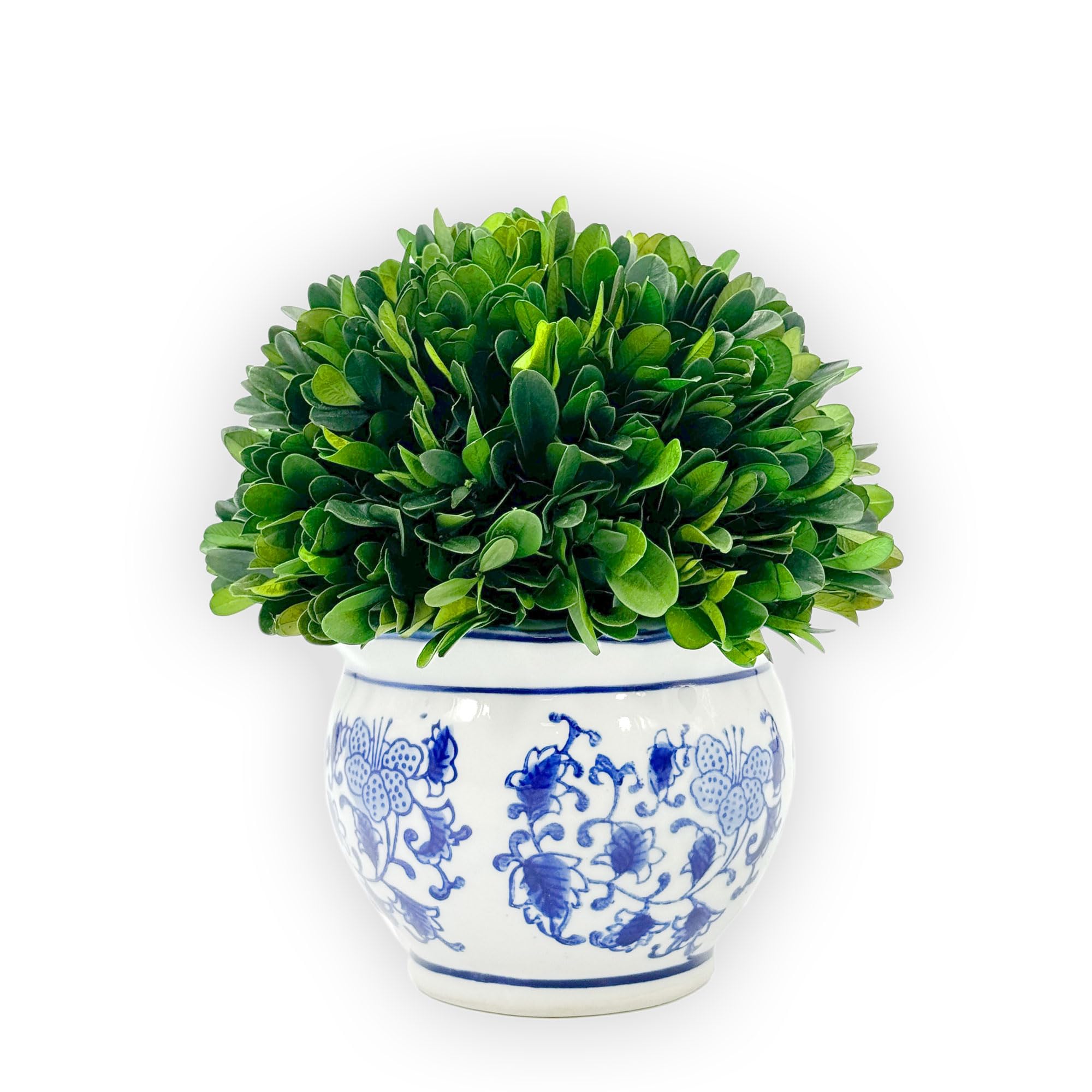
The no-water, no-fuss topiary that comes already assembled in a hand-painted pot.
This is the only pick in the list that arrives as a complete display — a naturally preserved boxwood ball already sitting in a hand-painted blue and white round porcelain pot. The boxwood is real (not plastic) and treated to hold its vibrant green color and texture indefinitely with zero watering, sunlight, or trimming. The pot itself is 5.91 inches in diameter and 7.09 inches tall, with intricate hand-painted patterns that echo the same chinoiserie tradition as the other two pots. At 1.5 pounds, it is noticeably lighter than the Red Lantern fishbowl (4 pounds) and smaller than the Arborus oval, making it a tight tabletop accent rather than a floor piece.
The main buyer feedback is straightforward — “it is smaller than the dimensions indicated,” several customers note, and some returned it for the larger 11-inch version. If you are expecting a substantial statement arrangement, this 7-inch topiary will read as a small, neat accent, not a showpiece. However, those who kept it describe it as “beautiful” and “elegant” with a “vibrant lush green” ball, and they appreciate that there is no mess or maintenance. Unlike the Arborus cachepot (which requires you to supply the plant), this is immediate — you unbox it and place it on a shelf or desk, and you are done.
With a 4.5 average from 275 ratings, the consensus is that it is a high-quality, honest product — just pay close attention to the 7-inch size before clicking buy.
What Works
- Real preserved boxwood — no watering or natural light required, just a beautiful ready display
- Hand-painted porcelain pot has intricate blue patterns that look genuinely handcrafted
- At 1.5 pounds it is light enough to move around easily between shelves and desks
What To Watch
- It is smaller than the dimensions indicate — a few buyers found it too dainty for the price point
- The boxwood ball may shed a few leaves on arrival, but the rest stays tight
- If you want a larger piece, the 11-inch version exists but is sold separately
Who It Fits: a buyer who wants a zero-maintenance, ready-to-display piece that works on a small side table, desk, or nightstand — just unbox and place.
Who Should Skip It: anyone expecting a large floor arrangement or a cachepot that fits a big nursery pot — the opening is only 5.91 inches wide.
Understanding the Specs
Material: Porcelain vs Ceramic
Porcelain is fired at a higher temperature than standard ceramic, which makes it denser, harder, and more resistant to chipping and crazing (those fine hairline cracks in the glaze). A porcelain cachepot like the Red Lantern fishbowl will feel noticeably heavier and is less likely to develop glaze cracks over years of use. Standard glazed ceramic, like the Arborus oval, is lighter and still very durable — just more prone to chipping if knocked into a hard surface. For a tabletop piece that might be moved often, glazed ceramic is fine. For a floor showpiece you want to last decades, porcelain is the stronger choice.
No Drainage Hole Design
Almost all cachepots intentionally lack a drainage hole — their job is to protect your tabletop or floor from water rings, not to let water pass through. This means you have two options: keep your plant in a standard plastic nursery pot and place it inside the cachepot (just lift it out when watering), or add a layer of pebbles at the bottom so the pot’s inner pot sits above any collected water. If you really want to plant directly into the cachepot, you can drill a drainage hole with a ceramic drill bit, but that is best done carefully on a glazed surface.
FAQ
Can I plant directly into a cachepot with no drainage hole?
What size cachepot do I need for a standard 6-inch nursery pot?
How do I clean a blue and white porcelain cachepot?
Is hand-painted better than transfer-printed pattern for a cachepot?
Can I use a blue and white cachepot outdoors?
What is the difference between a cachepot and a regular planter?
How long does preserved boxwood stay green and full?
Final Thoughts: The Verdict
Across the board, the blue and white cachepot winner is the Red Lantern 12″ Porcelain Fishbowl because it offers a genuine high-temperature Chinese porcelain body with a classic Ming dynasty pattern at a fair premium price point — a statement piece that will not look dated in five years. If you prefer a long oval shape that fits a mantel and pairs beautifully with an orchid, grab the Arborus Ceramic Oval Cachepot. And for a zero-effort, ready-to-display accent that brings greenery and blue ceramic together, the standout is the Galt International Preserved Boxwood Topiary.
How We Picked
We do not accept paid placement. Every pick is matched to a real buyer and a real use-case; we do not hands-on test units.
Sources & Methodology
Specifications: manufacturer listings and product documentation. Review insights: verified customer reviews, as of July 2026. Pricing: not shown on this page (it changes often); check the current price via the retailer link.
As an Amazon Associate, Lawn Gear Lab earns from qualifying purchases. This does not affect which products we feature.