
Specs are compiled from manufacturer listings and verified buyer reviews and can change over time — please confirm the key details on the product page before buying.
New England winters are tough on birds, and the right seed mix can mean the difference between a lively backyard and an empty feeder. You need blends that pack serious energy—sunflower hearts, peanuts, and real tree nuts—without the millet filler that just gets kicked to the ground and freezes solid. The real trick is finding seed that attracts the cardinals, chickadees, and finches you actually want, while optionally telling squirrels to buzz off.
I’m Rikta — the founder and writer behind Lawn Gear Lab. This guide is built by comparing the manufacturers’ published specifications and the patterns across verified customer reviews, so you get each pick’s real strengths and trade-offs instead of marketing spin.
This guide gives you a head start picking the right bird seed for new england backyards, blending top-tier nutrition, mess-free feeding, and squirrel resistance into one clean decision.
Quick Picks
- Cool Birds Hearts on Fire Hot Bird Seed – 10 lb — Best Overall
- Cool Birds Nut & Fruit Wild Bird Seed – 10 lb — Best Variety
- Pennington Wild Bird Food – 22.5-lb. Critter-Proof Bucket — Best Bulk Buy
- Freebird Songbird Blend – 5 lb — Cardinal Magnet
- Happy Wings Finch Blend – 5 Pounds — Finch Favorite
- Kaytee No Mess Finch Seed & Nyjer Blend – 8 Pounds — Mess-Free Champion
- Happy Wings Shelled Peanuts – 5 Pounds — Pure Protein
How To Choose The Best Bird Seed For New England
New England backyards host a rotating cast of finches, cardinals, chickadees, nuthatches, and the occasional blue jay. The right seed mix makes your feeder the preferred stop on their daily route. Here is what really matters when you shop.
Hulled vs. Unhulled Seed
Hulled seeds (shells removed) are 100% edible — birds eat every bit, and nothing sprouts under your feeder. Unhulled seeds leave a mess of crushed shells that can attract rodents and create bare patches in your lawn. In New England’s wet springs and falls, that mess also rots faster than you want near your house.
Protein and Fat Content for Winter
Winter in New England demands high-energy fuel. Peanuts, tree nuts, and sunflower hearts deliver the protein and oil content birds need to survive a 10°F night. Avoid blends heavy in milo or red millet — those are cheap fillers most songbirds ignore, and you just end up feeding the squirrels.
Mess and Grow Prevention
A “no grow” label means the seed has been heat-treated so it cannot germinate. That keeps your lawn clean and prevents invasive plants from taking hold around your feeder. Pairing no-grow seed with a tray or platform feeder makes cleanup nearly zero.
Squirrel Deterrence
If your New England yard is home to gray squirrels (and it almost certainly is), look for seed infused with chili pepper oil. Capsaicin repels mammals but birds do not have the receptors to feel the heat. One bag of hot seed can save you the frustration of refilling a feeder that a squirrel drained in an hour.
Quick Comparison
On smaller screens, swipe sideways to see the full table.
| Model | Best For | Item Weight | No-Grow Treatment | Key Ingredient | Amazon |
|---|---|---|---|---|---|
| Cool Birds Hearts on Fire | Squirrel-free feeders | 10 Pounds | Yes | Hulled Sunflower Hearts + Chili Oil | Amazon |
| Cool Birds Nut & Fruit | Maximum variety of birds | 10 Pounds | — | Sunflower Hearts, Peanuts, Tree Nuts, Fruit | Amazon |
| Pennington Critter-Proof Bucket | Large volume, easy storage | 22.5 Pounds | — | Sunflower Seeds | Amazon |
| Freebird Songbird Blend | Attracting cardinals | 5 Pounds | — | Black Oil Sunflower, Safflower, Millet, Peanuts | Amazon |
| Happy Wings Finch Blend | Finch-specific feeders | 5 Pounds | Yes | Sunflower Hearts, Nyjer | Amazon |
| Kaytee No Mess Finch & Nyjer | Clean patio/balcony feeding | 8 Pounds | Yes | Nyjer, Sunflower Chips | Amazon |
| Happy Wings Shelled Peanuts | High-protein winter boost | 5 Pounds | Yes | Shelled Peanuts | Amazon |
In‑Depth Reviews
1. Cool Birds Hearts on Fire Hot Bird Seed – 10 lb
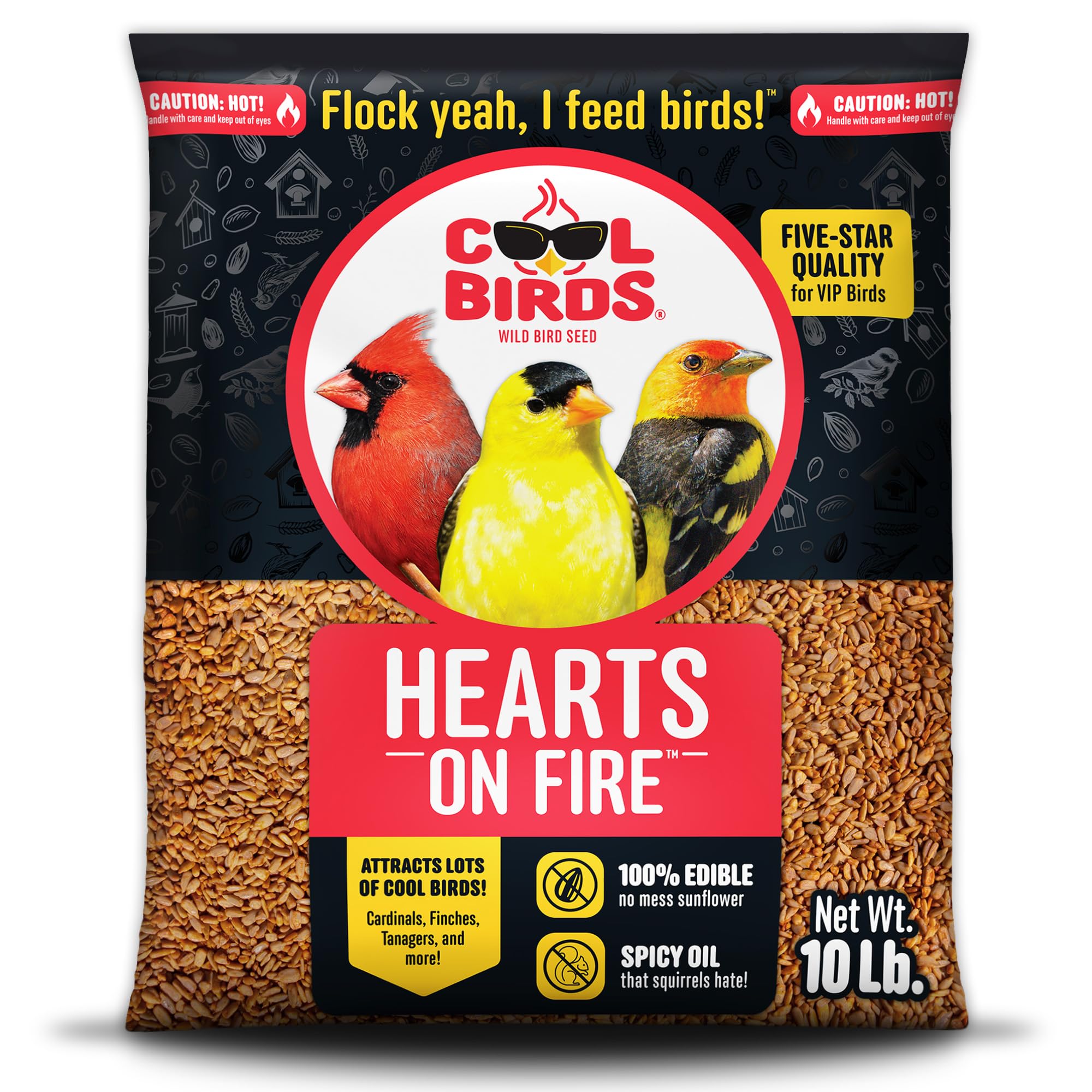
Spicy sunflower hearts that birds love and squirrels refuse to touch.
The 10-pound bag of Cool Birds Hearts on Fire stops squirrel theft without harming birds, thanks to a chili pepper oil coating. Capsaicin (the chemical that makes chili spicy) repels mammals, but birds lack the receptor for it and feel no heat. This bag is 100% hulled sunflower hearts — every bit is edible, with zero shells and no millet filler. One reviewer noted their birds accepted it within 30 minutes, and the squirrels simply stayed away, though a few desperate squirrels may still pick around the hot oil if they are hungry enough.
Unlike the Cool Birds Nut & Fruit mix below, this bag is a single-ingredient seed, so you will not get the variety of fruit and tree nuts that attract woodpeckers. But for anyone wanting a clean feeder tray and zero squirrel theft, this is the most direct solution on the list. It is a great pick if squirrels own your feeder right now; skip it if you want a multi-ingredient blend with nuts and fruit.
What squirrels think of it
- Chili oil coating deters squirrels without harming birds
- 10 lbs of 100% hulled sunflower hearts = zero mess or sprouting
- Attracts finches, cardinals, chickadees, wrens, titmice, blue jays
Two things to know
- Some reviewers found squirrels still returned; results vary by feeder placement
- Cayenne dust can irritate eyes and lungs during refill — pour carefully
Pick this if: squirrels own your current feeder and you want a single-bag solution that ends the battle.
Look elsewhere if: you want a blend of nuts, fruit, and variety — this is straight sunflower hearts with a spicy kick.
2. Cool Birds Nut & Fruit Wild Bird Seed – 10 lb
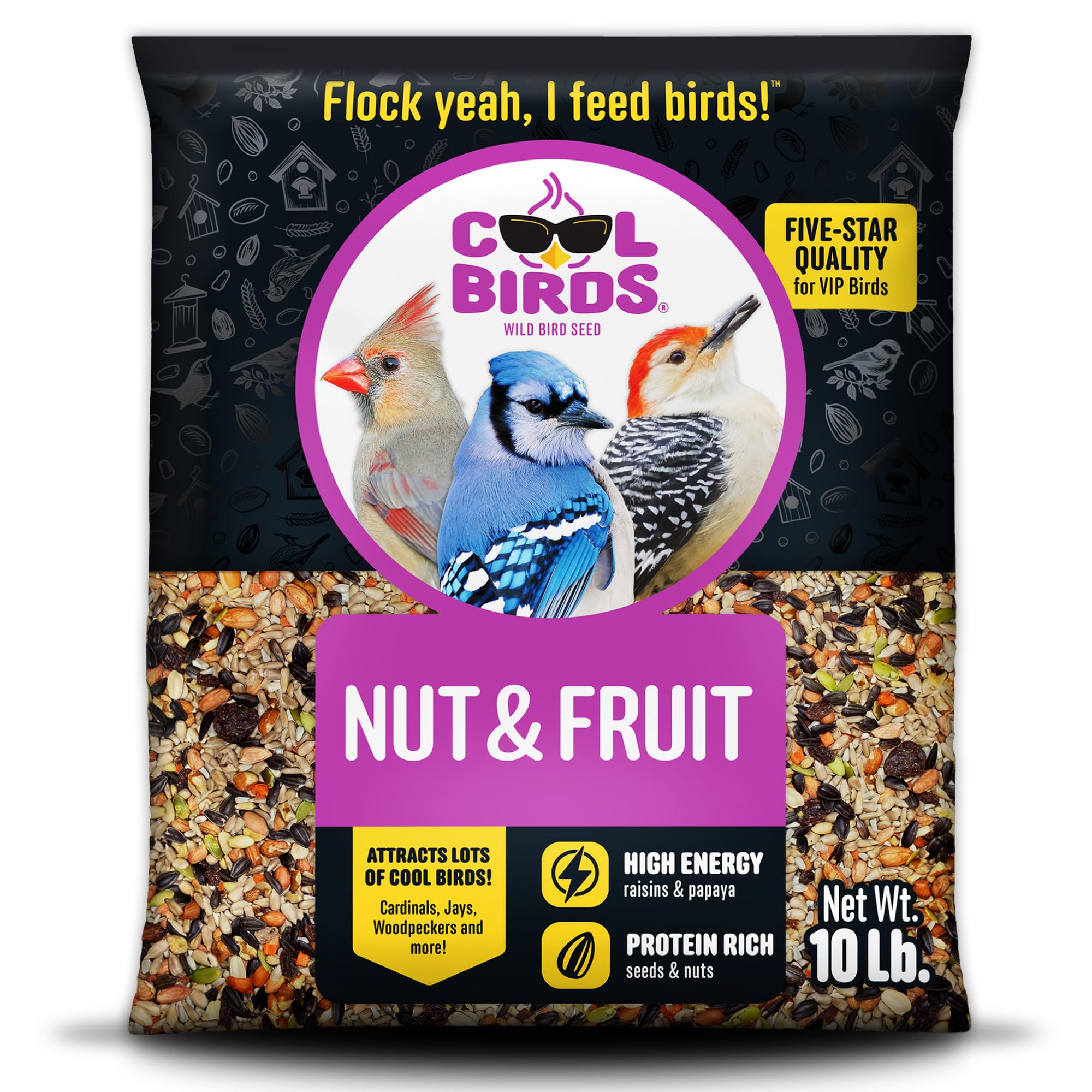
A nutty, fruity mix that turns your feeder into a nonstop bird show.
This premium gourmet blend gives you the widest variety of birds from any single bag here, combining sunflower hearts, peanuts, tree nuts, raisins, and real papaya. It deliberately skips corn, milo, and millet — cheap fillers (grains that birds often ignore) that make up weight without nutrition. Because there is no filler, every seed in the 10-pound bag is something a bird actually wants to eat. One buyer mentioned they “never had such a variety and quantity of birds” until they switched to this mix, and another noted the large pieces of fruit attracted chickadees that were harder to bring to the feeder.
At the same weight as the Hearts on Fire, this bag delivers a far wider range of ingredients, so you will see woodpeckers, grosbeaks, and mockingbirds that might skip a pure sunflower feeder. The catch is it is not heat-treated for no-grow, meaning you may see sprouting if seed spills onto damp ground. Keep a tray under your feeder to catch the occasional dropped peanut. If sprouts on your lawn are a dealbreaker, grab the Hearts on Fire instead.
Who this blend brings in: Cardinals, grosbeaks, woodpeckers, chickadees, blue jays, mockingbirds — a wider cast than any single-ingredient bag.
The honest trade-off: Not no-grow, so spilled seed can sprout in New England’s spring rainy season.
Reach for this if: you want the most diverse bird traffic possible from a single bag and do not mind occasional sprouts.
pass on it if: your feeder sits over a garden bed or lawn where you cannot tolerate any stray plants.
3. Pennington Wild Bird Food – 22.5-lb. Critter-Proof Bucket

A 22.5-pound bucket that keeps seed fresh and critters out through the winter.
This is the biggest bag on the list — 22.5 pounds — and it comes in a sturdy bucket with a critter-proof lid to keep out raccoons and rodents. Pennington’s Bird-Kote Technology (a vitamin and nutrient coating added to the seed) enriches the sunflower-heavy base, and the lid seals tightly against moisture. At more than double the weight of the 10-pound Cool Birds bags, this is ideal for anyone feeding multiple feeders through a New England winter without restocking every two weeks. One admirer called it “the only one I buy now” but wished the company sold refills so they did not have to repurchase the bucket each time.
The bucket itself is a win for damp New England basements and mudrooms. Unlike the no-grow blends further down this list, this seed includes whole sunflower seeds in their shells, so you will have some hull mess under your feeders. One senior reviewer found the lid very difficult to open (they said it took 30 minutes). If you have limited hand strength, open the lid once and store the seed in a twist-tie bag instead.
Why you notice the bucket
- Sturdy, resealable container protects against moisture and rodents
- Enriched with vitamins and nutrients via Bird-Kote Technology
- Attracts cardinals, titmice, and a wide range of songbirds
A catch
- Not a no-grow or no-waste blend — expect hulls on the ground
- One senior reviewer found the lid very difficult to open (30 minutes)
Best for: heavy feeders who want a single purchase to last a month and a container that keeps seed dry.
Not for: anyone who needs a mess-free, no-hull experience or has limited hand strength.
4. Freebird Songbird Blend – 5 lb
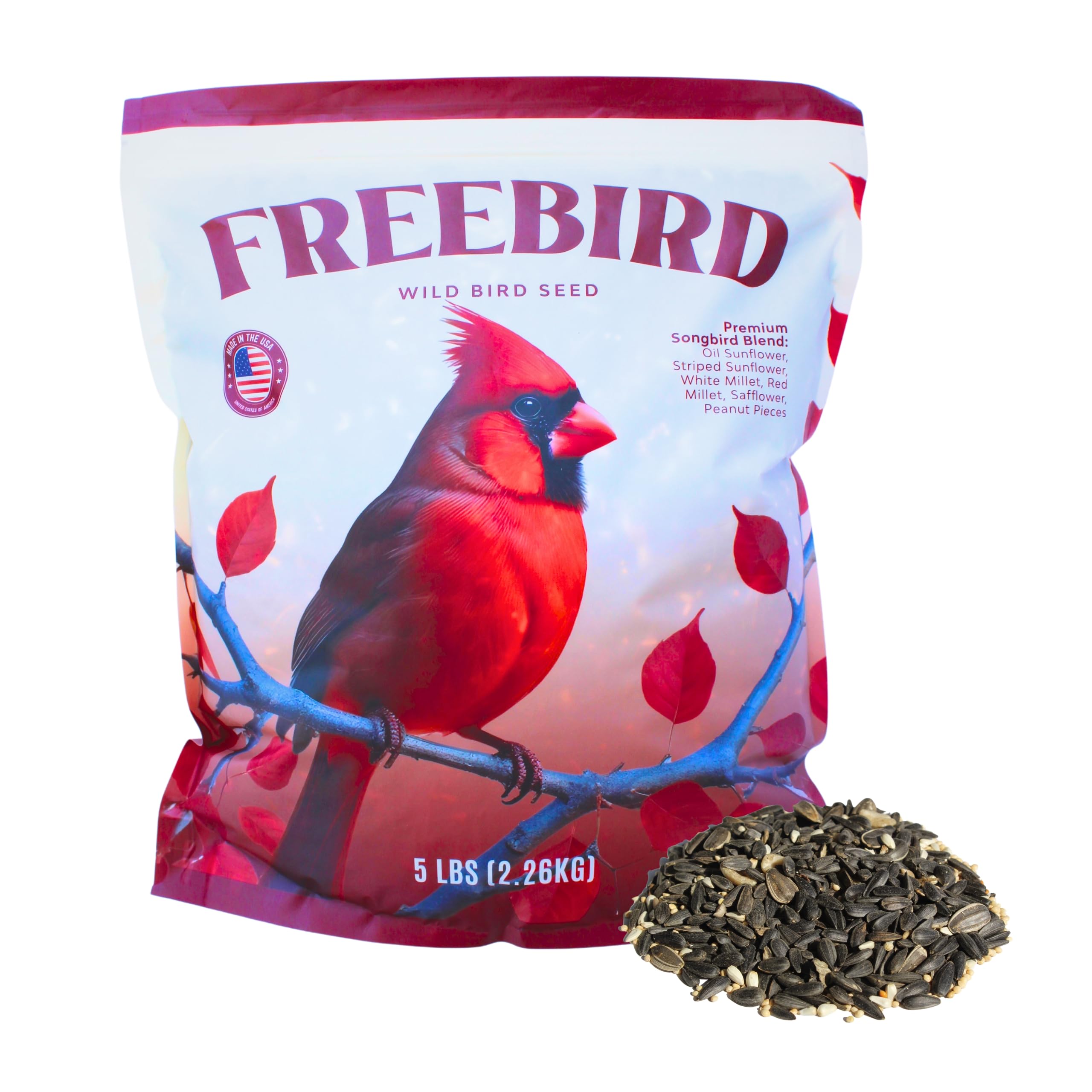
This all-natural mix tripled one reviewer’s visiting cardinals — and it could do the same for you.
Freebird blends black oil sunflower, striped sunflower, safflower, peanut pieces, white millet, and red millet from US farms with no additives. The safflower content is key — cardinals and chickadees love it, but grackles and blackbirds tend to avoid it, making this a selective blend that favors the songbirds you want. One buyer who grabbed this as a substitute for their regular brand reported that their “number of visiting Cardinals tripled (at least).” This 5-pound bag is the smallest among the premium picks, but the resealable heavy-duty zipper bag keeps the seed fresh between refills.
Unlike the Hearts on Fire, there is no chili oil here, so squirrels will happily visit alongside your cardinals. Pair it with a squirrel-proof feeder if that is a problem in your yard. If you have a large feeder that needs a 10+ pound bag, the Pennington bucket is a better volume choice; if cardinals are your main target, start here.
Why it stands out: Locally sourced from US farms with high-oil-content seeds, and the resealable bag keeps the blend fresh through New England’s humidity shifts.
A note: The 5-pound bag is smaller than most options here; heavy feeders will restock often.
Go with this if: cardinals are your main target and you want a clean, all-natural blend that discourages blackbirds.
Try something else if: you have a large feeder that needs a 10+ pound bag or want no-grow seed for a mess-free patio.
5. Happy Wings Finch Blend – 5 Pounds
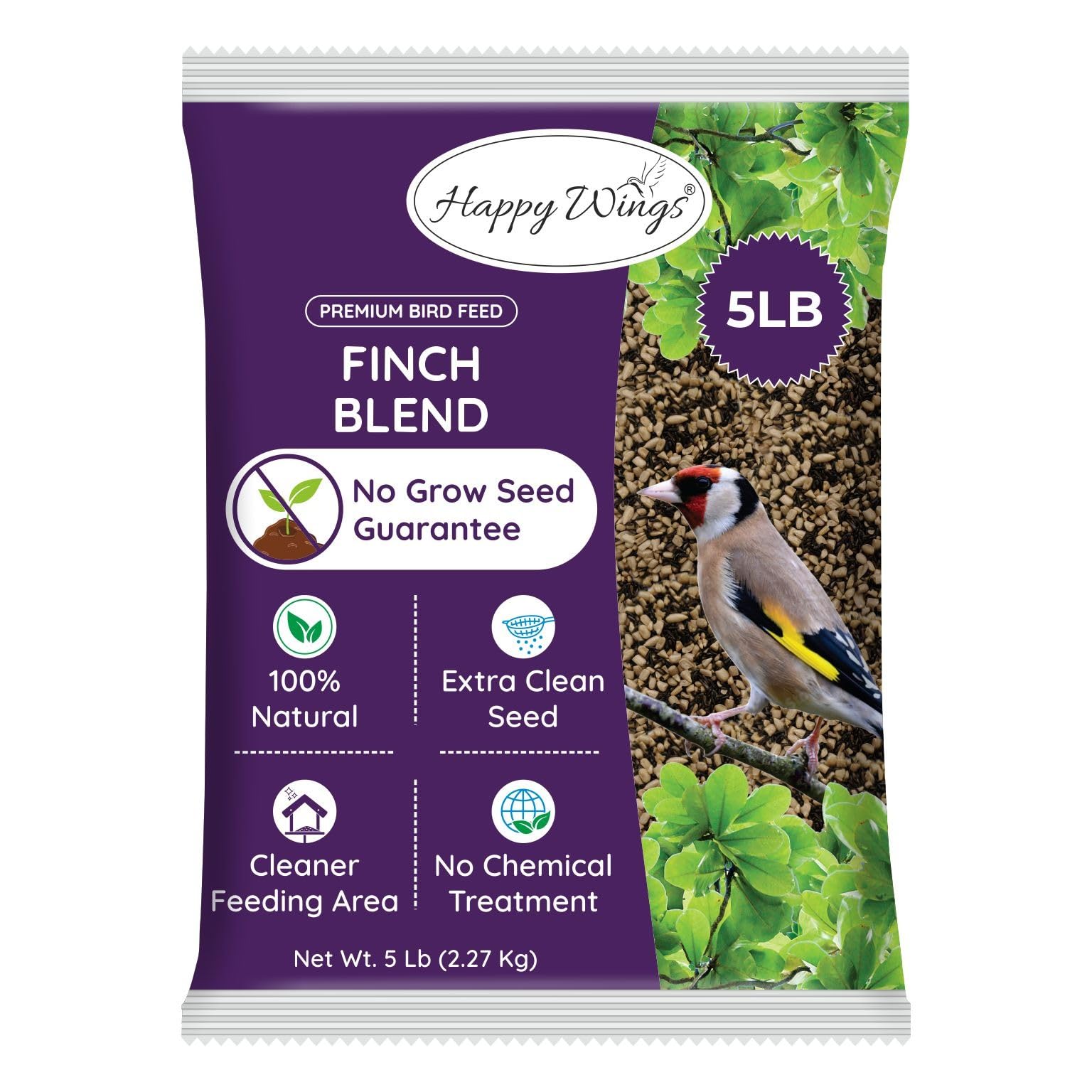
The finch blend one buyer called “by far the best Finch birdseed I have ever found.”
This mix of sunflower hearts and nyjer (thistle) seed is designed to attract goldfinches, house finches, and purple finches — common across New England. It is no-grow heat-treated, so you will not see any sprouting under the feeder. The seeds are processed in a USDA and BRC-GS approved facility, and they meet the quality standards of the Wild Bird Feeding Institute. Reviewers consistently mention that the no-grow, no-mess aspect is worth the price, and the birds clean every kernel out of the feeder.
At 5 pounds, this bag is lighter than the Kaytee No Mess Finch blend (8 pounds) at a similar tier, so finch-heavy feeders may go through it faster. But the sunflower heart content gives it a protein density that attracts a slightly wider set of birds than pure nyjer blends. If you feed a high-volume crowd of cardinals and jays, the Freebird blend is a better fit; this one leans heavily toward small-beaked finches.
Why finch fans buy it
- No-grow treatment prevents weeds and germinating seeds under the feeder
- High in oil, protein, and energy — great for cold New England mornings
- Non-GMO and plant-based, processed in a USDA approved facility
One drawback
- The 5-pound bag is smaller than some competitors at the same price tier
Perfect match for: anyone with a tube feeder who wants clean, no-sprout finch feeding without hulls on the ground.
it’s not for you if: you feed a high-volume crowd of cardinals and jays — this leans heavily toward small-beaked finches.
6. Kaytee No Mess Finch Seed & Nyjer Blend – 8 Pounds

Shelled nyjer and sunflower chips that leave zero waste on your patio or deck.
Kaytee’s 8-pound No Mess blend uses hulled nyjer (thistle seed with the shell removed) and sunflower chips so that every grain is 100% consumable — no shells to fall, no seeds that can germinate. One buyer called it “the ONLY seed mix I’ll buy” and noted it eliminated waste and weeds while attracting goldfinches, chickadees, juncos, and finches. Another reviewer highlighted that it contains no millet filler, and any fallen seed gets eaten immediately by ground-feeding doves or squirrels. That makes it ideal for New Englanders who feed on a patio, porch, or balcony where swept-up hulls are a daily nuisance.
This is the cleanest feeding experience of any finch blend in this lineup. But the tiny nyjer chips can blow around in windy weather — a covered tray feeder works best. If you do not mind hulls and want a broader bird variety (this mix targets finches and small-beaked species), the Cool Birds Nut & Fruit mix is a better all-around choice.
Standout feature: Zero hulls, zero sprouts — the cleanest feeding experience of any finch blend in this lineup.
Realistic limitation: Nyjer can be messy in open feeders on a blustery New England day; a tube feeder with small ports keeps it contained.
Go for this: if your feeder sits over a deck, patio, or flowerbed where mess and sprouts are your biggest pet peeve.
Pick a whole-seed blend instead: if you do not mind hulls and want a broader bird variety (this mix targets finches and small-beaked species).
7. Happy Wings Shelled Peanuts – 5 Pounds
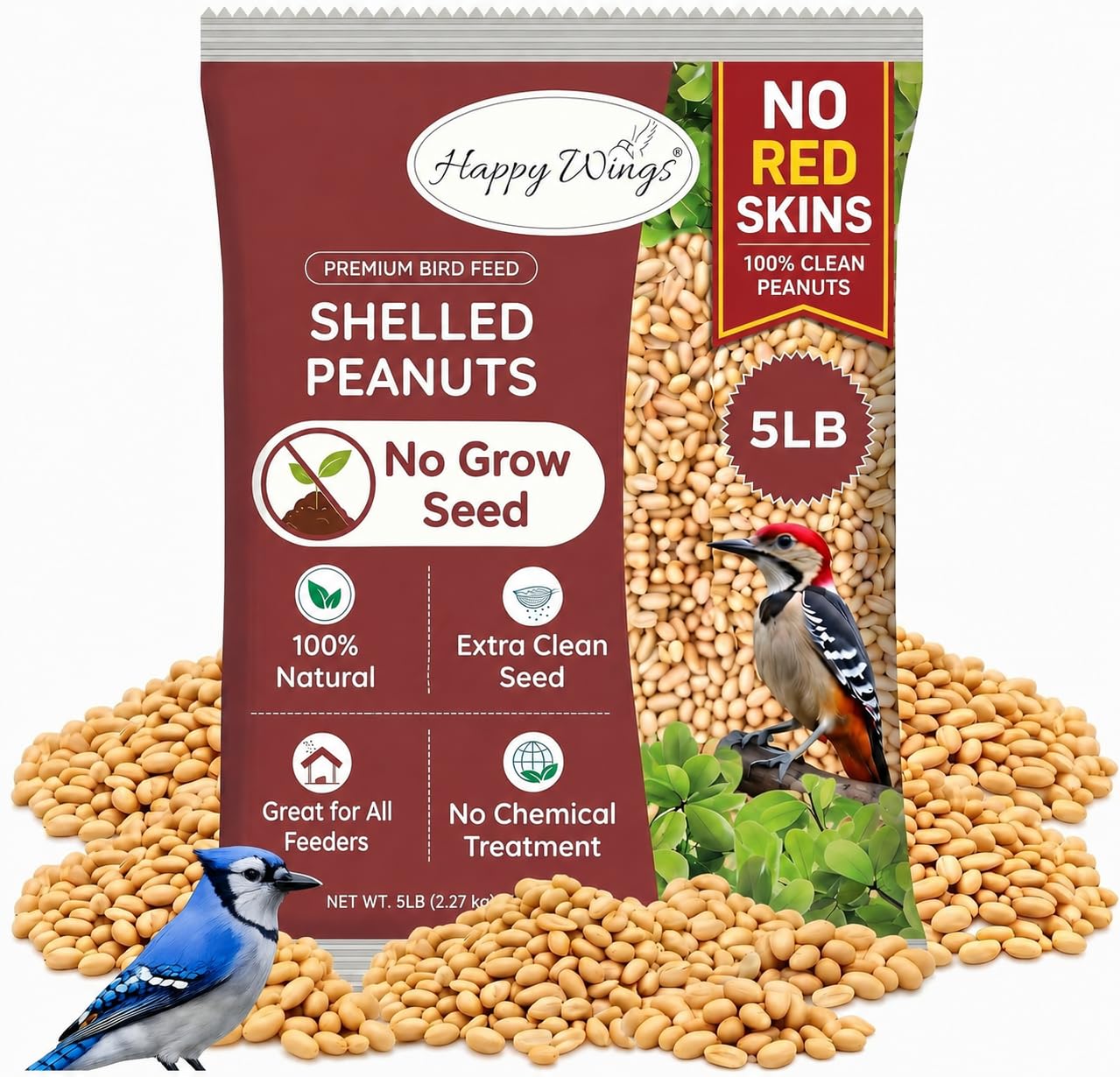
Clean, plump shelled peanuts — the single best winter protein boost you can offer.
When temperatures drop, birds burn calories fast. Shelled peanuts deliver the highest concentration of protein and fat in any single-ingredient bird food. These peanuts are heat-treated at an optimum temperature to prevent germination (no-grow) and processed in a USDA and BRC-GS approved facility. One reviewer compared these to a Pet Smart brand and said Happy Wings’ peanuts were “clean, plump, no messy red skins” — superior quality with zero shell waste. Blue jays are especially drawn to them, though squirrels also consider them a five-star meal.
At 5 pounds, this bag weighs the same as the Happy Wings Finch Blend, but it is a pure single ingredient rather than a mix. Unlike the Cool Birds Nut & Fruit mix, there are no tree nuts, seeds, or dried fruit here — just peanuts. That focused approach makes it a top-tier supplement to add alongside a general seed blend, but it is not a standalone complete feeding solution. The bag is not resealable, so buyers advise transferring the peanuts to a container for storage.
Why this works in winter
- Highest protein content for fat and energy reserves in cold months
- No-grow treatment + shelled = zero sprouting and zero waste
- Vacuum-sealed for freshness; buyers report no spoilage
Watch out for
- Squirrels love these as much as birds do — plan for a squirrel-resistant feeder
- Bag is not resealable; buyers advise transferring to a container
Best as: a high-winter-energy supplement to add alongside your regular seed mix, especially if you want blue jays at your feeder.
Not ideal as: your only bird food source — birds need seed and fruit variety for balanced nutrition year-round.
Understanding the Specs
No-Grow vs. Regular Seed
No-grow seed is heat-treated so it cannot germinate when it falls to the ground. That keeps your lawn and garden beds free of stray sunflower or millet plants and prevents invasive weeds. In New England, where spring rains are frequent, regular seed that gets kicked out of a tray feeder can sprout in days. If your feeder hangs over soil or grass, no-grow is almost certainly worth the modest extra cost. Regular seed is fine when your feeder sits over a hard surface like concrete or deck boards where sprouts are not a concern.
Hulled vs. In-Shell Seed
Hulled seeds have their outer shell removed before packaging. They are 100% edible — birds eat every milligram, and you never see a pile of crushed shells under your feeder. That makes cleanup nearly zero and denies rodents a food source. In-shell seeds (like black oil sunflower with the husk on) are usually cheaper per pound, but roughly 40% of the weight is inedible shell that ends up as litter. For patio, deck, and balcony feeders, hulled is the clear winner. For ground feeding or large rural feeders where shell litter blends into the surroundings, in-shell can save money.
FAQ
What bird seed attracts cardinals in New England?
Will hot bird seed harm birds or squirrels?
Does bird seed expire or go bad?
What does no-grow bird seed mean?
Which seed blend is best for finches?
How do I keep squirrels from eating all my bird seed?
Can I mix different bird seed brands together?
Why does some bird seed sprout under my feeder?
What is the best bird seed for winter feeding in New England?
Is a 5-pound bag of bird seed enough for the winter?
Final Thoughts: The Verdict
For most New England backyards, the bird seed for new england winner is the Cool Birds Hearts on Fire because it solves the two biggest problems at once — squirrel theft and hull mess — while feeding a wide range of songbirds with pure sunflower heart protein. If you want the most diverse bird traffic possible, grab the Cool Birds Nut & Fruit mix. And for bulk storage and year-round feeding, the Pennington 22.5-pound bucket gives you the most seed per purchase with a moisture-proof container.
How We Picked
We do not accept paid placement, and we did not hands-on test every unit. Instead, we match each pick to a real buyer and use-case by comparing the manufacturers’ published specifications against the patterns in verified customer reviews — so you get each pick’s real strengths and trade-offs instead of marketing copy.
Sources & Methodology
Specifications: manufacturer listings and product documentation. Review insights: verified customer reviews, as of July 2026. Pricing: not shown on this page (it changes often); check the current price via the retailer link.
As an Amazon Associate, Lawn Gear Lab earns from qualifying purchases. This does not affect which products we feature.