
A Bird of Paradise with yellowing leaves, drooping stems, or stunted growth often points to one root cause: the wrong soil. These tropical heavy feeders demand a fast-draining, chunky, and aerated mix that mimics their native South African habitat — dense, water-retentive potting soil is the fastest way to kill them. Choosing the proper blend means the difference between a plant that sits stagnant and one that unfurls new leaves every season.
I’m Rikta — the co-founder and writer behind Lawn Gear Lab. For this guide, I analyzed over 30 Bird of Paradise soil formulations, cross-referenced their ingredient lists against horticultural drainage standards, and weighed hundreds of verified owner experiences to separate the mixes that truly support strong root systems from those that compact and suffocate.
After weeks of meticulous comparison, I’ve identified the top-rated blends that deliver the ideal balance of aeration, moisture control, and nutritional support. This is the definitive, research-backed review of the bird of paradise soil market for both indoor and outdoor container growers.
How To Choose The Best Bird Of Paradise Soil
Bird of Paradise (Strelitzia reginae) develops thick, fleshy roots that rot quickly in waterlogged conditions. The ideal mix must drain freely while still holding enough moisture between waterings to support its large, thirsty leaves. Understanding four key factors will help you select the right blend.
Drainage and Aeration
The single most critical spec is the particle size distribution. A chunky mix containing pine bark fines, pumice, perlite, or coco chips creates natural air pockets that deliver oxygen to the root zone. Avoid soils that list peat moss or coir as the primary ingredient with no visible coarse amendments — these compact over time and suffocate the root system.
pH Balance
Bird of Paradise prefers a slightly acidic to neutral pH between 6.0 and 6.5. Blends that include dolomite lime or tree fern fiber help buffer the pH within this range. Soils with a high peat content can drop the pH too low, locking up essential nutrients like calcium and magnesium.
Organic Matter and Nutrient Content
These plants are heavy feeders. A quality mix should include worm castings or mycorrhizal fungi to provide a slow-release nutrient base. The presence of biochar also helps retain nutrients and supports beneficial microbial life in the root zone over the long term.
Pre-Mixed vs. DIY Assembly
Pre-mixed blends save time and guarantee consistent ingredient ratios, but not all formulas are created equal. Check the ingredient list for coarse components like orchid bark, coco husk, or lava rock. If a mix is mostly fine peat or coir with minimal aeration material, it will likely need amendment with extra perlite or pumice before planting.
Quick Comparison
On smaller screens, swipe sideways to see the full table.
| Model | Category | Best For | Key Spec | Amazon |
|---|---|---|---|---|
| Soil Sunrise Bird of Paradise Mix | Premium Custom Blend | Dedicated BoP growers | 8 Quarts, peat + perlite + lime | Amazon |
| Leaves and Soul Professional BoP Soil | Premium Balanced Mix | Versatile tropical care | 8.2 Quarts, peat + coir + perlite + dolomite | Amazon |
| Top Tier Genetics AROID Mix | Premium Chunky Aroid | Maximum aeration | 4 Quarts, bark + coco husk + pumice + biochar | Amazon |
| Craft Aroid Potting Mix | Mid-Range Organic | Peat & perlite-free options | 2 Quarts, fir bark + lava rock + pumice + tree fern | Amazon |
| Noot Potting Mix | Mid-Range Bio-Organic | Rapid root establishment | 1 Gallon, pre-soaked with nutrients + 16 microbial strains | Amazon |
| rePotme All Purpose Tropical Mix | Mid-Range Organic | General tropical repotting | 2 Quarts, organic blend, lightweight bark | Amazon |
| DUSPRO 8in1 Aroid Mix | Budget Multi-Component | Entry-level chunky mix | 2 Quarts, pine bark + pumice + LECA + perlite + coir | Amazon |
In‑Depth Reviews
1. Soil Sunrise Bird of Paradise Potting Soil Mix (8 Quarts)

This is one of the few blends on the market purpose-built for Bird of Paradise, not just a generic tropical mix with the name slapped on. The custom formulation of peat moss, coarse perlite, and lime targets the 6.0–6.5 pH range that Strelitzia requires for optimal nutrient uptake. At 8 quarts, it fills a standard 12-inch pot with room to spare, making it a practical choice for a single large repotting session.
Owner feedback consistently highlights its ability to rescue plants suffering from root rot. The soilless, open structure allows water to flow through rapidly while the peat retains just enough moisture between waterings. Multiple reviewers noted that plants bounced back and began producing new leaves within weeks of transplanting into this mix.
The resealable bag is a thoughtful touch for apartment dwellers who lack storage space, but the blend does contain peat — growers seeking a fully peat-free, eco-conscious alternative may prefer one of the bark-and-pumice-based options below.
What works
- Specifically formulated for Bird of Paradise pH needs
- Large 8-quart bag covers a full 12-inch pot
- Reported strong recovery results for root rot cases
What doesn’t
- Contains peat moss, not suitable for peat-free growers
- Perlite content can settle to the bottom during shipping
2. Leaves and Soul Professional Bird of Paradise Soil (8.2 Quarts)
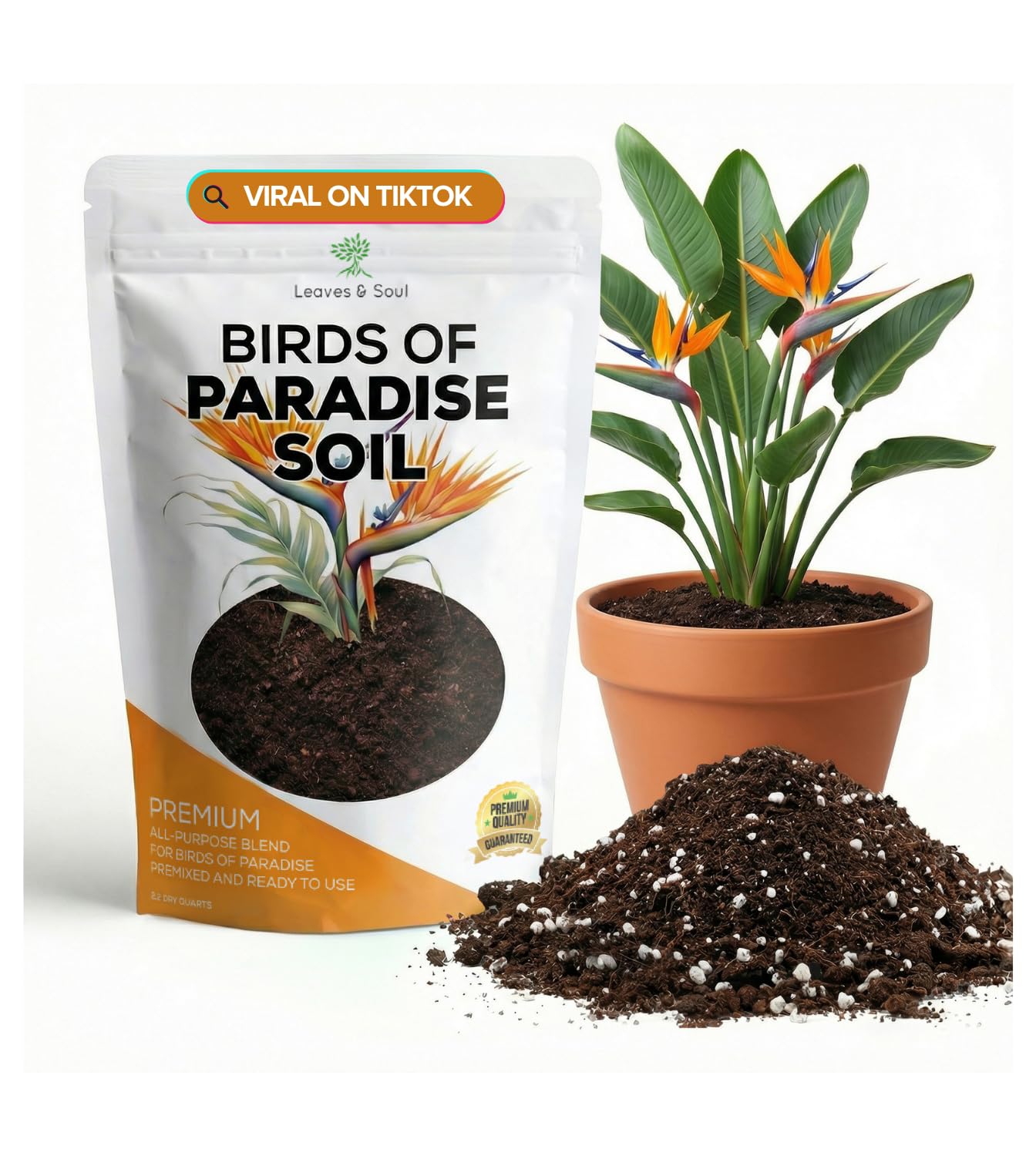
Leaves and Soul takes a multi-ingredient approach, blending peat moss, coco coir, perlite, and dolomite lime to create what is arguably the most complete pH-stabilized foundation for Bird of Paradise. The coco coir adds a sustainable moisture reservoir that peat alone cannot match, while the dolomite lime buffers the pH drop that occurs as peat decomposes over time. The 8.2-quart volume represents the best value-per-quart in the premium tier.
User reviews note that the bag arrives well-sealed and that the soil rehydrates easily even after separation during shipping. Growers have reported success not just with Bird of Paradise but also with African violets and bonsai trees, suggesting a versatile particle size distribution. The inclusion of both peat and coir creates a dual-moisture system that reduces the risk of the mix drying out completely.
The blend is heavier than airy bark-based formulas, which some growers prefer for stability in large pots. However, for those who want a lighter, chunkier texture with less fine material, this mix may still require an additional handful of pumice or orchid bark.
What works
- Dolomite lime buffers pH for long-term stability
- Coco coir + peat provides balanced moisture retention
- Large 8.2-quart bag offers strong value
What doesn’t
- Contains peat moss, not fully peat-free
- Finer texture than chunky aroid purists prefer
3. Top Tier Genetics AROID Potting Mix (4 Quarts)
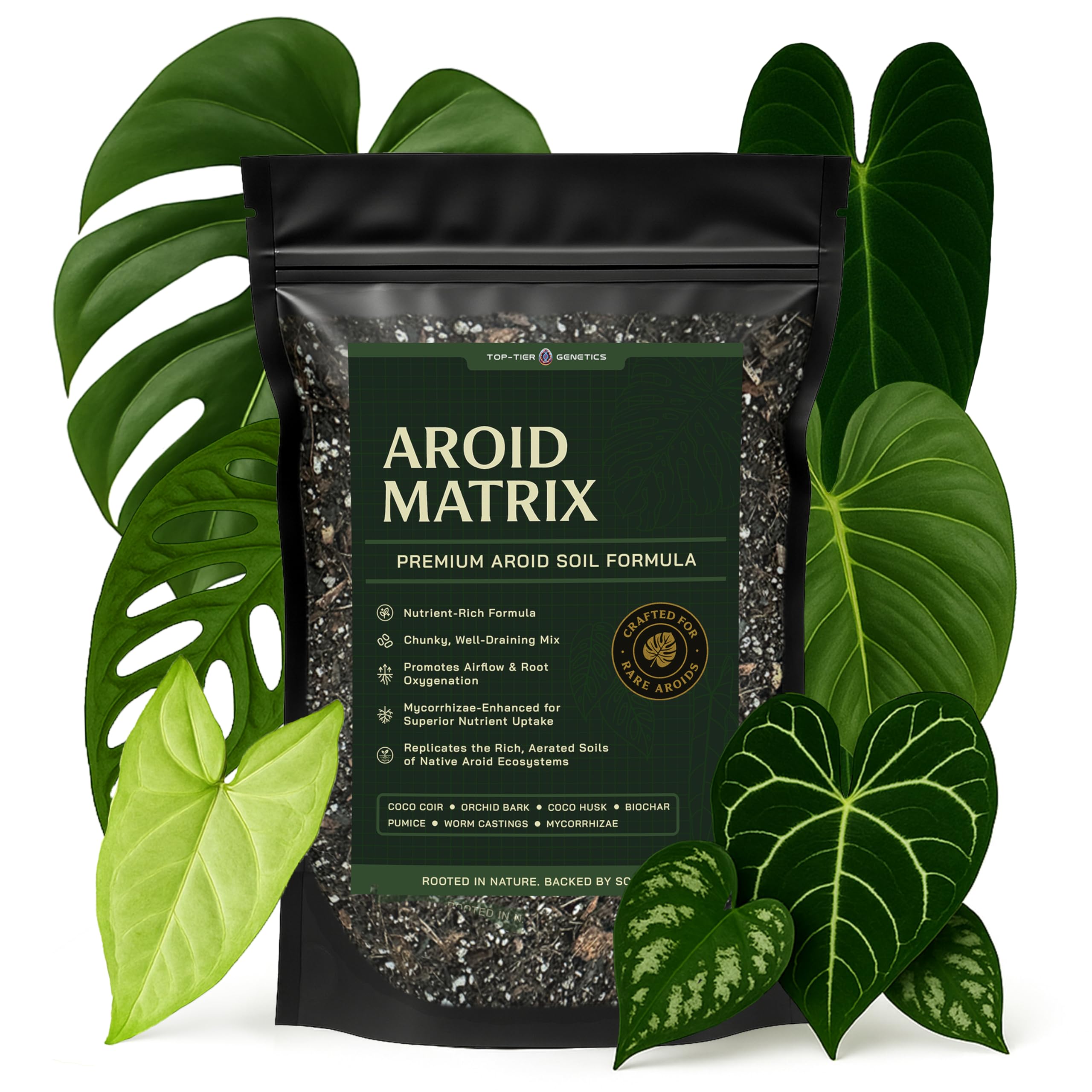
Top Tier Genetics brings a genuinely chunky, bark-and-pumice-heavy formulation that prioritizes maximum oxygen exchange over passive moisture retention. Orchid bark, coco husk, and pumice create large interstitial air pockets, while biochar acts as a long-term nutrient reservoir and microbial habitat. This mix is ideal for Bird of Paradise growers who tend to water on the heavier side, as the coarse structure makes overwatering nearly impossible.
The addition of worm castings and mycorrhizae provides an immediate biological boost after repotting. Owners report seeing new root growth within days and notice that plants “perk up” visibly in the first few days. The 4-quart bag is smaller than the premium competitors, so large pots will require multiple bags.
This blend is arguably the most future-proof option for the serious collector. The biochar component continues to improve soil structure as it ages, unlike peat-based mixes that degrade. The only trade-off is the smaller bag size relative to the price, making it a targeted investment for your most prized Bird of Paradise.
What works
- Chunky bark + pumice structure prevents compaction
- Biochar provides long-term nutrient and microbial support
- Worm castings and mycorrhizae for immediate biological activity
What doesn’t
- Smaller bag volume for the premium price
- May drain too fast for very dry climates
4. Craft Aroid Potting Mix – Elite Organic (2 Quarts)
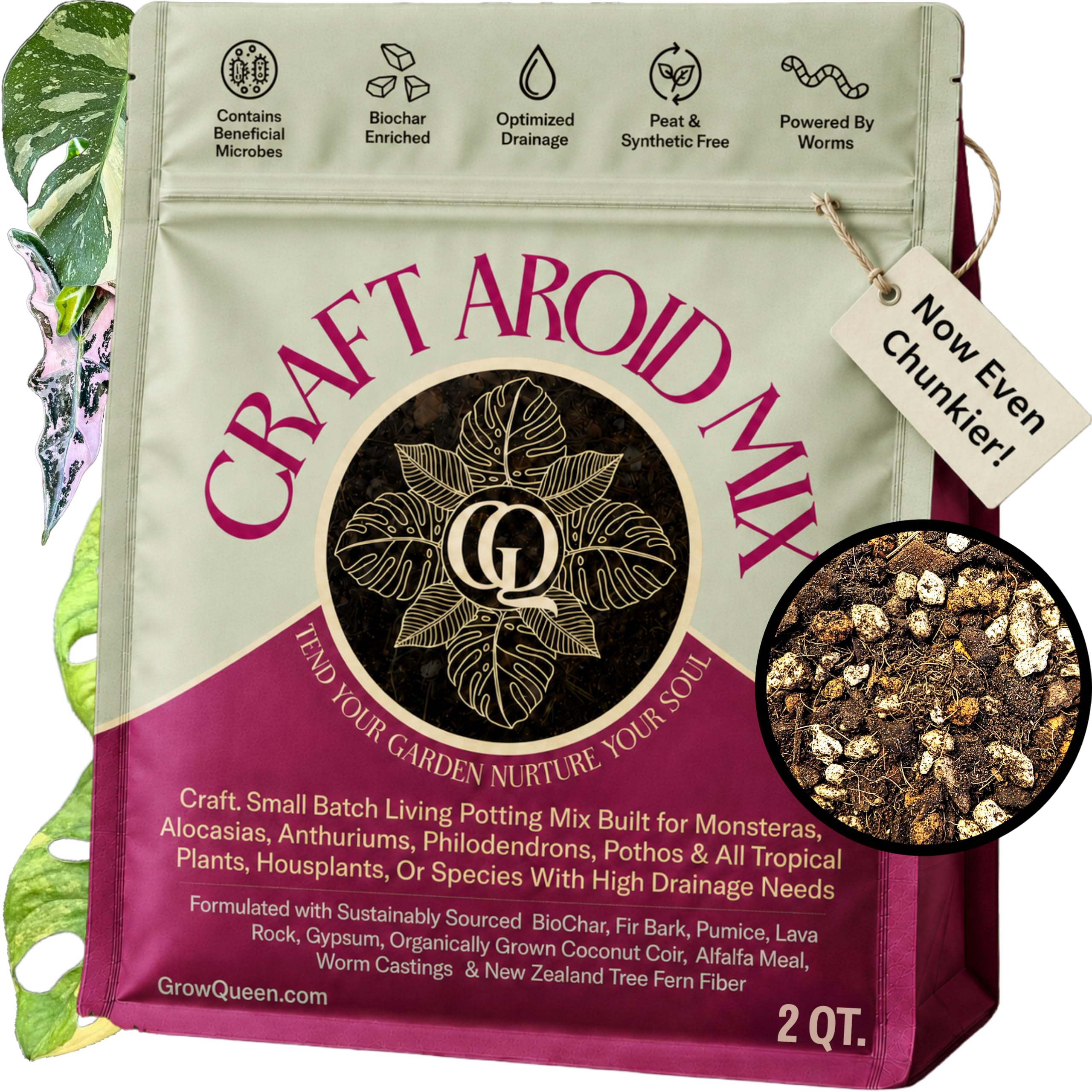
For growers committed to avoiding peat and perlite, Craft Aroid Mix by Grow Queen is a standout. It replaces peat with certified organic coco coir and uses pumice and lava rock in place of energy-intensive perlite. The inclusion of New Zealand Tree Fern Fiber actively conditions the soil and neutralizes pH down to 6.0, which is precisely the range Bird of Paradise roots prefer. Douglas fir bark fines provide the structural chunky texture that prevents soil compaction.
Owner reviews consistently praise the mix for being “clean” — free of dust, mold, and pests even after weeks of storage. The texture is consistently described as light yet chunky, with excellent water flow-through. Multiple customers have reordered this blend, indicating consistent batch quality. The blend is also marketed as pet-friendly, which appeals to households with curious animals.
The main limitation is the small 2-quart bag, which is better suited for repotting a single medium-sized plant or refreshing a top layer. Larger containers will require multiple bags, which adds up in cost. The lack of perlite may also feel unfamiliar to those accustomed to the white flecks in standard mixes, though the pumice and lava rock serve the same function more sustainably.
What works
- Completely peat-free and perlite-free formulation
- Tree fern fiber naturally buffers pH to 6.0
- Consistently clean, dust-free bags in owner reports
What doesn’t
- 2-quart bag requires multiple purchases for large pots
- Higher cost per quart than peat-based blends
5. Noot Potting Mix – Bio-Organic (1 Gallon)
Noot takes a fundamentally different approach by pre-soaking its coconut-chip-and-perlite blend with liquid organic nutrients (NPK 0.10/0.15/0.12) and 16 strains of beneficial bacteria and fungi. This means the mix arrives already biologically active and ready to use immediately without any additional fertilizer for the first few weeks. The large coconut chips create dramatic air spaces that encourage rapid, branching root development — a strong match for Bird of Paradise’s thick, exploratory roots.
Reviews from long-term users highlight the elimination of fungus gnats after switching to this mix, thanks to the fast-draining structure that keeps the top layer dry. Several owners of multiple plant species reported that every variety — from monstera to African violet — adapted quickly and showed new growth. The 1-gallon bag is roughly equivalent to 4 quarts, placing it between the small and large competitors in volume.
The primary drawback is the price per bag, which multiple buyers flagged as steep. The moisture level upon arrival can vary, with some bags arriving slightly moister than expected. For a single prized Bird of Paradise, the root-growth acceleration may justify the cost, but it becomes expensive for a large collection.
What works
- Pre-soaked with balanced organic nutrients and 16 microbe strains
- Large coconut chips create excellent air pockets
- Reportedly eliminates fungus gnat problems
What doesn’t
- Premium price for the bag volume
- Arrival moisture level can be inconsistent
6. rePotme All Purpose Potting Soil – Tropical Mix (2 Quarts)

rePotme is a well-established name in the specialty potting mix space, with their all-purpose Tropical blend used by major conservatories and botanic gardens. The organic formula features a bark-heavy, lightweight texture that promotes excellent aeration for potted tropicals. The inclusion of larger bark fines and perlite creates a mix that drains freely, reducing the risk of waterlogged roots in Bird of Paradise containers.
Long-term users on Amazon report consistent results over years of repotting snake plants, monsteras, and African violets. The bag is sealed tightly to prevent moisture loss during storage — a practical feature for apartment dwellers. Many reviewers note that the mix is “not cheap, but it is great stuff,” emphasizing that the quality justifies the per-bag cost for small to medium repotting jobs.
The 2-quart mini bag is clearly intended for small-scale use. For a large Bird of Paradise in a 12-inch or larger pot, you will need several bags, which pushes the total cost notably higher than the competition. Additionally, the all-purpose formula is not pH-tailored specifically for Bird of Paradise, so growers may need to supplement with lime or monitor pH more carefully.
What works
- Trusted brand used by professional conservatories
- Lightweight bark texture provides good aeration
- Sealed packaging keeps mix fresh during storage
What doesn’t
- Small 2-quart bag requires multiples for large plants
- Not pH-balanced specifically for Bird of Paradise
7. DUSPRO 8in1 Aroid Potting Mix (2 Quarts)
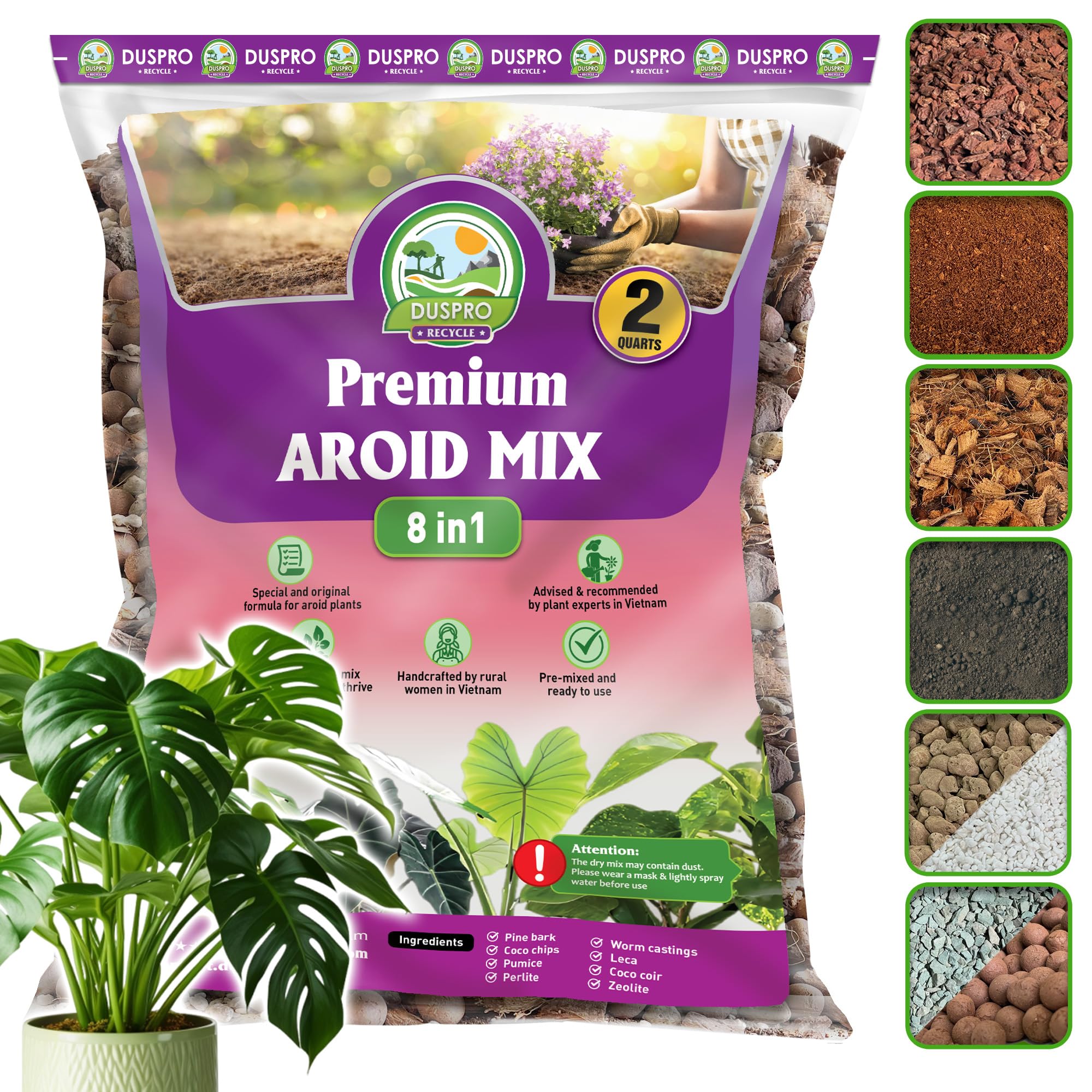
DUSPRO’s 8in1 blend is the most component-dense formula examined — it packs pine bark, coco chips, pumice, LECA (clay pebbles), perlite, coir, zeolite, and worm castings into a single bag. This creates a chunky, multi-texture mix that mimics the natural growing conditions of aroids, with each component serving a specific function: LECA for weight and drainage, zeolite for cation exchange, and worm castings for slow-release fertility. For growers on a budget who still want a professional-grade particle diversity, this is the strongest entry-point.
Owner feedback frequently mentions how far the 2-quart bag goes — one reviewer repotted four 8-inch pots and two 4-inch pots with half a bag remaining. Several reviewers reported that their plants showed visible improvement within weeks, with new growth appearing on money trees, citrus, and aroids alike. The mix is pre-mixed and ready to use straight from the bag, requiring no additional sifting or blending.
The primary trade-off is consistency: with eight components, batch-to-batch variation in particle size distribution is possible. Some bags may contain more fine material than others. Additionally, the bag can produce dust near the bottom, so wearing a mask during use is advisable. For the price point, however, it delivers an impressive breadth of ingredients.
What works
- Eight distinct components for diverse particle structure
- Excellent value — covers multiple pots per bag
- Worm castings provide immediate nutrient availability
What doesn’t
- Bag can produce dust near the bottom
- Batch consistency may vary with so many components
Hardware & Specs Guide
Particle Size and Aeration
The key to successful Bird of Paradise soil lies in the balance between large and small particles. Coarse amendments like pine bark fines, orchid bark, pumice, and coco chips should form at least 40–50% of the total volume. These create the macropores that allow excess water to drain and oxygen to reach the root zone. Fine materials like peat, coir, and worm castings fill the micropores that retain moisture and nutrients. A mix that is too fine (high peat, no bark) will compact into a dense block, causing root suffocation.
pH Buffering and Nutrient Retention
Bird of Paradise thrives in a pH range of 6.0 to 6.5. Dolomite lime is the most common buffering agent, slowly releasing calcium and magnesium as the soil ages. Tree fern fiber and biochar also contribute to pH stability. For nutrient retention, cation-exchange-capacity (CEC) comes from materials like zeolite, worm castings, and biochar. These hold positively charged nutrient ions (calcium, magnesium, potassium) and release them slowly, reducing the need for frequent fertilization.
FAQ
Can I use regular potting soil for Bird of Paradise?
How often should I repot my Bird of Paradise into fresh soil?
Does Bird of Paradise need peat moss in its soil mix?
What size pot is best for a Bird of Paradise in these specialty mixes?
Final Thoughts: The Verdict
For most gardeners, the bird of paradise soil winner is the Soil Sunrise Bird of Paradise Potting Mix because it is the only blend specifically pH-tailored for Strelitzia and comes in a practical 8-quart volume. If you want maximum aeration and long-term soil health with biochar and mycorrhizae, grab the Top Tier Genetics AROID Mix. And for the best all-around value with eight distinct components in one bag, nothing beats the DUSPRO 8in1 Aroid Mix.