
Specs are compiled from manufacturer listings and verified buyer reviews and can change over time — please confirm the key details on the product page before buying.
You plant tomatoes to enjoy, not to hand them over to every bird and squirrel in the neighborhood. The right netting stops them cold without blocking sun or rain, and the wrong one rips apart in a single storm, tangles into a mess, or lets tiny pests slip right through. This guide cuts through the confusion to give you the real picks that actually protect your crop season after season.
I’m Rikta — the founder and writer behind Lawn Gear Lab. This guide is built by comparing the manufacturers’ published specifications and the patterns across verified customer reviews, so you get each pick’s real strengths and trade-offs instead of marketing spin.
You will find five distinct options for bird netting for tomatoes, from ultra-fine mesh that blocks cabbage moths (a common garden pest) to heavy-duty woven HDPE (high-density polyethylene, a tough plastic) that stands up to deer, each chosen to match a specific garden setup and threat level.
Quick Picks
- Bird Netting for Garden, Fetanten 13 x 40 FT — Best Overall
- RIFNY 13 x 40 FT Heavy Duty Anti Bird Netting Mesh — Top Performer
- RIFNY Garden Netting, 2 Pack 10x33Ft Ultra Fine Mesh — Best Value
- SnugNiture Garden Netting 10x33FT Ultra Fine Mesh — Mid-Range Pick
- SnugNiture Garden Netting 8x24FT Ultra Fine Mesh — Budget Champion
How To Choose The Best Bird Netting For Tomatoes
Bird netting for tomatoes is a simple idea — a mesh barrier that stops birds, deer, and squirrels from reaching your fruit — but the details vary a lot. The main things to consider are the mesh size, the type of material, the weight of the netting, and if you need it to block only large animals or also tiny pests like cabbage moths and aphids.
Mesh size determines what gets blocked and what gets through
A larger mesh, like 5/8 inch (about 1.6 cm), is ideal for keeping out birds and squirrels while letting bees in to pollinate. It is strong enough to resist deer and poultry. A finer mesh, sometimes called ultra-fine or insect netting, has holes closer to 0.04 inches (about 1 mm). It blocks tiny insects but also keeps out pollinators, so you have to lift it during flowering or rely on self-pollinating crops like tomatoes.
Material and weight affect how long it lasts
Polyethylene (PE) netting is lightweight, cheap, and works fine for a season or two, but tears more easily and can snag on branches. High-density polyethylene (HDPE) is heavier, UV-resistant (meaning it resists sun damage), and rot-resistant — it stands up to multiple seasons of sun, wind, and rain without falling apart. The weight, measured in ounces per square yard (oz/yd²), is a clue: heavier netting, around 0.65 oz/yd², is tougher and less likely to tear.
Sheet size and included hardware save you time
Larger sheets, like 13 x 40 feet (about 4 x 12 meters), cover multiple raised beds or a row of fruit trees without needing to join pieces. Some kits come with landscape staples (metal pins for soil) and twist ties, which makes installation much easier, especially if you are working with soft soil or trying to wrap a tree canopy.
Quick Comparison
| Model | Best For | Mesh Size | Sheet Size | Weight | Amazon |
|---|---|---|---|---|---|
| Fetanten 13 x 40 FT | Heavy-duty animal barrier | 5/8 inch woven | 13 x 40 FT | 1.33 kg | Amazon |
| RIFNY 13 x 40 FT | Strong woven mesh for trees | 5/8 inch woven | 13 x 40 FT | — | Amazon |
| RIFNY 2 Pack 10x33FT | Ultra-fine insect barrier | 0.04 inch | 2 x (10 x 33 FT) | 1.08 kg | Amazon |
| SnugNiture 10x33FT | Mid-size ultra-fine coverage | Ultra-fine | 10 x 33 FT | 1.2 lbs | Amazon |
| SnugNiture 8x24FT | Budget starter pack | Ultra-fine | 8 x 24 FT | 0.35 kg | Amazon |
In‑Depth Reviews
1. Bird Netting for Garden, Fetanten 13 x 40 FT

Heavy-duty HDPE woven mesh that survived a summer and is ready for another.
If birds and deer are the main threat to your tomatoes, this is the netting that delivers. It uses a 5/8 inch woven mesh made from HDPE (high-density polyethylene) — a UV-proof (resists sun damage), rot-resistant material that buyers report stays strong through rain, heat, and cold. One reviewer noted it “worked very good at keeping the deer out of my tomato’s” and noted it made it through the whole summer and is being used again for another year. That kind of reuse is exactly what you want, and it beats flimsy netting that shreds after one storm. It comes with steel landscape staples (metal pins for soil) and twist ties, making setup simple. At 13 x 40 feet (about 4 x 12 meters), the 1.33 kg sheet is the largest in this lineup, at 13 x 40 feet versus the SnugNiture 8x24FT at 8 x 24 feet. The woven construction resists tangling and tearing — a sharp contrast to the ultra-fine nets that snag easily. A few buyers noted weird seams from the stitching and minor rips where the net touched something sharp, but the consensus is that this netting is sturdy enough for serious garden protection. People fighting large animals and wanting a multi-season net will get the most from this pick.
What holds up
- HDPE material resists UV and rot for multi-season use
- Included staples and ties simplify installation
- 5/8 inch woven mesh keeps deer and birds out without harming plants
What to watch for
- Woven mesh is too large to block tiny insects like cabbage moths
- Some stitching inconsistencies reported on a few rolls
Reach for this if: You have deer, birds, or poultry raiding your tomato patch and want a net that lasts more than one season.
Look elsewhere if: You are fighting tiny pests like aphids, which will slip right through the 5/8 inch holes.
2. RIFNY 13 x 40 FT Heavy Duty Anti Bird Netting Mesh
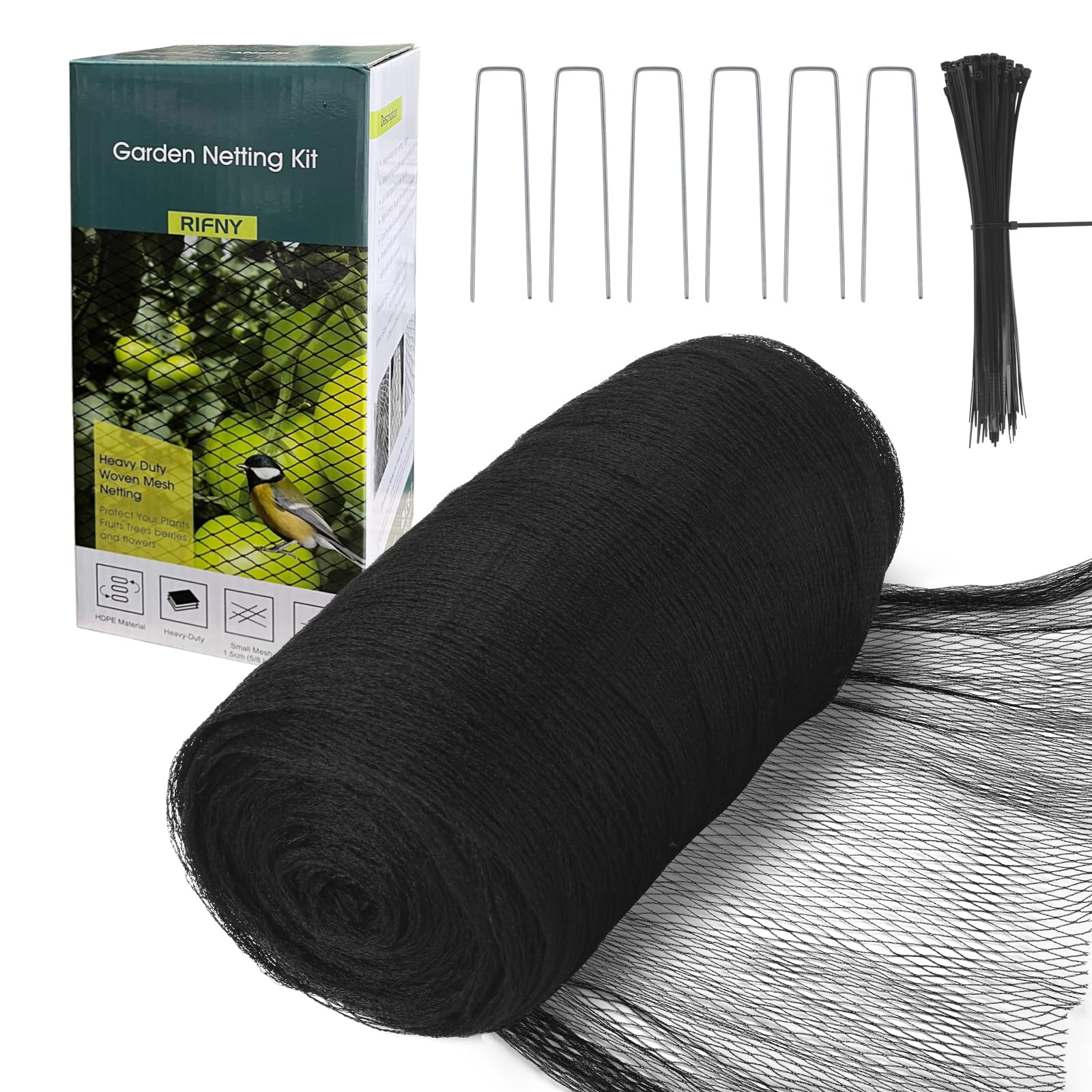
Woven HDPE with included staples and ties for quick setup.
This RIFNY netting matches the Fetanten in size and mesh — 13 x 40 FT with a 5/8 inch opening. Reviewers mention it unrolls easily, cuts cleanly with scissors, and stays flexible during setup. That alone makes a big difference when you are trying to drape it over a fruit tree or a row of tall tomato stakes. One avid gardener noted it worked great for covering raised beds to protect seedlings from birds, toddlers, and dogs. The weight is listed at 0.65 oz/yd² (ounces per square yard), giving it real heft without breaking branches. The included 7-inch landscape staples (metal pins for soil) and twist ties mean you are ready to install the moment the box opens. Buyers who used it on grape arches and fruit trees say it is better quality than what you get from the local hardware store. While the woven construction is strong enough to withstand deer and squirrels, the 5/8 inch mesh does let in smaller pests — it is a dedicated animal barrier, not an insect net. Gardeners draping nets over tree canopies and wanting zero tangling will find this their best bet.
Why it stands out
- Easy to unroll and cut for faster setup
- Lightweight enough to drape over fruit trees without breaking limbs
- Includes 7-inch staples and ties for immediate installation
Where it falls short
- Mesh size (5/8 inch) does not block small insects
- Hard ground may require separate longer anchors
Grab this for: Draping over fruit trees, grape arches, or tomato towers where you need a strong woven net with included install hardware.
skip it if: Your biggest problem is cabbage moths or aphids — they will slip straight through these holes.
3. RIFNY Garden Netting, 2 Pack 10x33Ft Ultra Fine Mesh

An ultra-fine 0.04-inch mesh that blocks cabbage moths — if you secure it tightly.
This is the pick for anyone losing tomatoes to tiny insects, not just birds. The 0.04 inch ultra-fine mesh stops cabbage moths, aphids, and worms dead, and you get two 10x33FT sheets in one package, for a total of 20 x 33 FT of mesh versus the SnugNiture 8x24FT at 8 x 24 FT. The oblong hole construction allows water and light through easily, so you can water and feed your plants without lifting the netting. One buyer mentioned it is “excellent at keeping cabbage moths out, vastly improving crop quality.” That same reviewer also flagged a catch: the weave is superfine but less sturdy, and it can distort under clamps (a holding device), which can let aphids in. So while the mesh itself blocks insects when it is flat and taut, it is vulnerable where pressure points exist. The net is lightweight (1.08 kg for the pack) and easy to cut with scissors, making it a simple cover for raised beds. It will not stop deer — for that, you need the woven HDPE nets above — but for fine-pest defense, this is the most capable option in the lineup. Someone with high insect pressure who can secure the edges well will love the value of this two-pack.
The big upside
- Ultra-fine 0.04-inch mesh blocks even tiny pests like cabbage moths
- Two-pack offers 20×33 FT of total coverage
- Water and light pass through freely, no need to remove for watering
The real catch
- Weave distorts under clamps, potentially creating gaps for aphids
- Too fine to pollinate through — lift it during flowering
Buy it for: Protecting brassicas, tomatoes, and leafy greens from moths and worms where fine-pest pressure is high.
Pass on it if: You are dealing with deer or large birds — the mesh is not strong enough for that.
4. SnugNiture Garden Netting 10x33FT Ultra Fine Mesh

A lightweight, translucent sheet that is easy to see through and water through.
If you want an ultra-fine mesh cover that is almost invisible on your garden beds, this SnugNiture netting is a solid choice. It is made from polyethylene (PE), weighs just 1.2 lbs (0.54 kg), and has a weave fine enough to block worms, bugs, and aphids while still letting sun and rain through. One buyer who used it for 7+ months said it covers multiple beds and fig trees, and noted it is “easy to see and water through.” They did mention it “snags easily,” so you need to be careful when dragging it over rough wood or stakes. At 10x33FT, it provides good coverage for a series of raised beds, and the ultra-light structure means it will not crush delicate seedlings. However, compared to the heavier RIFNY 2 Pack above, you get less total mesh and thinner material. The same buyer review noted it is “lightweight” — a positive for handling, but a trade-off for durability. This is a net for the gardener who wants insect protection with the least visual impact and does not mind replacing it after a couple of seasons. If you value see-through coverage over heavy tear resistance, this is your net.
What you get
- Sheer, see-through mesh that is barely noticeable on the garden
- Lightweight at 1.2 lbs, easy to drape and reposition
- Blocks worms, aphids, and bugs without blocking sun or water
What you trade
- Snags easily on rough edges, reducing lifespan
- Thinner than HDPE alternatives, less tear resistance
Ideal for: A gardener who values see-through coverage and needs insect protection across several beds without a heavy, bulky cover.
Not the best for: Areas with sharp stakes or rocks that will catch and tear the thin fabric.
5. SnugNiture Garden Netting 8x24FT Ultra Fine Mesh

The smallest and lightest net here, perfect for a starter garden or a single raised bed.
At 8x24FT, this is the smallest sheet in the group, but for a single tomato bed or a couple of raised rows, it gives you exactly the coverage you need. It weighs just 0.35 kilograms versus the Fetanten 13x40FT at 1.33 kg, making it trivial to handle, drape, and store. One owner reported using it for 7+ months to cover a 12x2ft and a 7x3ft bed plus fig trees, with mesh leftover. They called the weave “fine” and noted the netting is “sturdy” and held up well against insects. The material is polyethylene (PE), waterproof and sun-proof, but it is not as tough as the heavier HDPE nets. One reviewer gave the design a 4-star rating, noting the weave keeps insects out well but snags easily if caught on branches or stakes. Anyone starting a small garden with insect threats and a tight budget will appreciate this no-fuss entry into ultra-fine mesh protection. Deer fighters should skip it and grab the Fetanten instead.
Why it works
- Light enough at 0.35 kg to handle and reposition with zero effort
- Fine weave effectively blocks worms, bugs, and tiny pests
- Covered one gardener’s beds and fig trees with leftover mesh
Where it is limited
- Smallest coverage area (8x24FT) of all the picks
- Snags more easily than heavier woven alternatives
Best for: A small raised bed or a couple of tomato plants, where you want insect protection on a budget without wrestling a massive roll.
Not enough for: A large garden with deer or a tall crop that needs a heavy-duty anchor.
Understanding the Specs
Mesh Size
This is the gap between the strands of the net, usually measured in inches. A 5/8 inch mesh stops birds, squirrels, deer, and poultry but lets bees in to pollinate. An ultra-fine mesh, around 0.04 inches, blocks tiny pests like cabbage moths and aphids, but it also keeps out pollinators, so you need to lift it for crops that rely on bees. Choose based on what you are fighting: large animals need big holes, small insects need small ones.
Material: PE vs. HDPE
Polyethylene (PE) is the lightweight standard for inexpensive insect netting. It works fine for a season or two but can tear and snag more easily. High-density polyethylene (HDPE) is heavier, UV-proof (resists sun damage), rot-resistant, and lasts multiple seasons — ideal if you do not want to rebuy netting every year. Check the product label for “HDPE” if long-term durability matters to you.
Sheet Size and Weight
The dimensions tell you how much area one roll covers. Common sizes are 8x24FT (small bed), 10x33FT (mid-size), and 13x40FT (large garden or trees). Weight, listed in kilograms or pounds, is a clue to durability — heavier netting is usually thicker and more resistant to tearing. A net at 1.33 kg will feel denser and sturdier than one at 0.35 kg.
Included Hardware
Some nets come with landscape staples (metal pins for soil) and twist ties, which saves you a separate trip to the store. Staples are used to pin the netting into soil, while twist ties help wrap it around tree trunks or posts. If you are covering a large area, having these included makes installation much simpler right out of the package.
FAQ
Can I use bird netting to protect my tomato plants from both birds and insects?
Will the netting break or tear during a storm?
Can I water my plants through the netting or do I have to remove it?
How do I install bird netting over my tomato beds?
Will the netting get tangled and be impossible to reuse?
Can pollinators like bees get through the netting?
Is the netting safe for my plants or will it damage them?
How do I store the netting for next season?
Does the netting harm birds or animals if they get tangled?
Can I use this netting for crops other than tomatoes?
Final Thoughts: The Verdict
For most people, the bird netting for tomatoes winner is the Fetanten 13 x 40 FT because it combines a large 5/8 inch woven HDPE mesh with included staples and ties, delivering multi-season protection against deer and birds. If you want an ultra-fine insect barrier with two 10x33FT sheets, grab the RIFNY 2 Pack 10x33FT. And for a small, lightweight starter net for a single bed, the standout is the SnugNiture 8x24FT.
How We Picked
We do not accept paid placement. Every pick is matched to a real buyer and a real use-case; we do not hands-on test units.
Sources & Methodology
Specifications: manufacturer listings and product documentation. Review insights: verified customer reviews, as of July 2026. Pricing: not shown on this page (it changes often); check the current price via the retailer link.
As an Amazon Associate, Lawn Gear Lab earns from qualifying purchases. This does not affect which products we feature.