
Watching a flock of birds strip your blueberry, raspberry, or strawberry patch in a single afternoon is a uniquely frustrating experience for any berry grower. The solution isn’t complicated, but choosing the wrong netting creates a new set of problems — tangles, tears, trapped animals, and wasted time. This guide cuts through the marketing to identify the netting options that actually protect your harvest without the usual headaches.
I’m Rikta — the co-founder and writer behind Lawn Gear Lab. I’ve spent hundreds of hours analyzing mesh densities, tensile strengths, UV resistance ratings, and real owner feedback across dozens of bird netting products to build a guide that saves you time and your berries.
Whether you’re protecting a few container bushes or a full row of strawberries, the right barrier makes all the difference — I’m here to help you pick the best bird netting for berries based on what actually works in real gardens, not just product descriptions.
How To Choose The Best Bird Netting For Berries
Selecting the right netting depends on the type of berry you’re growing, the size of your planting area, and the specific pests you’re up against. A solution that works for a single potted blueberry bush may be completely wrong for a 20-foot strawberry row. Focus on these three factors first.
Mesh Size and Material
The most critical spec is the mesh opening. For berry protection, a mesh size of 5/8-inch to 1/2-inch is the sweet spot — large enough for sunlight and airflow but small enough to block sparrows, robins, and finches. Ultra-fine mesh (0.04-inch openings) blocks insects too, but it also prevents bees from pollinating, which kills your berry yield. On material, high-density polyethylene (HDPE) offers the best balance of UV resistance, weight, and tear strength. Nylon is softer and easier to drape but degrades faster in direct sun. Standard polyethylene is the budget option but snags and tangles more easily.
Coverage Style: Flat Sheet vs. Enclosure Bag
Flat netting sheets are ideal for covering large raised beds or row crops like strawberries, where you can drape the fabric over hoops or stakes and pin the edges. They are less effective for individual bushes because birds can sneak in from the bottom unless the netting is fully secured to the ground. Enclosure bags with built-in drawstrings are far superior for isolated blueberry, raspberry, or currant bushes. A proper drawstring cinches the net tight around the trunk or pot, eliminating entry points. Premium bag-style nets also include zippers for easy harvesting — a feature that quickly pays for itself in convenience.
Durability and Weather Resistance
Bird netting left outside all season takes a beating from UV radiation, rain, and wind. Look for products explicitly rated as UV-resistant and rot-resistant. HDPE netting with a weight around 0.65 oz/yd² provides enough tensile strength to resist tearing from squirrels or from branches poking through. The stitching around drawstring channels and zipper seams is the most common failure point — reinforced stitching and thick cordage are signs of a net that will last more than one season. Also consider ease of storage: netting that tangles into a knot when you try to fold it will discourage you from reusing it.
Quick Comparison
On smaller screens, swipe sideways to see the full table.
| Model | Category | Best For | Key Spec | Amazon |
|---|---|---|---|---|
| RIFNY 13×40 ft HDPE | Heavy Duty Flat Sheet | Large beds & rows | 5/8 in mesh, HDPE, -58°F to 212°F | Amazon |
| Fetanten 13×40 ft Kit | Premium Flat Sheet Kit | Versatile garden protection | 5/8 in woven mesh, staples & ties included | Amazon |
| OZMI 6×6 ft Zipper Bag | Drawstring Enclosure | Individual blueberry bushes | 72×72 in, zipper + drawstring | Amazon |
| RIFNY 10×33 ft Ultra-Fine 2-Pack | Fine Mesh Flat Sheet | Insect & bird barrier | 0.04 in mesh, PE, 2-pack | Amazon |
| Acostop 6-Pack Drawstring Bags | Multi-Bag Enclosure | Multiple small bushes & pots | 48×60 in, polyester, 6-pack | Amazon |
| GonLei 4-Pack Drawstring Bags | Value Enclosure Set | Container blueberry & citrus | 2 sizes, nylon, drawstring closure | Amazon |
| Ruolan 10×33 ft Flat Sheet | Entry-Level Flat Sheet | Budget row cover for deer & bugs | 10×33 ft, PE, fine mesh | Amazon |
In‑Depth Reviews
1. RIFNY 13 x 40 FT Heavy Duty Anti Bird Netting with Ties and Landscape Staples
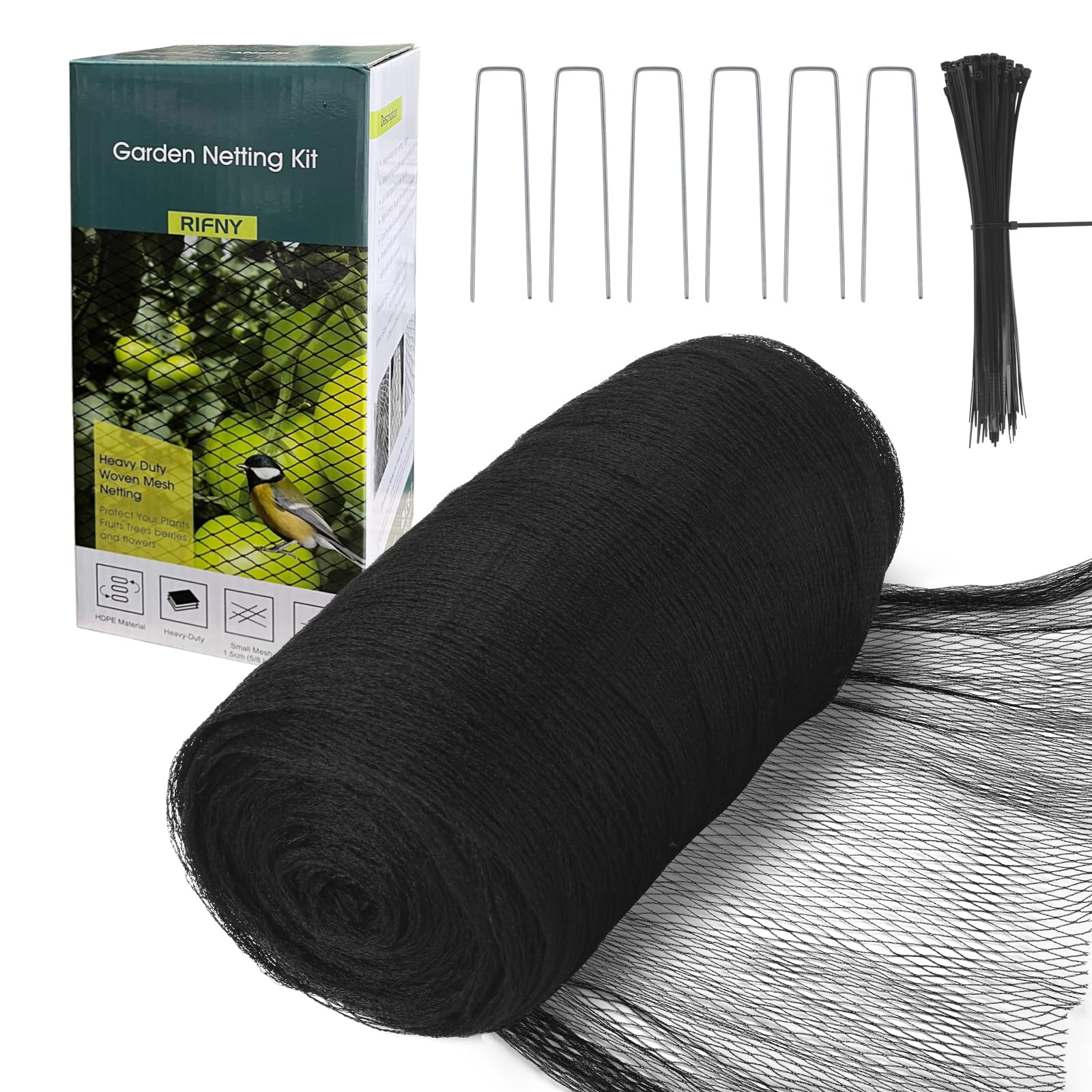
This is the netting I recommend to anyone protecting a large berry patch or multiple raised beds. The 13 x 40 ft sheet gives you enormous coverage, and the 5/8-inch woven HDPE mesh is the ideal balance between blocking birds and allowing light, rain, and beneficial insect access. Owners consistently praise how it doesn’t tangle during unrolling — a massive quality-of-life improvement over cheaper plastic nets that become a knotted mess.
The HDPE construction is what sets this apart. It’s rated for extreme temperatures from -58°F to 212°F, so it handles full summer sun without becoming brittle and winter storage without cracking. At 0.65 oz/yd², the fabric has enough heft to resist tearing from squirrels or deer pressing against it, yet it’s light enough to drape over delicate blueberry branches without breaking them. The included 7-inch landscape staples and twist ties make installation straightforward, though you’ll want additional stakes for a fully freestanding enclosure.
Multiple verified buyers note that they have reordered this product multiple times because it simply outlasts every other netting they’ve tried. It works equally well draped over fruit trees, wrapped around individual bushes, or secured over a full garden row. The only caution is to cut generously — several owners report cutting the sheet too short and struggling to keep it anchored on larger trees.
What works
- Does not tangle during unrolling or storage
- Extreme temperature tolerance from -58°F to 212°F
- Strong HDPE material resists tearing from animals
- Includes quality landscape staples and ties
What doesn’t
- Cutting to exact size requires careful measurement
- May need additional anchoring for large trees
2. Fetanten 13 x 40 FT Heavy Duty Woven Mesh Net Animal Fencing with Ties and Staples

The Fetanten kit is nearly identical in dimensions and mesh size to the RIFNY HDPE netting, but it earns its premium status through the bundled installation hardware and a slightly tighter weave that customers report holds up better against persistent deer pressure. The 5/8-inch mesh is constructed from UV-proof, rot-resistant polypropylene that resists aging even after a full season of direct sunlight. Many buyers specifically chose this over cheaper options because it survived severe storms without fraying when used as a protective roof over poultry runs.
What makes this particularly useful for berry growers is the combination of light weight and high tensile strength. The netting weighs only 1.33 kg for the full sheet, making it easy to maneuver over a row of raspberry canes or a blueberry bush without crushing branches. The woven structure is less likely to snag on woody stems compared to extruded plastic mesh. Multiple reviews confirm using the same netting across different seasons — first for strawberries, then for black raspberries — with no visible holes or rips.
One subtle advantage over the RIFNY sheet is that the included twist ties are slightly thicker, which makes a difference when securing the netting to stakes or fence posts in windy areas. The landscape staples are also a generous 7-inch length, suitable for penetrating even compacted garden soil. If you need a single large sheet that you can cut and customize for multiple applications around your property, this kit delivers excellent value for its build quality.
What works
- Woven HDPE resists fraying and UV damage
- Full installation kit saves extra purchases
- Light enough to drape without breaking branches
- Proven to withstand severe storms
What doesn’t
- Black color can heat up slightly in direct midday sun
- Large sheet may be overkill for small container gardens
3. OZMI 6 x 6 FT Blueberry Bush Netting Cover with Zipper and Drawstring

If you grow blueberries in individual bushes or small clusters, this OZMI bag-style netting is the most thoughtfully designed option in this lineup. The 6 x 6 ft bag is large enough to cover a mature blueberry bush without crushing the foliage, and the combination of a full-length zipper and a bottom drawstring gives you two separate access points for harvesting and watering. The zipper is the standout feature — you can unzip a panel to pick ripe berries without exposing the entire bush to birds, which is a massive convenience improvement over flat sheets.
The material is a lightweight, washable polyethylene with an ultra-fine mesh that blocks even small songbirds. The mesh is fine enough to deter insects as well, but during peak bloom you should open the net temporarily to allow bees to pollinate. The drawstring at the bottom cinches securely around the base of the bush or around a pot, creating a sealed enclosure that squirrels and chipmunks cannot push through. Multiple owners confirm that the zipper mechanism has held up well over multiple seasons without jamming.
This 2-pack covers two bushes, making it ideal for home gardeners with a small berry patch. The 6 ft height accommodates most mature blueberry varieties, and the bag folds flat for winter storage. A few users note that the netting can billow in strong wind if not staked down through the bottom loop, but the drawstring prevents animal entry regardless. For anyone frustrated by birds sneaking under flat sheets, this sealed bag design is the direct solution.
What works
- Zipper provides easy harvesting without full removal
- Drawstring bottom creates a fully sealed enclosure
- Washable and reusable across seasons
- Fine mesh blocks small birds and insects
What doesn’t
- Ultra-fine mesh blocks bee pollination during bloom
- Can blow in strong wind without additional staking
4. RIFNY 2 Pack 10 x 33 FT Ultra Fine Mesh Netting Pest Barrier

This two-pack from RIFNY is the best value for gardeners who need to cover a large area on a budget. Each sheet measures 10 x 33 ft, giving you a combined 660 square feet of coverage. The ultra-fine mesh has 0.04-inch openings, which is dense enough to block both birds and most insects, including cabbage moths and cucumber beetles. The oblong hole construction is specifically designed to allow water and airflow while keeping pests out, and owners confirm they can water directly through the fabric without pooling.
The PE material is lightweight — almost like a sheer fabric — which means it places almost no weight on young seedlings or tender berry canes. It’s easy to cut with standard scissors to fit raised beds or row covers. However, that lightweight nature also means it tears more easily than HDPE netting. Several reviews mention that determined squirrels can rip through the fine mesh, so this works best as a bird barrier rather than a full animal deterrent. It’s also worth noting that the ultra-fine mesh will exclude pollinators, so you must remove it during flowering or accept lower yields.
The real value here is in the sheer square footage per dollar. Two rolls give you enough material to cover multiple garden beds, a greenhouse bench, or even use as a mosquito screen on a patio. For berry growers who want to protect young strawberry plants from birds while they establish, this is a cost-effective solution. Just be prepared to replace sections after a season or two of heavy sun exposure, as PE degrades faster than HDPE.
What works
- Extremely high coverage for the price (2-pack)
- Ultra-fine mesh blocks insects as well as birds
- Lightweight and easy to cut to custom sizes
- Water and air pass through freely
What doesn’t
- PE material is less durable than HDPE alternatives
- Excludes pollinators — must remove during bloom
- Can be torn by determined squirrels
5. Acostop 6 Pack 4 x 5 FT Insect Bird Netting Cover with Drawstring

For gardeners managing multiple small to medium-sized berry bushes, this 6-pack of drawstring bags offers exceptional convenience. Each bag measures 4 x 5 ft, which is large enough to cover a modest blueberry bush, a potted citrus tree, or a tomato cage. The polyester material is softer and more flexible than polyethylene nets, which owners report makes installation significantly easier — the bag slides over unpruned bushes without snagging on thorns or branches, and you can cinch it tight in about 60 seconds.
Polyester offers better UV resistance than standard PE, and multiple reviews confirm these bags have lasted two or more seasons without tearing. The drawstring cordage is thicker than what you find on budget alternatives, and it doesn’t fray after repeated tightening. The fine mesh transparent material allows plenty of light penetration for photosynthesis while creating an effective barrier against birds, chipmunks, and squirrels. One reviewer noted the bags work well for moving container plants indoors during cold snaps while keeping the mesh protection intact.
The main trade-off is that each bag is slightly smaller than the OZMI enclosure, so very large mature blueberry bushes may be a tight fit. The 4 ft width accommodates most standard pots and small shrub shapes, but sprawling raspberry canes may push against the seams. The lack of a zipper means you must untie the drawstring fully to harvest, which is a minor inconvenience compared to the OZMI’s zipper design. Still, for the sheer quantity and quality per bag, this is a strong choice for container growers.
What works
- Soft polyester slides over branches without snagging
- Thick drawstring cord holds secure without fraying
- 6 bags cover multiple plants in one purchase
- Good UV resistance for multi-season use
What doesn’t
- No zipper — full drawstring removal needed for harvest
- 4×5 ft size may be snug for very large bushes
6. GonLei 4 Pack Garden Mesh Netting Bag with Drawstring (2 Sizes)
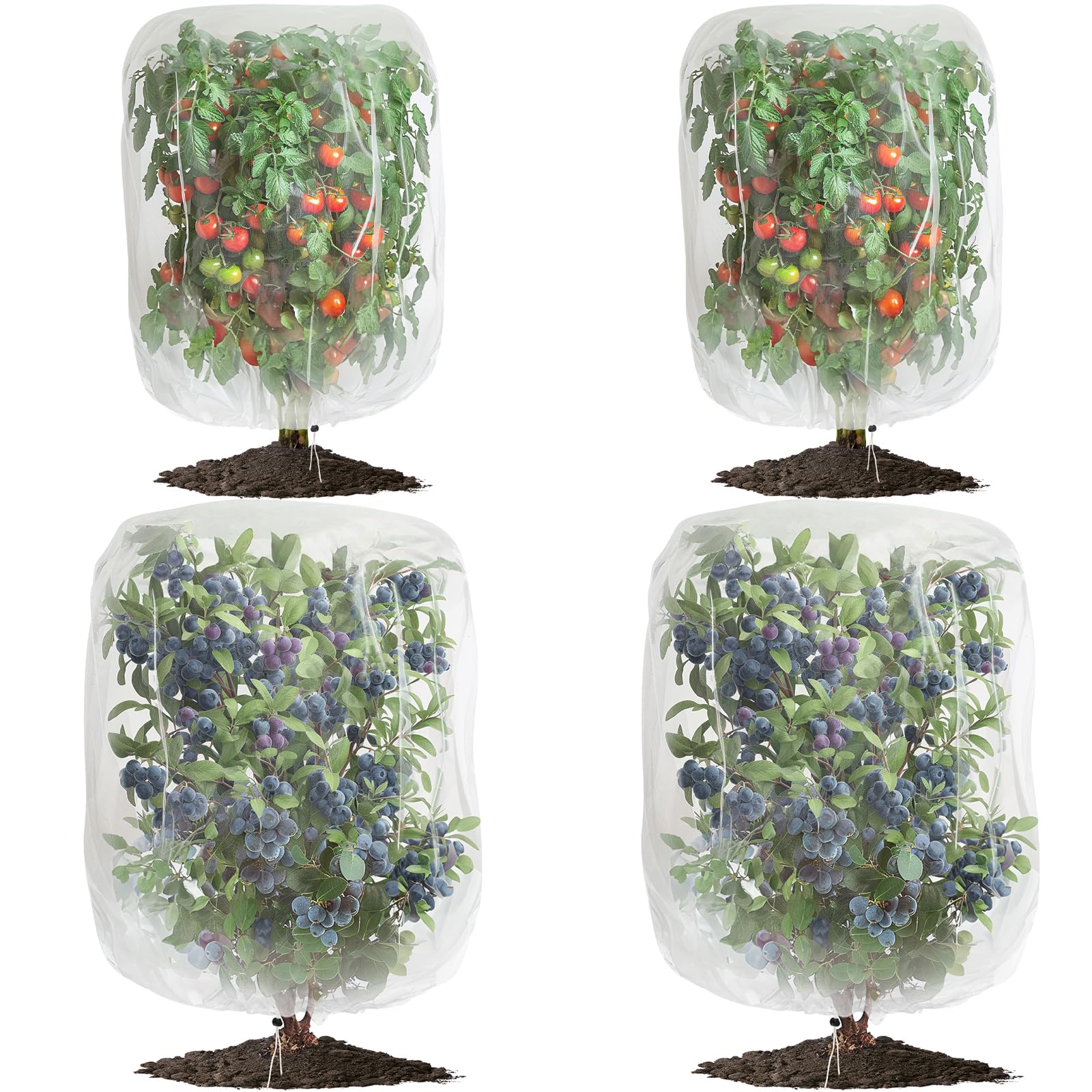
This GonLei set offers two different bag sizes — 2.6 x 3.3 ft and 3.3 x 4.9 ft — with two of each included. The smaller bags are ideal for covering container blueberry bushes, potted Meyer lemon trees, or small vegetable plants, while the larger bags handle medium shrubs. The nylon material is noticeably softer than polyethylene, making it easy to handle and fold. Owners consistently report being surprised by the quality relative to the cost, with many noting the bags exceeded their expectations for durability.
The drawstring design is functional but uses a thin synthetic cord that several reviewers recommend replacing with a thicker ribbon for a more secure cinch. In windy conditions, the thin cord can loosen, allowing the bag to shift. The mesh density is sufficient to block birds and cicadas, and the transparent material maintains good light transmission. One smart application noted by a buyer was using these bags as protective covers for fruit trees on a patio, where the lightweight fabric prevented fruit from being stolen by rodents.
The main limitation is long-term durability. Nylon will degrade faster than HDPE under continuous UV exposure, so these bags are best used seasonally and stored indoors during winter. The lack of a zipper means harvesting requires removing the entire bag, which can disturb the branches. For the price per bag, however, this is an excellent entry-level solution for beginners protecting their first berry plants or for gardeners with multiple small containers who need quick, inexpensive protection.
What works
- Two sizes included for flexible coverage
- Soft nylon material is easy to handle and store
- Great value for protecting multiple small plants
- Effective barrier against birds and cicadas
What doesn’t
- Thin drawstring cord may loosen in wind
- Nylon degrades faster than HDPE in sun
- No zipper — full bag removal needed for harvest
7. Ruolan Garden Mesh Netting 10 x 33 FT Insect Netting

The Ruolan netting is the most affordable flat sheet in this comparison, offering 10 x 33 ft of polyethylene mesh for a low entry cost. It’s a straightforward solution — you drape it over plants and weigh down the edges with stones or soil. The fine mesh is effective at excluding birds, deer, and rabbits, and owners report success protecting sweet potatoes, beans, and young squash plants. The fabric is lightweight enough that you can water directly through it without pooling issues.
The primary challenge with this netting is the handling experience. Multiple verified reviews note that unfolding the sheet can be a messy, tangled process, especially if you’re working alone. The PE material has a static cling that makes it stick to itself, and it’s best to have two or three people to manage the full sheet. Once installed, the netting works well, but it requires careful securing at ground level to prevent animals from pushing underneath. Several buyers also caution that the mesh can snag on broken branches or rough stakes, though the fabric itself is resistant to tearing.
This is a no-frills option best suited for covering low-growing berry patches like strawberries or young blueberry starts that haven’t filled out. It’s also useful as a floating row cover for frost protection in spring. The lack of included hardware means you’ll need to supply your own landscape staples or weights. While the durability is adequate for one or two seasons of use, the PE material will degrade faster than HDPE options when exposed to intense summer UV. For the lowest possible cost per square foot, this gets the job done.
What works
- Very low cost per square foot of coverage
- Effective barrier against birds, deer, and rabbits
- Water and sunlight pass through easily
- Suitable for low-growing crops and row covers
What doesn’t
- Tangles significantly during unpacking and installation
- Requires anchoring with stones or staples (not included)
- PE material degrades faster in direct UV exposure
- Difficult to install solo without a helper
Hardware & Specs Guide
Mesh Opening Size
The single most important spec for bird netting is the size of the mesh openings. For berries, a 5/8-inch (16 mm) mesh is the standard recommendation. This gap is large enough to allow honeybees and other pollinators to pass through while blocking robins, starlings, finches, and sparrows. Smaller openings like 0.04-inch (ultra-fine mesh) block insects too, but they also block pollinators, requiring you to temporarily remove the net during the flowering period. Mesh smaller than 1/2-inch also restricts airflow and can trap dew, promoting fungal diseases in humid climates.
Material & UV Resistance
Netting materials fall into three tiers. High-density polyethylene (HDPE) is the premium choice — it resists UV degradation, remains flexible in cold winter temperatures down to -58°F, and holds up to 3+ seasons of continuous outdoor use. Polyester is the mid-range option: softer and easier to drape, but it degrades faster under direct sun unless specifically UV-treated. Standard polyethylene (PE) is the entry-level material: lightweight and cheap, but it becomes brittle after one season of intense sun exposure and tangles more easily during installation. Always check for explicit “UV-resistant” or “rot-resistant” labeling.
FAQ
Will the 5/8-inch mesh keep hummingbirds away from my berry bushes?
Do I need to remove bird netting when my blueberry bushes are in full bloom?
How do I stop birds from entering from underneath flat netting sheets?
Final Thoughts: The Verdict
For most gardeners, the bird netting for berries winner is the RIFNY 13×40 ft HDPE sheet because it combines the ideal 5/8-inch mesh size with extreme weather durability and a tangle-free design that stands up to multiple seasons. If you want the convenience of a sealed bag with easy harvesting access, grab the OZMI 6×6 ft zipper bag. And for covering multiple container plants on a budget, nothing beats the quantity-to-price ratio of the Acostop 6-pack drawstring bags.