
Specs are compiled from manufacturer listings and verified buyer reviews and can change over time — please confirm the key details on the product page before buying.
You spend the whole season coaxing fruit from your trees, watching it grow from a flower to a perfect ripe orb, then you step outside one morning and find it pecked, half-eaten, or gone. The only thing standing between that harvest and a flock of birds is a physical barrier you need to install now and trust through wind, rain, and sun.
I am Rikta, the writer behind Lawn Gear Lab. This guide uses the manufacturers’ published specs and patterns across verified customer reviews to show you each pick’s real strengths and trade-offs.
The right bird mesh for fruit trees keeps birds out without tearing or letting the zipper fail mid-season. This guide helps you match a net to your tree’s size, shape, and what pests you actually face — without wasting money.
Quick Picks
- Homoda 2-Pack 8ft x 8ft Fruit Tree Netting Cover with Zipper & Drawstring — Best Overall
- CHNENOMME 8FT x 8FT Fruit Tree Netting with Zipper and Drawcord, 2Pcs — Budget Champ
- GonLei 2 PCS Large Fruits Tree Netting Cover 10 x 10 ft — Two-Pack Value
- LHongL 10ftx10ft Large Fruit Tree Netting Cover with Zipper & Drawstring — Premium Bag
- RIFNY Garden Netting 2 Pack 10x33FT Ultra Fine Mesh — Row Cover King
- Fetanten Bird Netting 13 x 40 FT Heavy Duty Woven Mesh with Ties and Staples — Weather Warrior
- RIFNY Bird Netting 13 x 40 FT Heavy Duty with Ties and Staples — Extreme Climate
How To Choose The Best Bird Mesh For Fruit Trees
Pick the wrong net and you either strangle your tree is new growth with a mesh that is too tight or watch birds poke right through holes that are too big. A few key specs separate a one-season headache from a cover that lasts years.
Mesh Size — The Hole That Decides Everything
The distance between the threads decides what gets stopped. A 5/8-inch mesh (about the width of a pencil eraser) stops birds and squirrels but lets tiny insects and bees through. That is good for pollination but bad if you have a bug problem. Ultra-fine mesh, with openings around 0.04 inches, blocks even the smallest gall wasps and flies but also blocks pollinators. You must cover the tree only after the flowers have been pollinated.
Zipper Bag vs Open Roll — Fit Your Tree Shape
A zippered bag with a drawstring cinches around the trunk and creates a sealed fortress. It is perfect for a single, free-standing tree like a dwarf apple or fig. Open rolls of netting (13 feet by 40 feet, for example) let you cut custom shapes and drape them over a row of bushes or a tall, irregular canopy. But you lose the tight ground seal unless you pin the edges with staples or rocks.
Material and UV Resistance — How Many Seasons You Get
HDPE (High-Density Polyethylene, a tough type of plastic) handles sun and rain without crumbling. So does standard PE (Polyethylene). Nylon and standard polypropylene tend to snap after one or two summers of UV exposure. Look for the explicit “UV-resistant” or “weatherproof” claim in the specs if you want the net to survive a full year without turning brittle.
Quick Comparison
| Model | Best For | Coverage / Dimensions | Mesh Density | Closure Type | Amazon |
|---|---|---|---|---|---|
| Homoda 2-Pack 8×8 ft | Small trees & multi-bush coverage | 96″ x 96″ (2-pack) | Ultra-fine HDPE | Zipper + Drawstring | Amazon |
| CHNENOMME 8×8 ft 2-Pack | Value-oriented berry bush cover | 96″ x 96″ (2-pack) | 40-mesh PE | Zipper + Drawstring | Amazon |
| GonLei 10×10 ft 2-Pack | Mid-size trees needing 2 covers | 118″ x 118″ (2-pack) | Ultra-dense PE | Drawstring | Amazon |
| LHongL 10×10 ft | Single large tree enclosure | 120″ x 120″ | Fine PE / Nylon | Zipper + Drawstring | Amazon |
| RIFNY 2-Pack 10×33 ft | Row covers & wide-bed protection | 396″ x 120″ (2-pack) | 0.04-inch ultra-fine PE | Drape (no closure) | Amazon |
| Fetanten 13×40 ft | Large-scale orchard & deer defense | 480″ x 156″ | 5/8-inch HDPE | Drape + staples | Amazon |
| RIFNY 13×40 ft | Extreme weather & heavy-duty wildlife | 480″ x 156″ | 5/8-inch HDPE | Drape + staples | Amazon |
In‑Depth Reviews
1. Homoda 2-Pack 8ft x 8ft Fruit Tree Netting Cover with Zipper & Drawstring
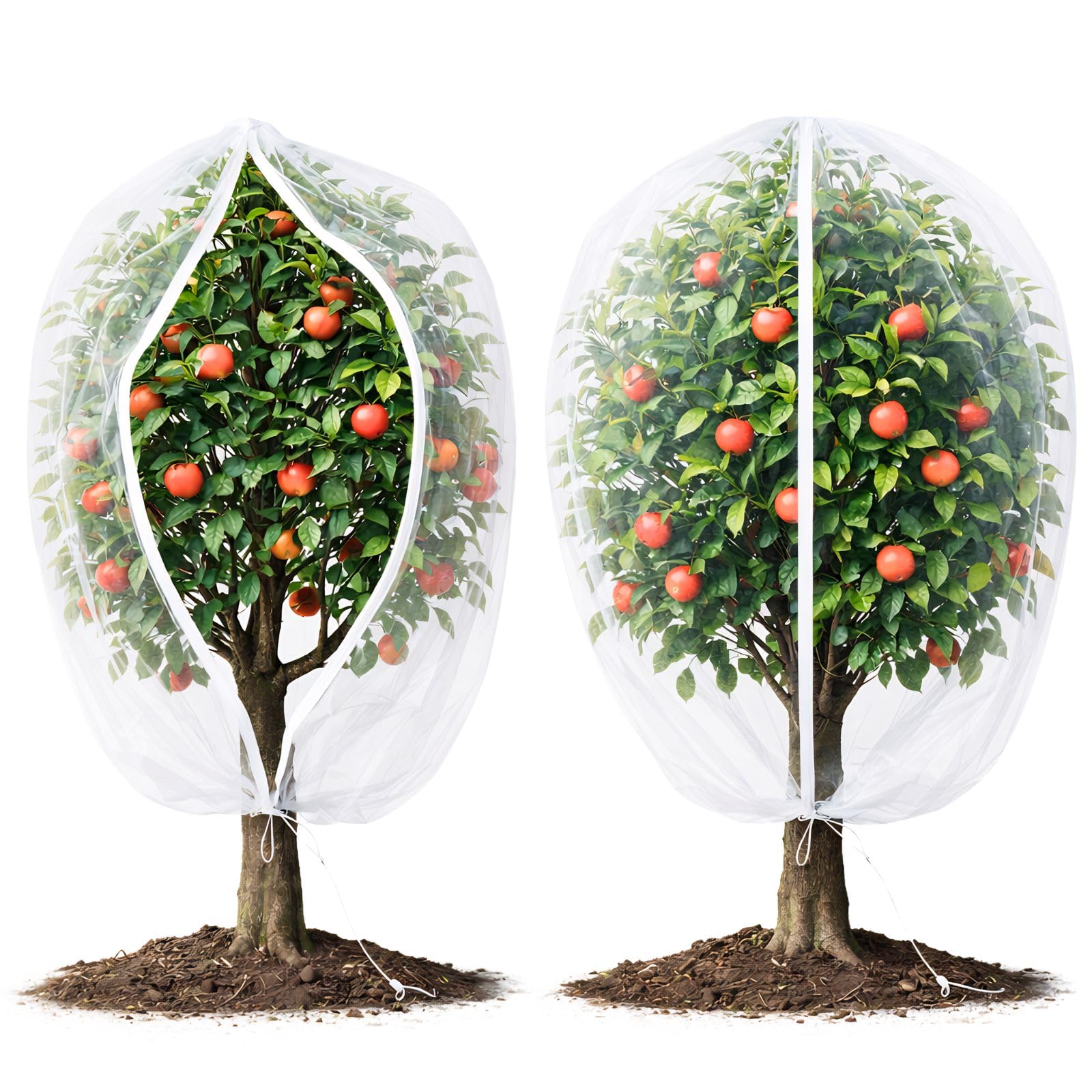
Two ready-to-go bags that seal tight around a single tree each, using a tougher HDPE mesh than the budget PE nets.
You get two separate covers, each 96 inches by 96 inches, made from HDPE (High-Density Polyethylene — a plastic type that does not stretch out of shape). The ultra-fine weave stops birds, squirrels, and even tiny insects. The ultra-fine weave is intended to block birds, squirrels, and small insects. The side zipper lets you open it to check on ripening fruit. The drawstring at the bottom cinches around the trunk so wind and ground critters cannot sneak in from below.
At 0.99 Kilograms per pack, these are heavier than the single 10×10 foot LHongL cover (which weighs just 0.66 Kilograms). That extra material gives a denser, tougher feel. Buyers report you need two people to drape them smoothly. The bottom seal takes some creativity with rocks or extra rope to keep determined ground squirrels out. Pair this with the CHNENOMME net below if you want one backup bag for odd-shaped bushes.
Reviewers report the zipper saves a lot of time when harvesting. The drawstring holds firm even in gusty conditions. With this ultra-fine mesh, cover only after pollination if you need bees to reach the blossoms.
Why you want it
- Two covers per purchase, so you can protect two small trees at once
- Ultra-fine HDPE weave blocks birds, chipmunks, and insects (buyers confirm it works on berry bushes)
- Side zipper + bottom drawstring give you access without untying everything
The trade-offs
- 8×8 ft fit is tight on broad-canopy trees — measure your tree is spread before buying
- Bottom needs extra weighting (rocks or soil) to seal completely against small animals
The smart pick for most people: If you have two dwarf trees or large shrubs and want zip-access, start here. It is tougher than the CHNENOMME 2-pack and undercuts the premium-tier options.
What to watch for: These are not tall enough for a full-grown 15-foot tree — you need the roll-style nets further down for big canopies.
2. CHNENOMME 8FT x 8FT Fruit Tree Netting with Zipper and Drawcord, 2Pcs
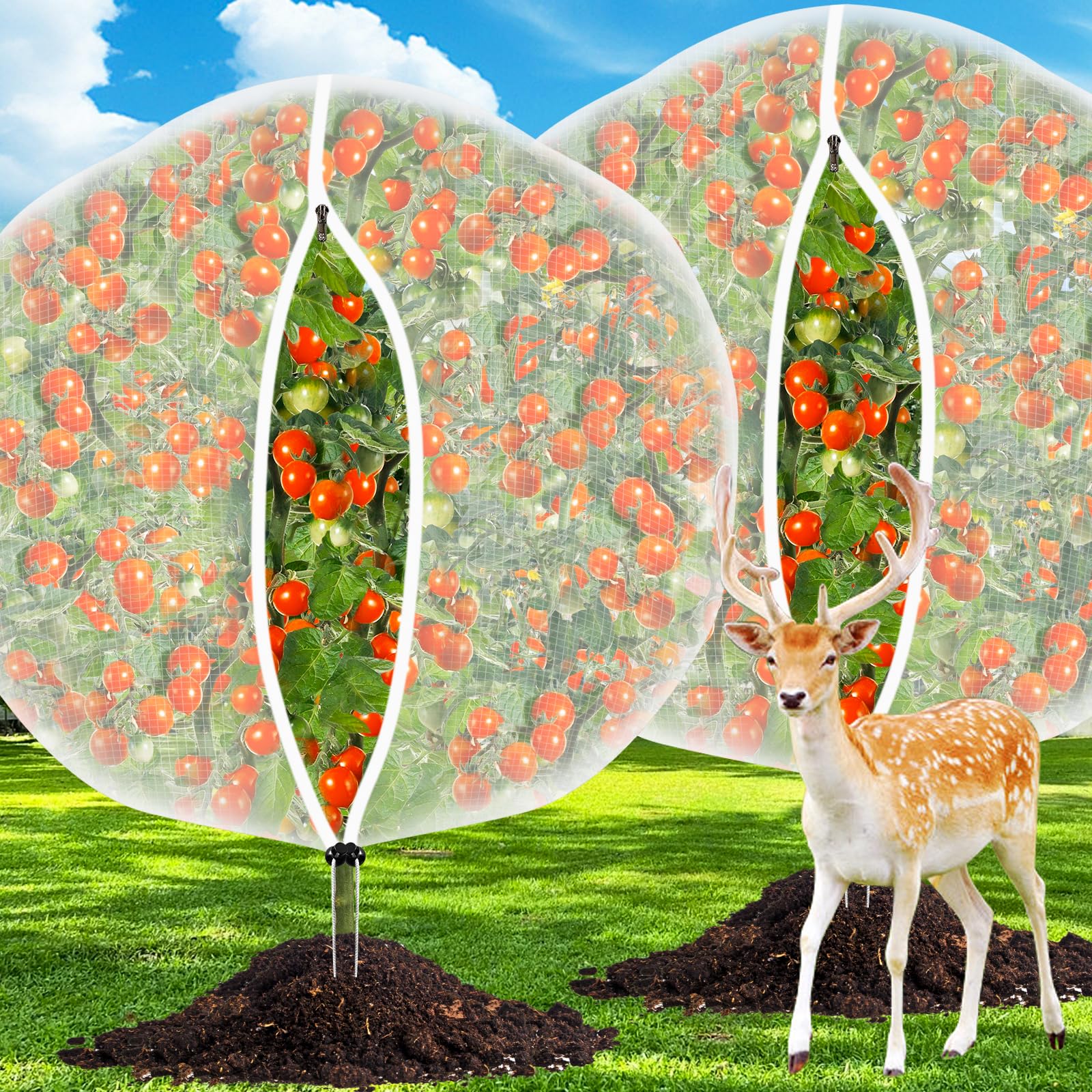
Affordable twin bags with a 40-mesh weave (40 strands per inch) that birds cannot slip through.
Each of the two covers is 8 feet by 8 feet and uses a 40-mesh polyethylene construction. That means 40 holes per linear inch, fine enough to stop birds and most bugs while still letting water and light through. The zipper and drawstring closure works the same way as the Homoda pair above, cinching around the trunk so the cover does not blow off.
Where this saves you money is in the material. Owners mention it is “heavy duty netting, easy to install” and that it covers several blackberry bushes individually. One buyer mentioned it protects a lemon tree from an unknown pest, but they plan to update on long-term durability in a few months.
At a budget-friendly tier, the PE mesh feels lighter than the HDPE used in the Homoda set above. If you need absolute toughness against sharp branches or strong wind, spend the extra few dollars on the Homoda. But for berry bushes and small citrus trees where you just need a basic barrier, this pair delivers exactly what the description promises.
What works
- 40-mesh density is fine enough to keep birds and chickens off fruit (confirmed by buyers)
- Drawstring holds the net securely around the trunk in windy spots
- Two covers in one purchase let you protect separate bushes
What is limited
- PE material may wear faster than HDPE under intense sun over multiple seasons
- 8×8 ft size is tight for a mature tree with a 6-foot canopy spread
Best for the price-conscious: Grab this twin pack if you are netting low bushes, small lemon trees, or blueberry patches and do not want to pay for ultra-premium material.
Skip this if: Your trees have sharp dead branches that could puncture a lighter PE mesh.
3. GonLei 2 PCS Large Fruits Tree Netting Cover 10 x 10 ft
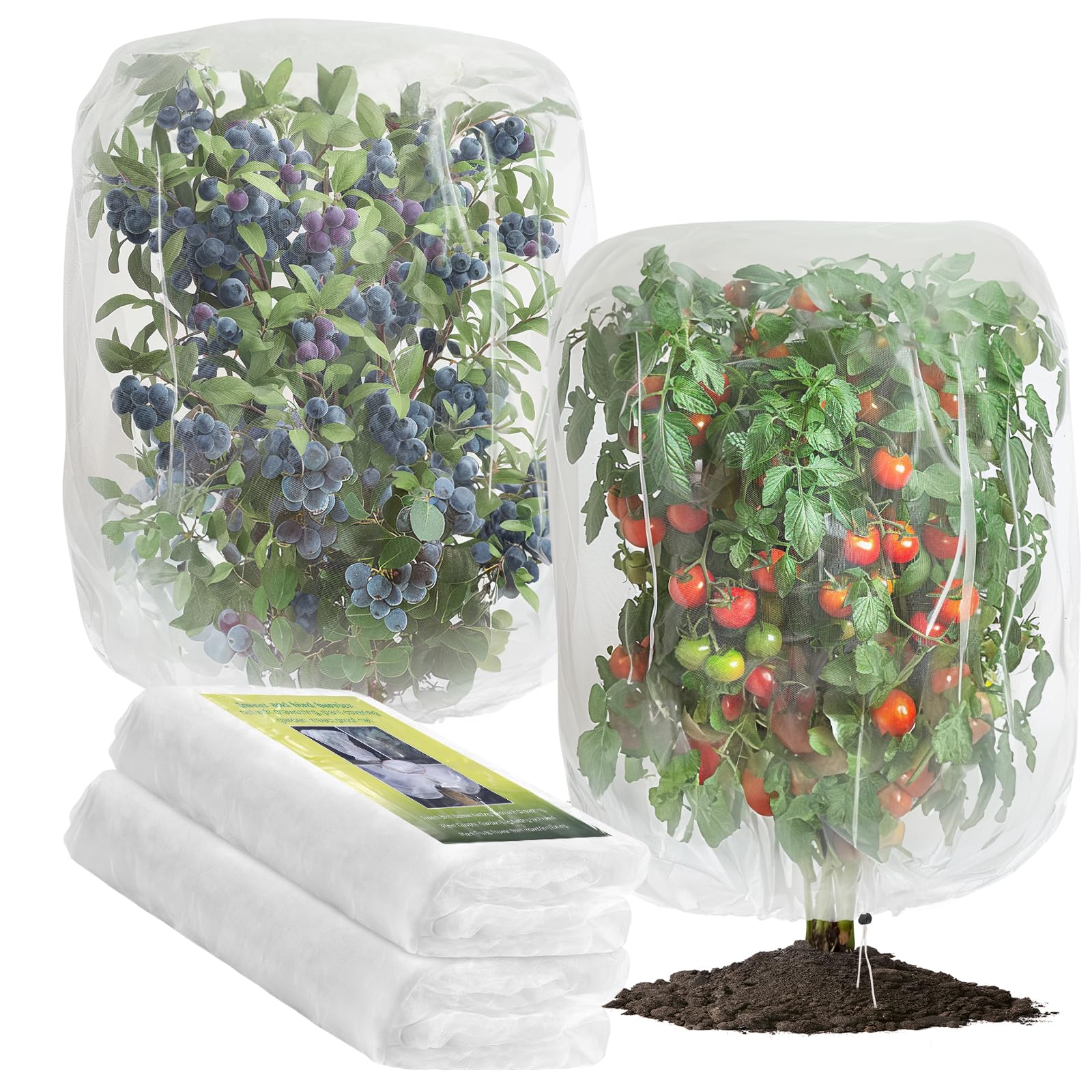
Two 10-foot squares made from soft nylon that drapes without crushing branches.
You get two covers at 118 inches by 118 inches each, compared with 96 inches by 96 inches for the Homoda and CHNENOMME options. This pair fits medium-sized trees that have spread out a bit. The material is polyethylene with a soft, elastic feel, which matters because a stiff net can scrape bark or break tender new growth on a windy day.
The closure is drawstring-only (no zipper). You drop the bag over the tree, pull the cord tight at the base, and you are done. The nylon is ultra-dense, so it blocks cicadas and small insects as well as birds. The lack of a zipper means retrieving a single ripe fruit means lifting the whole bag from the bottom. That is less convenient than the zipper bags above, but it also removes the zipper, which was the failure point in some buyer reports on other products.
There are no verified buyer reviews in the product data, so long-term durability is speculative. The soft material works for delicate branches but could puncture more easily if you have thorns or sharp stakes inside the net.
Where it shines
- Two 10×10 ft covers give you extra width for medium trees that the 8×8 options miss
- Soft, elastic PE nylon does not scrape bark or break branches in wind
- Simple drawstring system is faster to set up than zippered bags
Where it falls short
- No zipper means you must lift the whole cover to access fruit or check ripeness
- Zero customer review history in the data makes it harder to judge real-world toughness
Ideal for soft trees: Choose this if your tree has pliable branches (citrus, young fig) and you want a wide, gentle cover that you can cinch fast.
Not ideal for: Frequent harvesting — you will want the Homoda is side zipper if you check your fruit daily.
4. LHongL 10ftx10ft Large Fruit Tree Netting Cover with Zipper & Drawstring

A single 10-foot square with a dual closure, but the zipper is its weak spot.
This is the only single-pack in the first four options — one cover, 120 inches by 120 inches, made from a blend of nylon, plastic, and polyethylene. The fine mesh lets sunlight, air, and rain through while keeping birds, squirrels, rabbits, and small bugs out. The manufacturer lists cherry, fig, blueberry, peach, and apple trees as fits. At 10×10 feet, it handles most backyard trees without piecing multiple nets together.
Compared to the Homoda 2-pack, this LHongL measures 120 inches by 120 inches, while each Homoda cover measures 96 inches by 96 inches, and it weighs 0.66 Kilograms versus 0.99 Kilograms per Homoda bag. The material is lighter. Customers note a real durability problem: “Flimsy netting tears from zipper within minutes; zipper broke completely on one.” Two other reviews mention the net works well for pear trees and deer prevention, but the zipper failure is a pattern. If you choose this, handle the zipper gently and consider reinforcing the zipper track with tape.
The 10×10 ft span is generous for a single large tree. If you need two separate tree covers, the Homoda 2-pack gives you better durability at a slight dimension trade-off per bag.
High points
- 120-inch width covers a full-size dwarf or semi-dwarf tree without piecing nets
- Dual closure (zipper + drawstring) lets you access fruit and then reseal tightly
- Lightweight enough (0.66 kg) to drape without help
Low points
- Multiple buyer reports of the zipper tearing from the netting within days
- Lighter material may not survive a second season against sharp branches
One big tree solution: If you have a single pear, apple, or fig tree that needs a 10-foot bag, the dimensions are right — but baby the zipper.
Skip this if: You want a set-and-forget net that you do not want to inspect for tears. The Homoda 2-pack 8×8 ft is sturdier for a slightly smaller fit.
5. RIFNY Garden Netting 2 Pack 10x33FT Ultra Fine Mesh

Two massive rolls with a microscopic 0.04-inch weave that even cabbage moths cannot cross.
This RIFNY net comes as two separate rolls, each 10 feet wide by 33 feet long. That is 660 square feet total. The mesh is ultra-fine at 0.04-inch openings — small enough to stop cabbage moths, aphids, and the tiniest fruit flies. The oblong hole construction lets rain and light through but blocks dust and UV damage better than round-hole mesh.
Unlike the bag-style nets above, there is no zipper or drawstring. You drape the net over a row of plants or a large canopy and weigh down the edges with stones or soil. One reviewer built a 5x16x3 ft blueberry cage with zip ties and called it “perfect.” The net is lightweight enough that it will not crush tender seedlings. One reviewer reported being able to water right through it without removing the cover. The catch, as one owner reported, is that clamps can distort the weave, so you need fabric squares under any staple or clip to keep aphids from sneaking in.
For a traditional row garden or a tall, irregular fruit tree that no bag can fit, this roll format and super-fine density make it the most versatile option in this list. The 2-pack gives you two rolls, enough for a strawberry patch and a small orchard section.
The strengths
- 0.04-inch ultra-fine mesh blocks cabbage moths, aphids, and the smallest insects (buyers confirm it eliminated caterpillars)
- Two 33-foot rolls give massive coverage for rows, raised beds, or wide trees
- Self-draining — water and liquid fertilizer pass straight through the mesh
The weaknesses
- No zipper or drawstring — you must improvise with staples, clips, or stones for a ground seal
- Clamps and staples can distort the weave and let small insects through unless reinforced with fabric patches
Best for big projects: Grape vines, blueberry rows, raised beds, or an entire side of a garden need this roll-style barrier.
Not for single-tree users: If you just need to wrap one fig tree, the Homoda zipper bag is much easier to install.
6. Fetanten Bird Netting 13 x 40 FT Heavy Duty Woven Mesh with Ties and Staples

A 13×40-foot HDPE sheet designed to stay whole through hurricane season.
This is not a bag. It is a rectangular sheet, 480 inches long by 156 inches wide, made from UV-proof, rot-resistant HDPE (High-Density Polyethylene, the same type used in heavy-duty outdoor cables). The woven mesh opening is 5/8 inch, large enough to let bees and other pollinators through but small enough to stop birds, deer, squirrels, and poultry. At 1.33 Kilograms, it is the heaviest single net in this list, and that weight means it stands up to repeated use.
The kit includes steel landscape staples and twist ties. You can stake the edges into soil or wrap the net around a tree and tie it off. A buyer who used it for strawberries, then black raspberries, said it “holds up very well. No rips and no holes.” Another reported that a cat eating a bird stuck on the far side did not tear the net. The woven construction means it does not unravel easily when cut, so you can trim it to any shape with scissors.
Compared to the RIFNY 13×40 ft net below, this Fetanten is slightly less expensive and has the same dimensions, with the same 5/8-inch hole size. The main difference is the included hardware — you get staples and ties in the box. One customer observed some manufacturing stitch imperfections, though they were not functional issues.
What makes it tough
- HDPE woven mesh is UV-proof and rot-resistant, surviving multiple seasons without tearing (reviewers point out using it year after year)
- Staples and ties included in the kit — no extra trip to the hardware store
- 5/8-inch weave lets pollinators through while blocking deer and large birds
What to consider
- Some buyers found slight manufacturing seam imperfections that are cosmetic but not structural
- Heavier than fine-mesh nets — draping over a tall tree requires more effort
For the orchard owner: If you need to protect a whole row of trees from deer and large birds without suffocating the canopy, this is your workhorse. It costs less than the RIFNY 13×40 ft net with the same basic specs.
Not for insect defense: 5/8-inch holes will not stop cabbage moths or gall wasps — you want the 0.04-inch RIFNY net for that.
7. RIFNY Bird Netting 13 x 40 FT Heavy Duty with Ties and Staples
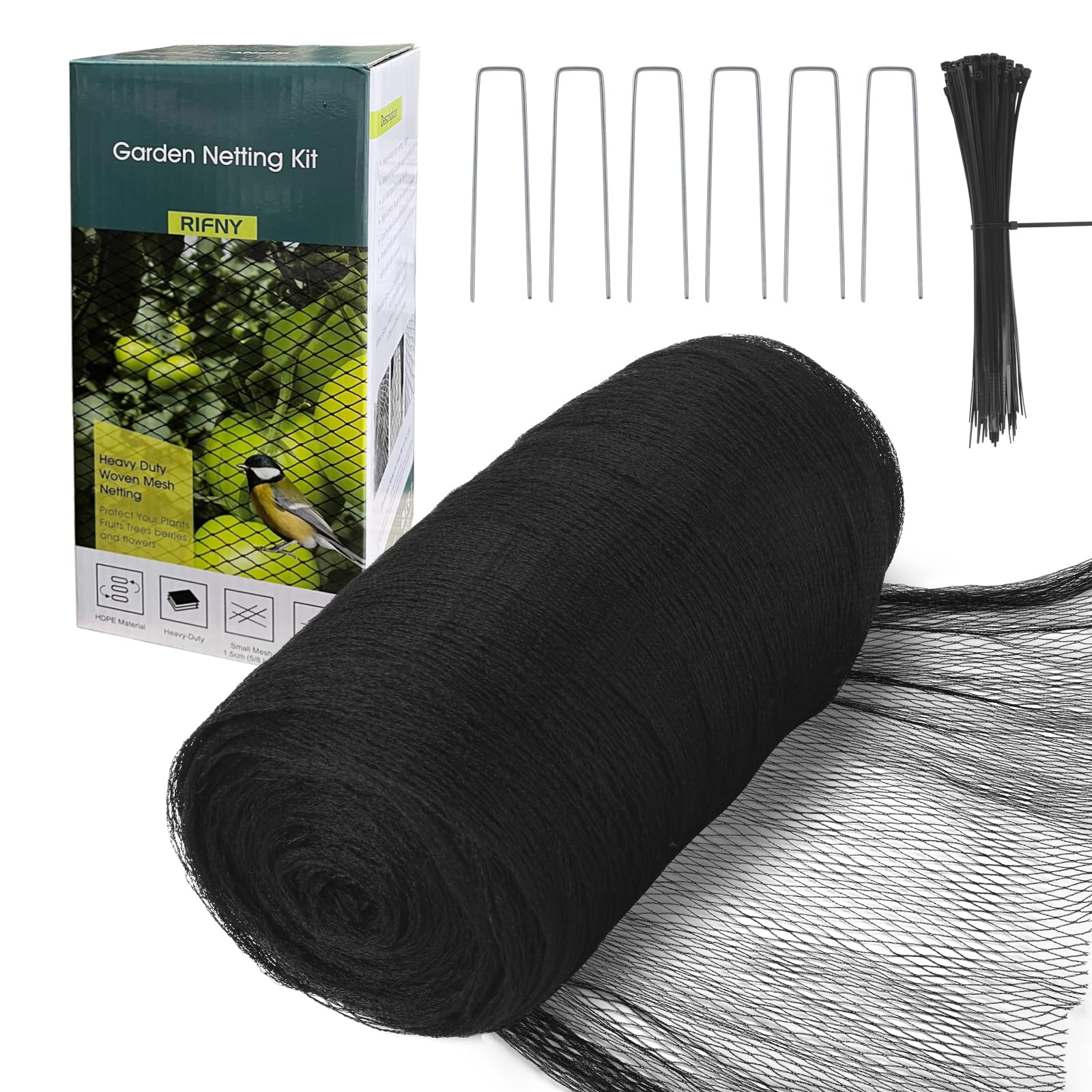
A 13×40-foot HDPE net that stays flexible from -58°F through 212°F — no cracking in winter, no sagging in summer.
At first glance, this RIFNY net looks identical to the Fetanten above. Same dimensions (480 inches by 156 inches), same 5/8-inch mesh size, same HDPE material. The weight is 1.08 Kilograms versus 1.33 Kilograms. The key difference is the temperature range. The manufacturer states this net is flexible from -58°F to 212°F. That means it will not crack in deep winter freezes and will not sag into a limp mess in extreme summer heat. If you live where temperatures swing from blizzards to 100°F summers, that thermal stability matters.
Buyer reports are almost uniformly positive. One buyer reordered four times, saying it “does not tangle or tear.” Another used it as a toddler and dog barrier for raised beds, showing how sturdy the 5/8-inch woven mesh is. The included 6 landscape staples and twist ties give you a complete installation kit. The 7-inch staples hold well in soft soil, but one user highlighted needing their own anchors for hard, rocky ground.
Even though this and the Fetanten share specs, the slightly lighter weight and the extreme-temperature rating push this RIFNY ahead for a buyer who needs the net to stay flexible through a cold snap. If you just need basic deer protection in mild weather, the Fetanten is your better value.
Standout features
- Operates from -58°F to 212°F, so it stays flexible through winter frost and summer heat
- Shoppers say zero tangling — unroll, cut, and install without fighting the net
- 5/8-inch mesh keeps birds, deer, and squirrels out while allowing bees to pollinate flowers
Potential issues
- Landscape staples included are 7 inches long, which may not penetrate dry or compacted soil
- At 1.08 kg it is lighter than the Fetanten, so high winds may lift edges if not well-anchored
Best for cold-climate gardens: If you face freezing winters and want a net you can leave up year-round without cracking, this is it.
skip it if: You need insect-scale protection — the 5/8-inch weave is too big for tiny bugs. Also not for single-tree bagging; this is a roll.
Understanding the Specs
Mesh Openings (5/8-inch vs 40-mesh vs 0.04-inch)
The hole size is the single most important number. A 5/8-inch opening (about 16mm) stops birds, deer, and squirrels but lets bees, small wasps, and moths through. That is great for pollination, useless for insect control. A “40-mesh” label means 40 strands per linear inch, creating very small holes that also block many insects. A 0.04-inch specification means the holes are only one millimeter wide, stopping even cabbage moths and aphids but also blocking pollinators. You must time your covering after the flowers have been fertilized.
HDPE vs PE vs Nylon Material
HDPE (High-Density Polyethylene) is the toughest and most UV-resistant. It will last multiple seasons without turning brittle or snapping. Standard PE (Polyethylene) is lighter and cheaper but degrades faster under direct sun. Nylon offers some elasticity, which prevents bark abrasion, but it absorbs water and can rot if left in constant contact with wet soil. For a net you plan to reuse every year, HDPE is the safest bet.
Zipper + Drawstring vs Open Roll
A zippered bag with a drawstring closure creates a fully sealed enclosure around a single tree. Critters cannot get in from the ground, and you can open the zipper to harvest fruit without removing the whole net. The weakness is that the zipper seam is a common failure point, especially if you stretch the net tight. Open roll nets (like the 13×40-foot sheets) give you unlimited size flexibility and no zipper to break, but you must secure the bottom edges with staples, rocks, or soil to prevent animals from tunneling under.
Weight and Pack Count
A heavier net (1.33 kg versus 0.66 kg) usually means denser material that resists tearing, but it also strains the tree’s branches if you drape it over a delicate canopy. A 2-pack gives you two separate covers for the price of one, which is useful for two spaced-apart trees. But if you have one large tree, a single oversized cover is easier to install than two smaller ones clipped together.
FAQ
Will the mesh hurt birds or small animals?
Can I leave the net on my tree through winter?
How do I install the net over a tall fruit tree without a ladder?
Will the net block sunlight and stop my tree from growing?
How do I water the tree with the net on?
Will a 5/8-inch mesh keep out squirrels and chipmunks?
How many seasons will an HDPE net last compared to PE?
Can I cut the roll nets to fit an odd-shaped tree?
What size net do I need for a standard 6-foot-tall dwarf fruit tree?
Will a drawstring closure alone keep out ground animals?
Final Thoughts: The Verdict
If you want one dependable pick, the bird mesh for fruit trees winner is the Homoda 2-Pack 8×8 ft. It gives you two separate HDPE bags with a reliable zipper-drawstring system at a price that undercuts the premium-tier options while outperforming the budget nets. If you need to cover a row of blueberry bushes or a wide raised bed, the RIFNY 10×33 ft ultra-fine roll offers the most insect protection per dollar with its 0.04-inch mesh. For a single large tree where a bag is impractical, the RIFNY 13×40 ft HDPE net is tough enough to survive sub-zero winters and keep deer away for years.
How We Picked
We do not accept paid placement. Every pick is matched to a real buyer and a real use-case; we do not hands-on test units.
Sources & Methodology
Specifications: manufacturer listings and product documentation. Review insights: verified customer reviews, as of July 2026. Pricing: not shown on this page (it changes often); check the current price via the retailer link.
As an Amazon Associate, Lawn Gear Lab earns from qualifying purchases. This does not affect which products we feature.