
Specs are compiled from manufacturer listings and verified buyer reviews and can change over time — please confirm the key details on the product page before buying.
Winter is brutal on backyard birds. Their bodies burn through energy just staying warm, and the natural seed supply is long gone by January. The right blend keeps them alive and coming back to your feeder — but the wrong one leaves you with a half-eaten mess and empty feeders that birds ignore. This guide lays out exactly which mixes deliver the calories birds actually need when the temperature drops, and which ones you should leave on the shelf.
I’m Rikta — the founder and writer behind Lawn Gear Lab. This guide is built by comparing the manufacturers’ published specifications and the patterns across verified customer reviews, so you get each pick’s real strengths and trade-offs instead of marketing spin.
Weighing fat content versus cost-per-pound and real buyer reports on how fast birds clean a feeder, here is the breakdown of the best bird food for winter.
Quick Picks
- Cool Birds Nut & Fruit Wild Bird Seed – 10 lb. — Top Performer
- Pennington Ultra Double Nut, Nut & Fruit Blend 10lbs — Best Overall
- C&S Peanut Butter Delight No Melt Suet Dough, 8 Pack — Suet Specialist
- Heath Outdoor Products DDB1-18 All Season High Energy Suet Cake, Case of 18 — Value Pack
- Kaytee Seed & Suet No Mess Blend Blueberry Flavor 10 Pounds — Budget Champion
- Valley Splendor Songbird Melody – 7 Pounds — Vitamin-Rich Pick
- CountryMax 50lbs Backyard Seeds Black Oil Sunflower Seeds — Bulk Buy
How To Choose The Best Bird Food For Winter
When the temperature drops, birds need high-calorie fuel just to make it through a single freezing night. The standard mixes that work fine in spring will leave your feeder half-eaten in January. Here is what actually matters in a winter blend.
Fat content is everything
Suet (rendered animal fat) and nuts are the two most calorie-dense options you can put out. Birds metabolize fat fast, turning it into body heat. Look for “high energy” on the bag — those blends are designed to pack more fat grams per ounce than a standard seed mix.
No mess vs. whole foods
“No mess” blends remove the shells, meaning nothing sprouts under the feeder. But the trade-off is real: shell removal often means more filler ingredients like millet or corn, which birds pick around in winter. Whole sunflower seeds and peanuts give more edible weight per scoop, so your dollar goes further in terms of actual calories delivered.
Suet cakes for sustained feeding
Suet cakes are a winter staple because they don’t freeze solid like wet seed can. A good suet block stays soft enough for birds to chip off pieces even below freezing. If your winter runs long and cold, suet is almost mandatory — it burns slower than seed and keeps feeder traffic consistent through the coldest days.
Quick Comparison
| Model | Best For | Item Weight | Item Form | Key Ingredient | Amazon |
|---|---|---|---|---|---|
| Cool Birds Nut & Fruit | Premium no-filler blend | 10 Pounds | Seed | Sunflower hearts, peanuts, tree nuts, fruit | Amazon |
| Pennington Ultra Double Nut | Best for variety of species | 10 Pounds | Seeds | Mixed nuts, real fruits | Amazon |
| C&S Peanut Butter Delight Suet | Suet dough for year-round | 5.87 Pounds | Cake | Roasted peanuts | Amazon |
| Heath Outdoor Products Suet Cake Case | Value pack suet | 18 x 11.25 Ounces | Semi Moist / Cake | Bird’s Blend | Amazon |
| Kaytee Seed & Suet No Mess | Budget-friendly no mess | 10 Pounds | Chunk | Seeds & Suet Nuggets | Amazon |
| Valley Splendor Songbird Melody | Vitamin-enriched blend | 7 Pounds | Seeds | Black oil sunflower, peanuts, raisins | Amazon |
| CountryMax Black Oil Sunflower | Bulk pure sunflower seeds | 50 Pounds | Seed | Black oil sunflower seeds | Amazon |
In‑Depth Reviews
1. Cool Birds Nut & Fruit Wild Bird Seed – 10 lb.
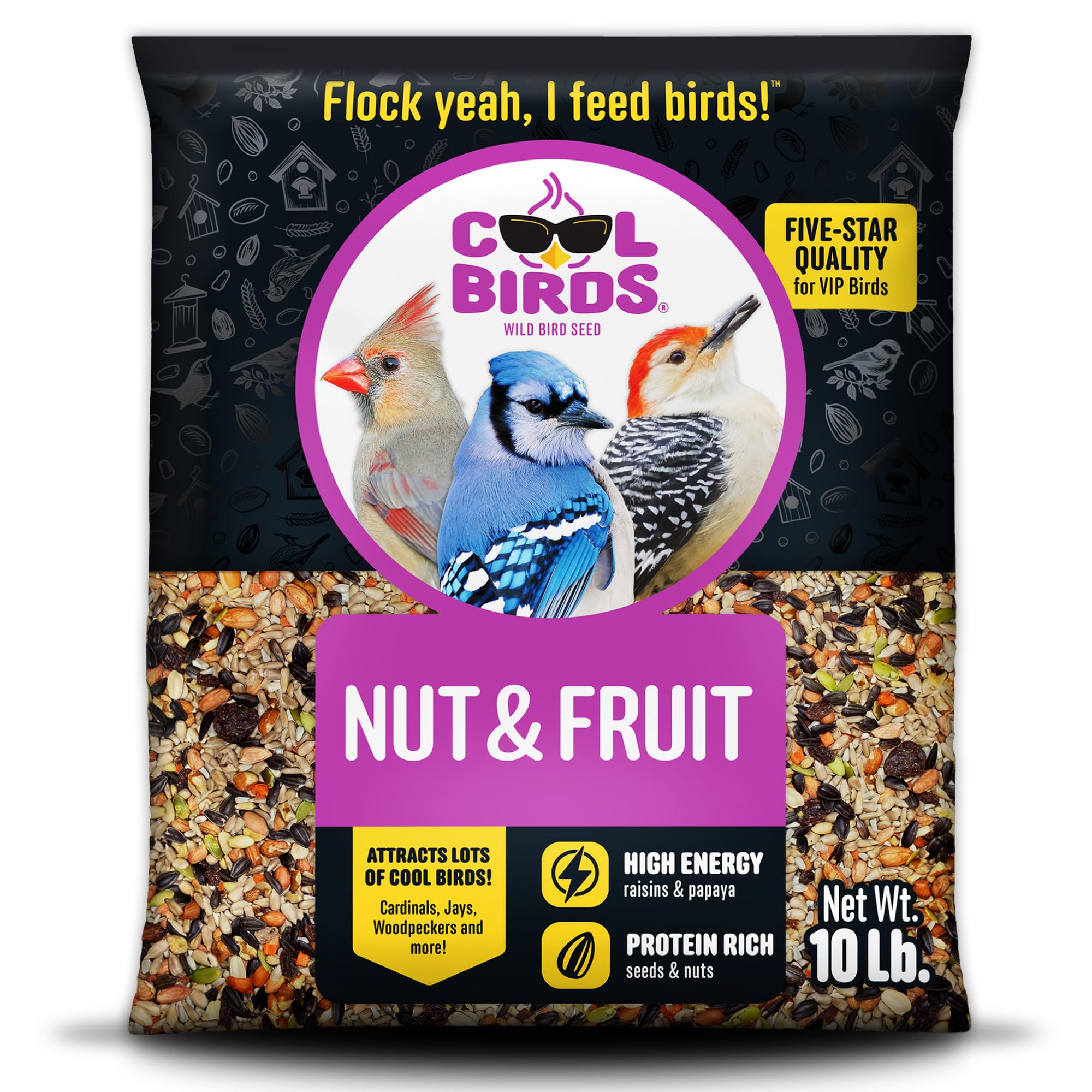
Every scoop is 100% edible — no filler waste means more energy for winter birds.
This blend skips cheap fillers so you get maximum bird traffic and minimum waste. It packs sunflower hearts (the meat of the seed with the shell already removed), peanuts, tree nuts, raisins, and papaya — every ingredient is something birds actually eat. Because it contains no corn, milo (a grain birds often ignore), or millet (a small seed that sparrows like but many others ignore), you won’t see birds pick through a pile of trash. Buyers report that the large fruit pieces and quality nuts attract chickadees and other species that are harder to bring to a feeder.
At 10 pounds, this bag is a straight upgrade over standard grocery-store blends. It works in tube, tray, hopper, platform, and smart feeders — so no matter what feeder setup you own, this seed fits. Owners mention that the seed stays clean with very little dust until the bottom of the bag, and there were no bugs reported. This is the rare blend that satisfies mockingbirds, blue jays, cardinals, and squirrels alike.
Standout Spec: Zero filler seeds (no corn, milo, or millet) means every pound delivers edible calories — crucial in winter when birds cannot afford to waste energy picking through trash.
Who it fits: Anyone who wants the most visible bird activity with the least wasted seed. If you only buy one bag, this is the one.
The trade-off: The price reflects the higher quality ingredients, so it costs a bit more per pound than standard sunflower seed.
2. Pennington Ultra Double Nut, Nut & Fruit Blend 10lbs
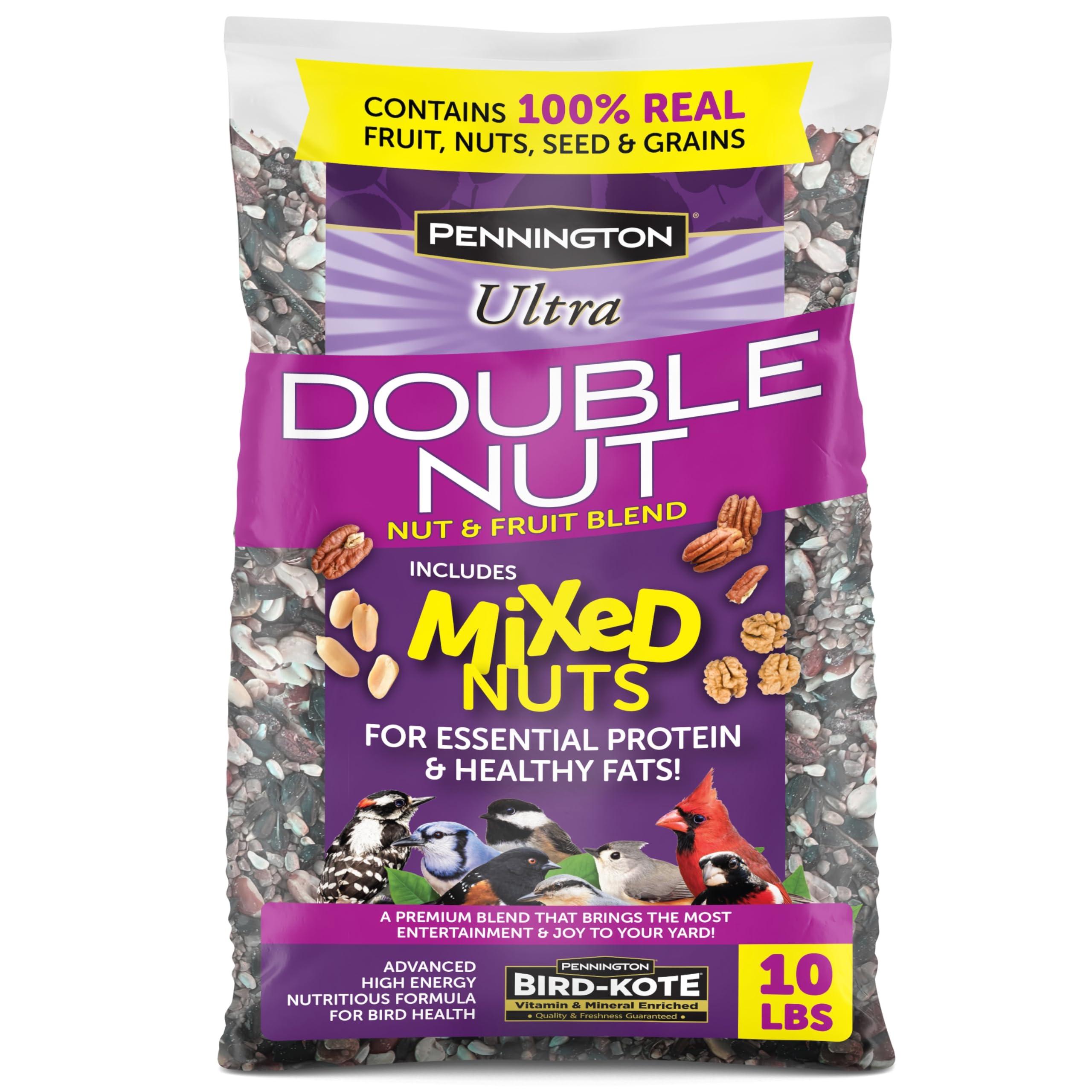
More species visit — one buyer saw three new types after switching to this nut-and-fruit mix.
Pennington’s Ultra Double Nut blend is built around mixed nuts, real fruits (the label says “100% real fruits”), seeds, and grains — a high-energy combo that is ideal for winter feeding when birds need dense calories. The bag is enriched with Bird Kote technology, which the brand says adds vitamins and minerals to support overall bird health through cold months. One reviewer noted that they saw three additional bird types show up after switching to this blend, a clear sign that the nut and fruit components broaden your feeder’s appeal beyond the usual flock.
At 10 pounds, this is a competitive weight for the price tier. It works in gazebo, hopper, platform, and tube feeders — basically any standard feeder you own. The fruit pieces attract a wider range of species than a plain sunflower mix, and the nuts deliver the fat content birds crave when temperatures drop. Buyers also note that squirrels love this blend just as much as the birds do, so be ready for some ground-level action if you have a squirrel-friendly yard.
Species draw: Real peanuts and dried fruit create a scent and visual profile that pulls in cardinals, chickadees, nuthatches, woodpeckers, and towhees — more variety than a standard seed-only blend.
Who it works for: Birders who want to expand the species list at their feeder without buying multiple separate bags.
Consider this: It is not a “no mess” blend — expect shells and some fruit debris under the feeder.
3. C&S Peanut Butter Delight No Melt Suet Dough, 8 Pack
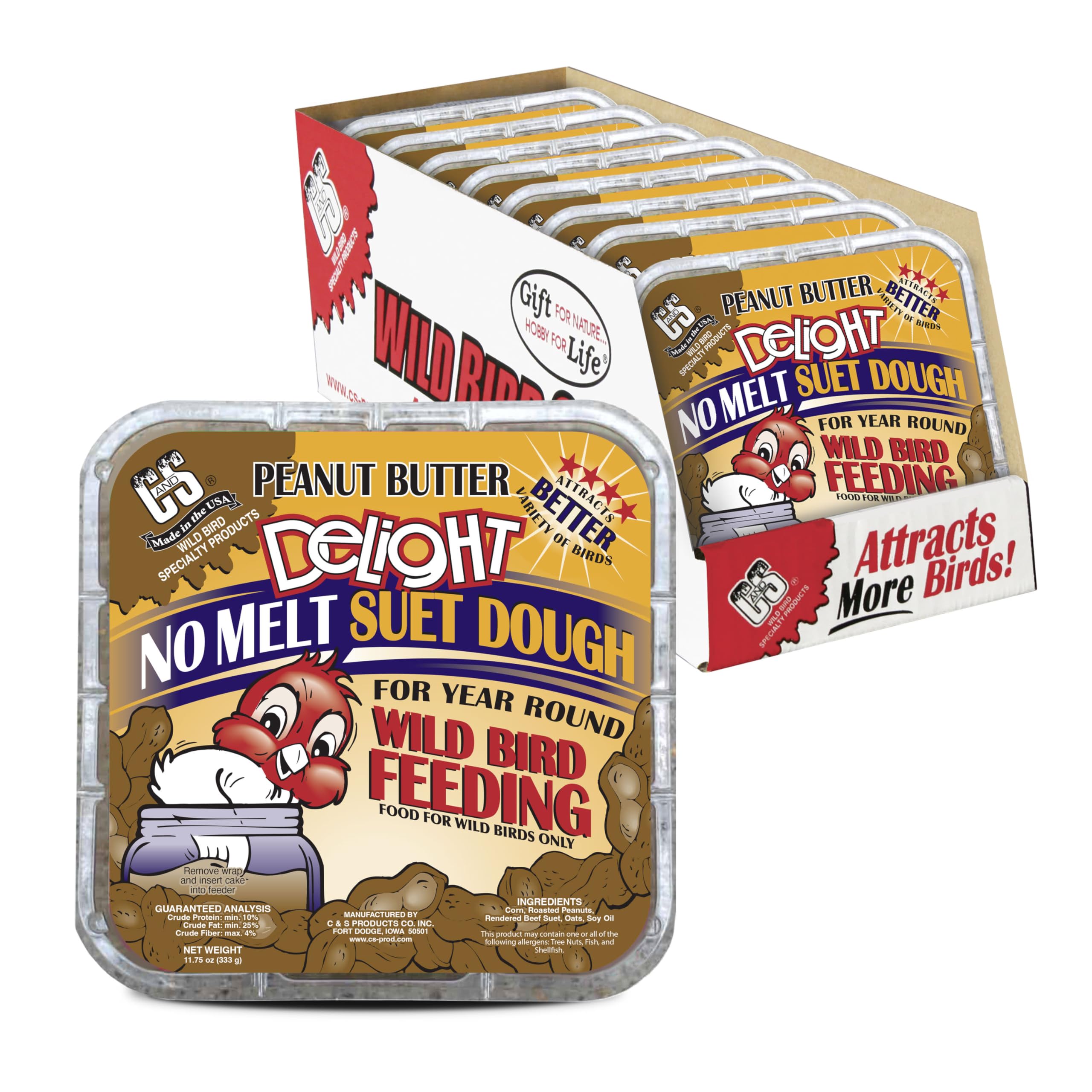
A soft dough that birds can chip into even in freezing weather — and it won’t melt during warm spells.
This is not a traditional hard suet block — it is a soft dough texture that birds can chip into easily, even in freezing weather. The formula stays solid up to 100°F, so a warm spell in late winter won’t turn your feeder into a greasy mess. It is made with roasted peanuts and appeals to wrens, woodpeckers, cardinals, songbirds, and jays — basically every nut-eating bird in your yard. One buyer in Florida reported that the suet did not melt even at 92°F in direct sun, and that woodpeckers and titmice came immediately.
Each carton contains 8 suet cakes, and the total item weight is 5.87 pounds. That is a noticeably lighter package than a 10-pound seed bag — 70% less weight — but the suet delivers far more calories per ounce. Customers note using the 8-pack in about two weeks when feeder traffic is high, and they note that birds consistently prefer it over other brands that either go uneaten or melt in the heat. It is made in the USA and backed by a company that has been in the bird-feeding business since 1986.
What the birds get
- Concentrated energy boost from roasted peanuts
- Soft dough texture that is easy to eat in cold weather
- Does not melt or turn greasy in warmer winter spells
Practical note
- An 8-pack may be consumed in roughly two weeks with heavy feeder traffic
- Lighter total weight than a seed bag, so factor in more frequent purchases
When to reach for this: If you want suet that works through unpredictable winter weather without melting or freezing solid.
skip it if: You prefer to buy in bulk and minimize trips to the store — this pack runs out faster than a 10-pound seed bag.
4. Heath Outdoor Products DDB1-18 All Season High Energy Suet Cake, Case of 18

Eighteen suet blocks — enough to keep heavy winter traffic going for months without reordering.
This case of 18 suet cakes is built for volume feeding. Each cake weighs 11.25 ounces and is rated as a high-energy Bird’s Blend that attracts cardinals, chickadees, goldfinches, juncos, nuthatches, woodpeckers, and wrens — a long list of winter-hardy species. The formula is designed as all-season suet with no melt up to 122°F, so it holds up even if your winter includes an unexpected warm streak. Reviewers point out that half a block lasts about two days in a video-equipped birdhouse, which gives you a real sense of how fast the birds consume it.
One buyer mentioned that a case of 10 (not the 18-pack from this listing) lasted two months across multiple feeders, so the 18-pack should stretch even further. The cakes come with an easy-peel pull tab, so you do not need scissors to open each block. This is a competitive price for an 18-count suet case, and it is made in the USA. Buyers consistently report that birds like it, with one noting that two cakes disappear in just a couple of days when traffic is high.
Case logic: At 18 cakes per box, this is the most economical way to keep suet out through an entire winter without reordering every week.
Who it is for: Heavy-duty birders who go through suet fast and want a single case that lasts the season.
Heads up: One reviewer found small green worms in a cake, which can happen with any suet stored warm — store in a cool, dry place.
5. Kaytee Seed & Suet No Mess Blend Blueberry Flavor 10 Pounds

No shells on your deck, no weeds under the feeder — but the low price means more filler.
Kaytee’s No Mess Blend uses seeds and suet nuggets that are 100% edible — meaning no shells drop on the ground and no weeds sprout under the feeder. That is a real advantage if you feed birds on a balcony, a deck, or a maintained lawn where you do not want a mess. The blueberry flavor is an added scent attractant, and the brand claims it attracts two times more birds than black oil sunflower alone, plus three times more woodpeckers. One buyer who lives on a third-floor apartment balcony confirmed the no-mess claim, noting they attract cardinals, blue jays, yellow finches, and woodpeckers.
The trade-off is in the ingredient list. Several shoppers say the blend is dusty and crumbly, with a lot of millet that draws sparrows and fewer sunflower chips than they would like. One owner reported having to refill the feeder almost daily. The flavoring is an artificial addition that some purists dislike, but the birds in the reviews do not seem to mind. For tube, hopper, or platform feeders, this is a functional winter option that saves cleanup time.
Clean feeder perk
- No seed shells or weeds on your lawn
- Attracts woodpeckers more than plain sunflower
- Good price for a 10-pound bag
What to watch
- Dusty and crumbly in the bag
- High millet content attracts sparrows over other species
- Artificial blueberry flavor may not appeal to every buyer
Bottom line: A solid value pick for apartment dwellers or anyone who cannot tolerate seed mess — just know the ingredient quality is a tier below nut/fruit blends.
Who should skip: Birders who want premium ingredients without artificial flavoring or filler seeds.
6. Valley Splendor Songbird Melody – 7 Pounds
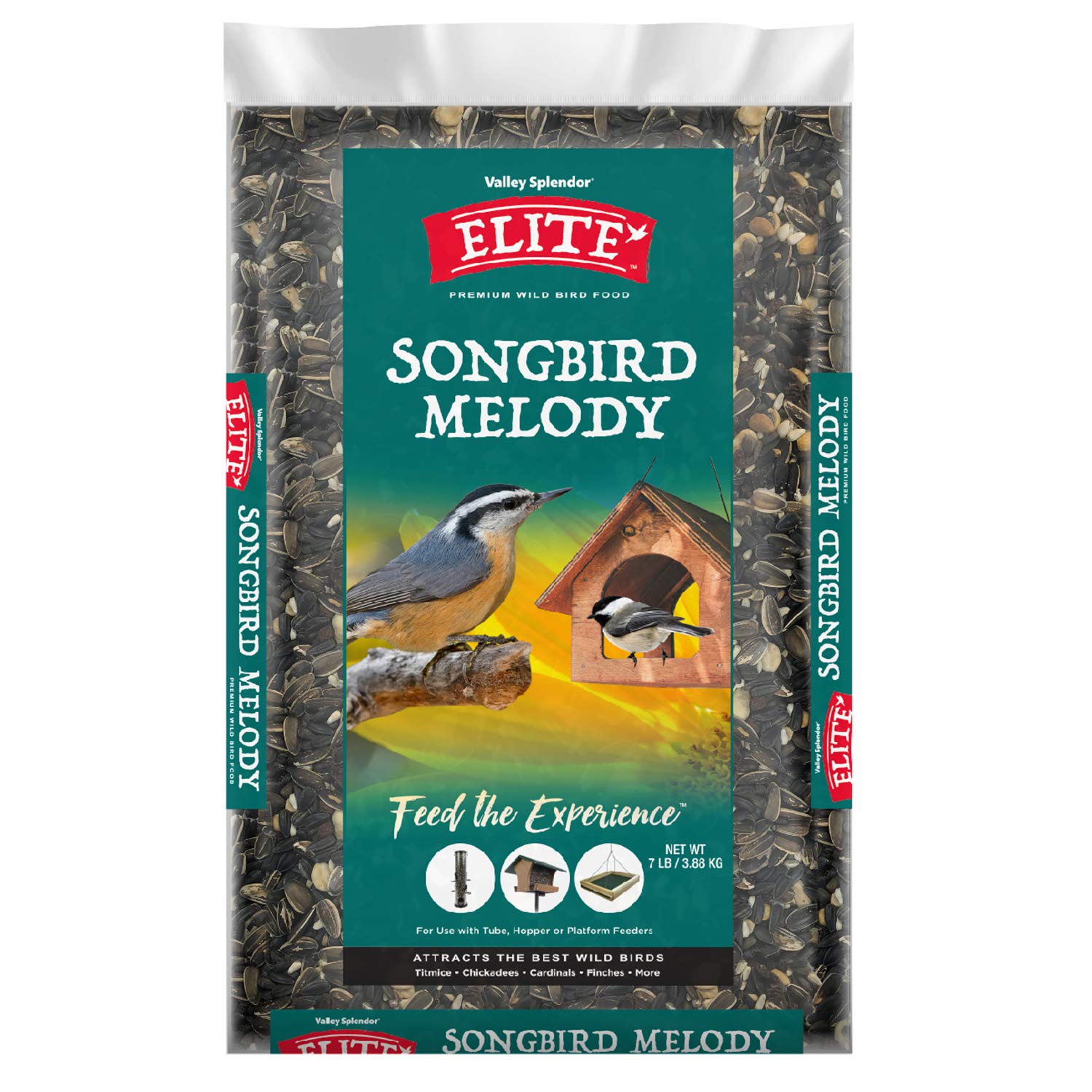
The only blend here with added vitamin A and D — that matters when natural food is scarce.
This mix from Valley Splendor is the only one in this lineup that specifically includes added vitamin A and D to support growth, reproduction, feathering, and bone development. That matters in winter because birds are under constant stress from cold and shorter daylight, and vitamin deficiencies hit harder when natural food sources are scarce. The blend contains black oil sunflower seeds, safflower seeds, peanuts, striped sunflower seeds, and raisins — a solid mix of high-protein and high-fat ingredients. A berry scent is added to attract more visitors.
At 7 pounds, this is the lightest bag on the list. The formula is made without any added fillers and is labeled as high-protein. It is specifically recommended by the manufacturer for cardinals, chickadees, and nuthatches — winter-hardy species that stick around through the cold months. While there are no customer reviews in the data to confirm how birds respond to it, the ingredient list is clean and the added vitamins give it a unique niche among winter blends.
Unique edge: The only blend in this guide with added vitamin A and D — helpful if you worry about nutritional gaps in a winter diet.
Who it works for: Birders who want a nutritionally fortified seed mix for small to medium feeders where a 7-pound bag is convenient.
Trade-off: Lighter weight means you will reorder sooner than with a 10-pound bag.
7. CountryMax 50lbs Backyard Seeds Black Oil Sunflower Seeds
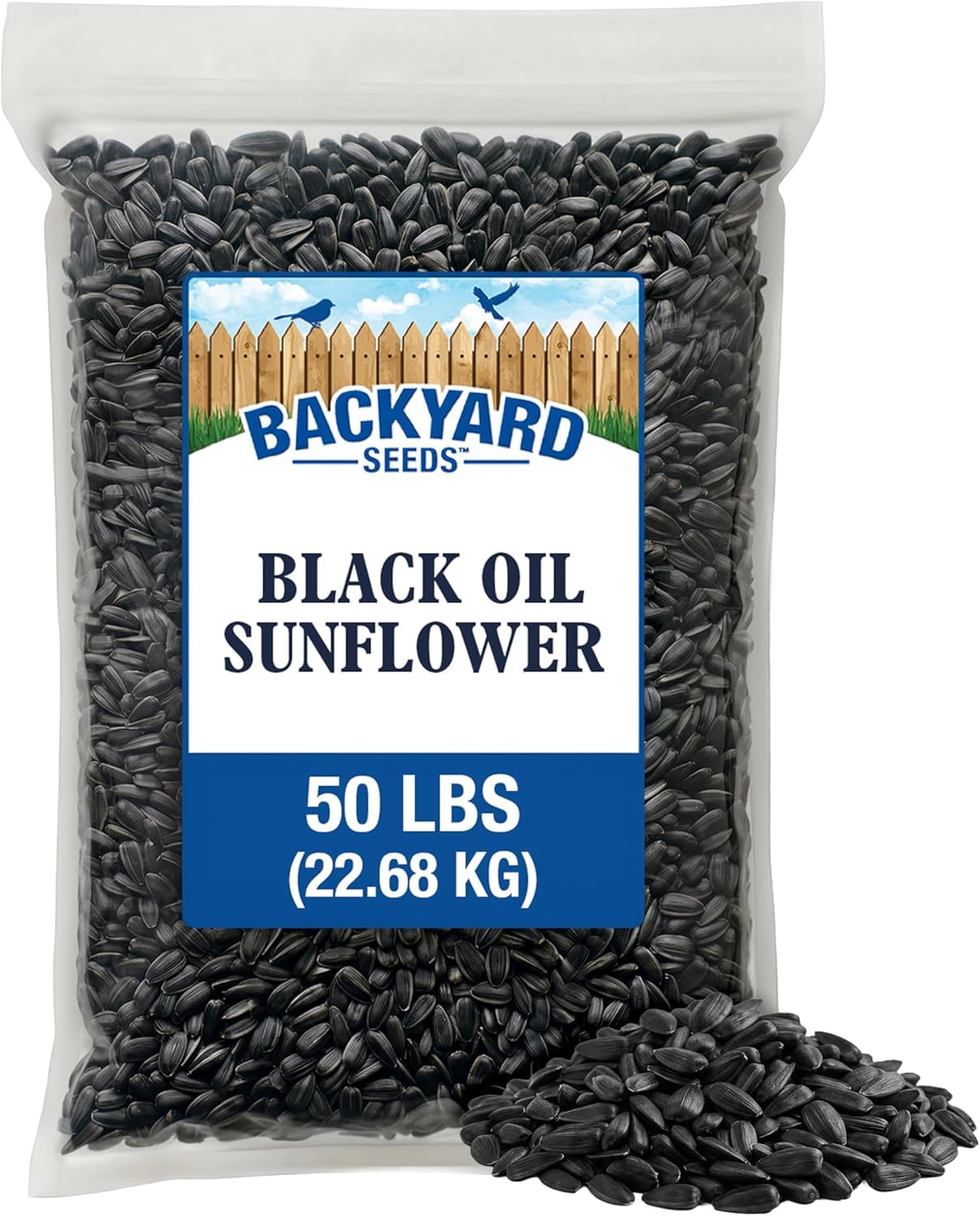
At 50 pounds, this is the largest volume — and lowest per-pound cost — in the guide.
Black oil sunflower seeds are the single most versatile winter bird food — nearly every seed-eating bird will eat them, and the thin shells make it easy for smaller-beaked species to crack them open. CountryMax offers a 50-pound bag of these seeds, which is the largest volume option in this guide. The seeds are high in protein, healthy fats, vitamins, and minerals, and they are packed with the energy birds need for breeding, migration, and winter survival. The bag is sourced and processed in the USA.
The manufacturer recommends storing the seed in a cool, dry place and suggests using a CountryMax 5-gallon bucket with lid for an airtight container. This bag works in tube, hopper, or platform feeders. Black oil sunflower is a pure, single-ingredient food — no fillers, no millet, no corn — so you know exactly what the birds are eating. This is the most economical option per pound in the lineup, making it ideal for feeders that see heavy daily traffic. Cardinals, chickadees, woodpeckers, and a long list of other winter species will visit.
Volume advantage: At 50 pounds versus the 10-pound bags above, one purchase can cover several months of heavy feeding.
Who it suits: Anyone with multiple feeders or a large bird population who wants the lowest per-pound cost and does not mind storing a big bag.
Consider this: Black oil sunflower alone is a single-ingredient seed option, while blended mixes can include additional ingredients such as fruit or nuts for broader variety.
Understanding the Specs
Item Form — Seed vs. Suet vs. Chunk
The form of the food changes how birds eat it. Seed blends are loose and work in tube or hopper feeders. Suet cakes are compressed fat blocks that hang in a cage feeder — they are ideal for winter because they do not freeze and deliver dense energy. “Chunk” forms, like the Kaytee blend, combine seed pieces with small suet nuggets for a hybrid feeding experience. Pick the form based on your feeder type and the bird species in your area.
Item Weight — What a Pound Actually Feeds
Weight is the most straightforward value metric, but not all pounds are equal. A 10-pound bag of whole sunflower seed has more edible material than a 10-pound bag of “no mess” blend, because the latter has already removed the shells. Suet cakes are heavy in fat, so a 5.87-pound box of suet delivers more calories than a 5-pound bag of seed. Compare cost per pound but also factor in how much edible weight you are actually buying.
No Melt Rating — Why It Matters for Winter
“No melt” means the suet or dough stays solid up to a specific temperature, noted in °F. For example, Heath’s suet is rated up to 122°F, and C&S dough is rated up to 100°F. If your winter includes mid-50s to 70°F warm spells, a no-melt formula prevents the suet from turning into a greasy puddle in your feeder. In deep winter, nearly any suet stays solid, but the rating matters for late fall and early spring.
Fillers — Corn, Milo, and Millet Explained
Many budget bird seed blends use corn, milo (a grain bird often ignore), or millet as cheap bulk ingredients. Birds will eat these, but they often pick around them in favor of sunflower seeds, peanuts, or fruit. In winter, when birds need every calorie, blends with fillers mean more waste on the ground and less energy delivered per scoop. The “no filler” claim on a bag means every ingredient in the mix is something the target birds actually eat, so your dollar goes further.
FAQ
Should I switch to suet in winter or stick with seed?
How long does a 10-pound bag of bird seed last in winter?
What is the difference between black oil sunflower and striped sunflower?
Can I feed birds bread or kitchen scraps in winter?
What does “no mess” bird seed actually mean?
Will birds still visit my feeder if it snows?
How should I store a 50-pound bag of bird seed?
Are flavored bird seeds better at attracting birds?
What birds eat suet in winter?
Can suet melt in winter if the weather is warm?
Final Thoughts: The Verdict
For the majority of shoppers, the best bird food for winter winner is the Cool Birds Nut & Fruit Wild Bird Seed because it delivers premium ingredients with zero filler waste — every scoop is edible energy birds actually need in cold weather. If you want the most species variety at your feeder, grab the Pennington Ultra Double Nut Blend. And for bulk feeding on a tight budget, the CountryMax 50-Pound Black Oil Sunflower Seeds give you the lowest cost per pound with no filler ingredients to worry about.
How We Picked
We do not accept paid placement. Every pick is matched to a real buyer and a real use-case; we do not hands-on test units.
Sources & Methodology
Specifications: manufacturer listings and product documentation. Review insights: verified customer reviews, as of July 2026. Pricing: not shown on this page (it changes often); check the current price via the retailer link.
As an Amazon Associate, Lawn Gear Lab earns from qualifying purchases. This does not affect which products we feature.