
Specs are compiled from manufacturer listings and verified buyer reviews and can change over time — please confirm the key details on the product page before buying.
For a garden to truly thrive, it needs more than just the basic three numbers on a bag. You are likely looking for a product that bridges conventional feeding with biological soil building — something that delivers immediate nutrients while also waking up the living ecosystem in your soil. That is exactly what a biostimulant and fertilizer does: it feeds the plant and feeds the soil microbes at the same time, so everything works harder together.
I’m Rikta — the founder and writer behind Lawn Gear Lab. This guide is built by comparing the manufacturers’ published specifications and the patterns across verified customer reviews, so you get each pick’s real strengths and trade-offs instead of marketing spin.
You want stronger tomato transplants or brighter flower beds, so you need a biostimulant and fertilizer that feeds your plants and boosts their natural growth. That means checking the nutrient ratio, picking between granular or liquid form, and seeing what biological extras — like mycorrhizae (beneficial root fungi) or humic acids (natural soil conditioners) — are actually inside the bag or bottle.
Our Picks at a Glance

How To Choose The Best Biostimulant And Fertilizer
Not all bags and bottles are built the same. Some deliver a quick green-up, while others focus on long-term soil structure. Here is what matters most.
Nutrient Ratio and Plant Stage
The three numbers on the label — nitrogen (N), phosphorus (P), and potassium (K) — tell you what the plant gets at a glance. A balanced ratio like 16-16-16 works for general feeding. A higher middle number, like 5-7-3, supports fruiting and flowering. Match the ratio to what your plants are doing right now.
Granular vs Liquid Form
Granular fertilizers (dry pellets or powders) release nutrients slowly and feed the soil over weeks. Liquids go straight to the root zone fast and are great for a quick boost or for fixing a deficiency mid-season. Some gardeners use both at different times of the year.
Biological Additives
This is what separates a plain fertilizer from a true biostimulant. Look for mycorrhizal fungi (which attach to roots and help them pull more water and nutrients), humic and fulvic acids (which improve nutrient uptake), and seaweed or kelp extracts (which supply trace minerals and natural growth hormones).
Organic Certification
If you are growing food crops, an OMRI-listed (Organic Materials Review Institute) label confirms the product is allowed for certified organic production. It means no synthetic chemicals, no sewage sludge, and no prohibited additives. For flower and lawn use, organic ingredients still help build long-term soil health without harsh salts.
Quick Comparison
| Model | Best For | N-P-K Ratio | Form | Key Biological Additives | Amazon |
|---|---|---|---|---|---|
| Espoma Bio-Tone Starter Plus★ Best Overall | Transplanting and root establishment | 4-3-3 | Granules | Endo & Ecto Mycorrhizae | Amazon |
| FoxFarm Happy Frog Tomato & VegetableTop Performer | Fruiting vegetables and berries | 5-7-3 | Granules | Mycorrhizal Fungi, Calcium | Amazon |
| Great Big Roses and Flowers Liquid Booster | Bloom stimulation in roses and flowers | — | Liquid | Humic Acid, Seaweed, 70 Trace Minerals | Amazon |
| Nature’s Wonder Plant & Turf Booster | Soil conditioning and drought tolerance | — | Liquid | Fulvic Humic Acid (OMRI Listed) | Amazon |
| Grow More Sea Grow Kelp Fertilizer | All-purpose feeding with seaweed boost | 16-16-16 | Powder | Seaweed Extract, Yucca Extract | Amazon |
In‑Depth Reviews
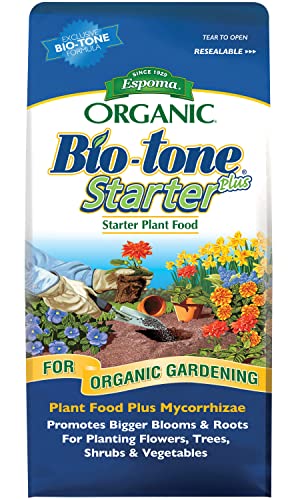
1. Espoma Organic Bio-Tone Starter Plus
Our pick — over 4.5★ from 800+ verified ratings; the strongest balance of quality and price.
The go-to starter for giving transplants a strong, stress-free root foundation.
When you are putting new plants in the ground, the first few weeks decide everything. Espoma Bio-Tone Starter Plus is designed specifically for that moment. It uses a gentle 4-3-3 fertilizer analysis (lower nitrogen than many feeds) and adds 5% calcium, which supports cell wall strength and helps prevent common issues like blossom end rot. According to buyers, it makes a noticeable difference in how quickly transplants settle in and start growing.
The real draw here is the biological side. This product contains both endo and ecto mycorrhizae — two types of beneficial fungi that attach to plant roots and massively expand the area the roots can reach for water and nutrients. Unlike the FoxFarm option, Bio-Tone covers all plant types, from trees to perennials to vegetables, and is registered as an Organic Input Material for organic gardening. Each pack holds 4 lbs, and this particular listing is a 2-count package.
Transplant Specialist: For anyone planting or transplanting anything in the garden — this is the one to have in hand at planting time. It feeds gently and builds root partnerships that pay off all season.
One Caveat: It is a starter fertilizer with a low N-P-K, not a heavy maintenance feed for mature, fast-growing vegetables mid-season.
Reach for this if: you are setting out new plants, trees, or shrubs and want to minimize transplant shock while building strong roots from day one.
Look elsewhere if: you need a high-nitrogen feed for an established lawn or a fruiting-specific booster for heavy-producing tomatoes mid-summer.
2. FoxFarm Happy Frog Tomato & Vegetable Fertilizer
A fruit-focused granular feed with calcium and fungi for heavy-producing edibles.
Tomatoes, peppers, and berries are what gardeners call “vigorous feeders” — they pull a lot from the soil and need the right support at the right time. FoxFarm Happy Frog uses a 5-7-3 blend in a granular form, with phosphorus slightly higher than nitrogen to encourage strong flower and fruit development. The bag is 4 lbs, which is 33% more weight than the Grow More Sea Grow 3 lbs powder bag, and the granule form feeds more slowly over weeks.
Buyers report it is especially effective at preventing blossom end rot, thanks to the added calcium in the formula. The product also includes mycorrhizal fungi to improve root function — helping the plant pull more nutrients and water from the soil. It is designed for a range of crops including tomatoes, peppers, leafy greens, and root vegetables, making it a solid one-bag option for a productive vegetable garden.
Standout Strengths
- Higher phosphorus (7) supports flowering and fruit set in tomatoes and peppers.
- Contains calcium specifically to prevent blossom end rot.
- Mycorrhizal fungi boost root efficiency for better nutrient uptake.
One Trade-Off
- Granular release is slower than liquid options — less suited for a quick mid-season correction.
- Formulated for specific crops, not a universal all-purpose feed.
Ideal for: tomato and vegetable gardeners who want a balanced granular feed that supports fruit production and prevents common calcium-related issues.
Not for: those who need a liquid fast-acting booster for established flowers or a general lawn feed.
3. Great Big Roses and Flowers Liquid Fertilizer Booster
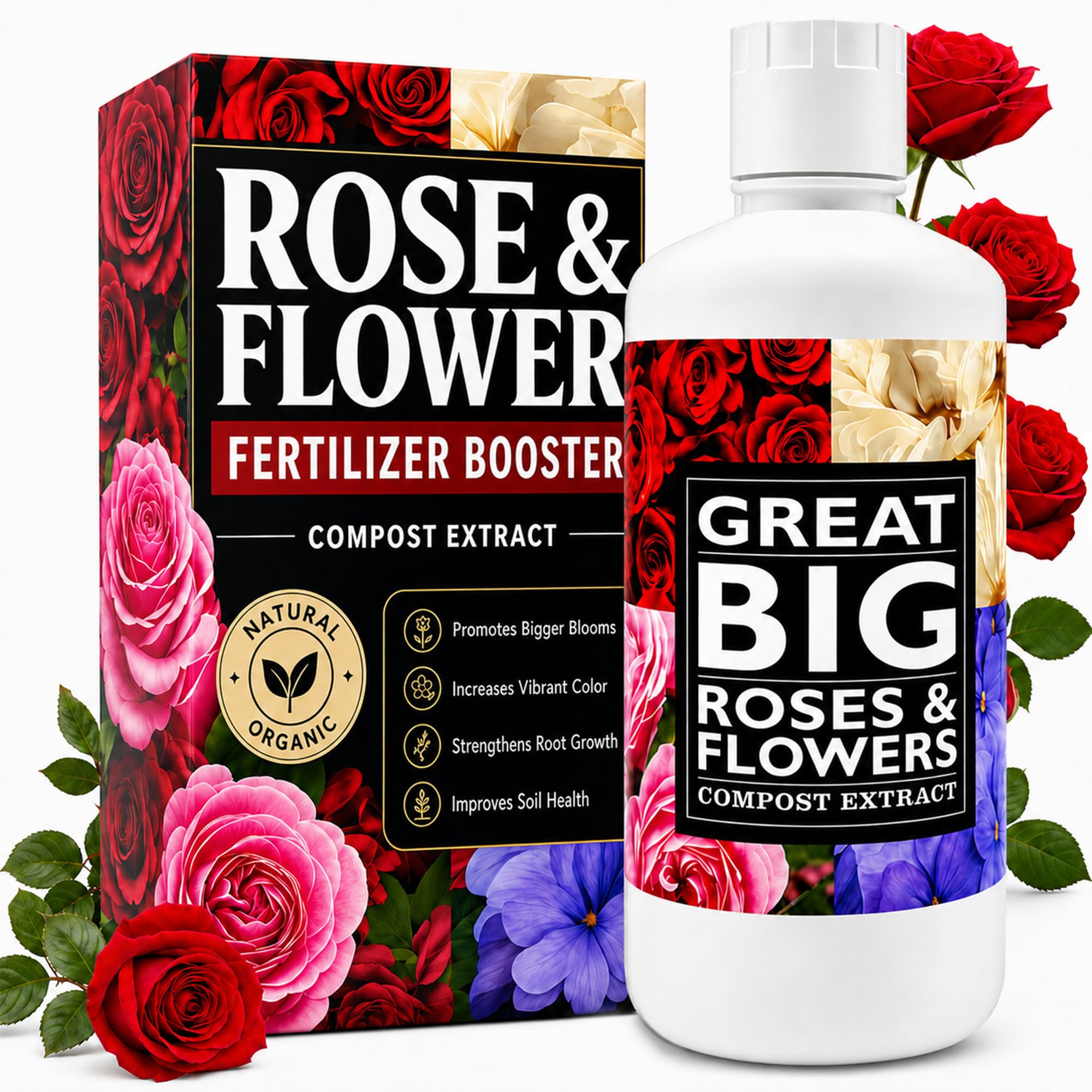
A liquid concentrate that wakes up dormant rose bushes and open up bloom potential.
Some plants simply refuse to bloom, even when fed regularly. This 32-fluid-ounce liquid booster from Great Big Plants approaches the problem differently. Instead of delivering a standard N-P-K punch, the formula delivers humic acids, seaweed, and over 70 chelated trace minerals directly to the root zone. It works by activating nutrients already in the soil and amplifying whatever fertilizer you are already using. The liquid volume here is 32 Fluid Ounces — a 7% increase over the Nature’s Wonder 30-ounce bottle.
Owners mention that rose bushes that had not bloomed in years produced big flowers within weeks after the first application. The booster mixes at 4 oz per gallon of water and works across hydrangeas, citrus trees, hibiscus, succulents, and perennials. Each bottle makes 8 gallons of feed solution, covering an entire growing season for most gardens. Unlike the granular options above, this goes to work instantly in the root zone.
Rebloom Trigger: If you have a rose bush or flowering shrub that seems stuck in green-only mode, this booster is the most direct tool in the lineup for coaxing out flowers. Works alongside any existing fertilizer routine.
Honest Limit: It is not a complete fertilizer on its own — it boosts and open up what is already in the soil or in your current feed, so pair it with a base nutrient program.
Best for: rose and flower gardeners who want to see more blooms on established plants and are already using a base fertilizer.
skip it if: you need a complete all-in-one feed with a full guaranteed N-P-K analysis.
4. Nature’s Wonder Plant & Turf Booster
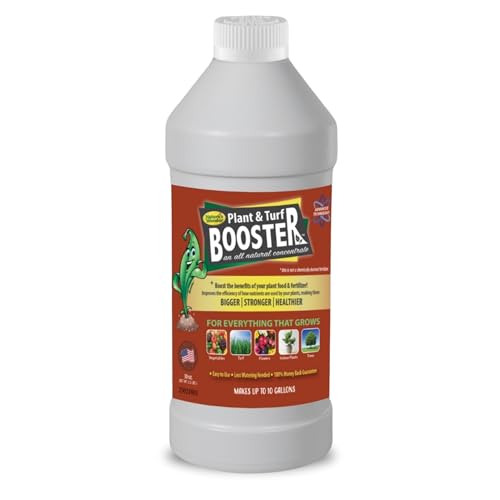
A concentrated humic-acid soil conditioner that makes every drop of water and fertilizer work harder.
This product from Nature’s Wonder is less about feeding the plant directly and more about fixing the soil so the plant feeds itself better. It is a 30-fluid-ounce liquid concentrate based on peat humic substances — the result of 10,000 years of microbial degradation. The label says to use just 3 oz per gallon of water every 2-4 weeks, which means a single bottle goes a long way. It holds 30.0 Fluid Ounces, which is 60% less volume by unit than the Grow More Sea Grow’s 48.0-ounce count, but the use rate is very low.
The biostimulant is OMRI-listed for organic production. According to the manufacturer, it improves water mobility in the plant, helps soil hold nutrients better, and reduces transplant shock. It is designed for use with any existing fertilizer to boost its effectiveness. The intended use is broad — lawns, flowers, vegetables, houseplants, and turf all qualify. Buyers appreciate the no-overuse safety message — the maker says there are no strict rules about how much to apply.
Key Benefits
- OMRI-listed for certified organic growing.
- Improves drought tolerance and reduces wilting according to the maker.
- Safe to use with any fertilizer or input — just add to your watering routine.
What It Won’t Do
- Contains no macronutrients (N-P-K) — this is a soil conditioner, not a complete fertilizer.
- Works best as a complement to an existing feeding program.
Reach for this if: you want to improve your soil’s ability to hold and deliver nutrients, and you are already using a fertilizer base for your plants or lawn.
Not a standalone feed: if you are looking for a single product that provides both nutrition and soil conditioning, pair this with a complete fertilizer.
5. Grow More Sea Grow Kelp Fertilizer
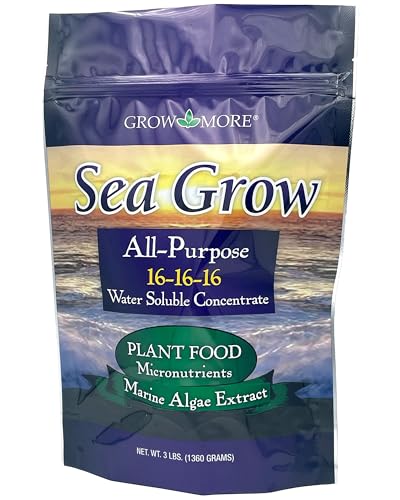
A balanced water-soluble powder with seaweed extract for general feeding indoors and out.
If you want a single bag that covers every plant in the house and garden, this 3-pound water-soluble powder from Grow More keeps things simple. The N-P-K is a balanced 16-16-16 (a triple 16 ratio), making it a reliable all-purpose feed for any growth stage. Unlike the granular formulas, this powder dissolves completely in water, so it reaches roots immediately. At 3 lbs, it is 33% lighter than the FoxFarm and Espoma 4 lb bags, and the 48.0-ounce unit count shows a 60% larger volume than the Nature’s Wonder 30 oz bottle.
The biostimulant angle comes from kelp and seaweed extracts, plus yucca extract which the maker says helps prolong the freshness of harvested fruits and vegetables. The water-soluble form makes mixing and application very straightforward — no measuring of granules into the soil. Buyers at 410 ratings give it a 4.6 average, noting it works across indoor and outdoor plants, flowers, trees, and lawns.
Budget All-Purpose: For the price, this is the most versatile entry-level option — one bag feeds every plant you own, dissolves fast, and includes natural seaweed biostimulants. The smaller bag size is fine for a single-season garden or a collection of houseplants.
The Catch: At 16-16-16, the nitrogen is on the higher side for fruiting crops that prefer a lower-N, higher-P ratio. You may need to supplement during flowering if you grow heavy feeders like tomatoes.
Good for: those new to using biostimulants who want a single, easy-to-mix powder that works everywhere — indoors, outdoors, flowers, and edibles.
Less ideal for: gardeners with specific heavy-fruiting crops who want a phosphorus-focused formula like the FoxFarm 5-7-3.
Understanding the Specs
N-P-K Ratio
These three numbers stand for nitrogen, phosphorus, and potassium — the primary macronutrients every plant needs. Nitrogen (the first number) drives leaf and stem growth. Phosphorus (the middle number) supports roots, flowers, and fruit. Potassium (the last number) helps overall plant health and disease resistance. A balanced ratio like 16-16-16 works for general use, while a higher middle number like 5-7-3 is better for fruiting and flowering crops.
Mycorrhizal Fungi
These are beneficial soil fungi that form a partnership with plant roots. The fungi attach to the root system and grow far out into the soil, effectively extending the root zone. In return for carbohydrates from the plant, the fungi bring back water and nutrients that the roots could not reach on their own. Look for “endo” mycorrhizae (which penetrate root cells) for most vegetables and flowers, and “ecto” mycorrhizae (which wrap around root cells) for trees and shrubs.
Humic and Fulvic Acids
These are natural organic compounds from decomposed plant matter and peat. Humic acid improves the soil’s ability to hold onto nutrients and water. Fulvic acid is a smaller molecule that helps transport nutrients into plant cells more efficiently. Products like Nature’s Wonder Plant & Turf Booster rely on these compounds to open up nutrients already in the soil and reduce transplant shock.
OMRI Listed
The Organic Materials Review Institute (OMRI) is an independent non-profit that evaluates products for use in certified organic production. An OMRI-listed product meets the National Organic Program standards — no synthetic chemicals, no sewage sludge, no genetically engineered ingredients. This is especially important if you are growing food crops for yourself or for sale under an organic certification.
FAQ
Can I use a biostimulant and a regular fertilizer together?
What is the difference between a biostimulant and a fertilizer?
Will a biostimulant make my lawn greener?
How often should I apply a liquid biostimulant like Great Big Roses or Nature’s Wonder?
Is granular or liquid biostimulant better?
Can I use a tomato fertilizer on my flowers?
What does it mean if a product is OMRI listed?
Do I need a biostimulant if I already use compost?
How do I measure water-soluble biostimulant powder correctly?
Final Thoughts: The Verdict
For most gardeners, the best biostimulant and fertilizer is the Espoma Bio-Tone Starter Plus because it gives every new plant a root partnership that lasts the whole season. If you grow a lot of tomatoes and peppers and want a targeted granular feed with calcium, grab the FoxFarm Happy Frog Tomato & Vegetable Fertilizer. And for coaxing more flowers from established rose bushes and perennials, the Great Big Roses and Flowers Liquid Booster is the bloom trigger that customers keep reaching for.
How We Picked
We do not accept paid placement. Every pick is matched to a real buyer and a real use-case; we do not hands-on test units.
Sources & Methodology
Specifications: manufacturer listings and product documentation. Review insights: verified customer reviews, as of July 2026. Pricing: not shown on this page (it changes often); check the current price via the retailer link.
As an Amazon Associate, Lawn Gear Lab earns from qualifying purchases. This does not affect which products we feature.