
Begonias demand a soil mix that strikes a precise balance between moisture retention and rapid drainage — too heavy and their delicate roots suffocate, too light and they dry out before the next watering. The right blend keeps fibrous roots aerated while holding enough water to support those fleshy stems and vibrant blooms.
I’m Rikta — the co-founder and writer behind Lawn Gear Lab. I’ve spent many hours analyzing ingredient lists, cross-referencing customer reports of root rot and wilting, and comparing the structural specs of over a dozen pre-mixed soils to find which formulations actually deliver the drainage and aeration begonias require.
After sorting through countless blends of peat moss, perlite, vermiculite, and worm castings, I’ve narrowed the field down to the seven mixes that consistently earn their spot on this list of the best begonia soil mix.
How To Choose The Best Begonia Soil Mix
Not all potting soils are created equal for begonias. The wrong mix can lead to yellowing leaves, stunted growth, or sudden root collapse. Here are the three most critical factors to evaluate before buying.
Drainage Components: Perlite vs. Pumice vs. Sand
Begonias hate sitting in soggy soil. Look for mixes that include perlite, pumice, or coarse sand — these create air pockets that allow excess water to escape. A mix with only peat and vermiculite holds too much moisture for tuberous and rex begonias unless you cut it with extra perlite.
Organic Matter: Worm Castings and Compost
Begonias are moderate feeders that benefit from slow-release organic nutrients. Worm castings provide gentle nitrogen and beneficial microbes without burning tender roots. Avoid mixes that rely solely on synthetic fertilizer spikes — they can cause salt buildup that damages fibrous begonia roots.
pH Balance and Acidity
Most begonias prefer a slightly acidic pH between 5.5 and 6.5. Canadian peat moss naturally lowers pH, making it a common base. If your water is alkaline, choose a mix with added lime to buffer pH shifts. Charcoal can also help neutralize pH swings and filter impurities in the root zone.
Quick Comparison
On smaller screens, swipe sideways to see the full table.
| Model | Category | Best For | Key Spec | Amazon |
|---|---|---|---|---|
| Gardenera Premium 4QT | Premium | Large repotting projects | 4 quarts, charcoal + sand blend | Amazon |
| Gardenera 3QT | Premium | Indoor tuber starting | 3 quarts, peat + worm castings | Amazon |
| Gardenera 2QT | Mid-Range | Single pot repotting | 2 quarts, charcoal + sand | Amazon |
| Grow Queen Craft Aroid | Premium | Chunky drainage lovers | 4 quarts, peat-free, fir bark | Amazon |
| Soil Sunrise Peace Lily | Premium | Moisture-consistent containers | 12 quarts, pine bark + sand | Amazon |
| Soil Sunrise Hoya | Mid-Range | Budget bulk for multiple pots | 8 quarts, charcoal + mulch | Amazon |
| Midwest Hearth AV | Budget | Entry-level quick start | 4 quarts, vermiculite + perlite | Amazon |
In‑Depth Reviews
1. Gardenera Premium Begonia Plant Potting Mix (4 Quart)
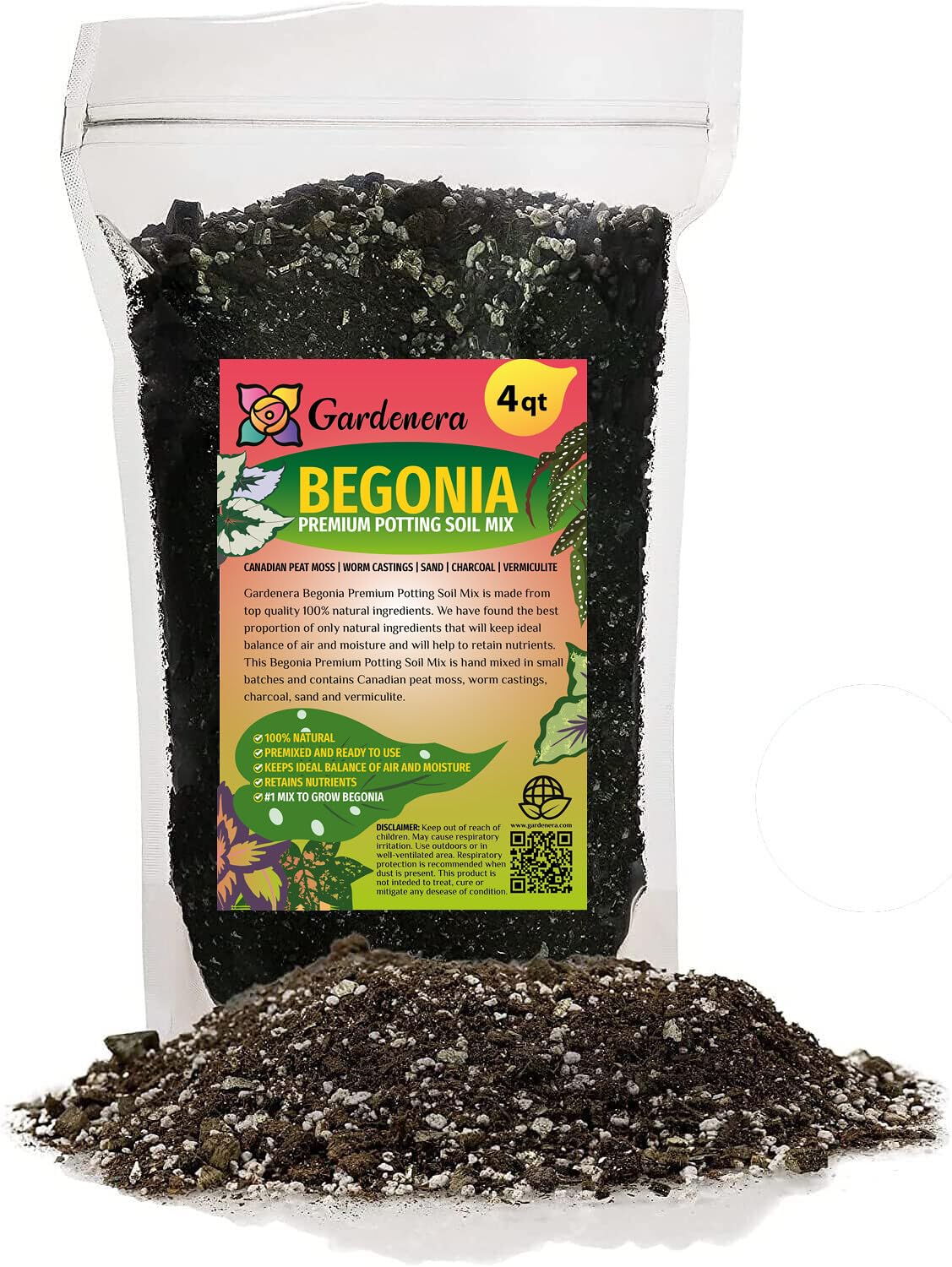
This 4-quart bag from Gardenera is the largest dedicated begonia mix we tested, and its ingredient list covers every base: Canadian peat moss for acidity, worm castings for gentle feeding, charcoal for filtration, sand for drainage, and vermiculite for moisture retention. The charcoal component is particularly valuable for begonia growers who struggle with tap water impurities — it acts as a natural filter in the root zone.
Several owners of non-stop and tuberous begonias reported that tubers planted indoors in this mix sprouted within weeks and maintained healthy, inch-tall growth. The sand and vermiculite duo creates enough weight to hold upright stems without compacting into a dense block. It works equally well for rex, angel wing, and wax begonias in both indoor pots and shaded outdoor containers.
The only recurring note from users in humid zones (8B and above) is that the mix holds moisture longer than some expect — if you tend to overwater, cutting this blend with 20 percent extra perlite or pumice is a smart precaution. For most growers, though, this is the most complete begonia-specific formula available in a single bag.
What works
- Four-quart volume is generous for multiple pots or one large repot
- Charcoal helps detoxify soil and neutralizes pH swings
- Worm castings provide steady organic nutrients without burning roots
What doesn’t
- Moisture retention may be too high for heavy-handed waterers in humid climates
- Sand content can make the bag heavier than all-peat mixes
2. Gardenera Begonia Plant Potting Mix (3 Quart)
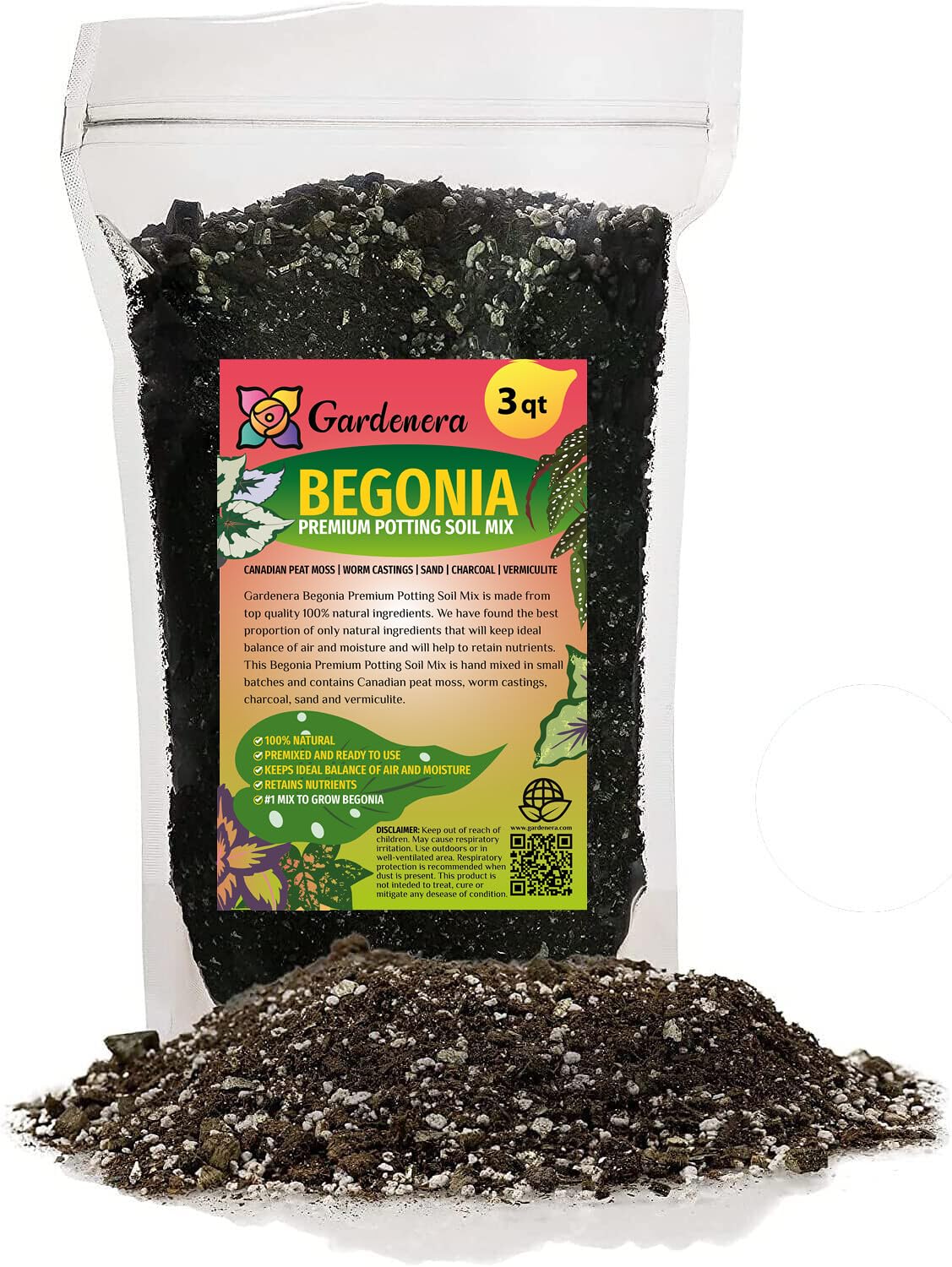
This 3-quart variant from Gardenera shares the same core formula as the 4-quart version — Canadian peat moss, worm castings, charcoal, sand, and vermiculite — but in a slightly smaller package that suits a single tuber-starting session or repotting a medium begonia. The inclusion of worm castings gives this mix an edge over generic African violet soils, providing slow-release organic nitrogen that supports steady leaf and bloom development.
Users starting begonia tubers indoors after winter storage reported that all nine tubers sprouted and grew about an inch in three weeks, with visibly healthy roots. The charcoal in the blend helps keep the soil fresh over longer pot cycles, reducing the need to repot as frequently. The texture is light and crumbly straight out of the bag, requiring no additional sifting or pre-mixing.
A few growers in humid zones noted that the mix holds water longer than expected — if your begonia pots stay damp for more than five days, adding a handful of perlite improves drainage. For growers in average indoor conditions, this mix provides the right balance of aeration and moisture control for both fibrous and tuberous begonia types.
What works
- Worm castings deliver consistent organic nutrition for foliage and blooms
- Charcoal acts as a natural filter and pH buffer
- Ready-to-use texture requires no amendments for most indoor setups
What doesn’t
- Small bag volume may not cover large repotting jobs
- Retains more moisture than chunky bark-based alternatives
3. Gardenera Begonia Plant Potting Soil (2 Quart)

This entry-point size from Gardenera is tailored for single-pot repotting or testing the formula before committing to a larger bag. The blend is identical to the premium version — peat moss, worm castings, charcoal, sand, and vermiculite — so you get the same drainage and aeration profile in a compact 2-quart volume. The charcoal component is particularly useful for growers who reuse pots and want to eliminate residual salts or old fertilizer deposits.
Begonia tuber starters reported excellent results: tubers planted indoors all sprouted within weeks and developed strong root systems. The sand and vermiculite combination provides enough structure to support top-heavy begonia varieties like angel wing and cane begonias without requiring a separate stake mix. The organic nutrient profile from worm castings supports continuous blooming throughout the growing season.
The main trade-off is the bag size — at 2 quarts, you will need multiple bags if you are repotting several plants at once. Some users also noted that the mix compresses slightly over time in small pots, so adding a layer of perlite at the bottom of the pot improves long-term aeration for moisture-sensitive begonia varieties.
What works
- Perfect trial size for growers new to specialized begonia mix
- Charcoal and sand create excellent drainage for small pots
- Worm castings provide gentle, steady nutrition
What doesn’t
- Small volume requires multiple bags for bulk repotting
- Can compact slightly over time if not mixed with perlite
4. Grow Queen Craft Aroid Potting Mix (4 Quart)
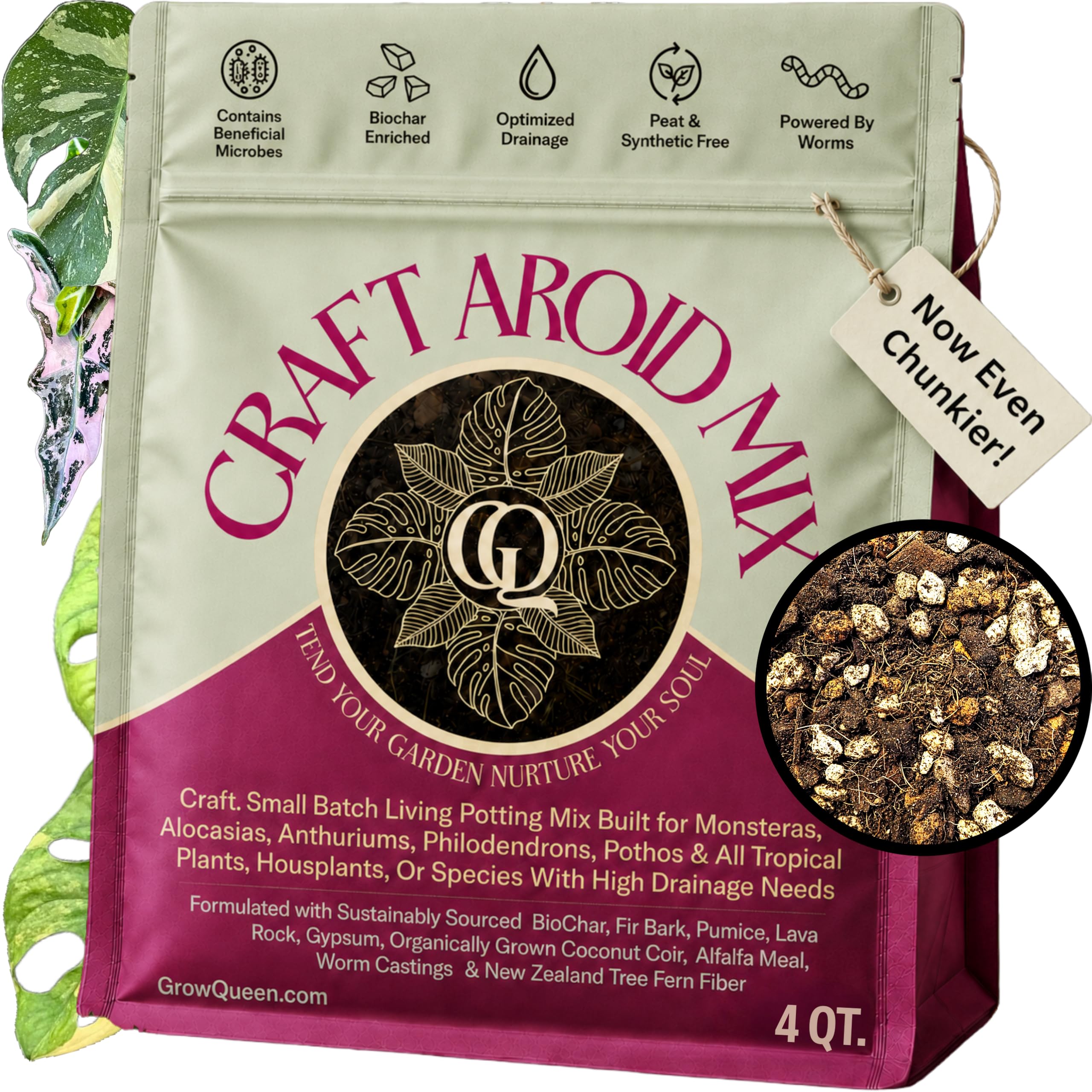
This peat-free, perlite-free mix is built on a chunky substrate of Douglas fir bark, pumice, lava rock, and certified organic coco coir — making it one of the most structurally open blends on this list. The large bark fines create air channels that make overwatering nearly impossible, a critical feature for begonia growers who struggle with root rot. New Zealand tree fern fiber in the formula helps buffer pH down to around 6.0, which aligns well with begonia preferences.
Multiple owners of aroids and begonias reported that this mix produced visibly healthier root systems and stronger growth than standard bagged soils. The pumice and lava rock provide long-lasting structure that does not break down over time, unlike perlite which can float to the surface or crush into dust. The coco coir retains enough moisture to keep begonia roots hydrated without becoming waterlogged.
The chunky texture means the mix drains very fast — if you live in a dry climate or use terracotta pots, you may need to water more frequently. It also comes pre-moistened, so the bag is heavier than a dry mix of the same volume. For growers who want a premium, sustainable option that supports strong root aeration, this is a standout choice.
What works
- Peat-free and perlite-free with eco-friendly pumice and lava rock
- Chunky bark texture allows almost zero risk of overwatering
- New Zealand tree fern fiber buffers pH to begonia-friendly levels
What doesn’t
- Fast drainage may require more frequent watering in arid zones
- Pre-moistened bag is heavier than dry alternatives
5. Soil Sunrise Peace Lily Potting Soil Mix (12 Quarts)
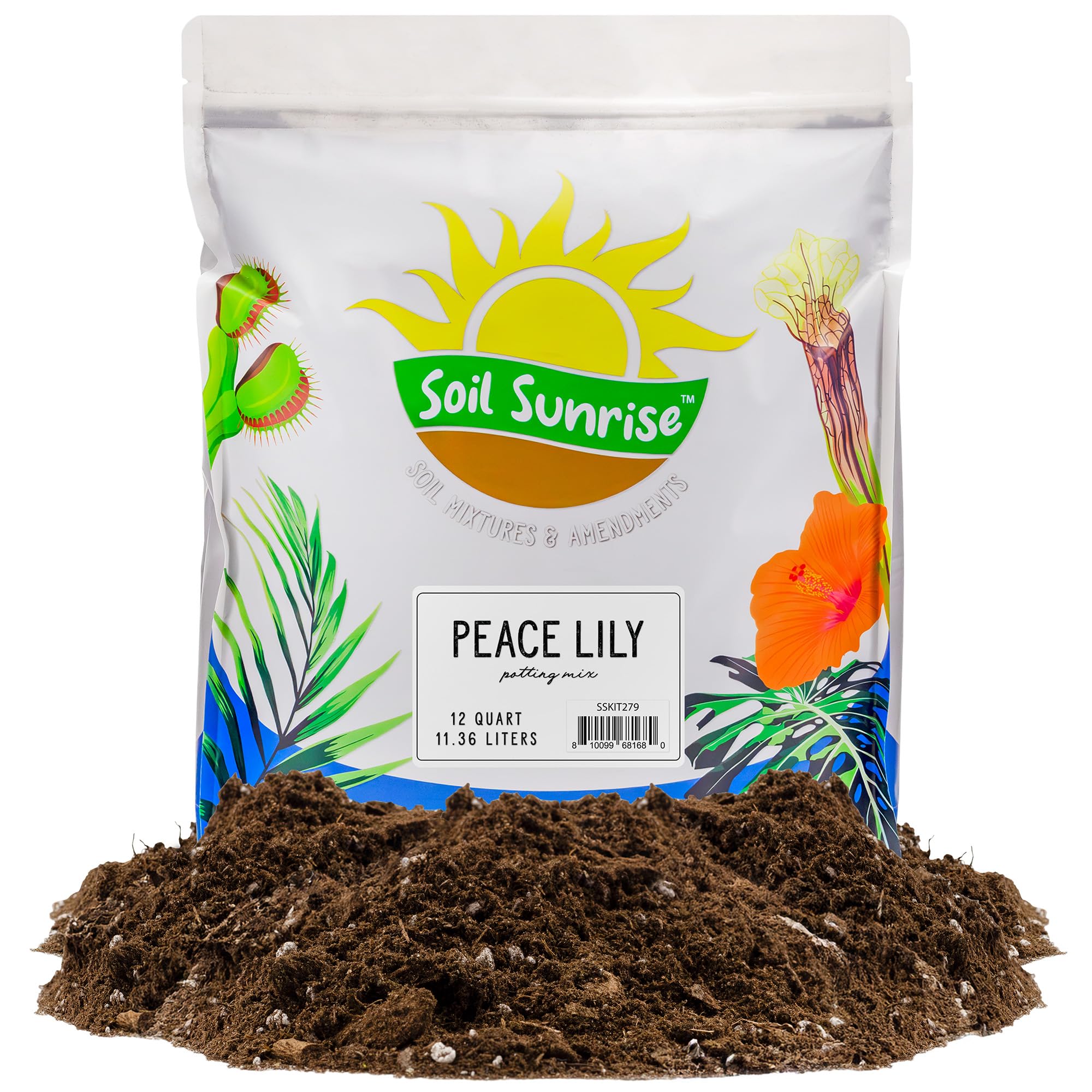
Though marketed for peace lilies, this 12-quart mix from Soil Sunrise works well for begonias that prefer consistent moisture without sogginess. The blend of pine bark, peat moss, perlite, sand, and lime creates a texture that drains faster than standard potting soil but holds enough moisture to prevent wilting between waterings. The large bag volume at this tier makes it a cost-effective option for filling multiple pots or large containers.
Users reported that struggling plants recovered well after repotting, with new sprouts appearing within weeks. The pine bark chunks provide long-lasting aeration channels that resist compaction, while the sand adds weight to keep the mix stable in deep pots. Lime in the formula helps buffer pH, which is useful if your tap water tends toward alkalinity.
The mix contains fine particles that can settle to the bottom of pots over time, so occasional gentle aeration with a chopstick is recommended. It is also slightly heavier than all-peat mixes due to the sand content. For growers managing several begonias or mixing their own custom blends, this bulk option offers strong value without sacrificing drainage performance.
What works
- Large 12-quart bag covers multiple pots or large containers
- Pine bark provides durable aeration that resists compaction
- Lime buffers pH for growers with alkaline tap water
What doesn’t
- Fine particles can settle to the bottom over time
- Sand content makes the bag heavier than peat-only mixes
6. Soil Sunrise Hoya Plant Potting Soil Mix (8 Quarts)
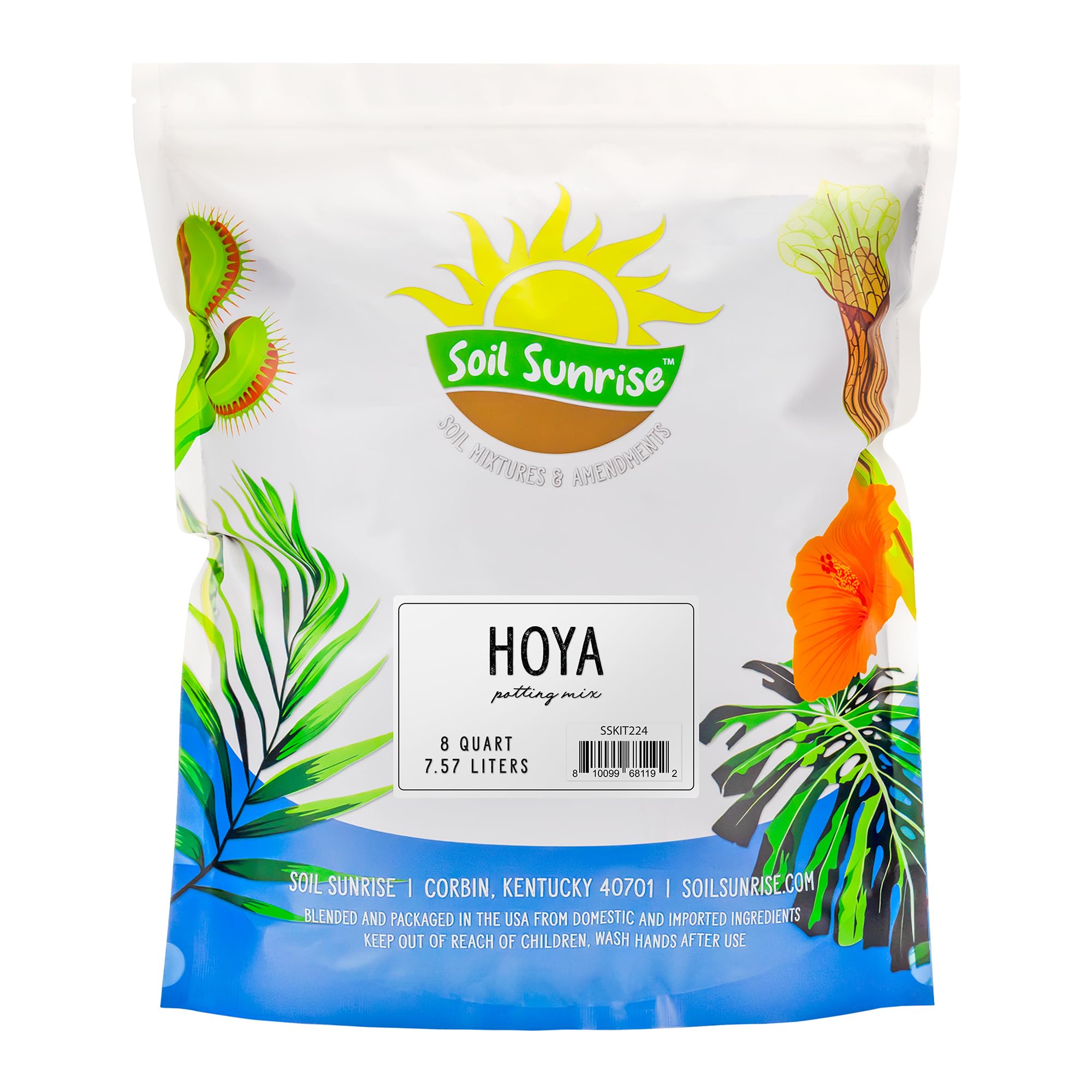
This 8-quart mix features peat moss, perlite, mulch, horticultural charcoal, worm castings, and lime — a broad ingredient list that provides a solid base for begonias with a few simple adjustments. The charcoal and mulch create good drainage and filtration, while the worm castings supply organic nutrients that support steady leaf growth. At this volume, it is one of the most economical options for growers with multiple pots.
Several users of houseplants reported excellent results with pothos and hoyas, noting that the mix is light, airy, and easy to work with straight from the bag. For begonia use, the mulch chips add structural aeration similar to bark fines. The lime content helps maintain a neutral pH, though begonia growers may want to add a small amount of extra peat moss to lower pH slightly.
The mulch pieces are larger than fine perlite, which can make the mix feel uneven if you prefer a uniform texture. Some growers also noted that the price per quart is reasonable, making this a practical base for custom blending. Adding extra perlite or pumice at about 20 percent by volume will optimize this mix specifically for moisture-sensitive begonia varieties.
What works
- Large 8-quart volume at an economical price point
- Charcoal and worm castings improve filtration and nutrition
- Light, airy texture works well as a custom blend base
What doesn’t
- Mulch chunks create uneven texture compared to finer mixes
- May need extra peat or perlite to optimize for begonias
7. Midwest Hearth African Violet Natural Potting Soil Mix (4 Quarts)

This African violet mix uses peat moss, perlite, and vermiculite in a simple, ready-to-use formula that provides a reasonable starting point for begonias, especially if you are repotting on a tight budget. The pH is controlled specifically for African violets, which aligns closely with the 5.5 to 6.5 range that begonias prefer. The 4-quart bag is small enough to test without a large commitment.
African violet growers reported that their plants recovered well after repotting, with blooming resuming within weeks. The mix is soft and light without large chunks, making it easy to work into small pots. For begonia use, the vermiculite content provides good moisture retention, which works well for wax begonias in dry indoor air.
The lack of charcoal, sand, or bark means this mix drains more slowly than blends formulated specifically for begonias. If you use this for tuberous or rex begonias, mix in at least 25 to 30 percent perlite or coarse sand to improve drainage and prevent root rot. It is a functional budget option for growers who are willing to do minor amendments but want a pre-blended base.
What works
- pH-balanced for acid-loving plants in the African violet range
- Soft, light texture that is easy to work into small pots
- Budget-friendly price for a pre-mixed bag
What doesn’t
- Vermiculite holds too much moisture for tuberous begonias without amendment
- No charcoal or sand for filtration and weight stability
Hardware & Specs Guide
Peat Moss vs. Coco Coir
Canadian peat moss is the traditional base for begonia mixes because it is naturally acidic (pH 3.5–4.5) and holds moisture evenly. Coco coir, an eco-friendly alternative, has a neutral pH and better rewetting properties. For begonias that prefer slightly acidic conditions, peat-based blends require less pH adjustment than coco coir mixes.
Perlite vs. Pumice
Perlite is lightweight, inexpensive, and improves aeration, but it can float to the surface during watering and break down over time. Pumice is heavier, more durable, and provides consistent air pockets without floating. For begonia growers who repot infrequently, pumice offers longer-lasting structure at a slightly higher cost.
Vermiculite and Moisture Control
Vermiculite absorbs many times its weight in water and releases it slowly — useful for moisture-loving wax begonias but dangerous for tuberous varieties prone to rot. A mix with more than 20 percent vermiculite by volume is likely too heavy for most begonias unless balanced with coarse perlite or sand.
Charcoal as a Soil Filter
Horticultural charcoal improves drainage, absorbs impurities, and can help neutralize pH fluctuations. In begonia mixes, charcoal also reduces the risk of fungal issues by keeping the root zone slightly drier. Look for activated or horticultural-grade charcoal, not barbecue charcoal, which contains additives harmful to plants.
FAQ
Can I use regular potting soil for begonias?
What is the ideal pH for begonia soil?
Should I add extra drainage to pre-made begonia soil?
How often should I repot begonias into fresh soil?
Final Thoughts: The Verdict
For most gardeners, the best begonia soil mix winner is the Gardenera Premium 4 Quart because it combines charcoal filtration, sand drainage, worm castings nutrition, and vermiculite moisture control in a single balanced bag. If you want a chunky peat-free option that virtually eliminates overwatering risk, grab the Grow Queen Craft Aroid Mix. And for bulk repotting of multiple begonias on a tighter budget, nothing beats the value of the Soil Sunrise Peace Lily 12 Quart with simple perlite additions.