
A battery operated garden cultivator is the tool that turns a chore into a manageable task, but the market is flooded with options that look similar on a shelf yet perform completely differently in soil. The difference between a machine that struggles with hard-packed clay and one that chews through it comes down to voltage, tine material, and battery capacity — specs that aren’t always obvious from the product page.
I’m Rikta — the co-founder and writer behind Lawn Gear Lab. I’ve spent years studying battery-powered outdoor equipment, comparing motor torque curves, tine configurations, and real-world runtime claims to help gardeners find the tool that actually matches their soil conditions and garden size.
After analyzing seven machines across voltage tiers, tine counts, and battery capacities, I’ve narrowed down the field to the models that deliver consistent results for different garden scenarios. This guide covers the best battery operated garden cultivator options for raised beds, flower borders, and small-to-mid-size plots, with honest assessments of where each one excels and where it falls short.
How To Choose The Best Battery Operated Garden Cultivator
Picking the right battery cultivator isn’t about the highest RPM or the flashiest brand. It’s about matching the tool’s voltage, tine design, and battery capacity to the actual soil type and garden size you work with. A machine that works beautifully in loose, sandy loam will stall out in heavy clay if the motor lacks torque or the tines aren’t aggressive enough. Understanding these three factors will steer you toward a cultivator that performs reliably season after season.
Voltage Class and Motor Power
20-volt cultivators are designed for light maintenance in already-worked soil — think flower bed touch-ups and weeding between established rows. They keep the weight down but struggle to break new ground or penetrate compacted clay. 40-volt models deliver significantly more torque, which translates to deeper tilling and the ability to chew through harder soil without bogging down. If you’re preparing new beds or turning over soil that hasn’t been touched in months, a 40-volt platform is the minimum you should consider. Brushless motors on higher-end models add efficiency and longer motor life, but the voltage class remains the primary indicator of raw digging power.
Tine Configuration and Material
The number, shape, and steel quality of the tines determine how well a cultivator breaks ground. Four steel tines with a counter-rotating design or aggressive curvature can handle compacted soil better than eight to twelve thin tines that just scratch the surface. Some budget models use stamped steel that bends on rocks or roots, while premium units use heat-treated alloy steel that holds its edge and shape. Pay attention to the tine width versus depth spec — a 9-inch width at 6-inch depth is fine for raised beds, but a 12-inch width at 8-inch depth cuts a larger swath and reaches deeper into existing sod or crusted soil.
Battery Capacity and Runtime
Battery amp-hour (Ah) ratings directly correlate to runtime, but the relationship depends on how hard the motor is working. Cultivating dry, compacted soil draws more current than weeding loose topsoil, so a 2.0Ah battery might last only 15-20 minutes in tough conditions. Two-battery kits mitigate this by letting you swap packs on the fly — look for total capacity of at least 4.0Ah across both batteries for a standard 20V system, or dual 4.0Ah packs on 40V machines for extended sessions. Charger speed also matters: a fast charger that tops off a depleted battery in under an hour keeps you working rather than waiting.
Quick Comparison
On smaller screens, swipe sideways to see the full table.
| Model | Category | Best For | Key Spec | Amazon |
|---|---|---|---|---|
| Earthwise TC70040EW | Premium 40V | Heavy-duty beds | 11-in width / 8-in depth | Amazon |
| MAXLANDER ML8G601 | Premium 40V | Hard/rocky soil | 280 RPM brushless motor | Amazon |
| MZK TC12D02 | Premium 40V | Large gardens | 14-in width / 8.6-in depth | Amazon |
| Saker SK-TC18B | Mid-Range 22V | Established beds | 360 RPM / 9-in width | Amazon |
| SOARFLY GT-02 | Mid-Range 21V | Extended runtime | 8.0Ah total battery | Amazon |
| TaskStar TH4000 | Mid-Range 21V | Maximum tine count | 48 steel tines | Amazon |
| Earthwise TC70020IT | Budget 20V | Small flower beds | 7.5-in width / 6-in depth | Amazon |
In‑Depth Reviews
1. Earthwise TC70040EW 40V Tiller

The Earthwise TC70040EW sits at the top of the 40-volt class with four heat-treated alloy steel tines that carve an 11-inch path down to 8 inches deep. That depth spec puts it in a different league than most 20V models, which typically top out at 6 inches. The 4.0Ah lithium-ion battery delivers enough sustained torque to chew through compacted clay without the motor bogging down — a common failure point on lower-voltage cultivators when the soil gets dense.
Flip-down rear wheels are a practical addition that most competitors skip. They let you roll the tiller to the garden instead of carrying it, then fold up out of the way during operation. The safety switch and trigger require two hands to engage, which prevents accidental startups but does slow down one-handed touch-ups. Users consistently report that it breaks up soil effortlessly in small-to-medium gardens, though the battery runs down faster in heavy sod than in pre-loosened beds.
Where the Earthwise truly separates itself is in balance — it has enough weight (roughly 15 pounds) to let the tines dig in rather than bouncing across the surface, yet remains light enough for a gardener of average strength to maneuver between rows. For anyone managing multiple beds or tackling new soil, this machine offers the best depth-to-portability ratio of the seven models reviewed.
What works
- 11-inch width and 8-inch depth match the specs of gas-powered entry-level tillers
- Flip-down rear wheels simplify transport across yards
- Heat-treated steel tines resist bending on rocks and roots
What doesn’t
- Single 4.0Ah battery may require a recharge for gardens larger than 200 sq ft in tough soil
- Two-hand safety trigger prevents quick one-handed weeding passes
2. MAXLANDER ML8G601 40V Cultivator
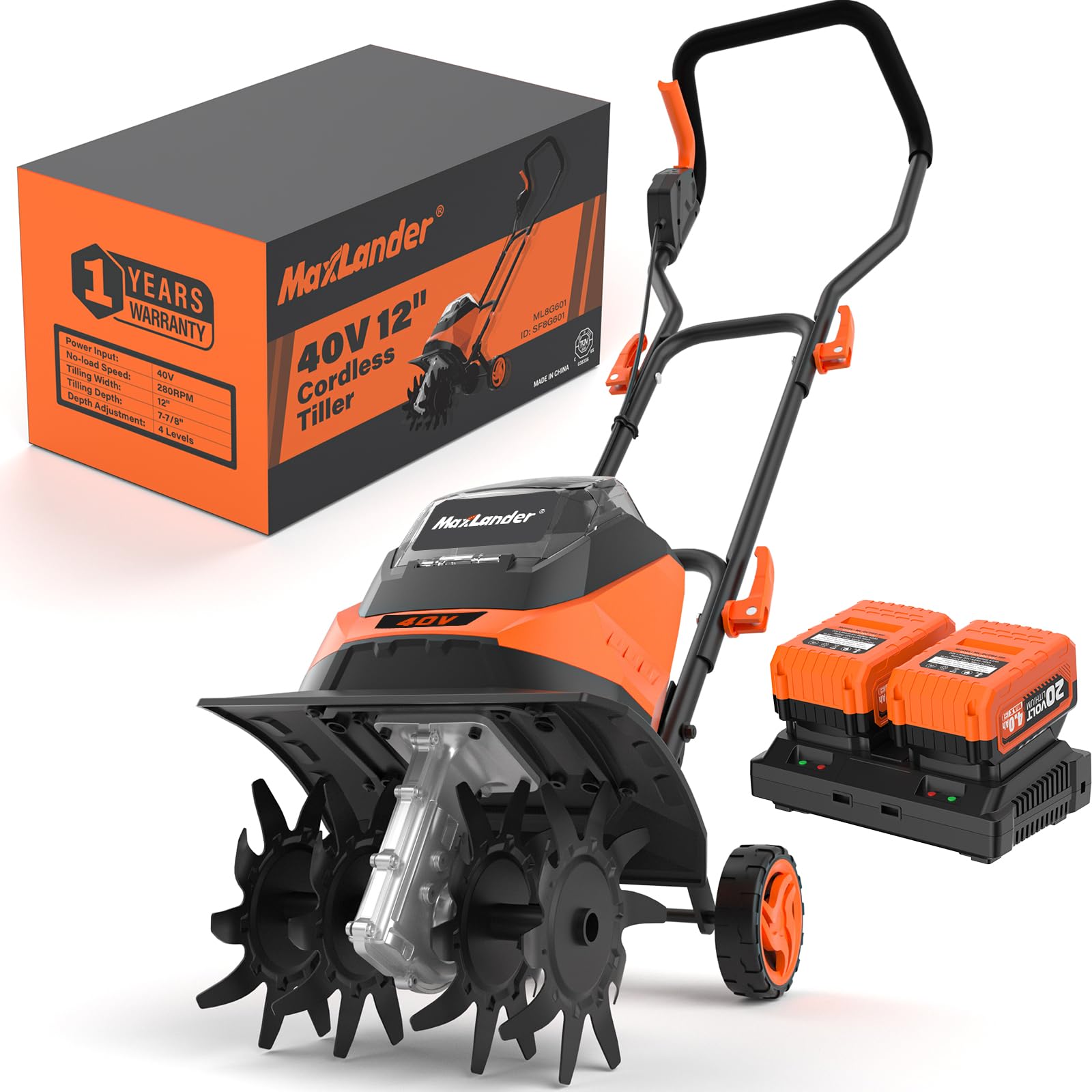
The MAXLANDER ML8G601 pairs a 40V brushless motor with four steel tines that cut a 12-inch swath down to 8 inches. The brushless design is the key differentiator here — it converts more electrical energy into rotational force than a brushed motor, which means less heat buildup and longer runtimes per charge. Owner reports confirm that this machine handles clay soil, embedded rocks, and shallow roots better than most cordless options in its tier.
The folding handle collapses for compact storage, a feature that matters if your shed or garage space is tight. Dual 4.0Ah batteries provide roughly 35 to 40 minutes of operation per pair, depending on soil hardness. The double safety trigger system requires both hands on the handles, which adds a layer of protection but also prevents the casual “grab and go” style that some lighter-duty users prefer.
A notable trade-off is the lack of depth adjustment wheels — the MAXLANDER relies entirely on downward pressure from the operator to control how deep the tines bite. This works fine for experienced users who can read soil resistance, but beginners may find themselves fighting for consistent depth across uneven ground. The motor’s grunt is the real story here: it powers through conditions that stall lesser 20V machines, making it a solid choice for anyone with heavy soil.
What works
- Brushless motor delivers higher torque and longer motor lifespan than brushed alternatives
- 12-inch width covers ground quickly in open beds
- Folding handle stores in less than half the space of fixed-handle models
What doesn’t
- No built-in depth adjustment wheels; depth is controlled by user pressure
- Debris shield can throw soil upward toward the operator in dry conditions
3. MZK TC12D02 40V Garden Tiller
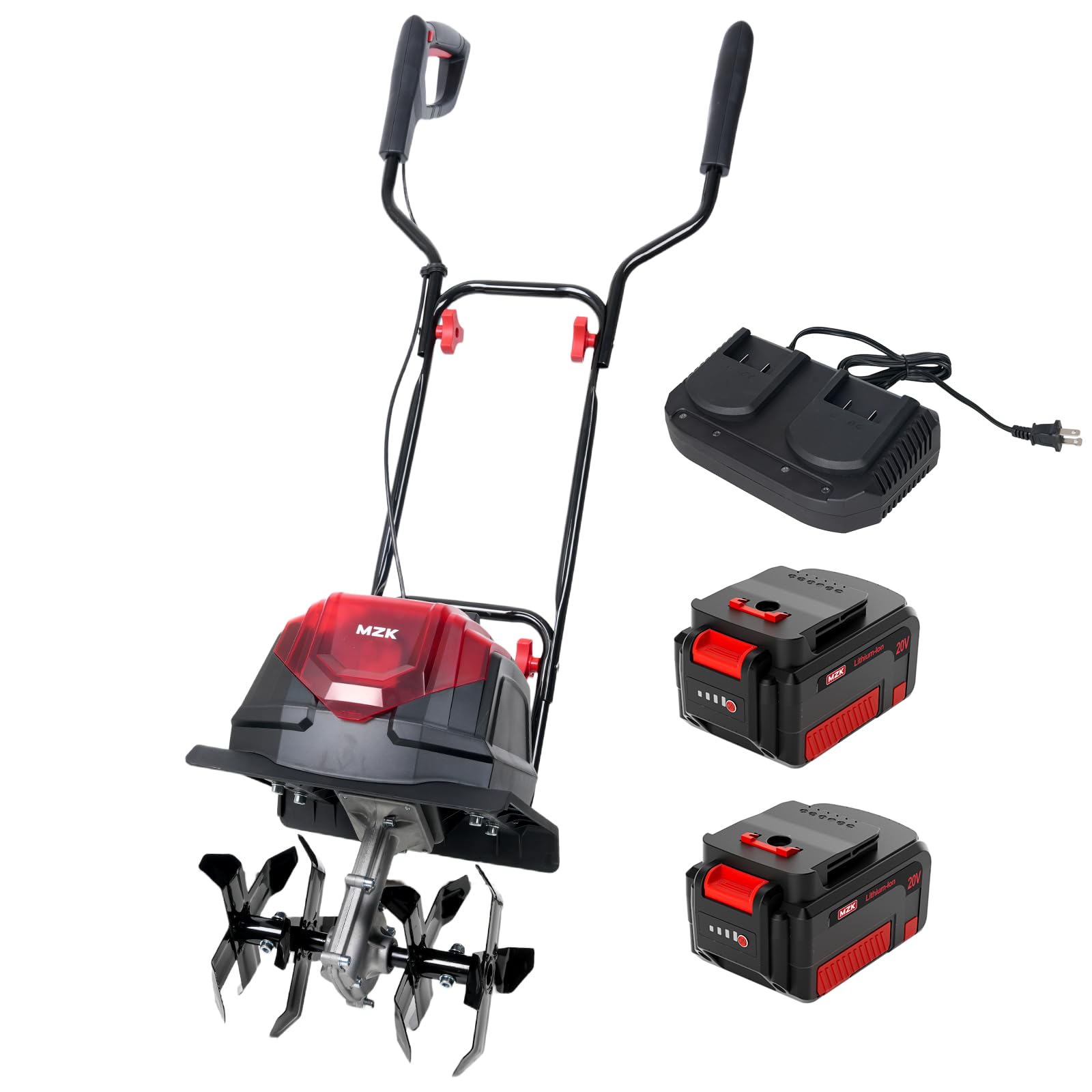
The MZK TC12D02 is the widest cultivator in this lineup, with a 14-inch tilling width and an 8.6-inch maximum depth — specs that put it in genuine competition with gas-powered tillers for small gardens. Sixteen steel tines (four groups of four) distribute the load across the cutting path, reducing the bouncing effect that plagues narrower machines on uneven ground. The 40V system runs at 180 RPM, which sounds slow on paper but provides enough rotational mass to pull itself downward into hard soil.
Adjustable wheels are a standout feature here. They let you set the tilling depth precisely and roll the machine to the work site without lifting. Dual 4.0Ah batteries give roughly 35 minutes of runtime, and the wheeled transport means you spend less energy getting to and from the garden. Users consistently praise how well it matches gas tiller performance without the pull-start frustration or fuel smell.
The trade-off is weight — at roughly 20 pounds, the MZK is heavier than any other model reviewed. That weight helps the tines bite deeper, but it can fatigue an operator working a large area without breaks. The instructions are sparse, and the assembly requires attaching the handle and wheels with tools not included in the box. For gardeners with larger plots who want gas-like performance in a cordless package, the MZK delivers the most coverage per pass.
What works
- 14-inch tilling width is the largest in the review, covering ground fast
- Adjustable wheels provide depth control and easy transport
- 16 tines reduce bouncing and improve soil breakup in uneven beds
What doesn’t
- Heavier than competitors at roughly 20 pounds; fatiguing over long sessions
- Assembly requires tools not included; instructions are minimal
4. Saker SK-TC18B 22V Tiller
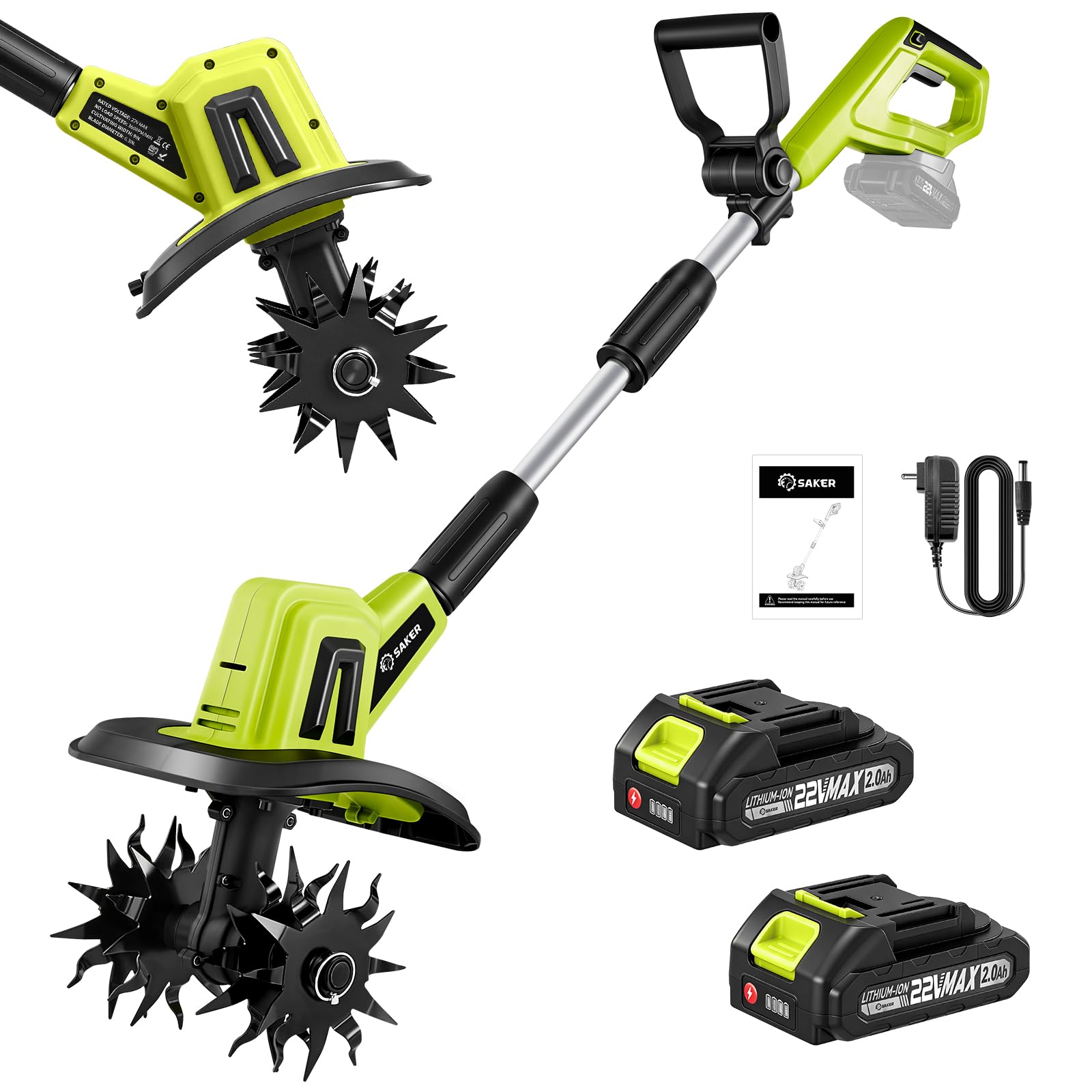
The Saker SK-TC18B runs on a 22V platform with four steel tines spinning at 360 RPM — a higher rotational speed than the 40V models, but without the torque that higher voltage provides. This trade-off means the Saker works beautifully in loose, already-cultivated soil but struggles to penetrate hard-packed clay on the first pass. For established raised beds and routine weeding between rows, the 9-inch width and 6.3-inch depth are more than adequate.
The adjustable auxiliary handle is a thoughtful addition — it rotates and slides to accommodate different arm lengths and grip preferences, which reduces fatigue during longer sessions. Two 2.0Ah batteries provide roughly 25-30 minutes of runtime each, and swapping them is quick. Owners consistently note that the assembly takes under ten minutes and requires no special tools.
The primary limitation is the lack of a rear guard or depth-adjustment mechanism. When pulling the tiller backward, there’s nothing to stop the tines from lifting and exposing bare metal near the operator’s legs. Multiple owner reports mention this as a safety concern, especially for newer users. The Saker is a capable tool for light maintenance — just keep it on pre-loosened ground and be mindful of foot placement on reverse passes.
What works
- High 360 RPM provides fast soil turnover in loose or sandy beds
- Adjustable auxiliary handle accommodates different user heights
- Quick assembly with no specialized tools required
What doesn’t
- Lacks rear tine guard, creating a safety risk when pulling backward
- Struggles to break new ground in compacted or clay-heavy soil
5. SOARFLY GT-02 21V Cultivator
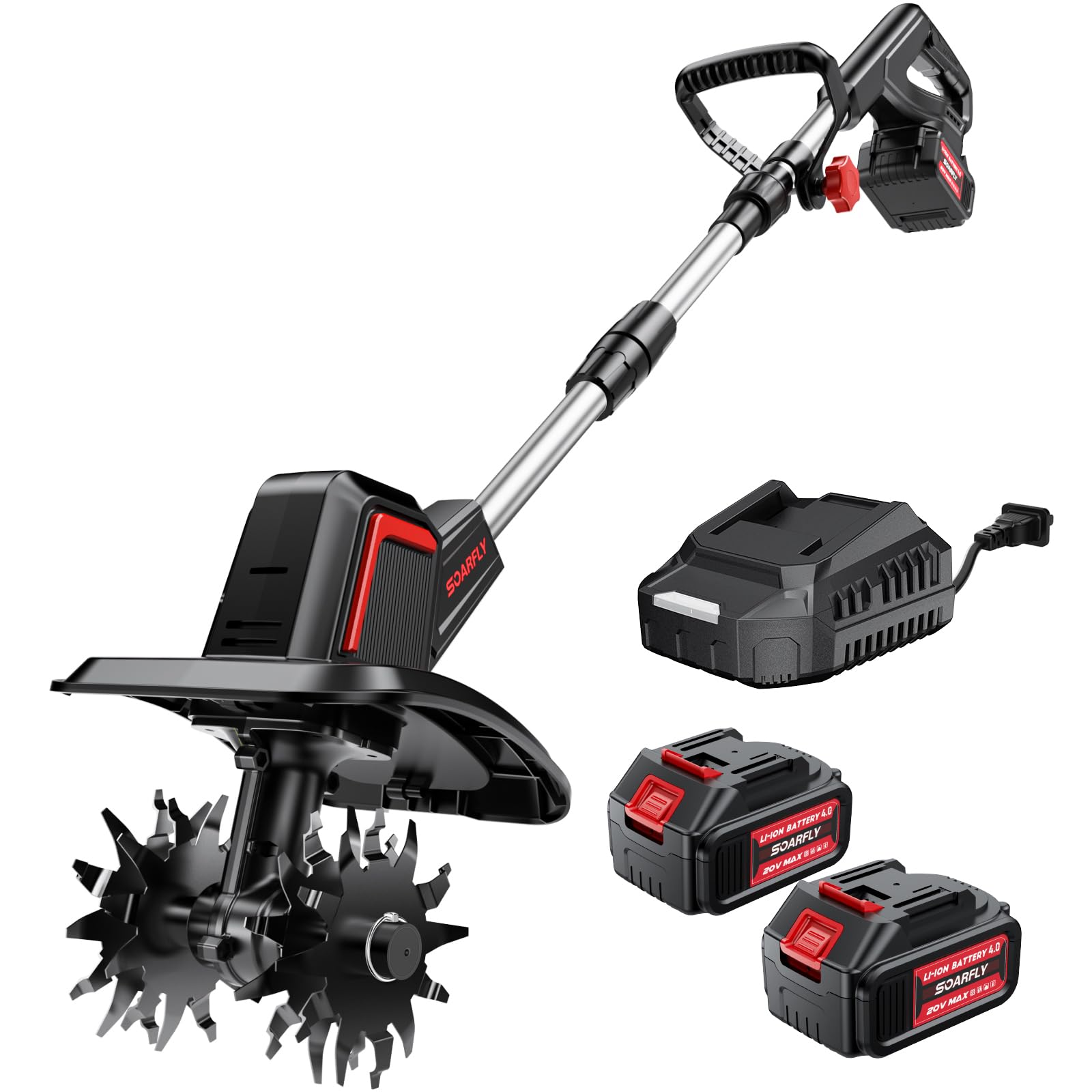
The SOARFLY GT-02 distinguishes itself with dual 4.0Ah batteries — a total of 8.0Ah capacity, which is double what most 20V-class competitors offer. That extra capacity translates to roughly 45 to 60 minutes of runtime in moderate soil conditions, enough to handle a half-dozen raised beds or a long border without stopping to recharge. The 48 steel tines are more than most machines need, but they distribute wear across a larger surface area and help break up soil faster than the 4-tine designs in the same voltage class.
The ergonomic design includes an adjustable auxiliary handle and a height-adjustment system that accommodates users from roughly 5 feet to 6 feet tall. Owners consistently report that the GT-02 is light enough to operate one-handed for short passes, though the tines will bounce on hard, dry ground if not enough downward pressure is applied. The dual safety system (unlock button plus trigger) prevents accidental starts.
The primary downside is that the SOARFLY, like other 21V machines, lacks the torque to break new ground in compacted clay. It excels as a maintenance tool for already-worked beds — weeding, aerating, and mixing in compost — but won’t replace a heavier 40V machine for initial bed preparation. The plastic housing components feel less robust than the all-metal builds of premium models, though owners report no structural failures in normal use.
What works
- Dual 4.0Ah batteries provide the longest runtime in the 21V class
- 48 tines distribute force and reduce wear on individual blades
- Adjustable height system fits a wide range of operator statures
What doesn’t
- Struggles with hard-packed clay and initial soil breaking
- Plastic housing components feel less durable than metal alternatives
6. TaskStar TH4000 21V Tiller
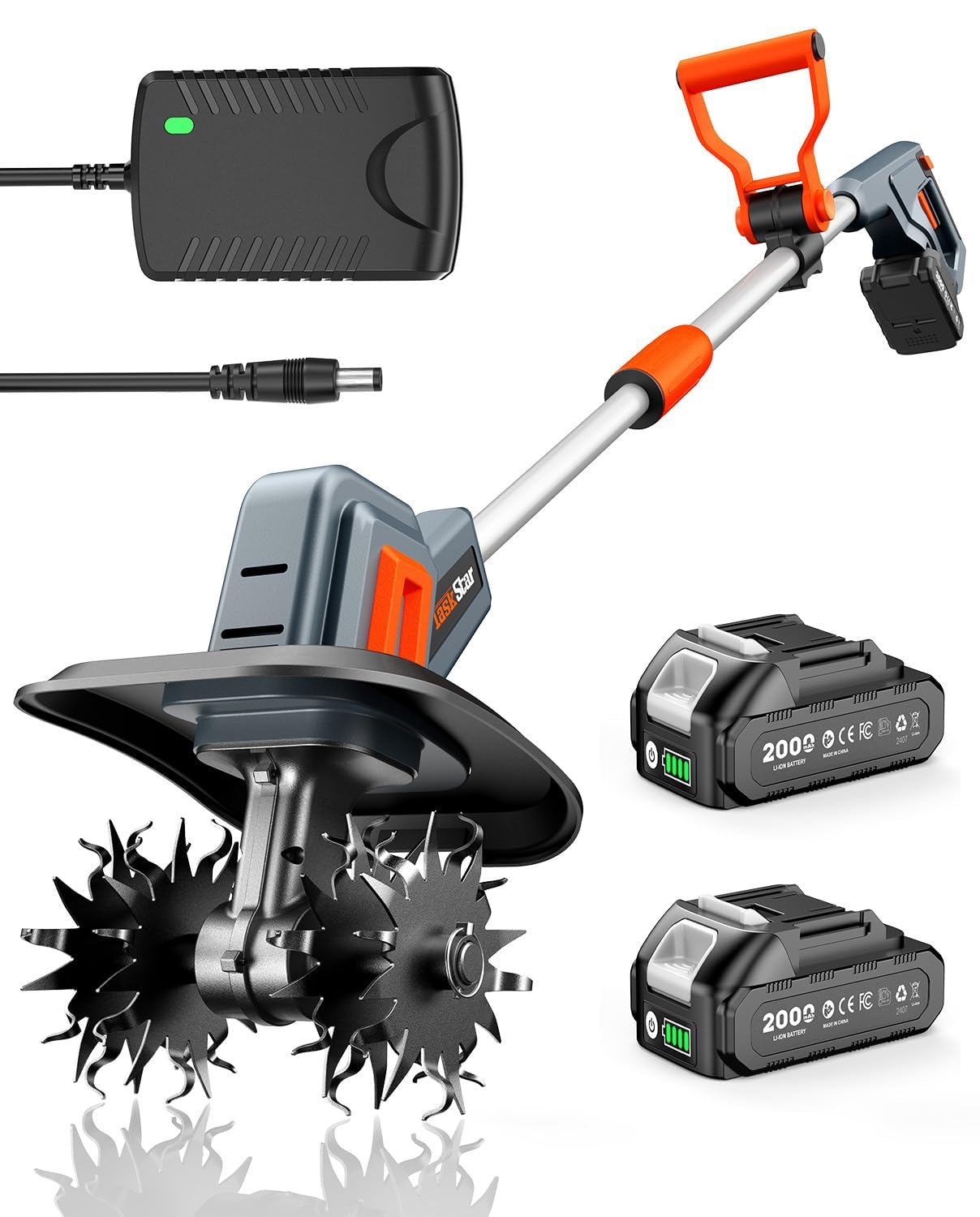
The TaskStar TH4000 runs on a 21V platform with two 2.0Ah batteries (4.0Ah total) and 48 heavy-duty steel tines that create a 9-inch tilling width at 7 inches depth. The tine count is the headline feature — more steel-to-soil contact points than any 4-tine model in this price range — which helps break up soil faster on each pass. The 360 RPM motor provides enough rotational speed to fluff existing beds and pull out shallow-rooted weeds effectively.
Owner feedback consistently highlights the TH4000 as a surprisingly capable tool for its weight class. Multiple reports detail successful use on 30-by-40-foot garden plots, with the dual batteries lasting through the full job. Assembly takes roughly five minutes, and the tool is light enough for a 63-year-old user to operate without strain. The rust-resistant steel tines are a practical upgrade over raw steel, which tends to corrode when left in damp sheds.
The main drawback — common across the 21V class — is insufficient torque for breaking new ground. The TH4000 does its best work on soil that has been turned within the past year. The plastic build quality is adequate but not confidence-inspiring for heavy-duty use; it’s clearly engineered to be lightweight at the expense of impact resistance. For gardeners who already have a primary tiller and need a light-duty weeding companion, this is a solid entry-level pick.
What works
- 48 tines create more soil contact points than 4-tine designs, speeding up cultivation
- Lightweight build at 12.8 pounds minimizes fatigue during extended use
- Rust-resistant steel tines hold up better in humid storage conditions
What doesn’t
- Lacks torque for initial breaking of compacted or clay-heavy soil
- Plastic construction may not withstand impacts from rocks or hard use
7. Earthwise TC70020IT 20V Tiller

The Earthwise TC70020IT is the entry point for battery powered cultivation, operating on a 20V platform with a 2.0Ah battery and four steel tines that cut a 7.5-inch path at 6 inches deep. It’s the smallest and lightest machine in this review, designed explicitly for tight spaces like raised beds, flower borders, and between-row weeding. Owners consistently praise its utility for small gardens where a gas tiller would be overkill and a hand fork would take all afternoon.
The 20V motor lacks the grunt to break new ground in compacted soil, but in already-worked beds it runs smoothly and tines up weeds effectively. The battery provides roughly 20-25 minutes of runtime, which is enough for a standard 4×8 raised bed plus a border. The safety button and trigger mechanism stops the tines quickly when released — a practical safety feature that newer users appreciate.
The most common complaint across owner reports is that weeds and grass vines wrap around the tines and must be cleared manually. This is not unique to the Earthwise — it happens with nearly every front-tine cultivator — but the narrow tine spacing makes debris removal slightly more tedious. For anyone with a minimal garden footprint who wants a no-fuss, lightweight tool for seasonal maintenance, this Earthwise delivers exactly what it promises without breaking the bank.
What works
- Lightweight and easy to maneuver in tight raised beds and flower borders
- Safety button stops tines instantly when released, reducing accident risk
- 2-year manufacturer warranty provides peace of mind for budget purchase
What doesn’t
- 20V battery lacks the torque to break compacted or clay-heavy soil
- Weeds and vines wrap around tines frequently, requiring manual clearing
Hardware & Specs Guide
Voltage Class vs. Soil Type
The 20V/21V/22V cultivators are best suited for maintenance in previously worked soil, flower beds, and raised garden boxes. They lack the torque to slice through compacted clay or stony ground. The 40V machines — Earthwise TC70040EW, MAXLANDER ML8G601, and MZK TC12D02 — produce roughly double the torque and can break new ground, cut through sod, and handle rocky soil without the motor stalling. If your garden has been fallow for more than one season or you’re dealing with heavy clay, skip the 20V tier entirely and start with 40V.
Battery Amp-Hour Runtime Math
A 2.0Ah battery on a 20V motor in moderate soil conditions provides roughly 15-20 minutes of continuous operation. Stepping up to 4.0Ah doubles that range to 30-40 minutes. On 40V platforms, a 4.0Ah battery delivers comparable runtime against harder soil, which means you get similar clock time but much more work done per minute due to the wider cutting path and deeper bite. The SOARFLY GT-02’s total 8.0Ah capacity (dual 4.0Ah packs) is the best value runtime spec in the 21V class, while the Earthwise TC70040EW and MAXLANDER each provide dual 4.0Ah packs at the 40V level.
FAQ
Can a battery cultivator break new ground in hard clay soil?
How long should I expect the battery to last on a single charge?
Are brushless motors worth the extra cost on a garden cultivator?
What width should I choose for raised bed gardening?
Final Thoughts: The Verdict
For most gardeners, the battery operated garden cultivator winner is the Earthwise TC70040EW because it combines a genuine 11-inch, 8-inch-deep cutting capacity with 40V torque, flip-down wheels for transport, and a proven owner satisfaction record across small-to-medium beds. If you want brushless efficiency and tackling hard clay, grab the MAXLANDER ML8G601. And for covering the most ground per pass on larger plots, nothing beats the MZK TC12D02 with its 14-inch width and adjustable depth wheels.