
You want one bag you can grab for everything—tomatoes, fruit trees, flower beds, your lawn—without burning your plants or needing a chemistry lesson to read the label. The right balanced organic fertilizer gives your soil steady, slow-release food for months, so vegetables grow bigger and shrubs stay green without the harsh salt spikes that synthetic products cause. Your challenge is picking the one with the right NPK (nitrogen-phosphorus-potassium) ratio that won’t cost a fortune or arrive as a dusty, torn bag.
I’m Rikta — the co-founder and writer behind Lawn Gear Lab. This guide is built by comparing the manufacturers’ published specifications and the patterns across verified customer reviews, so you get each pick’s real strengths and trade-offs instead of marketing spin.
These five products all earn a spot as contenders for best balanced organic fertilizer, and we break down exactly what each one delivers for your garden.
How To Choose The Best Balanced Organic Fertilizer
Picking the right all-purpose organic feed comes down to understanding what “balanced” actually means for your soil, how the ingredients work together, and how much you need to buy to get through a full season without running out.
The NPK Ratio and What It Delivers
The three numbers on the bag (say, 4-4-4 or 5-5-5) tell you the percentage by weight of nitrogen (N), which fuels leafy green growth; phosphorus (P), which supports roots and blooms; and potassium (K), which boosts overall plant health and disease resistance. A balanced fertilizer means these three numbers are equal or very close—so your plants get steady all-around support rather than a push toward just leaves or just flowers. For a general-purpose feed you can use on vegetables, trees, shrubs, and lawns, a 4-4-4 or 5-5-5 ratio is your safest bet.
Ingredient Source and Soil Biology
Organic fertilizers get their nutrients from natural sources like bone meal, feather meal, alfalfa meal, kelp, and chicken manure. These materials break down slowly, feeding the soil microbes that in turn feed your plants. Some products go a step further by adding mycorrhizal fungi (beneficial fungi that form a living network around plant roots) or beneficial bacteria—these create a living web in the root zone that helps plants access water and nutrients even during dry spells.
Bag Size and Application Rate
A 4-pound bag might be perfect for a container garden or a few raised beds, but if you are feeding a large vegetable plot, several fruit trees, or a lawn, you will need a 16- or 25-pound bag to avoid running out mid-season. Check the feeding rate on the label—some products recommend 1 cup per plant per application, while others use 1 tablespoon per 5-gallon pot—and calculate how many applications you will make during the growing season.
Quick Comparison
On smaller screens, swipe sideways to see the full table.
| Model | Category | Best For | Key Spec | Amazon |
|---|---|---|---|---|
| Down To Earth 25 lb | Premium | Large gardens & fruit trees | 25 lb bag, 4-4-4 NPK | Amazon |
| Dr. Earth 706P | Best Overall | Quick results + soil microbes | 4 lb bag, 4:4:4 ratio | Amazon |
| Gaia Green 4-4-4 | Mid-Range | Container & indoor gardens | 2 kg bag, 4-4-4 NPK | Amazon |
| EB Stone 5-5-5 | Mid-Range | General yard & garden feeding | 4 lb bag, 5-5-5 NPK | Amazon |
| Jobe’s Organics 16 lb | Value | Flower & vegetable yield | 16 lb bag, 4-4-4 NPK | Amazon |
In‑Depth Reviews
1. Dr. Earth 706P Organic All Purpose Fertilizer

4:4:4 NPK ratio plus 15 strains of beneficial soil microbes and mycorrhizal fungi make Dr. Earth 706P the top pick for home gardeners who want visible results within a week while feeding soil life. Buyers report it revived loquat, satsuma, lemon, and grapefruit trees using just 1 cup per tree three times a year. The granules use clean ingredients like pesticide-free cottonseed meal and wild Alaskan fish bone, with no slaughterhouse byproduct smell or fishy odor, and at 4.2 pounds per bag the Amazon price is notably lower than local nurseries.
The honest limit is bag size: at just over 4 pounds, you will need multiple bags for a large vegetable plot or row of mature fruit trees. Skip this one if your garden covers a half-acre or more and go for the Down To Earth 25-pounder instead.
For most home gardeners with a modest mix of ornamentals, vegetables, and a few trees, this is the most effective all-in-one organic feed you can buy.
Why it’s great
- Contains 15 strains of beneficial microbes and mycorrhizae
- Clean ingredients with no slaughterhouse byproducts
- Proven to revive struggling fruit trees within a week
Good to know
- Small bag size (4.2 lbs) for the price
- Some bags may arrive with a tear; transfer to a sealed container
2. Down To Earth Organic Vegetable Garden 4-4-4, 25 lb
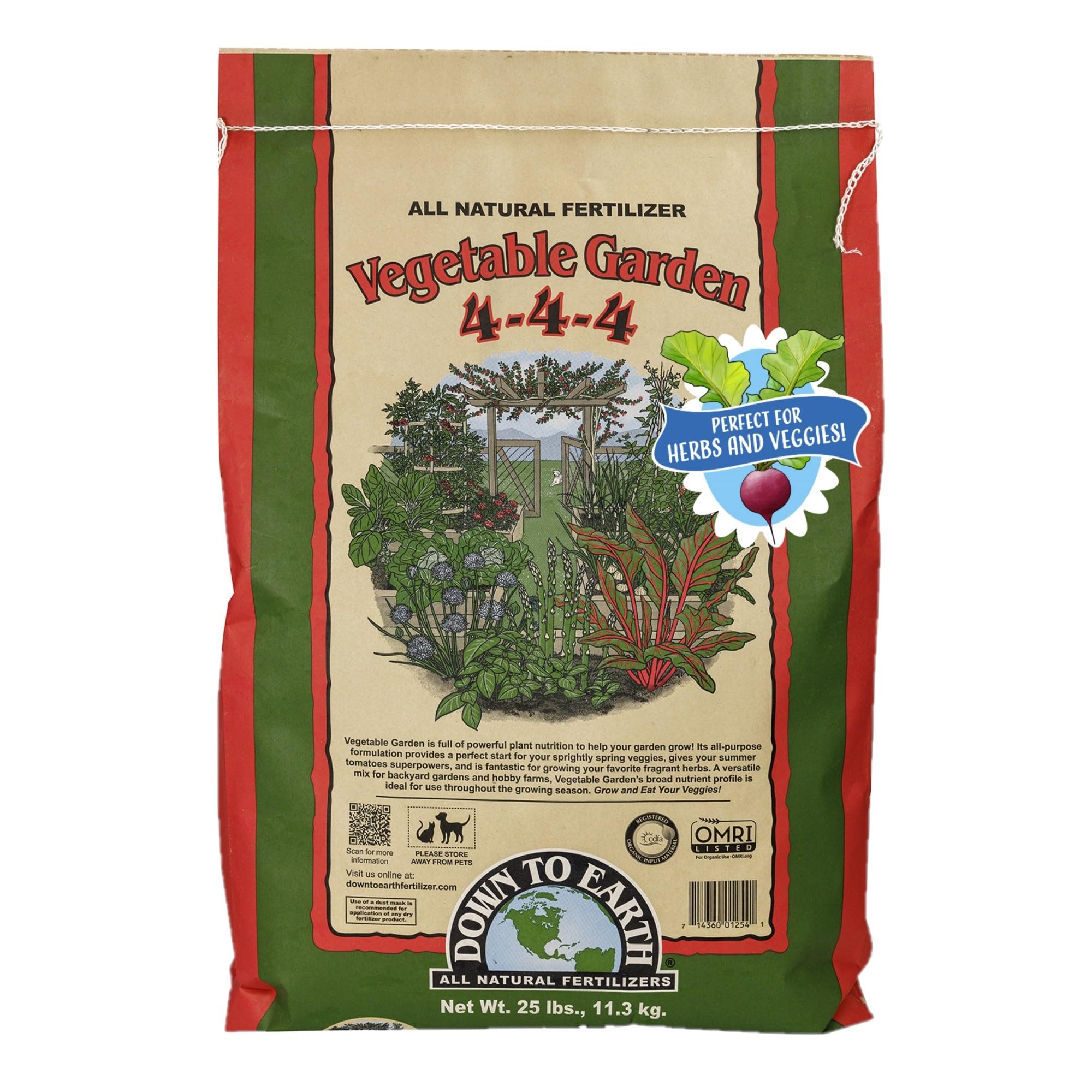
Where the Dr. Earth wins on microbial diversity, the Down To Earth 25-pounder wins on sheer value per pound for serious gardeners. This bag holds 25 pounds—more than 6.2 times the weight of the Dr. Earth 4-pound bag—so it is a smarter buy if you have a sprawling vegetable patch, multiple fruit trees, or a lawn to feed. It is also OMRI Listed (verified by the Organic Materials Review Institute for use in certified organic production) and uses a straightforward 4-4-4 formula. Owners mention that their fruit trees are growing big fruit with sweet flavor after using this fertilizer, and they appreciate that it avoids the synthetic fertilizer crash (the sudden nutrient drop that stresses plants). The ingredients are derived from fish bone meal, alfalfa meal, feather meal, langbeinite, basalt, and seaweed meal, giving plants a slow-release supply of nutrients that lasts the full season without a harsh spike.
This is the pick for the gardener who wants to buy once and forget about it for a year. The 25-pound bag is bulky and you will want a scoop or a dedicated container to keep it dry, but the cost-per-application is dramatically lower than any smaller bag in this lineup.
Choose this over the top pick if you prioritize raw volume and cost-per-pound over microbial complexity, and you need a single bag to feed a large garden or multiple trees for a full season.
Where it shines
- Massive 25 lb bag for large-scale feeding
- OMRI Listed for organic gardening
- Proven to increase fruit size and sweetness
Worth noting
- Bulky bag requires storage space
- No added mycorrhizae or microbial strains
3. Jobe’s Organics Granular All Purpose Fertilizer, 16 lbs

When your vegetable patch is demanding a mid-season boost and you need more than a small bag but less than a bulk sack, Jobe’s Organics Granular All Purpose Fertilizer delivers 16 pounds of 4-4-4 formula in a resealable bag that keeps granules dry between uses. It is OMRI Listed and contains no synthetic chemicals, so it is safe for organic vegetable gardens. Customers note that this feed boosted squash, cucumber, and pepper yields significantly, with flowers opening just 48 hours after feeding. Some users turn it into a liquid tea by steeping 1 cup of granules in 1 gallon of dechlorinated water for 24 hours, then diluting that tea at 1 cup per gallon of water for weekly feedings. The leftover solids go straight into the soil or compost pile, so nothing is wasted.
You should pick this one if you want a generous bag size without jumping to the 25-pound bulk option. The Jobe’s granules are fine enough to spread evenly with a hand-crank spreader on a lawn, but they also work well for targeted handfuls around individual plants. If you want the microbial boost of the Dr. Earth, this is not the bag—it has no added mycorrhizae or microbes.
At 16 pounds of 4-4-4 OMRI Listed organic fertilizer in a resealable bag, it is the middleweight champion that leaves nothing wasted.
What stands out
- Generous 16 lb bag at a reasonable price
- Resealable bag for easy storage
- Works as both dry feed and liquid tea
The trade-offs
- Granules have a pungent smell (milder than raw manure)
- No added mycorrhizae or beneficial microbes
4. EB Stone Organic All-Purpose 5-5-5 Plant Food, 4 lb
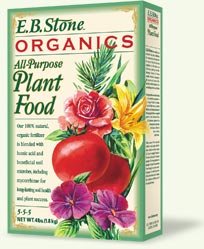
The single number that matters most in this category is the NPK ratio, and EB Stone Organic All-Purpose 5-5-5 scores a 5-5-5—25% more concentrated in each nutrient than the 4-4-4 products in this roundup. That means a 4-pound bag of EB Stone delivers more actual nitrogen, phosphorus, and potassium than a 4-pound bag of any 4-4-4 product, so you may need less volume per application. The ingredient list is comprehensive: blood meal, feather meal, bone meal, dried chicken manure, bat guano, alfalfa meal, kelp meal, and potassium sulfate.
Reviewers point out that this feed helped a struggling lily of the Nile plant recover easily, and experienced gardeners use it on trees, shrubs, and flower beds by spreading 3-4 handfuls per full-shrub-size plant three times a year (fall, early spring, early summer). The granules are easy to handle, and the product also contains humic acids (natural compounds that improve nutrient uptake) and mycorrhizal fungi to support soil biology. This one suits a gardener with a small yard who wants a slightly stronger, more concentrated balanced feed.
If you have a large garden, the 4-pound bag will get used up quickly—the Down To Earth bulk bag is a better fit for you, making this a stronger-per-pound option that offers good value for smaller spaces.
The upsides
- Higher 5-5-5 concentration means more nutrients per handful
- Rich ingredient list including bat guano and kelp meal
- Contains humic acids and mycorrhizae for soil health
Keep in mind
- Small 4 lb bag gets used up quickly
- Some reports of packaging inconsistency
5. Gaia Green 4-4-4 Organic All Purpose Fertilizer, 2 kg
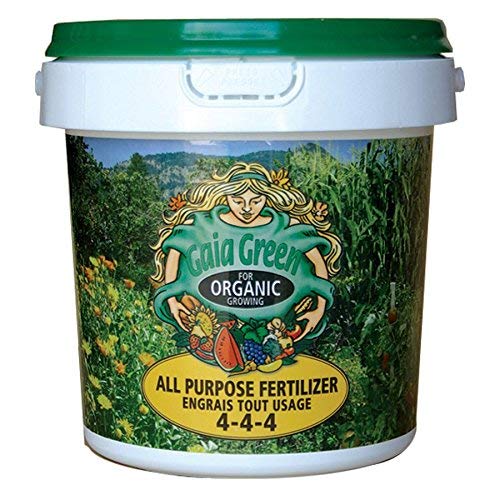
You get a straightforward, no-frills organic granular feed that hits the same 4-4-4 NPK as many pricier options but at a notably lower price per pound, in a 2 kg bag (about 4.4 pounds) that uses a blend of ingredients with variable nutrient release rates so your plants get fed gradually all season long rather than all at once. Shoppers say that seedling size doubled in the first week after application, with plants reaching 18 inches tall after just two weeks—performance that, according to reviewers, outperformed Alaskan fish fertilizer and compost tea. Indoor gardeners pair it with worm castings or bat guano to create a powerful organic soil mix, and the granules are easy to measure at 1 tablespoon per 5-gallon pot at transplant time.
What you give up compared to the Dr. Earth or Down To Earth options is the added microbial life and the bulk bag size; this is a pure fertilizer without the extra soil biology boosters.
It is the pick for the budget-conscious gardener who already uses compost or worm castings and just wants a reliable, balanced organic feed without paying for extras.
Why we’d pick it
- Low price per pound compared to other 4-4-4 options
- Proven to double seedling size in the first week
- Perfect for container gardens and indoor soil mixes
A few caveats
- No added mycorrhizae or beneficial microbes
- Small bag size (2 kg) for the price
Understanding the Specs
NPK Ratio (4-4-4 vs. 5-5-5)
The three numbers tell you the percentage of nitrogen (N) for leafy growth, phosphorus (P) for roots and blooms, and potassium (K) for overall health. A balanced fertilizer uses equal or near-equal numbers, so your plants get steady all-around support rather than a targeted push. The difference between 4-4-4 and 5-5-5 is concentration: a 5-5-5 product delivers roughly 25% more of each nutrient per handful, meaning you may use slightly less volume per application. For most vegetables and ornamentals, either ratio works—just follow the bag’s recommended feeding rate.
Mycorrhizae and Beneficial Microbes
Mycorrhizae are beneficial fungi that form a living network around plant roots, extending the root system’s reach to pull more water and nutrients from the soil. Some fertilizers—like Dr. Earth’s—add multiple strains of these fungi plus beneficial bacteria to kick-start soil biology. If you are planting into poor or compacted soil, a fertilizer with mycorrhizae can help plants establish faster and survive dry spells better. If you already have rich, living soil, a plain fertilizer without these additives works just fine and costs less per bag.
FAQ
Can I use a balanced organic fertilizer on my lawn?
How often should I apply a balanced organic fertilizer to my vegetable garden?
What does it mean if a fertilizer is “OMRI Listed”?
Is a 5-5-5 fertilizer better than a 4-4-4?
Final Thoughts: The Verdict
When it comes down to it, the balanced organic fertilizer winner is the Dr. Earth 706P because it combines soil-building microbes with proven fast results on a wide range of plants. If you want the best value per pound for a large garden, grab the Down To Earth 25 lb. And for the budget-conscious gardener growing in containers or raised beds, the Gaia Green 4-4-4 delivers reliable performance at a lower price without extras you do not need.