
Finding a bag of mulch that actually suppresses weeds, locks in moisture through a dry spell, and doesn’t fade into a gray mess within weeks is harder than it sounds. Most big-box options are dyed wood waste that breaks down fast, robs the soil of nitrogen, and leaves your beds looking tired by midsummer. The smart alternative is a concentrated organic mulch that delivers true soil-building value without the constant replacement.
I’m Rikta — the co-founder and writer behind Lawn Gear Lab. I’ve spent hundreds of hours comparing mulch specifications, analyzing organic content percentages, studying moisture retention data from grower forums, and reading thousands of verified owner reports to separate the products that actually perform from the overhyped fillers.
Whether you are topping off vegetable beds, refreshing ornamental borders, or mulching around trees, choosing the right material makes the difference between weekly watering and a resilient landscape. This guide cuts through the noise to help you find the best bags of mulch for your specific garden conditions and budget.
How To Choose The Best Bags Of Mulch
The bagged mulch aisle looks simple, but the real differences hide in the specs: organic certification, particle size, expansion ratio, and pH balance. Here is what to check before you load the cart.
Organic Content and Certification
Not all “natural” mulch is equal. OMRI-listed products guarantee no synthetic chemicals, dyes, or fillers — essential for vegetable gardens and edible beds. Uncertified wood mulches often contain construction scrap, treated pallet wood, or added dyes that offer zero soil benefit.
Moisture Retention and Expansion Ratio
Compressed coconut husk bricks are the heavy hitters here: a 10-pound brick can expand to 72 quarts or more when hydrated. That expansion ratio directly translates to coverage area and value. Traditional bark or wood chip bags give you exactly what you see — compressed organics give you up to 7x the volume after soaking.
Particle Size and Texture
Fine-textured aspen or cocoa shell mulches lock together better on slopes and resist wind scatter, but they break down faster. Coarse coco chips and large bark nuggets last longer and improve aeration but may float or shift in heavy rain. Match particle size to your specific bed type — fine for containers and raised beds, coarse for large landscape areas.
pH and EC for Sensitive Plants
Coconut-based mulches naturally sit at a neutral pH with low electrical conductivity, making them safe around seedlings, orchids, and acid-sensitive vegetables. Wood mulches from pine or cedar can lower soil pH over time, while cocoa shells tend to be slightly alkaline. If you grow blueberries, rhododendrons, or ferns, pH alignment matters.
Quick Comparison
On smaller screens, swipe sideways to see the full table.
| Model | Category | Best For | Key Spec | Amazon |
|---|---|---|---|---|
| Halatool 10LBS Coco Husk Chips | Compressed Organic | Targeted root zone moisture | Expands to 72 Quarts | Amazon |
| Plantonix Organic Coco Chips | Compressed Organic | Soil aeration & nutrient retention | High CEC; expands to 15 Gallons | Amazon |
| Back to the Roots Coco Husk Block | Compressed Organic | Large bed coverage & veggie gardens | Expands to 2 Cubic Feet | Amazon |
| Riare Coco Chips Substrate | Compressed Organic | DIY chunky soil mixes & orchid pots | Low EC; pH Balanced; 72 Quarts | Amazon |
| Brut Organic Aspen Mulch | Certified Organic Bark | Fine texture for containers & herbs | OMRI Listed; 10 Quarts | Amazon |
| Rubberific Shredded Rubber Mulch | Synthetic Long-Life | Playgrounds & permanent landscape | 12-Year Color Warranty; 16 LBS | Amazon |
| Hull Farm Cocoa Bean Shell Mulch | Organic Natural Shell | Scented beds & squirrel deterrent | Fertilizer Value 2.5-1-3; 2 Cu Ft | Amazon |
In‑Depth Reviews
1. Halatool 10LBS Coco Husk Chips
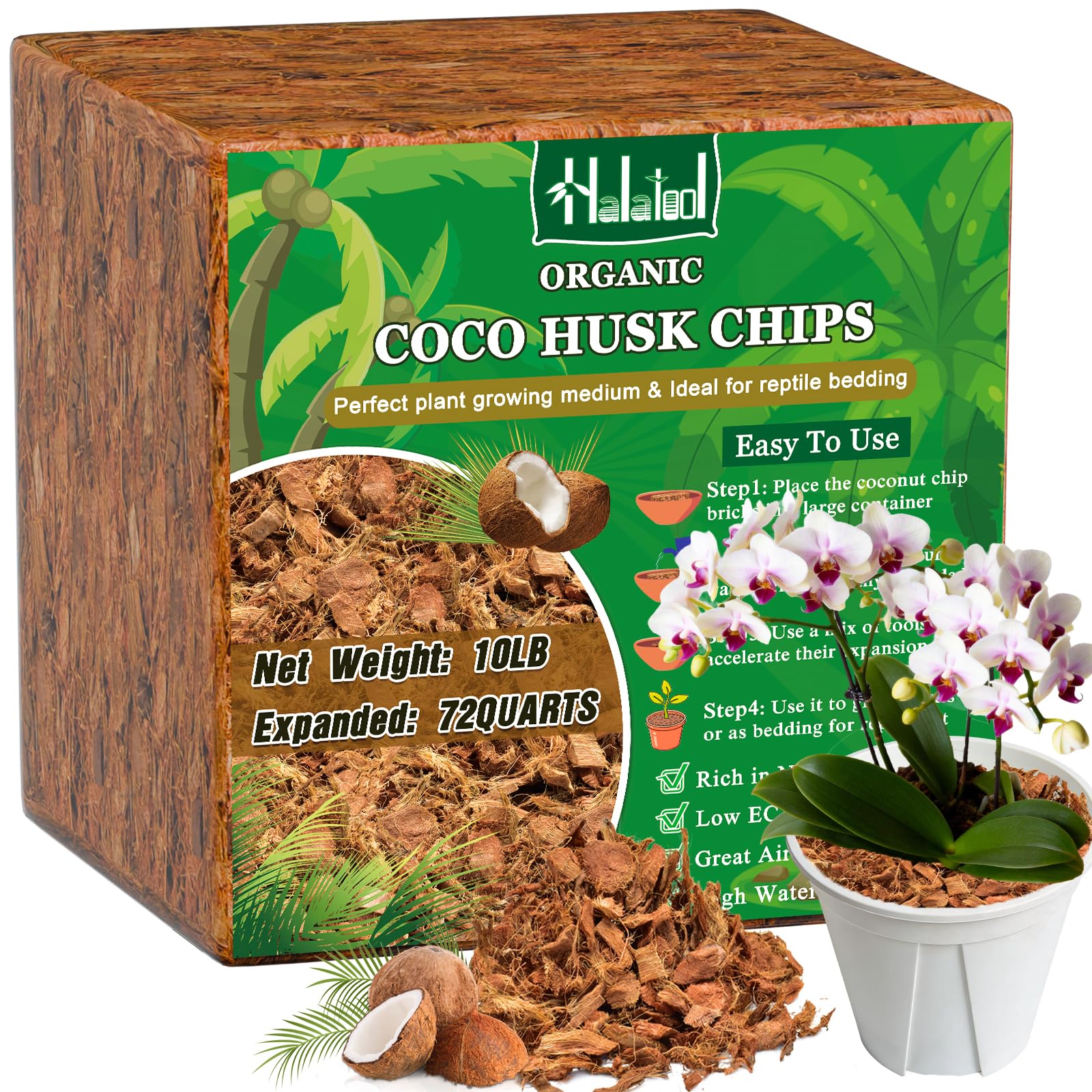
The Halatool brick delivers what the category should: a 10-pound compressed block that explodes to 72 quarts of chunky, pH-balanced coco husk chips. The expansion ratio is the headline — one brick fills an entire wheelbarrow — but the real story is the particle texture. These chips are coarse enough to prevent surface crusting yet retain moisture long enough to cut watering frequency by half in raised beds.
Multiple verified buyers report perfect results using it as a “mulch sandwich” for weed suppression: a layer of chips over weed barrier stays in place even through heavy wind and rain. The low electrical conductivity and neutral pH mean zero risk of nutrient lock-up around sensitive roots, a common problem with unbuffered coir products. The natural coconut scent is a bonus — it deters crawling pests without chemical repellents.
The only catch is the initial hydration step: you need roughly one gallon of water and a large container to break the brick apart fully. Skipping the full soak leaves dry pockets that won’t expand. But for the coverage — three 6-inch orchid pots plus leftovers in a single brick — this is the most volume-per-dollar organic option on the list. Serious gardeners buy in multiples.
What works
- Exceptional 72-quart expansion from a single 10-pound brick
- Coarse texture resists wind and rain displacement
- Neutral pH and low EC protect sensitive plant roots
What doesn’t
- Requires a large container and full hydration before use
- Not suitable as a fine top-dressing for small pots
2. Plantonix Organic Coco Chips (10lbs)

The Plantonix block leans into soil structure improvement — its high cation exchange capacity (CEC) means this mulch actively holds onto nutrients rather than letting them wash through the root zone. That makes it a superior choice for vegetable gardens and container mixes where fertilizer efficiency matters. The brick expands to 15 gallons, slightly less than some competitors, but the chip size is more consistent, creating even air pockets that prevent compaction.
Buyers mixing it into potting soil report significantly better drainage and root aeration compared to standard fine coir. The chips are chunkier than the typical coco dust that clogs drainage holes — pieces stay intact through multiple watering cycles. The neutral pH also eliminates the need to buffer before use, a step that tripped up some users with unbuffered coir from other brands.
One caveat: the brick is denser than some alternatives, requiring a bit more manual breaking apart during hydration. A few buyers mentioned that the price per dry cubic foot is slightly higher than store-brand coco bricks, but the consistent chip size and buffered quality justify the premium for serious growers who want predictable results in seed-starting mixes and permanent garden beds.
What works
- High CEC improves nutrient availability in the root zone
- Consistent chunky texture prevents soil compaction
- Buffered pH eliminates the need for pre-treatment
What doesn’t
- Slightly smaller expansion than the top performer
- Dense brick requires extra effort to break apart fully
3. Back to the Roots 100% Organic Coconut Husk Block
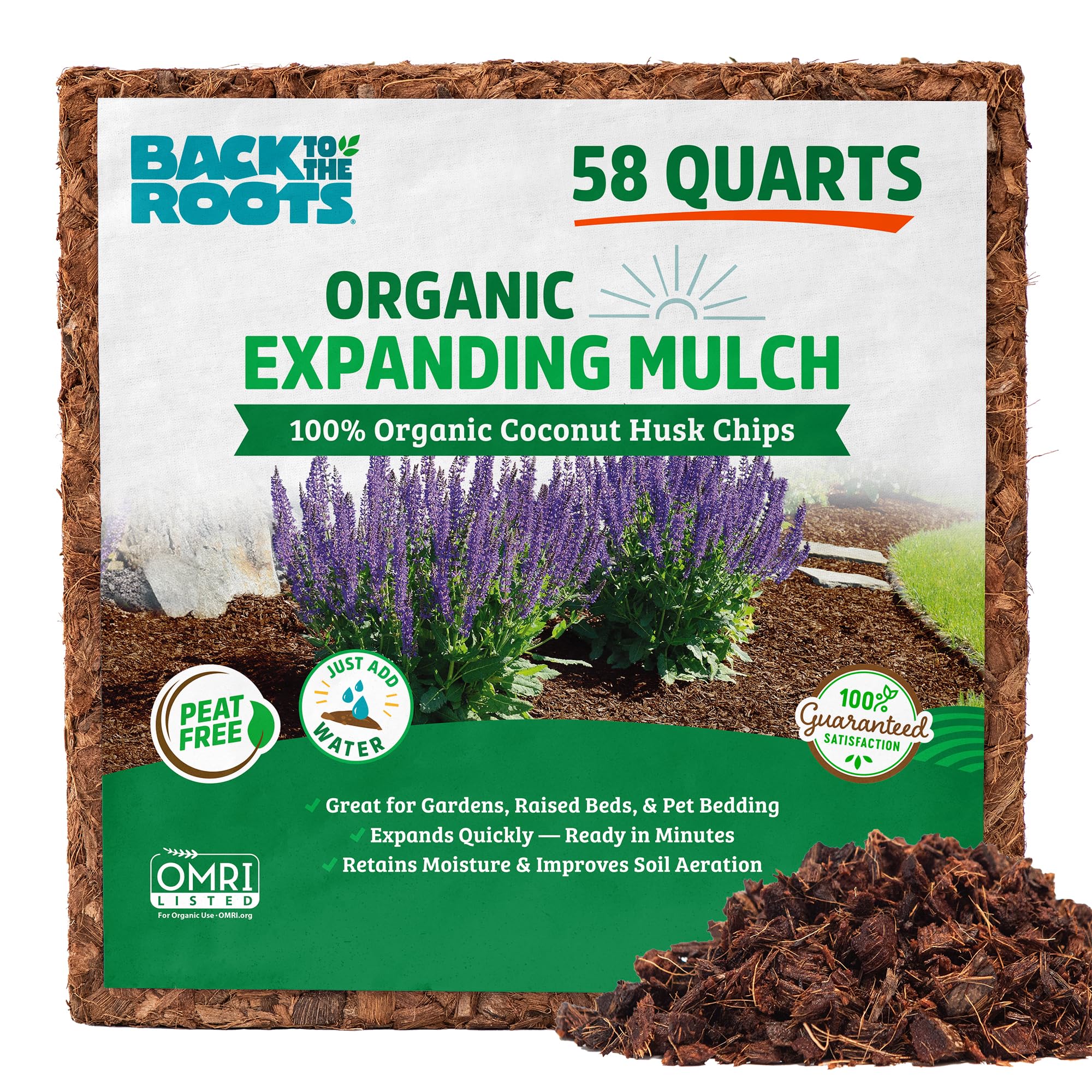
Back to the Roots pushes the expansion game further: a single 10-pound block blows up to 2 cubic feet of mulch — enough to fill a wheelbarrow three-quarters full and cover a sizable raised bed. The OMRI listing is verified, so gardeners growing edibles can trust zero synthetic additives. The color when hydrated is a rich, dark brown that looks like top-quality compost, giving beds a finished, professional appearance.
Verified purchasers consistently mention the “wow factor” of watching the block expand. Many use it not just as mulch but as a soil amendment, mixing it into clay-heavy ground to improve drainage. The light weight of the dry block is a practical win for anyone with limited mobility — no hauling 40-pound bags of wet bark from the car to the back yard.
The main trade-off is that the expanded volume is slightly fluffier than some coco bricks, meaning it settles more over a season and may need a top-up earlier. A few users noted that the brick is less compressed than others, so the actual dry weight feels lighter per cubic foot of coverage. But for rapid, large-area coverage with organic certification, this is the easiest path to thick, clean mulch without the labor of moving heavy wet bags.
What works
- Massive 2-cubic-foot expansion from a portable 10-pound block
- OMRI-listed organic — safe for vegetable gardens
- Deep brown hydrated color looks like premium compost
What doesn’t
- Fluffier texture settles faster than denser coco chips
- Less dry mass per cubic foot compared to some competitors
4. Riare 10LBS Coco Chips Substrate

The Riare coco chips are the thickest, coarsest bricks in this tier — buyers consistently call the texture “hefty” and “ideal for chunky soil mixes.” If you are building a DIY aroid or orchid mix, these chips provide the structural support that fine coir dust simply cannot. The low EC and balanced pH make them safe for direct contact with tender root systems, unlike some bark mulches that leach acidic tannins.
Long-term growers on Reddit and garden forums praise this specific product for outlasting pine straw in raised beds by multiple seasons. The chips break down very slowly, meaning you do not need to refresh the layer every year. The 72-quart expansion from a single brick is identical to the Halatool, but the chip size is noticeably larger, which is a pro for aeration and a con if you need a smooth, fine top-dressing for decorative beds.
Price sensitivity is the main friction point. Several verified buyers who have used coconut coir for decades noted that while the quality is excellent, they wish the quantity was closer to double for the same price point. If you are covering a large area, the cost adds up compared to bulk wood chips. But for targeted, high-performance mulching around specimen trees, perennials, or container gardens, the slow breakdown and structural integrity justify the spend.
What works
- Thickest, coarsest chip texture — ideal for aeration
- Very slow breakdown reduces annual reapplication
- Low EC protects sensitive root systems
What doesn’t
- Perceived as expensive relative to volume
- Too coarse for fine decorative top-dressing
5. Brut Organic Aspen Mulch 10 QT
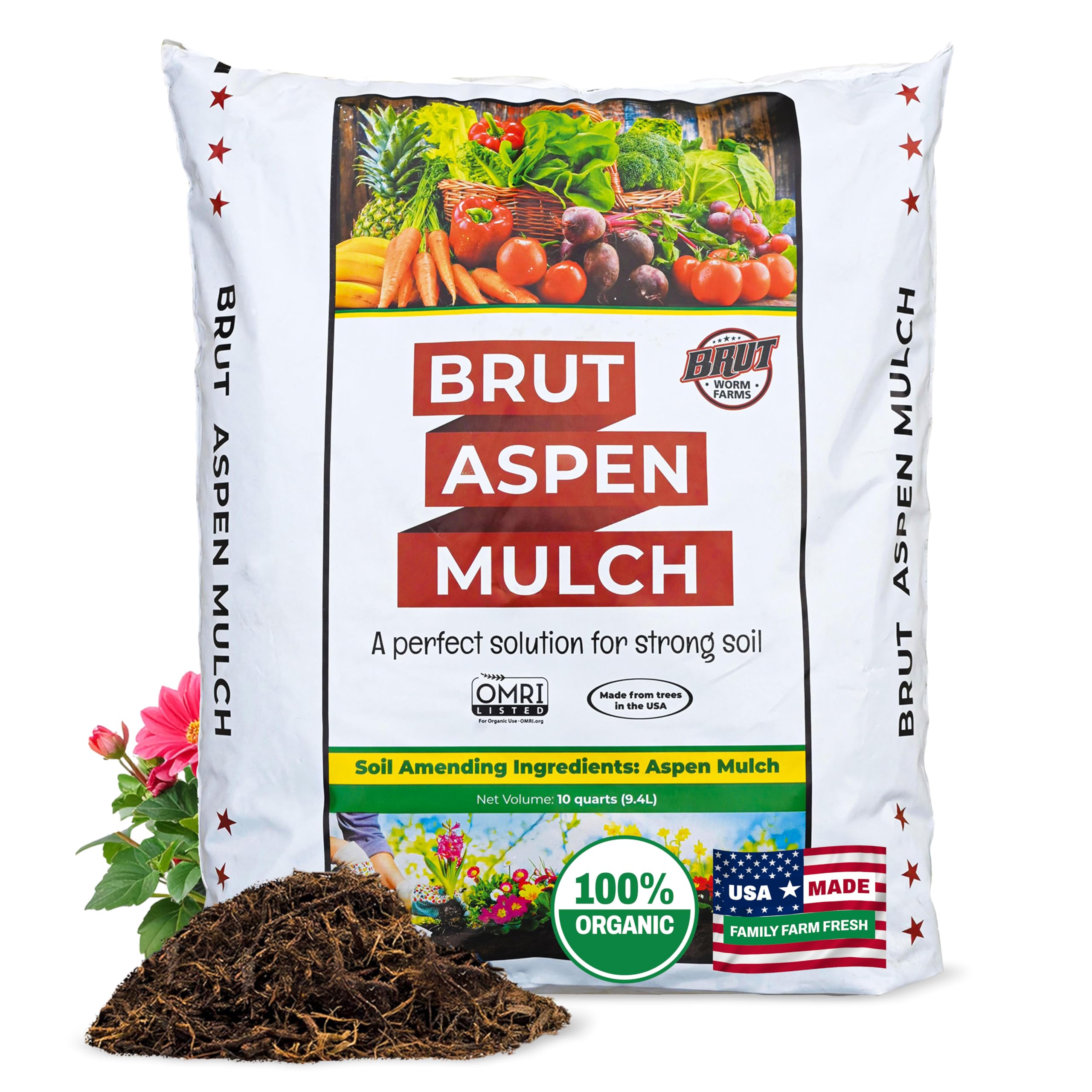
For gardeners who prefer a fine, soil-like texture over chunky coco chips, the Brut Organic Aspen Mulch delivers a completely different experience. It is OMRI-listed and made from pure aspen bark with 30 percent natural carbon content, which actively feeds beneficial soil microbes as it breaks down. The texture is almost like coarse coffee grounds — it lays flat, locks together on slopes, and creates a tidy, uniform surface that looks manicured.
Container gardeners and herb growers report that this mulch cuts watering frequency by about half. The fine particle size means it does not float away during irrigation, and the odor-free formula avoids the strong pine or cedar scents that can overwhelm small spaces. One buyer specifically praised it for a newly planted tree, noting the root zone stayed consistently moist without becoming soggy.
The biggest concern is volume. Several buyers felt the 10-quart bag was misleading — it is a light, fluffy product, so the bag looks smaller than expected for the price. The weight is low, but the coverage is honest. For large landscape beds, the cost per square foot is higher than traditional bark mulch. This is a precision tool for containers, herb gardens, and small focal beds where appearance and soil biology matter more than raw square footage coverage.
What works
- Fine, uniform texture ideal for containers and herb beds
- OMRI-listed with 30% carbon for soil microbe health
- Odor-free and stays in place during watering
What doesn’t
- Low volume per bag — expensive for large areas
- Lightweight material can appear less substantial than chips
6. Rubberific Premium Shredded Rubber Mulch

Rubberific sits in a completely different category from the organic options: it is a permanent synthetic mulch designed for playgrounds, pathways, and low-maintenance landscapes where you never want to reapply. The shredded rubber looks convincingly like real wood mulch — not the uniform pellets of old tire crumb — and comes with a 12-year color warranty. The red variant blends surprisingly well with brick and clay-toned landscapes.
The functional advantage is zero decomposition. It will not rot, compress, or lose its color over time, and it provides a cushioned surface that meets playground safety standards for impact attenuation. Multiple buyers cited the deterrent effect on animals — dogs and cats avoid walking or digging on it, solving a common problem with soft organic mulches that attract pests.
The downsides are substantial for gardeners. It smells strongly of rubber for the first several days. It offers zero soil-building value — no organic matter, no microbial activity, no nutrient cycling. And the cost per bag is significantly higher than wood or coco mulch, so covering large beds gets expensive fast. This is not a product for vegetable gardens or flower beds; it is a specialty solution for high-traffic, no-maintenance zones where appearance and longevity trump biology.
What works
- Does not rot, compress, or fade for over a decade
- Provides cushioned surface for playground safety
- Natural shredded look fools the eye at a distance
What doesn’t
- Strong rubber smell during initial installation
- No soil enrichment or microbial benefits
- High cost per bag for large-scale coverage
7. Hull Farm Cocoa Bean Shell Mulch

The Hull Farm cocoa shell mulch is the wildcard of this lineup — a byproduct of chocolate production that smells like a bakery for the first week after application. The NPK value of 2.5-1-3 means it actually fertilizes as it breaks down, delivering a slow-release nutrient boost that will not burn vegetation but does feed the soil over time. It is a genuine 2-cubic-foot bag, not a compressed brick, so it is ready to spread immediately with no hydration step.
Squirrel deterrence is the most commonly cited practical benefit. Buyers who switched from pecan or wood mulches reported that squirrels stopped digging in their flower planters after switching to cocoa shells. The material is lightweight and does not blow away easily once watered in — the shells lock together into a cohesive mat that holds moisture exceptionally well, outperforming standard bark in water retention tests.
The drawbacks are real and need emphasis. The chocolate scent attracts dogs, and cocoa shells contain theobromine, which is toxic to dogs if ingested in large amounts — this mulch is not safe for homes with dogs that chew or dig. It also lacks warning labels for flower beds in some batches: one buyer noted the bag did not mention that cocoa shells can inhibit some flowering annuals. The cost is the highest per cubic foot on this list, and the fragrance fades after roughly a week. This is a niche product for specific gardens with no pets, where scent and mild fertilization are the priority.
What works
- Pleasant chocolate scent for the first week
- NPK 2.5-1-3 provides slow-release soil nutrition
- Deters squirrels and other digging rodents effectively
What doesn’t
- Theobromine content is toxic to dogs — not pet-safe
- Highest cost per cubic foot in this review
- Scent fades quickly; may inhibit some flowering plants
Hardware & Specs Guide
Expansion Ratio
Compressed coconut husk bricks are measured by how much volume they yield after hydration. A standard 10-pound coco brick typically expands to 72 quarts (roughly 2.7 cubic feet). Brands like Halatool and Riare hit this mark consistently, while Back to the Roots advertises 2 cubic feet. Lower ratios mean less coverage per bag, so check the expanded volume, not the dry weight, when comparing value.
pH and Electrical Conductivity (EC)
Coconut coir naturally has a pH between 5.5 and 6.5 and a low EC, making it safe for almost all plants. Unbuffered coir can lock up calcium and magnesium, so look for products labeled “buffered” or with verified low EC readings. Wood mulches like pine and cedar tend to acidify soil over time, while cocoa shells are slightly alkaline. Test your soil pH before committing to a specific mulch type for long-term beds.
FAQ
How long does a 10-pound compressed coco brick take to fully expand?
Can cocoa shell mulch be used around vegetable gardens?
Does shredded rubber mulch heat up and damage plant roots?
Is organic certification like OMRI important for mulch?
Final Thoughts: The Verdict
For most gardeners, the best bags of mulch winner is the Halatool 10LBS Coco Husk Chips because it delivers a massive 72-quart expansion, neutral pH, and coarse chip texture that suppresses weeds without washing away. If you want the maximum single-block coverage for large raised beds, grab the Back to the Roots Coconut Husk Block. And for fine-textured, OMRI-listed mulching in containers and herb gardens where soil biology matters most, nothing beats the Brut Organic Aspen Mulch.