
Your garden soil is tired. Bagged compost is the quickest way to inject life, nutrients, and the right structure back into your beds, containers, or lawn without waiting months for a backyard pile to finish. The catch is that not every bag delivers what your plants actually need — some are little more than shredded bark or filler, while others give you the dense, dark, living material that turns weak growth around in a week.
I’m Rikta — the co-founder and writer behind Lawn Gear Lab. This guide is built by comparing the manufacturers’ published specifications and the patterns across verified customer reviews, so you get each pick’s real strengths and trade-offs instead of marketing spin.
The best bagged compost for you depends on the nutrient density, texture, and bag size that match your specific project.
How To Choose The Best Bagged Compost
Picking the right bagged compost comes down to what your soil lacks and what you are growing. Start by looking at the source — manure-based composts tend to be richer in nitrogen and beneficial bacteria, while peat-based options hold moisture better in sandy soils. Then check the texture: you want a dark, crumbly, uniform material without large sticks or clumps. Finally, match the bag size to your project — an 8-quart bag works for a few containers, a 40-quart bag covers raised beds and larger garden areas.
Check the Nutrient Source and Certification
The base ingredient dictates performance. Cow manure compost (like Black Kow) is high in nitrogen and microbes that convert nutrients into plant-available forms. Blended products (like Michigan Peat Wholly Cow) mix peat with manure for balanced moisture and aeration. If you grow vegetables or herbs and need organic assurance, look for an OMRI certification — that means the compost meets strict organic standards. Lobster and crab meal (found in Espoma Land and Sea) adds trace minerals and beneficial fungi called mycorrhizae that help roots absorb more.
Match the Texture and Bag Size to Your Project
Screened compost with a consistent, fine texture spreads evenly and works into soil without leaving gaps. A 34-pound bag is heavy but covers a lot of ground for raised beds and big planting holes. Lighter 10- or 6-pound bags are easier to carry and perfect for topping up containers or mixing into a few pots. If you are amending a large vegetable garden, a cubic foot bag (roughly 24 pounds) hits the sweet spot of volume and portability.
Watch for Moisture Retention and Odor
Compost that holds water well reduces how often you need to water — especially important in sandy or fast-draining soils. Fully composted manure has a mild earthy smell rather than a strong manure odor; that means it has broken down completely and is safe to use around tender roots. Buyers consistently report that low-odor bags are easier to work with indoors and in containers where smell matters more than in the open garden.
Quick Comparison
On smaller screens, swipe sideways to see the full table.
| Model | Category | Best For | Key Spec | Amazon |
|---|---|---|---|---|
| Michigan Peat Wholly Cow | Mid-Range | Raised beds & mushroom cultivation | 34 pounds, 40 quarts | Amazon |
| Espoma Land and Sea Gourmet | Premium | Perennials & high-value ornamentals | 24 pounds, lobster & crab meal | Amazon |
| R&M Organics Premium | Mid-Range | Indoor & container plants | 10 pounds, low odor | Amazon |
| Black Kow | Budget-Friendly | Soil aeration & general planting | 6 pounds, 8 quarts | Amazon |
| Ribbon Organics OMRI | Premium | Orchids, epiphyllums & sensitive containers | 7.9 gallons, OMRI certified | Amazon |
In‑Depth Reviews
1. Michigan Peat Baccto Wholly Cow Horticultural Compost and Manure
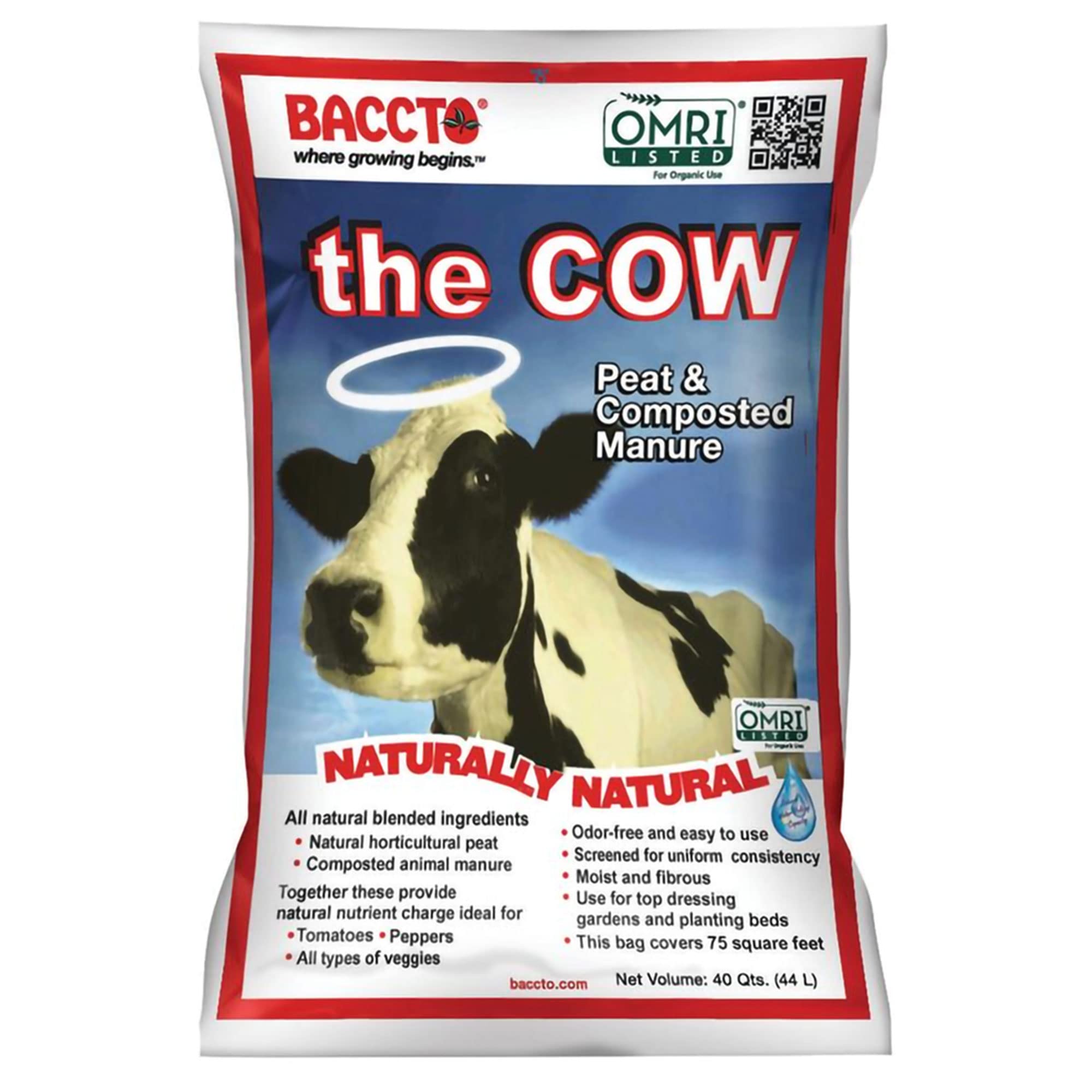
The Wholly Cow compost earns the top spot because it delivers a high manure concentration (aimed at heavier feeders and even mushroom growers) in a 34-pound, 40-quart bag — giving you the most volume per bag among these picks. This is the bag for anyone amending large raised beds, poor sandy soil, or lawn areas where you need a thick layer of rich organic matter that holds moisture and feeds for months.
Buyers report it is “perfect, no-smell, dark, lightweight, fluffy compost” with no large sticks or debris to pick out — one reviewer used it to create 12 to 15 mushroom substrates per 35-pound bag at a 1:1 ratio with coco coir. The screened, uniform texture means it mixes effortlessly into existing soil without clumping, and the peat blend gives it a natural water-holding capacity that reduces how often you water your beds.
At 34 pounds, this bag is heavy to carry from the car to the garden, and if you only have a few pots to fill, the 40-quart volume may be more than you need for one project. For the gardener tackling a substantial bed or lawn repair, this is the richest, cleanest all-around option at a mid-range price. Verdict: the best bag for getting serious with your soil.
Why it’s great
- High manure concentration for strong plant growth and mushroom cultivation
- Pleasant earthy smell — no strong manure odor
- Screened for uniform texture; no large sticks or contaminants
Good to know
- Heavy bag at 34 pounds, cumbersome to carry
- Large 40-quart volume may be more than needed for small container gardens
2. Espoma Organic Land and Sea Gourmet Compost

The Espoma Organic Land and Sea Gourmet Compost beats the Wholly Cow on nutrient diversity by adding lobster and crab meal — a protein-rich source of chitin and trace minerals that most composts lack. If the Wholly Cow is the volume king, this is the specialist: its 24-pound, 1-cubic-foot bag is packed with shellfish-derived nitrogen and a proprietary blend of endo and ecto mycorrhizae (beneficial fungi that help roots access more nutrients and water).
Owners mention using it to transform hostas and indoor vegetables, with one noting they have relied on it for three consecutive years. The granular form is easy to mix into potting soil or sprinkle around established perennials, and because it contains no synthetic chemicals, it is safe for edible gardens and around kids and pets.
Choose the Espoma over the Wholly Cow if you grow high-value ornamentals like hostas, roses, or container vegetables where the extra mineral boost from shellfish meal makes a visible difference in flower size and leaf color. The downside is a smaller bag volume for a premium price, so it suits focused planting beds and pots better than covering a whole lawn. This is your pick if your plants need a gourmet meal, not just a soil filler.
Where it shines
- Lobster and crab meal add trace minerals not found in standard manure compost
- Myco-Tone mycorrhizae improve root health and nutrient uptake
- Trusted by buyers with three-year consistent results
Worth noting
- Smaller bag size relative to other options at this tier
- Premium cost reflects the specialized ingredients
3. R&M Organics Premium Organic Compost
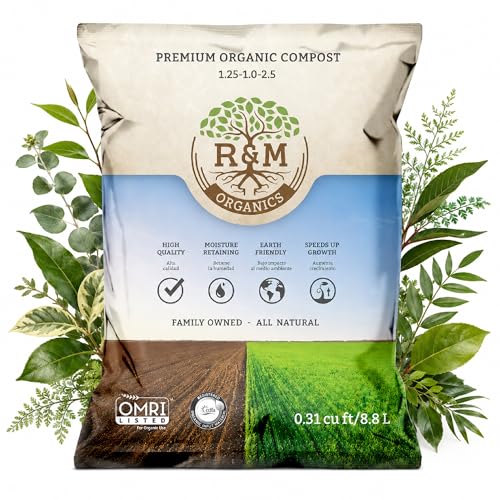
Imagine your tomato plant has yellow leaves and has stopped growing. One reviewer noted that this 10-pound bag of manure-based compost turned yellow leaves green and produced new flower buds within a week when mixed into a 27-gallon planter. The R&M Organics compost is designed for these rescue missions — its fine, topsoil-like texture has a low odor and works equally well for indoor pots and outdoor raised beds.
The 10-pound bag is easy to carry and store, and its 5:1 mixing ratio means a little goes a long way: spread a quarter-inch layer around plants or mix into potting soil for containers. Customers note it has “no manure smell or clumps” and is easy to spread, making it a comfortable choice for indoor use where odor matters. The moisture retention properties help soil stay hydrated longer, which means you water houseplants and container herbs less often.
Where the Wholly Cow leads on volume and the Espoma leads on mineral diversity, the R&M Organics excels as a versatile, carry-friendly compost that fits under the sink or in a small garden shed. The bag is smaller than the 34-pound Wholly Cow, so it is best for targeted plant rescue and medium-sized containers rather than large garden beds. Standout for its fine, odor-free texture that makes working with it genuinely pleasant.
What stands out
- Reviewers point out new growth appearing within a week of application
- Low odor, fine texture suitable for indoor and outdoor use
- Moisture retention reduces watering frequency
The trade-offs
- Smaller bag size at 10 pounds limits large-area coverage
- Premium price for the volume compared to bulk-style composts
4. Black Kow Nitrogen Phosphate Composted Cow Manure

The single number that matters most in bagged compost is the weight-to-volume ratio — a heavier bag for the same volume means denser organic matter. The Black Kow comes in at 6 pounds for 8 quarts, giving it a solid density that provides genuine moisture-holding capacity for sandy soils and aeration for hard clay soils. This makes it the most targeted pick for improving soil texture and drainage in specific planting holes and small beds.
The trade-off you accept with Black Kow is the well-known odor. Buyers are honest about it: “It smell terrible but for the value she can get over the smell.” The compost is fully composted and contains millions of beneficial bacteria that convert nitrogen into plant-available form, so the smell is a sign of active biology rather than a flaw. It works best when mixed into the soil at a 1:1 ratio, and the granular form pours easily into planting holes without clumping.
At six pounds, this is an entry-level purchase for testing cow manure compost without committing to a heavy 34-pound bag. It excels as a spot-treatment for individual plants and small container mixes, and it is the most affordable way to see if your garden responds to manure-based compost before buying a larger quantity. Solid value for the gardener who wants to improve soil biology on a budget.
The upsides
- Moisture-holding capacity helps sandy soils retain water
- Beneficial bacteria convert nutrients into plant-available forms
- Easy-to-pour granular form for targeted planting holes
Keep in mind
- Strong manure odor during application
- 6-pound bag is small — best for containers and spot-treatments
5. Ribbon Organics OMRI Certified Organic Compost

What you actually get at this lower price is a dark, rich, earthy compost with zero contaminants like sticks, plastic, or glass; buyers highlight that it is “excellent for container plants (Clivias, Orchids, Epiphyllums)” because it rehydrates easily and will not repel water like some cheaper mixes. The Ribbon Organics compost sits at the top of the price range but earns that premium with an OMRI certification — the most rigorous organic standard — and a 7.9-gallon bag that buyers describe as “black gold.”
What you give up is the larger volume you get for the same money with the Wholly Cow or even the Espoma. This is the most expensive pick by bag size, so it is not the choice for covering a large vegetable bed. Instead, it is purpose-built for the gardener who grows sensitive container plants where quality and consistency matter more than quantity. The compost pairs wonderfully with worm castings and perlite for custom potting mixes that give orchids and epiphyllums the precise drainage and moisture balance they need.
For the plant collector who has struggled with fungus gnats from other brands or water-repellent soil from acidic mixes, this is the precise solution. Buyers confirm it avoids those issues entirely. This is the compost to reserve for your most valuable pots and indoor specimens. In the field of premium composts, this is the one for the serious container enthusiast willing to pay for perfection. It is perfect for the budget buyer who prioritizes purity and consistency over volume, and who is willing to spend more per bag for the most reliable organic compost for prized container plants.
Why we’d pick it
- OMRI certified for strict organic use — no synthetic chemicals
- Rich, dark compost with no contaminants like sticks, plastic, or glass
- Rehydrates easily and does not repel water, unlike some other mixes
A few caveats
- Premium price point for the bag volume compared to other options
- Best suited for smaller, high-value container gardens rather than large beds
Understanding the Specs
Manure vs. Peat Base
The base ingredient determines nutrient level and water behavior. Manure-based composts (like Black Kow and R&M Organics) are higher in nitrogen and beneficial bacteria that break down nutrients for plant roots. Peat-blended composts (like Michigan Peat Wholly Cow) add natural water-holding capacity, which is ideal for sandy soils that drain too fast. Some premium blends (like Espoma Land and Sea) use shellfish meal for trace minerals not found in manure alone. Choose a manure base for a quick nutrient boost, a peat blend for moisture retention, and a marine-based mix for targeted mineral feeding.
Bag Weight, Volume, and Coverage
Bag weight (in pounds) tells you how dense and nutrient-packed the compost is. A 34-pound bag of 40 quarts (Wholly Cow) offers the most coverage for large beds and lawns. A 10-pound bag of 0.31 cubic feet (R&M Organics) is lighter and easier to carry for container work. The general rule is that one cubic foot of compost covers roughly 25 square feet at a one-inch depth. Match the bag size to your project: small bags for pots and spot treatments, large bags for raised beds and lawn top-dressing.
FAQ
Can I use bagged compost straight out of the bag without mixing it with soil?
How do I know if bagged compost is fully finished and safe to use?
What does OMRI certification mean for bagged compost?
Why do some bagged composts smell stronger than others?
Final Thoughts: The Verdict
Across the board, the bagged compost winner is the Michigan Peat Wholly Cow because it gives you the best balance of nutrient density, volume, and clean texture for anything from raised beds to mushroom cultivation. If you want specialized mineral-rich compost for high-value ornamentals, grab the Espoma Land and Sea. And for the container gardener who needs OMRI-certified quality in a small bag, the standout is the Ribbon Organics.