
Specs are compiled from manufacturer listings and verified buyer reviews and can change over time — please confirm the key details on the product page before buying.
Splitting wood is a battle between your swing and the log’s grain. The right axe decides whether you finish the pile in an hour or nurse blisters for a week. This guide breaks down four real contenders for the job — from heavy mauls that muscle through knotty rounds to balanced axes that let speed do the work.
I’m Rikta — the founder and writer behind Lawn Gear Lab. This guide is built by comparing the manufacturers’ published specifications and the patterns across verified customer reviews, so you get each pick’s real strengths and trade-offs instead of marketing spin.
After comparing the head weights, handle lengths, and what actual buyers report, these are the top four tools worth your money if you are shopping for the best axes for splitting wood.
Quick Picks
- Fiskars 36″ Super Splitting Axe — Best Overall
- Husqvarna Wood Splitting Axe S2800 — Premium Compact
- Estwing 8 lb Wood Splitting Maul with 36-Inch Fiberglass Handle — Heavy-Duty
- Truper 12 lb Splitting Maul, 27-Inch Steel Handle — Maximum Mass
How To Choose The Best Axes For Splitting Wood
You need a splitting tool that matches your log size, your strength and height, and how much wood you split each season. A mismatched tool makes every log harder than it needs to be.
Head weight sets the splitting power
A heavier head drives deeper into the wood through momentum. Splitting mauls typically carry 8 to 12 pounds of head weight, while splitting axes often stay around 5 to 6 pounds. The heavier the head, the less you rely on a perfectly sharp edge — the mass does the cracking. But you have to be able to swing that weight cleanly for a full session without your form falling apart.
Handle length changes your reach and leverage
Longer handles (36 inches and above) give you more swing speed and let you stand farther from the log, which reduces the risk of missing and hitting your shin. Shorter handles (27 to 28 inches) give you more control and work well in tight spaces, but you lose some of the lever force that cracks stubborn rounds. Taller users generally want a longer handle to keep their back from bending too much.
Splitting maul versus splitting axe
A splitting maul has a heavier, wedge-shaped head meant to smash through grain by brute force. A splitting axe has a lighter, more tapered head that slices with speed and accuracy. If you face large, knotty, or green wood, a maul usually wins. If you split smaller, seasoned logs and want to swing for longer without tiring, a splitting axe is the better fit.
Quick Comparison
On smaller screens, swipe sideways to see the full table.
| Model | Best For | Head Weight | Overall Length | Total Weight | Amazon |
|---|---|---|---|---|---|
| Fiskars 36″ Super Splitting Axe | Best Overall | 6 pounds | 36″ | 5.95 lbs | Amazon |
| Husqvarna Wood Splitting Axe S2800 | Premium Compact | 5 Pounds | 27.6″ | 6.17 lbs | Amazon |
| Estwing 8 lb Splitting Maul | Heavy-Duty Splitting | 8 lb | 36″ | 10.5 Pounds | Amazon |
| Truper 12 lb Splitting Maul | Maximum Mass | 12 lb | 27″ | — | Amazon |
In‑Depth Reviews
1. Fiskars 36″ Super Splitting Axe
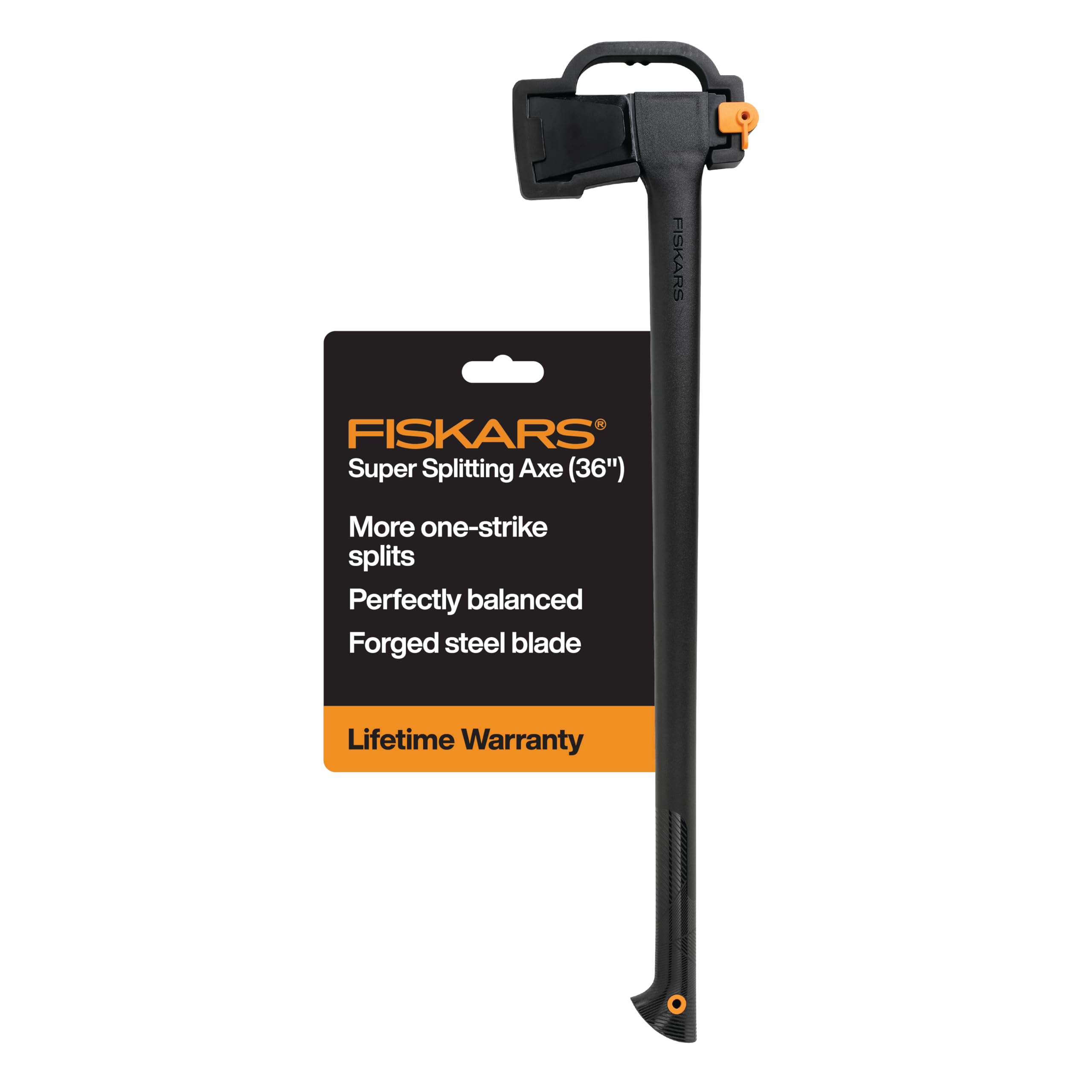
The speed-and-leverage specialist that turns medium rounds into firewood fast.
This axe hits the balance between weight and swing speed. Its 6-pound head is paired against the Husqvarna S2800’s 5-pound head, but the 36-inch handle versus the Husqvarna’s 27.6 inches lets you build real momentum without hauling a maul (a heavy, two-handed splitting tool) around. The bevel convex blade edge bites deep on the downswing then releases cleanly — reviewers call it “ultra-sharp” and note it stays sharp for years with just a file touch-up.
Owners mention the axe is “well-balanced, 3.5 lbs” (head weight noted in a review, referencing its manageable feel). The FiberComp handle absorbs the sting of impact better than traditional wood, which means you can work through a full afternoon without your hands going numb. At 5.95 pounds total weight versus the Estwing 8 lb maul’s 10.5 pounds, the difference is noticeable when you are swinging for the fiftieth time.
One trade-off: the weight that makes it fast through medium logs also means it bounces off really big, knotty rounds that a maul would crack. This is a speed tool for seasoned wood up to about 14 inches diameter. For bigger stuff, you still need a heavier hitter.
Why It Leads the Pack
- Forged steel blade with convex bevel stays sharp with minimal maintenance
- 36-inch handle generates strong swing speed for its weight class
- Shock-absorbing handle reduces vibration through long sessions
The Only Catch
- Less effective on very large or green, stringy logs — lacks the sheer mass of a maul
Reach for this if: you split medium to large seasoned firewood and value a fast, less-fatiguing swing over raw crushing power.
Look elsewhere if: your woodpile is full of knotty, oversized, or wet logs that need 8+ pounds of head mass to crack.
2. Husqvarna Wood Splitting Axe S2800

The compact beast that fits into tight wood piles and smaller hands.
At 27.6 inches overall, this is the shortest handle of the four picks — 27.6 inches versus the Fiskars at 36 inches. That makes it a strong choice for splitting in confined spots or for anyone under about 5’10” who wants to keep their back straight. The 5-pound head with a hardened stainless steel edge and non-stick coating cuts through seasoned softwood cleanly. One owner reports it is “extremely tough” after dropping a 40-inch water oak on it, with only a slight handle bend as proof of its durability.
The fiber-glass composite handle shrugs off weather and needs no oiling or sanding — unlike a wooden handle, it will not crack from sitting in a damp shed. Buyers praise the balance, calling it “well balanced, small but mighty.” At 6.17 pounds total, it weighs about the same as the Fiskars despite a shorter handle, which tells you the build is solid. The included sheath is a nice bonus for storage.
The honest limit here is reach. If you are over 6 feet tall, customers note the 27.6-inch handle forces you to bend, and some mention they wish it were 6 inches longer. It also arrives with a factory edge that is not razor sharp — buyers confirm it “is not razor sharp (acceptable for splitting axe)” — which is typical for splitting axes, but beginners may expect a keener edge from the start.
What Stands Out
- Compact length for tight splitting areas and easier control
- Non-stick coated blade prevents gum-up on resinous wood
- Lifetime warranty backs the build
What to Know
- Short handle forces bending for taller users
- Blade edge is functional but not out-of-box sharp
Your best bet if: you need a tough, low-maintenance splitter for a cord or two a year and want the durability of a composite handle.
Think twice if: you are over six feet tall or regularly work on oversized rounds where longer leverage matters.
3. Estwing 8 lb Wood Splitting Maul with 36-Inch Fiberglass Handle

The maul that thinks the best defense is a heavy offense.
When your wedge axe just bounces off a gnarled oak round, you reach for this. The 8-pound forged head (hardened to 50–55 HRC) sits on a 36-inch dual-injection fiberglass handle that is infused with over 70% fiberglass. The result is a 10.5-pound total tool versus the Fiskars at 5.95 pounds — noticeable in your hands from the first swing. Reviewers point out “it’s weight, shape and long handle make it unique” for tackling elm, ironwood, and wet logs that stall lighter tools.
The special head design aims to generate high splitting force with minimal blade penetration — it cracks rather than slices, so you are not fighting to pull the head back out. Reviewers call it a “beast” and note it works great on hardwoods. The handle is noticeably broader than many competitors, which gives you a confident grip even with gloves on.
But here is the honest trade-off: 8 pounds is heavy. Multiple owners say the weight takes getting used to, and one warns “if you are not sure though, 8 lbs. is heavy.” This is not a Saturday-afternoon-splitting-kindling tool. It is the specialist you grab for the three nastiest logs in the pile. Also, being made in India rather than Estwing’s usual US production may give some buyers pause.
The Big Advantage
- 8 lb forged head hardened to 50–55 HRC withstands repeated hard impacts
- Long 36″ handle gives the leverage to drive that mass effectively
- Broad fiberglass handle offers a secure, comfortable grip
The Real Cost
- 10.5 pounds total weight wears you down fast if you are not conditioned for heavy swings
Stick with this for: splitting large, knotty, or wet hardwoods where lighter axes glance off — this is your problem solver.
Pass on it if: you split mostly smaller, dry firewood or want a tool you can swing all afternoon without fatigue.
4. Truper 12 lb Splitting Maul, 27-Inch Steel Handle
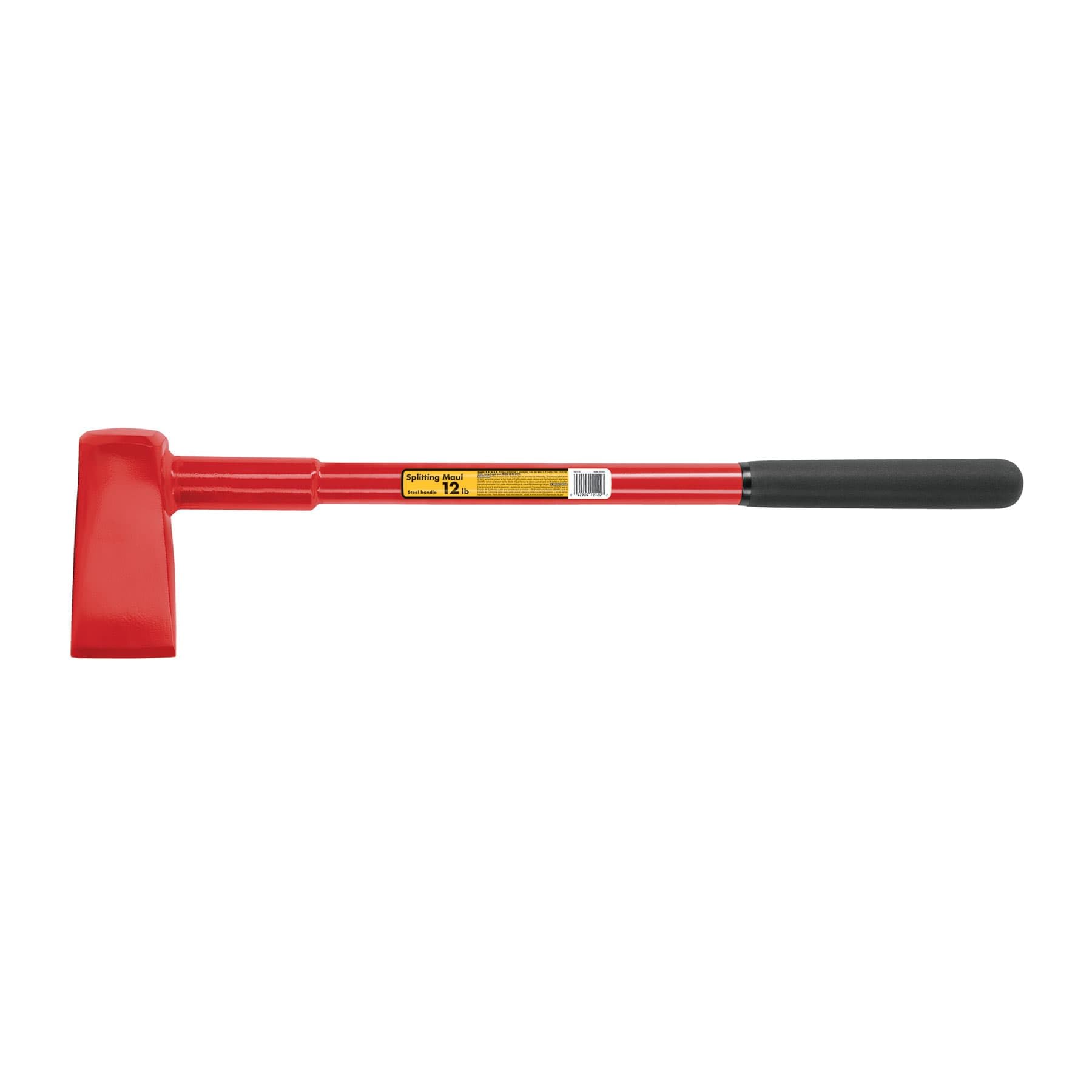
The sledgemill that asks the log to please just move out of the way.
The 27-inch high-strength steel handle and non-slip cushion grip mean you are getting close to the log, leaning your weight in, and letting gravity and mass do the rest. One reviewer noted they split “half cord in 2 days” with this maul, which gives you a real-world pace for sustained work.
The design is simple and almost crude: a convex alloy steel blade on a steel handle wrapped in rubber. There is no flex, no vibration absorption — just direct energy transfer from your swing into the wood. The head-to-handle joint is reinforced, and shoppers say there is no worry about the head coming loose. An Alaskan reviewer splitting 7 to 10 cords per winter calls it excellent for large, twisted logs that smaller mauls “just bounce off of.”
The big catch is that 27-inch handle paired with a 12-pound head. The short handle limits your swing arc, so you have to lift this heavy weight higher to build enough momentum — that is hard on shoulders and lower back. The cheap rubber butt cover tears on the first drop, which is a minor nuisance. And at this weight, you are not carrying it far; this is a tool that lives near the splitting stump.
Pure Power
- 12-pound head crushes logs that deflect lighter tools
- One-piece steel handle construction means no head-to-handle loosening
- Exceeds ASME Standard B107.54M for safety
The Downside
- Short handle requires a higher lift to build momentum, which taxes your shoulders
- Rubber butt cover is flimsy and tears quickly in real use
This is your go-to if: you face the toughest, largest rounds in your woodpile and want a no-nonsense steel-handled maul that will never break.
skip it if: you value swing speed, lighter weight, or need a tool for all-day splitting sessions — the 12-pound head demands real strength.
Understanding the Specs
Head Weight
This is the iron mass at the top of your tool, measured in pounds. More weight means more splitting force on impact — a 12-pound maul drives deeper through stubborn grain than a 5-pound axe. But that mass also means more fatigue over time. Match the head weight to the wood size: heavy mauls (8–12 lbs) for big knotty logs, lighter axes (5–6 lbs) for smaller seasoned splits where speed helps more than mass.
Handle Length
Longer handles (36 inches) give you more swing arc and leverage, letting you split bigger rounds without bending your back as much. Shorter handles (27 inches) offer better control in tight spaces but require you to be closer to the log. If you are over 6 feet tall, lean toward a 36-inch handle to keep your swing natural and safe.
FAQ
What is the difference between a splitting maul and a splitting axe?
How much should a splitting axe head weigh?
Is a longer handle always better for splitting wood?
Will a 12-pound maul wear me out too fast?
What handle material is most durable: fiberglass, steel, or wood?
How do I keep my splitting axe blade sharp?
Can I use a splitting axe for felling trees?
Does a splitting axe come sharp from the start?
Final Thoughts: The Verdict
For most people, the axes for splitting wood winner is the Fiskars 36″ Super Splitting Axe because it combines a fast 6-pound head with the leverage of a 36-inch handle in a durable, low-vibration package that handles the widest range of firewood. If you want a compact but tough splitter that weathers the elements, grab the Husqvarna Wood Splitting Axe S2800. And for cracking the heaviest, knottiest logs in your pile, the Estwing 8 lb Splitting Maul delivers the most force per swing.
How We Picked
We do not accept paid placement, and we did not hands-on test every unit. Instead, we match each pick to a real buyer and use-case by comparing the manufacturers’ published specifications against the patterns in verified customer reviews — so you get each pick’s real strengths and trade-offs instead of marketing copy.
Sources & Methodology
Specifications: manufacturer listings and product documentation. Review insights: verified customer reviews, as of July 2026. Pricing: not shown on this page (it changes often); check the current price via the retailer link.
As an Amazon Associate, Lawn Gear Lab earns from qualifying purchases. This does not affect which products we feature.